• Skip to primary navigation
  • Skip to main content
  • Skip to primary sidebar
  • Skip to footer

Steel Raven Farms

Where muck boots meet ground.

  • Animals
    • Chickens
    • Farm Dogs
    • Goats
  • Garden
    • Compost
    • Garden Projects
    • Seeds and Plants
    • Garden Journal
    • Working With Food
      • Recipes
      • Freezing Foods
      • Dehydrating Foods
      • Canning Tips And Tricks
        • Canning Inventory Sheets
  • Helpful Info
    • Welcome to the Homestead!
    • Emergency Preparedness
    • Frequently Asked Questions
    • Goal Setting
    • Project List
    • Shop Digital Products
      • Hay Calculator
      • Farm Expense And Income Tracker
      • Goat Crash Course: 101
      • Garden Journal Prompts
      • Schedule C Tracker
      • Schedule C Tracker
      • The Homestead Bundle
  • The Truths
  • Episode List
  • Start Here
    • Privacy Policy
    • Affiliate Disclosure
    • Let’s Get in Touch
    • Members Only Library
    • Welcome To Our Homestead

Homestead

Can Goats Eat….Yellow Squash?

May 25, 2024 by Leigh Leave a Comment

Yes, along with many other things. But they can’t eat everything. There is a huge myth out there that goats can eat anything and they can’t. In fact goats are incredibly picky eaters and they can/will eat a lot of different types of food. They have a type of sixth sense that tells them not to eat certain foods. However, if it’s in the pasture and they are hungry, they will eat it. Can goats eat yellow squash? Yup, and they love it.

can goats eat yellow squash

Before we get too far into this, I have a great course on the basics of goat care. I call it Goat Crash Course: Goat 101. In this course, I explain things like types of shelter, types of feeds and hays, basic assessments and so much more! Check it out!

Buy Now

Before We Get Into What Goats Can Eat

This is not a complete list of every single thing they can eat. Nor should it take the place of your vets advise. When it doubt, contact your vet. Also, when introducing a new food to your goat, keep an eye on them for allergic reactions, choking, etc. Midas absolutely loves cantaloupe rinds but I didn’t chop them small enough, he almost choked in his gusto to eat them before everyone else could.

So when it comes to the question; can a goat eat…. the answer is maybe.

What Grasses Can Goats Eat

Alfalfa

Clover

Timothy

Bahiagrass

Fescue

Bermuda

Bromegrass

Millet

Ryegrass

Orchard

Goats will eat grass, but when given an option between grass and weeds, they will go to the weed. That is because they are browsers and not so much grazers. Our pastures are mostly grasses with a ton of briars, poke berries, and other weeds that they love.

I’ve been hearing more and more that goats are “growse-rs”. Basically what that means is that they will browse on weeds and woody stemmed plants but also graze grasses and other low laying plants. And it’s true, they are “growse-rs but I don’t think it’s because they are supposed to be. I think because they have been in human care for so long they have adapted to grasses and hays.

Our herd health bundle helps you keep track of your herd’s health. Includes the goat assessment, herd check sheets AND Herd Health Tracker!

Buy Now

Which Fruits Are Safe

Apples

Banana and peels

Cantaloupe and rinds

Honey Dew and rinds

Plum- no pits

Grapefruit and peel

Kiwi

Mango

Oranges

Peaches- No Pits

Pineapple and rinds

Blueberries

Raspberries

Watermelon and rinds

Grapes

Apricots

Fruit should be fed in small quantities as well as in small pieces. Don’t let your goats gorge on it. That being said, goats can eat apples, cantaloupe, and really any fruit. But make sure you cut it small enough and remove any pits or seeds.

To expand a little further on whether a goat can eat fruit, I would say that for the most part goats can eat just about any of them. My concern is more the pits and seeds. If the pit or seed is too big, they probably shouldn’t eat it.

Veggies They Can Eat

Turnip- They like the greens vs the actual turnip

Green Beans

Zucchini

Carrots

Pumpkin

Summer Squash

Corn

Squash

Garlic- small amounts. Can also help with worms

My goats get about 20% of the garden waste when the garden is in full production. Usually they end up with the scraps from squash, cucumbers, etc. But at the end of the season, we will usually let the goats into the gardens for a couple of days for them to nom nom anything that is left over. They save us a ton of labor tearing out plants and money because we don’t have to feed them.

I will say that the only thing we have noticed when it comes to potato leaves is they will get loose stool occasionally. It could be from the potato leaves or because the sky was a weird shade of blue. Goats can be very finicky health wise so it’s always good to err on the side of caution. So we don’t intentionally feed them potato leaves anymore.

But that doesn’t mean that they don’t get into them.

goat kidding

Before we get too far into this, I have a great course on the basics of goat care. I call it Goat Crash Course: Goat 101. In this course, I explain things like types of shelter, types of feeds and hays, basic assessments and so much more! Check it out!

Buy Now

Horse Quality Hay

Alfalfa

Timothy

Orchard

Bermuda

Tall Fescue

When purchasing hay for goats, they can eat the same as the grasses above. But we really want to make sure that it’s good quality hay. Some people do not get quality hay for their goats and instead get cheap hay. Don’t do this.

Goats can get really sick from moldy hay. When you see “last year’s hay, good for mulch, bedding or goats” run for the hills. You will have more headache from that hay then it is worth.

Also, understand that when it comes to hay, your goat may absolutely love Brome but hate Orchard. Our girls loved Timothy but refused Brome. Or my personal favorite, they will eat Orchard grass but refuse Orchard hay… Go figure.

The Ultimate Homesteader’s Starter Bundle – Only $47!

Get the tools you need to stay organized, track profits, and manage your homestead with ease!

Includes:
✅ Schedule F Tracker – Simplify tax prep
✅ Profit Calculator – Track earnings
✅ Hay Calculator – Plan livestock feed
✅ Garden Journal – Digital & printable
✅ Herd Health Tracker – Monitor animal care
✅ Simple Budget – Manage finances
✅ Backyard Homestead eBook – Essential tips

$99 value – now just $47! Start your homesteading journey today!

Buy Now

Can Goats Have Grain

Grain is great for pregnant or lactating goats. I’ve written up an entire post about grain and it’s place in your goats diet.

Another thing is that grain should only make up maybe 5-10% of their diet. In fact, goats don’t need grain at all. The only time we feed them grain is when they are pregnant, lactating, or we need to hold them still for hoof trims and to give medications.

can goats eat yellow squash

We exclusively feed Tucker Mill Dairy Goat. It’s in the pink bag and we have seen an incredible turn around in the condition of our thinner goats. We also will give grain to our boys when in full rut. The reason is because some boys will stop eating when they go into rut. And our bucks definitely will. We want to make sure that they have access to as much food as possible.

Weeds To Plant Or Protect

Briars- I am the crazy lady that went and replanted all the briars from the property and replanted them in the goat pastures.

Poke Berries

Multiflora Rose

Ragweed

Crabgrass

Chicory

Kudzu

Sericea Lespedeza- If you can get your hands on this seed do it! Seriously, this has been studied extensively had has been proven to be a natural dewormer.

Goats are technically browsers and they will eat themselves out of a job if you let them. Now, I am not saying that you need to plant weeds in your pasture. But I am saying that if you end up falling in love with your goat ***raises hand****, you will end up planting weeds in your pasture.

Our herd health bundle helps you keep track of your herd’s health. Includes the goat assessment, herd check sheets AND Herd Health Tracker!

Buy Now

Supplements

Loose minerals

BOSS- Black Oil Sunflower Seeds

Nutridrench

Baking Soda

Goat Probiotics

Salt

Electrolytes

Copper Bolus– We take them out of the capsules to prevent choke

Can Goats Eat… Yellow Squash?

At the end of the day, you have to figure out what is best for your goats. We feed our goats scraps from the garden based off this list. When the green beans come in and we start processing, they get a pile of ends and dropped pieces. Same with our chickens.

I would say that a goat can eat a ton of different foods, but there are a lot of foods that can make them very sick. The best thing you can do is make sure that you give small amounts and see.

If you are concerned about what your goats are eating or what they can have, contact your small rumen vet and see what they say.

If you like the content I put out, feel free to buy us a coffee! It helps keep this site running, marketing and the goats in grain!

Buy me a coffee

If you like this post, feel free to share it and follow us below on our social media accounts!
  • Facebook
  • Pinterest
  • Instagram
  • YouTube
  • TikTok
  • Spotify
  • Threads

Filed Under: Animals, Garden, Goats Tagged With: Goats, Homestead

JOIN TO OUR MAILING LIST!

Leave us your email to receive new posts and special offers for members only! Don't miss a thing!

Recent Posts

  • Fall Garden Guide
  • Top Mistakes With Goats
  • How To Bond With Your Goats

Our Goats Are Pregnant

May 21, 2024 by Leigh Leave a Comment

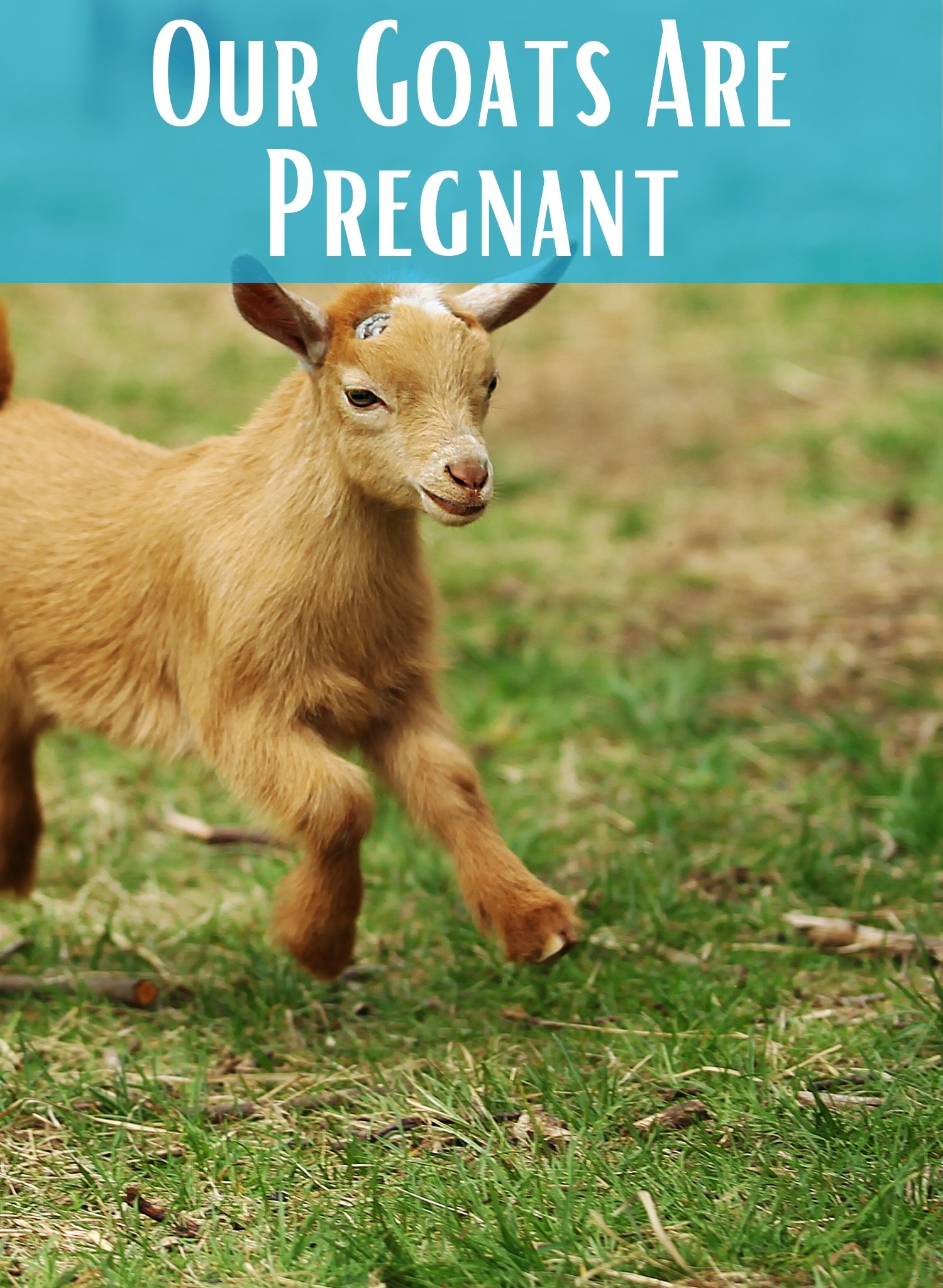
Well, Midas isn’t because he’s a buck. Oakley and Bailey are possibly pregnant but Champ and Bella sure are! I guess I could reword the title to say Champ and Bella are pregnant. Meh. Either way, I am ridiculously excited for some goat kids on the homestead!

goat kidding

Before we get too far into this, I have a great course on the basics of goat care. I call it Goat Crash Course: Goat 101. In this course, I explain things like types of shelter, types of feeds and hays, basic assessments and so much more! Check it out!

Buy Now

Let’s Go Back

In October, I watched Midas do his business with his girls. At the time we only had Champ and Bella. About a month later we had the vet come out to do a herd check and see if the girls were pregnant. The vet did an ultrasound both girls and didn’t find anything. She said that Midas was too young to get the job done. Well, someone forgot to tell Midas that.

Over the next several months we noticed that both girls were getting heavier and were excited because they were pretty thin going into winter despite how much we fed them and negative fecals.

They’re Not Fat… They’re Pregnant!

One day I went out to hang out with my goats and bam! Champ’s udders had gotten huge and her vulva was pretty swollen. If you don’t know anything about goats, these are pretty solid indicators that they are pregnant and close to delivery. I posted a picture on one of the pages I’m apart of on Facebook, and every single person came back and said, she’s pregnant. They also said we probably only had a few weeks before delivery.

Instant panic! I had no idea they were even pregnant and now we are weeks from birthing. So we have been prepping for the birthing and Jared has been building kidding pens. Constantly checking ligaments and making sure they get enough grain. Midas was not impressed that he is not allowed to have all the grain.

Our herd health bundle helps you keep track of your herd’s health. Includes the goat assessment, herd check sheets AND Herd Health Tracker!

Buy Now

With all the panic, the wonderful lady I am buying our two new doelings from has been amazing and answering all the questions I have. She has talked me off the ledge a couple of times without her even realizing she did. She’s also been very helpful when Oakley (brown and white goat) got really sick.

Today, March 20th, starts our baby watch for Champ and Bella. We are hoping for a safe delivery for both girls. As for the kids? We don’t care if they are boys or girls, as long as they are healthy and thrive.

Oakley and Bailey are possibly pregnant but it’s hard to tell because it’s so soon for them. We may have the vet do an ultrasound on them when they come out to disbud the new babies, but we shall see.

We will follow with an update when they are born and everyone pulls through *fingers crossed*

The Long Awaited Update

So this post was written on 3/20/21…. As of this update, the original post is 3 years old. Man, time flies! A lot has changed with our goat herd and both life and death has occurred on the farm.

I am pleased to say that all four girls, Bella, Champ, Oakley and Baily were pregnant. Bella gave us a healthy buckling named Be Be (or Bella’s Baby). Champ gave us three doelings but only Stella was born alive. Oakley and Bailey both gave us beautiful bucklings.

Unfortunately, we lost Oakley and Bailey’s bucklings due to worms that fall. BeBe was sent to freezer camp this past January. And Champ died this past winter at the ripe “old” age of 9 years old. While we know that death is a part of life, especially on the homestead, it still hurts.

However, Bella has given us 3 more babies over the years, as have Oakley and Bailey. Our herd has grown from 5 to 14, healthy, happy bouncing goats. We have learned a ton about goats, raising babies, and cooking goat meat.

goat kidding

Before we get too far into this, I have a great course on the basics of goat care. I call it Goat Crash Course: Goat 101. In this course, I explain things like types of shelter, types of feeds and hays, basic assessments and so much more! Check it out!

Buy Now

Maintaining Flexiblity

I mentioned homestead flexibility in this post, and it is a skill that is absolutely necessary when you are learning how to grow food, raise animals and be good stewards. Our original plan for the goat herd was to sell registered goats. But as time has gone on, we shifted our focus from breeding registered goat stock, to breeding for hardiness and milk.

We have learned when to breed and when to hold back. We’ve learned more tried and true methods to tracking pregnancy and how to raise bottle babies.

I think the most important shift that we have come to accept is that we just can’t keep all the goats. That sometimes, they will need to go to freezer camp (slaughter) and that’s okay. And yes, it’s hard. I’ve got three kids that we are raising for that purpose right now. We can’t keep all of them because our livestock are not pets.

If you like the content I put out, feel free to buy us a coffee! It helps keep this site running, marketing and the goats in grain!

Buy me a coffee

If you like this post, feel free to share it and follow us below on our social media accounts!
  • Facebook
  • Pinterest
  • Instagram
  • YouTube
  • TikTok
  • Spotify
  • Threads

Filed Under: Animals, Goats Tagged With: Goats, Homestead

JOIN TO OUR MAILING LIST!

Leave us your email to receive new posts and special offers for members only! Don't miss a thing!

Recent Posts

  • Fall Garden Guide
  • Top Mistakes With Goats
  • How To Bond With Your Goats

Starting Canning Season Right

May 18, 2024 by Leigh Leave a Comment

On our homestead, we can a lot. I’m not talking about making just jams either. Not only do we can individual items like corn, green beans, peaches, etc but we also can meals like chicken noodle soup, beef stew and chilis. But as we go through these jars of delicious foods, we tend to just wash them and stack them up. This creates a problem during canning season.

The Ultimate Homesteader’s Starter Bundle – Only $47!

Get the tools you need to stay organized, track profits, and manage your homestead with ease!

Includes:
✅ Schedule F Tracker – Simplify tax prep
✅ Profit Calculator – Track earnings
✅ Hay Calculator – Plan livestock feed
✅ Garden Journal – Digital & printable
✅ Herd Health Tracker – Monitor animal care
✅ Simple Budget – Manage finances
✅ Backyard Homestead eBook – Essential tips

$99 value – now just $47! Start your homesteading journey today!

Buy Now

Getting Ready For Canning Season

Canning season isn’t just about making sure you have plenty of jars, though that is definitely important. You also need to make sure you have plenty of rings, lids and your tools. You need to make sure you that you have your ingredients like vinegar, lemon juice (or citric acid), and cook or canning books. Another thing I like to make sure is ready are my canners.

Prepping Jars For Canning Season

As I said above, normally we just wash and stack our jars in the basement. Though we are slowly starting to fill jars with water before storing them. Making sure that the jars are clean and ready is key for a successful canning season.

If your jars are not not clean before starting your season, you be trying to wash jars AND can at the same time…. This creates a problem when I’m canning full force and putting up dozens of jars a day. So how do we go about getting all of our jars ready now while we wait for harvest? Every single case of empty jars comes upstairs, including all the lids, rings, and other odds and ends.

I go through each jar and make sure that they all in good condition, no chips, cracks, dips or dings. Then I go through all the rings and sort them. I will keep the rings that have rust but they go into a different bin to use on a different project. I will also take inventory on my jars and see if I need to buy more. Then I start the washing process.

I use vinegar instead of dish tabs because I’m cheap and I think the vinegar does a better job at cleaning them. Once they are clean, they get a fresh lid and ring. Back in the box and stacked up in the dining room. While this will create issues when I’m not canning, it will ultimately make everything easier when it’s time to can.

Getting Your Tools Ready

Finding out in the middle of a canning session is not the time to figure out that your funnels are broken or missing. Do yourself a favor and gather all your canning tools and make sure that you have everything.

Check to make sure that all of your strainers, ladles, and canning funnels are in good shape and you have enough of them. I have four funnels and I’m getting ready to buy a couple more that are much wider. I ordered this one. The reason is because during soup season, when I need to dump the last remaining goodness in that jar? I don’t want to spill it everywhere.

Go ahead and grab one or two more jar grabber thingy’s. Nope, I don’t know what they are actually called but I know when I start looking for mine, it’s usually hidden under all the towels and hot jars.

Also, make sure that you have PLENTY of lids. I usually can about 1,000 jars or more every year. While I do reuse lids, I am not about to learn the hard way that I have run out. Every year I purchase about 1,000 For Jars lids. I don’t always use them all, but a couple years ago, it was damn near impossible to find lids.

Lastly, make sure that all of your rags, hand and bath towels are clean and ready to go. I will blow through all of my rags and hand towels in 1 day if I’m not paying attention. My rags are for cleaning messes, hand towels for hands, and bath towels to help protect counters, tables, and other places I put my hot jars.

Are you getting overwhelmed in the garden? Stressed? Or just not enjoying the garden like you used to? Check out our garden prompts! We send out weekly emails that get you back in the garden and out of your head! Turn the garden back into a place of love and joy instead of frustration and headache!

Subscribe Now!

Start Stocking Up On Ingredients

Get your vinegar, garlic, salt and other herbs and spices for canning season. Remember, every other canner in your area is going to be getting these same items. Especially, if they did not stock up in the spring like you are doing.

We purchase salt by the 50# bag from Azure Standard as well as bulk order herbs that we can’t or didn’t grow from Mountain Rose Herbs.

Another tip is to make sure that you have all your recipes on hand and ready to go. I love this pressure canning cook book. In fact, I have copied several recipes out of it and have laminated them! Actually, to be fair, I laminate all of my favorite recipes so that I don’t ruin them with the mess that is canning season. This is the laminator that I use and love.

Checking Your Canners For Canning Season

Not everything revolves around jars during canning season. Weird, I know. But the jars are just the vessel that you are using to preserve your harvests or good deals. You also need to make sure that your canners, both pressure and water bath are in good condition and ready to go.

Peak canning season (June to September for us) is a terrible time to find out that the gasket on your pressure canner is cracked or the regulator broken. Go ahead and check those things now and order replacements if needed.

You can also take your canner to your local extension office and have them check it for you. I don’t do this, however, I do keep extra gaskets, weights, and timers around to make sure that I don’t lose one mid season… which I inevitably do.

Mentally Preparing For Canning Season

This is my final, and arguably the most important of all the prep work that you are going to do for canning season. Canning is a HUGE under taking. It involves a TON of work. You are going to be hauling potentially hundreds of jars up and down the stairs. You are going to be washing produce until your fingers look like raisins. The amount of cuts, scrapes and bruises will be mind blowing. And the very last thing you will want to do after putting up 200 jars in one day, is cook dinner.

But having the right attitude when you start canning is key to being successful. All of those things I mentioned above, happen to me every year. One year, I damn near cut my finger off. But I finished that round of canning and then went to get stitches.

But when I tell you that the emense pride you will feel when you walk into your basement and your canning shelves are filled to bursting with all that delicious food? It is worth every single ounce of effort.

These are just some of the things that you can do to make sure that you are ready for canning season. If you think of anything I missed, please comment below!

If you like the content I put out, feel free to buy us a coffee! It helps keep this site running, marketing and the goats in grain!

Buy me a coffee

If you like this post, feel free to share it and follow us below on our social media accounts!

  • Facebook
  • Pinterest
  • Instagram
  • YouTube
  • TikTok
  • Spotify
  • Threads

Filed Under: Canning, How To's, Our Homestead Tagged With: Canning, cooking, Homestead

JOIN TO OUR MAILING LIST!

Leave us your email to receive new posts and special offers for members only! Don't miss a thing!

Recent Posts

  • Fall Garden Guide
  • Top Mistakes With Goats
  • How To Bond With Your Goats

Homesteading With A Job

May 11, 2024 by Leigh 1 Comment

Wouldn’t it be nice to not have to go to work anymore? No matter how much you love your job, the idea of staying on your homestead is very appealing. I would love to be in a situation where I no longer have to work outside of my homestead. But homesteading doesn’t save you money, at least initially. So if you are like most of us, you are interested in homesteading with a job and you’ve come to the right place.

The Ultimate Homesteader’s Starter Bundle – Only $47!

Get the tools you need to stay organized, track profits, and manage your homestead with ease!

Includes:
✅ Schedule F Tracker – Simplify tax prep
✅ Profit Calculator – Track earnings
✅ Hay Calculator – Plan livestock feed
✅ Garden Journal – Digital & printable
✅ Herd Health Tracker – Monitor animal care
✅ Simple Budget – Manage finances
✅ Backyard Homestead eBook – Essential tips

$99 value – now just $47! Start your homesteading journey today!

Buy Now

Social Media Would Have You Believe

If you are browsing YouTube, Facebook, Pinterest, or other blogs, you will see a ton of stories about how they only work their homestead. Their home is insta-worthy and never once will they show last nights dishes in the sink.

Jealous? Maybe a little.

But a lot of people have been shown through various social media platforms that the only way to homestead is by not having a job. For a long time, I thought that too. But I figured with our schedule, we could make something work. And we have.

So how do I homestead with a job?

First and foremost, we have divided the chores between the four of us. Jaxson takes care of the chickens. Chase has the goats. I handle most of the garden, canning and project research. Jared handles butchering, building and many other tasks.

When it comes to the house split those chores as well. That sounds very homestead-y, right? But what about working? How is it with a job?

Logo 468x60

Well, between Jared and I, we work a ton. I work about 48 hours a week at one job, another 8-12 hours at another, and then spend another 20 hours a week on the blog. Not to mention that we homeschool the boys. Jared will usually pick up one or two extra shifts a week and he also works on the homestead.

We are always busy with something and come 8PM, we are exhausted. With our schedule though, that actually only looks like 3-5 days of work off the homestead. Both of us average about 65 hours of non homestead related jobs.

Save on Seeds

We are lucky enough that we have jobs that allow us to fit homesteading and homeschooling around our work life. But sometimes it just doesn’t seem like there are enough hours in the day. Especially for Jared since he is the master of projects around the property.

But Leigh, I work 9-5 Monday through Friday

Start small. If you start off thinking that you need to do everything all at once, you are not going to succeed. But if you start small and slowly build up, you will find that it’s not too bad. I did a blog post about saving your sanity with chores, and this is really no different.

The best thing you can do is start with a couple chickens, then add more. Or start with a small garden, then add to it. You do not have to start everything the day you move in.

I would set up your homestead goals and make sure you prioritize them. It takes a lot of time to get where you want to be, so don’t beat yourself up if you don’t get everything done in one year or five years.

When we started homesteading, we started small-ish. We started with chickens but then jumped to goats and all bets were off. The last six months “catching up” with the goats. We were also still trying to fix up the house, property, and all the other things starting a from scratch homestead entails.

Logo 468 x 60

Our schedule isn’t five days a week, but it is extremely long hours. But if you are working five days a week, it may be difficult to start at all. You probably only have the weekends off or two random days a week. So how can you do it?

Figure out what you CAN do then Level Up

Figure out what you can do during the week. Can you work the garden in the evenings when it’s cool? Do you have an instapot or crockpot for dinners? What about milking the goats in the morning before you go to work? Can you do anything early, the night before, or when you get back from work?

On the days that I am working at the college, I throw one of my favorite slow cooker recipes in before I leave for work. PS This one is great for winter! If I get home a little early, I will throw one of these awesome recipes in my Instapot. I could, and sometimes will grab a pizza on the way home but I really prefer to not spend extra cash that I don’t have on things I can make at home.

The Ultimate Homesteader’s Starter Bundle – Only $47!

Get the tools you need to stay organized, track profits, and manage your homestead with ease!

Includes:
✅ Schedule F Tracker – Simplify tax prep
✅ Profit Calculator – Track earnings
✅ Hay Calculator – Plan livestock feed
✅ Garden Journal – Digital & printable
✅ Herd Health Tracker – Monitor animal care
✅ Simple Budget – Manage finances
✅ Backyard Homestead eBook – Essential tips

$99 value – now just $47! Start your homesteading journey today!

Buy Now

My friend over at the 104 Homestead has some great recipes for slow cookers and Instapots. Seriously, if you don’t have an instapot by now, you really should get one!

My other friend at The Farmer’s Lamp has some really awesome Instapot recipes to look at here.

Subscribe to Craft Beer Club Today!

Some of the other things that can work out great for you is don’t touch the garden until it’s in the shade. For us, that is usually around 5pm. That allows us to get other chores done in the mean time. We also have our hoses set on a timer so if we aren’t there, the garden still gets water.

Our goats and chickens can be let out in less than 5 minutes. We will also plan ahead and “pre-bucket” their feed, if we know that we have an early morning. Our does get a scoop of grain (about a quart per bucket) and two scoops of alfalfa pellets (four quarts) per bucket. That way come morning we grab buckets and let them out. This really helps cut down on wasted time in the mornings.

Tractor Supply

If you can work around your work schedule, then you can absolutely homestead with a job. It just takes some time, patience, creativity, and a ton of hard work. But you can absolutely do it.

If you like the content I put out, feel free to buy us a coffee! It helps keep this site running, marketing and the goats in grain!

Buy me a coffee

If you like this post, feel free to share it and follow us below on our social media accounts!

  • Facebook
  • Pinterest
  • Instagram
  • YouTube
  • TikTok
  • Spotify
  • Threads

Filed Under: Frequently Asked Questions, Our Homestead Tagged With: Chickens, Goats, Homestead

JOIN TO OUR MAILING LIST!

Leave us your email to receive new posts and special offers for members only! Don't miss a thing!

Recent Posts

  • Fall Garden Guide
  • Top Mistakes With Goats
  • How To Bond With Your Goats

How Many Jars Do You Need For Canning?

May 7, 2024 by Leigh Leave a Comment

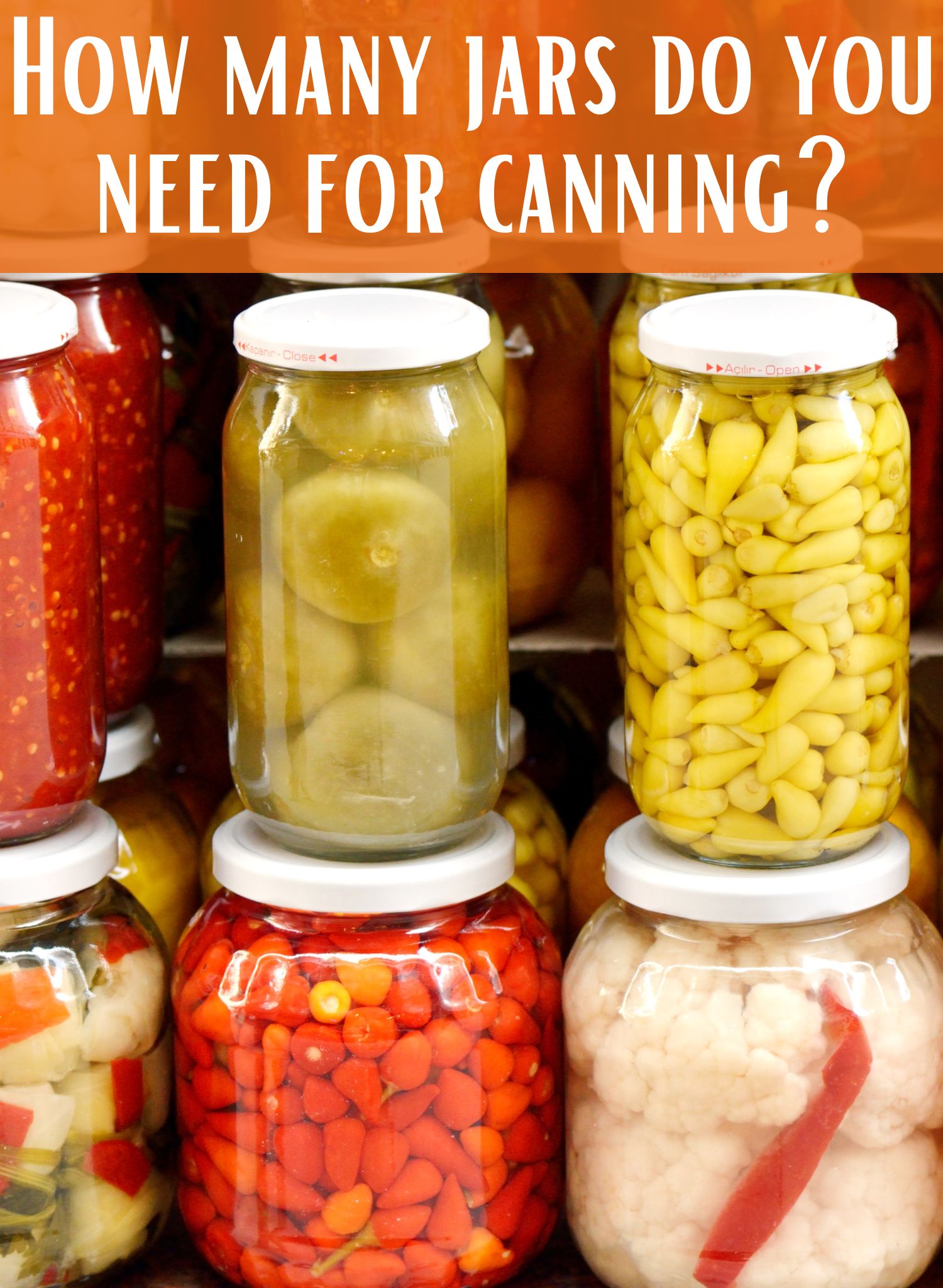
Well, the short answer is all of them. No, I am not exaggerating. When you are gardening to produce food for your family, chances are you would like to preserve some of that harvest for the rest of the year. Or if you are trying to take advantage of a produce sale? Better to have too many jars than not enough. While you can Google recipes all day long, I am more interested in the nitty gritty deals that most people forget to tell you about. Like how many jars do you need for canning? That all depends on your goals.

The Ultimate Homesteader’s Starter Bundle – Only $47!

Get the tools you need to stay organized, track profits, and manage your homestead with ease!

Includes:
✅ Schedule F Tracker – Simplify tax prep
✅ Profit Calculator – Track earnings
✅ Hay Calculator – Plan livestock feed
✅ Garden Journal – Digital & printable
✅ Herd Health Tracker – Monitor animal care
✅ Simple Budget – Manage finances
✅ Backyard Homestead eBook – Essential tips

$99 value – now just $47! Start your homesteading journey today!

Buy Now

Before We Jump In

I’ve written a couple posts on canning, so I don’t feel the need to sound like a broken record. But if you haven’t already, check out my post on gearing up for canning season, my homestead buying guide, and my shelving systems. Trust me, you will be glad you did…. at least for the shelves.

Next, we need to ask some questions before we determine how many jars you need for canning. If you are a beginning homesteader or canner, you will need to answer some questions like the ones below.

Are you looking to supply food for the entire year?

If you are looking to supply your family with an entire year of tomato sauce, you need to look very carefully at how much tomato sauce you currently buy or make. For us, we eat spaghetti about once a week. That means I need at a minimum 52 jars of tomato sauce.

The next question is, is that enough? For us, 52 jars would be gone in about six months. Because we also make chili and other things with tomato sauce. Or we will double or triple recipes because we need left overs for work. It’s the same way with green beans, corn, peas, pickles, etc. If I only can enough for what we use, we will be out in no time. That lesson was learned the hard way.

If you are new to heating with firewood and are looking to master the finer points of it. We’ve got a great eBook that goes in depth of what tools you should consider, how and where to stack, how to build a fire and so much more!

Buy Now

How many people are you feeding?

We are a family of four. But we homeschool and work 24-48 hour shifts. That means that we need left overs. Also we have two growing boys and that means we are also feeding I’m hungry, it’s not mine, and I didn’t do it. So when I am making my projection list for canning, I round WAY up.

What is your skill level with canning?

If you are a novice canner, you need to really consider if you are capable of canning more complex items like soups or stews. It’s not that soups and stews are SO hard to do. It’s actually more of a do you understand the actual process of canning.

For example; if your favorite soup has noodles, do you know that the noodles will turn to mush and become inedible. Same thing with rice, zucchini and other foods that are not as hardy. I’m a advanced but not pro level canner. I still make mistakes. So I know that I need to pay attention or all that hard work will be for not.

Before we get too far into this, I have a great course on the basics of goat care. I call it Goat Crash Course: Goat 101. In this course, I explain things like types of shelter, types of feeds and hays, basic assessments and so much more! Check it out!

Buy Now

Where are you going to put the jars?

I am extremely lucky that I have a full basement. I have sectioned off an entire food storage room. When it’s finished it will have walls, air vents, and a dehumidifier. Jared has also built me these fantastic shelves.

BUT if you don’t have that, you really need to consider how much you can actually can. If you have a tiny pantry, no basement, or other place to put them, you need to get really creative with where stuff will go.

I’ve seen under the bed storage systems for jars that will blow your mind. Keep in mind that your jars should be stored in a cool, dark place. So in a garage that is not temperature controlled probably isn’t the best idea.

Are you buying produce, or are you growing it?

We buy and grow a lot of our produce. Unfortunately, we can’t grow everything we need right now. That’s okay. It’s in the works to grow all the corn we need for a year. But it’s not here yet. If there are financial or garden space constraints, it’s better to identify them now.

Either way, knowing where you are going to source what goes in your jars is another key point in figuring out how many jars you need for canning.

The Ultimate Homesteader’s Starter Bundle – Only $47!

Get the tools you need to stay organized, track profits, and manage your homestead with ease!

Includes:
✅ Schedule F Tracker – Simplify tax prep
✅ Profit Calculator – Track earnings
✅ Hay Calculator – Plan livestock feed
✅ Garden Journal – Digital & printable
✅ Herd Health Tracker – Monitor animal care
✅ Simple Budget – Manage finances
✅ Backyard Homestead eBook – Essential tips

$99 value – now just $47! Start your homesteading journey today!

Buy Now

How far away is your local store?

Our local Wal-Mart is about 25 minutes from us. So if I run out of jars, lids, or anything else, I can get to it pretty quickly. The downside is, when it’s canning season in a farming community, there are no jars. You would be lucky to find anything.

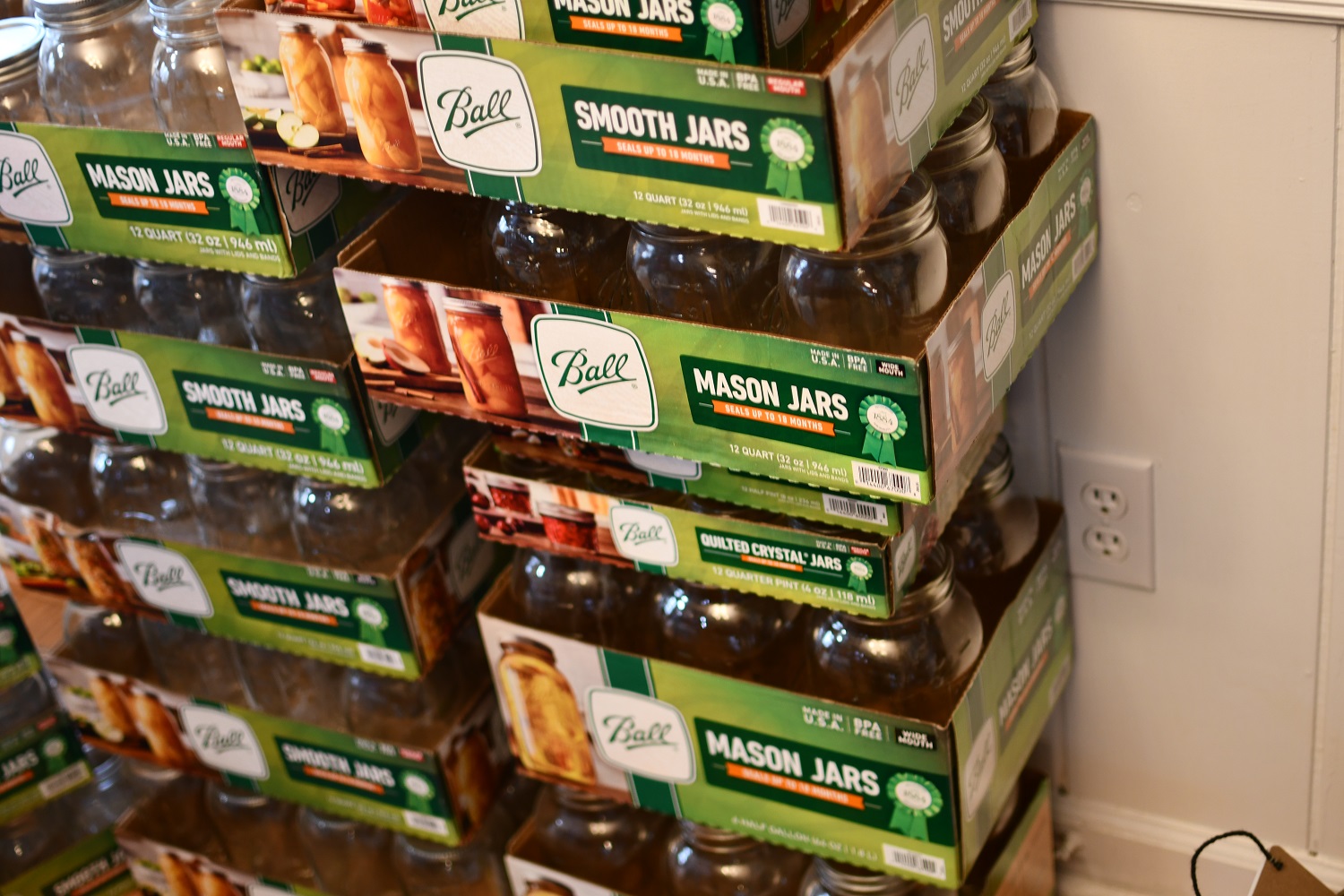
Last year, I bought brand new cases of jars because Wal-Mart had no lids! The only way I could get them was to buy the entire set up. Which is fine! I needed more jars anyways.

If your local store is more than an hour away, I would make sure to always have extra jars on hand. Maybe 1 or 2 cases per type of jar.

So how many jars do you need for canning?

I hate to break it to you, but there is no magic formula here. After you answer the questions above, you can get a much better idea for how many you need. BUT I’m not going to leave you hanging. If you are a beginning homesteader and you are trying to figure out a realistic number, I will tell you what I did.

Our herd health bundle helps you keep track of your herd’s health. Includes the goat assessment, herd check sheets AND Herd Health Tracker!

Buy Now

I buy 2 cases per size, per person, per meal.

And yes, it is a TON of jars. Part of my yearly canning list looks something like this:

52 quarts and pints of corn

52 quarts and pints of green beans

104+ quarts of tomato sauce

50 quarts and 25 pints each of: chicken noodle soup base (no noodles), beef stew, enchilada soup, taco soup, beef roast, potato soup, and chili.

25 pints of salsa

25 quarts of pickles

50 quarts each of pinto, black, kidney beans

100+ jars of potatoes

We are a family of 4 and again, we need to have enough for left overs, lunches, if the boys are home alone for the day, etc. This helps to make sure that even if we don’t eat all that corn, we have some for next year.

Are you getting overwhelmed in the garden? Stressed? Or just not enjoying the garden like you used to? Check out our garden prompts! We send out weekly emails that get you back in the garden and out of your head! Turn the garden back into a place of love and joy instead of frustration and headache!

Subscribe Now!

How many jars do YOU need?

Figuring out how many jars you actually need is going to come down to how much you enjoy canning, your storage, and your finances. Some people can’t afford to drop $12-$20/ person/ meal on jars.

At the end of the day, it’s really about what you can afford. If you can only afford two cases at a time, get them! Trust me, you will use them eventually. As you get more comfortable with canning, or you need to start making your own dog food, thanks Bear, you will appreciate having those extra cans.

Also please for the love of all that is good in this world, pick up lids every single time you see them! Come canning season, they have disappeared! Or you can buy reusable lids like Tattler. PS go to their website, they are a TON cheaper!

If you like the content I put out, feel free to buy us a coffee! It helps keep this site running, marketing and the goats in grain!

Buy me a coffee

If you like this post, feel free to share it and follow us below on our social media accounts!
  • Facebook
  • Pinterest
  • Instagram
  • YouTube
  • TikTok
  • Spotify
  • Threads

Filed Under: Canning, Garden, How To's Tagged With: Canning, cooking, Homestead, kitchen

JOIN TO OUR MAILING LIST!

Leave us your email to receive new posts and special offers for members only! Don't miss a thing!

Recent Posts

  • Fall Garden Guide
  • Top Mistakes With Goats
  • How To Bond With Your Goats

Should You Deworm Your Goats?

May 4, 2024 by Leigh Leave a Comment

There is no simple answer to this. Some farmers will deworm monthly. Others, like me, only deworm when there is a positive fecal or other significant signs or symptoms of needing dewormer. Answering the question should you deworm your goats, isn’t one that is easy to answer. Instead, I’ll tell you what we do and some options that you can use for your goats and farm.

goat kidding

Before we get too far into this, I have a great course on the basics of goat care. I call it Goat Crash Course: Goat 101. In this course, I explain things like types of shelter, types of feeds and hays, basic assessments and so much more! Check it out!

Buy Now

Does Your Goat Have Worms?

Every goat has worms. Period. It is not necessarily a bad thing for goats to have them. The issue is when the goat becomes stressed like with labor, travel or when you are in a high parasite area. Georgia has an insane parasite load, especially in the summer and worms will kill your goat. So then you have to deworm and the vicious cycle starts all over.

Our Main Parasites

The main parasites in my area, and we deal with commonly, are Barber Pole, Coccidia, and lung worms. What happens is that the worm or eggs are shed when the goat poops. It then attaches to grass and when the goat eats the grass, they get re-infected with worms.

Goats will naturally not eat grass or browse that is too short unless there is no other option. They usually eat down to about 4-6 inches and then will move on. This will expose the worm larvae and the sun should kill it.

Unfortunately, if you are not rotating your pastures often enough or feeding on the ground, you will get your goats sick. The sun will not have enough time to kill the larvae or worms themselves and you will end up back in the same boat you were in before.

So the best way to stop this cycle is to allow 90 days between each pasture to allow the grass or browse to get tall enough for the goats to eat it. Sometimes this isn’t possible but do the best you can, even if it’s just between two pastures.

Why you shouldn’t deworm your goats every month

Just like with antibiotics, you should only use dewormers if necessary. The more you use antibiotics, whether for yourself or your livestock, the less likely they are to work. Every sniffle doesn’t require antibiotics. It’s the same way with dewormers.

If you over use a dewormer, the dewormer simply will not work as effectively as before… And they aren’t making new dewormers! Since so many goat farmers have overused dewormer, we are already at the point where dewormers aren’t working. Now, we have to use two different dewormers over the course of several days or weeks to get the same results.

Our herd health bundle helps you keep track of your herd’s health. Includes the goat assessment, herd check sheets AND Herd Health Tracker!

Buy Now

We use cydectin and safe guard at the same time, and have had good results. But again, I will treat for worms with a positive fecal. Or whenever their FAMACHA is low, poor body condition, or other sign that the goats need dewormer. But I try really hard to only do deworm with fecals.

There will come a time when those dewormers are no longer effective. I’ve actually talked to some goat people in other parts of the country that have said that those dewormers are not longer effective for them either.

Holistic Care VS Deworming Your Goat

There are quite a few other things that can be done to help manage parasite loads. The first is pasture management. We touched on pasture rotation above, but it goes far beyond that. Pasture management is also making sure that your pasture isn’t being used by too many animals for too long, or not being taken care of between rotations. Only you will know if you have too many animals for too long on YOUR pasture. But if you are not rotating your pasture at all, expect to have issues with parasites.

Another way to help control parasites holistically is to feed or plant things that are known to kill parasites. Pumpkin seeds are high in tannins which are a natural dewormer. Same with garlic, oregano, clove, turmeric, cayenne pepper, and copper bolus.

If you can get your hands on it, seeding your pastures with some Sericea Lespedeza. This is a natural dewormer that has been studied extensively by Fort Valley State University. They have found that goats that ingest this plant regularly have virtually zero parasites…. Which is amazing!

The Ultimate Homesteader’s Starter Bundle – Only $47!

Get the tools you need to stay organized, track profits, and manage your homestead with ease!

Includes:
✅ Schedule F Tracker – Simplify tax prep
✅ Profit Calculator – Track earnings
✅ Hay Calculator – Plan livestock feed
✅ Garden Journal – Digital & printable
✅ Herd Health Tracker – Monitor animal care
✅ Simple Budget – Manage finances
✅ Backyard Homestead eBook – Essential tips

$99 value – now just $47! Start your homesteading journey today!

Buy Now

Breeding For Hardiness

I’m going to step up on my soap box for a minute here…. As someone who screwed up myself.

Another thing that you should be doing is breeding for hardiness. Especially in high parasite areas like the southeast. Sure, that blue eyed beauty is great, but if you are having to deworm her constantly, is she really that great?

I know this is a sore subject for a lot of goat owners, and probably not something that you want to hear…. BUT. Breeding for hardiness is what will save the future of these goats.

Before you think I’m being preach-y, I did it too! I wanted beautiful, blue eyed mini Nubians throughout my herd… Until I noticed that I was having to deworm those goats constantly. Every summer. But those mutt goats? Thrived! I have never HAD to deworm those mutts. Why? Because they were genetically hardy.

So really think about what you are purchasing, breeding and allowing to keep breeding. Because at the end of the day, livestock are not pets and should not always be treated that way.

***Steps off the soapbox****

So What Do We Do?

The best thing that we could possibly do is stop the unnecessary use of dewormers. Stop deworming every single month and start running fecals to see if your herd truly needs to be dewormed. Our fecals run us $22 for a herd fecal through the vet.

If your comfortable with a microscope, eager to learn, or got some cash to burn you can get a microscope, mcmaster slides, solution, and 1cc syringes for about $220 depending on where you are. There is also a really in depth video on YouTube that is pretty informative.

Also, learn how to do herd checks and FAMACHA tests to make sure they are healthy. When you are used to seeing them “normal” it is very easy to tell when they are sick. We have a book that we keep updated with any treatments done, fecals and results and more.

goat kidding

Before we get too far into this, I have a great course on the basics of goat care. I call it Goat Crash Course: Goat 101. In this course, I explain things like types of shelter, types of feeds and hays, basic assessments and so much more! Check it out!

Buy Now

You can see the pages that we use here on our product page. This really helps us keep up with who is gaining/losing weight, when vaccines are due, and so much more. We keep it in our livestock binder to keep everything on hand.

At the end of the day, you have to choose what is right for your animal. I am not here to tell you otherwise. I just want to tell you what we do and why we do it. I strongly disagree with the overuse of medication of any form, however, I am not afraid to use it when necessary. Necessary being the key and most important word.

If you like the content I put out, feel free to buy us a coffee! It helps keep this site running, marketing and the goats in grain!

Buy me a coffee

If you like this post, feel free to share it and follow us below on our social media accounts!

  • Facebook
  • Pinterest
  • Instagram
  • YouTube
  • TikTok
  • Spotify
  • Threads

Filed Under: Animals, Goats Tagged With: Goats, Homestead, Livestock Medications

JOIN TO OUR MAILING LIST!

Leave us your email to receive new posts and special offers for members only! Don't miss a thing!

Recent Posts

  • Fall Garden Guide
  • Top Mistakes With Goats
  • How To Bond With Your Goats

How To Set Up A Garden Journal

April 23, 2024 by Leigh Leave a Comment

Much like everything else that is homestead related, there is no one size fits all approach to a garden journal. I wish there was because it would make it easier to just have someone tell you what to do and it work 100% of the time. Unfortunately, that’s not the case. The next best thing that we can do is try different things until something works. Today, I’m going to show you how I set up a garden journal and give you the high points of how to start yours.

garden journal

Before we get too far into this post, I wanted to give a suggestion about keeping a garden journal. A digital garden journal is a fantastic way to keep track of past, present and future gardens. Our Digital Garden Journal is a great way to keep up with everything without getting too overwhelmed.

Buy Now

What Is A Garden Journal

A garden journal is exactly what it sounds like. It’s a journal that details your gardens throughout the years. Yes, years. In the first year, you may notice a high infestation of Japanese beetles. In your journal you would make note of the beetles, an estimate of how many beetles, when you first noticed them, what plants they were attracted to, any treatments you did to get rid of them, etc. The next year as you look through your journal, you remember that you had a problem last year, and you can be proactive this year.

How To Set Up A Garden Journal

Everyone will have a different set up based on what they are growing, where they live, and so on. But here are some starting points. If you aren’t sure where to start, you can purchase my garden journal printable in our general store.

The Binder

I think that the best thing you could do is to purchase a binder for your garden journal. I use this binder because I like that it doesn’t take up a lot of space on my desk. Plus, when I am out in the greenhouse working on seeds or out in the garden, it’s not this huge bulky thing. I also like using a binder because I can move pages around from year to year.

I have a bullet journal and while I love it, it is hard to find what I am looking for since it is chronologically done. Not a bad thing, but if I can’t remember when I did something, it was lost. Being able to look back and see that last year I planted 100 tomato seeds and only 80 germinated tells me a lot about the seeds, soil, watering, etc if I have that information available.

The Dividers

I have a TON of dividers in my garden journal, but again, I want simple and easy to find. I use these mini dividers to match my mini binder. For your dividers, you need to think about the things that you want to track. Do you want to track how many seedlings you bought? Or are you planting your own seeds? Do you want to keep track of your soil tests? What about expenses? These are all things that you need to think about so that you can keep track accordingly.

I like to know what seeds I started and when. Then I want to know my soil tests, pests and what seeds I saved. When our orchard stops getting attacked by goats, I would like to know when I pruned, harvested, and more.

Loose Paper

I use loose leaf sheets to take notes, brainstorm, etc. I get the college rule and blank to make sure that if I want to design a garden bed, I can design it on a blank sheet and write on the lined sheets. I store all the excess paper in the back of the binder. I also use sheet protectors on the important pages.

cropped-3.jpg

Are you looking for garden journal prompts, but aren’t interested in a weekly email? Check out our 365 Garden Journal Prompts! This is an amazing, all in one, yearly product that you only pay for once.

Buy Now!

For example: If I go into the greenhouse and I am working on transplants, I don’t want the pages to get dirty. Or if I have designed a garden bed, I want to be able to take that page out of the binder and take it with me to the bed. By having a sheet protector on it, I don’t have to worry as much about it getting destroyed.

Using Your Garden Journal

After getting your journal set up, you should start filling it out with the information you have. In your soil test section, you should fill out previous years soil test results. Be sure to separate years with a line or something so that you don’t get confused. If you don’t have that information anymore? Or this is your first garden? No worries, do the best you can.

When you start your seedlings, be sure to write where you purchased your seeds from. This will help you decide if that was a good buy. If you buy seeds, make sure to put where you bought them from. In your Pest section, make sure to keep track of what pests came when and how you treated for them. This will help you because next year, you can say, “In 2022, the Japanese beetles came in April and only hit the apple trees.” In 2023, you can make sure to have beetle traps or other treatments already in place.

Tractor Supply

I am the type that will write down everything because I will forget it. We had a great pepper harvest last year, but I know it could have been better if I had known only water them every 4-6 days. Because of my garden journal, I know not to water the peppers as often.

Another cool thing about my garden journal is that I have a harvest/ preservation section. This section tells me how much food I need to harvest and preserve from my gardens. I know that we eat a TON of green beans. Like, I can 100 quart jars of green beans and it’s usually gone by April. That tells me that I need to harvest at least 200# of green beans. Because I know these things, I know I need to plant a minimum of 200 pole bean plants. Same with corn and peas.

If you are looking for a great way to keep track of your gardens for years to come, check out our Digital Garden Journal. It’s a digital spreadsheet that helps you manage not only your seedlings but also your seed inventories, soil testing, orchard, harvests and so much more.

Buy Now

Lastly, in my garden journal, I have a list of monthly chores that I need to do. This helps me stay on track with the needs of my garden. Because our goal is to reduce our grocery bill by 75% in 5 years and our feed bill by 80% in 2 years, I need all the help I can get. It not only tracks the weeding, watering and planting, but it also tells me when exactly when to do those things. In April I have final fill of the garden beds, lay final layer of compost, plant after April 15th, weed weekly until seedlings are established, and so on. That way there is no guess work about what I need to do.

If you haven’t checked it out yet, you can find my garden journal printable in our general store here. There are a ton of different planners on the internet but none of them fit the style that I was going for, so I created my own.

Are you getting overwhelmed in the garden? Stressed? Or just not enjoying the garden like you used to? Check out our garden prompts! We send out weekly emails that get you back in the garden and out of your head! Turn the garden back into a place of love and joy instead of frustration and headache!

Subscribe Now!

If you like the content I put out, feel free to buy us a coffee! It helps keep this site running, marketing and the goats in grain!

Buy me a coffee

If you like this post, feel free to share it and follow us below on our social media accounts!

  • Facebook
  • Pinterest
  • Instagram
  • YouTube
  • TikTok
  • Spotify
  • Threads

Filed Under: Garden Tagged With: Canning, Garden, Gardening, Homestead, kitchen, veggies

JOIN TO OUR MAILING LIST!

Leave us your email to receive new posts and special offers for members only! Don't miss a thing!

Recent Posts

  • Fall Garden Guide
  • Top Mistakes With Goats
  • How To Bond With Your Goats

Using A Metal Shed For A Chicken Coop

April 16, 2024 by Leigh

I have been browsing the internet for weeks trying to figure out something for a new coop. We’ve got more chicks and ducks coming and nowhere to put them. So I started researching the different types of chicken coops and I couldn’t find anything I really liked. And to be honest, the wood coop that we have now, is starting to really stink, even after we clean it really well. I think using a metal shed for a chicken coop may work. Maybe.

Why We Chose A Metal Shed For A Chicken Coop

***Make sure to read the updates at the bottom to see how it’s actually working***

We have seriously out grown our old coop. When we bought it, we weren’t really planning on having a ton of chickens. Our thought was, chickens are pretty easy so let’s get a couple. By a couple I mean 15 but only 9 survived. After offering our extra eggs for sale and current state of the supply chain, we have decided to grow our flock. We are hoping that this will allow us to make a little bit of money but also sustain us food wise. You can read about our new flock here. 

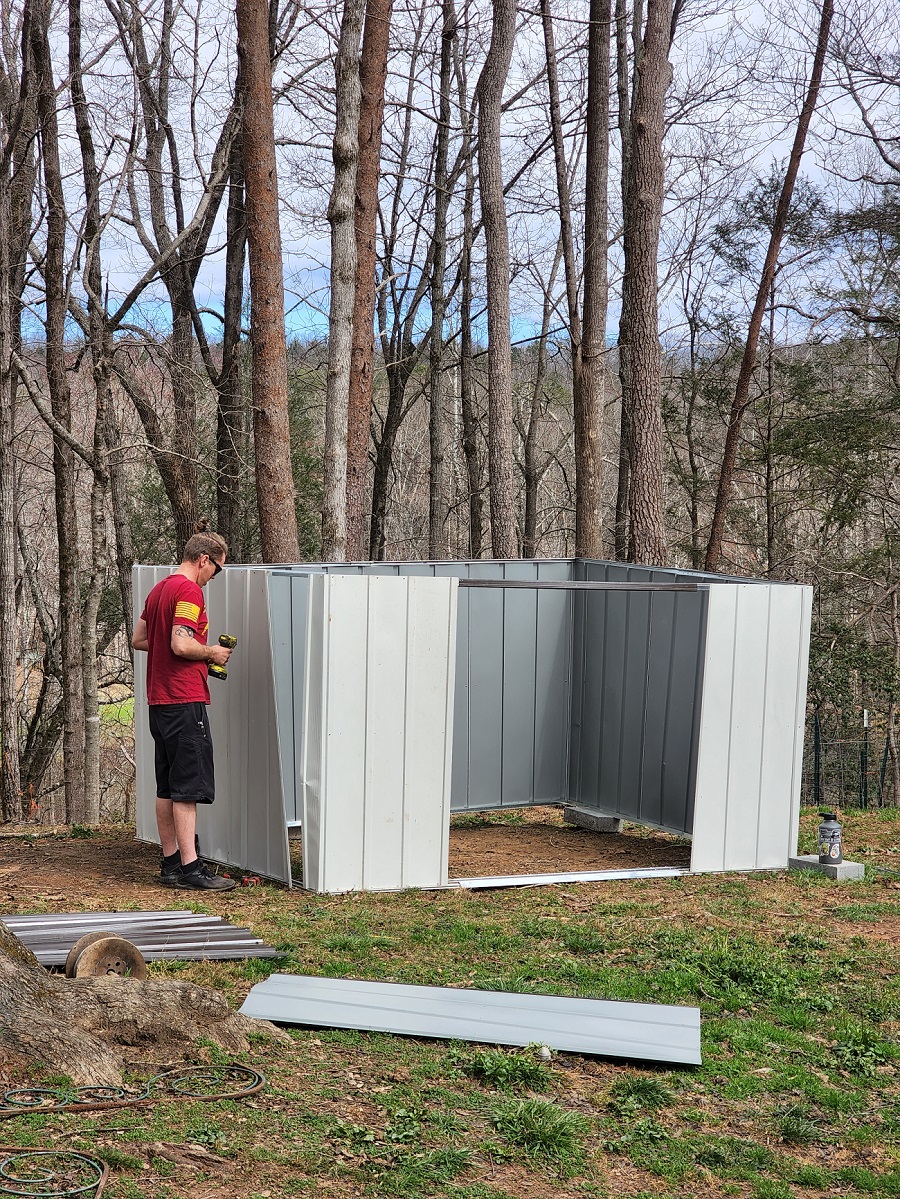
Since, we will also be getting 20 ducks around the end of March AND the 36 chickens, we want to make sure there is plenty of room for all of them. I think this 8×10 metal shed will work great. It’s got plenty of space and if we can hang the new laying boxes and roosting bars, there will be plenty of room for the ducks to nest.

Also since we allow them to free range throughout the day, there shouldn’t be any problems with space during the day.

Now before anyone gets all up in arms about it, we know some of the problems with a shed like this as well as ducks and chickens in the same coop. First, we will be installing gables and vents to make sure that the heat can escape in the summer. They will also have frozen bottles on the ground to keep cool. Not to mention we made sure that the coop is in a shady area.

Save on Seeds

We will also be adding boards and hardware cloth to the bottoms to ensure it as predator proof as possible. The ducks and chickens can cohabitate in the same coop as long as they have their own spaces. The ducks will be on one side and the chickens on the other. I’m sure we will find more problems as we go but we will see.

Jared working on the new Coop

We will always be as transparent with our readers. In that vein, we want to make sure that you don’t make the same mistakes we have. Or if you decide to make the mistake, at least do it differently.

You can also check out this from Redfin article as well! “Whether you’re planning to raise chickens at home in Asheville, NC, Eugene, OR, or Burlington, VT, check out this Redfin article we were featured in on 5 Chicken Coop Ideas For A Thriving Flock“

Summer Update

So this coop was built in the spring before it got really hot. What we have found is that the coop does not get super hot at night like we thought. Since we allow them to free range throughout the day and only put them inside the coop at night when the sun has gone down. We have not noticed a HUGE temperature increase.

Don’t get me wrong, it’s still hot at night and it’s warm in the coop, but I was thinking like fatally hot and it’s not. We have been averaging 80* nights and the coop is 90* but also has fans blowing the hot air out.

One of the things we have noticed is that NONE of the animals want to go in their respective houses at night. That includes the goats. I think a lot of it is that it’s just too hot. When they are outside they can move around and find cool ground.

The chickens and ducks seem to prefer being outside during the summer and that’s fine. We have predator lights up around the property and so far we haven’t seen any signs of them being taken in the night.

I’ll update back after winter and let you know how that goes. But for right now the coop is working.

Winter Update

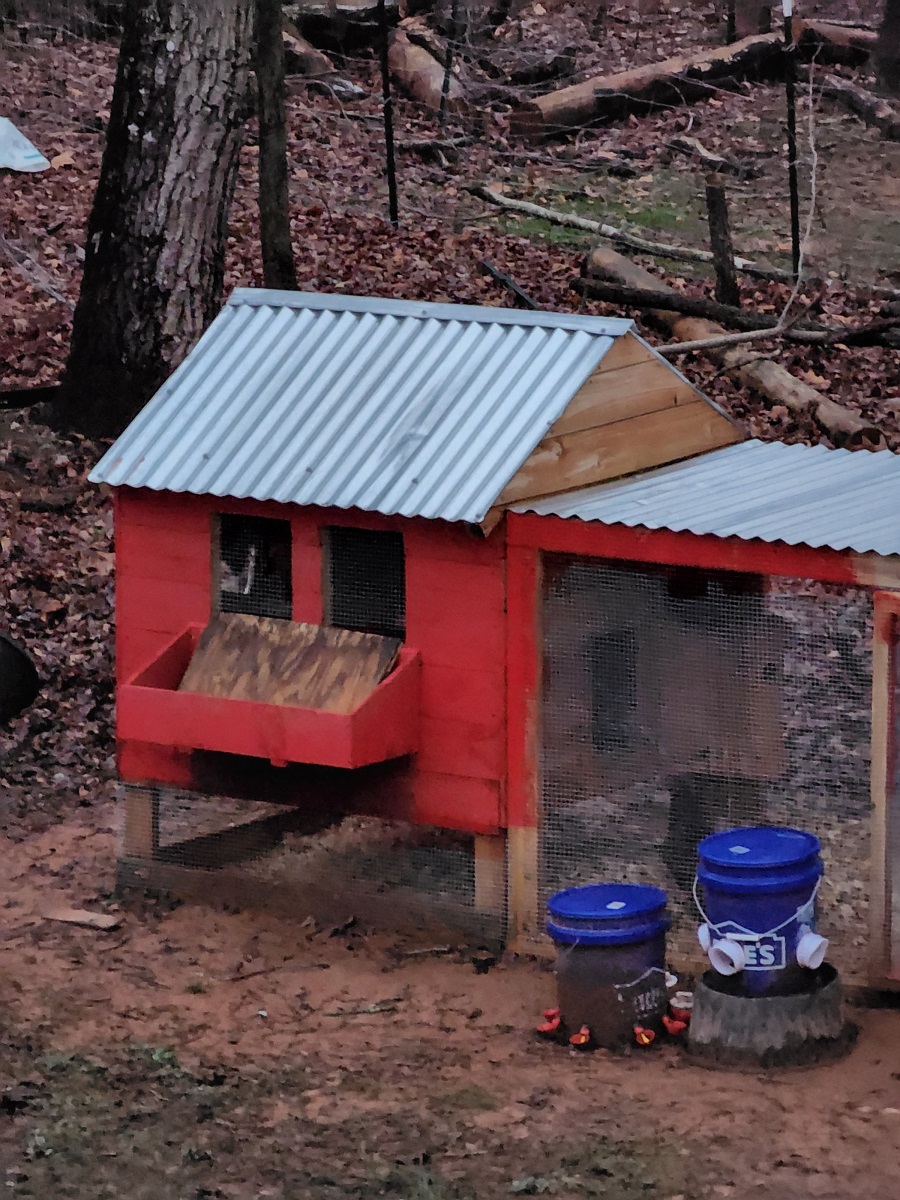
We have moved the chickens and ducks back into the red coop. The metal shed has turned into a flop…. Well, not completely. The shed rusted from the ground up. No matter how much pine shavings we added, the odor was completely foul. The chickens also didn’t seem as healthy either. It seemed to take them longer to get through molt and they stopped laying eggs way sooner than they should have.

When we moved them back to the red coop, their feathers seemed to get brighter and they seemed happier. Now, this is all speculation and we don’t have scientific proof, but I feel like the shed was not a good option for long term keeping.

We plan to convert the shed back into a shed and just put our various building materials in it. I would suggest looking into different types of chicken coops and leave the metal shed alone.

Using A Metal Shed For A Chicken Coop…. The Final Update

As of this writing (2024), we have turned this shed into a home for broody hens and a brood coop for new chicks. For this purpose, the metal shed has turned out to be excellent. We went through and painted all the rust, patched holes, and general upkeep of the shed. We noticed that the broody hens and new chicks all thrived.

I think the main problem with using a metal coop as a permanent coop is the severe lack of air flow, extremely low light, and everything tends to stay damp without a good heat source. Since we fixed everything and have made it a temporary home for these chicks/ hens, it has turned out VERY well and is something we will continue to do.

If you like this post, feel free to share it and follow us below on our social media accounts!

  • Facebook
  • Pinterest
  • Instagram
  • YouTube
  • TikTok
  • Spotify
  • Threads

Filed Under: Animals, Chickens, How To's, Projects Tagged With: chicken coop, Chickens, Chicks, Ducks, Eggs, Homestead, metal coop

JOIN TO OUR MAILING LIST!

Leave us your email to receive new posts and special offers for members only! Don't miss a thing!

Recent Posts

  • Fall Garden Guide
  • Top Mistakes With Goats
  • How To Bond With Your Goats

Welcome to The Homestead

April 13, 2024 by Leigh Leave a Comment

We are excited to bring you along for the journey. On this blog you will find a ton of posts about goats, gardening and homesteading. We wanted to let other people know that you don’t have to have hundreds of acres, tons of livestock or even generations of knowledge. We wanted our blog to be different. So welcome to the homestead!

The Ultimate Homesteader’s Starter Bundle – Only $47!

Get the tools you need to stay organized, track profits, and manage your homestead with ease!

Includes:
✅ Schedule F Tracker – Simplify tax prep
✅ Profit Calculator – Track earnings
✅ Hay Calculator – Plan livestock feed
✅ Garden Journal – Digital & printable
✅ Herd Health Tracker – Monitor animal care
✅ Simple Budget – Manage finances
✅ Backyard Homestead eBook – Essential tips

$99 value – now just $47! Start your homesteading journey today!

Buy Now

Welcome To The Homestead

Both Jared and I grew up as city kids. The hustle and bustle something that we never really wanted. As time went on and we got older, we realized that city life is not what we wanted. It is not what we want for our boys. So we decided to do something about it. We were breaking our back trying to save as much money as possible to get our homestead. Since we are both paramedics and after working 36-60 hour straight shifts for two years, we finally did it. We purchased our homestead.

We just celebrated 15 years of marriage

Shortly after buying the homestead, we got our first chickens.  They are pretty cool little critters and really, what homestead is complete without a couple chickens. We started with 15 and lost a couple. Now we are in the ballpark of 50. But I wanted something a little different. So I started looking into other critters that would be low maintenance while also being semi profitable.

George and His Ladies

Enter the goats

I’m not going to lie, I didn’t want goats. I had heard the horror stories. They are escape artists, they die easily, they can’t actually eat everything, and so on. They are pretty much everything BUT low maintenance and semi profitable. But Jared wanted goats, so we got the goats. Man, I was so wrong! I love those critters! They are seriously the best. Bella is a challenge and I am going to make her love me. But Champ? The girl below? She is the best girl. She is actually going to be giving us babies soon!

Champ

After adding our first couple goats, we wanted even more. So we added more goats, then some goats had babies and now we are at 12. We are hoping to have a few more and that will allow us to start milking regularly. That milk will then help us reduce our dependence on the grocery store.

Since owning goats for several years now, we have decided to, temporarily, move away from registered lines and start working on building a resistant herd with great milk lines. We have also learned to deal with the question of what to do with boys.

Sending bucks to processing has been a hard choice but definitely one that needed to be made. Unfortunately, when you breed animals, you have to face the hard reality of what to do with them if you can sell them. Livestock are not companion animals, although there are some exceptions, and treating them like pets will only break your heart.

We have also created a Goat Crash Course for those that were in our same position. Brand new and with no mentor.

goat kidding

Before we get too far into this, I have a great course on the basics of goat care. I call it Goat Crash Course: Goat 101. In this course, I explain things like types of shelter, types of feeds and hays, basic assessments and so much more! Check it out!

Buy Now

On To The Ducks

Ever since I was a kid, I have loved ducks. They are such cool creatures. Jared finally okayed a few ducks and meat ducks. While they are messy and their pool stinks to high heaven, no matter how often we drain it, I love those guys. We also gained our neighbors guinea. Apparently she was unhappy living with them.

Tractor Supply

Since owning the chickens and the ducks, we have come to realized a couple things. One, chickens get into EVERYTHING when they are not contained in some fashion. So free ranging chickens isn’t really a great idea. Two, ducks free range beautifully and don’t get into as much trouble as the chickens.

While I am not a huge fan of duck eggs, their antics and meat keep them around the homestead.

The Garden

We have also been working hard on our gardens and general clean up of the property. Our property was not set up for homesteading before we bought it. So we have been slowly but surely working through the property and clearing out old debris, trash, and other things. We are hoping to have it safe enough soon to let the goats roam bigger areas to keep the brush in line.

The Ultimate Homesteader’s Starter Bundle – Only $47!

Get the tools you need to stay organized, track profits, and manage your homestead with ease!

Includes:
✅ Schedule F Tracker – Simplify tax prep
✅ Profit Calculator – Track earnings
✅ Hay Calculator – Plan livestock feed
✅ Garden Journal – Digital & printable
✅ Herd Health Tracker – Monitor animal care
✅ Simple Budget – Manage finances
✅ Backyard Homestead eBook – Essential tips

$99 value – now just $47! Start your homesteading journey today!

Buy Now

The garden has been a huge pain in the backside as well. Between not being able to get all my seedlings started and then the ducks eating what I managed to plant, the garden is finally in. I was also able to harvest our first cucumbers!

We are gearing up to start our fall garden and I am ridiculously excited! Our summer harvest has been good, considering it’s our first garden here, but I’m hoping the fall garden will be even better. Our second garden was a bit better but not at all what we thought it was going to be. We have learned a ton about gardening in this area.

One of the biggest things I learned about the garden is protecting the soil! I never really put much thought into the soil and how to build it. I just thought you put things in the ground and they grew. I didn’t realize that building healthy soil, naturally, helped to bring in better harvests. Who knew!?

Our garden this year (2024) is set to be our best yet!

Building A Greenhouse

Last year, the major project was building a greenhouse. Jared absolutely nailed it and I love my greenhouse. It has become my sanctuary when things get hard. Jared poured so much love into that greenhouse and I can feel it every time I walk into it.

Not everyone can build a greenhouse, or really need one. But I do highly recommend at least entertaining the subject if it is possible for you.

Welcome To The Homestead

We will be adding to our homestead as this blog progresses and we want you to be along for the ride. So share and follow us on social media and welcome to the Homestead!

Are you getting overwhelmed in the garden? Stressed? Or just not enjoying the garden like you used to? Check out our garden prompts! We send out weekly emails that get you back in the garden and out of your head! Turn the garden back into a place of love and joy instead of frustration and headache!

Subscribe Now!

If you like the content I put out, feel free to buy us a coffee! It helps keep this site running, marketing and the goats in grain!

Buy me a coffee

If you like this post, feel free to share it and follow us below on our social media accounts!

  • Facebook
  • Pinterest
  • Instagram
  • YouTube
  • TikTok
  • Spotify
  • Threads

Filed Under: Our Homestead Tagged With: beginners, Chickens, Ducks, Eggs, Goats, Homestead

JOIN TO OUR MAILING LIST!

Leave us your email to receive new posts and special offers for members only! Don't miss a thing!

Recent Posts

  • Fall Garden Guide
  • Top Mistakes With Goats
  • How To Bond With Your Goats

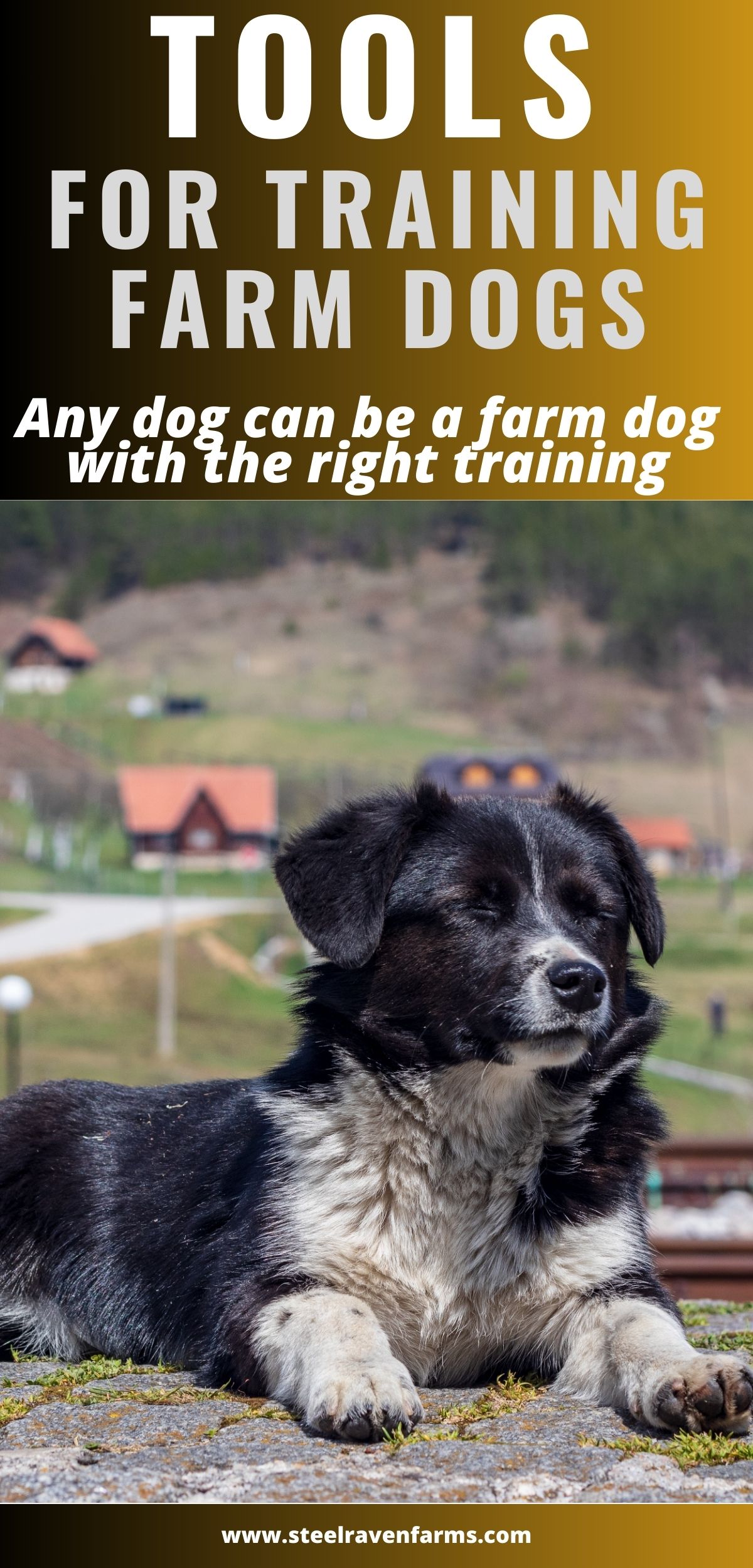
Hacks, Tips and Tools For Training Farm Dogs

April 2, 2024 by Leigh Leave a Comment

In the Training Farm Dogs series, we’ve talked about my pack and qualifications. We’ve talked about the universal truths for successfully training farm dogs. Today, we are going to talk about all of my hacks, tips and tools for training farm dogs. This is an affiliate link heavy post, especially when it comes to the tools section. If you would like to review our affiliate disclosure, you can do so here.

Are you getting overwhelmed in the garden? Stressed? Or just not enjoying the garden like you used to? Check out our garden prompts! We send out weekly emails that get you back in the garden and out of your head! Turn the garden back into a place of love and joy instead of frustration and headache!

Subscribe Now!

Do You Need Hacks, Tips and Tools For Training Farm Dogs?

Well, to be completely honest, you don’t. You could absolutely work your way through this with your dogs and probably do just fine. But since you clicked on my post, you are looking for pointers on how to get your dog to be the best version of themselves. Plus, who wouldn’t want to give their dog the freedom of being off leash and out of confinement?!

We moved out to the middle of nowhere to be able to live life the way we wanted. We homeschool our boys to give them the best chance of being well rounded adults that know how to THINK. We want the same for our dogs. So no, you don’t need my hacks, tips and tools for train farm dogs. But if it helps ONE person and their dog work together, I’m all about it.

Before we get too far into this, I have a great course on the basics of goat care. I call it Goat Crash Course: Goat 101. In this course, I explain things like types of shelter, types of feeds and hays, basic assessments and so much more! Check it out!

Buy Now

Hacks And Tips For Training Farm Dogs

I wish there was a magic pill, potion or spell to be able to understand dogs and them to understand us. It would make training SO much easier. But at this point in my life, there is no such thing, so I will continue to use my instincts, reasoning, and knowledge to work with dogs. And I’m going to share all of that with you.

Hack #1: The fastest way to train your dog is with a reward that THEY want. If your dog is toy driven, use toys to train. If they don’t like treats, don’t give them treats! Blu responds best to praise. Kodi will only sit for treats. Bear just wants to be left alone so training has to be fast. Fenrir is a puppy who doesn’t have a clue what he wants.

Hack #2: No two dogs are alike, don’t train every dog the same. You will set them up for failure. You will learn how to train your dog by building a bond with them first… See Hack #3.

Hack #3: Build the bond/ relationship with your dog FIRST! Training comes after the bond is solid. The reason why the bond comes before the training is because if you start working a dog that you don’t know, you have NO idea what will work for them. Bear used to be treat driven, now he’s 11 and doesn’t care about treats, toys, or praise. He wants to hang out. But because our bond is solid, we both know that the training is going to be short, sweet and to the point…. and it’s not going to happen that often because he’s damn near perfect.

Hack #4: If you need total obedience from your dog, you are on the wrong blog…. Probably should have put that one first. Farm dogs need to be able to THINK and that comes from building your bond with the dog AND their training.

PS: if you have never watched a dog work through a problem on their own, I highly recommend watching videos on watching cattle dogs actually working or a LGD guarding. It is amazing.

The Ultimate Homesteader’s Starter Bundle – Only $47!

Get the tools you need to stay organized, track profits, and manage your homestead with ease!

Includes:
✅ Schedule F Tracker – Simplify tax prep
✅ Profit Calculator – Track earnings
✅ Hay Calculator – Plan livestock feed
✅ Garden Journal – Digital & printable
✅ Herd Health Tracker – Monitor animal care
✅ Simple Budget – Manage finances
✅ Backyard Homestead eBook – Essential tips

$99 value – now just $47! Start your homesteading journey today!

Buy Now

Tip #1: Don’t be afraid to ask for help! I have been training dogs for a long time, but when Blu was giving us problems as a pup, I wasn’t afraid to reach out when I had exhausted every thing I knew.

Tip #2: Negative reinforcement is a tool that is 100% necessary when it comes to training and protecting your dog. Use it wisely. I talk about life and death training and negative reinforcement more here.

Tip #3: Learn your dogs boundaries (or crazy) and work within those boundaries. Learn WHEN to push those boundaries and when to let that boundary lie. Sometimes managing the crazy is better than breaking the bond.

Tip #4: Train your dogs separately. Do not think for one second that because all but one of your dogs know STAY, you will successfully get them to ALL do it while your training the last dog. Seriously, save yourself the frustration and train separately. Once everyone is trained, you can absolutely bring them together and work them. But don’t do it to start.

Tip #5: Overcoming the pack mentality is HARD. Just for clarification, when I say the pack mentality, I mean when all of your dogs are together. To give you an example of this, Kodi does not chase chickens. But Blu does. When Blu breaks her training and chases after a chicken, Kodi and Fenrir are right there with her. Bear is looking on like, “Y’all are a bunch of idiots” and goes back to sleep.

As of this writing, it’s the same with the goats. Kodi and Blu do not chase the goats, but Fenrir does. When Fenrir goes after the babies, Blu and Kodi will SOMETIMES get riled up. This is quickly squashed but it is something that we are working on with Fenrir. This is part of Fenrir’s training and he is doing VERY well with it.

Tip #5: Do not train the bark or growl from your dog. I don’t know why people do this but there are people out there that actively train their dogs not to bark or growl. When they do that, they are encouraging the dog to bite. Then they are going to wonder WHY their dog bit them or their kids.

Because I am specifically talking about training farm dogs, I am going to keep this advice related to the farm. That being said, your dog barking is telling you that there is a problem. This could be the mailman coming into the driveway or this could be a freaking BEAR! Do NOT tell your dog to stop barking without getting up to first check what they are barking at.

Also pay attention to HOW they are barking. Just like with babies, you can tell the difference between the barks. The happy bark means Jared or the mailman is here (our UPS guy gives the dogs treats). The snapping/snarling bark means predators. The chuffing bark means there’s something out there but I don’t know what.

I teach the Quiet command to my dogs. I look at what they are barking about, if I can’t see what they are barking about, I will say Quiet. If they are still going, I will LEASH them and go see what it is.

Tip #6: Teach your dog to NICELY take treats from you. This is a general dog tip not necessarily a farm dog thing but I can tell you that it has saved my fingers over the years. Even Diesel, my most food aggressive dog, would take food so sweetly.

To give you some context as to why this command is literally the FIRST thing I teach my dogs is because my dogs are huge and I have kids:

Dodger, my very first dog, was a Great Dane/ Lab mix who weighed a whooping 120#.

Next was Sammy, a Malinois/ Shepherd who weighed in at 80#.

Then Lexi, a Great Dane/ Lab at 110#.

Diesel was about 100#.

Shiloh was about 130# in the winter and 115# in the summer. Malamutes are no joke with that coat.

Blu is 110#

Kodi is 120#

Fenrir is 80#

Bear is 75#

Since my dogs have always been, and will probably always be huge dogs, I didn’t want them to snatch food from my kids as they walked by. I also didn’t want them to bite my kids hands off.

Tractor Supply

To teach this command, all you do is cover most of the treat with your hand or fingers. Yes, they are probably going to chomp on your fingers, but hold steady. Do NOT let them have the treat until they gently take it from you. Give the command, “Nice” as they are taking the treat. If they are too rough, you take the treat back and give them your no command. My “No” is some version of AH-AH.

I have been known to pry open the dog’s mouth and grab that treat back if they aren’t nice enough. Dogs usually catch on pretty quickly to the nice command and it’s a good safe guard if little ones are around.

Tools For Training Farm Dogs

First and foremost, I do not recommend things that I do not purchase, use, or like without telling you first. This goes for books, homesteading, gardening, companies, you name it. If for some reason I am recommend something that I have not purchased, used, or like, I am going to tell you that the recommendation came from X person and here are their credentials.

Let’s start with the second most controversial thing….

The E Collar

The reason that this is the second most controversial tool is because so many people have misused it. But I absolutely LOVE e collars. We rarely use the shock feature and only as a last resort. This is the one that we have used for the last two years and the one I will continue to purchase. I love the fact that this particular collar reports to have a range of about 3,300 feet. I can confirm 2,000 feet. The battery lasts weeks as long as you don’t stick it on a charger over night. Usually, it’s charged up in less than 30 minutes.

The trick with the e collar is have solid training done FIRST and then bring in the collar. When teaching recall, always start with the dog leashed. The very last thing you need is the dog panicking and taking off.

The Prong Collar

THIS is the most controversial tool on this list and, again, it’s because it has misused. Prong collars are not to be used as a dog’s every day collar. It is a training tool. This is the collar that I use when I am teaching leash manners or we are doing training.

Save on Seeds

Again, I have huge dogs. Dogs that can absolutely mangle you, me, or any animal if they so choose. I also have goats, ducks, and chickens. I need that dog to be perfect on leash to protect them, my family and my animals. This is life or death. So, while we are teaching them to walk on leash, we use a prong collar.

My dogs know that it is time for training when the collar is on. I have their undivided attention and that is key to successful training.

The trick with the prong collar is NOT to yank them around by the collar or leash. This will hurt them. We don’t want that. We use gentle pressure to get them to do what we want and we PRAISE them when they do it. I can hook any leash to any of my dogs with a prong and get them to do whatever I want without ever hurting them.

Leashes

While this may seem like a no brainer, you would be surprised how many people are clueless when it comes to what kind of leashes to use. Now, the goal is off leash while ON property. But there are going to be times when the dog has to be leashed. Things like a trip to Tractor Supply or the vet require leashes. Teaching off leash training requires leashes.

So what kind of leashes do you need? Well, to be honest, a few different kinds.

Normal, every day leash. I believe that every leash should be at least 1 inch wide. I don’t care the size of the dog, I want as much strength in that leash as possible. Depending on the size of the dog or the training that is happening, will determine the length that you need.

Long line training leash– Again, I want this to be as thick as possible because if that dog starts running, I want to be able to stop them. I have a couple different lengths depending on the type of training we are doing. I recommend 15ft for the start of off leash training. Side note: do not EVER use a prong collar when doing long line training. If that dog takes off running and that leash “catches” them, you will have a dead dog.

cropped-3.jpg

Are you looking for garden journal prompts, but aren’t interested in a weekly email? Check out our 365 Garden Journal Prompts! This is an amazing, all in one, yearly product that you only pay for once.

Buy Now!

Leash for teaching walking– This is really going to depend on your height and your dogs height. I am 5’8 and all of my dogs come up to about mid thigh to mid hip on me. So these short leashes are perfect. I use these leashes with the prong collar when I am teaching them how to walk with me. Or if we are going out in public, I will use these with a prong to keep the dogs with me and not have to have 5 feet of leash to keep up with.

No No Leashes:

Do not, I repeat DO NOT! EVER put your dog on a retractable leash. Those things snap and your dog is gone. These leashes work by having a small, thin cord that retracts or releases….. Imagine this scenario with me; you have your dog on a retractable leash and they are relatively well behaved. You are walking Fido and have him extended about 20 feet. He gets a little too close to the neighbors cow and you can’t pull him back because the reel has jammed. The cow kicks him…. Fido is, best case stunned or a little injured. Worse case, Fido is mangled or dead.

Bungee Leashes…. I’m sorry, but why even bother with a leash? You have limited control over your dog with a bungee leash. Now, I have one and I HATE it. I bought it because a friend who runs with their dog recommended it….. Let me tell you, that was the most frustrating run me AND Shiloh ran. He would go just far enough that it would yank me or him back to the other. Or I had to pull the “slack” out of the bungee to get him to come back. Just don’t bother.

Tractor Supply

Collars

We’ve already talked about prong collars but I wanted to talk about the various types of collars that you could have for your dogs on farm.

First, and my favorite, is a handled collar. Again, all of my dogs are huge and come up about mid thigh to mid hip on me, that means that the collar is right at hand level for me. There have been a surprising amount of times that I have had to snag collars on my dogs over the years and having that handle has been GREAT!

When it comes to collars, I don’t necessarily have any other ones that I like or don’t like. Instead, I’m going to give you what I look for in collars and why to help you make your decisions.

Never, ever, ever a plastic closure. Sure, small dogs may not have to worry about the closure snapping, but I will NOT have a plastic closure for my dogs.

Again, nothing less than 1″ wide. I want to grab a collar and know it’s going to hold.

One more thought on closures, I don’t necessarily mind the belt buckle type closure like this one. But like most belts, the holes stretch out with use. So keep that in mind when you are picking up collars. Also, the seatbelt style (like the handle collar linked above) have worked great for me over the years. I really like them. But it’s not a make or break choice when it comes to the collar.

Lastly, metal leash hooks. Plastic breaks. Don’t get plastic ANYTHING when it comes to dogs.

Are you getting overwhelmed in the garden? Stressed? Or just not enjoying the garden like you used to? Check out our garden prompts! We send out weekly emails that get you back in the garden and out of your head! Turn the garden back into a place of love and joy instead of frustration and headache!

Subscribe Now!

Electric Fences, Halo Collar, And Other Similar Containment Systems

I would be remise if I did not mention containment systems and I am nothing if not thorough. Here are my thoughts on containment systems: I don’t have them and don’t use them… for my dogs. That being said, I am not opposed to them. My dogs are indoor dogs unless we are outside, where they are off leash. We have too many animals and too many predators to leave my dogs outside unattended. But that is my personal thing.

But if I were to choose a containment system for them, I would definitely look at the HALO system. Yes, it is incredibly expensive. BUT it doesn’t rely on power or mobile networks to work. So even up here, where cell service is spotty at best, it works. Even if the power goes out or the mobile network goes down, my dogs still have a fence.

Basically, it uses satellites to create a fence for your dog. So even if your power goes out, your fence is still up. You can read all about the Halo system here. It uses various alerts (voice, vibrate, chimes, beeps, etc) to let your dog know they are getting too close to the fence. If the dog goes over the boundary, it doesn’t punish them for coming back over (which is a major con to most electric fences). And it can sense the direction they are traveling, so if the dog starts to come back home, it “lessens” the commands for coming home. If the dog changes directions to go away from home, it changes the command to tell them to come back. If the dog REALLY takes off, it uses satellites to track them so you can find them.

But that price tag ($700+ subscription fees) is hard to justify. Especially with 4 mostly well trained dogs.

If you are new to heating with firewood and are looking to master the finer points of it. We’ve got a great eBook that goes in depth of what tools you should consider, how and where to stack, how to build a fire and so much more!

Buy Now

I hope this post helps you and your dog on the road to off leash and out of confinement life! Be sure to check out the other posts in the Training Farm Dogs Series!

Other Posts In The Farm Dog Series:

How I Trained My Farm Dogs

How To Successfully Train Farm Dogs

If you like the content I put out, feel free to buy us a coffee! It helps keep this site running, marketing and the goats in grain!

Buy me a coffee

If you like this post, feel free to share it and follow us below on our social media accounts!

  • Facebook
  • Pinterest
  • Instagram
  • YouTube
  • TikTok
  • Spotify
  • Threads

Filed Under: Animals, Farm Dogs Tagged With: dogs, farm dogs, Homestead, training farm dogs

JOIN TO OUR MAILING LIST!

Leave us your email to receive new posts and special offers for members only! Don't miss a thing!

Recent Posts

  • Fall Garden Guide
  • Top Mistakes With Goats
  • How To Bond With Your Goats
  • « Go to Previous Page
  • Page 1
  • Interim pages omitted …
  • Page 5
  • Page 6
  • Page 7
  • Page 8
  • Page 9
  • Interim pages omitted …
  • Page 13
  • Go to Next Page »

Primary Sidebar

WELCOME

WELCOME

My name is Leigh and I am the lead chaos creator here at Steel Raven Farms. You will see throughout this blog that I am the crazy goat lady.

I am married to my high school sweetheart, Jared and we have two amazing boys.

FOLLOW ME

  • Amazon
  • Facebook
  • Instagram
  • Pinterest
  • TikTok

GET UPDATES!

Leave us your email to receive new posts and special offers for members only! Don't miss a thing!

In all the years that I’ve been growing a garden, the fall garden has steadily remained my favorite. Which is funny because I don’t really like any of the brassicas, which is what most people know the fall garden for. I prefer the root vegetables and cool air. But I have learned over the years…

Read More

  • Animals
    • Chickens
    • Farm Dogs
    • Goats
  • Garden
    • Compost
    • Garden Projects
    • Seeds and Plants
    • Garden Journal
    • Working With Food
      • Recipes
      • Freezing Foods
      • Dehydrating Foods
      • Canning Tips And Tricks
        • Canning Inventory Sheets
  • Helpful Info
    • Welcome to the Homestead!
    • Emergency Preparedness
    • Frequently Asked Questions
    • Goal Setting
    • Project List
    • Shop Digital Products
      • Hay Calculator
      • Farm Expense And Income Tracker
      • Goat Crash Course: 101
      • Garden Journal Prompts
      • Schedule C Tracker
      • Schedule C Tracker
      • The Homestead Bundle
  • The Truths
  • Episode List
  • Start Here
    • Privacy Policy
    • Affiliate Disclosure
    • Let’s Get in Touch
    • Members Only Library
    • Welcome To Our Homestead

Footer

  • Email
  • Facebook
  • Instagram
  • Pinterest

COME AND GET IT!

Leave us your email to receive new posts and special offers for members only! Don't miss a thing!

· Midnight Theme

Copyright © 2026 · Midnight Theme on Genesis Framework · WordPress · Log in