I was going to tell you all the tips and tricks that I have learned raising dogs and training farm dogs first. But as I started writing I realized that you probably don’t me, my farm or my dogs. So instead of starting with all the tips, tricks and things that you should do, I’m going to tell you how I trained my farm dogs, show you my pack, tell you how I trained them and some stories. As this series goes on, I am going to go more in depth about everything I know from successfully training your farm dog to best breeds, tools, hacks, and the actual training of dogs. So make sure to sign up for our newsletter to be alerted to those posts!


The Ultimate Homesteader’s Starter Bundle – Only $47!
Get the tools you need to stay organized, track profits, and manage your homestead with ease!
Includes:
✅ Schedule F Tracker – Simplify tax prep
✅ Profit Calculator – Track earnings
✅ Hay Calculator – Plan livestock feed
✅ Garden Journal – Digital & printable
✅ Herd Health Tracker – Monitor animal care
✅ Simple Budget – Manage finances
✅ Backyard Homestead eBook – Essential tips
$99 value – now just $47! Start your homesteading journey today!
How I Train My Farm Dogs: Some Details First
There are a ton of people moving to the country and purchasing property right now. They are getting into homesteading and gardening. Which is awesome! Except they don’t really know what to do with their dogs. Most city rules don’t apply in the country and it can be a hard transition. But one of the big things I see a lot is people thinking their dog can’t become a farm dog. That’s simply not true. It’s not hard to train farm dogs but it does take a far amount of work.
I am going to introduce you to my pack, then I’m going to tell you about some of our difficulties, and finally I’m going to talk about some of the tools that we use to work with our dogs and get their training up to speed.
What Is A Farm Dog
There is a huge difference between a city dog and a country dog. Just like there is a difference between a country dog and a farm dog. Then the biggest difference is between a farm dog and a livestock guardian dog (LGD). But at the end of the day, any dog can be a farm dog with the right training.
A farm dog is really just a dog that can live on a farm. They don’t have to be working dogs. And they don’t have to be GREAT with livestock or poultry but they can’t harm them. They need to be able to be off leash/ lead and I’ll explain more why that is important below. For some dogs, that’s an easy bar to hit. Other dogs, that may seem absolutely impossible.
Putting Titles On Your Dog
As of this writing, I have four farm dogs. I make the distinction between a working dog, farm dog, livestock dog and “regular” dog because they are all totally different. A “regular” dog is the dog you have in your backyard. They are a companion animal and rarely anything more.
But when you start putting titles on your dog and expecting them to do a job, you need to make sure that dog is equipped to handle it. For example, if you get a Heeler and don’t give it a job, it can become a disaster. But at the same time, if you have a couch potato breed like an English Bulldog, and expect it to round up your cattle? Equally as disappointing.
The Ultimate Homesteader’s Starter Bundle – Only $47!
Get the tools you need to stay organized, track profits, and manage your homestead with ease!
Includes:
✅ Schedule F Tracker – Simplify tax prep
✅ Profit Calculator – Track earnings
✅ Hay Calculator – Plan livestock feed
✅ Garden Journal – Digital & printable
✅ Herd Health Tracker – Monitor animal care
✅ Simple Budget – Manage finances
✅ Backyard Homestead eBook – Essential tips
$99 value – now just $47! Start your homesteading journey today!
My dogs all have different titles and roles on the farm. Each dog does something really well, others not so much. I call it managing their crazy. I know that Fenrir cannot be put in the goat pen alone, so I don’t put him in the goat pen alone. Blu cannot handle being unsupervised with the poultry, so we don’t let her stay outside alone. You just have to manage their crazy and see where you can push their boundaries without breaking them.
How I Train My Farm Dogs
The Bear Bear
Bear is the oldest at 11 and has been raised as a city dog his whole life. He is, what I call, a pound special. We have absolutely no idea what he is mixed with, though we can guess. He took to farm life like everything else we have thrown at him. There was no running away, his recall is damn near perfect and he doesn’t care about livestock or poultry coming up to him. He is my definition of a perfect dog.
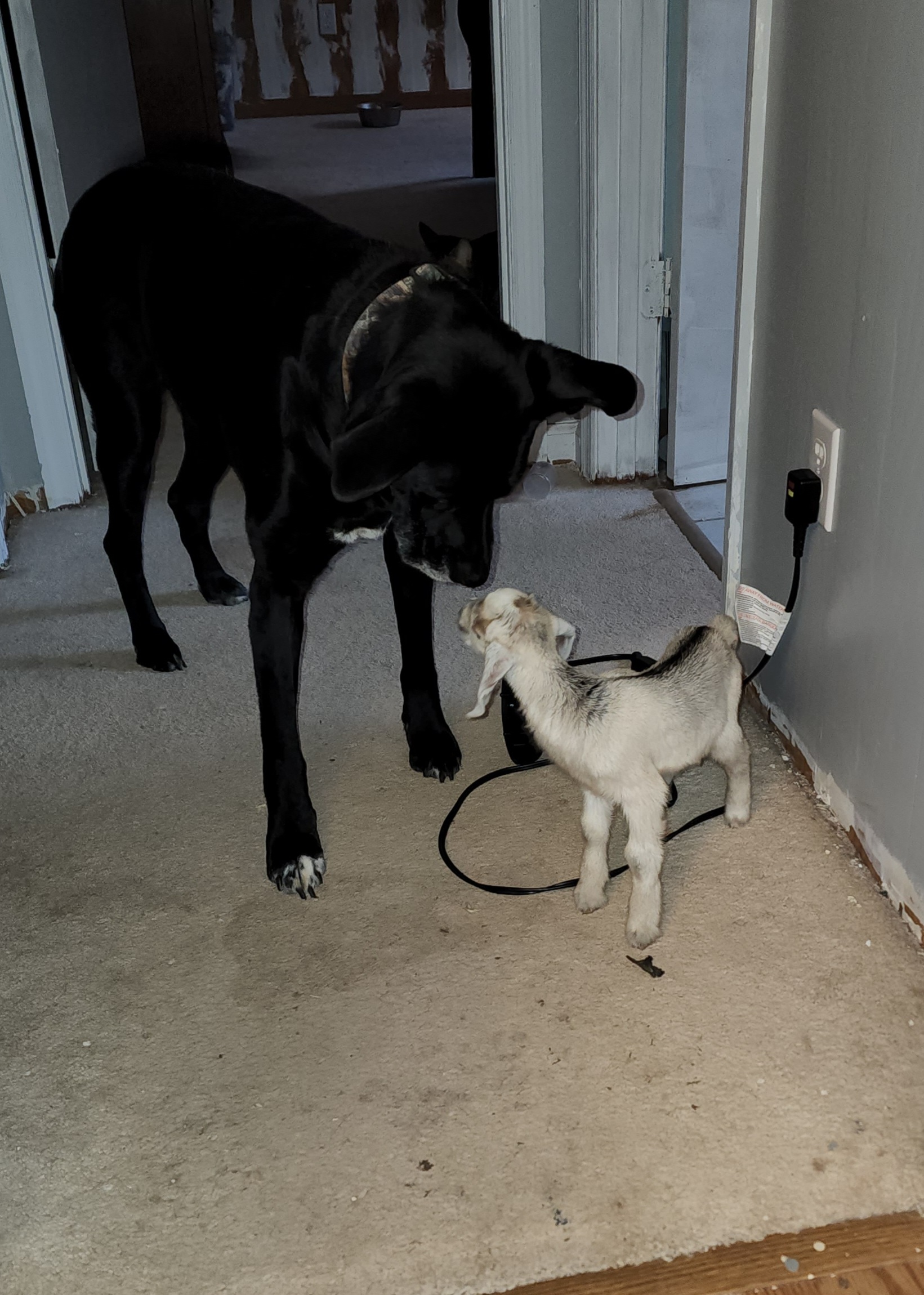
Training Bear was really easy because I have spent the last 11 years telling him exactly what I wanted him to do. From the time we brought him home from the pound at 6 weeks old, he took to training beautifully. When we moved to the farm, he already knew my “no” commands. He knew how to sit, down, and stay. So all I really needed to do was get him to come when I called him.
At this point in Bear’s life, I am not super worried about him not coming immediately when I call him. I trust that he isn’t going to run off, hurt the animals, etc. He’s 11 years old, all he wants to is hangout with me and sleep in the sun.
Training Blu
Next is Blu. She is a German Shepherd/ Great Pyrenees cross and she is 3. She is the first female dog I have had in a decade…. and she will be the last. While she is a damn good dog, she has been extra challenging to raise up. Part of that is the shepherd, part is the Pyrenees, and the last part is because she came to us at 4 weeks old. To this day, she chases chickens but her recall is just about perfect and she can be trusted with the goats.

The day we moved to the farm, I went and picked up Blu. Her breeder wanted the pups gone by 4 weeks old which is absolutely not ideal. In fact, dogs really should be with mom until 12 weeks old, but it is what it is.
Her training consisted of her becoming our shadow on the farm. That meant that she was leashed to us when we went outside or on the lead/ long line if we needed to be able to move around without her tripping us up. Once she learned recall, we put her on an e collar. It took her a while to full learn recall by the chime on the collar but eventually she did. Unfortunately, Blu is extremely stubborn and we have had to use the electric feature (always as a last resort) to pull her off the chickens.
Also, I knew that we were going to have chickens and ducks. But when she was about 12 weeks old, we brought goats to the farm. She learned a very valuable lesson when she started barking and growling at Bella. Bella rammed and rolled her. While I didn’t love it, and I knew that it could cause a fear response in Blu towards the goats, it worked exactly how I wanted. Because Bella rammed and rolled Blu, she taught Blu a lesson that we just couldn’t: sometimes the prey fights back. Blu is significantly more leery of the goats.

Are you getting overwhelmed in the garden? Stressed? Or just not enjoying the garden like you used to? Check out our garden prompts! We send out weekly emails that get you back in the garden and out of your head! Turn the garden back into a place of love and joy instead of frustration and headache!
Training Kodiak
Then we have Kodi (or Kodiak). This is Chase’s dog, my favorite Grand-pup and the largest of all the dogs. Kodi came from the pound and was labeled a St. Bernard. He’s actually a Leonberger and is fantastic with literally anyone that comes to the farm. He’s great with the goats and poultry. In fact the only “downside” about him is that he is a runner. Which is how we got him from the pound in the first place.
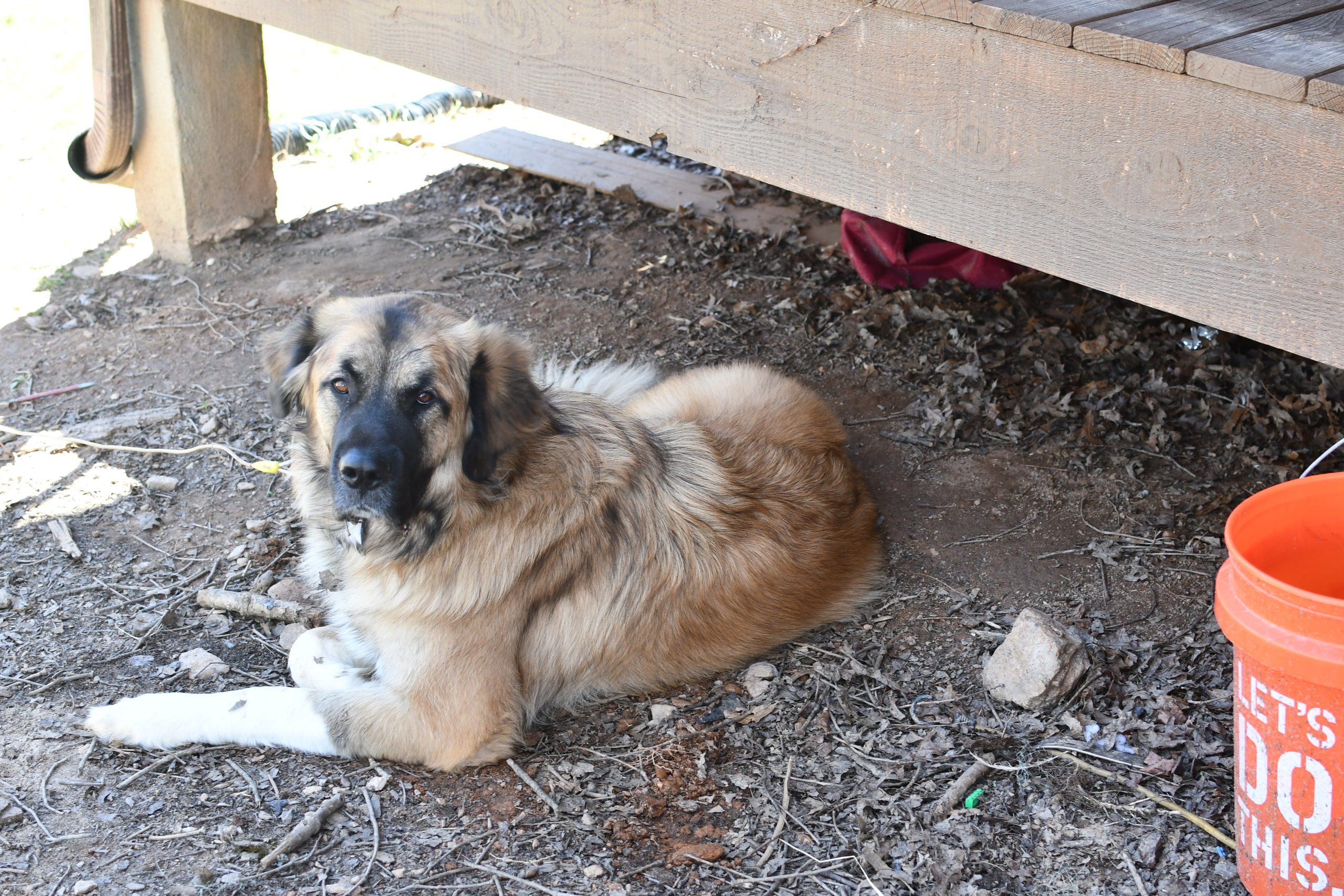
Kodi’s training was longer in some areas but was lightening fast in others. For example, he was immediately great with the animals and livestock. But his off leash training is still a work in progress 2 years later. He’s got great recall about 99% of the time. But that 1%? He’s gone.
But I can take him into the goat pens without a single worry. Baby goats absolutely love him and he loves them. In fact, I asked Chase (it’s his dog after all) if he would be willing to let Kodi stay outside and be an LGD… But he said no.
Training Fenrir
Lastly, we have my beloved Fenrir. Fen is new to the farm. We got him in August of 2023 and he has become an absolutely amazing farm dog. I have a tendency to find and fall in love with rescues, which can lead to really big issues on a farm. Fortunately, Blu and Fenrir are best buddies and he follows her around. This is great when it comes to recall but kind of sucks because he shares her tenacity to chase chickens.
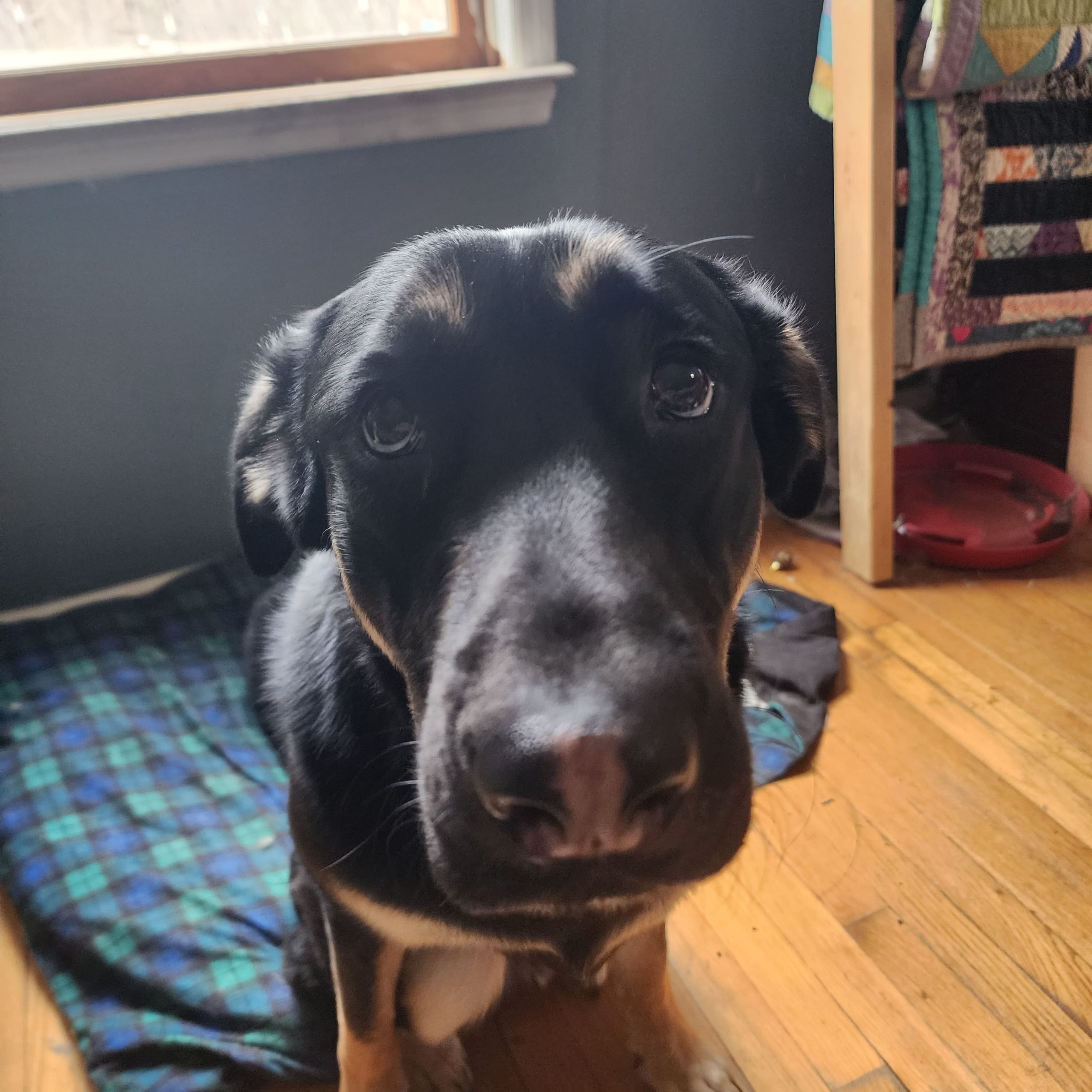
Unfortunately, Fenrir has really, REALLY bad hips. He has pretty severe hip dysplasia. The kind where no matter how careful we are with keeping his weight under control, exercise in moderation, supplements, etc he could jump off the couch and break his hip.
As far as his training, we are focusing on his animal training right now. He is okay around the big goats because they will ram him when he gets too close or rowdy. The babies are squeaky toys so when they start bouncing and screaming, it freaks him out. So I take him into the goat pens and just hang out with him. By keeping everything calm, he gets to become familiar with the baby goats and everything stays positive. The chickens will take longer but ultimately a firm “No” when he starts chasing is all he needs.
Bringing City Dogs To The Farm
Bear is not the only dog that we brought to the farm when we first bought the property. We also had Diesel and Shiloh. Diesel was Chase’s dog. Diesel loved everyone, but he was Chase’s dog. Those two were thick as thieves. He was a rescue that was so sweet and gentle despite the fact that he was 100+ pounds.
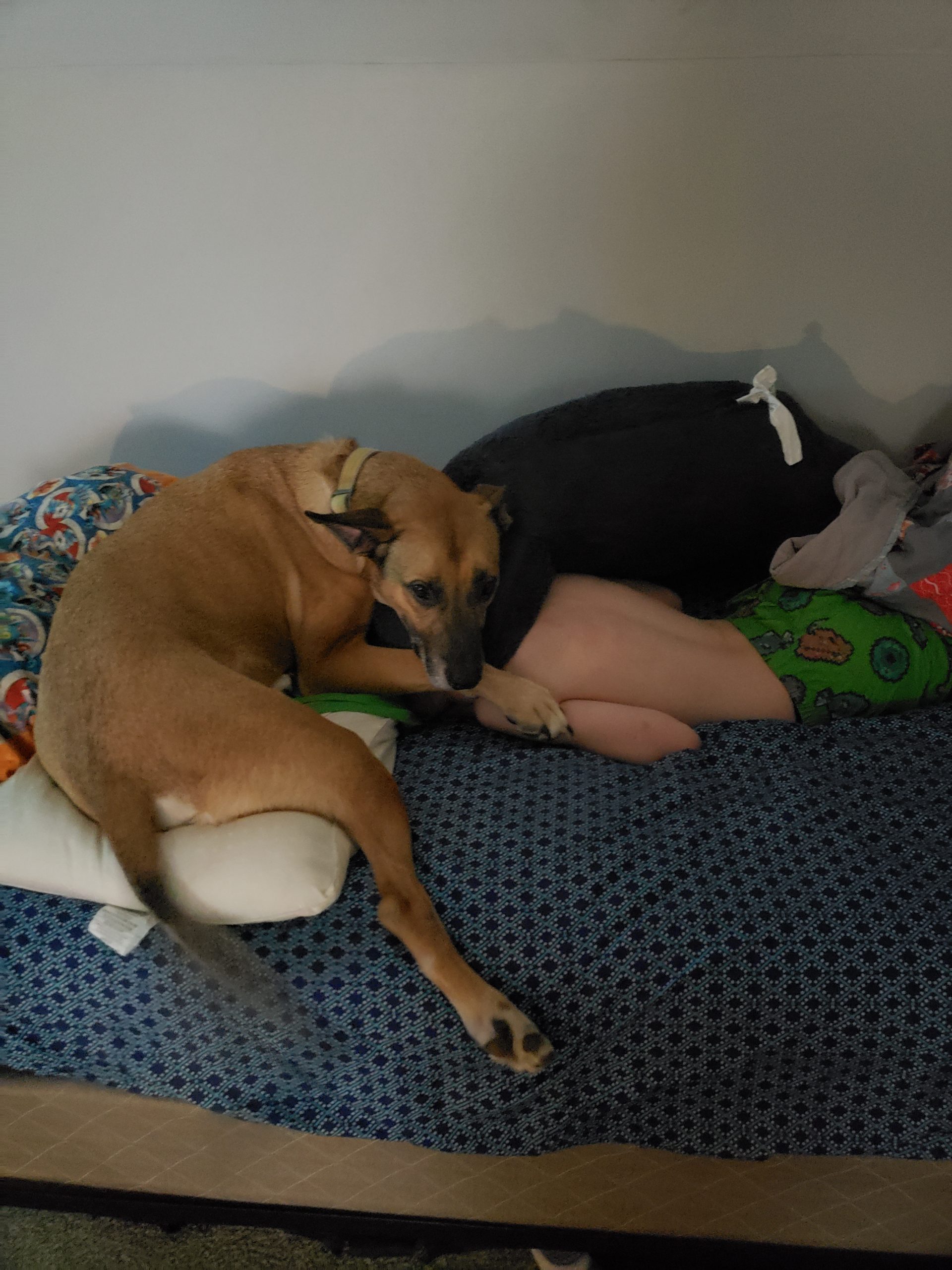
Shiloh was a German Shepherd/ Alaskan Malamute cross. He was my baby and he got me through some REALLY hard times. We would go hiking all the time and I was so excited to bring him to the mountains that we so loved. He was my soul dog. The first dog in my entire life that I felt so connected to it was ridiculous. But within 3 days of bringing them to the farm they ran away, never to be seen again.
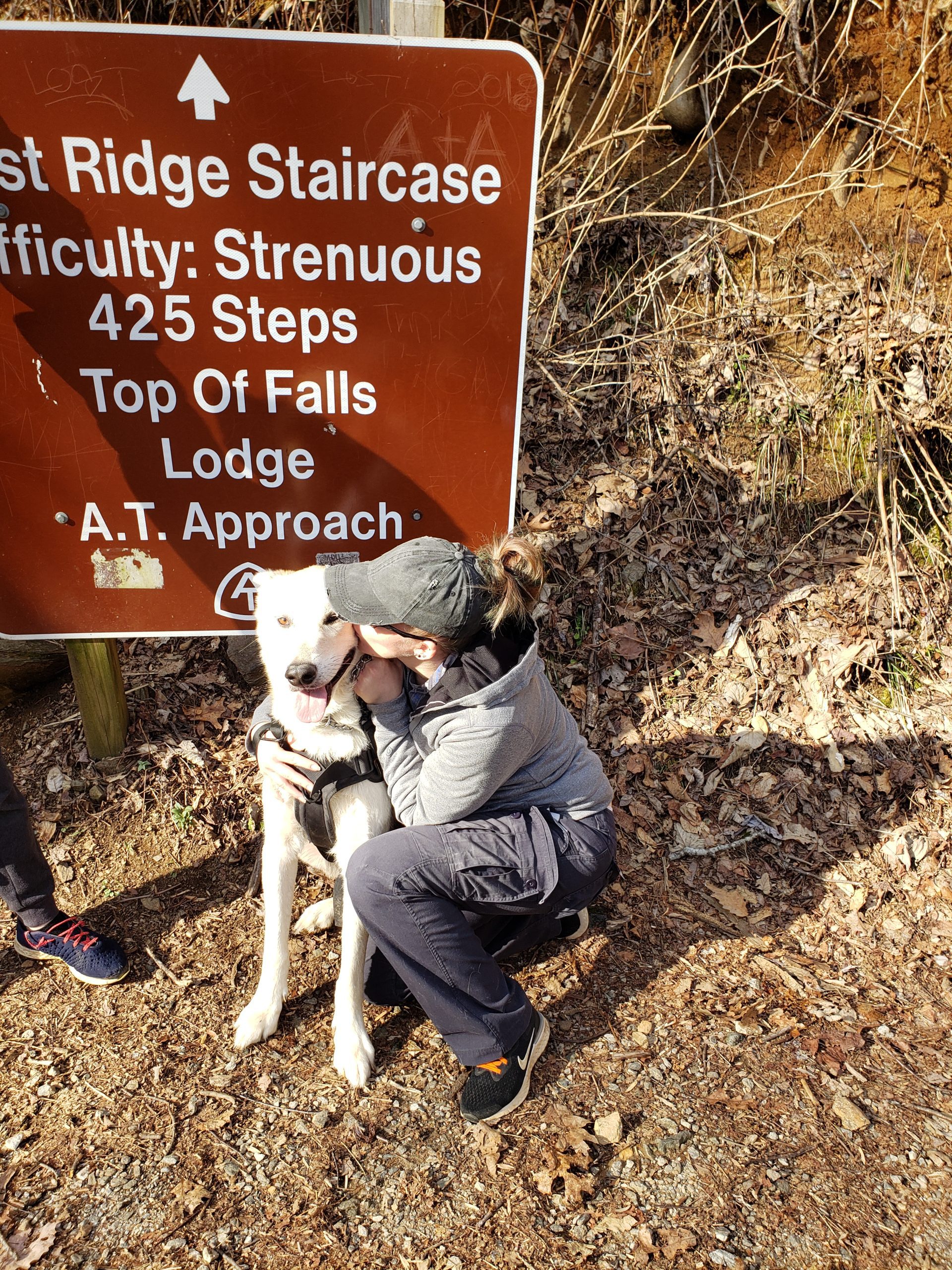
Bringing city dogs to the farm is usually not going to be a problem. But sometimes, you just have dogs that are not well suited for this life. Diesel would have killed every single animal that we brought to the property. Shiloh would never have learned recall. While it hurts like hell that we lost them, they were not suited to this life.
While I stand firmly by my statement that any dog can be a farm dog, some dogs will take WAY more effort to train up.
Training My Farm Dogs To Go Off Leash
Before I end this post, I wanted to give you one my tips on how to start training your dog off leash. First and foremost, your dog needs to be “trained” with animals. Because the reality is that if your dog is not good with livestock, the very last thing they need to have is off leash training around livestock. So if Fido won’t “leave” the chickens alone, being off leash just means you have ZERO control over the situation.
Now, assuming that your dog is great with livestock (or you don’t have livestock yet), off leash training starts with your bond with the dog. If your dog isn’t happy to see you, receive love from you, want your attention, etc, it’s going to be really hard to get them to come to you.
If you and your dog are bonded, we start on a long line like this, start with about 15ft. The goal here is to allow them to have enough “rope” to keep the leash slack and then you call the dog. When the dog comes to you, praise them, give them treats and love. Make it a big deal! Then do it again, and again, and again, until the dog comes to you every single time. Then graduate them to a longer line, 30-50ft. And do it again, and again, and again.
The Ultimate Homesteader’s Starter Bundle – Only $47!
Get the tools you need to stay organized, track profits, and manage your homestead with ease!
Includes:
✅ Schedule F Tracker – Simplify tax prep
✅ Profit Calculator – Track earnings
✅ Hay Calculator – Plan livestock feed
✅ Garden Journal – Digital & printable
✅ Herd Health Tracker – Monitor animal care
✅ Simple Budget – Manage finances
✅ Backyard Homestead eBook – Essential tips
$99 value – now just $47! Start your homesteading journey today!
Once you are comfortable with their level of recall, graduate them to an e collar. I’m going to offer some advice with the e collars. I do NOT encourage the use of the shock setting. In fact, with Kodi, I don’t think I’ve ever had to use it. But there are situations in which using the shock setting is necessary. Like your dog attacking an animal, about to get hit by a car, or other life or death situations, which I talk about in this post. If you feel it necessary to use the shock feature, start at the lowest setting and work your way up. We aren’t trying to hurt them, just break their attention off the thing and on to you.
This is the collar that we use for our dogs. Now is the time to be extremely patient. Some dogs don’t care about beeping, other dogs will panic. Same thing with the vibrate and shock. How I train my dogs on the e collar is to work on a long line (30ft) and continue work on their recall. I will recall and do the beep. When they come to me, I praise like crazy. And then do it again, and again, and again.
Tip: If they play fetch, this is the PERFECT time to work with the e collar because they are getting rewarded every time they hear the beep.
Once they have perfect, or near perfect recall, I will take off the leash. I will not them get more then 5ft away before recalling them. And then praise, give treats, a toy, whatever they want. And then do it again and again and again. Once they come back, I graduate their “invisible” leash around me. I let them go 10ft, 15ft, and so on until they come back EVERY TIME. This can be nerve racking but trust the process.
If the dog panics with the beep button, I just talk to them and work through the fear. Or, I will change the tone of the beep to something softer. Which is why I really like the e collar I linked above. It has a range of settings to fit the dog. Normally, the beeping or vibrate is just scary because it’s new. After a little bit, they won’t mind it so much.
I really hope this helps you and your dog become successful on your farm. Just remember, every dog can be a farm dog as long as you are willing to put in the work.
Other Posts From Training A Farm Dog Series
Tips, Tools and Hacks For Training Farm Dogs
Commands For Training Farm Dogs
If you like the content I put out, feel free to buy us a coffee! It helps keep this site running, marketing and the goats in grain!
Buy me a coffeeIf you like this post, feel free to share it and follow us below on our social media accounts!
Leave a Reply