• Skip to primary navigation
  • Skip to main content
  • Skip to primary sidebar
  • Skip to footer

Steel Raven Farms

Where muck boots meet ground.

  • Animals
    • Chickens
    • Farm Dogs
    • Goats
  • Garden
    • Compost
    • Garden Projects
    • Seeds and Plants
    • Garden Journal
    • Working With Food
      • Recipes
      • Freezing Foods
      • Dehydrating Foods
      • Canning Tips And Tricks
        • Canning Inventory Sheets
  • Helpful Info
    • Welcome to the Homestead!
    • Emergency Preparedness
    • Frequently Asked Questions
    • Goal Setting
    • Project List
    • Shop Digital Products
      • Hay Calculator
      • Farm Expense And Income Tracker
      • Goat Crash Course: 101
      • Garden Journal Prompts
      • Schedule C Tracker
      • Schedule C Tracker
      • The Homestead Bundle
  • The Truths
  • Episode List
  • Start Here
    • Privacy Policy
    • Affiliate Disclosure
    • Let’s Get in Touch
    • Members Only Library
    • Welcome To Our Homestead

Canning

How Many Jars Do You Need For Canning?

May 7, 2024 by Leigh Leave a Comment

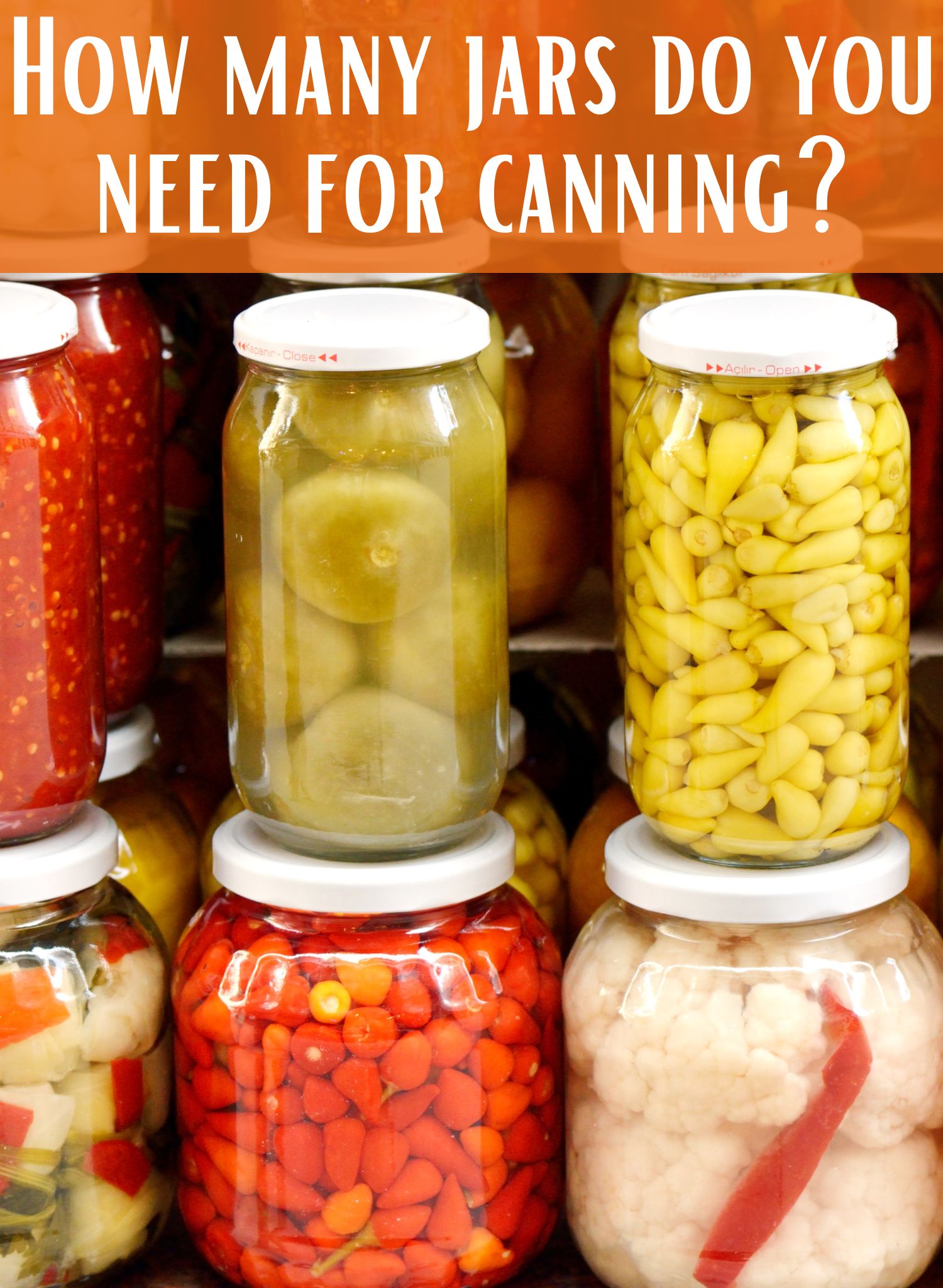
Well, the short answer is all of them. No, I am not exaggerating. When you are gardening to produce food for your family, chances are you would like to preserve some of that harvest for the rest of the year. Or if you are trying to take advantage of a produce sale? Better to have too many jars than not enough. While you can Google recipes all day long, I am more interested in the nitty gritty deals that most people forget to tell you about. Like how many jars do you need for canning? That all depends on your goals.
The Ultimate Homesteader’s Starter Bundle – Only $47!

Get the tools you need to stay organized, track profits, and manage your homestead with ease!

Includes:
✅ Schedule F Tracker – Simplify tax prep
✅ Profit Calculator – Track earnings
✅ Hay Calculator – Plan livestock feed
✅ Garden Journal – Digital & printable
✅ Herd Health Tracker – Monitor animal care
✅ Simple Budget – Manage finances
✅ Backyard Homestead eBook – Essential tips

$99 value – now just $47! Start your homesteading journey today!

Buy Now

Before We Jump In

I’ve written a couple posts on canning, so I don’t feel the need to sound like a broken record. But if you haven’t already, check out my post on gearing up for canning season, my homestead buying guide, and my shelving systems. Trust me, you will be glad you did…. at least for the shelves.

Next, we need to ask some questions before we determine how many jars you need for canning. If you are a beginning homesteader or canner, you will need to answer some questions like the ones below.

Are you looking to supply food for the entire year?

If you are looking to supply your family with an entire year of tomato sauce, you need to look very carefully at how much tomato sauce you currently buy or make. For us, we eat spaghetti about once a week. That means I need at a minimum 52 jars of tomato sauce.

The next question is, is that enough? For us, 52 jars would be gone in about six months. Because we also make chili and other things with tomato sauce. Or we will double or triple recipes because we need left overs for work. It’s the same way with green beans, corn, peas, pickles, etc. If I only can enough for what we use, we will be out in no time. That lesson was learned the hard way.

If you are new to heating with firewood and are looking to master the finer points of it. We’ve got a great eBook that goes in depth of what tools you should consider, how and where to stack, how to build a fire and so much more!

Buy Now

How many people are you feeding?

We are a family of four. But we homeschool and work 24-48 hour shifts. That means that we need left overs. Also we have two growing boys and that means we are also feeding I’m hungry, it’s not mine, and I didn’t do it. So when I am making my projection list for canning, I round WAY up.

What is your skill level with canning?

If you are a novice canner, you need to really consider if you are capable of canning more complex items like soups or stews. It’s not that soups and stews are SO hard to do. It’s actually more of a do you understand the actual process of canning.

For example; if your favorite soup has noodles, do you know that the noodles will turn to mush and become inedible. Same thing with rice, zucchini and other foods that are not as hardy. I’m a advanced but not pro level canner. I still make mistakes. So I know that I need to pay attention or all that hard work will be for not.

Before we get too far into this, I have a great course on the basics of goat care. I call it Goat Crash Course: Goat 101. In this course, I explain things like types of shelter, types of feeds and hays, basic assessments and so much more! Check it out!

Buy Now

Where are you going to put the jars?

I am extremely lucky that I have a full basement. I have sectioned off an entire food storage room. When it’s finished it will have walls, air vents, and a dehumidifier. Jared has also built me these fantastic shelves.

BUT if you don’t have that, you really need to consider how much you can actually can. If you have a tiny pantry, no basement, or other place to put them, you need to get really creative with where stuff will go.

I’ve seen under the bed storage systems for jars that will blow your mind. Keep in mind that your jars should be stored in a cool, dark place. So in a garage that is not temperature controlled probably isn’t the best idea.

Are you buying produce, or are you growing it?

We buy and grow a lot of our produce. Unfortunately, we can’t grow everything we need right now. That’s okay. It’s in the works to grow all the corn we need for a year. But it’s not here yet. If there are financial or garden space constraints, it’s better to identify them now.

Either way, knowing where you are going to source what goes in your jars is another key point in figuring out how many jars you need for canning.

The Ultimate Homesteader’s Starter Bundle – Only $47!

Get the tools you need to stay organized, track profits, and manage your homestead with ease!

Includes:
✅ Schedule F Tracker – Simplify tax prep
✅ Profit Calculator – Track earnings
✅ Hay Calculator – Plan livestock feed
✅ Garden Journal – Digital & printable
✅ Herd Health Tracker – Monitor animal care
✅ Simple Budget – Manage finances
✅ Backyard Homestead eBook – Essential tips

$99 value – now just $47! Start your homesteading journey today!

Buy Now

How far away is your local store?

Our local Wal-Mart is about 25 minutes from us. So if I run out of jars, lids, or anything else, I can get to it pretty quickly. The downside is, when it’s canning season in a farming community, there are no jars. You would be lucky to find anything.

Last year, I bought brand new cases of jars because Wal-Mart had no lids! The only way I could get them was to buy the entire set up. Which is fine! I needed more jars anyways.

If your local store is more than an hour away, I would make sure to always have extra jars on hand. Maybe 1 or 2 cases per type of jar.

So how many jars do you need for canning?

I hate to break it to you, but there is no magic formula here. After you answer the questions above, you can get a much better idea for how many you need. BUT I’m not going to leave you hanging. If you are a beginning homesteader and you are trying to figure out a realistic number, I will tell you what I did.

Our herd health bundle helps you keep track of your herd’s health. Includes the goat assessment, herd check sheets AND Herd Health Tracker!

Buy Now

I buy 2 cases per size, per person, per meal.

And yes, it is a TON of jars. Part of my yearly canning list looks something like this:

52 quarts and pints of corn

52 quarts and pints of green beans

104+ quarts of tomato sauce

50 quarts and 25 pints each of: chicken noodle soup base (no noodles), beef stew, enchilada soup, taco soup, beef roast, potato soup, and chili.

25 pints of salsa

25 quarts of pickles

50 quarts each of pinto, black, kidney beans

100+ jars of potatoes

We are a family of 4 and again, we need to have enough for left overs, lunches, if the boys are home alone for the day, etc. This helps to make sure that even if we don’t eat all that corn, we have some for next year.

Are you getting overwhelmed in the garden? Stressed? Or just not enjoying the garden like you used to? Check out our garden prompts! We send out weekly emails that get you back in the garden and out of your head! Turn the garden back into a place of love and joy instead of frustration and headache!

Subscribe Now!

How many jars do YOU need?

Figuring out how many jars you actually need is going to come down to how much you enjoy canning, your storage, and your finances. Some people can’t afford to drop $12-$20/ person/ meal on jars.

At the end of the day, it’s really about what you can afford. If you can only afford two cases at a time, get them! Trust me, you will use them eventually. As you get more comfortable with canning, or you need to start making your own dog food, thanks Bear, you will appreciate having those extra cans.

Also please for the love of all that is good in this world, pick up lids every single time you see them! Come canning season, they have disappeared! Or you can buy reusable lids like Tattler. PS go to their website, they are a TON cheaper!

If you like the content I put out, feel free to buy us a coffee! It helps keep this site running, marketing and the goats in grain!

Buy me a coffee

If you like this post, feel free to share it and follow us below on our social media accounts!

  • Facebook
  • Pinterest
  • Instagram
  • YouTube
  • TikTok
  • Spotify
  • Threads

Filed Under: Canning, Garden, How To's Tagged With: Canning, cooking, Homestead, kitchen

JOIN TO OUR MAILING LIST!

Leave us your email to receive new posts and special offers for members only! Don't miss a thing!

Recent Posts

  • Fall Garden Guide
  • Top Mistakes With Goats
  • How To Bond With Your Goats

Canning Dried Peas

April 27, 2024 by Leigh Leave a Comment

Jump to Recipe

I combed the internet looking for how to can dried peas and came up with very little. Most posts where about canning beans with a little footnote about canning dried peas. Below I’m going to walk you through the step by step process of how to take those little dried marbles and turn them into a shelf stable jar of food that saves me a ton of time.

goat kidding

Before we get too far into this, I have a great course on the basics of goat care. I call it Goat Crash Course: Goat 101. In this course, I explain things like types of shelter, types of feeds and hays, basic assessments and so much more! Check it out!

Buy Now

Why Not Buy Canned Peas At The Store?

The short answer is because it’s expensive. A single can of good quality peas is easily $1.50 by me, but I’m cheap and the store brand is usually about $.60. When I buy food, I buy a lot in one shot. So by the time all is said and done, I’ve spent about $15 to $36 on 24 15oz cans of peas. Is that a lot? No. But I feel better knowing that the only thing in my jar of peas is peas.

The other part is that whole dried peas are a ton cheaper as well. I can buy a 10# of whole split peas for $15. Plus, if they are kept “right” they can last for a long time on the shelf just like they are. If I don’t want to can 10# of peas in one go, I can put them in a mylar bag with some oxygen absorbers and store it.

The reason I choose to can dried peas is because dried peas take a LONG time to cook. I have zero desire to stand in my kitchen that long so I go ahead and can them.

Canning Dried Peas

This recipe is the one I came up with a couple years ago and just followed the guidelines for beans. If you are a strict follower of the Ball Bible? Maybe not follow this recipe. I found Ball’s recipe produces very mushy peas that did not hold well. Since I don’t mind breaking the rules and this recipe is mine, you take on all risks associated with following it. I’ve never had a problem in all the years I’ve canned like this, but I can’t guarantee your kitchen or skills.

This method of canning peas is called dry canning. I’m not really sure why because when you dry can potatoes, you don’t add any liquid, on this one you do. I think the difference between the two is that when you are done, your peas should have soaked up most of the water.

You can find all the supplies you need on this blog post.

Step 1:

You should always be in the practice of soaking your peas or beans. This helps get all the dirt and debris off your peas and that was in the bag. However, I’ve never soaked peas or beans because there has never been a problem. I do rinse them though.

Step 2:

If you have soaked your peas, GENTLY, scoop your peas with either a cup (for quarts) or half cup measuring cup (for pints) and put them in your mason jar. If you haven’t soaked them, you don’t have to be as careful but I wouldn’t be overly rough either. Also, I suggest wide mouth but whatever works for you. At this point you can add salt if you wish, we don’t. 1 teaspoon for quarts 1/2 teaspoon for pints.

Step 3:

I work in batches, so I only fill however many jars my canner will hold. Also, I only can peas in pint jars. I don’t have a lot of use for a quart of peas. So I will fill 10 jars with peas, then fill the rest with water leaving 1″ head space. This allows for expansion of the pea.

Save on Seeds

Step 4:

Fill your canner with the recommended water amount. My Presto 23-Qt with 3 quarts of water but be sure to check your manufacture recommendations. Then add your filled jars to the canner.

Step 5:

Bring your canner up to pressure by using your manufacture recommendations. I will usually fill my canner with 3 qts of hot water and put the burner on high. Then as my canner is reaching temperature, I will fill my jars with hot water. After about 5 minutes I will secure the lid. 10 minutes after that I add my weight. I process for meat times 90 minutes for quarts and 75 minutes for pints. For my altitude I use a 15# weight.

Logo 468x60

Step 6: When you are done processing your jars, let the canner naturally depressurize. This can take a long time but don’t rush it! Once it’s depressurized, you can use your jar grabber and take your jars out to cool on a towel. Make sure to label!

That’s really it!

Pressure Canning Dried Peas

I’m going to give it to you straight, you CAN can dried peas. But just because you can, doesn’t mean you should. Pressure canning dried peas creates a mush that is hard to get out of a jar. On top of that, they are extremely mushy and not a good texture.

I would not throw away the pints and pints of peas in my basement, because I think they could be put in stews or made into split pea soup. But to eat as a side? Probably not.

I will still purchase dried peas and I will probably put them in an instapot before I canned them again. Not my favorite way to enjoy peas.

That being said, I would definitely dehydrate or freeze them.

Can Dried Peas

Pressure Canning Dried Peas

Print Recipe Pin Recipe
Ingredients Equipment Method

Ingredients
  

  • 5 Lbs Whole Peas
  • Salt if desired

Equipment

  • 1 Pressure Canner
  • 2 Cases Pint Jars
  • Basic Canning Supplies

Method
 

  1. Rinse peas and disguard any rocks, bugs, etc that may be in the bag. I've never had this problem so to be fair, I don't usually rinse.
  2. Scoop 1 cup of peas into a quart jar or 1/2 cup into a pint jar
  3. Fill the rest of the way with water, making sure to leave 1" headspace
  4. Optional! Add 1 teaspoon for quart or 1/2 teaspoon for pint
  5. Fill your pressure canner with water to manufacture recommended level
  6. Add jars to canner
  7. Process for 90 minutes for quarts or 75 minutes for pints
  8. Allow canner to completely depressurize before opening
  9. Once depressurized, pull out jars and place on a towel until you hear the beautiful *ping*
  10. If any jars fail to seal, refrigerate and use within 4 days.
  11. Be sure to label your jars!

Filed Under: Canning, Canning Recipes, Recipes Tagged With: Canning, cooking, kitchen

JOIN TO OUR MAILING LIST!

Leave us your email to receive new posts and special offers for members only! Don't miss a thing!

Recent Posts

  • Fall Garden Guide
  • Top Mistakes With Goats
  • How To Bond With Your Goats

How To Set Up A Garden Journal

April 23, 2024 by Leigh Leave a Comment

Much like everything else that is homestead related, there is no one size fits all approach to a garden journal. I wish there was because it would make it easier to just have someone tell you what to do and it work 100% of the time. Unfortunately, that’s not the case. The next best thing that we can do is try different things until something works. Today, I’m going to show you how I set up a garden journal and give you the high points of how to start yours.

garden journal

Before we get too far into this post, I wanted to give a suggestion about keeping a garden journal. A digital garden journal is a fantastic way to keep track of past, present and future gardens. Our Digital Garden Journal is a great way to keep up with everything without getting too overwhelmed.

Buy Now

What Is A Garden Journal

A garden journal is exactly what it sounds like. It’s a journal that details your gardens throughout the years. Yes, years. In the first year, you may notice a high infestation of Japanese beetles. In your journal you would make note of the beetles, an estimate of how many beetles, when you first noticed them, what plants they were attracted to, any treatments you did to get rid of them, etc. The next year as you look through your journal, you remember that you had a problem last year, and you can be proactive this year.

How To Set Up A Garden Journal

Everyone will have a different set up based on what they are growing, where they live, and so on. But here are some starting points. If you aren’t sure where to start, you can purchase my garden journal printable in our general store.

The Binder

I think that the best thing you could do is to purchase a binder for your garden journal. I use this binder because I like that it doesn’t take up a lot of space on my desk. Plus, when I am out in the greenhouse working on seeds or out in the garden, it’s not this huge bulky thing. I also like using a binder because I can move pages around from year to year.

I have a bullet journal and while I love it, it is hard to find what I am looking for since it is chronologically done. Not a bad thing, but if I can’t remember when I did something, it was lost. Being able to look back and see that last year I planted 100 tomato seeds and only 80 germinated tells me a lot about the seeds, soil, watering, etc if I have that information available.

The Dividers

I have a TON of dividers in my garden journal, but again, I want simple and easy to find. I use these mini dividers to match my mini binder. For your dividers, you need to think about the things that you want to track. Do you want to track how many seedlings you bought? Or are you planting your own seeds? Do you want to keep track of your soil tests? What about expenses? These are all things that you need to think about so that you can keep track accordingly.

I like to know what seeds I started and when. Then I want to know my soil tests, pests and what seeds I saved. When our orchard stops getting attacked by goats, I would like to know when I pruned, harvested, and more.

Loose Paper

I use loose leaf sheets to take notes, brainstorm, etc. I get the college rule and blank to make sure that if I want to design a garden bed, I can design it on a blank sheet and write on the lined sheets. I store all the excess paper in the back of the binder. I also use sheet protectors on the important pages.

cropped-3.jpg

Are you looking for garden journal prompts, but aren’t interested in a weekly email? Check out our 365 Garden Journal Prompts! This is an amazing, all in one, yearly product that you only pay for once.

Buy Now!

For example: If I go into the greenhouse and I am working on transplants, I don’t want the pages to get dirty. Or if I have designed a garden bed, I want to be able to take that page out of the binder and take it with me to the bed. By having a sheet protector on it, I don’t have to worry as much about it getting destroyed.

Using Your Garden Journal

After getting your journal set up, you should start filling it out with the information you have. In your soil test section, you should fill out previous years soil test results. Be sure to separate years with a line or something so that you don’t get confused. If you don’t have that information anymore? Or this is your first garden? No worries, do the best you can.

When you start your seedlings, be sure to write where you purchased your seeds from. This will help you decide if that was a good buy. If you buy seeds, make sure to put where you bought them from. In your Pest section, make sure to keep track of what pests came when and how you treated for them. This will help you because next year, you can say, “In 2022, the Japanese beetles came in April and only hit the apple trees.” In 2023, you can make sure to have beetle traps or other treatments already in place.

Tractor Supply

I am the type that will write down everything because I will forget it. We had a great pepper harvest last year, but I know it could have been better if I had known only water them every 4-6 days. Because of my garden journal, I know not to water the peppers as often.

Another cool thing about my garden journal is that I have a harvest/ preservation section. This section tells me how much food I need to harvest and preserve from my gardens. I know that we eat a TON of green beans. Like, I can 100 quart jars of green beans and it’s usually gone by April. That tells me that I need to harvest at least 200# of green beans. Because I know these things, I know I need to plant a minimum of 200 pole bean plants. Same with corn and peas.

If you are looking for a great way to keep track of your gardens for years to come, check out our Digital Garden Journal. It’s a digital spreadsheet that helps you manage not only your seedlings but also your seed inventories, soil testing, orchard, harvests and so much more.

Buy Now

Lastly, in my garden journal, I have a list of monthly chores that I need to do. This helps me stay on track with the needs of my garden. Because our goal is to reduce our grocery bill by 75% in 5 years and our feed bill by 80% in 2 years, I need all the help I can get. It not only tracks the weeding, watering and planting, but it also tells me when exactly when to do those things. In April I have final fill of the garden beds, lay final layer of compost, plant after April 15th, weed weekly until seedlings are established, and so on. That way there is no guess work about what I need to do.

If you haven’t checked it out yet, you can find my garden journal printable in our general store here. There are a ton of different planners on the internet but none of them fit the style that I was going for, so I created my own.

Are you getting overwhelmed in the garden? Stressed? Or just not enjoying the garden like you used to? Check out our garden prompts! We send out weekly emails that get you back in the garden and out of your head! Turn the garden back into a place of love and joy instead of frustration and headache!

Subscribe Now!

If you like the content I put out, feel free to buy us a coffee! It helps keep this site running, marketing and the goats in grain!

Buy me a coffee

If you like this post, feel free to share it and follow us below on our social media accounts!

  • Facebook
  • Pinterest
  • Instagram
  • YouTube
  • TikTok
  • Spotify
  • Threads

Filed Under: Garden Tagged With: Canning, Garden, Gardening, Homestead, kitchen, veggies

JOIN TO OUR MAILING LIST!

Leave us your email to receive new posts and special offers for members only! Don't miss a thing!

Recent Posts

  • Fall Garden Guide
  • Top Mistakes With Goats
  • How To Bond With Your Goats

March Garden Chores

March 1, 2024 by Leigh Leave a Comment

Y’all!!! Spring is here! Well, that depends on which meteorological or astronomical seasons. But regardless, spring is either here or coming up soon! Can you tell I’m excited? The spring garden doesn’t usually do well for us here in the Southeastern US. But there is still a ton of stuff to do and I’m here to give you my March garden chores so that you can prepare your garden.

Are you getting overwhelmed in the garden? Stressed? Or just not enjoying the garden like you used to? Check out our garden prompts! We send out weekly emails that get you back in the garden and out of your head! Turn the garden back into a place of love and joy instead of frustration and headache!

Subscribe Now!

March Garden Chores

March starts the crazy season for us on the homestead. But the March garden chores can be broken down into 3 main categories: seeding the garden, cultivating the beds, and building the garden. This is also the same time that I am still gathering any tools that I may need that I didn’t get in February. While that may seem kind of lame after I just said it’s a crazy season, but keep reading and I’ll explain.

Seeding The Garden

This is hands down the most time consuming thing when it comes to the garden. Not only does it take a lot of time, it also takes a lot of mental energy. You’ve got to figure out how many seeds you are going to start, how many cups you have, how much space you have, etc.

For me, I use Seedtime to help me figure out exactly how many seeds to plant and when to start them. Seedtime has definitely made my weekly garden task list easier to manage and less of a guessing game. The garden planning feature is great on it’s own, but I tend to throw my plan out the window during the height of planting….. It’s something I’m working on.

If you are interested in learning more about my favorite garden planner. I highly recommend Seedtime! This planner has been instrumental in helping me plan out my gardens with WAY more efficiency than I could ever expect! It has also reduced overwhelm, stress, and calmed my ADD/ADHD!

More Info!

The other big part about seeding the garden is making sure that I actually have plenty of stuff to start seeds. This year, we are selling plant starts, so not only am I starting all of our seeds for our family and farmer’s market produce, but I’m also starting seeds for plant sales.

That means I need to make sure that I have plenty of pots, trays, seeds, soil, and compost. I use these seed trays, these pots, and these carry trays from Bootstrap Farmer for our personal plants and farmer’s market produce. I use these pots from Grower’s Solution for all of our plant starts that we are selling.

Logo 468x60

Cultivating Garden Beds

This is going to look different from year to year depending on your own beds. This year, we completely changed our big garden. We are installing raised beds throughout the garden to help build the soil faster. There were a lot of reasons that went into building raised beds, but at the end of the day, we now have to cultivate them.

What is cultivating? In short, it’s just preparing the beds for planting. That may look like breaking the soil just enough to be able to get your plants in there, pulling weeds, or amending beds.

In the kitchen garden, cultivating looks like taking a couple loads of goat bedding and soil to each bed and filling them up a bit more.

In the big garden, we won’t start cultivating beds until closer to April. This is mostly due to the fact that we haven’t gotten them built yet…. oops.

But the biggest part about cultivating is making sure that all the weeds are out, leaves from fall are moved to the compost pile, and you are ready to plant.

cropped-3.jpg

Are you looking for garden journal prompts, but aren’t interested in a weekly email? Check out our 365 Garden Journal Prompts! This is an amazing, all in one, yearly product that you only pay for once.

Buy Now!

Building The Garden

If you are in March, your garden should already be built. BUT if you’re anything like us, you are probably still building your garden because the timeline got pushed until the breaking point. In our defense, we both work full time jobs, homeschool and February-April is kidding season. So we are slammed trying to get everything done.

We start planting our gardens around April 15th, pending a frost free 10 day forecast, which means every single bed must be built, filled and prepped by April 1st. If we are not building beds, like in our kitchen garden, it looks like repairs, cleaning up, adding compost, soil, or animal bedding.

Building the garden also looks like fencing, gates, seating areas, trellising, and other supports. So even if you aren’t building beds, you may need to be thinking about and sourcing these items. We may not be able to get the gates installed, so we will end up falling back on using pallets. That means that I need to get ahold of pallets and gate hardware. Or figuring out how to get cattle panels to the farm and then up up for trellising.

Our big garden is also getting a gazebo/ pergola this year. In fact, we can’t even finish building the back left side of the garden until the gazebo is built. We are doing this to make sure that we have PLENTY of space between beds and aren’t trying to squeeze things where they don’t fit.

Gathering Tools

Everyone is different when it comes to their planting times. That means that you may not be ready to start seeds yet. But you still need to start gathering up any tools, pots, soil, compost, seeds, etc. If you are a new gardener, you may not know exactly what tools you need. Or maybe you’re not ready to start your own seeds. That’s totally cool.

The main tools that you will need are a good set of pruners (I prefer Fiskars brand). There are a ton of different kinds of pruners, but getting a small and larger set will get you started. I would also suggest getting at least two… you will lose them.

I would also suggest a good set of hand tools. I’m not saying you should get this set, but I would suggest that you get at least the hand trowel, cultivator and large trowel.

March Garden Chores: Planting!

For us, we are usually able to start planting stuff in March. I’ll be planting carrots, broccoli, cabbage and cauliflower around the first of the month. Hopefully, our cool nights will allow us to actually get a harvest….

What are your March garden chores?

If you like the content I put out, feel free to buy us a coffee! It helps keep this site running, marketing and the goats in grain!

Buy me a coffee

If you like this post, feel free to share it and follow us below on our social media accounts!

  • Facebook
  • Pinterest
  • Instagram
  • YouTube
  • TikTok
  • Spotify
  • Threads

Filed Under: Garden Tagged With: Canning, compost, Garden, seeds

JOIN TO OUR MAILING LIST!

Leave us your email to receive new posts and special offers for members only! Don't miss a thing!

Recent Posts

  • Fall Garden Guide
  • Top Mistakes With Goats
  • How To Bond With Your Goats

What Is Steel Raven Farms?

January 2, 2024 by Leigh Leave a Comment

To put it simply, Steel Raven Farms is my farm…. Well, Jared and my farm. It’s a legacy that we are leaving for our kids, grandkids and anyone that we can touch. What started out as a day dream has turned into this huge thing that I am so incredibly proud of. But to start, let me show you my farm.

The Ultimate Homesteader’s Starter Bundle – Only $47!

Get the tools you need to stay organized, track profits, and manage your homestead with ease!

Includes:
✅ Schedule F Tracker – Simplify tax prep
✅ Profit Calculator – Track earnings
✅ Hay Calculator – Plan livestock feed
✅ Garden Journal – Digital & printable
✅ Herd Health Tracker – Monitor animal care
✅ Simple Budget – Manage finances
✅ Backyard Homestead eBook – Essential tips

$99 value – now just $47! Start your homesteading journey today!

Buy Now

How Steel Raven Farms Was Born

There was a really long time where I wanted something that I just couldn’t name. I had this yearning for something different than the standard American dream. I didn’t want the white picket fence in suburbia. I didn’t want a perfectly manicured lawn. And I didn’t want the perfect house with the perfect kids. That’s not even close to who I am. But I couldn’t put my finger on the THING that was missing.

Check out our Microgreens at True Leaf Market

City Kids Turned Rural Adults

Jared and I grew up as city kids and moved a LOT. We always lived in suburbia in various houses and apartments. When we got married at the ripe old age of 18 and 19, we continued on that path.

I’ve always loved planting things and I’ve always tried to grow a garden. But with constant moves, it was damn near impossible. Then I said screw it and planted a small garden in my front yard of our on post house on Fort Hood. I grew and harvested my first carrot and some potatoes and I was HOOKED.

When we bought our first house in Texas, I planted our first “real” garden and I absolutely feel in love! I started trying to figure out how we could do more of it. But we were stuck in the middle of this tiny town and couldn’t move.

Save on Seeds

After a move back to Georgia, and a couple more moves, we finally landed on our slice of heaven in Habersham County, GA in the foothills of the Appalachian Mountains.

Searching For Peace

Throughout my life, I kept searching for this thing. Like I said above, I just couldn’t put my finger on whatever it was that I couldn’t find. The closest I ever came was the various gardens I planted. But I never put two and two together until we moved here.

Jared and I haven’t always had the relationship we have now. I’ve realized over the last 5 years, that we were both searching for this THING and we were making each other miserable.

When we moved to our property and took our first real breath, we discovered what this THING was, we had finally found peace.

Steel Raven Farms Was Born

When we were preparing to buy this property, we started doing a ton of research. What did we want to do with this property? We knew we wanted to grow our own food and raise as much of our meat as possible. But what else?

Then as we were getting ready to close on the property, I decided the farm needed a name. Something that we could call it that gave it an identity and make it ours.

Logo 468x60

So I got on Google and started looking at various symbols, mythology, and pagan held beliefs.

We chose Steel because it is hard, rigid, and stubborn. But it also means strength, purpose, and honor.

We chose Ravens as a nod to our heritage but also because ravens are inquisitive, intelligent, mate for life. There is also a ton of symbolism behind them like ancient wisdom, partnerships, adaptability, and transitions.

We chose Farms because at the end of the day, we are working towards retirement with the farm being our income source. I talked here about the difference between a homestead and farming. There wasn’t much mystical or symbolic about that one I’m afraid.

Where Steel Raven Farms Is Going

I always have a plan and where my farm is going is no different. The end goal of Steel Raven Farms is a legacy for our family. But there are so many parts and pieces to get there. We must maintain our peace while also pushing the needle to the end goal. We have this huge goal of growing 75% of our and our animal’s food on farm. But mostly? We want a place that is full of learning.

Pushing The Needle, While Maintaining Peace

I think the most important thing I have learned since starting the farm, was realizing that it is okay to push the needle hard but also be able to back off and enjoy peace. In my podcast about Struggling With Overwhelm, I talked about the internal struggle that most millennials have. We were taught that we can’t play until our chores, homework, etc were done. But that creates an environment were, as adults, we can’t relax because there’s so much to do!

Logo 468x60

I have discovered that by creating time within my day to relax and take time for myself, I am able to push that needle. All while avoiding burnout and risking my peace.

What that looks like for Steel Raven Farms, is growing bigger gardens without forcing the land to give what it’s not ready for. It includes setting up infrastructure to allow for scaling up but not requiring it. Or allowing myself a hobby that has nothing to do with the farm.

Check out our Microgreens at True Leaf Market

Setting Goals But Being Okay With Not Hitting Them

One thing that some homesteaders don’t realize until it’s too late, is that Mother Nature is on her own time. Sure, we can adjust that time but installing greenhouses or high tunnels. But she has the final say when it comes to nature. A freak storm can take out your garden, or a parasite infestation takes out your goats. That means that for us, we have to be willing and able to say let’s try again next year.

Or it means, changing goals. It’s okay to think you want to raise chickens for egg production, only to realize that they may not be worth the damage they do. So you decide to get ducks instead. That’s okay!

Creating An Environment For Learning

I believe, fully and completely, that you should always be learning something. It doesn’t matter if it is a new way of cooking, hobby, or skill. You should always learn something new. We also wanted to create an environment were our boys were able to be curious, where they could move and be outside.

Tractor Supply

I believe, and time will tell, that we have created an environment where they can learn and make mistakes in the safety of this property. There are no tests here. Life will be their test, this farm can be their practice. And if I’m being totally honest, it’s our place to practice too.

We have colossally screwed up multiple times, trying to figure out the best way to do things. And that’s okay! The first time we raised and butchered pigs ended up being a complete loss. The first time brooding turkeys wasn’t any better. But that’s okay too. We are learning.

We Are Steel Raven Farms

And we are creating a legacy, environment for learning and a sanctuary for peace.

If you like this post, feel free to share it and follow us below on our social media accounts!

  • Facebook
  • Pinterest
  • Instagram
  • YouTube
  • TikTok
  • Spotify
  • Threads

Filed Under: Start Here Tagged With: About Us, Canning, Goats, Homestead, Pigs, self sufficiency

JOIN TO OUR MAILING LIST!

Leave us your email to receive new posts and special offers for members only! Don't miss a thing!

Recent Posts

  • Fall Garden Guide
  • Top Mistakes With Goats
  • How To Bond With Your Goats

Building Your Legacy: Leaving Your Mark On YOUR World

October 25, 2023 by Leigh Leave a Comment

When I was in school, there was this hype of “You can be anything you want to be”. I had thoughts of being President of the United States. Or maybe an astronaut. But I never really figured out what I wanted to do. Even now, in my 30’s with a great career, I just want to retire. I want to leave the rat race and homestead full time. Over the last handful of years though, the thought has shifted from what do I want to be when I grow up to asking myself: How are you building your legacy?

The Ultimate Homesteader’s Starter Bundle – Only $47!

Get the tools you need to stay organized, track profits, and manage your homestead with ease!

Includes:
✅ Schedule F Tracker – Simplify tax prep
✅ Profit Calculator – Track earnings
✅ Hay Calculator – Plan livestock feed
✅ Garden Journal – Digital & printable
✅ Herd Health Tracker – Monitor animal care
✅ Simple Budget – Manage finances
✅ Backyard Homestead eBook – Essential tips

$99 value – now just $47! Start your homesteading journey today!

Buy Now

Building Your Legacy

I think the first step in building your legacy, is to look at the definition of legacy. I pulled this definition from the Oxford dictionary.

noun

  1. an amount of money or property left to someone in a will. “my grandmother died and unexpectedly left me a small legacy.”
  2. the long-lasting impact of particular events, actions, etc. that took place in the past, or of a person’s life. “he left us a rich legacy of buildings that are both innovative architectural creations and genuine works of art”

For some families, the legacy is being in law enforcement or military. For other families, it’s cycling addiction and abuse. And for me, it’s the dreaded 9-5 and grocery stores.

What Was Passed To Me?

The legacy that was passed to me is the typical American legacy. It was working 40 hours a week in a job that you like just enough to keep going to. Or the feeling of being stuck in a job because you don’t have the time, money or education for something different. It was going grocery shopping at a big box store with labels, directions for cooking, and packaging galore. It was sending your kids to school to get an education that they could take to their 40 hour a week job. It was expected that I get a job at 13 and work as much as possible, or as much as my family could get me to that job.

Beyond the typical legacy, my love of creating came from the women in my life. I learned how to sew from my mom. I learned how to crochet and knit from my grandmother. My love of photography came from my aunt.

But I’ve never been one to do what I’m told. I’ve been accused of not listening or following direction on MANY occasions. And most of the time, it wasn’t in a good way. I am pure frustration for anyone “in charge” of me or any rule follower teaching me how to do something. Being a rebel has a lot of up and downsides. So those skills I picked up from my mother, grandmother and aunt were expanded upon by going further down the rabbit hole on my own.

Wanting Something Different

I’m an observer. I see what other people do, how they do it, and most importantly, how they LIKE it. Then I take that observation and pull it into whatever I’m doing. I saw what the 40 hour work week was like and knew I didn’t want to work 40 hours a week and only see my kids and husband a few hours at night. Being stuck inside 4 walls, without the ability to escape when I need it, causes HUGE amounts of anxiety. There HAD to be something better than packaged food from the grocery store. I wanted something different.

I am a VERY independent 4 year old trapped in a 34 year old body…. with access to the bank cards.

The legacy I want is handed down recipes. I want second and third generation cast iron. I want generational knowledge of gardening, canning, animal husbandry, and working WITH nature. And I KNOW it sounds spoiled but I desperately want to learn these things at my family’s knee instead of the internet.

If you are new to heating with firewood and are looking to master the finer points of it. We’ve got a great eBook that goes in depth of what tools you should consider, how and where to stack, how to build a fire and so much more!

Buy Now

So we started building our legacy

Building your legacy doesn’t always start with a radical shift. Sometimes, it’s just one thing. It’s prioritizing family over work. Or making family meals every Friday night. Sometimes something small is enough to get you moving in the “right” direction for you to build the legacy you want.

Your Legacy Is In Your Hands

We definitely broke the mold over the years.

Since we were a young family and Jared was in the Army, I stayed home with the kids. My cooking skills grew and I no longer had to buy Bisquik to make pancakes. I got a job where I could work two days a week and bring home a full time paycheck. A job allows me to homestead and homeschool while earning a paycheck.

Jared broke the cycles of addiction.

We are creating a legacy of skills, hard work, and independence that our boys can take to their own families.

Do I expect them to be paramedics? No. In fact, I don’t want them to be paramedics. This job is HARD. But I will support them no matter what they decide to do.

Do I expect them to go into the military? No. Again, I don’t want them to. But if that is what they decide, I will support them.

Do I want them to have a homestead? Yes. Because then I know they will be able to take care of themselves and their families. But if not? That’s okay too.

Do I want them to homeschool their kids? Meh. It’s what worked for us.

Before we get too far into this, I have a great course on the basics of goat care. I call it Goat Crash Course: Goat 101. In this course, I explain things like types of shelter, types of feeds and hays, basic assessments and so much more! Check it out!

Buy Now

So What Is My Legacy?

I don’t know, yet. I know what I want my legacy to be. I want my legacy to be a person who is supportive of not only my family’s endeavors and decisions but my own. I want to raise boys who are good and capable men. I want my family to be able to grow their own food, raise and butcher their own animals, and be good stewards to the resources they have been entrusted with. Whether they do those things or not is irrelevant.

I want my children and grandchildren to know that I will pass down second or third generation cast iron. I will teach them how to cook from the heart and not a book. I will always be willing to teach them the skills that I have learned so they don’t have to learn them from the internet. They will learn how to raise and butcher animals. They will know how to put in a garden.

But most importantly, when I die, I know that I did everything I could do to raise a family that doesn’t roll over when things get hard. I know that I have taught the next generation skills that will help them thrive no matter where they find themselves.

If you like the content I put out, feel free to buy us a coffee! It helps keep this site running, marketing and the goats in grain!

Buy me a coffee

If you like this post, feel free to share it and follow us below on our social media accounts!

  • Facebook
  • Pinterest
  • Instagram
  • YouTube
  • TikTok
  • Spotify
  • Threads

Filed Under: Our Homestead Tagged With: Canning, cast iron, Chickens, Chicks, cooking, Eggs, Goats, Homestead, kitchen, Welcome

JOIN TO OUR MAILING LIST!

Leave us your email to receive new posts and special offers for members only! Don't miss a thing!

Recent Posts

  • Fall Garden Guide
  • Top Mistakes With Goats
  • How To Bond With Your Goats

The Real Homestead

September 17, 2023 by Leigh Leave a Comment

As the years have progressed, there has been a huge influx of people wanting to homestead. Which I am ALL FOR! I think it’s absolutely fantastic that we have people rushing out of the cities and onto land. Or turning their lawns into food, either for themselves or pollinators. I love the fact that we have people that are wanting to grow their own food, preserve it, and get away from the overprocessed life. But I’ve got a really big problem when I see the content that people are making and it’s these carefully curated posts or reels. It’s not a real homestead!

The Ultimate Homesteader’s Starter Bundle – Only $47!

Get the tools you need to stay organized, track profits, and manage your homestead with ease!

Includes:
✅ Schedule F Tracker – Simplify tax prep
✅ Profit Calculator – Track earnings
✅ Hay Calculator – Plan livestock feed
✅ Garden Journal – Digital & printable
✅ Herd Health Tracker – Monitor animal care
✅ Simple Budget – Manage finances
✅ Backyard Homestead eBook – Essential tips

$99 value – now just $47! Start your homesteading journey today!

Buy Now

Why Is It Not Real?

This blog post has been on my mind a lot over the last couple of months. To be honest, I wasn’t sure how to write it without sounding judgmental and nasty. While that is not my intent, I feel like I am seeing so many more posts about “I can’t do that because… insert reason here” and it absolutely breaks my heart. And I’ve had enough.

While I know it’s not great for my sleep habits, I scroll TikTok and Instagram at night. I have seen a ton of these carefully curated reels of homesteads and gardens. I see women and little girls in these prairie dresses picking vegetables from the gardens or collecting eggs. Men and little boys working a tractor or building a barn in perfectly crisp wranglers and a pearl snap button down shirts.

Or I see designer chicken coops with perfect eggs and chickens that don’t escape their run. A beautiful garden that has not a single pest, bruised leaf or dropped veggie. Perfectly cropped lawns with beautiful houses.

And I want to scream from the roof tops, IT’S NOT REAL!

Go check out my Instagram feed, I’ll wait.

What you see on my profile is the real stuff. Sure, I try not to get the trash pile from clearing the land or burn pit in the pictures because who wants to see my amazon addiction. But I will gladly tour my homestead and show you the REAL homestead. The one where the chickens have pooped on the deck and I’ve not had a chance to get it cleaned off.

Or the real homestead where Jared is building my greenhouse and there is paint EVERYWHERE. There are piles of scrap wood that needs to be close to the greenhouse for some reason or another.

The fallen trees that we won’t take care of in the summer but will work on in the fall or winter. The goat barn or hay shed that is absolutely not designer. It’s REAL!

Don’t get me wrong, I enjoy those reels because it’s visually pleasing to watch. It’s amazing to dream. But if THAT reel is why you want to homestead, keep reading.

Why Does It Make Me Mad?

It absolutely infuriates me when I hear new homesteaders that are upset that they can’t start their garden because they think they have to have perfect garden beds. Or they give up hope because they saw a TikTok that showed an obviously manufactured chicken coop and run, and they don’t have enough money to buy one.

Content creators are taking the spirit of homesteading out of it and creating this world where people don’t want to try because they think they can’t afford to homestead the way they see on reels. Or they are making people believe that what they are showing is what homesteading is. And people give up before they even start. And that breaks my heart.

Save on Seeds

I could spit nails when I see someone say they just popped out to harvest a couple things from the garden in their white linen dress. They are making a from scratch meal with their fresh bread made from their sourdough starter.

Let me tell you this, that is not what homesteading looks like.

Not a single person would be caught dead wearing WHITE LINEN in their garden, at least not to harvest anything.

I can just imagine wearing a white linen dress, dodging the pigs that have found a mud pit on my way to the garden, dogs playing and the chicken poop on the walkways. While in there, I am having to hold my dress up so it doesn’t get caked with Georgia red clay and trying to harvest a couple of tomatoes, squash or melons. All while knowing I should have brought a basket (and I always forget one) because my dress doesn’t have POCKETS! It’s freaking hysterical! Mainly because I don’t even own a dress.

Logo 468x60

Let’s not mention that my fresh bread rarely looks Insta-worthy, though it’s pretty delicious. And my sourdough starter jar is NEVER clean. In fact, it’s usually caked in starter residue from it overflowing the jar.

But you know what my homestead is? It’s the place that I don’t have to pretend. And I am honored by that.

What Is A Real Homestead?

So if those reels are not entirely accurate, what is a real homestead?

It’s a spirit of self sustainability. A person or family that simply wants better, not just for themselves but for their food, animals, community and the earth. It makes you FEEL every time you step outside.

It’s a perfectly ripe tomato on a hot summer day.

It’s the cry from you and a brand new baby goat that you had to pull from momma.

It’s humanely butchering an animal that has been loved and taken care of from birth.

It’s watching your kids come to you, absolutely filthy, holding a frog, snake or lizard they found.

It’s sitting at the dinner table, talking about your day with those that share what you hold so dear.

It’s creating a legacy were you previously didn’t have one.

It’s slow dancing with your partner in the kitchen while dinner cooks on the stove.

It’s watching your sons learn how to be capable men.

It’s watching your daughters learn to be capable women.

It’s working with nature to bring forth the harvest.

It’s freezing nights in a barn with a momma who is scared.

It’s bringing animals into the house because they are hurt or sick.

It’s NOT asking why there is goat vomit on the ceiling, a duck in the bathtub, or a chicken perched on the shower rod.

It’s syringes by the sink and hay in your hair.

It’s flies in the house, poop on the deck, broken eggs and hearts.

It’s a tearful good bye to a beloved animal.

But most of all, it’s this soul soothing, living and breathing thing that brings us back to nature in a way that a weekly hike or walk through the park just can’t do. It’s something that no content creator can make you feel.

It’s a deep breath and a weight off your shoulders when you realize that more doesn’t equal better.

While I am not a country fan, like at all, because heavy metal is life in this house. I have to appreciate what Zack Bryan said in Fear and Fridays….

“I’ve learned that every waking moment is enough and еxcess never lеads to better things, it only piles and piles atop the things that are already abundantly in front of you like breathing and chasing and slow dancing and love making, fighting and laughing“–Zack Bryan (Fear and Fridays)

My Dearest Homesteader In The Making

I beg you not to look for your life on social media. It doesn’t matter if you are a homesteader or not. The internet is not honest. It’s brief snippets of life, whether real or created. But YOU are real, your dreams are real and you will create YOUR real homestead.

So buy that property, make it YOURS. Make mistakes and learn from it. Dig into the dirt, and feel. Feel every single possibility and make it YOURS.

“Save it with the blame game
I’ve heard it all before
Ain’t nothing holdin’ you down
‘Cept your own feet on the floor
So go on, roll your sleeves up
Put your hands down in the dirt
It’s alright to follow your heart
And take what you deserve
” –Charles Wesley Godwin (Here In Eden)

If you like this post, feel free to share it and follow us below on our social media accounts!

  • Facebook
  • Pinterest
  • Instagram
  • YouTube
  • TikTok
  • Spotify
  • Threads

Filed Under: Our Homestead Tagged With: Canning, cast iron, Chickens, Chicks, cooking, Eggs, Goats, Homestead, kitchen, Welcome

JOIN TO OUR MAILING LIST!

Leave us your email to receive new posts and special offers for members only! Don't miss a thing!

Recent Posts

  • Fall Garden Guide
  • Top Mistakes With Goats
  • How To Bond With Your Goats

10 Things To Start Preparing For Winter

September 17, 2023 by Leigh Leave a Comment

I know, I know! It’s only September. BUT you can never be too prepared, especially when you have lives depending on you. Here in north Georgia, it’s 90*+ and it feels like winter is forever away, but trust me when I tell you, it’s all down hill from here. The leaves are already starting to fall, albeit one at a time. The mornings are cooler and though it’s still hot, it’s not as unbearable. So I figured I would talk about the things we are doing now, to prepare for winter.

The Ultimate Homesteader’s Starter Bundle – Only $47!

Get the tools you need to stay organized, track profits, and manage your homestead with ease!

Includes:
✅ Schedule F Tracker – Simplify tax prep
✅ Profit Calculator – Track earnings
✅ Hay Calculator – Plan livestock feed
✅ Garden Journal – Digital & printable
✅ Herd Health Tracker – Monitor animal care
✅ Simple Budget – Manage finances
✅ Backyard Homestead eBook – Essential tips

$99 value – now just $47! Start your homesteading journey today!

Buy Now

Preparing For Winter Is Easy…When You Do It Early

First thing is first, go ahead and make a list of all the things you think you’ll need. Then check it against my list and maybe google some other blogs like Southern Dreams Homestead, The Homesteading RD or The Farmer’s Lamp to help give you a few more ideas. Below is simply part of my list that I think everyone could benefit from.

The List

Firewood!-Seriously, if you haven’t started sourcing, chopping or collecting firewood, stop everything and go do it right now. Like, now. If you haven’t been able to get around to it, make the time. You still have some time to get a few cords chopped and drying if you make it a priority. You can check out our latest eBook Heating With Firewood to help get you started.

Also, check around with neighbors or even different market places. You may find that someone has a tree they need cut and hauled away. Easy firewood. You can find a small electric log splitter less than $300 or even a big gas powered one for less than $1,500

I’m going to throw candles in here too. A small tea light candle can heat a small room for several hours. It can even cook food when placed in terracotta pots. So maybe having a million of these little buggers around would be a good idea too.

Pantry Restock– I go through my canning inventory sheets and check it against my shelves in the basement. I restock our pantry/ food storage room quarterly. That means that I go through and find all the things we have used or are running low on and make a run to the store. This tends to be a big haul for us and has things like toilet paper, laundry detergent, etc. But you don’t want to find out in the middle of a snow storm that you’re out of toilet paper. If you don’t have a place to store it, check out Home Depot for wire shelves or check out my post on our shelves.

Canning– The entire month of September, I am canning the last bit of the summer garden and soups. I will put up about 300qts and 200pts of soup to prepare for winter. The way I see it, if the power goes out, I can still heat soup on my wood stove. If you haven’t already, check out The Canning Diva’s cookbook. She has a ton of amazing soups. This book is my holy grail for soup season.

Coffee– If you are a coffee drinker, go ahead and can several quarts of coffee. I know, it sounds crazy, but when our power went out last year, guess who didn’t have coffee? So yea, can a couple quarts. I waterbath can my quarts for 20 minutes. Now, I can just heat it in a pot on the stove. I’ve also got a great recipe for homemade creamer too.

Extra Blankets– We have a million blankets and every year, I am tempted to throw out half of them. BUT it’s nice having the ability to close off rooms, layer up, or even insulate freezers if necessary. Not to mention if livestock needs to come inside because it’s freezing or they are injured.

Finn had to come inside when he busted his shoulder.

Portable Battery Banks– We have a bunch of these guys around and they are really handy to have. When the power goes out and the boys last device is dead, this thing saves my sanity. Plus, we can hook it up to our kitchen radio and still have news updates and more.

Animal Feed– This isn’t just Fido’s dog food. If you have any kind of livestock, now is the time to make sure you are sourcing enough for winter. For us, that means finding enough hay to get through the winter. It also means sourcing grain, alfalfa pellets, and other miscellaneous food stuffs they need.

The Hay Calculator:

If you aren’t math-y (don’t worry I’m not either), check out our Hay Calculator. It literally does ALL of the math for you and gives you totals based on what you want your goals.

On the second page, you can track where you’ve bought hay, what you spent and how long it lasted.

Buy the Hay Calculator

Animal Bedding– Don’t forget their bedding! While it doesn’t get super cold in Georgia, it does still get cold. And wet. So make sure that you’ve got some form of bedding for them. We use the deep litter method and pine shavings. The deep litter method really helps insulate them in winter and helps keep them off the cold ground. We also spread Diatomaceous Earth between layers to help keep down bugs. Again, it doesn’t get super cold here so winter Lice/Mite infestations happen. The great thing about it is we can use all that bedding as compost in the spring!

Emergency Medicines/ First Aid– This looks different from homestead to homestead, but having the ability to treat various illnesses or injuries is extremely important. I talked about the basics needed to care for goats but you also need to include yourself here. Sometimes band aids just aren’t going to cut it. You may need sutures, super glue, etc to close lacerations. Or when you’re animal suddenly develops pneumonia, having the ability to treat that without calling for a vet is a huge time and money saver.

Something to alleviate boredom– It’s true. The hustle and bustle of summer makes way for a slower winter. Maybe not 100% of the time, but more often than not, the weather keeps us inside. Extreme weather could keep us inside for days. I am a bookworm and have at least twenty books on standby waiting to be read. But my boys and Jared are not so lucky. We have games, puzzles, cards and more. They still refuse to let me read, but at least they have something to do.

Tractor Supply

Preparing For Winter

I hope this helps you start preparing for winter at least a little bit. This is not an exhaustive list by any means, but it is a start. Only you know what you are going to need to get through the winter. And while this may be your first winter on a homestead, it’s not your first winter. So get a list going and start stocking up!

If you like this post, feel free to share it and follow us below on our social media accounts!

  • Facebook
  • Pinterest
  • Instagram
  • YouTube
  • TikTok
  • Spotify
  • Threads

Filed Under: Emergency Preparation, Homestead Planning Tagged With: Canning, cast iron, Chickens, Chicks, cooking, Eggs, Goats, Homestead, kitchen, Welcome

JOIN TO OUR MAILING LIST!

Leave us your email to receive new posts and special offers for members only! Don't miss a thing!

Recent Posts

  • Fall Garden Guide
  • Top Mistakes With Goats
  • How To Bond With Your Goats

4 Ways To Reduce Food Waste

August 24, 2023 by Leigh Leave a Comment

The simple answer is get a couple pigs or chickens. That’s it. End blog post here. But that’s not an ideal answer. If you can’t have pigs or chickens, or you don’t like or want livestock. What are your other options? How can you reduce food waste?

reduce food waste

The Ultimate Homesteader’s Starter Bundle – Only $47!

Get the tools you need to stay organized, track profits, and manage your homestead with ease!

Includes:
✅ Schedule F Tracker – Simplify tax prep
✅ Profit Calculator – Track earnings
✅ Hay Calculator – Plan livestock feed
✅ Garden Journal – Digital & printable
✅ Herd Health Tracker – Monitor animal care
✅ Simple Budget – Manage finances
✅ Backyard Homestead eBook – Essential tips

$99 value – now just $47! Start your homesteading journey today!

Buy Now

Can It!

Sometimes reducing food waste is as simple as making a larger batch and canning it. For example, beef stew is literally the easiest meal on the planet to can. Make a big batch of it and can the left overs. You will need a pressure canner. Though it’s not absolutely required, it is strongly recommended.

If you don’t want to make a large batch but still want to get a couple jars of left overs canned? This little canner is a great option. It’s a little pricey but for the ease of use and not having to lug out one of the big canners? I think it’s definitely worth the investment.

Canning can be pretty nerve-racking to start. Especially, if you are teaching yourself how to start canning. But I promise, the old days of pressure canners exploding are WAY less likely to repeat themselves.

Dehydrating To Reduce Food Waste

I talked here about my new love for dehydrating and I have to say it’s one of my favorite ways to not only reduce food waste, but also to put up food for a rainy day. I love the “set it and forget it” ability with dehydrating food. With a couple hours of prep (for large batches), I can fill up my trays and be done. One of the ways that I work my dehydrator schedule is to cut a large batch of a veggie while prepping/cooking dinner and then fill the trays. Usually, by morning it’s done and ready to be put into jars.

If you are only cutting a cup of carrots but have another pound that will go bad? Just cut all of them and throw what you don’t need in the dehydrator.

When it comes to using a dehydrator to reduce food waste, I mainly use it when I find great deals or sales. Or when my garden is over abundant. I have two dehydrators, one that is a DIY that we picked up from our local Habitat For Humanity and our Excalibur. I have to say the mac daddy one that we picked up? Absolute favorite because it is MASSIVE.

reduce food waste

Can You Feed Food Scrap Your Livestock

Another fantastic way to reduce food waste is to feed it to your animals! This goes for ALL animals on the homestead but is only where applicable. We have a 5gal bucket on our back deck that is strictly for our chickens and pigs. Every evening fill the bucket about half way with feed if it’s not full and throw it on the ground for them.

By feeding kitchen scraps to your livestock, you can effectively reduce not only your food waste but also your feed bill! In fact, we have a whole section of the garden that is for livestock fodder. Another cool hack is to bring a small covered bucket to work and have your co workers fill the bucket with their food scraps! We have been feeding our pigs and chickens for months like this.

A word of caution though, not all animals can eat all food scraps. So be aware and prepared for that. Goats can’t eat meat. It’s taboo for a chicken to eat chicken. Cows shouldn’t have large apples. Etc. So just be cautious when feeding your livestock out of your kitchen scraps.

Meal Prepping To Reduce Food Waste

Lastly, meal prepping will help you reduce a lot of food waste. I talked here about how to stretch your meals out to reduce the stress of cooking after a long day of work. When you have a plan of what you are going to eat for the week, it really helps to reduce food waste and stress!

If you are working towards reducing your need of processed foods, that not only feed your family but the scraps go to your livestock, I talk about cooking from scratch here. Because buying the non-gmo, no corn/soy feed for your meat animals doesn’t make a lick of sense if you turn around and feed them a box of mac and cheese.

Bonus Tip: Compost!

The reason why this wasn’t included in the main group is because composting has some “rules”. The general rule of thumb for compost is to put in organic matter. Things like leaves, grass clippings, garden waste, and most kitchen scraps. BUT!

You really don’t want to put meat scraps in your compost. You can put meat or bones in your compost, but you chance predators or the meat going rancid and causing problems in your compost. Another problem is using things like oil, butter, etc can also go rancid. But if you have left over carrot caps, watermelon rinds, etc? Abosultely put them in the compost.

  • Facebook
  • Pinterest
  • Instagram
  • YouTube
  • TikTok
  • Spotify
  • Threads

Filed Under: Chickens, Garden, Pigs, Projects Tagged With: Canning, Chickens, compost, cooking, Homestead, kitchen, Pigs

JOIN TO OUR MAILING LIST!

Leave us your email to receive new posts and special offers for members only! Don't miss a thing!

Recent Posts

  • Fall Garden Guide
  • Top Mistakes With Goats
  • How To Bond With Your Goats

What I Wish I Knew Before Starting A Homestead

July 10, 2023 by Leigh Leave a Comment

Oh, the things I wish I knew. “They” say that hindsight is 20/20 and they are absolutely right. There are so many challenges that we have faced over the years. If someone would have told me, before starting a homestead, that it would have been this hard? Well, I still would have done it….. and I probably wouldn’t have listened. But if I can help you avoid some pitfalls, I’m going to do it, even if I’m wasting my time.

The Ultimate Homesteader’s Starter Bundle – Only $47!

Get the tools you need to stay organized, track profits, and manage your homestead with ease!

Includes:
✅ Schedule F Tracker – Simplify tax prep
✅ Profit Calculator – Track earnings
✅ Hay Calculator – Plan livestock feed
✅ Garden Journal – Digital & printable
✅ Herd Health Tracker – Monitor animal care
✅ Simple Budget – Manage finances
✅ Backyard Homestead eBook – Essential tips

$99 value – now just $47! Start your homesteading journey today!

Buy Now

What I wish I would have known before starting a homestead

Set Goals, Make A Plan, And Stick To It

This seems to be the hardest thing for people to do. There is so much excitement in buying a piece of property and you have all these ideas of how you want to do things. Only to realize half way through a project that it’s not working or you don’t need it. But if you can spend some time thinking about all the things you want, how you’re going to accomplish it and putting it in play? You will be ahead of the game.

Save on Seeds

Paralysis By Analysis

This is the next part of the planning process and it happens to EVERYONE. Don’t get so caught up in making plans, that you don’t execute them. Yes, there are a million ways to do something. But don’t get so tangled up in the best way, that you don’t do anything. Sometimes jumping in with both feet is the best way to learn. Sure, it can be an expensive lesson. But imagine the pride that comes with learning how to build a coop, a garden bed, or canning? Imagine if you were to put aside the “best” way to do something and just did it? Those lessons are far more valuable than the loss of a couple dollars.

To give you an example, if we had waited to build our goat barn, they would have died that first winter. If we had waited until we knew exactly how to build it, proper plans, location, materials, etc, it wouldn’t have gotten done that first year. We would have had to bring them into the house when we got 4″ of snow and ice. Sure, it’s in a bad spot and doesn’t look pretty but my goats are happy.

Garden Before Livestock

This idea tends to be a forgotten thought on most influencer’s platform. Every single one of us know that you are going to get chickens before you have a way to feed them. Or goats before you have the best practices in hand. It’s just the way this lifestyle works. Sure, you’ll have a few people that will learn everything possible before taking the leap. But a lot of us don’t.

before starting a homestead

It’s easy to have the mindset of just going to the feed store for food. A bag of non gmo, corn or soy free feed is about $15 for a 50# bag by me. That doesn’t seem like a lot, right? But it is when you buy 6 bags (or more) of chicken feed, goat feed, pig feed, and alfalfa pellets per month …. Then you have to buy hay, supplements, and medications. The feed alone is $360+ a month.

OR you can learn how to grow their food.

Logo 468x60

Live There For A Season

So many times, new homesteaders want to get straight to work. While that is an amazing attitude to have, sometimes living in the space for a season will give you the best possible look at what is going to happen. For example, we waited a whole year before we put in gardens. Why? Because I didn’t want to waste a ton of time, money, resources, etc on putting a garden in, only to have it be in the wrong spot.

Another example is the goat barn. If we had waited a season before putting that in, we would have seen that the water runs right into the barn after a big storm. Now it’s a constant battle to keep them and their bedding dry.

If You Want It, Get It

Not everything needs to be so utilitarian that you can’t have pretty things. But you will realize very soon that utility and practicality are far more valuable than a pretty face. My gardens are a prime example of wanting something pretty vs totally utilitarian.

My kitchen garden has raised beds in rows, with arched trellises, decorations on the fence, and figurines tucked throughout. Yes, it is pretty and fussy. Yes, we sank over a thousand dollars into it. And by the time it’s finished, we will dump another couple thousand. But it is hands down my most favorite spot on the homestead. I’m in there for hours every single day I’m home. That means it gets weeded and watered regularly. The bugs get picked off more often. It’s better taken care of.

Before we get too far into this post, I wanted to give a suggestion about keeping a garden journal. A digital garden journal is a fantastic way to keep track of past, present and future gardens. Our Digital Garden Journal is a great way to keep up with everything without getting too overwhelmed.

Buy Now

My big garden? I walk through it to check on things. I’ll weed occasionally. But I’m not hanging out in there. Why? Mainly, because there is just so much more work that needs to be done in there. Also, because my kitchen garden brings me indescribable joy.

Just Because It’s Cute, Doesn’t Mean You Need It

The flip side of idea above is: you don’t need to waste money on garden statues if it takes away from your seed budget. Just because you love llamas, doesn’t mean it’s a good idea to get one. Unless you plan on selling fiber. But the point is that whatever it is you want, it needs to fit in with your budget, plan, and goals.

Before Starting A Homestead Define What Success Is

This is really hard for those that aren’t goal orientated or those who don’t really have a goal in mind. But for some of us, we want to have this successful homestead. But what does that actually look like? I ask myself a lot, “At what point will I consider this (whatever it is) done and a success?”

To give you an example, my gardens will be a success when they provide 75% of the food needs of the entire farm. This includes livestock and humans. My homestead will be successful then.

Infrastructure Is Not Build In A Day

So many times we want everything done right now. But it’s important to realize that unless you have a TON of capital, you won’t get all of your infrastructure built right now. Not only does it take time, your plans change! Initially, we didn’t want a greenhouse. Our spring/summer growing season is about 200 days and usually we can grow frost hardy crops straight through winter. In theory, we can grow year round. But we realized after the second failed attempt at starting seeds inside, we need a greenhouse. Blu loves to look out the windows and she doesn’t care if the seedlings are in her way. To protect our seeds, we need to get the away from the 110# fur missile.

before starting a homestead

Invest In Good Tools An Equipment

This is probably the most important thing you could possible do. Do not waste your money on tools or equipment that aren’t worth anything. I’ll be posting a garden guide (coming soon) of the tools that we have bought and love, and those that I wouldn’t waste your money on. But at the end of the day, spend the few more dollars for tools that work well and will last you a long time. A lot of influencers have a list a mile long of tools that are amazing, and tools that we will tell you to stay away from. Obviously, it’s biased, but walk into large purchases with your eyes wide open.

In that same category, don’t waste money on courses that you don’t need. YouTube, Instagram, and blogs like this one are all great resources of information that is FREE!

Before Starting A Homestead: Grace

The absolutely most important thing that you should keep in mind when starting a homestead, is grace. Grace for yourself when you screw up. Understanding when your spouse screws up. Joy when there is success. All of these things are so important. You won’t be successful every time, with everything. And that’s okay. It’s the best part of learning.

  • Facebook
  • Pinterest
  • Instagram
  • YouTube
  • TikTok
  • Spotify
  • Threads

Filed Under: Our Homestead Tagged With: Canning, Chickens, cooking, Goats, Homestead

JOIN TO OUR MAILING LIST!

Leave us your email to receive new posts and special offers for members only! Don't miss a thing!

Recent Posts

  • Fall Garden Guide
  • Top Mistakes With Goats
  • How To Bond With Your Goats
  • « Go to Previous Page
  • Page 1
  • Page 2
  • Page 3
  • Page 4
  • Go to Next Page »

Primary Sidebar

WELCOME

WELCOME

My name is Leigh and I am the lead chaos creator here at Steel Raven Farms. You will see throughout this blog that I am the crazy goat lady.

I am married to my high school sweetheart, Jared and we have two amazing boys.

FOLLOW ME

  • Amazon
  • Facebook
  • Instagram
  • Pinterest
  • TikTok

GET UPDATES!

Leave us your email to receive new posts and special offers for members only! Don't miss a thing!

In all the years that I’ve been growing a garden, the fall garden has steadily remained my favorite. Which is funny because I don’t really like any of the brassicas, which is what most people know the fall garden for. I prefer the root vegetables and cool air. But I have learned over the years…

Read More

  • Animals
    • Chickens
    • Farm Dogs
    • Goats
  • Garden
    • Compost
    • Garden Projects
    • Seeds and Plants
    • Garden Journal
    • Working With Food
      • Recipes
      • Freezing Foods
      • Dehydrating Foods
      • Canning Tips And Tricks
        • Canning Inventory Sheets
  • Helpful Info
    • Welcome to the Homestead!
    • Emergency Preparedness
    • Frequently Asked Questions
    • Goal Setting
    • Project List
    • Shop Digital Products
      • Hay Calculator
      • Farm Expense And Income Tracker
      • Goat Crash Course: 101
      • Garden Journal Prompts
      • Schedule C Tracker
      • Schedule C Tracker
      • The Homestead Bundle
  • The Truths
  • Episode List
  • Start Here
    • Privacy Policy
    • Affiliate Disclosure
    • Let’s Get in Touch
    • Members Only Library
    • Welcome To Our Homestead

Footer

  • Email
  • Facebook
  • Instagram
  • Pinterest

COME AND GET IT!

Leave us your email to receive new posts and special offers for members only! Don't miss a thing!

· Midnight Theme

Copyright © 2026 · Midnight Theme on Genesis Framework · WordPress · Log in