• Skip to primary navigation
  • Skip to main content
  • Skip to footer

Steel Raven Farms

Where muck boots meet ground.

  • Animals
    • Chickens
    • Farm Dogs
    • Goats
  • Garden
    • Compost
    • Garden Projects
    • Seeds and Plants
    • Garden Journal
    • Working With Food
      • Recipes
      • Freezing Foods
      • Dehydrating Foods
      • Canning Tips And Tricks
        • Canning Inventory Sheets
  • Helpful Info
    • Welcome to the Homestead!
    • Emergency Preparedness
    • Frequently Asked Questions
    • Goal Setting
    • Project List
    • Shop Digital Products
      • Hay Calculator
      • Farm Expense And Income Tracker
      • Goat Crash Course: 101
      • Garden Journal Prompts
      • Schedule C Tracker
      • Schedule C Tracker
      • The Homestead Bundle
  • The Truths
  • Episode List
  • Start Here
    • Privacy Policy
    • Affiliate Disclosure
    • Let’s Get in Touch
    • Members Only Library
    • Welcome To Our Homestead

How To's

Avoiding Homestead Burnout

April 20, 2024 by Leigh Leave a Comment

As I was writing about our 2022 goals and planning our 2023 goals, I realized something. I’ve hit burnout. As a medic, I am very, very familiar with burnout. But maybe you don’t know the signs and symptoms of burnout and you may not know how to fix it. Or you didn’t think you could burnout doing something you enjoy and are passionate about, but you’re ready to throw in the towel. Before you do that, let me see if I can help in avoiding homestead burnout.

Avoiding Homestead Burnout

The Ultimate Homesteader’s Starter Bundle – Only $47!

Get the tools you need to stay organized, track profits, and manage your homestead with ease!

Includes:
✅ Schedule F Tracker – Simplify tax prep
✅ Profit Calculator – Track earnings
✅ Hay Calculator – Plan livestock feed
✅ Garden Journal – Digital & printable
✅ Herd Health Tracker – Monitor animal care
✅ Simple Budget – Manage finances
✅ Backyard Homestead eBook – Essential tips

$99 value – now just $47! Start your homesteading journey today!

Buy Now

What Is Burnout?

Burnout is, at it’s core, being overly stressed. The powers that be (psychiatrists) believe that it is work related. While I don’t disagree, I feel like it is more encompassing than that.

Your children can burn you out. That job you love, can burn you out. Those animals you love? Can burn you out. Your beautiful homestead? WILL burn you out. Why? Because burnout is stress and even the things we love most in the world, stress us out.

If you don’t know how to identify burnout, then you will never be able to cope with it.

But What Is Homestead Burnout?

Homestead burnout is no different than work burnout. It’s feeling overwhelmed with all the things that need to be done. Apathy when it comes to chores, projects or other upgrades to the homestead. A lack of empathy with those around you. It’s also a kind of depression, not wanting to get out of bed/house to take care of your farm, life, etc. Homestead burnout can also be trying to push through and failing miserably. Or, lastly, anxiety.

Identifying Burnout

Do your animals no longer bring you joy, or not as much?

Everything you touch seems to turn to shit?

The thought of planning your garden causes so much anxiety that you avoid it at all costs?

The last thing you want to do is start another project?

You and your spouse are not on the same page?

Logo 468x60

You are staying in your house more and more instead of working your property?

Constant fatigue?

Pain?

Congratulations, if you’ve answered yes to literally any of these, you are courting with burnout. If you answered yes to the majority of these, you are burned out.

I can’t talk for any other career field, but as a medic, I know more about burnout then I care to admit. Not only because I’ve had it, but because I’ve watched great medics and EMT’s lose the battle with burnout. In an effort of full disclosure, my homestead is my exit strategy for burnout. BUT I’ve put everything I have into my homestead, and guess what? It’s burned me out too.

Coping With Homestead Burnout

The crappy part is that even if you are burned out because of your homestead, there really isn’t much you can do about it, right? The animals, gardens, children, etc don’t just go away when you say, “That’s it! I’m stressed and I can’t function with this anymore.” Because guess what? You still have to slog out to feed and water the animals. There’s still weeds to pick and eggs to collect. There’s nothing we can do about it….

Or is there something you can do about it?

Save on Seeds

Things That “They” Say To Try

These think tanks that like to tell us how to minimize stress, reduce burn out, etc are obviously upper management and don’t get their hands dirty. For those of us in healthcare, it’s like them saying “I know you asked for increase staffing, higher pay and better equipment, but here’s a pizza party instead.”

I say this because “They” are saying things like “Have a support system” or “Get some sleep”…. and in the real world that doesn’t happen. I can’t just get more sleep. Trust me, I’ve tried. I have a support system. But guess what? They’re burned out too. So what are some ACTUAL ways to help relieve burnout?

If you are struggling with burnout and not sure where to start, there are several really good books out there to help identify and cope with burnout. I found this one and this one to be pretty helpful. Buuuuuttttttt. When I’m burned out the last thing I want to do is read books about burnout.

Identify What Is Causing Your Stress

Identify the things that are stressing you out. Really think about what is happening in your life that is causing your stress levels to be so high. There may not be much you can do about those stresses, but at least by identifying what they are, you can start looking at ways to reduce those. The first step in fixing a problem is realizing you have one, right? Same thing here.

If you are struggling to figure out what is stressing you out, simply look at the things you are avoiding. This may not look like active avoidance, “I refuse to weed the garden.” Instead, it could look something like, “I’m too busy to weed the garden, I’ll do it later.” Lately, I have been avoiding my goats. Not purposefully, but avoiding all the same. I just don’t hang out with them like I used to because I feel this all consuming drive to get all the things done. This resulted in not realizing that they are all covered in chewing lice and now I’m behind the eight ball on treatment.

Reduce Stress

Now, that you know what is causing your stress, you can start to take steps to reduce it. Unlike normal burnout, it may not be as simple as walking away from that job or cutting back hours. Again, you can’t just stop homeschooling the kids. You can’t just stop being a farmer. But there are things you can do and the first is ask for help.

When you reach out for help, you need to be willing to accept that help in whatever form it comes in. This is really hard for us women. We want it done THIS way. But when you are at your wits end, sometimes done is better than not done, even if it’s not the way you would do it. You can always fix it your way later.

You can put off that project until you’re ready to tackle it. It’ll still be there.

You can spend an extra 10 minutes playing with your goats. Everything else can wait.

You can make that homemade bread. If it sucks? The pigs can eat it.

Reducing stress doesn’t include doing nothing. Sometimes it’s as easy as doing something you WANT to do, instead of HAVE to do. But if doing nothing works, then do nothing for a short time every day and call it your meditation time.

Tractor Supply

Understand that it doesn’t all need to be done right now

For the last twenty years or so, we have had it crammed into our head that tomorrow is never promised. So we have been killing ourselves trying to get everything done. Go see that play, hang out with friends, get the garden in, homeschool the kids, work more, save more. More, More, More.

But trust me, there’s always tomorrow. Yes, I understand that tomorrow is never guaranteed. But would you rather die stressed with almost everything done, or happy with a million unfinished projects. Personally, I want both. But I also understand that by stressing myself out getting everything done, I am not happy. Jared isn’t happy. And the farm suffers.

Subscribe to Craft Beer Club Today!

Learn Something New

This may seem counter productive because we are trying to reduce stress, but learning something new or different can help ease stress. How? Because when we are learning, we tend to give ourselves grace. We’re just learning, right? It’s okay to get it wrong because you understand that you can’t be an expert in something you are just learning.

Whenever I’m burned out, I pick a new craft, book, baking technique and start to learn it. This really helps pull my focus off the things that are burning me out, and pulls me back to learning which is something I love.

Are you getting overwhelmed in the garden? Stressed? Or just not enjoying the garden like you used to? Check out our garden prompts! We send out weekly emails that get you back in the garden and out of your head! Turn the garden back into a place of love and joy instead of frustration and headache!

Subscribe Now!

Work On An Easy Project

When you have the anti-Midas touch, sometimes it’s really easy to get even more stressed and burned out. No matter what you are doing, everything turns to crap. But find a project that doesn’t require a lot of brain power from you. Or something you’ve done a million times and probably won’t screw up. Then go do it.

Part of burnout is depression. You just don’t care about whatever it is that you’re doing. But by working on a project that is easy, you are doing something. Even if it’s just taking out the trash or cleaning off your desk. That alone will help you beat back that depression. And if you just can’t, that’s okay too. At least you tried.

How I Deal With Homestead Burnout

I’m not going to lie, usually I step back and punt. That means that I just don’t do the chores or I fall back on planning, cleaning, organizing, or my Finish Line Goals. I am beyond blessed that I have that option, and I know it. There are times when I simply cannot gather up the gumption to build a fence, work on the gardens, or literally anything else. So I ask for help, and do something else.

If that’s not an option and I have to do the things that are burning me out, I do it carefully and slowly. There’s nothing more frustrating that things not going how you want or need them to go.

Lastly, I go play in the dirt. For some reason, that is my reset. It doesn’t have to be anything major, either. Simply watering my plants or spreading grass seed is enough to remember that not everything has to be done the way I want it or think it should be. And that’s okay.

How Can You Deal With Burnout?

The reality is that you will burn out at sometime. Probably multiple times. That’s okay! You are normal. Identify that you are burned out, figure out (if possible) what is specifically burning you out, and then step back or go slower. Or don’t do it at all. Remember, at the end of the day, it’ll get done or it won’t. And both of those answers are just fine.

If you like the content I put out, feel free to buy us a coffee! It helps keep this site running, marketing and the goats in grain!

Buy me a coffee

If you like this post, feel free to share it and follow us below on our social media accounts!
  • Facebook
  • Pinterest
  • Instagram
  • YouTube
  • TikTok
  • Spotify
  • Threads

Filed Under: Homestead Planning, How To's Tagged With: Animals, burnout, Chickens, Goats, homeschool, kitchen, stress

JOIN TO OUR MAILING LIST!

Leave us your email to receive new posts and special offers for members only! Don't miss a thing!

Recent Posts

  • Fall Garden Guide
  • Top Mistakes With Goats
  • How To Bond With Your Goats

Using A Metal Shed For A Chicken Coop

April 16, 2024 by Leigh

I have been browsing the internet for weeks trying to figure out something for a new coop. We’ve got more chicks and ducks coming and nowhere to put them. So I started researching the different types of chicken coops and I couldn’t find anything I really liked. And to be honest, the wood coop that we have now, is starting to really stink, even after we clean it really well. I think using a metal shed for a chicken coop may work. Maybe.

Why We Chose A Metal Shed For A Chicken Coop

***Make sure to read the updates at the bottom to see how it’s actually working***

We have seriously out grown our old coop. When we bought it, we weren’t really planning on having a ton of chickens. Our thought was, chickens are pretty easy so let’s get a couple. By a couple I mean 15 but only 9 survived. After offering our extra eggs for sale and current state of the supply chain, we have decided to grow our flock. We are hoping that this will allow us to make a little bit of money but also sustain us food wise. You can read about our new flock here. 

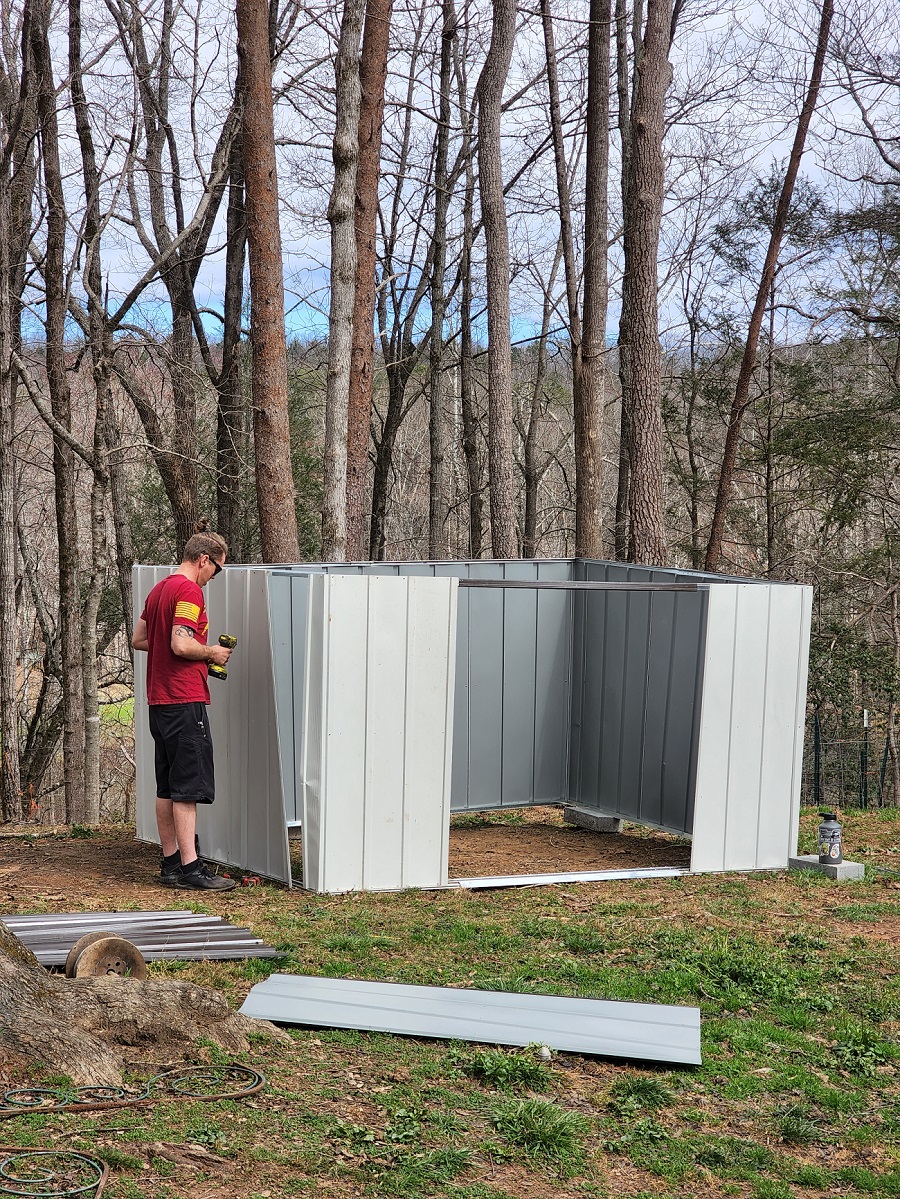
Since, we will also be getting 20 ducks around the end of March AND the 36 chickens, we want to make sure there is plenty of room for all of them. I think this 8×10 metal shed will work great. It’s got plenty of space and if we can hang the new laying boxes and roosting bars, there will be plenty of room for the ducks to nest.

Also since we allow them to free range throughout the day, there shouldn’t be any problems with space during the day.

Now before anyone gets all up in arms about it, we know some of the problems with a shed like this as well as ducks and chickens in the same coop. First, we will be installing gables and vents to make sure that the heat can escape in the summer. They will also have frozen bottles on the ground to keep cool. Not to mention we made sure that the coop is in a shady area.

Save on Seeds

We will also be adding boards and hardware cloth to the bottoms to ensure it as predator proof as possible. The ducks and chickens can cohabitate in the same coop as long as they have their own spaces. The ducks will be on one side and the chickens on the other. I’m sure we will find more problems as we go but we will see.

Jared working on the new Coop

We will always be as transparent with our readers. In that vein, we want to make sure that you don’t make the same mistakes we have. Or if you decide to make the mistake, at least do it differently.

You can also check out this from Redfin article as well! “Whether you’re planning to raise chickens at home in Asheville, NC, Eugene, OR, or Burlington, VT, check out this Redfin article we were featured in on 5 Chicken Coop Ideas For A Thriving Flock“

Summer Update

So this coop was built in the spring before it got really hot. What we have found is that the coop does not get super hot at night like we thought. Since we allow them to free range throughout the day and only put them inside the coop at night when the sun has gone down. We have not noticed a HUGE temperature increase.

Don’t get me wrong, it’s still hot at night and it’s warm in the coop, but I was thinking like fatally hot and it’s not. We have been averaging 80* nights and the coop is 90* but also has fans blowing the hot air out.

One of the things we have noticed is that NONE of the animals want to go in their respective houses at night. That includes the goats. I think a lot of it is that it’s just too hot. When they are outside they can move around and find cool ground.

The chickens and ducks seem to prefer being outside during the summer and that’s fine. We have predator lights up around the property and so far we haven’t seen any signs of them being taken in the night.

I’ll update back after winter and let you know how that goes. But for right now the coop is working.

Winter Update

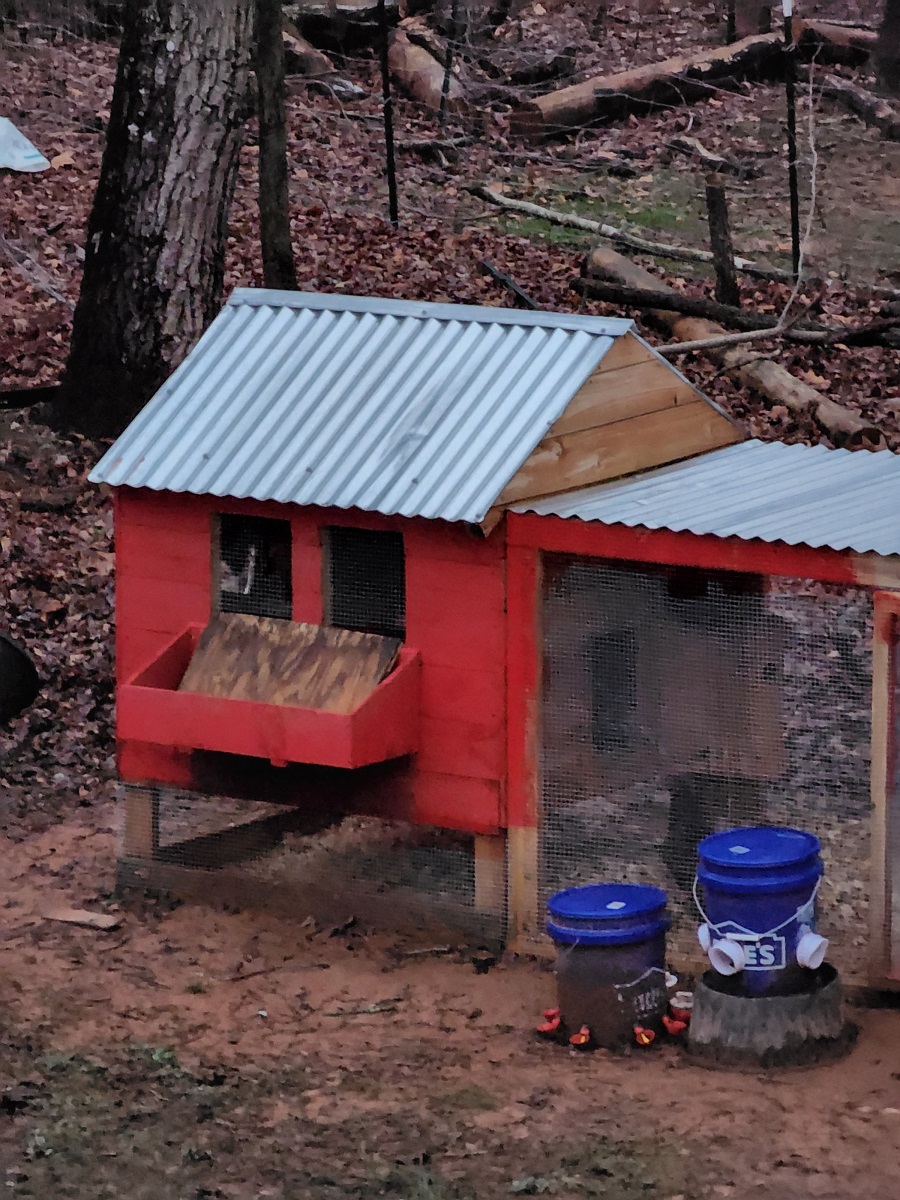
We have moved the chickens and ducks back into the red coop. The metal shed has turned into a flop…. Well, not completely. The shed rusted from the ground up. No matter how much pine shavings we added, the odor was completely foul. The chickens also didn’t seem as healthy either. It seemed to take them longer to get through molt and they stopped laying eggs way sooner than they should have.

When we moved them back to the red coop, their feathers seemed to get brighter and they seemed happier. Now, this is all speculation and we don’t have scientific proof, but I feel like the shed was not a good option for long term keeping.

We plan to convert the shed back into a shed and just put our various building materials in it. I would suggest looking into different types of chicken coops and leave the metal shed alone.

Using A Metal Shed For A Chicken Coop…. The Final Update

As of this writing (2024), we have turned this shed into a home for broody hens and a brood coop for new chicks. For this purpose, the metal shed has turned out to be excellent. We went through and painted all the rust, patched holes, and general upkeep of the shed. We noticed that the broody hens and new chicks all thrived.

I think the main problem with using a metal coop as a permanent coop is the severe lack of air flow, extremely low light, and everything tends to stay damp without a good heat source. Since we fixed everything and have made it a temporary home for these chicks/ hens, it has turned out VERY well and is something we will continue to do.

If you like this post, feel free to share it and follow us below on our social media accounts!
  • Facebook
  • Pinterest
  • Instagram
  • YouTube
  • TikTok
  • Spotify
  • Threads

Filed Under: Animals, Chickens, How To's, Projects Tagged With: chicken coop, Chickens, Chicks, Ducks, Eggs, Homestead, metal coop

JOIN TO OUR MAILING LIST!

Leave us your email to receive new posts and special offers for members only! Don't miss a thing!

Recent Posts

  • Fall Garden Guide
  • Top Mistakes With Goats
  • How To Bond With Your Goats

Goats Are Not Beginner Livestock

March 9, 2024 by Leigh Leave a Comment

I have recently been asked “If you love goats so much, why do you tell people not to get them?” The answer is simple, if more people would educate themselves before buying animals, I wouldn’t tell them not to buy goats. Most people do not do the research, and they end up getting a bunch of animals that they are not prepared to care for. But the reality is that goats are not for the feint of heart and they are not beginner livestock.

goat kidding

Before we get too far into this, I have a great course on the basics of goat care. I call it Goat Crash Course: Goat 101. In this course, I explain things like types of shelter, types of feeds and hays, basic assessments and so much more! Check it out!

Buy Now

Goats are NOT beginner livestock

I wrote my post about goats coming to the homestead and I will be honest, I left a lot of information out. Mainly because it was a piece designed to give a brief snap shot of why and how we have come to love our goats. But I feel, especially after what I said above, that I needed to be a little more clear about why I feel this way.

The plan truth is that it is easier to kill a goat than keep it alive when you are just starting out. When we first bought Bella and Voldemort, we knew that he had worms. But we had absolutely no idea what that actually meant. If a dog has worms, you give it a pill and repeat again in a week. After that you should be good to go. With goats it’s not that easy. In fact, goats will easily die from worms and quickly.

Banner 468x60

Goats Die Easily

There is a treatment protocol that is now in place because farmers have overtreated for parasites and it has caused resistance to these dewormers. Instead of two doses of one dewormer, it is multiple doses of several dewormers over several days/weeks. If you don’t know these things, you will lose goats before you are ever really comfortable with them.

Banner 468x60

Then there are plants are toxic that can kill them or the predators out there. Or that if their rumen gets out of whack, they could die. I have an entire book of treatment protocols that I have gone over with my vet to make sure I am doing the right thing.

That being said, once you understand what you are doing and why, it is extremely easy to keep them going. With regular herd checks and individual checks, your herd can thrive. We’ve had some touch and go moments since owning goats and we have managed to pull most of them through.

goat kidding

Before we get too far into this, I have a great course on the basics of goat care. I call it Goat Crash Course: Goat 101. In this course, I explain things like types of shelter, types of feeds and hays, basic assessments and so much more! Check it out!

Buy Now

Having Medications On Hand

Unlike your dog, cat or even chickens, you need to have medications on hand for goats and know how to use them. Goats can take Aspirin, but if you don’t know how often or the dosage you could kill them. You need to have antibiotics on hand for things like pneumonia, antitoxin for injuries, thermometers for temp checks and minerals for their general health.

Good luck finding a vet that will treat your goat. Seriously, we got incredibly lucky that not only does our vet treat ALL of our animals, they are goat owners themselves. So they know how to take care of small ruminants, which is huge when figuring out how to take care of these creatures.

I have a tool box that I carry when doing herd checks. It is packed to the brim and a binder that lists medications, FAMACHA scores, weights and much more. I conduct herd checks weekly to make sure that we catch any possible illness before they happen. Even with all that, we ended up with two pregnant goats that we didn’t catch until a few weeks before delivery.

But once you learn what you need to do to care for them appropriately, they are worth it. Every time they bleat when you come into their pen. Their antics when they are playing fighting, and more is so worth every ounce of heartbreak when you lose one.

Goat People vs Everyone Else

There are two types of people when it comes to goats. There are people who have goats and people who love their goats. I know many people who have goats and they are just that, a goat. Goat people truly love their goats. I have chickens, I like them and they’re pretty cool but I don’t love them. I am not a chicken person. I’m not going to snuggle my chickens. I’m not going to check on them constantly. If one goes missing? I’m not going to be upset.

Save on Seeds

My goats? I cried when we lost Voldemort and Texas. My kids bawled with Texas. I refused to entertain the notion of another goat after that for about 5 minutes because I love these goats. I am a goat person. I have spent untold hours researching everything I can about them. I have spent more money on them then I care to admit, but they are my babies.

So No Goats are NOT beginner livestock

They just aren’t. But that is coming from a goat person. Someone who truly loves these animals and wants you to love them too. So if you want goats, by all means, get goats. They are really cool critters that have absolutely stolen my heart. But understand what you are getting into. It’s not all sunshine and roses.

goat kidding

Before we get too far into this, I have a great course on the basics of goat care. I call it Goat Crash Course: Goat 101. In this course, I explain things like types of shelter, types of feeds and hays, basic assessments and so much more! Check it out!

Buy Now

Sometimes it’s recognizing that your goat isn’t acting right and getting in there with a thermometer, FAMACHA chart and figuring it out. Or collecting poop and storing it in your fridge until you can get it to the vet. It’s keeping goats in your house because they could die at any minute and you need to be there to try and stop it. It’s realizing that despite your best efforts some may die and there’s not a lot you can do to stop it.

But it’s also having your goats sing to you as you come down your driveway- RIP Texas

It’s getting snuggles from your best girl- Champ

It’s playing, getting headbutts, and dodging a buck in full rut- Midas

It’s slowly, so slowly winning the affection of Queen Bee- Bella

It’s watching two girls grow and start to play and call out for you- Oakley and Bailey

It’s helping deliver the first goat born on your homestead- Stella

It’s wethering your first buck- BeeBee

It’s being surprised by a new kid on the ground and not realizing your girl was that close- Bailey and Sebastian

It’s doctoring a sore shoulder because he jumped off a log- Finnegan

It’s listening to a tiny bleat from a huge goat with a comb over- Spike

It’s watching 2 little girls melt my husbands heart with every whiny bleat and nibble- Jade and Sapphire

Logo 468 x 60

So while they may not be beginner livestock, they are absolutely worth the time, energy, effort and money that goes into their care and keeping.

If you like the content I put out, feel free to buy us a coffee! It helps keep this site running, marketing and the goats in grain!

Buy me a coffee

If you like this post, feel free to share it and follow us below on our social media accounts!
  • Facebook
  • Pinterest
  • Instagram
  • YouTube
  • TikTok
  • Spotify
  • Threads

Filed Under: Animals, Goats, How To's, Our Homestead Tagged With: Chickens, Goats, Homestead

JOIN TO OUR MAILING LIST!

Leave us your email to receive new posts and special offers for members only! Don't miss a thing!

Recent Posts

  • Fall Garden Guide
  • Top Mistakes With Goats
  • How To Bond With Your Goats

What Does Homestead Mean?

February 27, 2024 by Leigh Leave a Comment

There is no hard fast definition for what homestead means. For some people a homestead means completely off grid with no reliance on anyone but themselves. Others believe that homesteading means growing their own vegetables. But as time goes on, the meaning changes for those people as well. Regardless of what this means to others, I am going to tell you what homesteading means to me and what it has come mean as well.

The Ultimate Homesteader’s Starter Bundle – Only $47!

Get the tools you need to stay organized, track profits, and manage your homestead with ease!

Includes:
✅ Schedule F Tracker – Simplify tax prep
✅ Profit Calculator – Track earnings
✅ Hay Calculator – Plan livestock feed
✅ Garden Journal – Digital & printable
✅ Herd Health Tracker – Monitor animal care
✅ Simple Budget – Manage finances
✅ Backyard Homestead eBook – Essential tips

$99 value – now just $47! Start your homesteading journey today!

Buy Now

What Does Homestead Mean

Well, the formal definition of homestead I pulled from Oxford Dictionary is:

“A house, especially farm, and outbuildings.”

The good thing about that definition is that it’s as broad and vague as how homesteaders, or aspiring homesteaders define homesteading.

Really, any piece of property can be a homestead! You don’t HAVE to have hundreds of acres. You can homestead on a city lot or out in the country.

What Does Homestead Mean To Me?

At first, homesteading meant a way to take care of my family without relying so much on others. The thought of being at the mercy of grocery stores to have my food was slightly worrisome. If we couldn’t get food, where would we be? Not having access meat, veggies, fruit, dog or cat food, has the potential for disaster. There were a ton of holes in our food security.

It meant learning skills and building a legacy for my children. Things like building barns, fences, and gardens. It meant learning how to cook from scratch.

Delicious biscuits

Learning Skills Ma Ingle Would Have Been Proud Of

From scratch cooking is surprisingly easy. I wonder if we were raised to believe that it was so much harder so that there was more reliance on boxed and canned meals. Since being on the homestead, we have learned a ton when it comes to cooking, canning, and other food related skills.

Homesteading can mean bringing animals into this world, learning how to milk and make cheese and processing animals. It means learning to depend on yourself in ways that you never really valued or thought you could do.

I learned that if I can raise my own hens, I can get eggs that I don’t have to go to the store for. I could raise my own meat birds and rabbits to help save on meat costs. Also, I learned that if I learn to preserve those things, I can have them on stand by and make everything easier.

Save on Seeds

Sometimes meanings change

But as time has gone by and the continued strain on our supply chain, homestead has come to mean other things as well. It means being prepared and stocking up on items that we use a lot of: coffee, tea, noodles, canning jars and lids, and other necessities. Making sure that we have enough supplies if another snow storm hits. Will we have plenty of firewood, canned food, and fuel for the chainsaws and other equipment?

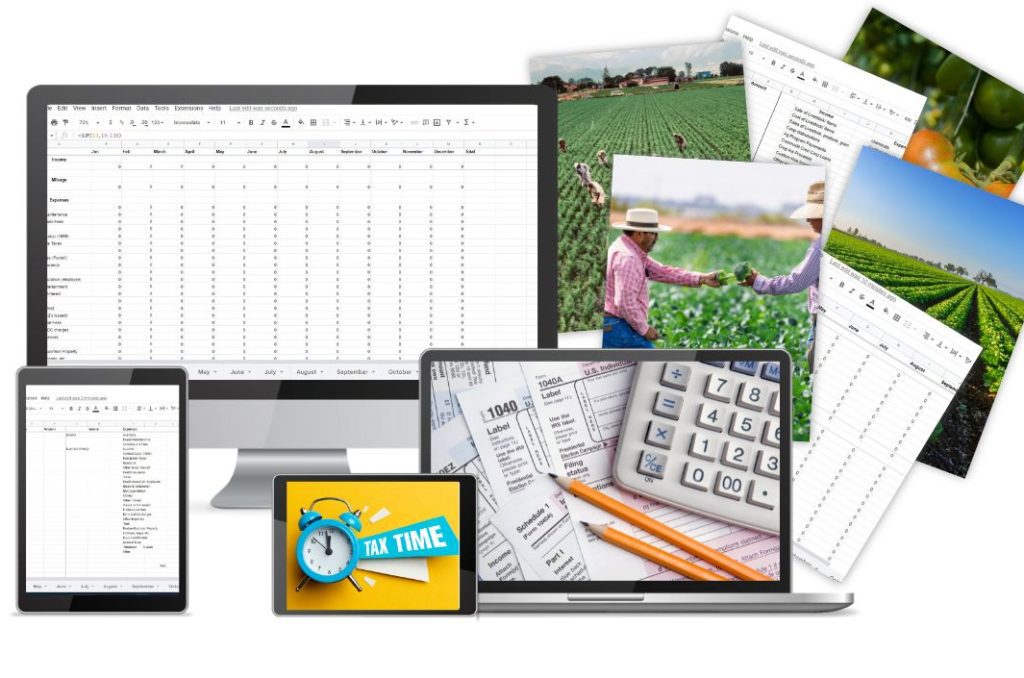
If you are a farmer/ homesteader and looking for a way to track your income and expenses, I highly recommend our Schedule F Tracker! We have been using it for years and it is the easiest, fastest and best way that we have found to keep track of the money spent on the homestead.

Buy Now

Homesteading means community. We realize that we are stronger together and we stand with our neighbors when times are good and we help pick them up when they have hard times. It’s knowing that they will stand with us in our hard times too.

Logo 468x60

It has also come to mean finding random eggs in the hay barn, playing with goats, and impatiently awaiting the arrival of Champ’s babies.

Update: She gave us a beautiful doeling that we named Stella.

It means caring for the new chicks that will not only give us eggs but also lay our next meat chickens. Homesteading means learning new skills, facing challenges, and not giving up. It means doing the things you thought you couldn’t, only to realize that you are more than capable of building fences, buildings, and fixing all the things.

Poor Champ is uncomfortable as she comes to the end of her pregnancy.

What Homesteading Doesn’t Mean

I can tell you that homesteading doesn’t mean judging others. Whether you have a quarter acre in the city or a hundred acres in the country, you are still homesteading regardless of if you purchase your food from a grocery store or farmers market, or if you grow your own.

It doesn’t mean being unaffected when creatures die or need to be butchered. For some people, taking the life of a chicken is okay, but it still affects them in some way, even if it’s only gratitude.

The Hay Calculator:

If you aren’t math-y (don’t worry I’m not either), check out our Hay Calculator. It literally does ALL of the math for you and gives you totals based on what you want your goals.

On the second page, you can track where you’ve bought hay, what you spent and how long it lasted.

Buy the Hay Calculator

Homesteading doesn’t mean easy. There is no part of this life that is easy. If you are hauling lumber for a barn or feed to your animals, homesteading is hard work. It can be heart and back breaking when you have to put down your favorite bottle baby because she got sick.

You can’t be lazy and a homesteader. There is simply too much to do. Gardening, canning, working with livestock and more, there is not a ton of downtime. But when you see the fruits of your labor? It’s worth every aching joint, pulled muscle, cut and bruise.

New Chicks

What Does Homestead Mean?

I don’t know that homesteading has a meaning. I think homesteading is a spirit. It’s the spirit of being less dependent on the power grids, grocery stores, and other commodities. These people who want to homestead do it because they want to be independent. Whether that is a completely or partially independent, is not the point. Homesteaders simply want to take care of themselves and their community. Which is what homestead means to us.

Banner 468x60

I think that as long as people want to take ownership of their little plot of land, we will keep the spirit of homesteading alive. I think as long as people desperately want to learn the skills of their ancestors, they will lead a full and productive life. And I think that as long as we are here fighting for our community and independence, we will see the resurgence of a way of life that mixes the old with the new. And we will be better for it.

What does homesteading mean to you?

If you like the content I put out, feel free to buy us a coffee! It helps keep this site running, marketing and the goats in grain!

Buy me a coffee

If you like this post, feel free to share it and follow us below on our social media accounts!

  • Facebook
  • Pinterest
  • Instagram
  • YouTube
  • TikTok
  • Spotify
  • Threads

Filed Under: Animals, Canning, Chickens, Garden, Goats, How To's, Our Homestead, Pigs Tagged With: Animals, Homestead

JOIN TO OUR MAILING LIST!

Leave us your email to receive new posts and special offers for members only! Don't miss a thing!

Recent Posts

  • Fall Garden Guide
  • Top Mistakes With Goats
  • How To Bond With Your Goats

The Importance Of Journaling

December 30, 2023 by Leigh Leave a Comment

If you are not a writer, you don’t like journaling, or any variation, I can totally understand…. Sorta, I am a writer, so for me words are life. But I want to talk to you about the importance of journaling, why you should at least have it as an option and some tips and tricks for you to get started and KEEP GOING with your journals.

Are you getting overwhelmed in the garden? Stressed? Or just not enjoying the garden like you used to? Check out our garden prompts! We send out weekly emails that get you back in the garden and out of your head! Turn the garden back into a place of love and joy instead of frustration and headache!

Subscribe Now!

Importance Of Journaling

I cannot stress the importance of journaling to you any more than this: when I am at my lowest, my journals have saved me. This is both literal and figurative. I have always been a writer. My first love was books, a note pad, and pen and to this day, that really hasn’t changed. I have books and notebooks all over the house. Some notebooks have been written in, and others are just pretty. I have a favorite pen and a favorite brand (shout out to G2!).

And 100% of my books have at least flipped through….

That’s a lot of books. But I say all of this to say, journaling has saved my sanity, money and relationships. It has also given me a chance to be introspective and change habits I didn’t realize were hurting me or others. That is why journaling is so important.

How Journaling Has Saved Me

I didn’t have the best childhood growing up. But I had people who loved me and that was enough. My family are also huge readers, so the love of books came naturally. I remember sitting and reading on the couch for hours with my mom or aunt.

Logo 468x60

But I also loved to write. It didn’t matter if it was stories, journaling, or just making lists. I love/d watching that pen meet paper and see what was in my brain come out on paper.

The action of writing has helped pull me out of some dark places. Not necessarily because I was writing what I was feeling, but because it gives my brain a chance to rest while focusing on something else. It allows me to be present in a way that therapy just doesn’t do.

People who work with their hands are usually happier and more at peace than those who don’t. This is one of the better articles that I have found on the topic. There’s a great book that was mentioned in the article that I purchased and read and it has really helped because it put into words what I knew and what was working.

How Journaling Has Saved Me Money

While it may seem ridiculous because of the amount of money I have spent on journals, pens and books, journaling has helped me save a ton of money. I have homestead journals, garden journals, story journals, and, of course, my mental health journals. I pick up bullet journals when I like the patterns or colors. The link is currently my favorite sets. There’s also these really cool stencils that I LOVE!

Barnes and Noble and Books A Million are the worse places to take a bookworm who has access to the bank cards!

But journaling has saved me a ton of money because I am able to look back at my notes and see what we have done, what worked, what didn’t and make decisions based on that information. To give you a screaming example is the chickens.

I have spent thousands of dollars on poultry, which is ridiculous because they come from the hatchery at less than $5 each! In the four years that we have bought chickens, ducks and turkeys, we have spent close to $1500. That’s about 400 chickens, 50 ducks, and 25 turkeys, roughly. That doesn’t count the amount of money we have spent on feed, waterers, feeders, housing, fencing, etc.

I can tell you right now, we do not have that many creatures! We have butchered about 100 of those animals. The rest have died, wandered off, a predator took them, or some other thing. That is freaking insane.

But because I have my journals, I know exactly what I’ve spent, what we have done for predators, brooding, and other things to try and keep them alive. A couple of bullet journals at $10/each vs several thousand dollars in poultry? Yea, it’s saved me a ton of money.

How Journaling Has Saved My Relationships

My mental health hasn’t always been the greatest. Again, a not so great childhood, mixed with a really hard 20’s, and a career that takes WAY more than it gives back? It’s a recipe for disaster. But because I journal, I am able to look at times that are troubling and what I was writing about. Then I can start making changes because I can SEE the issues. Even if it’s at a later date.

It’s kind of like seeing your Facebook memories from like 10 or 15 years ago and you just cringe. Yea, that’s how journaling is! You can look back at that argument, or what you were feeling and go…. yea maybe you were in a bad place.

Because of this level of self reflection, you get the opportunity to be better. You get to make changes because you see what is “wrong” and can make it right without anyone telling you otherwise.

Save on Seeds

How Journaling Has Saved My Gardens

Y’all, I have about 10 years of garden journals. Each one starts on January 1 and ends on December 31st. Some of those journals don’t have much in them. Others take up multiple books. But they have saved my gardens. Because I can look at those journals and see how far I’ve come as a gardener. I can see all the varieties I’ve tried and which ones I really like, hated or just didn’t do well for me.

I can see my interventions for disease or pests. I can see what worked!

But the coolest part of my garden journals isn’t the day to day planning, planting, harvesting, etc. It’s actually the pure joy that comes through those pages. I can see the transition from the bad day to the pure excitement of finding honey bees in my gardens. I can see my crappy drawings of my first ever rose. Or the pressed sweet pea flower.

How To Start Journaling

Now that I’ve given you all my reasons about the importance of journaling. I want to talk to you about how to start your journaling journey. First and foremost, if typing out your journal is all you can do, then by all means, do you boo boo.

But if you are looking for healing affects, serotonin release and lowering of cortisol, get yourself a couple of journals that you like, a good pen and get to work.

Tips And Tricks

Intentions– When I am starting a new journal, I fill out the first page with my intentions for the journal. For example, in my garden journal, the very first page is for that year’s goals, intentions and plans. Technically, it takes up several pages and that’s ok.

Set A Timer– Well, first set an alarm specifically for journaling time and then set a timer. You only need about 10-15 minutes to journal. Sure, you can absolutely go longer, but when you are just starting out, 10-15 minutes is plenty of time.

Check out our Microgreens at True Leaf Market

Pick A Topic– Don’t set an unrealistic expectation that you are going to have a journal for every possible topic. Just pick one thing that you want to work on; gardens, mindfulness, frustrations, etc. Literally, anything can be a topic. Don’t worry about how “good” it is.

Don’t Sweat It– If you don’t journal today, that’s okay. Hit it tomorrow. If you only have 10 minutes while you sit with your coffee? Nail it. But if you can’t today, that’s okay too. We aren’t getting down on ourselves for not doing this. BUT don’t be so laid back that you forget to journal either.

Subscribe to Craft Beer Club Today!

The Hard Thing– One of the things that I think people need to understand is that you don’t have to write about a topic forever. There can be an end. I have found that when I write out something that is bothering me, I can release it easier. I have a couple journals that collect dust that are simply me writing about that hard thing or things that have been taking up WAY too much space in my brain. I don’t have to write about it for weeks or months. I let that stress vent by writing and then let it go. If that venting didn’t work, then I write about it again and again until whatever that hard thing is has passed.

Writers Block– If you have never journaled, maybe you don’t have anything pressing that you WANT to write about, or in my case, I’m not ready to write about that particular hard thing, pick a prompt service. This is not a plug for my journal prompts, but there are literally hundreds of services out there that have a variety of topics that you can journal with. I’ve got a garden journal prompt that is a monthly service that sends you weekly emails for topics you can write about. <—– THAT is the plug for my garden journal.

Logo 468x60

Subjects For Journaling

There are millions of things that you can write about to start your journaling journey. My favorites are:

  • Fitness
  • Healthy eating
  • Cooking
  • Dealing with emotions
  • Healing from injury
  • Stress management
  • Mindfulness
  • Trauma healing
  • Depression
  • Anxiety
  • That THING you don’t want to talk about
  • Garden
  • Homesteading
  • Chickens
  • Goats
  • Tomato diaries
  • Project journals

This list isn’t an end all, be all. You can journal about whatever you want, but these are some great topics to get you started if you don’t have any in mind.

The Importance Of Journaling

I hope I have covered all of the reasons that you should at lease consider journaling. Also, I hope I’ve given you some tips and tricks that are worth exploring. But mostly? I hope that whatever you decide to journal about, it heals you.

If you like this post, feel free to share it and follow us below on our social media accounts!

  • Facebook
  • Pinterest
  • Instagram
  • YouTube
  • TikTok
  • Spotify
  • Threads

Homesteading Journal Prompts

I am looking for beta testers for my new homestead journal prompts and would LOVE your help.

I am looking for about 10 testers who are homesteaders that have livestock, gardens, and other responsibilities that are looking to either start journaling or have been journaling for a while. I am offering these prompts for free, BUT there is a catch.

Each week I will send you 3 emails. The first will be the prompts for the week. The second will be a reminder and feedback. The third will be all feedback.

You MUST be willing to offer feedback in exchange for these emails.

If you are interested, please fill out the sign up form below!

Homestead Journal Prompts

If you are interested in learning more about our homestead journal prompts, subscribe to sign up for the waitlist!

    We respect your privacy. Unsubscribe at any time.
    Built with ConvertKit

    Filed Under: How To's Tagged With: journals

    JOIN TO OUR MAILING LIST!

    Leave us your email to receive new posts and special offers for members only! Don't miss a thing!

    Recent Posts

    • Fall Garden Guide
    • Top Mistakes With Goats
    • How To Bond With Your Goats

    How To Start A Homestead

    December 29, 2023 by Leigh Leave a Comment

    I can’t and won’t tell you how to start a homestead. Each homesteader is going to have different ideas, wants, desires, goals, etc. So to give you a step by step guide is pretty pointless. But what I am going to do, is tell you how I would have done it when we started. I am going to give you the tips and tricks I wish I had known prior to starting out. Because to tell you how to start a homestead would be amazing, it’s not going to work for everyone.

    The Ultimate Homesteader’s Starter Bundle – Only $47!

    Get the tools you need to stay organized, track profits, and manage your homestead with ease!

    Includes:
    ✅ Schedule F Tracker – Simplify tax prep
    ✅ Profit Calculator – Track earnings
    ✅ Hay Calculator – Plan livestock feed
    ✅ Garden Journal – Digital & printable
    ✅ Herd Health Tracker – Monitor animal care
    ✅ Simple Budget – Manage finances
    ✅ Backyard Homestead eBook – Essential tips

    $99 value – now just $47! Start your homesteading journey today!

    Buy Now

    Before You Start A Homestead

    Before you start looking for properties, you need to set your homesteading goals. Do you want to raise or grow all your own food? Are you looking to make money? Is this a retirement plan? You really need to dig deep about why you want to start your homestead and start journaling everything.

    The reason this comes first is because you are going to need to know what kind of land you need for the goals you have. When we started looking at properties, we found one that we absolutely fell in love with. It was at the top of a mountain with 15 acres and a ton of boulders. As you can imagine, living on a mountain would have a lot of challenge like, steep cliffs, rocky soil, and outbuilding issues.

    Because we knew what we wanted to do on the property, we knew that doing those things on a mountain would be extremely difficult.

    After Setting Your Goals

    You should consider your goals with every single property that you look at. Is there enough land for your goals? Can you work the land without a lot of initial investment? Is the layout of the land going to work with your principles, goals and ideals?

    If you find a property that has a ton of pasture, fencing, and outbuildings, only to find out that the land was used to grow GMO corn? That may not line up with your ideals of organic farming. While that land is already set up to farm, it’s going to take years to repair that soil.

    If your property is completely raw, you are going to put a TON of work into it to get it where you want it. Our property was almost completely raw. No outbuildings, no gardens, and minimal pastures. So we have spent a lot of time and money getting everything set up. And we aren’t even close to being done.

    Researching Laws On Your Homestead

    If you are planning on homesteading, but your county or state laws require all sorts of regulations, make sure you know what they are before you buy that property. The sale of raw milk recently became legal in the state of Georgia. But there are a lot of regulations to go with it. Same with cow sharing and meat purchases. Don’t sink all your money into a property only to find out later that you can’t do the things you want to do.

    If we had just started selling raw milk when we first started, we would have ended up in law suits with possible jail time. It’s better to know what you’re getting into before your hip deep in problems.

    Start an LLC, S Corp or Similar

    Research which of these business options make the most sense to you, your property and your goals. But whatever it is, get it started before you buy the first fence post, animal, bag of feed, you name it. If possible get an EIN number or other tax applications done. You want to make sure you are tracking every purchase.

    This will lower your tax burden and allow you to *hopefully* get some money back at the end of the year.

    I use this tracker to make sure that I am getting as much back on my taxes as possible.

    After Buying Your Property

    Once you’ve committed, or purchased a property, I want you to sit with it for a minute. Especially if you are a brand new homesteader! Don’t start digging a garden, building a barn, or anything else until you know what you’re land is capable of.

    We knew we wanted animals, but weren’t in a hurry to get them. Until the goats. While I’m glad we got the goats, I really wish we would have waited.

    Waiting On Gardens

    No matter how much you know you need to wait, you want to plant more. My biggest reason for waiting was just wanting to make sure that before we started clearing huge areas for a garden, we knew what it would look like in all four seasons. I wanted to make sure that I knew where water run off would be, sunlight, and where the good soil already was.

    Because we waited, we saved ourselves a ton of physical labor as well as time and money.

    Waiting On Animals

    This is by far the hardest thing for any new homesteader. It’s usually the first thing that we think of when we think about farming or homesteading. But trust me when I say, if you get animals before your infrastructure is set up, you will be chasing your tail for the next decade.

    We brought two goats onto the property without fencing put up, shelter in place or any idea what to feed them. After we lost V, we had to scramble to buy more goats. Then more shelters, fencing, etc. That first year should have been figuring out what we wanted to do. Instead, it was a year of figuring out what we were doing.

    Waiting On Major Purchases

    When we first bought the property, we were going to build Jared’s shop, get a tractor, a side by side, and huge barn. Man, I am SO glad we waited. We had all these ideas and plans, that I am beyond grateful didn’t work out. That first year would have cost us several thousand dollars. But you know what we learned? We don’t need a tractor, a side by side, a huge barn, or Jared’s shop.

    Would those things have made our lives easier? Abso-freaking-loutely! But it would have stretched us so thin that we wouldn’t have been able to do the other things that we wanted to do.

    Because we waited, we learned that manual power is the advantage. We don’t need a tractor to haul the dead trees anywhere. We cut them into smaller chunks and rolled them where they needed to be.

    Because we waited on the huge barn, we realized that smaller shacks for the animals are easier to move and easier for them to keep themselves warm.

    Because we waited on the side by side, we found a great deal on a pair of four wheelers that don’t require payments.

    We did realize that a barn, shop, tractor, side by side would make things easier but we could do more manually.

    Getting To Work

    Once you have sat on your property for a minute, and learned what you and that property were capable of, get to work.

    Start Your Garden First

    I will say it again and again, wait on livestock till you have your gardens in! Yes, this is a do as I say not as I DID. I say this with the experience of someone who DIDN’T start with gardens. I wish we would have waited on livestock but we didn’t.

    When you are setting up your gardens, think about your goals for the garden. Are you planning on a fresh eating garden? Or are you looking to put up food for the off season? How big is your family? All of these questions are important to answer before you start your gardens.

    I suggest starting with a larger space than you think you need. Without fail, and every year, we end up having to expand our gardens. Which is great, but does lead to issues with fencing, beds and having to change stuff around constantly.

    Start On Your Animals

    If you listened, which I doubt because I wouldn’t either, you have waited on getting animals till after you’ve gotten your gardens dialed in. Now, we get animals.

    Unlike the garden, where you give yourself more space than you need, start small with your livestock. Start with ONLY the amount of chickens you need. Only get a couple of goats or cows. Start small and learn the animal before you get an entire herd.

    I know you’re not going to and I’m wasting my time, but you can’t say I didn’t warn you.

    Revisit Those Major Purchases

    After you have learned how to do things manually, start thinking about those bigger purchases. We thought we would need that tractor? Turns out, we don’t even want a tractor. It doesn’t fit with our land philosophies.

    Jared’s shop? Yes, we will be building it. But it doesn’t have to be any time soon. There are more important things to build. Like the barn.

    One of the big things that we have noticed is that we need more space in the barn. We have 9 permanent does and space during kidding season is at a premium. In fact, the shuffle of trying to figure out who goes where is kind of intense. Especially, since the girls don’t like the other does near their babies. So it can get pretty hairy.

    But if we had just built the barn, we wouldn’t know exactly what we wanted.

    How To Start A Homestead

    I can’t tell you how to start a homestead. I can only tell you the things that we have discovered since starting our own homestead. Things I wish we would have done differently but also things I’m REALLY glad we waited on.

    If you like this post, feel free to share it and follow us below on our social media accounts!
    • Facebook
    • Pinterest
    • Instagram
    • YouTube
    • TikTok
    • Spotify
    • Threads

    Filed Under: Frequently Asked Questions, How To's Tagged With: Chickens, Chicks, Goats, Homestead

    JOIN TO OUR MAILING LIST!

    Leave us your email to receive new posts and special offers for members only! Don't miss a thing!

    Recent Posts

    • Fall Garden Guide
    • Top Mistakes With Goats
    • How To Bond With Your Goats

    How To Build Soil The Easy Way

    December 9, 2023 by Leigh Leave a Comment

    I’ve talked in depth about my winter reading consisting of Grow Your Soil and Dirt to Soil. I also talked about ways to improve your soil here. But today, I wanted to talk about the things we are doing this winter to actively build soil for the spring and summer gardens. There’s some repeating information from the posts I did before but I figured it would help to give a step by step, this is the exact thing we are doing, post to help you build soil. Now, please understand, I am no expert! But I know a thing or two.

    Are you getting overwhelmed in the garden? Stressed? Or just not enjoying the garden like you used to? Check out our garden prompts! We send out weekly emails that get you back in the garden and out of your head! Turn the garden back into a place of love and joy instead of frustration and headache!

    Subscribe Now!

    Building Soil Doesn’t Have To Be Hard

    In fact, there are really just three principles to building healthy soil. 1) Organic material 2) No till 3) Cover Crops

    Done! Blog post over! But if you’re anything like me, figuring out when to add material, or what exactly no till is, or what in the world are cover crops, you’ve come to the right place. First, I want to give you an overview of how these things help your gardens and how you can use them. If you are looking for what we do in our gardens, jump down to Our Step By Step System.

    Logo 468x60

    Using Organic Material To Build Soil

    The reason organic material is number one is because it’s the most important. We have Georgia red clay on 99% of our land. Sure, we have areas where no one has dug, tilled or scrapped. But the vast majority of our land is clay or rock. So what do you do with that kind of soil? Add more organic material to it!

    To limit confusion, let’s talk about what organic material is. Organic material is any material that is natural. Some examples would be plant cuttings, leaves, sticks, mulch (not dyed), pine needles or shavings, and other material that you would find in nature. This can include dirt, rock, etc but because we are talking about building soil, we probably don’t want many, if any rocks.

    Save on Seeds

    No Till Helps To Build Soil

    I think there is a ton of us that were taught that in order to have light, fluffy soil, you had to till it all the time. Or to get rid of weeds, the only thing is to till them under. And both of these things couldn’t be further from the truth.

    Soil needs the bacteria, fungi, and other microbes to help build healthy soil. Every time we till, we are ripping the soil apart. We are killing all the good things, including bugs, to help with weeds? And I have yet to see tilled soil that doesn’t turn hard and compacted by middle of the season.

    I’m not saying that there is no place for tilling in the garden. Because I think in certain situations it can be hugely beneficial. But I think the vast majority of the time, you shouldn’t need to till at all.

    Using Cover Crops To Build Soil

    Using cover crops when you are looking to build soil is huge! Mother Nature does not want to be naked and she will cover herself with weeds. But if we plant cover crops, her dirt will be covered. The other really amazing thing about cover crops is the ability to fix the soil. Depending on your soil’s deficiencies, you can plant to help correct them.

    Usually, you are going to be deficient in nitrogen in the garden. Especially in the tomato, potato, corn or melon beds. One of the ways you can fix this is by planting clover, field peas, and other legumes.

    Cover crops can be difficult to figure out. The most common question is when do you plant them? Too late in the season and they won’t sprout till spring. Too early and they are getting scorched.

    cropped-3.jpg

    Are you looking for garden journal prompts, but aren’t interested in a weekly email? Check out our 365 Garden Journal Prompts! This is an amazing, all in one, yearly product that you only pay for once.

    Buy Now!

    How We Build Soil

    I don’t really have a great answer for you. But I’ll tell you what I do, and you can figure out if it would work for you.

    First, we are in zone 7b/8a. Even with the new updated maps, I am still going to garden like I live in 7b to help minimize heartache. At least for the next couple years. Second, this is what we do and what works for our land. You should experiment and play with your garden to see what really works well for you.

    To give you a glimpse into our garden, we have two gardens. The first is my kitchen garden (yes, mine) and it is about 500 sq ft of space. I’ve got 14 4×8 raised beds and then a bunch of planters, in ground plants, etc. Second, is our big garden and it is approximately 1,250 sq ft of garden space. Right now, the garden was a hodge podge of various spaces with trellising.

    The plan for next years garden is: 80ftx120ft area with a chicken run, orchard, 16 4x20ft raised beds, 20 2x18ft in ground beds, and then spaces along the fence for plants. I’m going to take you along planning that space in another blog post as well as the podcast to follow.

    When it comes to putting the three principles of building soil to use, I am going to give a couple examples at the end of this post. So feel free to skip towards the bottom if that’s all your interested in. I hope it clears up a lot of this information because I know it’s a lot.

    Adding Organic Materials To Build Soil

    During the winter, we will blow leaves into the gardens and use the leaves as mulch. We will also fill all of our beds with leaves, sticks, mulch, and pine needles. Since our pine shavings are being used as bedding, that part isn’t something we add until spring.

    Usually, by end of November, most of our gardens are toast or getting that way. We will have some fall stuff like brussel sprouts, cabbage, etc that will over winter. The beds that are still active with plants is mulched well with leaves and sticks. But the beds that are going to bed will have all of the plants cut at soil level and laid in the bed to act as mulch.

    Before we get too far into this post, I wanted to give a suggestion about keeping a garden journal. A digital garden journal is a fantastic way to keep track of past, present and future gardens. Our Digital Garden Journal is a great way to keep up with everything without getting too overwhelmed.

    Buy Now

    No Tilling In The Gardens

    I’m not saying tilling is bad but I am saying we use tilling sparingly. For the most part, we don’t till our gardens at all. The big garden is getting a massive overhaul this winter and I couldn’t be more excited about it. I’ve got a blog post coming about it so stay tuned.

    The hardest compacted areas are going to have raised beds placed over it. At this point, it’s going to take years and years to fix that soil. The next best option is to just put raised beds in. The other problem is that in that area, we deal with a lot of soil erosion because it’s on a slope. So raised beds are the best option.

    Logo 468x60

    One of the big reasons we chose no till is because of what just organic material can do for the soil. To give you an example, in the spring of 2023, we were forced to till just to get our tomatoes planted. The ground was like concrete. After getting the tomatoes and other plants in. We mulched heavily. Now, (winter of 2023) the ground is so soft and fluffy, you almost can’t walk on it because it shifts so easily.

    Cover Crops Really Do Build Soil

    On the of the biggest issues I see in gardens is bare earth, especially over winter. That soil is so dry and damaged, little is going to grow out of it. But if we throw down some seed, cover it with soil or leaves? We can have green in that area! And the green we want will suppress all the weeds!

    Check out our Microgreens at True Leaf Market

    We use a couple of different mixes, plus left over seeds to get a cover crop in the ground.

    • Garden Cover Crop- True Leaf Market- I like this blend a lot and have very few issues with it. I love the fact that I can put it in raised beds, the big gardens and even the yard to get some nom noms for the animals.
    • Brassica Cover Crop– True Leaf Market- This is one of my favorite blends for third reasons. First, I don’t have to worry about it “overgrowing” because it usually dies off in winter. Second, some brassicas have long taproots that will help bring nutrients from further down in the soil, up to the plants. Third, there are two root vegetable seed in this mix. That means that I don’t have to worry as much about compaction.
    • Dryland Pasture Cover Crop– True Leaf Market- Every grass in this mix is safe for my goats to eat. Since my goats free range, I like to allow them into the gardens whenever we are done with them. I want to make sure they have good, healthy food to eat. This is also what we plant in our orchard/ chicken so that they have something to eat.

    Our Step By Step System For Building Soil

    I told you I would give you a step by step guide, so here it is.

    Bed is being put to bed

    When we have a bed that is being put to bed for the winter, we want to prepare it as much as possible for spring planting.

    1. Cut all of the plants that are still in the bed at soil level and put in a pile outside of the bed.
    2. Broadcast a cover crop mix based on that beds needs and next years plans.
      • Example: In a tomato bed, we would plant a legume heavy mix.
      • We would also make sure that whatever mix we planted would have a winter kill if we plan to use the bed next year.
    3. Water well and, if possible, allow several days for germination.
    4. Once sprouted, or not if seed will go dormant, take all the cut plants and place in beds.
    5. Cover with more leaves or other organic materials as needed throughout winter.
    6. At planting time, cut all plants to soil level, and plant transplants.
      • If planting seed in that bed, you may need to cover with tarps to kill the cover crop first.

    Banner 468x60

    Bed is in use over fall/ winter

    This would be a bed full of brassicas, root vegetables or other cold hardy plants. Obviously, we aren’t going to cut plants to soil level, though we could.

    1. No need for a cover crop in these beds!
    2. Mulch WELL around the plants without damaging them. We don’t want to smother them.
      • I use leaf litter the most in active beds because it helps insulate and breaks down slower.
    3. Once plants die, I cut whatever is left of the plant at soil level and use it as mulch.
    4. Usually, since our winters are so mild, I don’t need to worry about cover crops because my fall crops act as cover crops.
    5. At planting time, I will clear out the beds of anything that hasn’t broken down fully, put it in the compost bin, and then plant.
      • Depending on the soil level of the bed, I will just add more soil or compost on top of the mulch. It really depends on what that bed looks like come planting time.
    6. Once new plants are established, mulch.
    Check out our Microgreens at True Leaf Market
    cropped-3.jpg

    Are you looking for garden journal prompts, but aren’t interested in a weekly email? Check out our 365 Garden Journal Prompts! This is an amazing, all in one, yearly product that you only pay for once.

    Buy Now!

    How do you build soil in your gardens?

    I would love to hear about what you are doing to build soil in your gardens!

    If you like the content I put out, feel free to buy us a coffee! It helps keep this site running, marketing and the goats in grain!

    Buy me a coffee

    If you like this post, feel free to share it and follow us below on our social media accounts!
    • Facebook
    • Pinterest
    • Instagram
    • YouTube
    • TikTok
    • Spotify
    • Threads

    Filed Under: Compost, Garden, How To's Tagged With: chicken, compost, Garden, soil

    JOIN TO OUR MAILING LIST!

    Leave us your email to receive new posts and special offers for members only! Don't miss a thing!

    Recent Posts

    • Fall Garden Guide
    • Top Mistakes With Goats
    • How To Bond With Your Goats

    How To Make A Brain Dump List

    November 22, 2023 by Leigh Leave a Comment

    If you have never heard of a brain dump, I HIGHLY suggest it. Especially, if you have ADD/ADHD or get overwhelmed easily. A brain dump list is extremely helpful when you have a bunch of things running around in your brain and you can’t figure out what to do next. A lot of times it can lead to paralysis and you end up getting absolutely nothing done.

    The Ultimate Homesteader’s Starter Bundle – Only $47!

    Get the tools you need to stay organized, track profits, and manage your homestead with ease!

    Includes:
    ✅ Schedule F Tracker – Simplify tax prep
    ✅ Profit Calculator – Track earnings
    ✅ Hay Calculator – Plan livestock feed
    ✅ Garden Journal – Digital & printable
    ✅ Herd Health Tracker – Monitor animal care
    ✅ Simple Budget – Manage finances
    ✅ Backyard Homestead eBook – Essential tips

    $99 value – now just $47! Start your homesteading journey today!

    Buy Now

    Using A Brain Dump List

    There are a ton of reasons to use a brain dump list, but my biggest reason is to put on paper the things that are overwhelming me. Whether it is because my brain is going a million miles an hour or because I know we have this huge list of things to do, setting up a brain dump is the first step to getting a plan together.

    It’s also a great tool to use when you are transitioning from one project to another. When the animals got into the fall garden, I struggled to switch gears because that was my project for the rest of the year… Until there wasn’t a garden to work on. With my brain dump, I was able to switch gears easier because I knew I had other things I could work on.

    What Is A Brain Dump?

    Simply put, a brain dump is writing out all of the things that are running around in your brain. There is no order, rhyme or reason. It is simply trying to dump all of the things in your brain onto paper so that you can focus.

    For those that struggle with stress and overwhelm, this is a great tool for dealing with it. Lately, I have been using it every time I come home from work. I’ve got 3 major projects in the works this winter. Plus work, running the homestead and fitting in the boys homeschool in there somewhere.

    When To Use A Brain Dump?

    There is no bad time to use a brain dump. But if you are struggling to make decisions, pick a direction or dealing with decision fatigue, grab a sheet of paper and make a brain dump. I’m going to go over my brain dump below.

    Even if you are not having any issues, a brain dump is great to just dump everything out and get it organized.

    Does It Really Help?

    Yes! There are times when I am stressed, overwhelmed, exhausted and just mentally not able to do another thing. When that happens, I sit down and start my brain dump. Sometimes, I start my day with it. Especially, when we are dealing with a transition period. When there is a project that is coming to a close, or is done, I tend to feel stuck or struggle to switch gears into a new project.

    A Brain Dump List In Action

    Step one is to grab a pen and piece of paper.

    I usually use a sharpie and blank piece of computer paper. I don’t want any distractions and if there are lines on the paper, I will make a list of things that need to be done vs a brain dump of all the things that are circling my brain. This is going to cause problems because when you are struggling to make decisions, prioritize, or dealing with overwhelm.

    Step two is to organize all of your tasks

    This can look very different for everyone. But for me, it means organizing this mess into columns or categories. Some of this stuff is clearly business related. Some is homesteading or personal. So I want to make sure it goes into the right categories.

    Also, I want to make sure I’m not giving a ton of space and energy for things that just don’t matter right now. Or things that I WANT to do, but we all know isn’t going to actually happen. By making sure that we are being realistic with our time, it really does help us from becoming overwhelmed.

    Step 3 is prioritizing your list

    Making goals, steps, and all that is incredibly important and even satisfying, but if you can’t prioritize, you’re going to end up spinning your wheels. To be honest, before you start making your goals or steps, you should be prioritizing them anyways!

    To give you an example from the Homesteading section, there are somethings that just aren’t that important. Blowing all of the leaves for example. I don’t really care if the leaves get moved into the compost. I would LOVE if it happened, but I’m not going to make it a huge priority. Having leaves covering the yard really isn’t on my radar of concern. Plus, it’s my favorite time of year, soooooo.

    Using A Brain Dump List To Make Your Goals

    When we start working on our 2024 project list, we will use a brain dump list. We will also do this when it comes to finding sponsors for the podcasts or brainstorming content. A brain dump is so helpful for a ton of reasons and these are just a few

    1. It allows you to see all the things you need to get done and prioritize the ones that are more important, can wait or just don’t need to be handled right now.
    2. A brain dump allows you to create an action plan with steps and deadlines because you start with the end goal in mind.
    3. Allows you to see how much, or how little, work you have in one area vs another. This means you know how to structure your time.
    4. A brain dump gives you a strange piece of mind because if it’s not on the page, is it really that important. If it is, add it in. But if it’s not? Cross it off and move on. Here’s looking at you leaves!

    I hope this helps you stay organized and a little less stressed!

    Comment below on how you stay organized and how you reduce stress!

    If you like this post, feel free to share it and follow us below on our social media accounts!
    • Facebook
    • Pinterest
    • Instagram
    • YouTube
    • TikTok
    • Spotify
    • Threads

    Filed Under: Goal Setting, Homestead Planning, How To's

    JOIN TO OUR MAILING LIST!

    Leave us your email to receive new posts and special offers for members only! Don't miss a thing!

    Recent Posts

    • Fall Garden Guide
    • Top Mistakes With Goats
    • How To Bond With Your Goats

    How To Build A Successful Homestead

    March 18, 2023 by Leigh Leave a Comment

    This is a loaded question that is personal, individual, and can only be answered by you, your family and your land’s capability. At the end of the day, every single homestead is going to look different. You may not want a lot of animals or you may not want huge gardens. You may have to work off farm or on a fixed income. There are so many variables to building a successful homestead. But here are my thoughts on how to build your successful on the homestead.

    The Ultimate Homesteader’s Starter Bundle – Only $47!

    Get the tools you need to stay organized, track profits, and manage your homestead with ease!

    Includes:
    ✅ Schedule F Tracker – Simplify tax prep
    ✅ Profit Calculator – Track earnings
    ✅ Hay Calculator – Plan livestock feed
    ✅ Garden Journal – Digital & printable
    ✅ Herd Health Tracker – Monitor animal care
    ✅ Simple Budget – Manage finances
    ✅ Backyard Homestead eBook – Essential tips

    $99 value – now just $47! Start your homesteading journey today!

    Buy Now

    What Is A Successful Homestead?

    Before you start the first project, buy the first piece of land, or anything else, you need to determine what will make your homestead successful to YOU. Is it being 90% self reliant? Raising 100% of your own meat? Surviving or Thriving? It’s so important to have a definition of your success so you can measure your progress. And it’s okay if that definition changes or evolves. But if you cannot figure out the benchmark for your successful homestead, you won’t be successful.

    Tractor Supply

    Defining A Successful Homestead

    If you already know what your successful homestead looks like, congratulations! You are ahead of the game by a LOT. I didn’t really understand that I needed to define what my vision of success looked like until I had been homesteading for a couple of years and realized that I was spinning in circles, getting a lot of things done, but nothing that was moving us towards “success”.

    So Jared and I sat down and really thought about how would we define the success of our homestead. The question we needed to answer was, “What is THE thing, that when it’s done, we can say we were a success.”

    For our homestead, we define success as growing 75% of our food and our animals food, that means meat, dairy, and produce for us. It also means fodder like corn, oats, BOSS, squash/pumpkins and other veggies. Success also means building as much of our infrastructure ourselves whenever possible. Finally, I will deem the homestead and this blog a success when it not only supports itself financially but also allows us to retire early.

    Measuring Against Your Definition Of A Successful Homestead

    Every single goal, project, expectation, or purchase needs to be measured against your definition of success. That doesn’t mean that you can’t do that project, set that goal, or make the purchase. But the KNOWING is the most important thing.

    Successful Homestead

    To give you an example, I want a greenhouse so badly. I want to grow coffee, citrus, and other heat loving plants that my zone gets too cold for. Towards the bottom of the blog post, I have listed out our definition of success, but one of the big ones is growing 75% of our food. Measuring the want of a greenhouse against growing 75% of our own food, the greenhouse would be a good purchase and project. If I build a greenhouse, we could start our garden plants in the greenhouse which would greatly improve their chances of surviving Blu. It would limit the amount of citrus and coffee we purchase from the store. Win.

    Another example would be buying a milk cow right now. This would definitely help us with grow/ own 75% of our own food because we would save a ton of money on dairy products and potentially meat. But if we do it now, before we have solid pastures set up, we would not be working towards success because of the amount of hay we would have to purchase. Lose. BUT it’s something that can be done later.

    So before you start doing things to or for your homestead, make sure it’s getting you closer to success instead of further away.

    Setting Expectations For Success

    A long time ago, I heard someone say that the #1 relationship killer was unmet expectations. I thought it was a crock, because everyone knows it’s communication, right? But when he explained it further it makes total sense. Let’s say you expect your spouse to always do the dishes, but you never said “this is your chore” and they never agreed. They can’t meet your expectation. Or if you have told your spouse a million times that you can’t stand roses. But they get you roses all the time, you have the expectation that they will not buy you roses because you don’t like them. That expectation is not met. Overtime it causes immense frustration and anger that ultimately can kill a relationship.

    It’s the same for homesteading. If your expectation is to have all of your infrastructure in place within one year, and it doesn’t happen, you’re going to be upset. If you keep failing to meet your expectations, you could hit burnout and give up.

    Unrealistic Expectations

    One of the things that every single homesteader is guilty of is setting unrealistic expectations. We think that we have to have everything done, RIGHT NOW! The reality is that unless you have the capital to buy a farm that is already where you want it, it’s going to take years of work and a ton of capital to get you where you want to be. And if you don’t have a ton of capital, it’ll take even longer.

    Tractor Supply

    It’s saying I’m going to buy a cow with absolutely ZERO grass to raise them on. Or I’m going to heat only with the trees harvested from my land and there isn’t a single tree on your property. Or my favorite, I’m going to grow 100% of my yearly food needs in an unproven garden with no experience.

    These unrealistic expectations will not be met. Sure, you can get a cow, but you will be buying TONS of hay. You can’t heat with only wood from your farm if you have zero trees on your land. And trust me when I say, you won’t grow a year’s worth of food in an unproven garden if you have zero experience.

    Realistic Expectations For A Successful Homestead

    Setting your expectations for a successful homestead should be in line with your definition of success. For example, if you’re definition of success is for the homestead to feed you and your animals, maybe don’t get animals before the garden. Which ALL of us do, no matter how many times we say we won’t.

    Your expectations should be worked into your goals. There is a huge difference between a goal and an expectation. A goal is something you are striving for, while an expectation is something you expect to happen. If your goal is to grow 75% of you and your animals feed, the expectation is that you are going to put in a garden.

    Having a realistic expectation of what you are able to do, the capital available to do those things and a clear set of goals will set you up on the path to a successful homestead.

    Your Land’s Capability

    I feel like this is very important when it comes to homesteading, that you really look at what your land is capable of. I mentioned that if you have an expectation to heat with only wood harvested from your own land, but you have zero trees on your property, that is unrealistic. But I wanted to take it one step further because I don’t think new homesteaders truly understand what they are getting into.

    preparing for winter

    If your land is steep hills, mountains, etc, it is not necessarily capable of supporting a cow. If your land is mostly trees, you are going to have to do some major work to get a garden in. I want everyone to homestead in SOME capacity where you are right now. But at the same time, you have to be realistic in what you can and can’t do base on what your land can do.

    Neighbors may not want to listen to your goats scream all day. Local ordinances may not allow more than so many chickens. Before you start defining your successful homestead, you have to be aware of what land you are buying and what it can actually do for you.

    Our Successful Homestead Plan

    For Jared and I to feel like we have been successful in building our homestead, it has to have 3 key points:

    1. The homestead grows 75% of the food for us and our animals.
    2. We build, create, or source from our property as much as we possibly can.
    3. Our homestead (and blog) would be considered a success if it can fully support itself and allows us to retire early.

    Let’s break this down

    75% Of All Food

    This is a big expectation because it’s a lot of food. But I don’t expect that overnight or even in one year. We learned a lot in our first garden and we’ve learned even more since. But we have realized that we have to grow slowly so that we don’t end up packing too much work on ourselves. Since we both work fulltime, we have to be aware of how much we can actually do. This is where that homestead flexibility comes in.

    Save on Seeds

    We also have a ton of trees on our land. Which is great for heating the house, but sucks when it comes to sunlight and garden space. This year we installed a kitchen garden in this weird lawn space in between our driveways. It’s a lot of space and a great place to have veggie plants, flowers, herbs, and lettuces. We can even put in our potatoes, carrots, garlic and onions. But I forgot that in the summer, there are a ton of trees that block the sun. This isn’t a big deal because those trees need to come down anyways. But our garden may not thrive because of them.

    Our gardens are a process and that’s okay. 75% of our food doesn’t need all be done right now.

    Logo 468x60

    Being Self Reliant

    Jared and I are both city kids and we don’t have anyone teaching us how to do these things. Because of that, it’s really important to both of us that we learn how to do stuff for ourselves. I didn’t know how to make bread before I started this journey. Now, I can make sourdough!

    Jared had never felled trees before coming to the homestead. Now? He’s really good at it. He didn’t know how to sharpen a chainsaw. Now, he does.

    Leaving behind a legacy is really important to me. I’m not going to get my great grandmother or grandmothers cast iron pans. I didn’t get cooking skills from my mom, grandmother, great grandmother. Jared and I didn’t learn how to butcher animals or put in gardens from our family. And that’s okay because that’s not the life they lived. But because this is so important to us, we are also teaching our kids how to do these things. We are teaching them how to repair toilets, install light fixtures, build chicken tractors without plans, put in gardens, sharpen chainsaws, and so much more.

    That’s a legacy I am proud to leave behind.

    Save on Seeds

    Financial Freedom

    I started this blog and our homestead with one single end goal: Retire early. That’s it. We are putting in the work now, while we are young, so that we can have systems in place for retirement. When the homestead produces 75% of our food, that puts approximately $900/mo back in our pockets. When it produces 75% of our animals food? That’s $600/mo!

    While this blog is not currently making a lot of money, the reality is that it is getting to the point of being self reliant. Thanks to you guys!

    Successful Homestead

    Walking into retirement with virtually zero bills or debt allows us to not worry so much about a crashing economy. Knowing that we can garden and sell the produce or sell goat kids? That brings more options to the table than praying my 401k and social security will still be there.

    Building Your Successful Homestead

    At the end of the day, your homestead is not going to look like anyone else’s. You’ve got your own hopes, dreams, capabilities, resources, and needs. But if you can define what a successful homestead looks like to you, and then start setting expectations and goals for it, you will get there so much faster.

    • Facebook
    • Pinterest
    • Instagram
    • YouTube
    • TikTok
    • Spotify
    • Threads

    Filed Under: How To's, Our Homestead Tagged With: Canning, cast iron, Chickens, Chicks, cooking, Eggs, Goats, Homestead, kitchen, Welcome

    JOIN TO OUR MAILING LIST!

    Leave us your email to receive new posts and special offers for members only! Don't miss a thing!

    Recent Posts

    • Fall Garden Guide
    • Top Mistakes With Goats
    • How To Bond With Your Goats

    The Homestead Holiday Gift Guide

    October 2, 2022 by Leigh Leave a Comment

    The holidays are coming and with that comes the desire to get those that matter to us gifts that are meaningful and useful. If you are living on a homestead, or have relatives that do, this list is packed full of great ideas to help you get the most bang for your buck. While also get something that they will love. Some of the things on this list are things that are on our own holiday wish list. Others are things that we have already bought and absolutely love. This homestead holiday gift guide is sure to have something for your homesteader.

    If you are a homesteader, and your family doesn’t know what to get you for the holidays? Share this with them. Or, if you are going to a holiday party and need a hostess gift? Check out the $0-$50 section below. It’s got a ton of great ideas.

    Homestead Holiday Gift Guide

    I have broken this guide up into price points because that’s important. No one wants to find the perfect gift and realize it’s outside of their price range. Also this entire post is filled with affiliate links. Buying from these links doesn’t charge you any extra but it does allow us to make some extra money for the farm. You can read more about our affiliate disclosure by clicking the link.

    But First Some Housekeeping

    The holiday season is a time for giving. As the giver, you are giving someone a gift that you thought they would like or that made you think of them. And friends? That is amazing. As the recipient, it is an awesome feeling when someone hands you a gift and says, “This made me think of you.” But also as a recipient, I don’t want you to waste your money on me. I would rather you donate that money to a good cause like animal rescue, save the bees, or really anything where the money actually goes to the cause.

    Sometimes though, the gift giver simply wants to give you a gift. And if you are getting a gift for a homesteader, you may be a little lost on what to get them. You know they don’t want anything, but you are bound and determined to get them something. Most homesteaders would love to receive a gift that works on the farm. So let’s talk about homestead holiday gifts.

    $0-$100 Gifts

    First and foremost, GIFT CARDS. I can not stress this enough. I know, it seems like such an impersonal gift. But it is seriously the BEST gift I could receive and I know a lot of other people feel the same. I hate wasting money and when people buy things that I can’t use, it bothers me. Not because I’m spoiled, although that is true too. It’s because that person spent their hard earned money on things that won’t get used, can’t be returned, etc. So seriously consider gift cards to places like Home Depot, Tractor Supply and Amazon.

    Tractor Supply

    Digital Prints, Digital Art Work, or Printables– I have several different digital photography prints in my Etsy store and they are a huge hit. Unlike regular artwork, these are digital and can be printed at any size you want. These make fantastic hostess gifts, too. You will usually find prints for less than $10 and it doesn’t cost more than a few more dollars to have them printed at Walmart, Target, Sams, etc.

    Ask About Their Amazon Wish List– Almost anyone that regularly shops on Amazon has at least one wish list. I have 10. But ask them for a link to their wish list so you can be sure to get something that they will love.

    Donations– Every year there is that one person that you have absolutely no idea what to get them. I’ve got a family full of them. Instead of getting them a present that is going to hang out in the garage for the next 5 years, you know who you are, make a donation to their favorite charity. Get them a card, explain what you did, and put the receipt in the card.

    Books– If your homesteader is a bookworm then I’ve got the list for you!

    Homesteading

    • Back To The Basics
    • The Homesteader’s Herbal Companion
    • The Encyclopedia of Country Living
    • The First-Time Homesteader

    Cookbooks

    • The Homestead Canning Cookbook
    • The Complete Guide To Pressure Canning
    • Preserving Everything
    • The Prepper’s Pantry

    Animals

    • The Backyard Homestead Guide To Raising Animals
    • Butchering
    • The Ultimate Guide To Raising Farm Animals

    Gear- Whether it’s stuff for butchering, milking, or building having extra gear is amazing. Gift cards would be amazing for this stuff as well because you may not know the difference between hoof trimmers to get, or which power tools they need batteries for. But I will tell you this, getting me gear so I can do my chores better? Score.

    Sharp Things

    • Cold Steel Machete
    • Mtech Axe
    • Throwing Axes

    Tools

    • Drill Bits, Saw Blades, and more
    • Hand tools: extra screw drivers, wrenches, socket sets, pliers and more.

    Miscellaneous

    • Cast Iron, the good kind from antique stores.
    • Boots are always a plus
    • Coveralls! Seriously.

    Seeds!!!!!!!! This would probably be better as a gift card, but I don’t know many homesteaders that will turn down packets of seeds. Tomatoes are usually pretty safe. Cucumbers are too if they have livestock. But check and see what they grow, and then check out Territorial Seed Company or Eden Brothers.

    Logo 468x60

    Plants- Territorial Seed has some great plants including coffee plants! Etsy is also another great place to get edible plants so consider berry bushes, grape vines, etc.

    $100-$250 Gifts

    You had better be pretty good to get something off this list. While I know I haven’t been super good, if my family is reading this? I would like this milker please!

    Greenhouse– There are some greenhouses that will come in under $250 that are great for seed starts or house plants that are too big to come inside. If you know they are short on space, a greenhouse may be a great option.

    Pressure Canners– I will never say no to an additional canner. I’ve been saving up for this canner, but just having another one is a time saver for me. The All American 931 can hold 19 quart jars and is a double stack. When I’m hip deep in canning season, this helps a lot. The Presto is a great canner and you can usually only get 7 quart jars in there.

    Camp stove- Along the same lines as a pressure canner, having additional burners would be amazing. Not to mention not heating up the house. This camp stove has been on my list for a while and I’m hoping to get one before next canning season.

    Bench Grinder– You have no idea how quickly sharp things get dull on the homestead. Having a good bench grinder is a great gift to give. Jared is able to sharpen all the knives, scissors, shovels, axes, and more with ours.

    $250+ Gifts

    If you’ve got a from scratch chef that has made you some amazing meals, check out this Kitchen Aid Mixer. Yes, it’s pricey but well worth the money spent, especially if that means you are going to get some awesome home cooking from it. This one is on my wish list as well

    Got a homesteader that has goats? Or other hooved creatures? Hoof Boss is definitely a time and back saver. When we have to trim hooves, it takes hours. It’s hard on the back and trying to wrangle all the goats? Well, they’re lucky they’re cute.

    Chainsaws– Now, this one will need a little bit of research, but an extra chainsaw is always great to have around. Not to mention the chains, sharpening equipment, etc.

    At The End Of The Day

    Your homesteader will love whatever gift you give them, we are grateful like that. But if you want to give them something that they will use, or need, check out some of the offerings on the homestead holiday gift guide. Or better yet, ask them what they want or need. I’m sure they would be ecstatic to receive something they need.

    If you like this post, feel free to share it and follow us below on our social media accounts!

    • Facebook
    • Pinterest
    • Instagram
    • YouTube
    • TikTok
    • Spotify
    • Threads

    Filed Under: Animals, Canning, Chickens, Garden, Goats, How To's, Our Homestead, Pigs, Projects Tagged With: Canning, cast iron, Chickens, Chicks, cooking, Eggs, Goats, Homestead, kitchen, Welcome

    JOIN TO OUR MAILING LIST!

    Leave us your email to receive new posts and special offers for members only! Don't miss a thing!

    Recent Posts

    • Fall Garden Guide
    • Top Mistakes With Goats
    • How To Bond With Your Goats
    • « Go to Previous Page
    • Page 1
    • Interim pages omitted …
    • Page 4
    • Page 5
    • Page 6
    • Page 7
    • Go to Next Page »
    • Animals
      • Chickens
      • Farm Dogs
      • Goats
    • Garden
      • Compost
      • Garden Projects
      • Seeds and Plants
      • Garden Journal
      • Working With Food
        • Recipes
        • Freezing Foods
        • Dehydrating Foods
        • Canning Tips And Tricks
          • Canning Inventory Sheets
    • Helpful Info
      • Welcome to the Homestead!
      • Emergency Preparedness
      • Frequently Asked Questions
      • Goal Setting
      • Project List
      • Shop Digital Products
        • Hay Calculator
        • Farm Expense And Income Tracker
        • Goat Crash Course: 101
        • Garden Journal Prompts
        • Schedule C Tracker
        • Schedule C Tracker
        • The Homestead Bundle
    • The Truths
    • Episode List
    • Start Here
      • Privacy Policy
      • Affiliate Disclosure
      • Let’s Get in Touch
      • Members Only Library
      • Welcome To Our Homestead

    Footer

    • Email
    • Facebook
    • Instagram
    • Pinterest

    COME AND GET IT!

    Leave us your email to receive new posts and special offers for members only! Don't miss a thing!

    · Midnight Theme

    Copyright © 2026 · Midnight Theme on Genesis Framework · WordPress · Log in