• Skip to primary navigation
  • Skip to main content
  • Skip to footer

Steel Raven Farms

Where muck boots meet ground.

  • Animals
    • Chickens
    • Farm Dogs
    • Goats
  • Garden
    • Compost
    • Garden Projects
    • Seeds and Plants
    • Garden Journal
    • Working With Food
      • Recipes
      • Freezing Foods
      • Dehydrating Foods
      • Canning Tips And Tricks
        • Canning Inventory Sheets
  • Helpful Info
    • Welcome to the Homestead!
    • Emergency Preparedness
    • Frequently Asked Questions
    • Goal Setting
    • Project List
    • Shop Digital Products
      • Hay Calculator
      • Farm Expense And Income Tracker
      • Goat Crash Course: 101
      • Garden Journal Prompts
      • Schedule C Tracker
      • Schedule C Tracker
      • The Homestead Bundle
  • The Truths
  • Episode List
  • Start Here
    • Privacy Policy
    • Affiliate Disclosure
    • Let’s Get in Touch
    • Members Only Library
    • Welcome To Our Homestead

How To's

Questions To Ask Before Buying A Goat

September 28, 2024 by Leigh 9 Comments

There are a ton of ways to get a goat. You could go to your local livestock auction, look on different market places, or find a breeder local to you. Goats are not difficult to find, but what you see is not always what you get. At least with the goat itself. There are questions you need to ask about your prospective goats and if you are not well versed? You are probably going to get taken advantage of. Before you learn what to ask before buying a goat, you need to ask yourself some questions first. A goat health checklist if you will.

goat kidding

Before we get too far into this, I have a great course on the basics of goat care. I call it Goat Crash Course: Goat 101. In this course, I explain things like types of shelter, types of feeds and hays, basic assessments and so much more! Check it out!

Buy Now

Before Buying A Goat, Ask Yourself

Why do you want goats? Is it for fiber? Land clearing? Diary? Breeding? Just because?

Do you have a secure area for them to be in? Is it safe from predators?

Are you willing to get and do all the things that they need to be healthy and happy?

Are you squeamish with blood, guts, poop, or birthing?

Goat nose

Now What Do You Ask A Breeder?

When I was thinking of all the questions I would ask a breeder, I struggled for two reasons. 1) There are a ton of questions that I ask. But they are based off of what my goals are for my herd. 2) A lot of people raise their goats in different ways and their philosophies with raising goats may not be the same as mine or yours. That being said, no matter what your philosophy is, these are some pretty standard questions to ask before buying a goat.

When was the goat born? How many kids did the doe have?

Any complications to the doe or kids during delivery?

Is the goat horned, polled or disbudded?

Are they registered or registerable?

Do you worm your entire herd or just those with a positive fecal? What were the results of the last fecal?

Are they up to date on any vaccines, bloodwork, or whatever is applicable in your area/ philosophy.

two goat kids

As A Breeder

I am pretty bougie when it comes to my goats. I would rather hold onto a kid or goat than see it go to someone who isn’t up to my standard. To be honest, my standard isn’t that high. There are just some foundational beliefs that I have. Beliefs that comes from a ton of research.

That person could be a brand new goat owner or someone who’s been doing this for a hundred years. While I care about their experience level, what I actually care about is simple. Are my goats going to a home that I want them to live in? So what are the answers to those ten questions?

Save on Seeds

First, our goats started out as “long term lawn mowers” to quote Jared. The longer we had them, the more we fell in love. Now, we breed for dairy as well as land clearing and meat.

Second, we do have a safe and secure area for our animals. But we also allow them to free range from late spring to mid/late fall. We have a barn that will be rebuilt over the summer/fall. Our barn protects our females from predators. Our bucks do not have a barn but do have predator lights and a clear line of sight. They are also huge and normally a coyote will not mess with them.

Our herd health bundle helps you keep track of your herd’s health. Includes the goat assessment, herd check sheets AND Herd Health Tracker!

Buy Now

Third, it took us a second but we have pretty much everything they need. It’s not just having food and water for them. Though you can definitely get away with that for a while. You also need medications, syringes, and more. If you are going to get goats to have them “rot in a pasture”, I guess you don’t need those things. But you also won’t be getting one of my goats.

Fourth, when you have goats, you will have poop and blood in your fridge. When they kid, you could have your arm elbow deep inside them, trying to reposition a kid. Giving an injection to a screaming goat is not for the faint of heart. Are you ready for all that?

Now, as a breeder I’m going to answer these questions. Because the answers are extremely important.

I know when every goat was brought or born on my homestead. I have a herd health sheet that tells me everything that has been done to those goats. If someone was to ask, I can tell them all about the parents genetics, polled/disbudded, last fecals, and more.

Our herd health bundle helps you keep track of your herd’s health. Includes the goat assessment, herd check sheets AND Herd Health Tracker!

Buy Now

I’m also going to tell you that I think that if you want a breeder that will stand by their goats, you want registered goats. Usually, and yes this is a blanket statement, if someone takes the time, money and energy to register their herd, they are serious about their goats. I feel strongly that if I am going through a breeder that has a registered herd, I can all but guarantee the health of that goat. Especially if that breeder will also talk to me and answer any question I have.

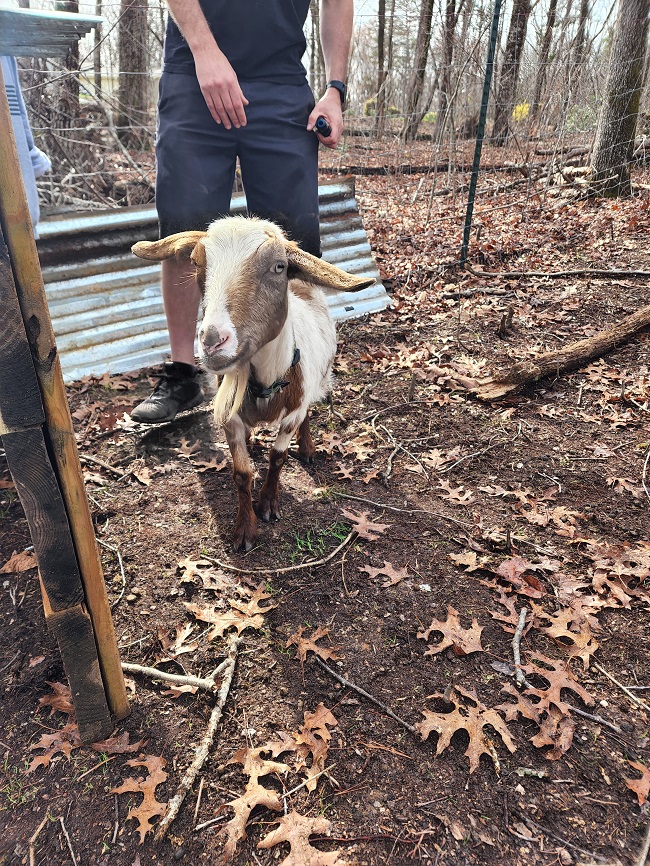
red and white goat

When it comes to worming, vaccines, and bloodwork, I recommend doing your research first. I do not give dewormer as a preventative because it is causing resistance. I also do not deworm the entire herd unless there is a need. Goats have worms. They are supposed to, since it helps with their gut health. But by giving dewormer every month, you are creating more resistance. And they are not creating new or stronger wormers.

Banner 468x60

With bloodwork, I would strongly advise asking your vets or the goat owners in your area. Our vets are extremely knowledgeable goat owners. They said that there is not a need right now. We do not have issues with CL, CAE, or other diseases IN OUR AREA. If and or when that changes, we will start getting bloodwork done. We do vaccinate for tetanus but that’s about it.

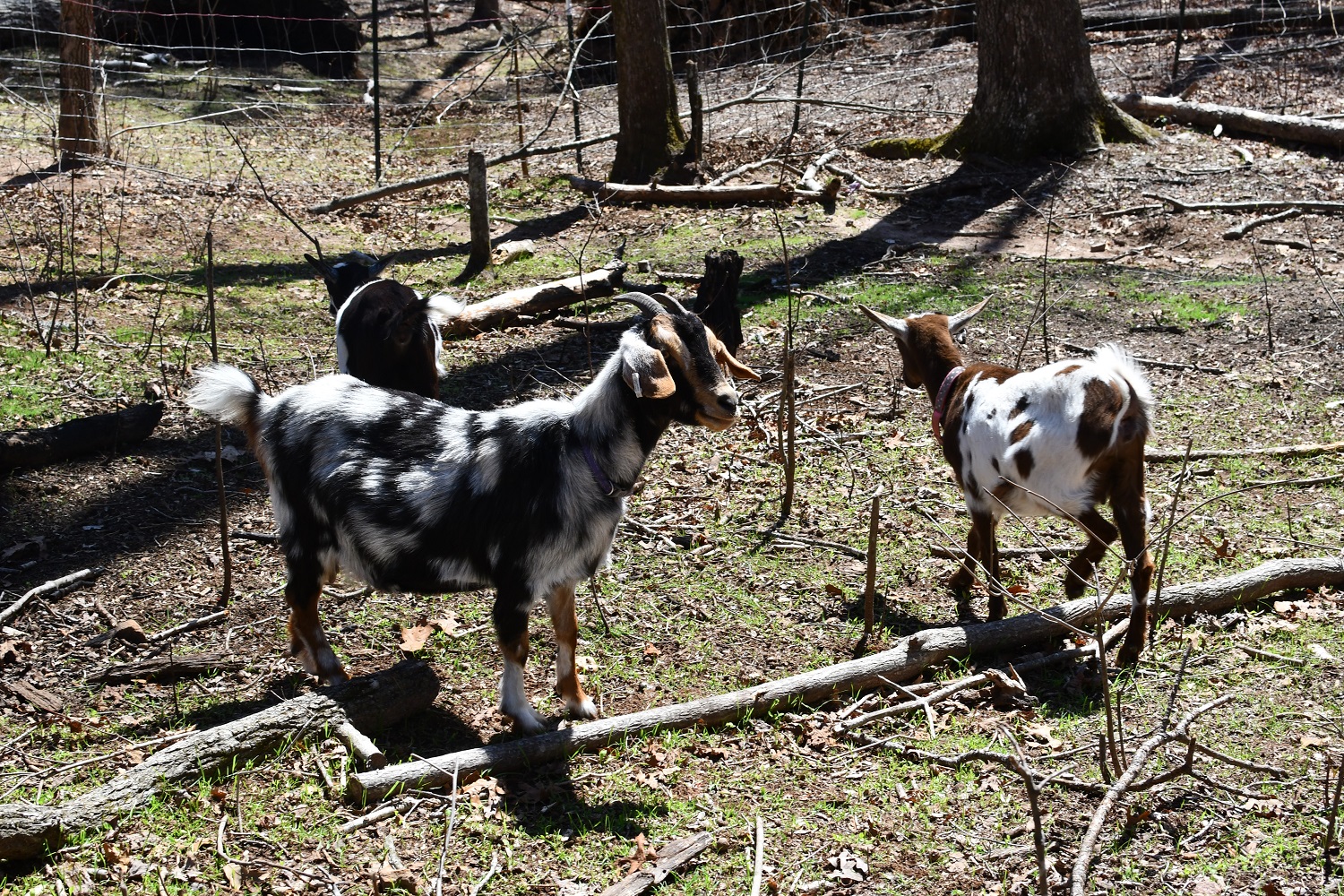
dappled black, white and brown horned goat

Bonus Tip: No matter how well socialized your goat is at their farm. They will not be social at yours, at least at first. Our newest two girls and buck were extremely social while at their home farm. When they came to us, they wanted nothing to do with us. So be prepared to give them plenty of time to adjust and follow these tips on bonding with your goat.

We Recently Bought A New Goat

As a breeder, we wanted to bring in new genetics. We are also moving away from mini Nubians and moving towards full size Nubians. So I went on to my local livestock groups on Facebook and started looking to see what was available. When I saw a goat I wanted, I would send a message that said; I’m interested in your Nubian doeling, but I have some questions. How often do you deworm your herd? Is she horned, disbudded or polled? Is her dam on site and in milk? When was she born? Is she a dam or hand raised?

The first doeling I looked at, I asked if she was hardy. This basically means is she a strong goat. Now, everyone has a different version of hardy. To me, a hardy goat is one that I can put her in pasture and never really worry about parasites or her getting sick. This particular breeder said yes, she’s hardy and comes from hardy lines. I was excited and asked, how often do you deworm? She replied back that they deworm monthly for preventative.

I am not going to buy that goat. Because I don’t deworm monthly, so there is a really good chance that goat won’t be hardy for me. Not to mention the possible nightmare of bringing resistant parasites to my farm.

Asking questions is incredibly important to ensure the safety of your goat and finding goats that fit in with your philosophies for raising/ owning goats.

Do What’s Right For You

At the end of the day, these are going to be your animals. You need to make sure that you are comfortable and happy with the care you are providing. These questions are just a checklist for brand new goat owners. But if you use common sense and don’t get suckered into buying a goat because they’re cute or in distress, you will be fine.

If you like the content I put out, feel free to buy us a coffee! It helps keep this site running, marketing and the goats in grain!

Buy me a coffee

If you like this post, feel free to share it and follow us below on our social media accounts!

  • Facebook
  • Pinterest
  • Instagram
  • YouTube
  • TikTok
  • Spotify
  • Threads

Filed Under: Animals, Goats, How To's Tagged With: Animals, breeder, goat person, Goats, livestock

JOIN TO OUR MAILING LIST!

Leave us your email to receive new posts and special offers for members only! Don't miss a thing!

Recent Posts

  • Fall Garden Guide
  • Top Mistakes With Goats
  • How To Bond With Your Goats

7 Most Common Mistakes For New Homesteaders

September 21, 2024 by Leigh 4 Comments

So you’ve bought your property. Congratulations! You have been dreaming, scheming, planning, watching YouTube, and reading blogs like this one to try and figure out all the things you want to do on your homestead. Once you’ve moved in and the dust has settled, you look around and ask, “What now?” If you’re anything like the the rest of us mere mortals, you’re going to jump in with both feet. Now, you are overwhelmed, underprepared and stressed to the max. It’s like I know, right? Welcome to my life for the last year. So here is my list of 7 most common mistakes for new homesteaders, and how to avoid them.

The Ultimate Homesteader’s Starter Bundle – Only $47!

Get the tools you need to stay organized, track profits, and manage your homestead with ease!

Includes:
✅ Schedule F Tracker – Simplify tax prep
✅ Profit Calculator – Track earnings
✅ Hay Calculator – Plan livestock feed
✅ Garden Journal – Digital & printable
✅ Herd Health Tracker – Monitor animal care
✅ Simple Budget – Manage finances
✅ Backyard Homestead eBook – Essential tips

$99 value – now just $47! Start your homesteading journey today!

Buy Now

Mistakes For New Homesteaders and Quick Fixes

Starting Too Big

We all want to hit the ground running when we start our homesteads. Before you know it, you’ve got chickens, ducks, turkey, rabbits, cows, and goats. Your garden is huge but not producing. The goats are sick all the time. You have no time to enjoy the life you are trying so hard to build.

Downsize– Seriously, I know you wanted all the critters when you moved in and the thought of selling or butchering them is abhorrent, but you need to think about where you are and what you are doing. If you are struggling with caring for them, you aren’t giving them their best life. So downsize the herd and move on.

cucumber seedling

Get Help– If you are able to, enlist the help of kids, family or neighbors. Worse case? Hire someone until you get it figured out. This can get expensive, but if you don’t want to downsize, there are plenty of 4H and FFA kids that are looking for farm work.

Pay someone– I know that this seems counterproductive to the whole homesteading thing, but consider it. Jared and I work full time, plus have part time jobs and homeschooling that take up a lot of time. The exterior of our house desperately needs a coat of paint, but we just don’t have the time to do it. So we are hiring it out. It’ll be the same when we put in our property fencing and expand the goat pens. We could absolutely do it, but paying someone else to do it frees up our time to do something else.

Logo 468x60

Not starting at all

Paralysis by analysis is a thing. You want to do all of these things but you get so overwhelmed with choices, decisions and options, that you do nothing. You’ve got a list that is three miles long but you’re not really sure which thing is the best to start with.

Pick one thing– When we first moved in, our list of the things we wanted to do was incredibly long. I had 3 legal pad filled with notes, lists, and more. What made it easy to start was that we prioritized a few things off that list. We got a chicken coop and chicks. We started clearing land and debris. Then we got goats. THEN we got overwhelmed.

two goats

Infrastructure– A lot of people don’t think about infrastructure when they are setting up their homesteads. They have this idea in their head about what they want but no idea how to execute. My suggestion is to come up with your Homestead Infrastructure and then start making plans based on that.

Not having a plan

You jumped in with both feet and no plan. You are stressed, overwhelmed and ready to throw in the towel. You ordered the chicks but don’t have a coop. The seedlings that you planted in January have no home because there is no garden. You lost your plan, your goals, and your mind

Write it down!- I talked about goal setting here. But while goals are great, if you don’t have a plan, they’re not really a goal. It’s a dream. So come up with a big picture goal/ dream and start laying out how to achieve it.

Save on Seeds

Create A Budget– Look into how much those goals, dreams, and plans are going to cost. Then start working it into your budget. This life is expensive, but no one wants to be shocked when they go to start building a barn and end up thousands of dollars in the hole.

Lack of Organization

I have lost two bags of chicken shrink bags. I’ve misplaced my goals list and plan. Don’t even get me started about the basement. If I don’t have a list, things don’t get done. Or I my ADD kicks in and I have cleaned the whole house, but it doesn’t look like it.

Declutter– Yes, I know. You know how to declutter but you just don’t have the time. Well, let me ask you this? How much time have you wasted looking for things? How much money have you wasted reordering things because you can’t find them? Go ahead and declutter.

Make lists– Make the lists, check it twice and then put it on your fridge!

The Ultimate Homesteader’s Starter Bundle – Only $47!

Get the tools you need to stay organized, track profits, and manage your homestead with ease!

Includes:
✅ Schedule F Tracker – Simplify tax prep
✅ Profit Calculator – Track earnings
✅ Hay Calculator – Plan livestock feed
✅ Garden Journal – Digital & printable
✅ Herd Health Tracker – Monitor animal care
✅ Simple Budget – Manage finances
✅ Backyard Homestead eBook – Essential tips

$99 value – now just $47! Start your homesteading journey today!

Buy Now

No Accountability

Let’s be real for a second. We think we want accountability, but we really don’t. But we REALLY do. Most of us are self starters and are excited to work on new projects. But when we get bored, disinterested or defeated, it’s easy to just walk away from it. If we don’t have someone to say no, do not get that herd of twenty goats, you’ll never get ahead.

brooder full of baby ducks and some chicks

Respect the no– When I brought up getting pigs to Jared, he flat out told me no. Not because he doesn’t want them. He does. He said no because we don’t have fencing, a dedicated spot, or anything else. We’ve got two pregnant goats as well as all the chickens. So I respected the no.

Learn to self motivate– While I struggle with wanting everything right now and ADD. Jared struggles with motivation. He has been working on self motivation for a while and is doing better. There are days when he’s just not feeling it. That makes it hard on all of us because he is the main builder and heavy lifter on the farm. Figure out what you can do to motivate yourself and do it, all the time.

Banner 468x60

Education

We all know that education is key to everything. If you don’t know how to do something, life is going to get hard if you’re not willing to learn.

Pick a subject– and become an expert on it. Or at least as much as an expert as you can. If you pick goats, good luck. You will never be an expert. Find someone who is an expert and learn as much as you can from them. Our neighbors have been farmers their entire lives, who better to teach us how to be farmers?

Subscribe to Craft Beer Club Today!

Don’t be afraid to learn as you go– Get a solid base knowledge of your topic and then put it to work. Jared was not a carpenter before this homestead, now? He has built chicken tractors, barns, and so much more. He built my beautiful greenhouse. Don’t be afraid to learn.

Not knowing and using your resources

I am guilty of this one. Our neighbor has goats. Have I ever asked him for help? Nope. Our other neighbor raised meat chickens for years. Did I ask him for help? Nope. It’s a flaw that I’m still working on.

jars of green beans getting ready for the canner

Social media and YouTube are all great resources, but nothing is better than having someone walk you through the process. I can watch something one time and tell you how to do it. But I don’t actually know how to do it, until I’ve done it.

Don’t Get Discouraged

There is a reason you wanted to homestead. Remember that reason at every turn. When things get hard, remember why you chose this life. When the chicken knocks over a $80 bottle of goat antibiotics because your child forgot to shut the garage door? Remember you wanted the chickens…. and the child. As you progress with your homestead and get discouraged about all the things you need to do, look back and see all of the things that you’ve already done. Even if that’s only managing to keep the children alive.

If you like the content I put out, feel free to buy us a coffee! It helps keep this site running, marketing and the goats in grain!

Buy me a coffee

If you like this post, feel free to share it and follow us below on our social media accounts!

  • Facebook
  • Pinterest
  • Instagram
  • YouTube
  • TikTok
  • Spotify
  • Threads

Filed Under: Animals, How To's, Our Homestead, Projects Tagged With: Chicks, cooking, Goats, kitchen, Welcome

JOIN TO OUR MAILING LIST!

Leave us your email to receive new posts and special offers for members only! Don't miss a thing!

Recent Posts

  • Fall Garden Guide
  • Top Mistakes With Goats
  • How To Bond With Your Goats

Should You Get A Goat

September 10, 2024 by Leigh Leave a Comment

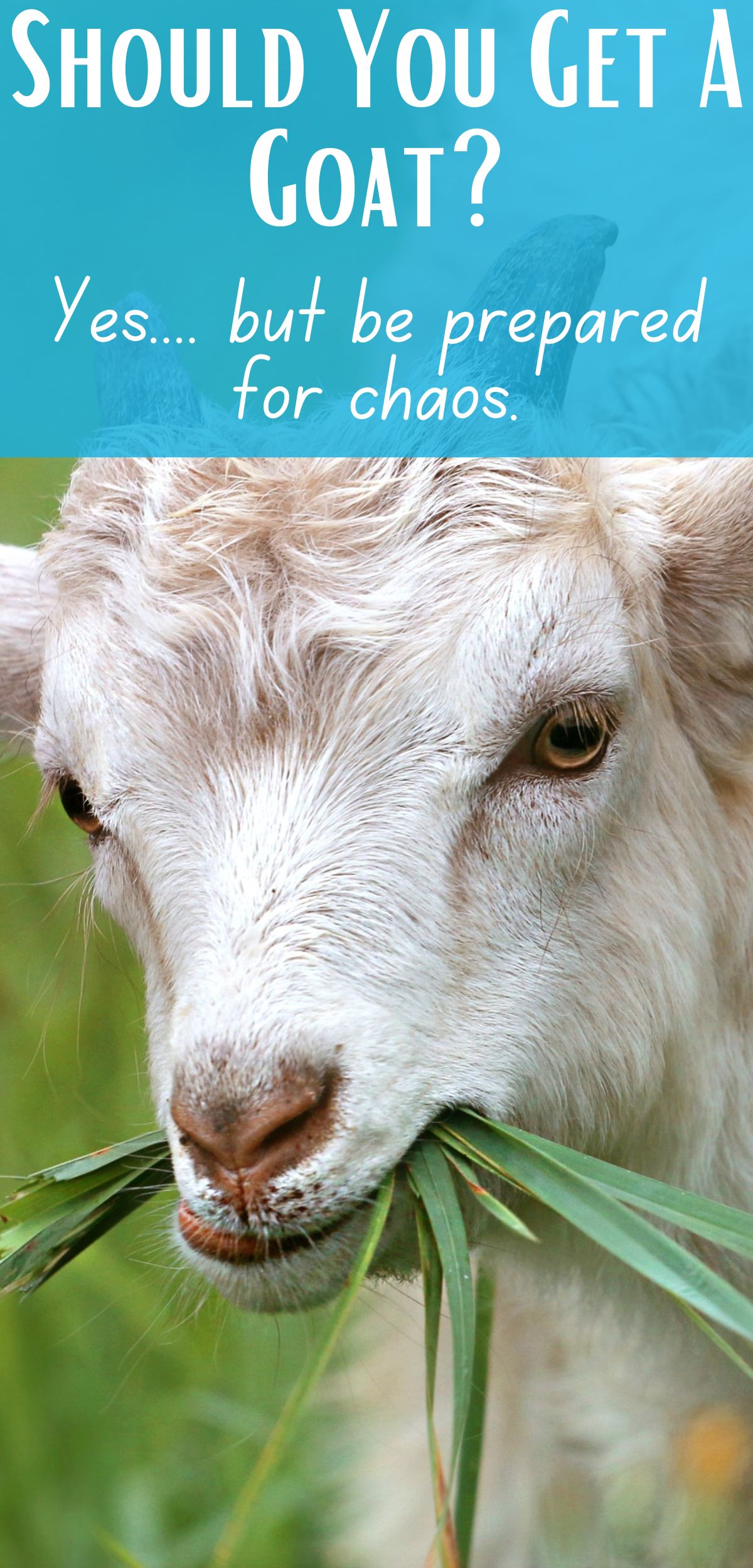
Yes, yes you should. That’s the whole post! I wish it were that simple, but it’s not. Goats are not beginner livestock. They actively try to kill themselves and will test your fences and patience. But they are by far my favorite livestock. Their antics, sweetness and desire to be around you, make them great for small farms and homesteads. You should absolutely get a goat, or twenty…

Before you go out and get a goat, check out my Goat Crash Course: Goat 101 below. There is a ton of valuable information in there because I think there are some very important things you need to consider. Like do you have the space? Are you going to milk? What is your predator load? Are you willing to put in the time to educate yourself?

goat kidding

Before we get too far into this, I have a great course on the basics of goat care. I call it Goat Crash Course: Goat 101. In this course, I explain things like types of shelter, types of feeds and hays, basic assessments and so much more! Check it out!

Buy Now
Save on Seeds

Things To Consider Before Getting A Goat

I go over a lot of this information, more in depth, in Goat 101. But there are a lot of things that you should consider before getting goats. To start, do you have enough space for goats? While they don’t require a ton of space, you do still need to be prepared if you do or don’t have enough. Another thing to consider is breed. Do you want big or small goats? Are you going to have them only for milk? Do you want meat? All of these things are important to know before you start getting goats.

Finally, do you have enough time? Goats are not terribly time consuming creatures, but they can be. And while goats may not take up a lot of your time, learning about them can take up a fair amount of your time.

Do you have enough space for a goat?

It is recommended that you have approximately 30 to 60 SQ Ft of space per goat of pasture. I disagree on both of those points. One, goats don’t need pasture, they need browse. Goats are considered Br-azers, meaning that they will consume weeds, grass, trees, etc. Putting goats on grass only will end up giving you problems with worms, too rich of grass, and similar issues.

If you only have grass, consider getting sheep or a milk cow.

The second problem is that square footage. I’m here to tell you that even 60 sq ft per goat will not last you long, let alone for a year. We had four goats in 100ft x100ft area. The briars, trees, and other weeds were over 6ft high. This should have lasted them a long time. It lasted about a month. The 2nd pasture we put them in was a tiny bit smaller but crammed full of ruffage for them. They cleared it in a little over two months.

So if you only have 60 sq ft per goat, you can absolutely still have goats, but you need to be prepared to supplement with hay, grain and pellets.

Before we get too far into this, I have a great course on the basics of goat care. I call it Goat Crash Course: Goat 101. In this course, I explain things like types of shelter, types of feeds and hays, basic assessments and so much more! Check it out!

Buy Now

Milking Goats

Let me tell you, milking goats is not for the faint of heart. You don’t get to just buy a goat and milk her. I mean, yes, you could. I would not advise it though. You have to make sure she has plenty of space and feed, gets pregnant, delivers and is healthy. Then you have to make sure that she nurses her babies for about two weeks before you start “goat sharing”.

Then you have to be careful of a kicking goat that is going to knock over your milk bucket, jump off the milk stand, or produce so little milk, that it is not worth the effort. Some goats will not let you milk them, no matter how much grain, treats, and scratches you give them. Here’s looking at you, Champ.

If you are looking to sell raw goat milk, you need to check your state regulations. In Georgia, you can sell raw, unpasteurized goat milk for human consumption but there are a TON of regulations. So make sure you know what you are allowed to do in terms of selling that milk. As of right now, we are not looking to sell goat milk. That may change in the future.

Which Goat Breed?

There are a ton of different goat breeds out there. While that is great, it also comes with a problem…. which one do you pick? For us, we really liked mini Nubians. They have great butter fat in their milk. But as we have had goats, we realized that we really wanted to have meat too. So this has caused us to move away from mini Nubians and move towards full size Nubians.

For you and your farm, you may not be able to have full size or large goats. They’re just too big for you. That’s totally okay! You can have a tiny little goat that produces a gallon of milk a day. That’s our Bella. Or you could have a huge goat that produces a tiny amount of milk, that was Stella.

One of the things I really want to more people to understand is that goats are not pets. Sure, they can be pets, but if you bought your goats for a specific purpose and they are not meeting those goals, it is okay to replace that animal. Don’t get hung up on an animal just because you feel like it’s a pet.

Predator Load

There are some other considerations to thing about when dealing with goats and really any livestock and that’s what is your predator load. It’s not just about coyote, bears, etc. What about people? Are you in an area were your goats are safe from people who want to steal them or hurt them? We are lucky in that regard. But what about neighborhood dogs, wild dogs, etc? While we don’t necessarily have a people problem, but we have a decent predator load.

What do we have? Coyotes, bears, fox, and minx. Since we have mini Nubians, the fox and minx shouldn’t give us many problems. But they could be drawn to the property because of the chicken and ducks. Then they could find the goat kids. So they are something we prepare for.

Some of the ways we have handled the predator load is with my .22 rifle and these. The idea of these boxes is to make it look like a bigger predator is standing there. So far *knock on wood* it has been working. It also is a great thing in the garden as well.

Education

I will say it again and again. Goats try to kill themselves every day. They are incredibly smart but curiosity will kill the goat. They cannot eat everything. No, they cannot eat a tin can. You know how babies put everything in their mouth? Goats are the same. They are exploring their environment with their mouth so yea, they will try to eat anything.

Tractor Supply

The best thing you can do for yourself is to study up on different blogs and figure out what your goats can eat, not eat. You need to make sure that you know what to do if they get ahold of something they shouldn’t. What happens when they get their horns stuck in a fence? They break a horn, a leg?

Should You Get A Goat

Yes. You really should. Because they are amazing creatures that have filled my life with joy. When I’m having a bad day, I go out and sit with my goats. When I am frustrated, upset, or just feeling meh, I go and play with my babies. They are seriously the best.

Yes, they are hard work. Yes, they want to escape. But I wouldn’t trade them for the world.

If you like the content I put out, feel free to buy us a coffee! It helps keep this site running, marketing and the goats in grain!

Buy me a coffee

If you like this post, feel free to share it and follow us below on our social media accounts!

  • Facebook
  • Pinterest
  • Instagram
  • YouTube
  • TikTok
  • Spotify
  • Threads

Filed Under: Animals, Goats, How To's Tagged With: Goats, Homestead

JOIN TO OUR MAILING LIST!

Leave us your email to receive new posts and special offers for members only! Don't miss a thing!

Recent Posts

  • Fall Garden Guide
  • Top Mistakes With Goats
  • How To Bond With Your Goats

Homestead Lessons: We Learn The Hard Way

August 24, 2024 by Leigh 7 Comments

Originally, this post was about the all the homestead lessons we learned the first year. But you never stop learning, especially when you homestead. So I wanted to go over all the homestead lessons we have picked up along the way. And the list keeps growing and growing.

The Ultimate Homesteader’s Starter Bundle – Only $47!

Get the tools you need to stay organized, track profits, and manage your homestead with ease!

Includes:
✅ Schedule F Tracker – Simplify tax prep
✅ Profit Calculator – Track earnings
✅ Hay Calculator – Plan livestock feed
✅ Garden Journal – Digital & printable
✅ Herd Health Tracker – Monitor animal care
✅ Simple Budget – Manage finances
✅ Backyard Homestead eBook – Essential tips

$99 value – now just $47! Start your homesteading journey today!

Buy Now

Homestead Lessons:

The Animals

Goats are not entry level animals. Seriously, wait until you have good fencing, a good vet, and patience!

Goats eat WAY more than you think they do.

Goat math is a thing. I’m still confused how our numbers jumped from 2 to 7….. Now, we are hovering around 15.

Chickens are cool, roosters are not. I threaten George with the stock pot daily.

Learn how to butcher and process your own animals. But also give yourself grace because you don’t know how.

If you don’t have a solid plan for pigs, don’t even bother. They will destroy your gardens, pens, and sanity. Sure, sometimes they’re fine. But these are also not beginner animals.

Be prepared for a ton of clean up after processing those animals.

Chicken poop is slippery on concrete. Be careful when you start chasing chickens through your basement.

Animals will die. Yes, it’s hard. No, it doesn’t get any easier.

Building

Build it right the first time. I cannot tell you the amount of times we have had to rebuild fences.

But also understand that you will rebuild things. It’s inevitable.

Don’t let the husband borrow your tools. Ever. Seriously, don’t do it. This man has broken more tape measures….

You are way more capable than you think you are. So is your spouse.

Regardless if it’s going to take longer, get your kids involved with projects. They need to learn how to do this stuff too.

Budget for a project, and then double it. If you think it’s going to cost $400 to build a fence, make sure you’ve got at least $800 set aside.

Garden

Find a local farm stand. Even if you have a garden. It’s better to know where to get fresh produce if the garden fails…. or the chickens, goats or pigs wreck it.

Canning is addictive. Get more jars than you think you will ever need, then double it.

Enjoy the abundance, even when you are drowning in cucumbers.

Learn to start your own plants. It’s WAY cheaper.

Give your garden and yourself grace! You can’t know everything about every plant!

Keep a garden journal!

Buy the seeds…. yes, all of them.

Try new varieties. Even if you have ones you love, try different ones.

Plant the flowers. Yes, all of them.

Plant ALL the plants. Even if you think it’s too many. You would be surprised what can happen in a season…. Plus that’s extra for the animals.

Also, plant for your animals too. You may not have enough to sustain them, but any discount on my feed bill makes me happy.

Planning

Have a plan A, B, C, D and E. Maybe go ahead and plan for F, G and H too. Just to be safe.

Estimate how much firewood you will use, and then double it. Maybe triple if you live in a crazy weather state like Georgia.

Go ahead and stock up on the things you think you need. Not only is it cheaper in the long run, if you need to pull off your supply in an emergency, you will be glad you have it.

Patience is the biggest lesson you will learn.

An emergency fund is going to be your saving grace when you buy a house. But when you buy a homestead? You should probably triple the amount you think you’ll need.

You are going to blow through that emergency fund when your goats get sick, dog needs surgery, well pump goes out and water heater explodes all in one month.

Understand things are going to happen that are beyond your control. Roll with it. A good attitude will get you through it.

Start a blog to detail the antics and chaos of your life. In a year, you will look back and laugh.

Learn to say no. Especially to your husband when he says goats would be a great idea 2 months into owning your homestead.

You are living the life you always wanted in a way you never dreamed. You are blessed beyond measure.

A homestead is what you make it. It starts with HOME for a reason. Enjoy it.

Bear the freeloader

Since buying our homestead, I have learned so much. These are just a few of the homestead lessons we have picked up along the way. I could write 100 more and still not be at the end of my list. But it has been worth every single penny, sleepless night, and fight. I would not trade my life for the world and all the money. Here’s to the next year on the homestead. May it be as entertaining and interesting as the last.

If you like the content I put out, feel free to buy us a coffee! It helps keep this site running, marketing and the goats in grain!

Buy me a coffee

If you like this post, feel free to share it and follow us below on our social media accounts!

  • Facebook
  • Pinterest
  • Instagram
  • YouTube
  • TikTok
  • Spotify
  • Threads

Filed Under: Animals, Canning, Chickens, Goats, How To's, Our Homestead, Pigs, Projects Tagged With: Chickens, Goats, Homestead, Projects, Welcome

JOIN TO OUR MAILING LIST!

Leave us your email to receive new posts and special offers for members only! Don't miss a thing!

Recent Posts

  • Fall Garden Guide
  • Top Mistakes With Goats
  • How To Bond With Your Goats

Is 5 Acres Enough For A Homestead?

August 20, 2024 by Leigh Leave a Comment

There has been a self sufficient movement over the last couple of years. More people are wanting to become self sustaining. They want to be able to grow their own food, raise livestock, and be less reliant on others. Personally, I am ecstatic. But how big of a property do you need? 100 acres? 50? At least 20, right? Is 5 acres enough for a homestead? The answer is yes.

The Ultimate Homesteader’s Starter Bundle – Only $47!

Get the tools you need to stay organized, track profits, and manage your homestead with ease!

Includes:
✅ Schedule F Tracker – Simplify tax prep
✅ Profit Calculator – Track earnings
✅ Hay Calculator – Plan livestock feed
✅ Garden Journal – Digital & printable
✅ Herd Health Tracker – Monitor animal care
✅ Simple Budget – Manage finances
✅ Backyard Homestead eBook – Essential tips

$99 value – now just $47! Start your homesteading journey today!

Buy Now

Is 5 Acres Enough For A Homestead

Technically, we have just over 8 acres. But 2 acres of that is a pond, and another 1.5-2 acres is a giant hill that we can’t do a lot with. So, we have 5 usable acres. We have 30ish chickens, 17 ish ducks, and 10 goats that all need a place to live. There is also the garden that needs to go somewhere. Not to mention all the small projects that need land, like the orchard, clothesline, and *fingers crossed* the pool. Or the larger projects like the shop, greenhouse, and granny pods? 5 acres is enough for a homestead.

What Are Your Goals?

Do you want to be totally self sufficient? Is this a hobby? Are you supplementing your income? Why do you want to homestead? What does a successful homestead look like to you? When you can answer those questions you can start crafting your goals. Our goals are: Have the homestead be self sustaining and self funding. Mortgage paid off in less than 15 years. Animals provide food and/ or income. Land produces 75% or more food and 100% of firewood. Yes, 5 acres can do that.

By having clear goals and expectations, it allows you to focus your energy on the things that matter.

Save on Seeds

The Plan

In another post about homesteading, I talked about what homesteading means and starting a homestead. You really need to figure out what it means for you and how you want to make this property work for you.

Before you even decide on a property, or if you already have a property, you need to plan what you want to do with it. Do you want goats? What about chickens? Are you going to try and squeeze a cow or pigs in? What does your property look like? Is it hilly or flat? Do you have access to plenty of water? Are you going to garden for fun or for purpose? These are just some of the questions that you need to answer before you get into the guts of building up your homestead.

If you want goats, do you already have browse for them? Is the fencing goat proof? How long would it take you to put up good fencing and install a good pasture? Do you already have a barn? Is there a predator problem? Do you want to milk them? Breed them? If you can answer these questions you can start to plan.

goat kidding

Before we get too far into this, I have a great course on the basics of goat care. I call it Goat Crash Course: Goat 101. In this course, I explain things like types of shelter, types of feeds and hays, basic assessments and so much more! Check it out!

Buy Now

As a beginning homesteader, you are going to want chickens. At least every beginner that I have met does. But really think about how any eggs you eat. Jared usually eats 3 eggs a day but no one else really does. When we make breakfast for dinner, we normally go through about a dozen eggs. But what about expansion. Do you want to sell eggs? Do you want to sell chicks? Are you going to be a victim of chicken math? Are you going to raise meat birds?

What about raising larger livestock, do you want pigs or cows? With enough pasture land, you can have a cow on an acre. You could have several pigs as well. The key is knowing your space and maximizing it.

Banner 468x60

Get To Work On The Plan

Most people only need a 800 sq ft (or 200 sq ft per person) garden to feed their family of 4 for a year. That’s not really a ton of space when you are talking about having 5 acres. Since we can a ton and give it to family, we decided to triple that. Plus, tomato math is a thing. We also knew that we were going to put in an orchard and decided that strategically planting trees throughout the property would benefit us more than having trees in rows. This would help with shade and keep pests from demolishing the entire crop.

We decided that we wanted to up our egg production for sales as well as reducing our need for chicken at the store. Then we bought more chickens and all of them are dual purpose birds, meaning that they are both egg layers and meat birds. We are also looking into selling any extra chicks.

Then we bought ducks…. Initially, I bought 10 meat ducks and 10 egg ducks. After our losses, I’m pretty sure I now have a total of 17 pet ducks. I’m not sure if I can butcher these guys. The way I see it though, I have 10 production meat ducks and those guys can lay and hatch our meat ducks…. At least that’s what I’m telling myself.

Our goats are for milking and breeding. Goats are a long term investment. If we can keep them alive and healthy, and all our does produce milk and good kids, we are looking at making about $9,000-11,000/ year. Not counting vet, feed, fencing, etc. That’s also not counting cheese, butter, soap or lotion sales.

Stick To Your Plan

We went off plan by getting the goats. They are no where near returning their investment. But they are so damn cute that we let it slide. Unfortunately, we had to put pigs on the back burner because of it. Same with meat rabbits. Homesteading on 5 acres or less is totally doable, but I will say it again and again. Set your goals, prioritize them, and get your plan in motion.

I would love to hear how you are homesteading or planning to homestead your property.

If you like the content I put out, feel free to buy us a coffee! It helps keep this site running, marketing and the goats in grain!

Buy me a coffee

If you like this post, feel free to share it and follow us below on our social media accounts!

  • Facebook
  • Pinterest
  • Instagram
  • YouTube
  • TikTok
  • Spotify
  • Threads

Filed Under: How To's, Our Homestead Tagged With: Chickens, Chicks, Eggs, Goats, Homestead, Welcome

JOIN TO OUR MAILING LIST!

Leave us your email to receive new posts and special offers for members only! Don't miss a thing!

Recent Posts

  • Fall Garden Guide
  • Top Mistakes With Goats
  • How To Bond With Your Goats

Homestead Daily Schedule

August 13, 2024 by Leigh Leave a Comment

On our homestead, this looks a little different than most. Due to our work schedules, one of us is gone 48 of 72 hours. Sometimes more. However, the goats still need to be milked, fed and let out. Chickens and ducks still need feed, water, and be let out. Dogs are also hungry and need to go to the bathroom. And all the other chores need to be done. So regardless of who is home, the daily schedule looks pretty much the same.

The Ultimate Homesteader’s Starter Bundle – Only $47!

Get the tools you need to stay organized, track profits, and manage your homestead with ease!

Includes:
✅ Schedule F Tracker – Simplify tax prep
✅ Profit Calculator – Track earnings
✅ Hay Calculator – Plan livestock feed
✅ Garden Journal – Digital & printable
✅ Herd Health Tracker – Monitor animal care
✅ Simple Budget – Manage finances
✅ Backyard Homestead eBook – Essential tips

$99 value – now just $47! Start your homesteading journey today!

Buy Now

What Is Our Homestead Daily Schedule?

As I mentioned above, our days are set up on a 3 day rotation. On the first day, I go to work and Jared is the responsible party until he goes to work the next day. Day 2 is when I come home and handle my portion of the homestead chores. On day 3 we are both home and try to squeak out as much time together as possible.

Day 1 Daily Schedule

This is my work day, so Jared is home with the boys. He usually gets up with me and we drink coffee and hang out for a few minutes before I head to work. Sometimes, he will tell me about what he has planned for the day. But more often then not, I don’t really care per say. The way I see it, he is a grown ass man and knows what he needs to do for the day. Unless there is something pressing, I don’t worry too much about what he’s doing.

That being said, most of the time he is working on whatever project we are doing. In the summer, it’s usually firewood. In the winter, it’s usually household projects. Spring is reserved for garden projects and fall is for yard clean up.

He also makes sure that the boys are doing their school work and the house doesn’t burn down.

Day 2 Daily Schedule

This is the day that he goes to work and I am coming home. Normally, I get home a little later in the morning. After getting myself cleaned up and my stuff put away, I get the boys started on their school work and I start working on whatever inside projects need to be handled. Sometimes this is blog or household work. Other times this could be getting seeds together and planted. It really depends on what the season is.

But I can tell you that the day after a 24 hour shift is left really loose. I have run calls all night and come home with a pile of chores that HAVE to get done and it’s awful. Instead, we give ourselves and each other grace when it comes to the day after shift. We just don’t put a lot of stuff on ourselves.

That being said, the goats still need to be checked and fed. Chickens and ducks still need to be fed and let out. The garden still needs to be harvested, planted or maintained. But we don’t stress about getting the to do list done.

Day 3 Daily Schedule

For me, the day starts around 8am. Blu gets her morning meds and mom needs coffee. The first set of dogs are let out and showers start. I will usually start a load of laundry and work on it throughout the day.

If I have goats in milk, my day starts a little earlier so that I can get them milked before they are screaming for their food and to be let out. I also do a quick glance at the herd to make sure everyone is healthy and happy.

After I get the goats done, I am in the garden first thing to beat the heat. I try to get things harvested before the heat of the day really hits. I will also try to get the first batches of preservation going. Whether it’s dehydrating tomatoes or squash or getting a canner filled. Depending on the season, I may be planting more in the garden.

I will also start the boys on their homeschool stuff for the day. As the day heats up, I scramble into the house to keep from overheating (y’all the Georgia heat is no joke!). I will work on the blog or general household tasks until it cools down enough to be able to go back outside.

Then it’s dinner time. After dinner, the boys take care of their chores. I finish up laundry and head to bed, where I read for about 4 hours.

Homesteading Daily Schedule With Kids

One of the biggest issues that I see new homesteaders, and hell even parents, making is that they don’t give their kids chores. You will overwhelm yourself and your partner if you do not let those kids earn their keep. We have a pay to play rule which means that if you want to play video games, watch TV or do what YOU want to do, you have to “pay” for that by doing your chores, school work, etc. So make sure that your kiddos are helping.

After everyone is done and animals are fed, we start working on school work, this is usually around 930-10. Jared and I have different views on this. Usually I let them unschool and Jared is more structured. Unschooling is when the child directs what they would like to learn about. I feel like this gives them the opportunity to learn about the things that interest them and helps them learn better. Jared prefers to help them with “normal” school work.

Neither way is wrong and the boys seem to enjoy having the flexibility. Win Win.

We get them involved with various aspects of homesteading to not only teach them how to do things that are necessary for survival if the SHTF but also because this is invaluable information. And this still counts as their schooling since they are learning things like how to follow the instructions on how to put together a metal shed. Or how much firewood makes a cord and then measuring the stack that they’ve made. They also get crash courses in animal husbandry if an animal gets sick and needs medications. They’ve also been a huge help in the garden and ask a ton of great questions. Most that I don’t have an answer to, so we ask google a lot of questions.

Don’t Beat Yourself Up

One of the things that I see a lot of new homesteaders do, especially those of us that work off farm, is that they feel like they have to do ALL the things, RIGHT NOW! That can’t be further from the truth. In fact, the opposite is more true; you have time. I talk about homesteading goals and preparation here, but the short version is figure out where you want to be, and take small actionable steps to get there.

Homesteading, while hard work, should NOT be so stressful that you don’t want or can’t do it. You don’t have to get everything done right now! Take a breath and give yourself kindness and grace to make at a reasonable pace. You don’t need to burn yourself out within the first year.

If you like the content I put out, feel free to buy us a coffee! It helps keep this site running, marketing and the goats in grain!

Buy me a coffee

If you like this post, feel free to share it and follow us below on our social media accounts!

  • Facebook
  • Pinterest
  • Instagram
  • YouTube
  • TikTok
  • Spotify
  • Threads

Filed Under: Animals, Canning, Chickens, Garden, Goats, Homeschool, How To's, Our Homestead, Pigs, Projects Tagged With: Canning, cast iron, Chickens, Chicks, cooking, Eggs, Goats, Homestead, kitchen, Welcome

JOIN TO OUR MAILING LIST!

Leave us your email to receive new posts and special offers for members only! Don't miss a thing!

Recent Posts

  • Fall Garden Guide
  • Top Mistakes With Goats
  • How To Bond With Your Goats

Can Homesteading Save Money

August 6, 2024 by Leigh 2 Comments

We can answer this right now, no. Homesteading will not save you money. In fact, homesteading will cost you money. A lot of money. In the first year we were on our homestead we exhausted our emergency fund four separate times. Can homesteading save money? No. Not at first. But in the long run, it will absolutely save you money. Just maybe not in the ways your expecting. Be sure to read to the end for the “pay offs” I’m talking about.

The Ultimate Homesteader’s Starter Bundle – Only $47!

Get the tools you need to stay organized, track profits, and manage your homestead with ease!

Includes:
✅ Schedule F Tracker – Simplify tax prep
✅ Profit Calculator – Track earnings
✅ Hay Calculator – Plan livestock feed
✅ Garden Journal – Digital & printable
✅ Herd Health Tracker – Monitor animal care
✅ Simple Budget – Manage finances
✅ Backyard Homestead eBook – Essential tips

$99 value – now just $47! Start your homesteading journey today!

Buy Now

Why Should You Homestead Then?

Homesteading is not necessarily about saving money. Sure, there are somethings that we have saved a ton of money on like eggs, milk, and chicken.

We no longer buy eggs because our chickens have solved that problem. We don’t have to buy chicken at the grocery store because we butcher our own. We don’t buy milk from the store unless we run out. But when you look at the $100/month we have saved by how much we have spent? We are solidly in the red.

Spend More To Make More?

Because the farm is an LLC, which I highly recommend you do, we are able to write off a lot for taxes. That being said, our first year’s return was eye opening. We spent over $3,000 in vet bills and another $5,000 on feed. That was only in six months. The following year we doubled that. That doesn’t include the well pump that went out, or the water heater. Or all the fencing and structures for the goats and chickens.

But homesteading is not about saving money. It’s about living off the land, having livestock, learning new skills, and being self sufficient. Of course homesteading means different things for different people.

The Ultimate Homesteader’s Starter Bundle – Only $47!

Get the tools you need to stay organized, track profits, and manage your homestead with ease!

Includes:
✅ Schedule F Tracker – Simplify tax prep
✅ Profit Calculator – Track earnings
✅ Hay Calculator – Plan livestock feed
✅ Garden Journal – Digital & printable
✅ Herd Health Tracker – Monitor animal care
✅ Simple Budget – Manage finances
✅ Backyard Homestead eBook – Essential tips

$99 value – now just $47! Start your homesteading journey today!

Buy Now

Homesteading Is A Long Game When It Comes To Saving Money

What I have found is that homesteading is a long term goal and commitment. You are probably not going to save money your first or your second year. If you are starting your homestead from the ground up, you will probably not see a positive until year five. But it really depends on your goals. If you want your homestead completely self sufficient but you are starting from scratch, it will take time. If you came into a property that has fencing, a barn, and garden. You are probably already ahead of the game.

Why Homesteading Doesn’t Save Money?

The reality is that you are going to spend money at first. Rarely, though it does happen, are you going to stumble onto a property that is absolutely perfect for you. You are going to have to spend money to make that property the way you want it.

I preach the importance of setting goals and figuring out your WHY. But probably the most important thing is to define what your vision of a successful homestead is. This is no different. When you are trying to set up your homestead, you want to make sure that you aren’t wasting money on things that don’t matter in the long run.

While you may not see a big financial gain, you will see the “pay off” in other areas.

When Does Homesteading “Pay Off”?

For us, homesteading started to pay off within the first year. But it’s probably not the way you’re thinking. When we bought our property, we defined, very quickly, what a successful homestead meant, and then wrote down our year one, five and ten year goals. That’s when we started to see the “pay off.”

Chickens Doing Double Duty

The pay off was a significant decrease in fleas and ticks. This was because the chickens free ranged and took care of those bugs. That meant that Jared and Jaxson weren’t being eaten alive. This made them happier and more likely to be outside.

The chickens also helped break up the compacted soil in the garden spaces. They ate the grubs and bugs that could destroy the next years crops. They’re manure became compost for the next years garden.

Their eggs are SO much better than anything you can get from the store. Bright orange yolks mean very healthy and happy chickens. But it also means that egg is packed with nutrients.

Another great thing about chickens is that we can incubate the eggs because we have a rooster. That means that technically, we never have to buy another batch of chickens. Which of course means that we will buy more chickens because… chicken math is a thing.

cropped-3.jpg

Are you looking for garden journal prompts, but aren’t interested in a weekly email? Check out our 365 Garden Journal Prompts! This is an amazing, all in one, yearly product that you only pay for once.

Buy Now!

Goats Earning Their Keep

Initially, we bought the goats to be long term lawn mowers. But after falling in love with these creatures, we started breeding and milking them. Their pay off has been a little slower because they are expensive creatures to maintain. But I realized very quickly that I could tolerate their milk.

Their pay off is in my health. For the first time in years, I am able to consume milk with pain. While I am not lactose intolerant, I do have issues with gut health. Their milk has helped ease that pain and has increased the good bacteria in my gut. Not to mention, I know exactly what is in their feed, hay, treats, etc.

Before we get too far into this, I have a great course on the basics of goat care. I call it Goat Crash Course: Goat 101. In this course, I explain things like types of shelter, types of feeds and hays, basic assessments and so much more! Check it out!

Buy Now

The Garden Producing

Gardening is probably the biggest way that we save money on the homestead. But again, not at first and not in the way you are probably thinking. Our big garden is getting a face lift in 2024 and that means a TON of money is getting dumped into it.

Like the budget for it is about $10,000 and includes the orchard, chicken runs, fencing, the gazebo and more. That’s okay, though. Because the amount of money it saves us isn’t about the weekly or monthly dollars saved at the grocery store.

It’s about the health benefits of the garden.

We do not spray our gardens with ANYTHING. There are no pesticides, herbicides or fertilizers used…. at all. It’s grown in soil that comes from our neighbors horse manure and our own animals bedding. Neither one of us deworm or use chemicals our animals unless absolutely necessary.

That means that our food from the garden is literally the healthiest thing we can consume on the planet. This pays off HUGE because we are filling our plates with food that is so nutrient dense, that it helps ward off sickness, disease and other issues that are common for people who eat the standard American diet.

goat kidding

Before we get too far into this, I have a great course on the basics of goat care. I call it Goat Crash Course: Goat 101. In this course, I explain things like types of shelter, types of feeds and hays, basic assessments and so much more! Check it out!

Buy Now

No, homesteading probably won’t save you money

But what homesteading will do is shorten your supply train. Homesteading will reduce your need on the grocery store. It will make you healthier, even if it’s only because you are more active. There are so many other pay offs when it comes to homesteading that it’s okay that it doesn’t save you a ton of money at first.

It will pay off in the end.

If you like the content I put out, feel free to buy us a coffee! It helps keep this site running, marketing and the goats in grain!

Buy me a coffee

If you like this post, feel free to share it and follow us below on our social media accounts!
  • Facebook
  • Pinterest
  • Instagram
  • YouTube
  • TikTok
  • Spotify
  • Threads

Filed Under: Animals, Canning, Chickens, Goats, How To's, Our Homestead, Pigs, Projects Tagged With: Canning, cast iron, Chickens, Chicks, cooking, Eggs, Goats, Homestead, kitchen, Welcome

JOIN TO OUR MAILING LIST!

Leave us your email to receive new posts and special offers for members only! Don't miss a thing!

Recent Posts

  • Fall Garden Guide
  • Top Mistakes With Goats
  • How To Bond With Your Goats

What to Plant in Your Vegetable Garden

July 30, 2024 by Leigh Leave a Comment

If you are new to gardening or homesteading, and you’ve been breaking your brain trying to figure out what to plant in your vegetable garden, allow me to help you! The main things I look at when planning a garden is what do I want to eat, how much space do I have, and leave room for experimenting.

cropped-3.jpg

Are you looking for garden journal prompts, but aren’t interested in a weekly email? Check out our 365 Garden Journal Prompts! This is an amazing, all in one, yearly product that you only pay for once.

Buy Now!

What To Plant In Your Gardens

Through the years, various gardens and designs, I have figured out a few things about gardening. The first is to always give more space to fruits and vegetables that you know you like. Next, is to figure out how much space I am willing to give to the stuff I like, but also the things I want to try. Finally, what do I want to try and grow.

I found Southern Dreams Homestead to have a great article for beginners and their gardens. They have a ton of great information and it’s really helpful if you don’t know what you’re doing. Learning and Yearning also has a great article about getting started with organic gardening.

cropped-3.jpg

Are you looking for garden journal prompts, but aren’t interested in a weekly email? Check out our 365 Garden Journal Prompts! This is an amazing, all in one, yearly product that you only pay for once.

Buy Now!

What fruits and vegetables do you like?

This is a very serious question that people usually get tripped up on. I despise raw tomatoes. I do not want it anywhere near my hamburger or salad. BUT I absolutely love salsa, ketchup, BBQ sauce, and more. That means I should probably not plant a ton of slicing tomatoes and plant more sauce or paste tomatoes. While, yes, Jared loves to eat raw tomatoes, he is the only one. So it doesn’t make a lot of sense to plant an entire row of slicers just for him. 

To figure out what to plant in your garden, I would sit down and really think about all the fruits and vegetables you like to eat. Then, I would think about all the cooked versions of those foods you like. Do you like pasta sauce? That’s tomatoes, peppers, onion, garlic, basil, oregano, etc. If you have the space in your garden to grow those things. Then do it!

Another thing to consider is your animals. If you have chickens or goats, you can absolutely grow extra squash for them. As you are figuring out what to plant, also think about all the things you can grow to help off set your feed bills.

Before we get too far into this, I have a great course on the basics of goat care. I call it Goat Crash Course: Goat 101. In this course, I explain things like types of shelter, types of feeds and hays, basic assessments and so much more! Check it out!

Buy Now

How Much to Plant?

Again this one is pretty simple, it comes down to space and what you like. Going back to my tomato example, out of the four of us, Jared is the only one that likes raw tomatoes. I’m not going to take up an entire row of space for slicers. But what I will do is plant a couple slicers and grape tomatoes so that he has something to snack on. The majority of my tomato space will be taken up with beefsteak or slicers.

But how much to plant? This is a varying formula that takes time to dial in. The best way to do this is to figure out how much each plant should produce and then figure out how much you need. As you grow, you will adjust how much you eat/ use but to start figure out how much you think you’ll eat and how much each plant should grow. Below is a how to become a victim of tomato math.

cropped-3.jpg

Are you looking for garden journal prompts, but aren’t interested in a weekly email? Check out our 365 Garden Journal Prompts! This is an amazing, all in one, yearly product that you only pay for once.

Buy Now!

What is tomato math?

Well, it’s the same as chicken and goat math. If I need two eggs a day for breakfast, I need at least ten chickens. That is chicken math. No, it doesn’t make any sense which is the point. Goat math is a little different because you start with two and then end up with nine and I’m still not really sure how that happened.

Tomato math is simply thinking that 25 plants is not nearly enough to sustain my family’s tomato needs and you end up with 150 plants and a ton of tomatoes. Not to mention trying to figure out what your going to do with 1,2000+ pounds of tomatoes.

The best way to figure out how much you need to plant is simple.

Figure out what the average yield for the type of plant: tomatoes are 8-10# per plant, peas are about 30 plants per person, potatoes are 5-10# per plant and so on. Then figure out how many pounds you need. I know we will go through about 100# per person for potatoes per year for cubed, shredded, whole, and fries. So I need 400#.

Then divide the number of pounds the plant yields to the number pounds you need;

Potatoes- 400/5=80 potato plants.

If you don’t know how many pounds you need, estimate and write down what you planted. When you harvest, write down the weight. Keep an eye on how much you are using and when it’s gone, figure up how many days until your next harvest. This is where garden journals are absolutely necessary!

Our herd health bundle helps you keep track of your herd’s health. Includes the goat assessment, herd check sheets AND Herd Health Tracker!

Buy Now

Experimenting With Your Garden

A lot of times, people only grow what they will eat. And that’s great if you are limited on space. But you are missing out on whole other varieties! I did a podcast about trying different varieties here. We didn’t know that we liked cabbage until we had it, same with broccoli, winter squash, radishes, etc.

Don’t be afraid to give some space to other plants in your garden. If you don’t like them, I’m sure your chickens will love them.

Are you getting overwhelmed in the garden? Stressed? Or just not enjoying the garden like you used to? Check out our garden prompts! We send out weekly emails that get you back in the garden and out of your head! Turn the garden back into a place of love and joy instead of frustration and headache!

Subscribe Now!

Try not to get overwhelmed

I know that is way easier said than done. At the end of the day, even planting one tomato plant is better than doing nothing at all. So don’t sweat it, just get out there and start digging in the dirt and enjoy the wonder of growing your own food.

If you decide to start seeds instead of buying plants, which I highly recommend, The Homesteading RD has a great guide for starting pepper plants. Since my own pepper starts didn’t do so well, I will be using some of these tips next year.

You can start big or small, it’s totally up to you. What you need to remember is that just by planting something you are doing something to decrease your dependency on the grocery store. It doesn’t matter that you didn’t harvest thousands of pounds of food. The reality is that you tried.

If your garden doesn’t produce a ton like you wanted it to, try again. I found these articles helpful for fall planting or just helping your soil through fall. Though Georgia doesn’t have much of a fall, more of a HOT, not so hot, freezing, hot…. you get the picture.

The Ultimate Homesteader’s Starter Bundle – Only $47!

Get the tools you need to stay organized, track profits, and manage your homestead with ease!

Includes:
✅ Schedule F Tracker – Simplify tax prep
✅ Profit Calculator – Track earnings
✅ Hay Calculator – Plan livestock feed
✅ Garden Journal – Digital & printable
✅ Herd Health Tracker – Monitor animal care
✅ Simple Budget – Manage finances
✅ Backyard Homestead eBook – Essential tips

$99 value – now just $47! Start your homesteading journey today!

Buy Now

Other Helpful Tips and Tricks

Over at Vintage Homestead, you can figure out how to take a soil samples. This is great for figuring out if you need extra nitrogen, fertilizer, or other materials added to your garden. Once you’ve taken your samples and have your results you can head over to Learning and Yearning to figure out how to add materials to your soil naturally.

If you’re anything like me and you want to know which plants like rhubarb and help them, head over to The Homesteading RD to take a look at what they have to say.

I am guilty of wanting to mulch everything in the garden and Learning and Yearning has a great article on how to avoid those pitfalls that comes with it.

If you like the content I put out, feel free to buy us a coffee! It helps keep this site running, marketing and the goats in grain!

Buy me a coffee

If you like this post, feel free to share it and follow us below on our social media accounts!

  • Facebook
  • Pinterest
  • Instagram
  • YouTube
  • TikTok
  • Spotify
  • Threads

Filed Under: Animals, Canning, Chickens, Garden, Goats, How To's, Pigs, Projects Tagged With: cooking, Homestead, Organic, Plants

JOIN TO OUR MAILING LIST!

Leave us your email to receive new posts and special offers for members only! Don't miss a thing!

Recent Posts

  • Fall Garden Guide
  • Top Mistakes With Goats
  • How To Bond With Your Goats

How To Pressure Can Green Beans

July 20, 2024 by Leigh 2 Comments

Jump to Recipe

I am extremely picky when it comes to green beans. I cannot stand mushy green beans. The thought of the skin of the green bean scraping against my teeth is enough to make me want to vomit. So the only way I will buy, can or otherwise consume green beans is frenched green beans. Today, I went to my local farmers market for strawberries. Yes, they are worth the two hour round trip drive and I saw they had bushels of green beans! Score! So today I’m going pressure can green beans.

The Ultimate Homesteader’s Starter Bundle – Only $47!

Get the tools you need to stay organized, track profits, and manage your homestead with ease!

Includes:
✅ Schedule F Tracker – Simplify tax prep
✅ Profit Calculator – Track earnings
✅ Hay Calculator – Plan livestock feed
✅ Garden Journal – Digital & printable
✅ Herd Health Tracker – Monitor animal care
✅ Simple Budget – Manage finances
✅ Backyard Homestead eBook – Essential tips

$99 value – now just $47! Start your homesteading journey today!

Buy Now

Pressure Canning Green Beans

The first thing you need is fresh green beans. Straight from the garden is the best but today we are working with what we’ve got. I got a bushel which is about 30# of green beans and will yield about 25 quart jars of beans. This is not precise. Sometimes a bushel is only 25# and only 18# of usable green beans. So be prepared for less or more.

You’ll need a couple bowls, cold water for soaking, jars, pressure canner and the assorted tools that go with pressure canning.

Let’s Get Snapping

You’ll need a couple bowls so you can snap to your hearts content. This is seriously my favorite part. No one wants to help because it’s pretty mindless which is why it’s my favorite part. Last year I snapped two bushels of green beans in six hours. I took my time and got to watch my farm. I watched the goats play, the chickens scratch, and my boys help Jared build. All while I took a load off.

If you don’t know how to snap beans, it’s very simple. Snap off the ends at about 1/2 inch, roughly. Throw the ends in a bowl. Then snap the bean in half or thirds depending on how big you want your pieces. Just work through your bushel/ bag.

If you have goats or chickens, they will love you for giving them the ends. All of the animals fight over the beans, tops and bottoms and of course anything that gets dropped on the floor.

Soak Your Beans

Next clean your sink or a cooler and let them sit in cool water for about 30 minutes. You don’t have to do this step but I feel like it gets all the dirt and grime off your beans. You can do this before you start snapping, go for it, it’s totally up to you.

Also, I will “agitate” the water with my hands to help scrub off any dirt or debris that is on the beans.

I like using a cooler because I can just dump the processed beans straight into a cooler of cool water on the porch and I don’t have to move. Which is ideal considering I usually process 40-50 quarts of green beans at a time.

French Cut Green Beans

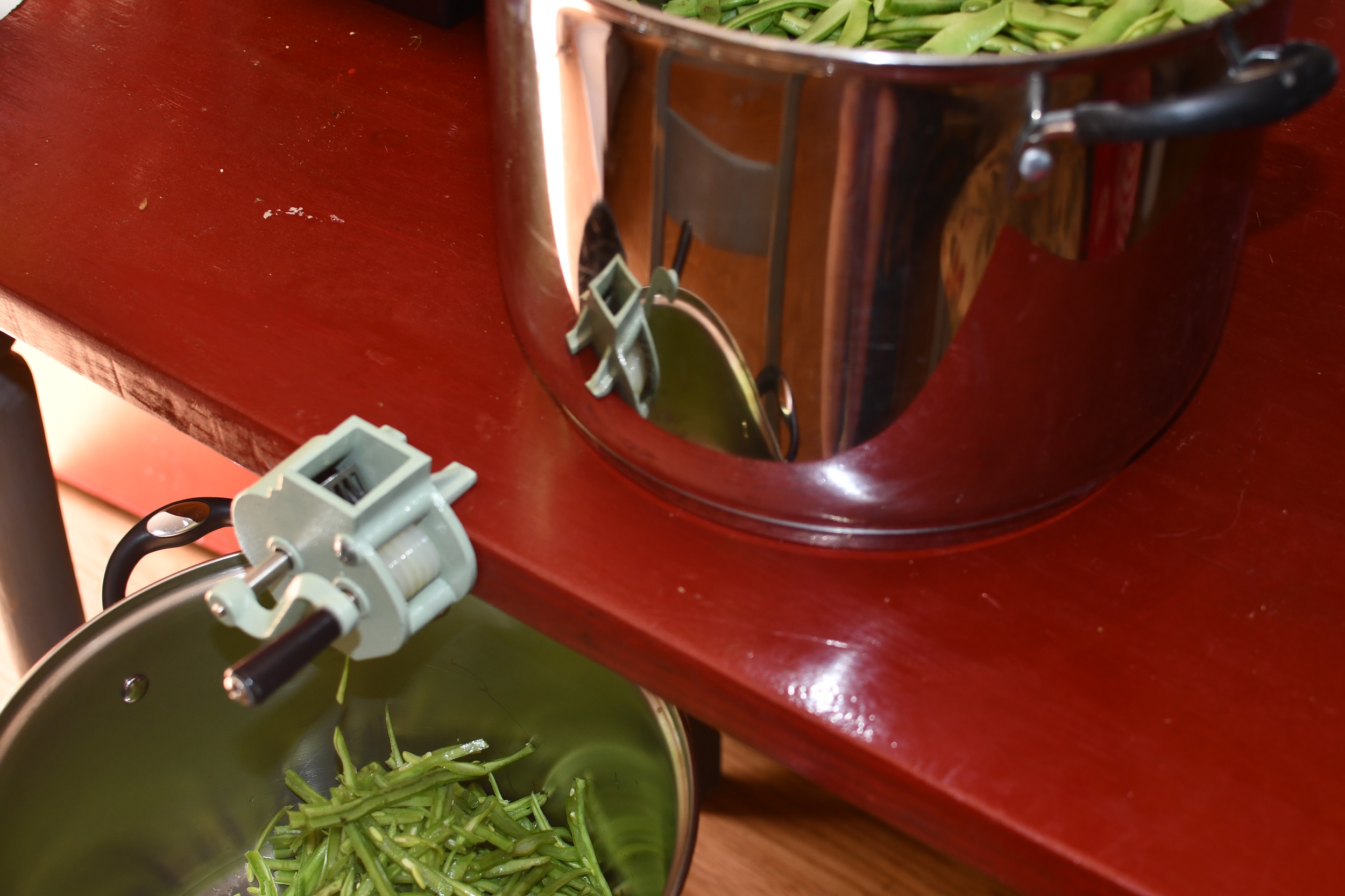
Once they are clean, I run them through the frencher. If you don’t have a frencher or don’t want french cut beans just skip this step. But make sure that you snap your beans a little smaller about an inch long.

If I am canning green beans, which is the entire point of this post, I only can French cut green beans. So you’ll need a frencher like this one and while I love it, it does get stuck if the bean is too big or too hard. It also requires you to attach it to a counter, table, etc and sometimes it just doesn’t work that well. But it’s the best crank version and I don’t like the manual ones.

Get Your Canner Ready

Next, get your canners ready. You need a pressure canner. I have two similar to this one but mine don’t have the gauge. You don’t HAVE to have the gauge. If you head to your local Wal-Mart they should have one that doesn’t have a gauge. While you’re at Wal-Mart go ahead and get at least two cases of quart mason jars. Ball is the most common, but Azure Standard has some really great jars as well. Also pick up the tool pack that has a canning funnel, canning tongs, and the de-bubbler. It should look like this.

Your specific canner should tell you how much water to put into it. My canner says three quarts. It will not fill the canner, and you don’t want it to. Go ahead and fill it to your manufactures instructions and get the water boiling.

Pack Your Green Beans Into Jars

While waiting on your water to boil, you’re going to start packing your jars. Using your funnel and clean hands start packing your green beans into your jars. I usually pack till the green beans are about an inch and a half from the top. I usually push down to get as many beans in as possible but you also don’t want to pack it so full. Set it off to the side until you have a canner full. This is usually seven-ten quart jars depending on the size of your canner.

Once you have a full canner ready (not in the canner yet), go ahead and fill each jar with room temperature water till you have 1″ head space. Head space refers to the space from the top of the food/water to the top of the jar. Next, you’re going to use the de-bubbler to get all the air bubbles out.

I’m not going to lie to you, I gently tap the jar on the counter until all the bubbles are at the top. It’s worked well for me, usually because I can’t find the de-bubbler thing. Add more water to the jar to maintain the 1″ head space.

Then wipe the rim of the jar with a paper towel or rag dipped in vinegar. Put the lid and then ring on to finger tip tight and you are ready to put them in the canner. I usually place them in the canner all at once so that nothing starts cooking before I’m ready.

Loading Your Pressure Canner

By the time you are ready to start adding your jars, your water should be boiling or close. Go ahead and place your jars in the canner and place the lid per your canners instructions. The normal process for most canners is to let the canner vent for ten minutes before placing your weight on the vent. But again, follow your canners instructions.

My canners have a pressure lock that will pop up once it has come to pressure and shortly after that the rocker will rock. Your canner may be different.

Once the weight starts to rock, or you are up to your PSI on your gauge, you start your time. I will also usually drop the temp on the burner at this point too. I have it on high to get everything up to pressure but will usually drop it to medium to medium high once the weight is rocking. You only want the weight to rock about once every few seconds. Usually mine just gently jiggles.

Green beans need to be processed for 25 minutes. Depending on your altitude will depend on your actual times. I process mine at 25 minutes at 15 PSI for quarts because I am over 1000 feet above sea level.

PS Loading a canner is pretty universal. That process is pretty much the same for everything you are going to pressure can except headspace, time and pressure (Your PSI will never change unless you love altitude).

After Processing Your Pressure Canned Green Beans

When time is up, simply turn off the heat and wait about ten minutes. After that you can move your canner off the burner. Some people move it before, some never touch it. It’s up to you. If I’ve got multiple canners going, I will pull mine off the burner.

You MUST let your canner depressurize naturally! This is none negotiable. At best, you will ruin your food. At worst you can warp your canner or blow up your kitchen. Let’s not do that.

Once the pressure lock drops you can remove ONLY the weight. Once the pressure lock drops and you have removed the weight, give it about ten minutes or so and then you should be able to crack the canner open.

There will be steam that comes out so please be careful. Leave the lid on for another ten minutes or so. The other way you can do it is just put your canner off to the side and let it set for about an hour to hour and a half. This should give it plenty of time to depressurize naturally. When in doubt, leave it alone.

Unloading Your Canner

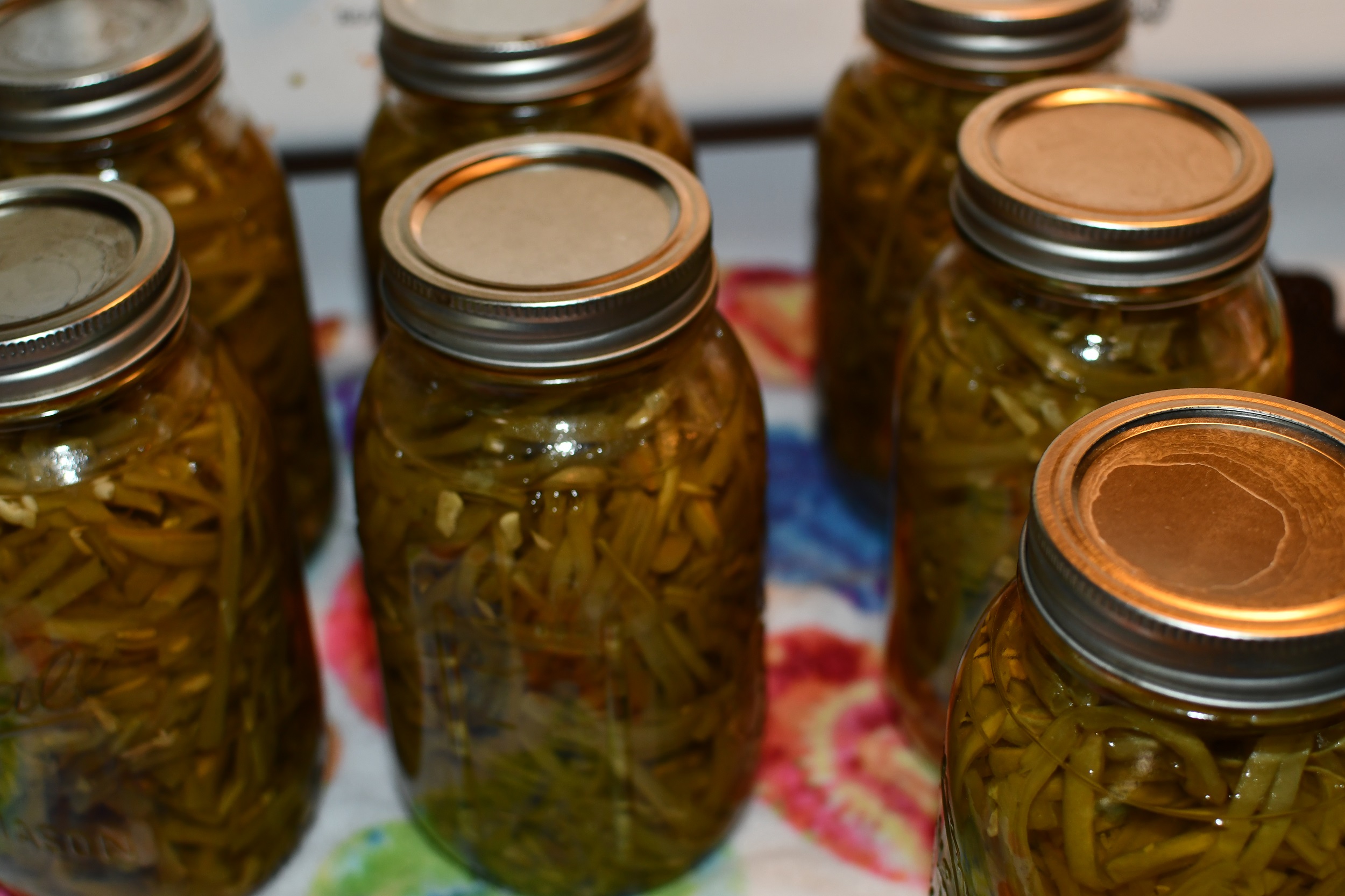
You can then take the lid off and carefully lift out the jars using the jar tongs. Again, be very careful. The contents of the canner and jars are still extremely hot. I put the jars on a folded towel to start to cool. Within 24hrs you will hear the sweet pinging of success! You can test your seal after 24hrs by pressing down on the lid. If there is give, it’s not sealed. If it sealed, you won’t feel or hear anything when you press it.

Anything that is not sealed needs to go into the fridge or be eaten within a couple of days.

Also, please, please, please remove your rings from the jars before storage. Normally, I am very much your kitchen, your rules. But on this one, I’m going to be a little more vocal…. The reason we remove rings from jars is because if that jar becomes unsealed for any reason, you will never know it if the ring is still on. As temperatures change in your storage area, seals can break. As bacterial get in and start growing, it could re-seal itself.

I’ve had a few jars that we forgot to take the ring off of and pulled months later? There was no way to tell that the lid resealed and the food inside looked perfectly fine. But there was a film on the top of the food. So be careful. Was the food safe, maybe? I wasn’t willing to risk it. So do yourself a favor and remove the rings.

But that’s it! You will love your green beans!

If you like the content I put out, feel free to buy us a coffee! It helps keep this site running, marketing and the goats in grain!

Buy me a coffee
Print Recipe
Print

Pressure Canned French Cut Green Beans

The best green beans that you can make and can yourself.
Prep Time6 hours hrs
Active Time2 hours hrs
Total Time8 hours hrs

Equipment

  • 1 Pressure Canner
  • 1 Canning Kit Funnels, Canning Tongs, and Debubbler
  • 1 Green Bean Frencher
  • 2 Cases of Quart Jars You can use pints but get double the amount
  • All Bowls and Stock pots You will probably need every last one by the time this is all said and done

Materials

  • 1 bushel Green Beans

Instructions

  • Snap your green beans by snapping off the top and bottom. Then snap them into desired lengths. I tend to snap mine in 2in sections but it's not a big deal if they are longer or shorter
  • Rinse beans well. I usually have a big stock pot full of water and I just throw the beans into that as I snap
  • Once you are either done snapping or you have filled your first pot, drain the water. Now you will start frenching. If you are using the crank tool then make sure you've got a pot under it. Start feeding your green beans through it.
  • When you arms feel like jello from cranking, take a break and fill up your pressure canner with water to per manufacture instructions. Mine says 3qts.
    Get it on the stove to start boiling.
  • Next start filling your jars with green beans. I tend to pack my jars pretty full. Fill with room temperature water, wipe the rim with a vinegar rag and place a lid and ring on it. Tighten ring to finger tight.
    Set it off to the side
  • Once you have a full canner of jars, gently set the jars into the canner. If the water is already boiling you can secure your canning lid. Follow manufacture instructions on using your canner. Every single one is different.
  • Process for 20 minutes for pints and 25 for quarts at 10# of pressure. Adjust for altitude.
  • When processing is over allow canner to depressurize naturally. This could take a couple hours depending on your model so be prepared.
  • Once canner is cool and safe to open, bring your jars out and allow them to cool. Listen for the ping and check your seals the next morning. Anything that doesn't seal, put in the fridge and eat within a couple of days.

If you like this post, feel free to share it and follow us below on our social media accounts!

  • Facebook
  • Pinterest
  • Instagram
  • YouTube
  • TikTok
  • Spotify
  • Threads

Filed Under: Canning, Canning Recipes, How To's Tagged With: Canning, cooking, green beans, Homestead, kitchen, pressure canning, Recipes

JOIN TO OUR MAILING LIST!

Leave us your email to receive new posts and special offers for members only! Don't miss a thing!

Recent Posts

  • Fall Garden Guide
  • Top Mistakes With Goats
  • How To Bond With Your Goats

How To Care For Goats

July 13, 2024 by Leigh 6 Comments

So you’re thinking about getting a goat. You’re doing your research and probably thinking, “Whoa, there’s a lot to learn.” You would be right, but don’t let that stop you. Just by having some basic supplies on hand and a willingness to learn, puts you ahead of the game. Learning how to care for goats is actually pretty simple with the right supplies, resources and attitude. It would be impossible to write one post about caring for goats. It’s simply too much. But this post is a good start and below you can find our goat crash course.

Before we get too far into this, I have a great course on the basics of goat care. I call it Goat Crash Course: Goat 101. In this course, I explain things like types of shelter, types of feeds and hays, basic assessments and so much more! Check it out!

Buy Now

How To Care For Goats

When we first started looking into goats, I was extremely hesitant. I knew from research that they were a ton of work and hard to keep alive, but I didn’t realize how much more there was to learn. I have learned a ton in the years that I’ve been raising and managing goats. From caring for hooves to goat assessments, what medicines to keep on hand, and what goats can eat, the opportunities for education and adventure is never ending with goats.

Our herd health bundle helps you keep track of your herd’s health. Includes the goat assessment, herd check sheets AND Herd Health Tracker!

Buy Now

Medications to keep on hand

This is by no means a comprehensive list or replacement for veterinarian advise or treatment.

Vitamin B Complex is another necessity. When your goat isn’t acting 100%, sometimes it’s simple vitamin deficiency. Other times, their entire system is out of whack and you need to start working to get them back on track. The real need with the B complex is actually the thiamine in it. Goats will usually make their own but when their rumen is out of whack, they can get really sick. If you can get your hands on thiamine from the vet, I highly suggest that you get some.

LA200, Tylan 200 or similar antibiotic. Sometimes your goat will have a cough, gunky eyes or nose, or other infection. Having antibiotics on hand helps save you from a vet visit. As of this revision, you need a vet to get antibiotics. If you have a good relationship with your regular vet, they may be able to help you when it comes to your livestock.

Dewormers- now I could go in depth about the various types of dewormers. Both chemical and natural. But I’m not going to. The reason is because there are so many different types of parasites and treatment protocols for them, it would make this blog post insanely long. What I will say is talk to the person you are getting your goats from and see what they are giving their animals. That will point you in the right direction for care. I do talk in depth about deworming goats here if you are interested in it.

BluKote– This amazing can of awesome has literally saved our goat’s lives. I was told by a farmer once that BluKote is so good, it will regrow legs. And while obviously, that’s not true, it will help keep the leg from rotting off. It’s an antifungal, kind of antibacterial and quick drying agent. Stella got tangled up in sheet metal and sliced up all four legs in various spots. Some deep enough to need sutures. But have you ever tried to suture a goat? We sprayed this on her, kept her contained for a few days and within about 6 hours she had scabs and within about 2 days she was almost completely healed. So no, it won’t regrow legs. But it does protect the ones they have.

Before we get too far into this, I have a great course on the basics of goat care. I call it Goat Crash Course: Goat 101. In this course, I explain things like types of shelter, types of feeds and hays, basic assessments and so much more! Check it out!

Buy Now

Supplies to have on hand to care for goats

A thermometer is number one for a reason. Goats must stay around 101-103. This tells you a lot about what you could be dealing with. Too cold and you need to start actively rewarming them. Too warm and you may have an infection.

Syringes and Needles– Having a variety of different syringes is huge. I’ve got goats that range from 5# to 100# so having everything from 3cc-60cc syringes is extremely helpful. Also make sure that whatever size you get they are Luer Lock! Seriously, you do not want to be sprayed in the face with an antibiotic because the pressure shot off the needle. Yes, it’s happened. With needles, I highly recommend getting 20 ga or 18 ga. Anything smaller than 20 gauge and you will have a really hard time getting medication into a squirming goat. We use 18ga as a rule but we have 20s as well.

Free choice baking soda is a mineral that goats will eat to help soothe their stomach. Goats can bloat or become acidotic and baking soda can help them help themselves.

Free choice minerals is very important in making sure that they have ample minerals that your area may be deficient in. We use these as the goats love them. *** As of this revision (6/24) we use the goat mineral buffet from Avalon Farms and our goats love it. We have seen huge improvements in their health and coats. If you can’t get this or don’t have the “right set up” regular free choice is fine.

All the buckets. When you think you have enough, grab a couple more. We use a 5gal buckets for water and 3gal buckets for feeding. I attach the feed buckets to the fence with strong clips so they have plenty of space for everyone to have something. I also hang a couple of these on the fences to give even more options. It really helps to keep everyone from crowding on each other.

As long as you have plenty of ruffage, you shouldn’t need a lot of feed for them. Bucks, male goats, don’t get grain or at least not a lot. We fed our goats off the land for the first year to help get everything clear. Now we are bringing in pellets and grains to help supplement the hay until our pastures take hold. But really we could put them back in the briars and they would be very happy.

Hoof Trimmers– A couple pairs of hoof trimmers are great. Even better if you can take them apart to sharpen them. We’ve got probably 5 or so pairs around the farm. I like to have extras just in case one set is dull or we need to clean them while trimming hooves.

goat kidding

Before we get too far into this, I have a great course on the basics of goat care. I call it Goat Crash Course: Goat 101. In this course, I explain things like types of shelter, types of feeds and hays, basic assessments and so much more! Check it out!

Buy Now

Other Resources

I would also recommend getting into a couple of different goat groups on Facebook. Most vets do not see livestock and if they do see livestock, they are probably not well versed in goats. That being said, these different groups on Facebook are people with years and years of experience. I have trusted them with my babies on multiple occasions and they have helped me pull my goats through when a vet was clueless. Successful Goating With Rosie and Goat Emergency Team are the two that I recommend.

Lastly, enjoy your goats. Seriously, they are some of the coolest critters and I am so glad that Jared talked me into getting them. When I am stressed to the max with work, the kids, or anything, I go out and sit with my babies. They make all of it go away. How can Midas’ antics not put a smile on your face?

If you like the content I put out, feel free to buy us a coffee! It helps keep this site running, marketing and the goats in grain!

Buy me a coffee

If you like this post, feel free to share it and follow us below on our social media accounts!

  • Facebook
  • Pinterest
  • Instagram
  • YouTube
  • TikTok
  • Spotify
  • Threads

Filed Under: Animals, Goats, How To's Tagged With: Goats, Homestead, Welcome

JOIN TO OUR MAILING LIST!

Leave us your email to receive new posts and special offers for members only! Don't miss a thing!

Recent Posts

  • Fall Garden Guide
  • Top Mistakes With Goats
  • How To Bond With Your Goats
  • « Go to Previous Page
  • Page 1
  • Page 2
  • Page 3
  • Page 4
  • Page 5
  • Page 6
  • Page 7
  • Go to Next Page »
  • Animals
    • Chickens
    • Farm Dogs
    • Goats
  • Garden
    • Compost
    • Garden Projects
    • Seeds and Plants
    • Garden Journal
    • Working With Food
      • Recipes
      • Freezing Foods
      • Dehydrating Foods
      • Canning Tips And Tricks
        • Canning Inventory Sheets
  • Helpful Info
    • Welcome to the Homestead!
    • Emergency Preparedness
    • Frequently Asked Questions
    • Goal Setting
    • Project List
    • Shop Digital Products
      • Hay Calculator
      • Farm Expense And Income Tracker
      • Goat Crash Course: 101
      • Garden Journal Prompts
      • Schedule C Tracker
      • Schedule C Tracker
      • The Homestead Bundle
  • The Truths
  • Episode List
  • Start Here
    • Privacy Policy
    • Affiliate Disclosure
    • Let’s Get in Touch
    • Members Only Library
    • Welcome To Our Homestead

Footer

  • Email
  • Facebook
  • Instagram
  • Pinterest

COME AND GET IT!

Leave us your email to receive new posts and special offers for members only! Don't miss a thing!

· Midnight Theme

Copyright © 2026 · Midnight Theme on Genesis Framework · WordPress · Log in