• Skip to primary navigation
  • Skip to main content
  • Skip to primary sidebar
  • Skip to footer

Steel Raven Farms

Where muck boots meet ground.

  • Animals
    • Chickens
    • Farm Dogs
    • Goats
  • Garden
    • Compost
    • Garden Projects
    • Seeds and Plants
    • Garden Journal
    • Working With Food
      • Recipes
      • Freezing Foods
      • Dehydrating Foods
      • Canning Tips And Tricks
        • Canning Inventory Sheets
  • Helpful Info
    • Welcome to the Homestead!
    • Emergency Preparedness
    • Frequently Asked Questions
    • Goal Setting
    • Project List
    • Shop Digital Products
      • Hay Calculator
      • Farm Expense And Income Tracker
      • Goat Crash Course: 101
      • Garden Journal Prompts
      • Schedule C Tracker
      • Schedule C Tracker
      • The Homestead Bundle
  • The Truths
  • Episode List
  • Start Here
    • Privacy Policy
    • Affiliate Disclosure
    • Let’s Get in Touch
    • Members Only Library
    • Welcome To Our Homestead

livestock

Master Planting List

January 11, 2025 by Leigh Leave a Comment

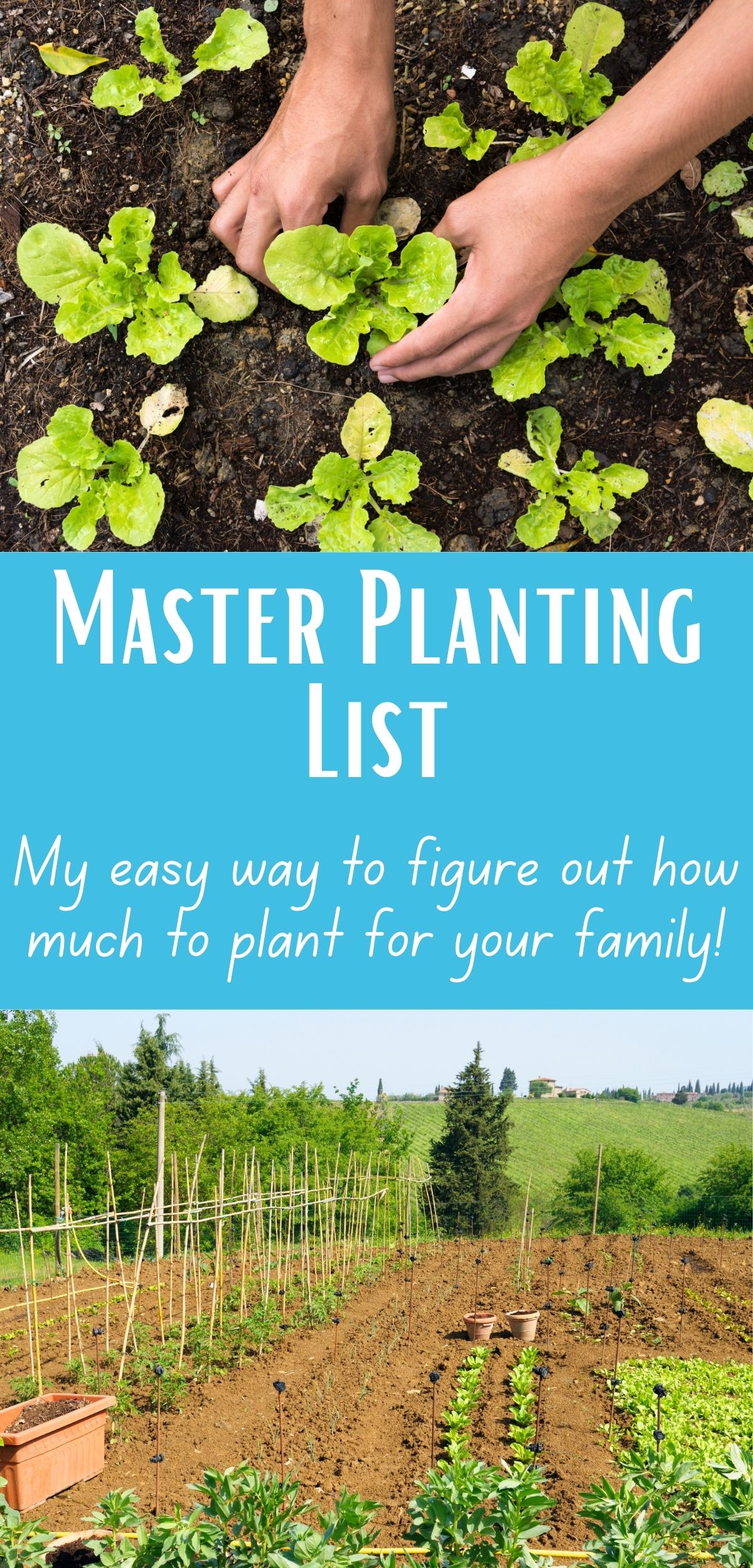
Over the last several years, I have tried to figure out the best way to help new gardeners, garden effectively. Sometimes it helps new gardeners, other times? Maybe not so much. So today, I am going to give you my master planting list for my family of 4 and livestock. I’m also going to give you what I would have done differently if I needed to start over with the knowledge that I have now.
cropped-3.jpg

Are you looking for garden journal prompts, but aren’t interested in a weekly email? Check out our 365 Garden Journal Prompts! This is an amazing, all in one, yearly product that you only pay for once.

Buy Now!

My Master Planting List

The biggest problem with new gardeners that I have learned is that people expect gardening to be easy and then get discouraged when they struggle. They think they have a black thumb and give up. Or, the exact opposite happens. They have a GREAT year, and are overconfident next year. But if you aren’t exactly sure where you fall because this year is your first garden, let me help you out.

In this blog post, I am going to give you my master planting list but also how to figure out exactly how much space you need, how many plants to start or purchase, and then finally, how to put it all together.

How Much Space

Realistically, you only need about 100 Sq Ft (10ft x10ft) of space per person for a fresh eating garden. If you are looking to put up food for winter, then you need about 200 Sq Ft (10×20). This is going to vary greatly based the space you have, what you are growing, and how much meat you consume.

But what you “should” have may not be what you actually have. So how can you increase your space? Container gardens are a great option. Especially if you are focusing on fresh eating. A 5 gallon bucket with good soil and drainage can easily grow a tomato plant and it only has about a 12 inch footprint. And with vertical support, a cucumber plant can easily trellis and give you a ton of food.

Another thing to consider is adding additional plants within a space. A good example of this is planting green beans with tomatoes. A tomato needs about 12-18 inches of space between tomato plants. But that doesn’t mean that those 12-18 inches needs to be empty. You can plant something else in between those tomatoes.

As you stretch your gardening muscle and learn what works and what doesn’t, you will find more space for more plants.

How Many Plants

This is the nitty gritty of what everyone really wants to know when it comes to new gardeners. How many plants do I need…? There are a ton of formulas to figure this out, and to be honest, they are all really useful. And completely overwhelming.

If you are starting from scratch and you don’t have a clue what is going on, that’s totally ok. My rule of thumb is a minimum of 1 plant per person. At the very least, this gets you started on a garden and gives you plenty of information for your next garden.

If you are a family of 4, this means 4 tomato plants. If well cared for, that tomato plant will yield you about 25 to 40# of tomatoes depending on variety. But this doesn’t work well for say corn which only gives 1 or 2 ears of corn per stalk.

You will have to do some research about what you eat, what you are comfortable preserving, your space, etc. Which is why I say that you have to work on your gardening skills.

Putting Your Garden Together

First, let’s say that you have a 25ftx 50ft space that you can convert into a garden and are a family of 4. Then let’s say that you are not super comfortable with pressure canning but you have plenty of freezer space. Here is what I would plant within my garden:

50 Tomato Plants- That is 1 row in my garden and will give me approximately 400# for fresh eating and preservation. I can water bath can tomato sauce, dice tomato, and salsa.

4 Cucumber Plants- If put on a fence, cattle panel or something to get it off the ground, it will take up 4 sq ft and yield approximately 100#, if well cared for, for fresh eating and livestock food. If picked small, you can pickle them for shelf stability.

4 Zucchini or Summer Squash Plants- This will take up approximately 8 sq ft and yield approximately 40# of squash if reasonably cared for. Summer squashes do not can well but if flash frozen does well in the freezer to be used in soups and stews. Excess can be given to livestock.

50 Corn- Plant in a square instead of a row to increase pollination. This will yield between 50-100 ears of corn. It can be eaten fresh OR decobbed and put in the freezer for later. Cobs, husks and silks can all be fed to livestock.

8 Ft (16 plants) Green Beans- If you really like green beans and you have room, add more. They only need about 6in between plants. Green beans are super easy to grow, are delicious and usually yield about 1/2# per plant, if well cared for. They also hold up well to being frozen. Unfortunately, you should pressure can green beans.

8 Ft (16 plants) Peas- Now, peas are a cool ish weather crop. So make sure that if you are planting them in the summer, they are in shade and get well watered. Shelling peas usually yield about 2# for 16 plants but this will vary on variety and care.

10 Pepper Plants- If you don’t like peppers, plant extra tomatoes. Peppers do not need or want a ton of water and usually do well in high heat, high sun areas. You will get about 200 hot peppers or about 70 bell or sweet peppers with 10 plants. Peppers do not can well unless they are in something like salsa or relish. But they do freeze or dehydrate extremely well.

10 Potato Plants- Potatoes are the unsung hero in a world that tells us starch and carbs are bad for us. Personally, I freaking love potatoes and could eat them every day. Regardless, potatoes yield about 10# per plant and can store in a cool dry place for months. If you get an indeterminate variety, that number goes up to about 15#. You can pretty much forget about your potatoes and are all but guaranteed to get something.

Tips From A Not So Master Gardener

  1. Start where you are and learn as you go.
  2. Don’t panic if you can’t do all organic, everything. Simply growing your own food is better than nothing.
  3. Gardening should be fun, not a horrible chore.
  4. Gardening is not intuitive, it is a skill and should be treated as such.
  5. WRITE IT DOWN! Trust me, you will not remember.
  6. Learn to save seeds, but don’t sweat it if you can’t.
  7. Start small and grow as you learn.
  8. Gardening is not easy.
  9. Mulch is your friend.
  10. Learn to grow your own soil!

If you like the content I put out, feel free to buy us a coffee! It helps keep this site running, marketing and the goats in grain!

Buy me a coffee

If you like this post, feel free to share it and follow us below on our social media accounts!
  • Facebook
  • Pinterest
  • Instagram
  • YouTube
  • TikTok
  • Spotify
  • Threads

Filed Under: Garden, Homestead Planning Tagged With: cooking, Garden, Homestead, livestock, Planning

JOIN TO OUR MAILING LIST!

Leave us your email to receive new posts and special offers for members only! Don't miss a thing!

Recent Posts

  • Fall Garden Guide
  • Top Mistakes With Goats
  • How To Bond With Your Goats

How To Prepare For Storms

November 16, 2024 by Leigh Leave a Comment

As I write this, I have finished battening down the hatches, and got everything as ready as possible for Hurricane Helene. But as I was doing all of this, I realized that many people, and many new homesteaders, don’t know what to do in case of storms. While it’s a day late, and a dollar short, keep this information in your back pocket so that you can prepare for storms that will come your way.

The Ultimate Homesteader’s Starter Bundle – Only $47!

Get the tools you need to stay organized, track profits, and manage your homestead with ease!

Includes:
✅ Schedule F Tracker – Simplify tax prep
✅ Profit Calculator – Track earnings
✅ Hay Calculator – Plan livestock feed
✅ Garden Journal – Digital & printable
✅ Herd Health Tracker – Monitor animal care
✅ Simple Budget – Manage finances
✅ Backyard Homestead eBook – Essential tips

$99 value – now just $47! Start your homesteading journey today!

Buy Now

How To Prepare For Storms

First and foremost, a storm does not need to be a cat 5 hurricane. It could be any inclement weather event. In this blog post, I’m going to show you how we get prepared for storms as well as general rules to follow in the event of storms coming in.

Now, this is going to be homestead friendly, but if you don’t have livestock, that’s okay. Just input your animal there.

Preparing Food For Storms

The number one thing that I see people struggling with when it comes to storms is food. Why on Earth do we need to stock up on milk and bread? As a mom of two boys? I get the beer part. But I’ve lived in the south pretty much my entire life and I have never had a milk sandwich. Can anyone explain this?

All joking aside, I do grab a gallon of milk if my girls aren’t in milk and a couple loaves of bread for sandwiches. I just don’t understand why the shelves are cleared of these things.

While food supplies will look different for everyone, one of the big things I let go of is the healthiness of the foods. The reality is that this is a stressful time for everyone. You are stressed to the max because the power is out. The dogs are driving you crazy and the kids are fighting like they are trying out for UFC. It’s okay to have a box of fruit snacks to lessen the tension. Plus, it’s a treat.

When it comes to storm supplies, there are some food things that you should have on hand no matter the situation. Things like canned, dehydrated and freeze dried goods. Personally, I keep at least two weeks worth of food on hand at all times anyways.

Our storm food supplies generally look like various soups. It’s quick, easy and filling. Plus, I can throw it on the camp stove and let it simmer away for eating throughout the day. It’s also a great way to use up any veggies that go bad because the fridge is out.

Preparing Water For Storms

If I know that I have a storm coming, I will buy two cases of water per person, per day of expected power outage. For example, we are a family of four and we are expected to have 2 days of storms. That means that I need to have a minimum of 8 cases of water. But I also make sure to have plenty of water for our animals ready.

Now, when it’s a rain storm, I don’t worry about water for livestock as much. Their water containers will fill with rain water. But I make sure to have a couple 5 gallon jugs for the dogs.

Another thing to consider when you have storms coming is how you’re going to flush your toilets. People forget that when they lose power, they lose water!

Make sure that you have a way to clean yourself, kids, animals, and cook. Brushing your teeth, washing your face and hands, are all things that people don’t really think about when they lose power or running water.

Pro tip, when you are canning throughout the year, go ahead and fill those empty spots in your canner with jars filled with water. This will give you sterile water for wound cleansing, hand or dish washing, or drinking water.

Handling Power Outages

I wrote a whole blog post about power outages here, but I want to touch on it again because people are always so shocked. The biggest take away is to have banks to charge devices. I use these and love them. The next step, stay off your devices unless you absolutely have to! I know that it keeps the kids happy and you sane, but when it’s day 3 without power, you will thank me.

Another thing to remember, as I stated above, when you lose power, you will have no access to running water. Unless you have a generator. So be mindful about how you are going to flush your toilets, brush your teeth, etc. Always make sure you have more water than you think you need.

Also, don’t open your fridge or freezers! One of the things we do is grab out whatever meat we need for the expected outage, and put it in the fridge or the top part of the freezer. We don’t want to open those fridges and freezers unless we have no choice.

If you have freezers for your meat, I highly suggest getting some of these thermometers. Make sure to get the ones that have a gauge that goes in the fridge/ freezer so that you aren’t having to open the door to check the temp. These are a great, cheap way to keep an eye on your foods to make sure they won’t go bad.

Lastly, in preparing for the storm, get those freezers filled to capacity. The more dead space in your freezer, the quicker they will start to defrost. One of the things that has saved us in past storms/ power outages, was having fully stocked freezers.

Special Concerns For Livestock

One of the things that I try to do is make sure that there is fresh, fluffy bedding for the goats and chickens. If those animals go outside in the rain, they are wet. They need to dry off quickly. Their bedding will get them dry pretty quickly as well as soak up water that comes in from the ground.

Another big consideration is to get their feed up off the ground. If you even have a potential for flooding, you need to get that feed up off the ground. We have our feed on pallets and that really reduces the chances of bags getting wet.

Lastly, check your medicine stock. The last thing we want is to have a goat go down and you have no medicine for them. I usually check my meds every quarter and replace as needed. But when I have a storm approaching, I check again. Better to be safe than sorry.

Not Prepared For Hurricane Helene

I’m pretty lucky that I don’t usually have to go crazy to prepare for a storm. Usually, it’s just checking what I have against what I need. However, Hurricane Helene snuck up on me. I literally found out that this storm was going to be a doozy yesterday (Wednesday 9/25/24). The storm hit us Friday morning around 4 am. So I had to scramble to get a couple cases of water and snacks from the grocery store.

Normally, I don’t have to do that. I have several gallons of water at the ready, IBC’s that we can use for flushing toilets and food stocked in the fridge, basement and freezers…. Except I was not paying the slightest bit of attention to this storm.

When I got home from work this morning, I stowed away all our lawn chairs, double checked the motorcycles, covered the 4wheeler, made sure the chainsaws were ready, and checked our propane and fuel levels. Then I checked the animals, batteries, candles, and then took a nap.

The only reason I am able to completely space on these storms and not panic is because we do the prep work throughout the year.

If you like the content I put out, feel free to buy us a coffee! It helps keep this site running, marketing and the goats in grain!

Buy me a coffee

If you like this post, feel free to share it and follow us below on our social media accounts!

  • Facebook
  • Pinterest
  • Instagram
  • YouTube
  • TikTok
  • Spotify
  • Threads

Filed Under: Emergency Preparation, Homestead Planning Tagged With: emergency, food security, livestock, preparedness, prepping

JOIN TO OUR MAILING LIST!

Leave us your email to receive new posts and special offers for members only! Don't miss a thing!

Recent Posts

  • Fall Garden Guide
  • Top Mistakes With Goats
  • How To Bond With Your Goats

Questions To Ask Before Buying A Goat

September 28, 2024 by Leigh 9 Comments

There are a ton of ways to get a goat. You could go to your local livestock auction, look on different market places, or find a breeder local to you. Goats are not difficult to find, but what you see is not always what you get. At least with the goat itself. There are questions you need to ask about your prospective goats and if you are not well versed? You are probably going to get taken advantage of. Before you learn what to ask before buying a goat, you need to ask yourself some questions first. A goat health checklist if you will.

goat kidding

Before we get too far into this, I have a great course on the basics of goat care. I call it Goat Crash Course: Goat 101. In this course, I explain things like types of shelter, types of feeds and hays, basic assessments and so much more! Check it out!

Buy Now

Before Buying A Goat, Ask Yourself

Why do you want goats? Is it for fiber? Land clearing? Diary? Breeding? Just because?

Do you have a secure area for them to be in? Is it safe from predators?

Are you willing to get and do all the things that they need to be healthy and happy?

Are you squeamish with blood, guts, poop, or birthing?

Goat nose

Now What Do You Ask A Breeder?

When I was thinking of all the questions I would ask a breeder, I struggled for two reasons. 1) There are a ton of questions that I ask. But they are based off of what my goals are for my herd. 2) A lot of people raise their goats in different ways and their philosophies with raising goats may not be the same as mine or yours. That being said, no matter what your philosophy is, these are some pretty standard questions to ask before buying a goat.

When was the goat born? How many kids did the doe have?

Any complications to the doe or kids during delivery?

Is the goat horned, polled or disbudded?

Are they registered or registerable?

Do you worm your entire herd or just those with a positive fecal? What were the results of the last fecal?

Are they up to date on any vaccines, bloodwork, or whatever is applicable in your area/ philosophy.

two goat kids

As A Breeder

I am pretty bougie when it comes to my goats. I would rather hold onto a kid or goat than see it go to someone who isn’t up to my standard. To be honest, my standard isn’t that high. There are just some foundational beliefs that I have. Beliefs that comes from a ton of research.

That person could be a brand new goat owner or someone who’s been doing this for a hundred years. While I care about their experience level, what I actually care about is simple. Are my goats going to a home that I want them to live in? So what are the answers to those ten questions?

Save on Seeds

First, our goats started out as “long term lawn mowers” to quote Jared. The longer we had them, the more we fell in love. Now, we breed for dairy as well as land clearing and meat.

Second, we do have a safe and secure area for our animals. But we also allow them to free range from late spring to mid/late fall. We have a barn that will be rebuilt over the summer/fall. Our barn protects our females from predators. Our bucks do not have a barn but do have predator lights and a clear line of sight. They are also huge and normally a coyote will not mess with them.

Our herd health bundle helps you keep track of your herd’s health. Includes the goat assessment, herd check sheets AND Herd Health Tracker!

Buy Now

Third, it took us a second but we have pretty much everything they need. It’s not just having food and water for them. Though you can definitely get away with that for a while. You also need medications, syringes, and more. If you are going to get goats to have them “rot in a pasture”, I guess you don’t need those things. But you also won’t be getting one of my goats.

Fourth, when you have goats, you will have poop and blood in your fridge. When they kid, you could have your arm elbow deep inside them, trying to reposition a kid. Giving an injection to a screaming goat is not for the faint of heart. Are you ready for all that?

Now, as a breeder I’m going to answer these questions. Because the answers are extremely important.

I know when every goat was brought or born on my homestead. I have a herd health sheet that tells me everything that has been done to those goats. If someone was to ask, I can tell them all about the parents genetics, polled/disbudded, last fecals, and more.

Our herd health bundle helps you keep track of your herd’s health. Includes the goat assessment, herd check sheets AND Herd Health Tracker!

Buy Now

I’m also going to tell you that I think that if you want a breeder that will stand by their goats, you want registered goats. Usually, and yes this is a blanket statement, if someone takes the time, money and energy to register their herd, they are serious about their goats. I feel strongly that if I am going through a breeder that has a registered herd, I can all but guarantee the health of that goat. Especially if that breeder will also talk to me and answer any question I have.

red and white goat

When it comes to worming, vaccines, and bloodwork, I recommend doing your research first. I do not give dewormer as a preventative because it is causing resistance. I also do not deworm the entire herd unless there is a need. Goats have worms. They are supposed to, since it helps with their gut health. But by giving dewormer every month, you are creating more resistance. And they are not creating new or stronger wormers.

Banner 468x60

With bloodwork, I would strongly advise asking your vets or the goat owners in your area. Our vets are extremely knowledgeable goat owners. They said that there is not a need right now. We do not have issues with CL, CAE, or other diseases IN OUR AREA. If and or when that changes, we will start getting bloodwork done. We do vaccinate for tetanus but that’s about it.

dappled black, white and brown horned goat

Bonus Tip: No matter how well socialized your goat is at their farm. They will not be social at yours, at least at first. Our newest two girls and buck were extremely social while at their home farm. When they came to us, they wanted nothing to do with us. So be prepared to give them plenty of time to adjust and follow these tips on bonding with your goat.

We Recently Bought A New Goat

As a breeder, we wanted to bring in new genetics. We are also moving away from mini Nubians and moving towards full size Nubians. So I went on to my local livestock groups on Facebook and started looking to see what was available. When I saw a goat I wanted, I would send a message that said; I’m interested in your Nubian doeling, but I have some questions. How often do you deworm your herd? Is she horned, disbudded or polled? Is her dam on site and in milk? When was she born? Is she a dam or hand raised?

The first doeling I looked at, I asked if she was hardy. This basically means is she a strong goat. Now, everyone has a different version of hardy. To me, a hardy goat is one that I can put her in pasture and never really worry about parasites or her getting sick. This particular breeder said yes, she’s hardy and comes from hardy lines. I was excited and asked, how often do you deworm? She replied back that they deworm monthly for preventative.

I am not going to buy that goat. Because I don’t deworm monthly, so there is a really good chance that goat won’t be hardy for me. Not to mention the possible nightmare of bringing resistant parasites to my farm.

Asking questions is incredibly important to ensure the safety of your goat and finding goats that fit in with your philosophies for raising/ owning goats.

Do What’s Right For You

At the end of the day, these are going to be your animals. You need to make sure that you are comfortable and happy with the care you are providing. These questions are just a checklist for brand new goat owners. But if you use common sense and don’t get suckered into buying a goat because they’re cute or in distress, you will be fine.

If you like the content I put out, feel free to buy us a coffee! It helps keep this site running, marketing and the goats in grain!

Buy me a coffee

If you like this post, feel free to share it and follow us below on our social media accounts!

  • Facebook
  • Pinterest
  • Instagram
  • YouTube
  • TikTok
  • Spotify
  • Threads

Filed Under: Animals, Goats, How To's Tagged With: Animals, breeder, goat person, Goats, livestock

JOIN TO OUR MAILING LIST!

Leave us your email to receive new posts and special offers for members only! Don't miss a thing!

Recent Posts

  • Fall Garden Guide
  • Top Mistakes With Goats
  • How To Bond With Your Goats

Livestock Are Not Pets

January 20, 2024 by Leigh Leave a Comment

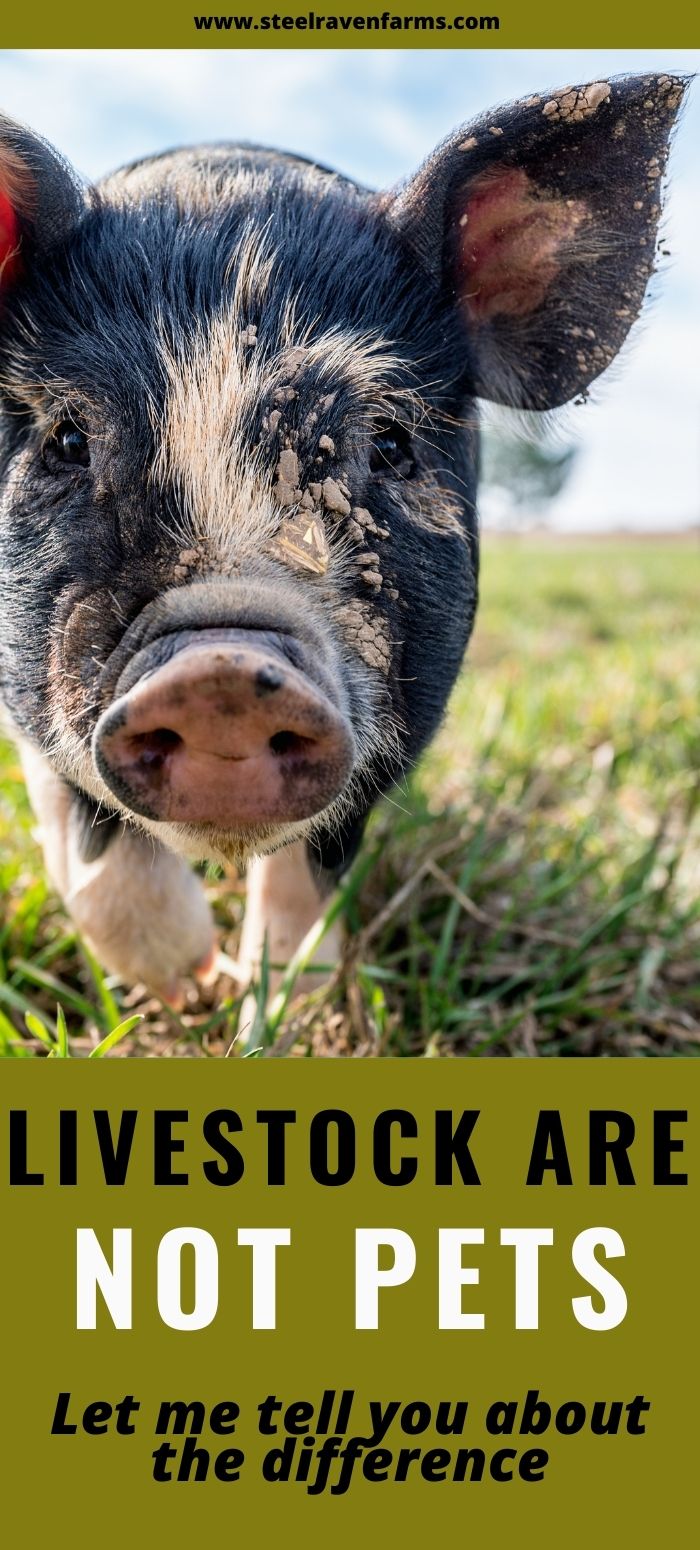
If you did not grow up on a farm or with livestock animals, it may be a foreign concept of raising animals for meat. It could bother you that people, like myself, butcher animals for meat. It’s difficult for a lot of people to wrap their mind around the fact that I can genuinely love my animals, yet I’m still able to put them in the freezer. But that’s because I have realized that livestock and poultry are not pets and that helps a lot. Before you click off this blog post, stick with me and I will explain more about how people can raise an animal and then butcher it. Maybe then, you can understand why people like me choose to raise our meat.

goat kidding

Before we get too far into this, I have a great course on the basics of goat care. I call it Goat Crash Course: Goat 101. In this course, I explain things like types of shelter, types of feeds and hays, basic assessments and so much more! Check it out!

Buy Now

Livestock Aren’t Pets

Now, you can absolutely have livestock animals that you bought with the sole purpose of it being a pet. But before we get too far down this rabbit hole, we need to discuss some things first. Like, the definition of livestock and poultry, what is a companion animal, why people choose to raise their own meat, and why we need to respect those decisions.

Remember, stick with me! Don’t get upset and storm off because you don’t like what I have to say. I mean, obviously you can, but if you truly want the answer to “how can you slaughter something you raised” stick around and find out.

What Is Livestock And Poultry

The Oxford Dictionary defines livestock as “Domestic animals kept on a farm for use or profit; esp. cattle, sheep, and pigs.” And poultry as “Domestic fowl collectively; birds which are commonly reared for their flesh, eggs, or feathers, as chickens, ducks, geese, turkeys, etc.“

The reason this is important is that a lot of people confuse ALL animals with pets or companion animals. They think that all animals that are kept by people should be raised but not butchered. Because that is the lens in which they see animals. They’ve never been on a farm or raised an animal knowing that it’s entire purpose is to end up in the freezer.

Which makes me wonder who they think raises the meat they get at the grocery store?

What Is A Companion Animal

I’m not going to pull out the dictionary for this one but I define a companion animal as a pet. This could be a dog, cat, gerbil, or even a pig or goat. And we have PLENTY of these on the homestead. These animals don’t really have a job, they aren’t an asset or really have a use other than companionship.

Champ is a goat and companion animal. She will live out the rest of her days here on the farm with no use. When she dies, she will be cremated. BUT she started out as livestock. Her original purpose was to give us milk and babies and she did that. Now that she is older, she has earned her retirement.

But what a lot of people don’t seem to understand is that my herd, and most peoples herd, of goats are not companion animals. They have a purpose: Milk, Money or Meat. While I don’t WANT to butcher any of my goats, I know that it is a reality that I will have to deal with. Especially because I want milk.

BeBe and Rory are not companion animals, they are livestock. They will be butchered as soon as they hit 75# or we head into winter, whichever comes first.

Answering Questions With Questions

To answer the question of why we raise our own meat, the answer is another question, actually a couple. Have you ever seen where livestock is raised? I’m not talking about the fields dotted with cattle and chicken or woods with pigs. I’m talking the pig houses, chicken houses or CAFOs. Have you seen what those animals are fed? Do you know where that feed comes from? Do you have any knowledge of ruminant biology?

I don’t ask these questions to be rude or nasty. I ask them because if you have never seen any of those things, I can understand why you would be confused. I can understand why you ask “why raise your own meat?”

Why We Raise Our Own Meat

Now, to be completely transparent, we don’t raise cow or pig on the homestead. We tried to raise pigs and it was a colossal failure meat-wise. We will try again when we are in a better position…maybe. But we do raise our own chicken and goat. That may not seem like a lot, but we just don’t have the infrastructure to raise cows yet. Building pasture for cattle and goats is a big goal for 2024.

In the mean time, we source our beef from a local farm that raises grass fed beef. We source our pigs from someone who raises pasture pork. We purchase meat in bulk instead of relying on the grocery store.

The reason is because we want the animals that are being raised for meat, to be animals. Pigs root and wallow. Cattle should walk around and eat grass. Chickens should scratch and peck. Goats should scream and eat grass. That is what they are SUPPOSED to do.

Industrial Agriculture

Industrial agriculture has created these confinement systems to hold huge groups of animals together, feed them low grade antibiotics and grains, pack them onto trailers and send them to the processor.

The amount of stress those animals endures is not okay. In fact, it’s inhumane. Animal welfare is not at the top of industrial agriculture’s list of priorities.

Like most homesteaders, I choose to source or raise the meat my family is going to consume as humanely as possible. I want animals that are raised as natural a diet as possible. I want animals that have only one bad day.

Respecting Decisions

I’m not sure when we became a country that isn’t allowed to have differences of opinions. But what I will say is that no matter where you fall on the meat eating/ raising spectrum you fall on, respecting other’s decisions is a key part of being an adult. If a person chooses to only source their meat from local farms, great. If a person decides to go to the grocery store, great…. I don’t have to like it.

I can desperately want to take them to the different chicken farms around here and show them how these animals are raised, shoved into cramped boxes, transported in the rain, heat, etc. I want show them where these animals are unloaded and butchered.

But I can’t do that. I have to respect their decision.

But the beautiful thing about a blog?

I can also show you my operation. I can show you transparency.

I can talk about all of the crazy things my chickens and goats do.

In doing those things, my hope is that you make the decision to source your food locally. From farmers who really do love their animals, instead of industrial ag….

If you like the content I put out, feel free to buy us a coffee! It helps keep this site running, marketing and the goats in grain!

Buy me a coffee

If you like this post, feel free to share it and follow us below on our social media accounts!

  • Facebook
  • Pinterest
  • Instagram
  • YouTube
  • TikTok
  • Spotify
  • Threads

Filed Under: Animals Tagged With: Ducks, ethical meat, Goats, Homestead, livestock

JOIN TO OUR MAILING LIST!

Leave us your email to receive new posts and special offers for members only! Don't miss a thing!

Recent Posts

  • Fall Garden Guide
  • Top Mistakes With Goats
  • How To Bond With Your Goats

Primary Sidebar

WELCOME

WELCOME

My name is Leigh and I am the lead chaos creator here at Steel Raven Farms. You will see throughout this blog that I am the crazy goat lady.

I am married to my high school sweetheart, Jared and we have two amazing boys.

FOLLOW ME

  • Amazon
  • Facebook
  • Instagram
  • Pinterest
  • TikTok

GET UPDATES!

Leave us your email to receive new posts and special offers for members only! Don't miss a thing!

In all the years that I’ve been growing a garden, the fall garden has steadily remained my favorite. Which is funny because I don’t really like any of the brassicas, which is what most people know the fall garden for. I prefer the root vegetables and cool air. But I have learned over the years…

Read More

  • Animals
    • Chickens
    • Farm Dogs
    • Goats
  • Garden
    • Compost
    • Garden Projects
    • Seeds and Plants
    • Garden Journal
    • Working With Food
      • Recipes
      • Freezing Foods
      • Dehydrating Foods
      • Canning Tips And Tricks
        • Canning Inventory Sheets
  • Helpful Info
    • Welcome to the Homestead!
    • Emergency Preparedness
    • Frequently Asked Questions
    • Goal Setting
    • Project List
    • Shop Digital Products
      • Hay Calculator
      • Farm Expense And Income Tracker
      • Goat Crash Course: 101
      • Garden Journal Prompts
      • Schedule C Tracker
      • Schedule C Tracker
      • The Homestead Bundle
  • The Truths
  • Episode List
  • Start Here
    • Privacy Policy
    • Affiliate Disclosure
    • Let’s Get in Touch
    • Members Only Library
    • Welcome To Our Homestead

Footer

  • Email
  • Facebook
  • Instagram
  • Pinterest

COME AND GET IT!

Leave us your email to receive new posts and special offers for members only! Don't miss a thing!

· Midnight Theme

Copyright © 2026 · Midnight Theme on Genesis Framework · WordPress · Log in