• Skip to primary navigation
  • Skip to main content
  • Skip to primary sidebar
  • Skip to secondary sidebar
  • Skip to footer

Steel Raven Farms

Where muck boots meet ground.

  • Animals
    • Chickens
    • Farm Dogs
    • Goats
  • Garden
    • Compost
    • Garden Projects
    • Seeds and Plants
    • Garden Journal
    • Working With Food
      • Recipes
      • Freezing Foods
      • Dehydrating Foods
      • Canning Tips And Tricks
        • Canning Inventory Sheets
  • Helpful Info
    • Welcome to the Homestead!
    • Emergency Preparedness
    • Frequently Asked Questions
    • Goal Setting
    • Project List
    • Shop Digital Products
      • Hay Calculator
      • Farm Expense And Income Tracker
      • Goat Crash Course: 101
      • Garden Journal Prompts
      • Schedule C Tracker
      • Schedule C Tracker
      • The Homestead Bundle
  • The Truths
  • Episode List
  • Start Here
    • Privacy Policy
    • Affiliate Disclosure
    • Let’s Get in Touch
    • Members Only Library
    • Welcome To Our Homestead

Our Homestead

How To Set Homestead Goals

May 28, 2024 by Leigh Leave a Comment

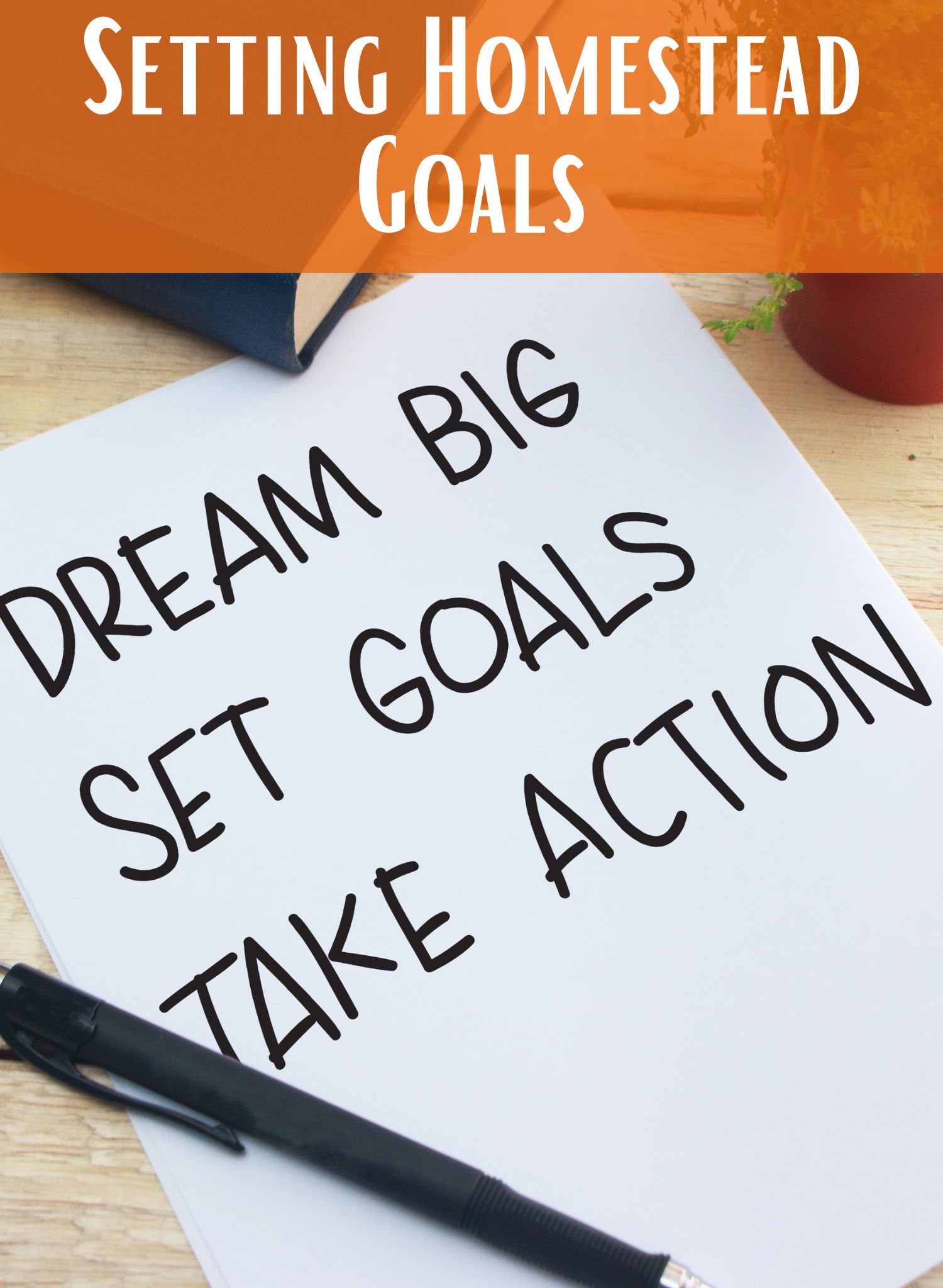
We all know the saying “A goal is a dream with a deadline.” — Napoleon Hill. We also know that when you break that goal down into steps it becomes a plan. Then when you take action, you can make those dreams come true. You can think it’s a load of goat shit but it really is true. We had a dream of owning a homestead, we added a deadline, made a plan, and when we followed through. Our dream became reality. If your goal is similar to ours, or if you already have a homestead and you are trying to figure out your next steps, this is how to set homestead goals.
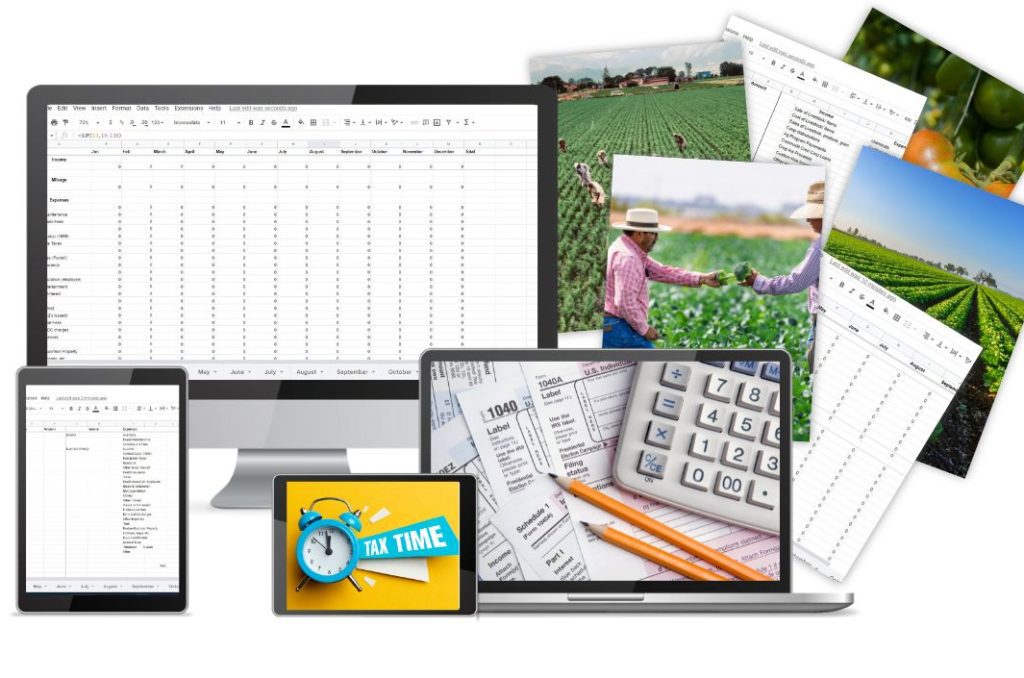
The Ultimate Homesteader’s Starter Bundle – Only $47!

Get the tools you need to stay organized, track profits, and manage your homestead with ease!

Includes:
✅ Schedule F Tracker – Simplify tax prep
✅ Profit Calculator – Track earnings
✅ Hay Calculator – Plan livestock feed
✅ Garden Journal – Digital & printable
✅ Herd Health Tracker – Monitor animal care
✅ Simple Budget – Manage finances
✅ Backyard Homestead eBook – Essential tips

$99 value – now just $47! Start your homesteading journey today!

Buy Now

First Step For How To Set Homestead Goals

The first thing you need to do is dream. If you’re anything like me, that’s absolutely not a problem. I am a daydreamer at heart. But thankfully, I’m also a planner so getting down to the nitty gritty is also easy. But if you struggle with dream, I’ve got an exercise for you.

Daydreaming Exercise

Go out into nature. It can be a park, your yard, whatever. Take your shoes off and put your feet on the ground. This is called grounding. Take a couple of big, deep breaths. Close your eyes (as long as it’s safe!) and allow your mind to wander. Don’t think of all the responsibilities you have, allow yourself to dream.

Flush out that dream in your meditative state. Do you see animals? A huge garden? A greenhouse? What is the finished product of your goal?

Write it down

Our dream is to make the homestead as self sustaining and self funding as possible. We want to be able to pay off our mortgage in 15 years. We want our animals to not only provide food for us, but also an income. Lastly, we want the land to produce enough food and firewood that we decrease our dependency on outside sources by 75% in 5 years.

That’s a large order, right? But it’s really not when you add a deadline like 15 years for the mortgage or 5 years for independence. It is overwhelming when you stop and consider how much work, money, and time it’s going to take. But again, bite size steps or actions can really make a difference.

Logo 468x60

Setting Your Homestead Goals

These are the big goals inside our dream

  • Pay off mortgage in 15 years
  • Self sustaining and self funding
  • Animals provide food and income
  • Land produces enough food, and water and firewood to decrease dependency by 75% in 5 years.

Be sure to list out those big goals from your daydreaming. These high point/ big goals are your starting point.

Logo 468x60

By having clear and measurable goals you can then start brainstorming on what you can do to hit those goals. But the goals listed above are long term goals. And while maintaining a big picture is always a good thing, small steps are what we are after.

My list of 2022 homestead goals are:

  • Garden/ orchard
  • Goat breeding program/ goat dairy
  • Poultry
  • Remodel master bedroom/bathroom/ hall
  • Water Collection system

These small goals will help us reduce dependency, and start making a dent in our budget to allow us to put more money towards the mortgage or back into the farm.

Save on Seeds

Brainstorming or Brain Dumping

I like to list out all the possible things we can do to hit these goals. No matter how big or small, ridiculous, or crazy, I want to know what I can do to make sure we can get achieve our dreams. Get creative here.

  • Pick up extra shifts at work
  • Sell ducklings
  • Sell goat butter
  • Buy/plant fruit trees
  • Pay extra on mortgage
  • Stud out buck
  • Sell Goat Pages
  • Sell cut flowers
  • Sell eggs
  • Sell goat kids
  • Buy/ plant nut trees
  • Sell goat milk
  • Set up roach colony for dragons
  • Farmers Market
  • Stop spending so much money at Lowes
  • Sell chicks
  • Sell goat cheese
  • Plant extra in the gardens
  • Bigger salad bar for dragons
  • Sell the actual kids
  • Sell bearded dragons
  • Goat Ultrasound
goat kidding

Before we get too far into this, I have a great course on the basics of goat care. I call it Goat Crash Course: Goat 101. In this course, I explain things like types of shelter, types of feeds and hays, basic assessments and so much more! Check it out!

Buy Now

Setting The Goals With A Deadline

Setting a deadline puts your brain in motion. Your brain is going to start thinking of ways to hit those goals. And each time you mark off one of those goals, your brain releases a small hit of dopamine and serotonin which are the happy chemicals that will keep you going when you are struggling through that extra shift.

Some examples of goals with a deadline is:

  • I will install our kitchen garden by March of 2023.
  • The greenhouse will be finished by January 2024.
  • We will get and be proficient with an ultrasound machine by 2025.

Keeping goals simple will make them easier to achieve. If you have never run a marathon, it may not be the most attainable to say you are going to run a marathon in three months. Could you do it? Sure, but the chances are that you are not going to be successful without a lot of hard work.

Just because this says for a homestead, doesn’t mean it’s only for a homestead. This same theory can be used for absolutely anything.

Understanding Homestead Flexibility

There is a fine line between homestead flexibility and abandoning your goals because they are too hard or you lose interest.

At the end of the day, you have to remember that all of your goals may be amazing, achievable, S.M.A.R.T, etc. But if you don’t have the flexibility to understand that life is going to pop up and change things? Your homestead could come to a grinding halt. So make sure you are allowing for plenty of time to achieve your goals. I wrote an entire post about homestead flexibility that you can find here.

The flip side is that you have to make sure that you are staying the course. You don’t want to get distracted and end up spending more time and money on projects that aren’t worth your time and money. So make sure that while you’re dreaming, you are also keeping in mind what your definition of success is.

If you like the content I put out, feel free to buy us a coffee! It helps keep this site running, marketing and the goats in grain!

Buy me a coffee

If you like this post, feel free to share it and follow us below on our social media accounts!
  • Facebook
  • Pinterest
  • Instagram
  • YouTube
  • TikTok
  • Spotify
  • Threads

Filed Under: Animals, Canning, Garden, How To's, Our Homestead, Pigs, Projects Tagged With: cast iron, Chickens, Chicks, cooking, Goats, Homestead, kitchen, Welcome

JOIN TO OUR MAILING LIST!

Leave us your email to receive new posts and special offers for members only! Don't miss a thing!

Recent Posts

  • Fall Garden Guide
  • Top Mistakes With Goats
  • How To Bond With Your Goats

Starting Canning Season Right

May 18, 2024 by Leigh Leave a Comment

On our homestead, we can a lot. I’m not talking about making just jams either. Not only do we can individual items like corn, green beans, peaches, etc but we also can meals like chicken noodle soup, beef stew and chilis. But as we go through these jars of delicious foods, we tend to just wash them and stack them up. This creates a problem during canning season.

The Ultimate Homesteader’s Starter Bundle – Only $47!

Get the tools you need to stay organized, track profits, and manage your homestead with ease!

Includes:
✅ Schedule F Tracker – Simplify tax prep
✅ Profit Calculator – Track earnings
✅ Hay Calculator – Plan livestock feed
✅ Garden Journal – Digital & printable
✅ Herd Health Tracker – Monitor animal care
✅ Simple Budget – Manage finances
✅ Backyard Homestead eBook – Essential tips

$99 value – now just $47! Start your homesteading journey today!

Buy Now

Getting Ready For Canning Season

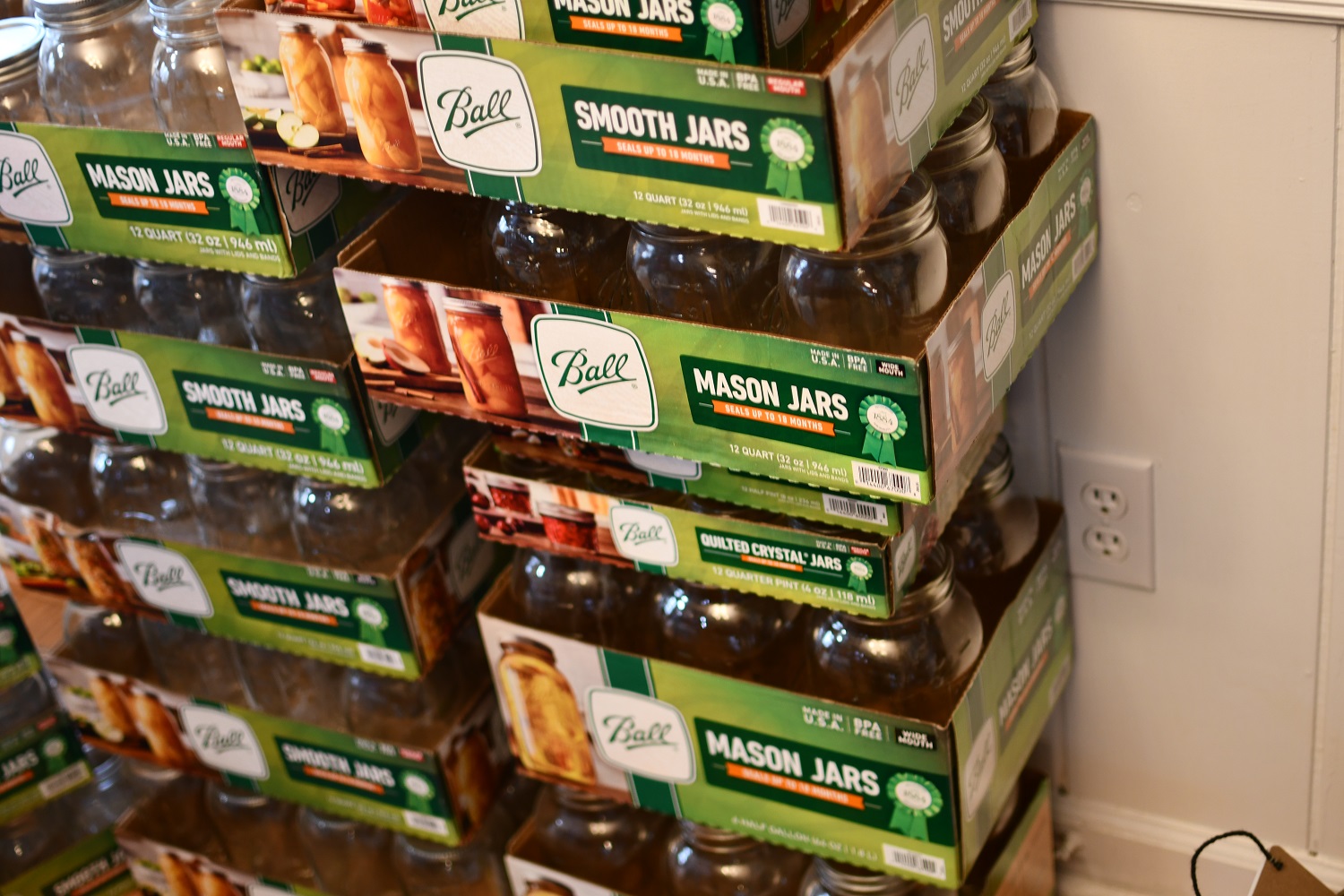
Canning season isn’t just about making sure you have plenty of jars, though that is definitely important. You also need to make sure you have plenty of rings, lids and your tools. You need to make sure you that you have your ingredients like vinegar, lemon juice (or citric acid), and cook or canning books. Another thing I like to make sure is ready are my canners.

Prepping Jars For Canning Season

As I said above, normally we just wash and stack our jars in the basement. Though we are slowly starting to fill jars with water before storing them. Making sure that the jars are clean and ready is key for a successful canning season.

If your jars are not not clean before starting your season, you be trying to wash jars AND can at the same time…. This creates a problem when I’m canning full force and putting up dozens of jars a day. So how do we go about getting all of our jars ready now while we wait for harvest? Every single case of empty jars comes upstairs, including all the lids, rings, and other odds and ends.

I go through each jar and make sure that they all in good condition, no chips, cracks, dips or dings. Then I go through all the rings and sort them. I will keep the rings that have rust but they go into a different bin to use on a different project. I will also take inventory on my jars and see if I need to buy more. Then I start the washing process.

I use vinegar instead of dish tabs because I’m cheap and I think the vinegar does a better job at cleaning them. Once they are clean, they get a fresh lid and ring. Back in the box and stacked up in the dining room. While this will create issues when I’m not canning, it will ultimately make everything easier when it’s time to can.

Getting Your Tools Ready

Finding out in the middle of a canning session is not the time to figure out that your funnels are broken or missing. Do yourself a favor and gather all your canning tools and make sure that you have everything.

Check to make sure that all of your strainers, ladles, and canning funnels are in good shape and you have enough of them. I have four funnels and I’m getting ready to buy a couple more that are much wider. I ordered this one. The reason is because during soup season, when I need to dump the last remaining goodness in that jar? I don’t want to spill it everywhere.

Go ahead and grab one or two more jar grabber thingy’s. Nope, I don’t know what they are actually called but I know when I start looking for mine, it’s usually hidden under all the towels and hot jars.

Also, make sure that you have PLENTY of lids. I usually can about 1,000 jars or more every year. While I do reuse lids, I am not about to learn the hard way that I have run out. Every year I purchase about 1,000 For Jars lids. I don’t always use them all, but a couple years ago, it was damn near impossible to find lids.

Lastly, make sure that all of your rags, hand and bath towels are clean and ready to go. I will blow through all of my rags and hand towels in 1 day if I’m not paying attention. My rags are for cleaning messes, hand towels for hands, and bath towels to help protect counters, tables, and other places I put my hot jars.

Are you getting overwhelmed in the garden? Stressed? Or just not enjoying the garden like you used to? Check out our garden prompts! We send out weekly emails that get you back in the garden and out of your head! Turn the garden back into a place of love and joy instead of frustration and headache!

Subscribe Now!

Start Stocking Up On Ingredients

Get your vinegar, garlic, salt and other herbs and spices for canning season. Remember, every other canner in your area is going to be getting these same items. Especially, if they did not stock up in the spring like you are doing.

We purchase salt by the 50# bag from Azure Standard as well as bulk order herbs that we can’t or didn’t grow from Mountain Rose Herbs.

Another tip is to make sure that you have all your recipes on hand and ready to go. I love this pressure canning cook book. In fact, I have copied several recipes out of it and have laminated them! Actually, to be fair, I laminate all of my favorite recipes so that I don’t ruin them with the mess that is canning season. This is the laminator that I use and love.

Checking Your Canners For Canning Season

Not everything revolves around jars during canning season. Weird, I know. But the jars are just the vessel that you are using to preserve your harvests or good deals. You also need to make sure that your canners, both pressure and water bath are in good condition and ready to go.

Peak canning season (June to September for us) is a terrible time to find out that the gasket on your pressure canner is cracked or the regulator broken. Go ahead and check those things now and order replacements if needed.

You can also take your canner to your local extension office and have them check it for you. I don’t do this, however, I do keep extra gaskets, weights, and timers around to make sure that I don’t lose one mid season… which I inevitably do.

Mentally Preparing For Canning Season

This is my final, and arguably the most important of all the prep work that you are going to do for canning season. Canning is a HUGE under taking. It involves a TON of work. You are going to be hauling potentially hundreds of jars up and down the stairs. You are going to be washing produce until your fingers look like raisins. The amount of cuts, scrapes and bruises will be mind blowing. And the very last thing you will want to do after putting up 200 jars in one day, is cook dinner.

But having the right attitude when you start canning is key to being successful. All of those things I mentioned above, happen to me every year. One year, I damn near cut my finger off. But I finished that round of canning and then went to get stitches.

But when I tell you that the emense pride you will feel when you walk into your basement and your canning shelves are filled to bursting with all that delicious food? It is worth every single ounce of effort.

These are just some of the things that you can do to make sure that you are ready for canning season. If you think of anything I missed, please comment below!

If you like the content I put out, feel free to buy us a coffee! It helps keep this site running, marketing and the goats in grain!

Buy me a coffee

If you like this post, feel free to share it and follow us below on our social media accounts!

  • Facebook
  • Pinterest
  • Instagram
  • YouTube
  • TikTok
  • Spotify
  • Threads

Filed Under: Canning, How To's, Our Homestead Tagged With: Canning, cooking, Homestead

JOIN TO OUR MAILING LIST!

Leave us your email to receive new posts and special offers for members only! Don't miss a thing!

Recent Posts

  • Fall Garden Guide
  • Top Mistakes With Goats
  • How To Bond With Your Goats

Homesteading With A Job

May 11, 2024 by Leigh 1 Comment

Wouldn’t it be nice to not have to go to work anymore? No matter how much you love your job, the idea of staying on your homestead is very appealing. I would love to be in a situation where I no longer have to work outside of my homestead. But homesteading doesn’t save you money, at least initially. So if you are like most of us, you are interested in homesteading with a job and you’ve come to the right place.

The Ultimate Homesteader’s Starter Bundle – Only $47!

Get the tools you need to stay organized, track profits, and manage your homestead with ease!

Includes:
✅ Schedule F Tracker – Simplify tax prep
✅ Profit Calculator – Track earnings
✅ Hay Calculator – Plan livestock feed
✅ Garden Journal – Digital & printable
✅ Herd Health Tracker – Monitor animal care
✅ Simple Budget – Manage finances
✅ Backyard Homestead eBook – Essential tips

$99 value – now just $47! Start your homesteading journey today!

Buy Now

Social Media Would Have You Believe

If you are browsing YouTube, Facebook, Pinterest, or other blogs, you will see a ton of stories about how they only work their homestead. Their home is insta-worthy and never once will they show last nights dishes in the sink.

Jealous? Maybe a little.

But a lot of people have been shown through various social media platforms that the only way to homestead is by not having a job. For a long time, I thought that too. But I figured with our schedule, we could make something work. And we have.

So how do I homestead with a job?

First and foremost, we have divided the chores between the four of us. Jaxson takes care of the chickens. Chase has the goats. I handle most of the garden, canning and project research. Jared handles butchering, building and many other tasks.

When it comes to the house split those chores as well. That sounds very homestead-y, right? But what about working? How is it with a job?

Logo 468x60

Well, between Jared and I, we work a ton. I work about 48 hours a week at one job, another 8-12 hours at another, and then spend another 20 hours a week on the blog. Not to mention that we homeschool the boys. Jared will usually pick up one or two extra shifts a week and he also works on the homestead.

We are always busy with something and come 8PM, we are exhausted. With our schedule though, that actually only looks like 3-5 days of work off the homestead. Both of us average about 65 hours of non homestead related jobs.

Save on Seeds

We are lucky enough that we have jobs that allow us to fit homesteading and homeschooling around our work life. But sometimes it just doesn’t seem like there are enough hours in the day. Especially for Jared since he is the master of projects around the property.

But Leigh, I work 9-5 Monday through Friday

Start small. If you start off thinking that you need to do everything all at once, you are not going to succeed. But if you start small and slowly build up, you will find that it’s not too bad. I did a blog post about saving your sanity with chores, and this is really no different.

The best thing you can do is start with a couple chickens, then add more. Or start with a small garden, then add to it. You do not have to start everything the day you move in.

I would set up your homestead goals and make sure you prioritize them. It takes a lot of time to get where you want to be, so don’t beat yourself up if you don’t get everything done in one year or five years.

When we started homesteading, we started small-ish. We started with chickens but then jumped to goats and all bets were off. The last six months “catching up” with the goats. We were also still trying to fix up the house, property, and all the other things starting a from scratch homestead entails.

Logo 468 x 60

Our schedule isn’t five days a week, but it is extremely long hours. But if you are working five days a week, it may be difficult to start at all. You probably only have the weekends off or two random days a week. So how can you do it?

Figure out what you CAN do then Level Up

Figure out what you can do during the week. Can you work the garden in the evenings when it’s cool? Do you have an instapot or crockpot for dinners? What about milking the goats in the morning before you go to work? Can you do anything early, the night before, or when you get back from work?

On the days that I am working at the college, I throw one of my favorite slow cooker recipes in before I leave for work. PS This one is great for winter! If I get home a little early, I will throw one of these awesome recipes in my Instapot. I could, and sometimes will grab a pizza on the way home but I really prefer to not spend extra cash that I don’t have on things I can make at home.

The Ultimate Homesteader’s Starter Bundle – Only $47!

Get the tools you need to stay organized, track profits, and manage your homestead with ease!

Includes:
✅ Schedule F Tracker – Simplify tax prep
✅ Profit Calculator – Track earnings
✅ Hay Calculator – Plan livestock feed
✅ Garden Journal – Digital & printable
✅ Herd Health Tracker – Monitor animal care
✅ Simple Budget – Manage finances
✅ Backyard Homestead eBook – Essential tips

$99 value – now just $47! Start your homesteading journey today!

Buy Now

My friend over at the 104 Homestead has some great recipes for slow cookers and Instapots. Seriously, if you don’t have an instapot by now, you really should get one!

My other friend at The Farmer’s Lamp has some really awesome Instapot recipes to look at here.

Subscribe to Craft Beer Club Today!

Some of the other things that can work out great for you is don’t touch the garden until it’s in the shade. For us, that is usually around 5pm. That allows us to get other chores done in the mean time. We also have our hoses set on a timer so if we aren’t there, the garden still gets water.

Our goats and chickens can be let out in less than 5 minutes. We will also plan ahead and “pre-bucket” their feed, if we know that we have an early morning. Our does get a scoop of grain (about a quart per bucket) and two scoops of alfalfa pellets (four quarts) per bucket. That way come morning we grab buckets and let them out. This really helps cut down on wasted time in the mornings.

Tractor Supply

If you can work around your work schedule, then you can absolutely homestead with a job. It just takes some time, patience, creativity, and a ton of hard work. But you can absolutely do it.

If you like the content I put out, feel free to buy us a coffee! It helps keep this site running, marketing and the goats in grain!

Buy me a coffee

If you like this post, feel free to share it and follow us below on our social media accounts!

  • Facebook
  • Pinterest
  • Instagram
  • YouTube
  • TikTok
  • Spotify
  • Threads

Filed Under: Frequently Asked Questions, Our Homestead Tagged With: Chickens, Goats, Homestead

JOIN TO OUR MAILING LIST!

Leave us your email to receive new posts and special offers for members only! Don't miss a thing!

Recent Posts

  • Fall Garden Guide
  • Top Mistakes With Goats
  • How To Bond With Your Goats

Using A Metal Shed For A Chicken Coop

April 16, 2024 by Leigh

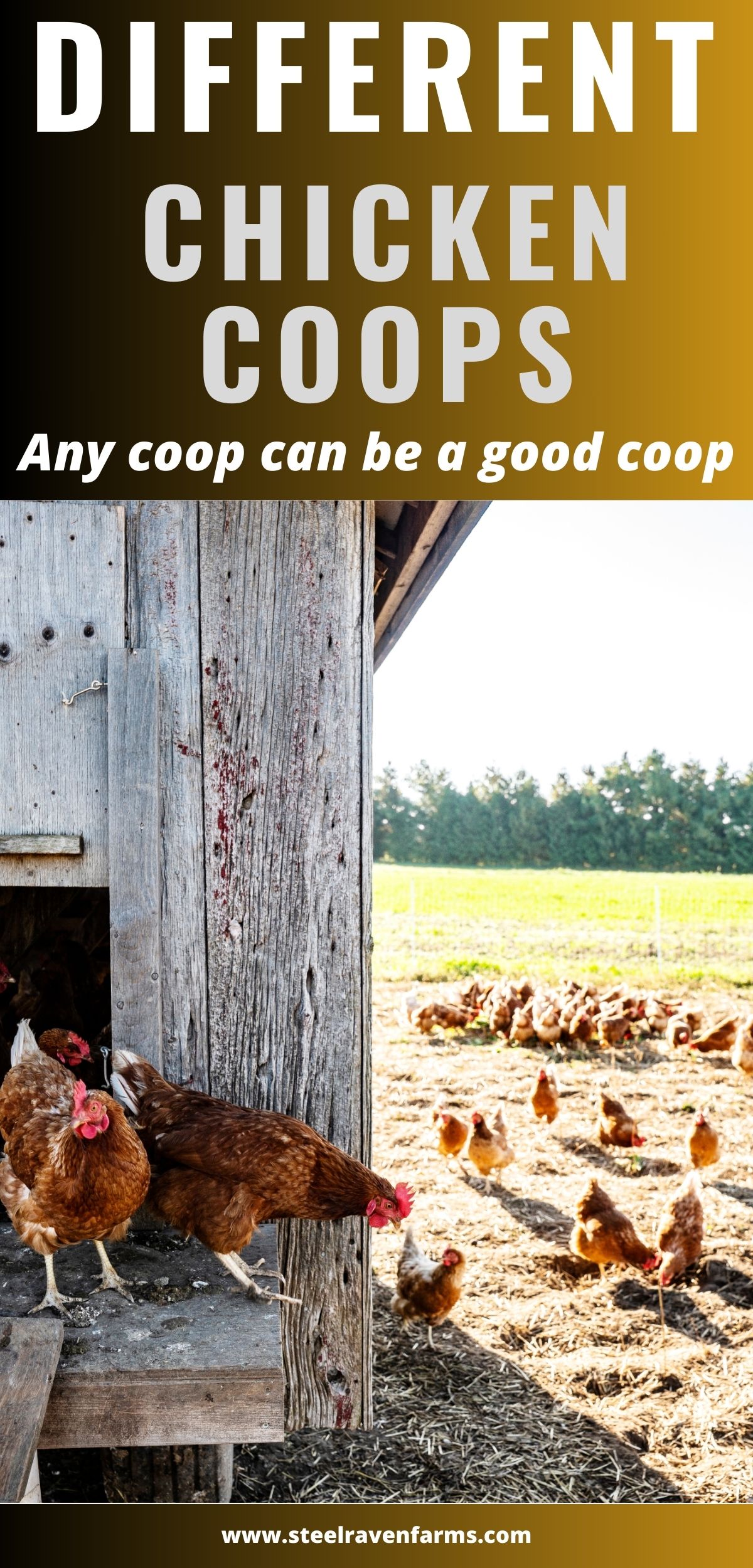
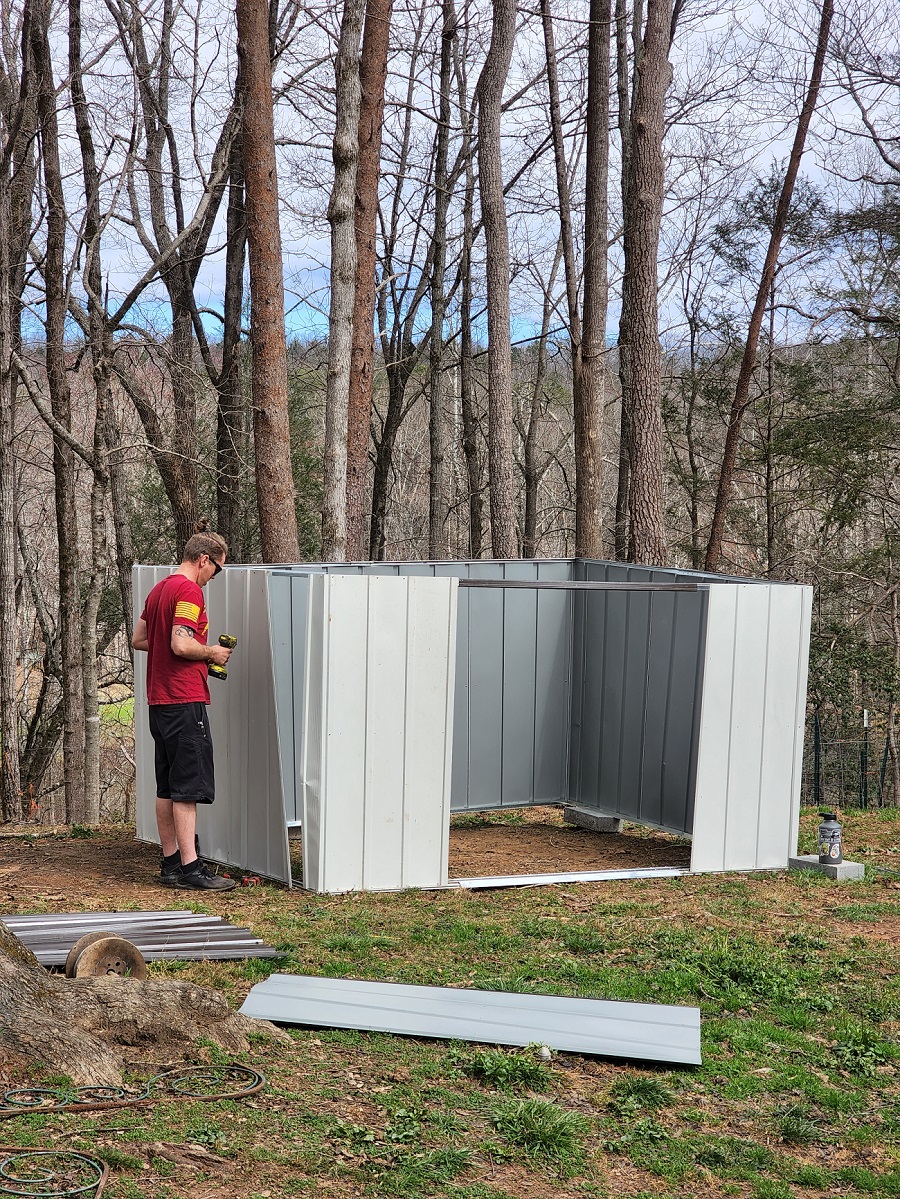
I have been browsing the internet for weeks trying to figure out something for a new coop. We’ve got more chicks and ducks coming and nowhere to put them. So I started researching the different types of chicken coops and I couldn’t find anything I really liked. And to be honest, the wood coop that we have now, is starting to really stink, even after we clean it really well. I think using a metal shed for a chicken coop may work. Maybe.

Why We Chose A Metal Shed For A Chicken Coop

***Make sure to read the updates at the bottom to see how it’s actually working***

We have seriously out grown our old coop. When we bought it, we weren’t really planning on having a ton of chickens. Our thought was, chickens are pretty easy so let’s get a couple. By a couple I mean 15 but only 9 survived. After offering our extra eggs for sale and current state of the supply chain, we have decided to grow our flock. We are hoping that this will allow us to make a little bit of money but also sustain us food wise. You can read about our new flock here. 

Since, we will also be getting 20 ducks around the end of March AND the 36 chickens, we want to make sure there is plenty of room for all of them. I think this 8×10 metal shed will work great. It’s got plenty of space and if we can hang the new laying boxes and roosting bars, there will be plenty of room for the ducks to nest.

Also since we allow them to free range throughout the day, there shouldn’t be any problems with space during the day.

Now before anyone gets all up in arms about it, we know some of the problems with a shed like this as well as ducks and chickens in the same coop. First, we will be installing gables and vents to make sure that the heat can escape in the summer. They will also have frozen bottles on the ground to keep cool. Not to mention we made sure that the coop is in a shady area.

Save on Seeds

We will also be adding boards and hardware cloth to the bottoms to ensure it as predator proof as possible. The ducks and chickens can cohabitate in the same coop as long as they have their own spaces. The ducks will be on one side and the chickens on the other. I’m sure we will find more problems as we go but we will see.

Jared working on the new Coop

We will always be as transparent with our readers. In that vein, we want to make sure that you don’t make the same mistakes we have. Or if you decide to make the mistake, at least do it differently.

You can also check out this from Redfin article as well! “Whether you’re planning to raise chickens at home in Asheville, NC, Eugene, OR, or Burlington, VT, check out this Redfin article we were featured in on 5 Chicken Coop Ideas For A Thriving Flock“

Summer Update

So this coop was built in the spring before it got really hot. What we have found is that the coop does not get super hot at night like we thought. Since we allow them to free range throughout the day and only put them inside the coop at night when the sun has gone down. We have not noticed a HUGE temperature increase.

Don’t get me wrong, it’s still hot at night and it’s warm in the coop, but I was thinking like fatally hot and it’s not. We have been averaging 80* nights and the coop is 90* but also has fans blowing the hot air out.

One of the things we have noticed is that NONE of the animals want to go in their respective houses at night. That includes the goats. I think a lot of it is that it’s just too hot. When they are outside they can move around and find cool ground.

The chickens and ducks seem to prefer being outside during the summer and that’s fine. We have predator lights up around the property and so far we haven’t seen any signs of them being taken in the night.

I’ll update back after winter and let you know how that goes. But for right now the coop is working.

Winter Update

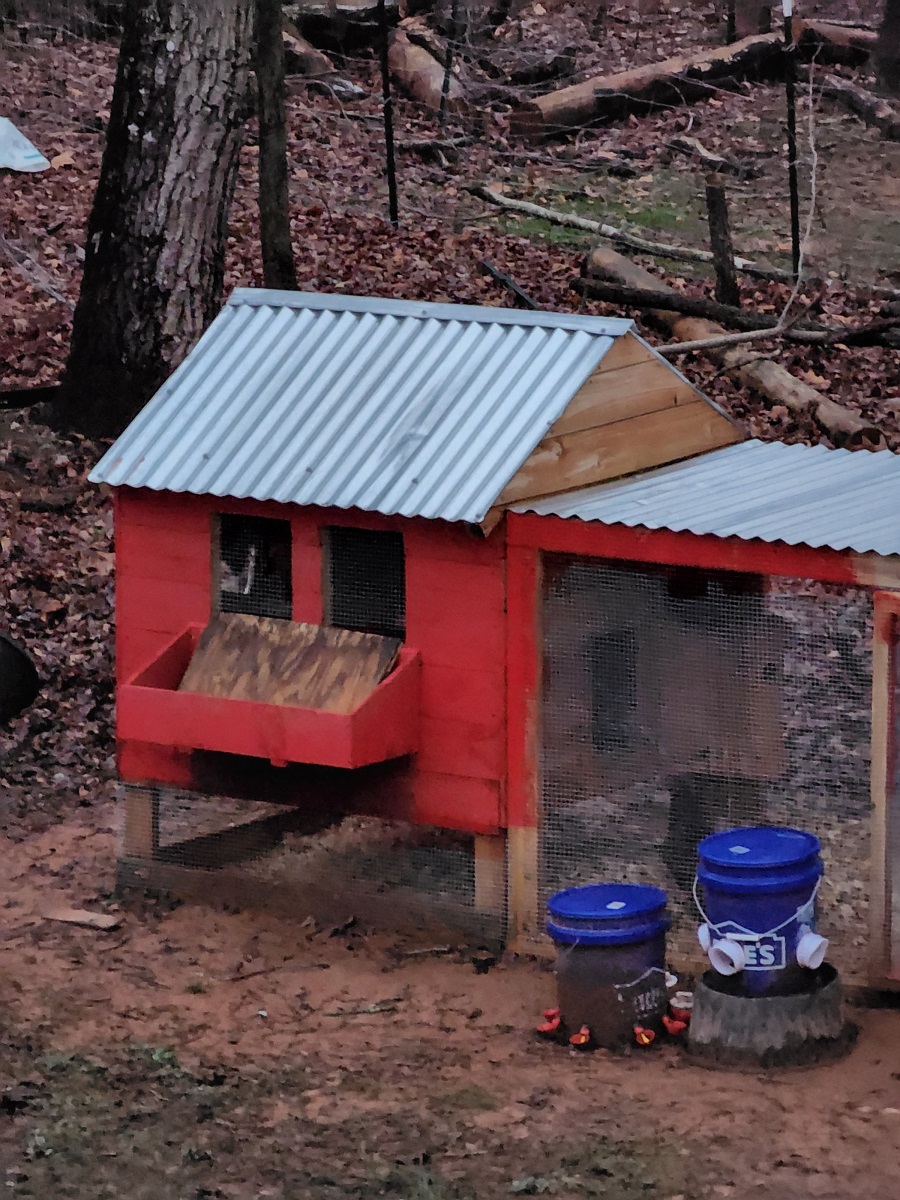
We have moved the chickens and ducks back into the red coop. The metal shed has turned into a flop…. Well, not completely. The shed rusted from the ground up. No matter how much pine shavings we added, the odor was completely foul. The chickens also didn’t seem as healthy either. It seemed to take them longer to get through molt and they stopped laying eggs way sooner than they should have.

When we moved them back to the red coop, their feathers seemed to get brighter and they seemed happier. Now, this is all speculation and we don’t have scientific proof, but I feel like the shed was not a good option for long term keeping.

We plan to convert the shed back into a shed and just put our various building materials in it. I would suggest looking into different types of chicken coops and leave the metal shed alone.

Using A Metal Shed For A Chicken Coop…. The Final Update

As of this writing (2024), we have turned this shed into a home for broody hens and a brood coop for new chicks. For this purpose, the metal shed has turned out to be excellent. We went through and painted all the rust, patched holes, and general upkeep of the shed. We noticed that the broody hens and new chicks all thrived.

I think the main problem with using a metal coop as a permanent coop is the severe lack of air flow, extremely low light, and everything tends to stay damp without a good heat source. Since we fixed everything and have made it a temporary home for these chicks/ hens, it has turned out VERY well and is something we will continue to do.

If you like this post, feel free to share it and follow us below on our social media accounts!
  • Facebook
  • Pinterest
  • Instagram
  • YouTube
  • TikTok
  • Spotify
  • Threads

Filed Under: Animals, Chickens, How To's, Projects Tagged With: chicken coop, Chickens, Chicks, Ducks, Eggs, Homestead, metal coop

JOIN TO OUR MAILING LIST!

Leave us your email to receive new posts and special offers for members only! Don't miss a thing!

Recent Posts

  • Fall Garden Guide
  • Top Mistakes With Goats
  • How To Bond With Your Goats

Welcome to The Homestead

April 13, 2024 by Leigh Leave a Comment

We are excited to bring you along for the journey. On this blog you will find a ton of posts about goats, gardening and homesteading. We wanted to let other people know that you don’t have to have hundreds of acres, tons of livestock or even generations of knowledge. We wanted our blog to be different. So welcome to the homestead!

The Ultimate Homesteader’s Starter Bundle – Only $47!

Get the tools you need to stay organized, track profits, and manage your homestead with ease!

Includes:
✅ Schedule F Tracker – Simplify tax prep
✅ Profit Calculator – Track earnings
✅ Hay Calculator – Plan livestock feed
✅ Garden Journal – Digital & printable
✅ Herd Health Tracker – Monitor animal care
✅ Simple Budget – Manage finances
✅ Backyard Homestead eBook – Essential tips

$99 value – now just $47! Start your homesteading journey today!

Buy Now

Welcome To The Homestead

Both Jared and I grew up as city kids. The hustle and bustle something that we never really wanted. As time went on and we got older, we realized that city life is not what we wanted. It is not what we want for our boys. So we decided to do something about it. We were breaking our back trying to save as much money as possible to get our homestead. Since we are both paramedics and after working 36-60 hour straight shifts for two years, we finally did it. We purchased our homestead.

We just celebrated 15 years of marriage

Shortly after buying the homestead, we got our first chickens.  They are pretty cool little critters and really, what homestead is complete without a couple chickens. We started with 15 and lost a couple. Now we are in the ballpark of 50. But I wanted something a little different. So I started looking into other critters that would be low maintenance while also being semi profitable.

George and His Ladies

Enter the goats

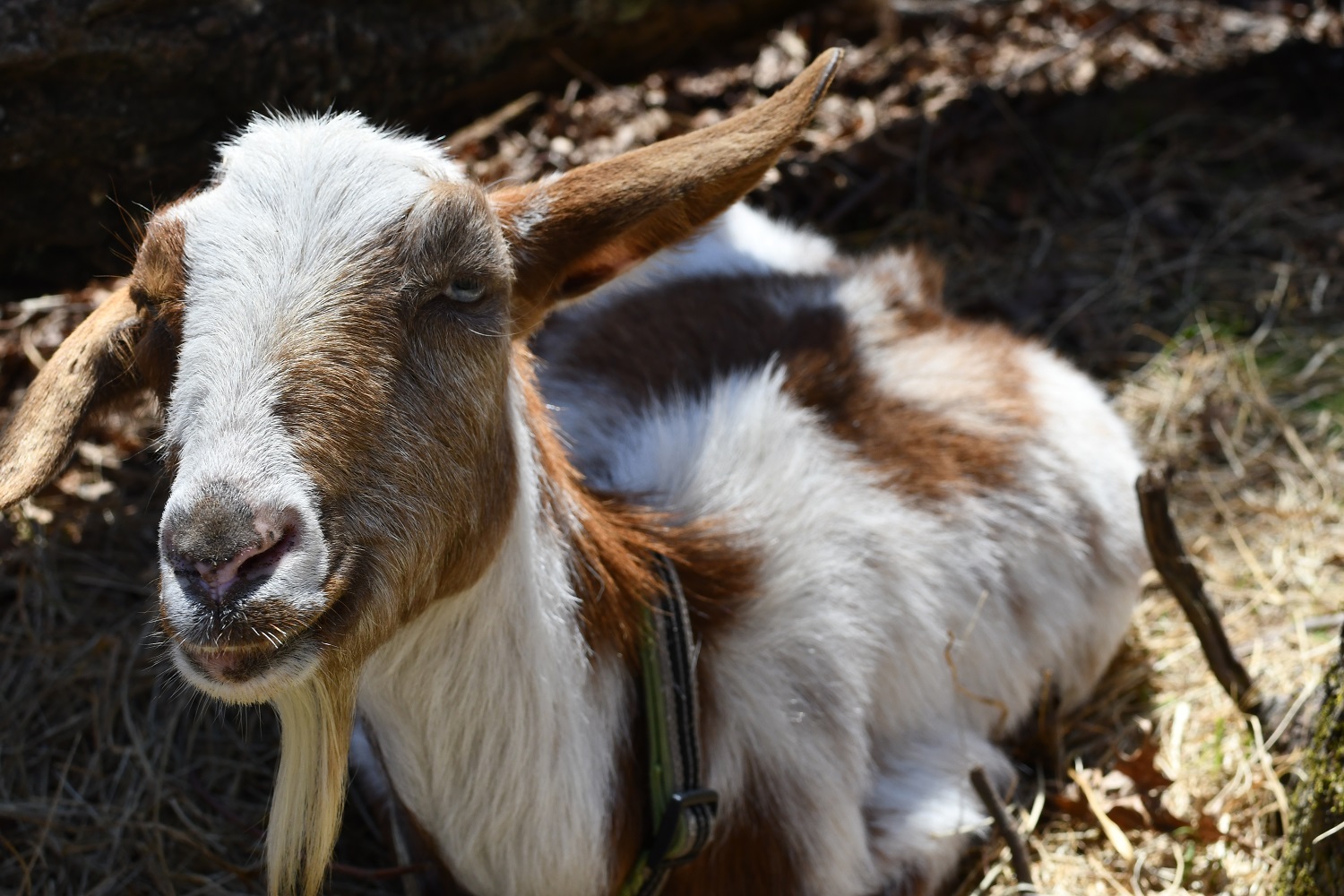
I’m not going to lie, I didn’t want goats. I had heard the horror stories. They are escape artists, they die easily, they can’t actually eat everything, and so on. They are pretty much everything BUT low maintenance and semi profitable. But Jared wanted goats, so we got the goats. Man, I was so wrong! I love those critters! They are seriously the best. Bella is a challenge and I am going to make her love me. But Champ? The girl below? She is the best girl. She is actually going to be giving us babies soon!

Champ

After adding our first couple goats, we wanted even more. So we added more goats, then some goats had babies and now we are at 12. We are hoping to have a few more and that will allow us to start milking regularly. That milk will then help us reduce our dependence on the grocery store.

Since owning goats for several years now, we have decided to, temporarily, move away from registered lines and start working on building a resistant herd with great milk lines. We have also learned to deal with the question of what to do with boys.

Sending bucks to processing has been a hard choice but definitely one that needed to be made. Unfortunately, when you breed animals, you have to face the hard reality of what to do with them if you can sell them. Livestock are not companion animals, although there are some exceptions, and treating them like pets will only break your heart.

We have also created a Goat Crash Course for those that were in our same position. Brand new and with no mentor.

goat kidding

Before we get too far into this, I have a great course on the basics of goat care. I call it Goat Crash Course: Goat 101. In this course, I explain things like types of shelter, types of feeds and hays, basic assessments and so much more! Check it out!

Buy Now

On To The Ducks

Ever since I was a kid, I have loved ducks. They are such cool creatures. Jared finally okayed a few ducks and meat ducks. While they are messy and their pool stinks to high heaven, no matter how often we drain it, I love those guys. We also gained our neighbors guinea. Apparently she was unhappy living with them.

Tractor Supply

Since owning the chickens and the ducks, we have come to realized a couple things. One, chickens get into EVERYTHING when they are not contained in some fashion. So free ranging chickens isn’t really a great idea. Two, ducks free range beautifully and don’t get into as much trouble as the chickens.

While I am not a huge fan of duck eggs, their antics and meat keep them around the homestead.

The Garden

We have also been working hard on our gardens and general clean up of the property. Our property was not set up for homesteading before we bought it. So we have been slowly but surely working through the property and clearing out old debris, trash, and other things. We are hoping to have it safe enough soon to let the goats roam bigger areas to keep the brush in line.

The Ultimate Homesteader’s Starter Bundle – Only $47!

Get the tools you need to stay organized, track profits, and manage your homestead with ease!

Includes:
✅ Schedule F Tracker – Simplify tax prep
✅ Profit Calculator – Track earnings
✅ Hay Calculator – Plan livestock feed
✅ Garden Journal – Digital & printable
✅ Herd Health Tracker – Monitor animal care
✅ Simple Budget – Manage finances
✅ Backyard Homestead eBook – Essential tips

$99 value – now just $47! Start your homesteading journey today!

Buy Now

The garden has been a huge pain in the backside as well. Between not being able to get all my seedlings started and then the ducks eating what I managed to plant, the garden is finally in. I was also able to harvest our first cucumbers!

We are gearing up to start our fall garden and I am ridiculously excited! Our summer harvest has been good, considering it’s our first garden here, but I’m hoping the fall garden will be even better. Our second garden was a bit better but not at all what we thought it was going to be. We have learned a ton about gardening in this area.

One of the biggest things I learned about the garden is protecting the soil! I never really put much thought into the soil and how to build it. I just thought you put things in the ground and they grew. I didn’t realize that building healthy soil, naturally, helped to bring in better harvests. Who knew!?

Our garden this year (2024) is set to be our best yet!

Building A Greenhouse

Last year, the major project was building a greenhouse. Jared absolutely nailed it and I love my greenhouse. It has become my sanctuary when things get hard. Jared poured so much love into that greenhouse and I can feel it every time I walk into it.

Not everyone can build a greenhouse, or really need one. But I do highly recommend at least entertaining the subject if it is possible for you.

Welcome To The Homestead

We will be adding to our homestead as this blog progresses and we want you to be along for the ride. So share and follow us on social media and welcome to the Homestead!

Are you getting overwhelmed in the garden? Stressed? Or just not enjoying the garden like you used to? Check out our garden prompts! We send out weekly emails that get you back in the garden and out of your head! Turn the garden back into a place of love and joy instead of frustration and headache!

Subscribe Now!

If you like the content I put out, feel free to buy us a coffee! It helps keep this site running, marketing and the goats in grain!

Buy me a coffee

If you like this post, feel free to share it and follow us below on our social media accounts!
  • Facebook
  • Pinterest
  • Instagram
  • YouTube
  • TikTok
  • Spotify
  • Threads

Filed Under: Our Homestead Tagged With: beginners, Chickens, Ducks, Eggs, Goats, Homestead

JOIN TO OUR MAILING LIST!

Leave us your email to receive new posts and special offers for members only! Don't miss a thing!

Recent Posts

  • Fall Garden Guide
  • Top Mistakes With Goats
  • How To Bond With Your Goats

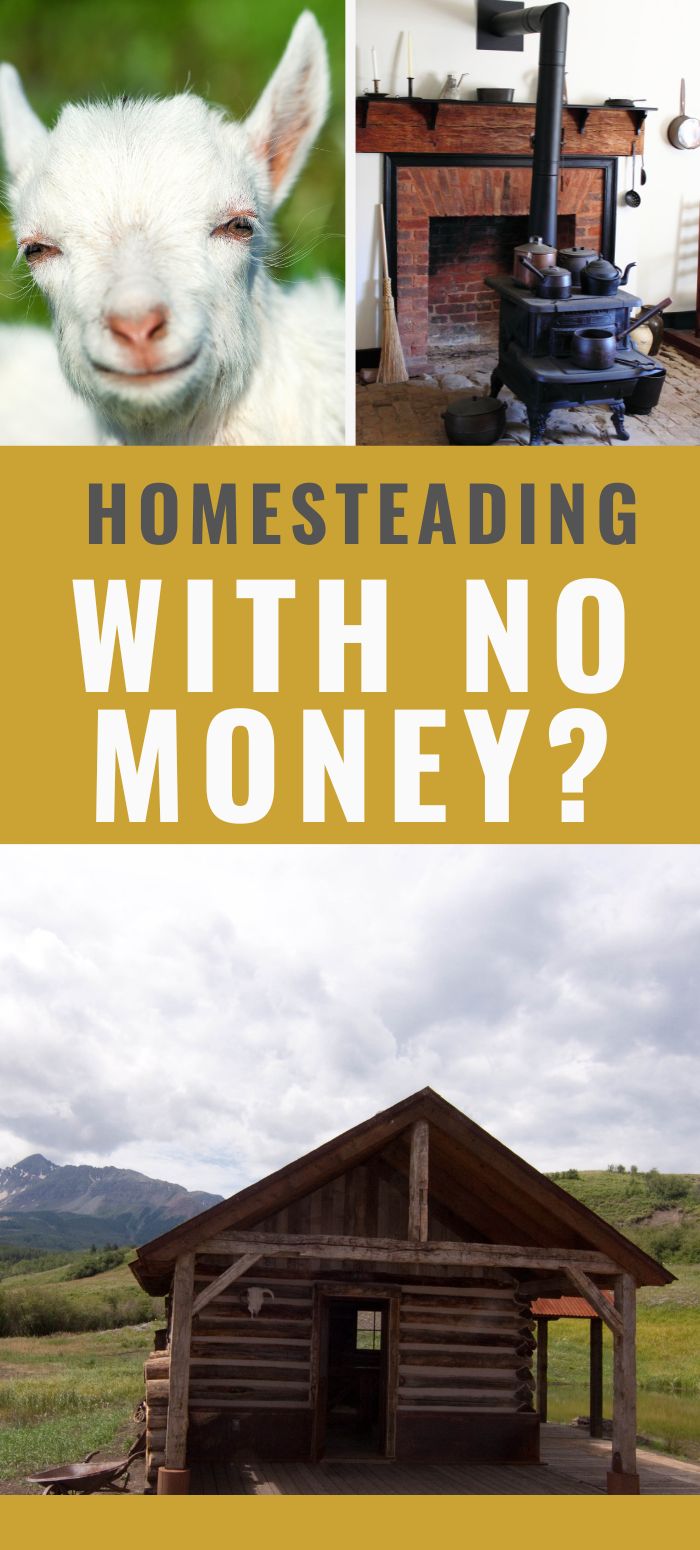
Can You Start A Homestead With No Money?

March 23, 2024 by Leigh 10 Comments

The short answer is no. You do need some money but it might surprise you that you don’t need a ton of money to start a homestead. Ingenuity, hard work and a lot of sweat goes a long way. But at the end of the day, no, you can’t start a homestead with no money.

The Ultimate Homesteader’s Starter Bundle – Only $47!

Get the tools you need to stay organized, track profits, and manage your homestead with ease!

Includes:
✅ Schedule F Tracker – Simplify tax prep
✅ Profit Calculator – Track earnings
✅ Hay Calculator – Plan livestock feed
✅ Garden Journal – Digital & printable
✅ Herd Health Tracker – Monitor animal care
✅ Simple Budget – Manage finances
✅ Backyard Homestead eBook – Essential tips

$99 value – now just $47! Start your homesteading journey today!

Buy Now

When we started our homestead, we had about $2,000. Considering the amount of work we needed to do? It was not a lot of money and I was panicking. I thought we needed all the things to get everything done, RIGHT NOW. Thankfully, after working a ton of overtime we have been able to slowly grow our homestead over the next year. Keyword is slowly.

Logo 468x60

How much do you need?

I would say a good rule of thumb to moderately build your homestead is $1,000 per acre to start. That doesn’t mean if you don’t have that $1,000 you can’t buy a homestead. But $1,000 is a good way to get started on a fair amount of projects without freaking out when you have to go back to the hardware store for the 15x in two days.

Replacing the water heater only took 7 trips in two days.

Also, depending on the state of your homestead, you may need to do a lot of manual labor before you can even get to work on any big projects. When we first moved in, we had to pull tons of debris from the homestead. Fencing, barbed wire, posts, random pieces of wood with nails sticking out of them, etc. Even a burned out freezer was just hanging out.

Banner 468x60

Can You Homestead With No Money: Animals

It took us a month and a half before we brought goats to the homestead to help clear land. Even though you can get goats pretty cheap, it’s not ideal. Cheap goats tend to be problem goats. Even mix breed goats can be expensive. Then there’s medication, feed, hay, shelters, and basic supplies.

Shelter

Before bringing home new animals, make sure that you have shelter already figured out. When we brought home Bella and V, we thought one of those plastic dog crates would be fine…. Well, we live in the rainiest parts of Georgia and every summer afternoon we have a pop up shower. Which is great for the garden, but not so great for goats. Depending on your weather, a good, cheap option is a dog igloo.

Fencing

I will say is this, before you bring bigger livestock (goats, pigs, donkey, etc) to the homestead, make sure you have plenty of money set aside because your first fence probably sucks. Especially if you have never built fences for livestock. I’m not knocking your fence building skills, but those animals will find the weak points. We spent two hours chasing Bella between our property and our neighbors. So make sure you either have extra money on hand or someone who actually knows how to build livestock fencing.

goat kidding

Before we get too far into this, I have a great course on the basics of goat care. I call it Goat Crash Course: Goat 101. In this course, I explain things like types of shelter, types of feeds and hays, basic assessments and so much more! Check it out!

Buy Now

Can You Homestead With No Money: Gardening

Gardening doesn’t necessarily have to be expensive. In fact, you could have an amazing garden on a shoestring budget. You really just need time, dirt, seed and some manual labor.

This year we put in our kitchen garden beds. While I absolutely LOVE them and I’m so glad we did it, the reality is that it cost us around $2,000 between soil, materials, trellising, etc. And we’re not even done yet. We still have to add more trellising and a better fence.

Are you getting overwhelmed in the garden? Stressed? Or just not enjoying the garden like you used to? Check out our garden prompts! We send out weekly emails that get you back in the garden and out of your head! Turn the garden back into a place of love and joy instead of frustration and headache!

Subscribe Now!

Putting in gardens is going to be hard work. You can do a lot of work by hand instead of relying on a tractor. I feel like it’s worth it to learn how to do it manually so you know how to till (if that’s what you’re doing), amend the beds, see the soil structure, etc. However, it would be really nice to have a tractor for pulling stumps and not spending two weeks working the soil.

Can You Homestead With No Money: Get Creative

If you can get creative with what is already on your property, you don’t need a ton of money to start a homestead. We had a ton of old material from various projects we did at our old house. We made sure to bring all of that with us. Since our new garage wasn’t big enough for the 2 sets of storage shelves we had in the old garage, we used the wood for something else.

New Kidding Pens

Some of the debris on the property has yielded us a couple of goat shacks, a chicken coop, plenty of roosting bars, and much more all without spending a penny. And while it’s not pretty, it works really well. The goat shack above has about $2 worth of screws invested in it. Since it has been converted into a kidding pen it has another $10 worth of hinges and wood.

Logo 468 x 60

There have also been instances of numerous projects that need to be done, and we only have $1,000 to all of them. Things get really creative then but when I look around at all the things we have gotten done around here, I’m pretty impressed.

Don’t be afraid of buying a property because you don’t have a ton of money to get started. It takes time to get a homestead up and running, not money. Hard work goes a lot further than a dollar so please don’t get hung up on that part.

Banner 468x60

It Doesn’t Have To Be Insta-Worthy

With the rise of homesteading, I see tons and tons of Instagram or Pinterest boards of these perfectly curated gardens, chicken coops, barns, homes, etc. Please, please, please don’t fall into that trap! Those of us that have been homesteading for more than 5 minutes fully understand the reality of homesteading.

You will wear yourself out trying to keep everything perfect.

There was chicken poop all over our back deck before we got our chicken run set up. Before we renovated the living room, we had goat vomit on the ceiling. I have a trash pile that is almost as wide as my driveway. I have flies in my kitchen no matter what I do to get rid of them.

Is my house dirty? No. It’s a working homestead. Syringes by the sink, coffee mugs on the deck, measuring tape on the picnic table, and boxes of garden harvest on every flat surface.

It’s this life, I love so much.

Sure, you could spend your entire day chasing after kids trying to keep those baseboards white….. Or you could enjoy the laughter as that child snuggles with a baby goat.

You could spend 2 hours every day making sure the chicken coop is spotless. Or you could spend those same 2 hours playing in the garden.

You could spend your day pulling every weed from the garden. Or you could cover it with some mulch and plant new things.

It’s all a matter of perspective. I don’t need a perfectly clean house, coop/barn, or weed free garden. My happiness means more to me than an insta-worthy picture.

If you like the content I put out, feel free to buy us a coffee! It helps keep this site running, marketing and the goats in grain!

Buy me a coffee

If you like this post, feel free to share it and follow us below on our social media accounts!
  • Facebook
  • Pinterest
  • Instagram
  • YouTube
  • TikTok
  • Spotify
  • Threads

Filed Under: Frequently Asked Questions, Our Homestead Tagged With: Chickens, Goats, Homestead

JOIN TO OUR MAILING LIST!

Leave us your email to receive new posts and special offers for members only! Don't miss a thing!

Recent Posts

  • Fall Garden Guide
  • Top Mistakes With Goats
  • How To Bond With Your Goats

5 Things I Learned Heating With Firewood

March 19, 2024 by Leigh Leave a Comment

What sounds more homestead-y than a wood burning stove? Not much… Well, I would say gathering eggs too. But there are a lot of things to consider when it comes to heating with firewood, before you jump in with both feet. Things like, how much do you need? How are you going to stack it? How do you start a fire in an insert or wood stove? These are all questions I didn’t know I had, till I had them.

If you are new to heating with firewood and are looking to master the finer points of it. We’ve got a great eBook that goes in depth of what tools you should consider, how and where to stack, how to build a fire and so much more!

Buy Now

I Learned A Lot Our First Year Heating With Firewood

Our fireplace insert is pretty old but still works very well. Unfortunately, it is not very energy efficient. We also learned that when we lose power, we loose the ability to heat our home well. We also have a wood burning furnace in the basement. While it was cool but not cold, we decided to start the furnace to see if it even worked. Boy did it! The boys rooms were 95* before we were able to get the fire out. After some trail and error, we figured out the basics of heating with firewood.

We’ve been heating our home solely with firewood for several years now so this list has changed a bit LOT!

We have since removed the old furnace in the basement since it produced WAY too much heat and ate WAY too much wood. Our wood burning insert in the living room suits us just fine.

Save on Seeds

1. Cut or buy more wood than you think you’ll need

If it’s your first year, cut double what you think you’ll need. We only cut two cords that first year. By the time the season was over, we had bought two more cords. Thankfully, we had a ton of downed trees on the property that were pretty dry. That allowed us to cut as we needed but having to buy firewood wasn’t on my to do list….until it was.

The Ultimate Homesteader’s Starter Bundle – Only $47!

Get the tools you need to stay organized, track profits, and manage your homestead with ease!

Includes:
✅ Schedule F Tracker – Simplify tax prep
✅ Profit Calculator – Track earnings
✅ Hay Calculator – Plan livestock feed
✅ Garden Journal – Digital & printable
✅ Herd Health Tracker – Monitor animal care
✅ Simple Budget – Manage finances
✅ Backyard Homestead eBook – Essential tips

$99 value – now just $47! Start your homesteading journey today!

Buy Now

We still ended up running low and almost out on two separate occasions and of course one of those we had a winter storm baring down on us. Figures.

In the subsequent years, we have learned that having 6 cords of wood on standby is ideal. Do we use 6 cords of wood? Rarely. But having it on standby is a great way to always have a head start on next year’s wood pile.

2. Get a good wood splitter

I love splitting firewood. Whether with an axe or with the splitter, it is incredibly satisfying to see your wood pile grow. Part of it is because you can see the progress of your work. The other part is you know you will be warm that winter.

But you do need a solid wood splitter to get the job done faster. Trust me, after an hour of swinging that axe you will be tired and looking to trade out with someone. There are several kinds out there, but we have an electric splitter. I would prefer gas but with it being 3x to 5x the price? Electric it is.

Logo 468 x 60

Our log splitter is smaller and we have to bend over to use it. Jared is tasked with building a table for it because after a while my back and hip start to hurt and I have to walk it off. Still, it beats having to use an axe 100% of the time.

We are also very lucky that our neighbors have a log splitter that they are totally cool with us borrowing. I would recommend saving to purchase your own and we are but thankfully that purchase is lower on the list.

3. Learn how to start a fire

You think I’m joking but you need to learn how to properly start a fire. There is no one right way to do it but you still need to know how to do it. You also need to learn how to operate your insert, stove, or fireplace. The basic jist is open your flue and add some sort of starter like paper, leaves, or similar. Light the starter and quickly add small sticks or kindling to it. Then add larger pieces of kindling until you can add a log without putting out the fire.

If you are new to heating with firewood and are looking to master the finer points of it. We’ve got a great eBook that goes in depth of what tools you should consider, how and where to stack, how to build a fire and so much more!

Buy Now

How I do it, put cardboard on the log holders and a couple small logs that are “scraggly” they are super dry and have little pieces of wood sticking off them. This acts as my kindling. Then I light with our propane torch. Easy peasy. Jared has this whole process of building and building and BUILDING. I’ve go other stuff to do so I choose the easy way.

PS: Our propane torch is this attachment to the camp stove propane bottles. We then refill the camp stove bottles off a big propane tank at the beginning of every fall/winter.

4. Get a pot of water for your stove

A pot of water on the stove allows for you to create humidity. Without it, you will dry out not only your sinuses but it can also damage your home. If you have hard wood floors, or wood paneling like we do, it will cause it to dry, crack, and split.

Thankfully, when we had a cord of wood delivered, I started asking the guy questions because he had heated with wood his entire life. He walked in the house and asked where our water pot was. Before he left, we fixed the problem.

I had no idea that was a thing until I ended up getting really sick. I had a patient that had bronchitis and she coughed on me. Because my sinuses were so dry, there was no mucus. No mucus= no protection from germs.

We have since upgraded to a “fancy” pot so I could have my cooking pots back. We also have a magnetic fan and thermometer. While this may not seem important, and isn’t really necessary, it has helped a lot with monitoring the insert’s temperature AND moving air even if the power is out. I highly recommend both of these things.

If you are new to heating with firewood and are looking to master the finer points of it. We’ve got a great eBook that goes in depth of what tools you should consider, how and where to stack, how to build a fire and so much more!

Buy Now

5. Storing Your Firewood

Next to cutting or ordering enough, storing your firewood is the most important lesson we learned. I knew that we needed to stack firewood off the ground. Also, I knew that we needed to keep it mostly dry. You should also probably not bring a ton of firewood on your deck or into your house because of bugs.

What I didn’t know was the mess dry wood creates in a house. I didn’t know that you should store your kindling separate. Finally, I didn’t realize that tarping your wood will actually cause to stay wet.

Banner 468x60

To fix some of these problems I made a wood storage box. It’s not pretty, but it does a fantastic job of making sure that the mess stays in the box. I also have a small ledge behind the lid that we have another box that holds small pieces of kindling. This box has been a lifesaver.

We pulled off the tarp and almost immediately wood that was previously damp, started to dry. We only pulled the tarp over our stack if it was supposed to rain. This helped a ton.

Subscribe to Craft Beer Club Today!

Bonus tip!

Leave a layer of ash in the bottom of your insert! I swear, this was the key to starting fires quickly and keeping those embers warm. It acts as insulation and really helps keep your fireplace at the correct temperatures. I usually keep an inch or two in the bottom when I clean it out between fires. When I need to remove ash, I place it in this bucket until it’s most full and then it goes into the compost pile.

If you like the content I put out, feel free to buy us a coffee! It helps keep this site running, marketing and the goats in grain!

Buy me a coffee

If you like this post, feel free to share it and follow us below on our social media accounts!
  • Facebook
  • Pinterest
  • Instagram
  • YouTube
  • TikTok
  • Spotify
  • Threads

Filed Under: Our Homestead, Projects Tagged With: firewood, heating, Homestead, things I've learned, tips, wood burning

JOIN TO OUR MAILING LIST!

Leave us your email to receive new posts and special offers for members only! Don't miss a thing!

Recent Posts

  • Fall Garden Guide
  • Top Mistakes With Goats
  • How To Bond With Your Goats

Goats Are Not Beginner Livestock

March 9, 2024 by Leigh Leave a Comment

I have recently been asked “If you love goats so much, why do you tell people not to get them?” The answer is simple, if more people would educate themselves before buying animals, I wouldn’t tell them not to buy goats. Most people do not do the research, and they end up getting a bunch of animals that they are not prepared to care for. But the reality is that goats are not for the feint of heart and they are not beginner livestock.

goat kidding

Before we get too far into this, I have a great course on the basics of goat care. I call it Goat Crash Course: Goat 101. In this course, I explain things like types of shelter, types of feeds and hays, basic assessments and so much more! Check it out!

Buy Now

Goats are NOT beginner livestock

I wrote my post about goats coming to the homestead and I will be honest, I left a lot of information out. Mainly because it was a piece designed to give a brief snap shot of why and how we have come to love our goats. But I feel, especially after what I said above, that I needed to be a little more clear about why I feel this way.

The plan truth is that it is easier to kill a goat than keep it alive when you are just starting out. When we first bought Bella and Voldemort, we knew that he had worms. But we had absolutely no idea what that actually meant. If a dog has worms, you give it a pill and repeat again in a week. After that you should be good to go. With goats it’s not that easy. In fact, goats will easily die from worms and quickly.

Banner 468x60

Goats Die Easily

There is a treatment protocol that is now in place because farmers have overtreated for parasites and it has caused resistance to these dewormers. Instead of two doses of one dewormer, it is multiple doses of several dewormers over several days/weeks. If you don’t know these things, you will lose goats before you are ever really comfortable with them.

Banner 468x60

Then there are plants are toxic that can kill them or the predators out there. Or that if their rumen gets out of whack, they could die. I have an entire book of treatment protocols that I have gone over with my vet to make sure I am doing the right thing.

That being said, once you understand what you are doing and why, it is extremely easy to keep them going. With regular herd checks and individual checks, your herd can thrive. We’ve had some touch and go moments since owning goats and we have managed to pull most of them through.

goat kidding

Before we get too far into this, I have a great course on the basics of goat care. I call it Goat Crash Course: Goat 101. In this course, I explain things like types of shelter, types of feeds and hays, basic assessments and so much more! Check it out!

Buy Now

Having Medications On Hand

Unlike your dog, cat or even chickens, you need to have medications on hand for goats and know how to use them. Goats can take Aspirin, but if you don’t know how often or the dosage you could kill them. You need to have antibiotics on hand for things like pneumonia, antitoxin for injuries, thermometers for temp checks and minerals for their general health.

Good luck finding a vet that will treat your goat. Seriously, we got incredibly lucky that not only does our vet treat ALL of our animals, they are goat owners themselves. So they know how to take care of small ruminants, which is huge when figuring out how to take care of these creatures.

I have a tool box that I carry when doing herd checks. It is packed to the brim and a binder that lists medications, FAMACHA scores, weights and much more. I conduct herd checks weekly to make sure that we catch any possible illness before they happen. Even with all that, we ended up with two pregnant goats that we didn’t catch until a few weeks before delivery.

But once you learn what you need to do to care for them appropriately, they are worth it. Every time they bleat when you come into their pen. Their antics when they are playing fighting, and more is so worth every ounce of heartbreak when you lose one.

Goat People vs Everyone Else

There are two types of people when it comes to goats. There are people who have goats and people who love their goats. I know many people who have goats and they are just that, a goat. Goat people truly love their goats. I have chickens, I like them and they’re pretty cool but I don’t love them. I am not a chicken person. I’m not going to snuggle my chickens. I’m not going to check on them constantly. If one goes missing? I’m not going to be upset.

Save on Seeds

My goats? I cried when we lost Voldemort and Texas. My kids bawled with Texas. I refused to entertain the notion of another goat after that for about 5 minutes because I love these goats. I am a goat person. I have spent untold hours researching everything I can about them. I have spent more money on them then I care to admit, but they are my babies.

So No Goats are NOT beginner livestock

They just aren’t. But that is coming from a goat person. Someone who truly loves these animals and wants you to love them too. So if you want goats, by all means, get goats. They are really cool critters that have absolutely stolen my heart. But understand what you are getting into. It’s not all sunshine and roses.

goat kidding

Before we get too far into this, I have a great course on the basics of goat care. I call it Goat Crash Course: Goat 101. In this course, I explain things like types of shelter, types of feeds and hays, basic assessments and so much more! Check it out!

Buy Now

Sometimes it’s recognizing that your goat isn’t acting right and getting in there with a thermometer, FAMACHA chart and figuring it out. Or collecting poop and storing it in your fridge until you can get it to the vet. It’s keeping goats in your house because they could die at any minute and you need to be there to try and stop it. It’s realizing that despite your best efforts some may die and there’s not a lot you can do to stop it.

But it’s also having your goats sing to you as you come down your driveway- RIP Texas

It’s getting snuggles from your best girl- Champ

It’s playing, getting headbutts, and dodging a buck in full rut- Midas

It’s slowly, so slowly winning the affection of Queen Bee- Bella

It’s watching two girls grow and start to play and call out for you- Oakley and Bailey

It’s helping deliver the first goat born on your homestead- Stella

It’s wethering your first buck- BeeBee

It’s being surprised by a new kid on the ground and not realizing your girl was that close- Bailey and Sebastian

It’s doctoring a sore shoulder because he jumped off a log- Finnegan

It’s listening to a tiny bleat from a huge goat with a comb over- Spike

It’s watching 2 little girls melt my husbands heart with every whiny bleat and nibble- Jade and Sapphire

Logo 468 x 60

So while they may not be beginner livestock, they are absolutely worth the time, energy, effort and money that goes into their care and keeping.

If you like the content I put out, feel free to buy us a coffee! It helps keep this site running, marketing and the goats in grain!

Buy me a coffee

If you like this post, feel free to share it and follow us below on our social media accounts!

  • Facebook
  • Pinterest
  • Instagram
  • YouTube
  • TikTok
  • Spotify
  • Threads

Filed Under: Animals, Goats, How To's, Our Homestead Tagged With: Chickens, Goats, Homestead

JOIN TO OUR MAILING LIST!

Leave us your email to receive new posts and special offers for members only! Don't miss a thing!

Recent Posts

  • Fall Garden Guide
  • Top Mistakes With Goats
  • How To Bond With Your Goats

How Much Hay Does Your Goat Need?

March 2, 2024 by Leigh Leave a Comment

No matter where you live, there’s a really good chance that you will need to feed your goats hay to get them through winter. If you live in the south, you probably won’t need a ton. But if you have an actual winter, you probably want to make sure you have enough. To figure out how much hay you need, we’ll need to ask some questions first.

goat kidding

Before we get too far into this, I have a great course on the basics of goat care. I call it Goat Crash Course: Goat 101. In this course, I explain things like types of shelter, types of feeds and hays, basic assessments and so much more! Check it out!

Buy Now

Questions to ask yourself

How many goats do you have? How long do you need to hay your goat? Are you breeding your goats? What kind of storage do you have for hay?

I wish it was a simple equation but the reality is you don’t want to find out you were wrong in the middle of a snow storm. But I am going to give you the high points and what we do with our goats. By the end of this post, you can go into fall and winter with a rough idea of how much hay you’ll need.

Oakley and Bailey the goats
Oakley and Bailey

Before we get started I want to address something. Yes, I am writing this post in March. Why am I writing a post about how much hay you need for winter in the spring? Because being prepared is key for getting your livestock through winter. It doesn’t matter if you are in a mild winter climate like Georgia, or being buried in feet of snow every winter like Alaska. Knowing how much hay your goats need will get your goats through winter without losing body condition or worst case, a goat.

Save on Seeds

How Many Goats Do You Have? And Are You Breeding?

The key to successfully getting your animals through winter is know how many mouths you are feeding and how much they should eat. While this may seem like a no brainer, you must also consider how many additional animals may be coming to your homestead. We ended up picking up two more goats in January, had we not planned for extra hay, we would have been short because we now have two more mouths to feed.

Bella scratching her side because her pregnant belly gets in the way

You also need to consider if any of your does are pregnant, or could become pregnant. If you only get the minimum needed for each goat, and now your doe needs more hay because she is pregnant, you will be short. Or worse case, you don’t have enough for when the babies are ready to eat.

Logo 468x60

How Long Is Your Winter? Where Are You Storing Your Hay?

In Georgia, we have an extremely mild winter. Sure it gets cold and wet, but it doesn’t snow a lot and we usually have some sort of greenery for goats to eat. It is certainly not enough for them to eat throughout winter, but we do have some grasses that will grow year round here. When we start figuring up how much hay we need, we look at how much we got last year, and how long that lasted us. We also figure up how many months we will use hay.

For us, we want the ability to start giving them hay by mid to end October and have enough to carry them to the end of April. Now, we don’t start getting cold enough for our pastures to start hibernating until probably November. Our grass also usually starts growing in March, but having that extra cushion allows us to not worry if we get a freak snow storm in March, which has happened.

Jared also built a hay barn that is about fifty feet from our goat barn. While that is certainly a pain some days, especially when it is raining. It adds a layer of security that if the hay catches fire, which it’s prone to doing, our goats are safe. We tweaked his original design so that it’s easier to load. He’s also going to make an opening so that the goats can still get hay if they run out.

So How Much Hay Do You Need?

The general rule of thumb is 2-4 pounds of hay per day per goat. Or if you know their weight, 2-4% of their weight per day. Before we start looking at how much hay you need, I have a hay calculator in our general store that will make all this math a LOT easier. All you have to do is put the weight of your animal (estimating is fine), the percentage you want to feed per day and the amount of days you want to feed for. On the second page, there is a hay tracker that allows you to see where you bought your hay previously, how much you bought, how much you spent and so on.

The Hay Calculator:

If you aren’t math-y (don’t worry I’m not either), check out our Hay Calculator. It literally does ALL of the math for you and gives you totals based on what you want your goals.

On the second page, you can track where you’ve bought hay, what you spent and how long it lasted.

Buy the Hay Calculator

So let’s crunch some numbers. When we ordered our hay this year we got fescue/ Bermuda mix and we got two strand square bales. We had four goats, but our Texas died before we actually started using the hay. But we figured that each goat weighed 50# and we wanted to make sure that we had plenty of hay. So our equation looked like this

50# x .04= 2#/ day

2#x4 goats= 8#/ day

30 days in a month x 8 months= 240 days

8#x 240 days=1920# of hay

Tractor Supply

I know two tons of hay sounds like a lot, and it is. But if we had minimized what we needed:

30# x .02= .6#/ day

.6#x4 goats= 2.4#/ day

30 days in a month x 8 months= 240 days

2.4#x 240 days=576# of hay

We would have run out of hay in December. Let’s not mention that we wouldn’t have had enough to feed the two new goats we got in January. So knowing these figures allowed us to figure out how much hay we needed and we actually rounded down to about 1600# of hay.

The Hay Calculator:

If you aren’t math-y (don’t worry I’m not either), check out our Hay Calculator. It literally does ALL of the math for you and gives you totals based on what you want your goals.

On the second page, you can track where you’ve bought hay, what you spent and how long it lasted.

Buy the Hay Calculator

Now the second question of where to put the hay comes into question. Because we didn’t have a place to put a round bale of hay, nor anyway to move it into the pens, we opted for 2 strand square bales. Not only did we not have space, but putting all our eggs in that basket seemed like a bad idea. If any portion of that round bale molded and we fed it to the goats, they could all die. So we went with square bales.

Jared built our hay barn so that we could house the hay without it getting wet but still had plenty of ventilation, which decreases the chances of it molding, composting, or any other nasty that would make it unusable. When we ordered our hay we ordered 28 bales of hay to get everyone though winter. That’s about 1600# and we only paid $200 for it.

Tractor Supply

This year we will have twelve goats to get through winter and we have been seeding our pasture to make sure they had plenty of options, especially in winter. To give you a break down of how much hay we are planning for and the corresponding math.

Our seven girls total weight= approximately 525#

Our five bucks/wether= approximately 600#

1125# goat x .04 & .02= 45# of hay/ day or 22# of hay/day

30 days x 45 (and 22)= 1350# or 660#

Logo 468x60

Long feed (September to April) X High Weight= 10,800#

Long Feed X Low Weight=5280#

Short Feed (November to March) X High Weight=6750#

Short Feed X Low Weight=3330#

If all of that is just a lot of information and hard to keep up with? Just head over to our hay calculator and you can purchase the much easier version.

Save on Seeds

Now we average the highest number and the lowest number: 10,800# and 3,300#= 7,050# of hay.

Why do we average it? Because they aren’t only going to eat hay. They get alfalfa pellets and grain as well. Plus they will eat branches, dead leaves, etc. So they won’t need the full 45# of hay per day. But they might. And as I said before, I would rather have too much than not enough. And let’s face it, they are going to waste a fair amount of it.

Is there an easier way to do this? Absolutely. I could just multiply by .03 instead but I like having the high and low numbers. If I am aiming for 10k # of feed and only hit 5k #, then I know I will have to buy extra grain, alfalfa pellets, or beet pulp.

So how much hay do you need to get through winter? Use the formula above to figure it out and remember, it is better to have too much than not enough.

If that was a little too much to handle, don’t forget you can use the hay calculator to make it a TON easier

The Hay Calculator:

If you aren’t math-y (don’t worry I’m not either), check out our Hay Calculator. It literally does ALL of the math for you and gives you totals based on what you want your goals.

On the second page, you can track where you’ve bought hay, what you spent and how long it lasted.

Buy the Hay Calculator

If you like the content I put out, feel free to buy us a coffee! It helps keep this site running, marketing and the goats in grain!

Buy me a coffee

If you like this post, feel free to share it and follow us below on our social media accounts!

  • Facebook
  • Pinterest
  • Instagram
  • YouTube
  • TikTok
  • Spotify
  • Threads

Filed Under: Animals, Frequently Asked Questions, Goats Tagged With: Goats, hay, Homestead

JOIN TO OUR MAILING LIST!

Leave us your email to receive new posts and special offers for members only! Don't miss a thing!

Recent Posts

  • Fall Garden Guide
  • Top Mistakes With Goats
  • How To Bond With Your Goats

What Does Homestead Mean?

February 27, 2024 by Leigh Leave a Comment

There is no hard fast definition for what homestead means. For some people a homestead means completely off grid with no reliance on anyone but themselves. Others believe that homesteading means growing their own vegetables. But as time goes on, the meaning changes for those people as well. Regardless of what this means to others, I am going to tell you what homesteading means to me and what it has come mean as well.

The Ultimate Homesteader’s Starter Bundle – Only $47!

Get the tools you need to stay organized, track profits, and manage your homestead with ease!

Includes:
✅ Schedule F Tracker – Simplify tax prep
✅ Profit Calculator – Track earnings
✅ Hay Calculator – Plan livestock feed
✅ Garden Journal – Digital & printable
✅ Herd Health Tracker – Monitor animal care
✅ Simple Budget – Manage finances
✅ Backyard Homestead eBook – Essential tips

$99 value – now just $47! Start your homesteading journey today!

Buy Now

What Does Homestead Mean

Well, the formal definition of homestead I pulled from Oxford Dictionary is:

“A house, especially farm, and outbuildings.”

The good thing about that definition is that it’s as broad and vague as how homesteaders, or aspiring homesteaders define homesteading.

Really, any piece of property can be a homestead! You don’t HAVE to have hundreds of acres. You can homestead on a city lot or out in the country.

What Does Homestead Mean To Me?

At first, homesteading meant a way to take care of my family without relying so much on others. The thought of being at the mercy of grocery stores to have my food was slightly worrisome. If we couldn’t get food, where would we be? Not having access meat, veggies, fruit, dog or cat food, has the potential for disaster. There were a ton of holes in our food security.

It meant learning skills and building a legacy for my children. Things like building barns, fences, and gardens. It meant learning how to cook from scratch.

Delicious biscuits

Learning Skills Ma Ingle Would Have Been Proud Of

From scratch cooking is surprisingly easy. I wonder if we were raised to believe that it was so much harder so that there was more reliance on boxed and canned meals. Since being on the homestead, we have learned a ton when it comes to cooking, canning, and other food related skills.

Homesteading can mean bringing animals into this world, learning how to milk and make cheese and processing animals. It means learning to depend on yourself in ways that you never really valued or thought you could do.

I learned that if I can raise my own hens, I can get eggs that I don’t have to go to the store for. I could raise my own meat birds and rabbits to help save on meat costs. Also, I learned that if I learn to preserve those things, I can have them on stand by and make everything easier.

Save on Seeds

Sometimes meanings change

But as time has gone by and the continued strain on our supply chain, homestead has come to mean other things as well. It means being prepared and stocking up on items that we use a lot of: coffee, tea, noodles, canning jars and lids, and other necessities. Making sure that we have enough supplies if another snow storm hits. Will we have plenty of firewood, canned food, and fuel for the chainsaws and other equipment?

If you are a farmer/ homesteader and looking for a way to track your income and expenses, I highly recommend our Schedule F Tracker! We have been using it for years and it is the easiest, fastest and best way that we have found to keep track of the money spent on the homestead.

Buy Now

Homesteading means community. We realize that we are stronger together and we stand with our neighbors when times are good and we help pick them up when they have hard times. It’s knowing that they will stand with us in our hard times too.

Logo 468x60

It has also come to mean finding random eggs in the hay barn, playing with goats, and impatiently awaiting the arrival of Champ’s babies.

Update: She gave us a beautiful doeling that we named Stella.

It means caring for the new chicks that will not only give us eggs but also lay our next meat chickens. Homesteading means learning new skills, facing challenges, and not giving up. It means doing the things you thought you couldn’t, only to realize that you are more than capable of building fences, buildings, and fixing all the things.

Poor Champ is uncomfortable as she comes to the end of her pregnancy.

What Homesteading Doesn’t Mean

I can tell you that homesteading doesn’t mean judging others. Whether you have a quarter acre in the city or a hundred acres in the country, you are still homesteading regardless of if you purchase your food from a grocery store or farmers market, or if you grow your own.

It doesn’t mean being unaffected when creatures die or need to be butchered. For some people, taking the life of a chicken is okay, but it still affects them in some way, even if it’s only gratitude.

The Hay Calculator:

If you aren’t math-y (don’t worry I’m not either), check out our Hay Calculator. It literally does ALL of the math for you and gives you totals based on what you want your goals.

On the second page, you can track where you’ve bought hay, what you spent and how long it lasted.

Buy the Hay Calculator

Homesteading doesn’t mean easy. There is no part of this life that is easy. If you are hauling lumber for a barn or feed to your animals, homesteading is hard work. It can be heart and back breaking when you have to put down your favorite bottle baby because she got sick.

You can’t be lazy and a homesteader. There is simply too much to do. Gardening, canning, working with livestock and more, there is not a ton of downtime. But when you see the fruits of your labor? It’s worth every aching joint, pulled muscle, cut and bruise.

New Chicks

What Does Homestead Mean?

I don’t know that homesteading has a meaning. I think homesteading is a spirit. It’s the spirit of being less dependent on the power grids, grocery stores, and other commodities. These people who want to homestead do it because they want to be independent. Whether that is a completely or partially independent, is not the point. Homesteaders simply want to take care of themselves and their community. Which is what homestead means to us.

Banner 468x60

I think that as long as people want to take ownership of their little plot of land, we will keep the spirit of homesteading alive. I think as long as people desperately want to learn the skills of their ancestors, they will lead a full and productive life. And I think that as long as we are here fighting for our community and independence, we will see the resurgence of a way of life that mixes the old with the new. And we will be better for it.

What does homesteading mean to you?

If you like the content I put out, feel free to buy us a coffee! It helps keep this site running, marketing and the goats in grain!

Buy me a coffee

If you like this post, feel free to share it and follow us below on our social media accounts!

  • Facebook
  • Pinterest
  • Instagram
  • YouTube
  • TikTok
  • Spotify
  • Threads

Filed Under: Animals, Canning, Chickens, Garden, Goats, How To's, Our Homestead, Pigs Tagged With: Animals, Homestead

JOIN TO OUR MAILING LIST!

Leave us your email to receive new posts and special offers for members only! Don't miss a thing!

Recent Posts

  • Fall Garden Guide
  • Top Mistakes With Goats
  • How To Bond With Your Goats
  • « Go to Previous Page
  • Page 1
  • Interim pages omitted …
  • Page 3
  • Page 4
  • Page 5
  • Page 6
  • Page 7
  • Page 8
  • Go to Next Page »

Primary Sidebar

WELCOME

WELCOME

My name is Leigh and I am the lead chaos creator here at Steel Raven Farms. You will see throughout this blog that I am the crazy goat lady.

I am married to my high school sweetheart, Jared and we have two amazing boys.

FOLLOW ME

  • Amazon
  • Facebook
  • Instagram
  • Pinterest
  • TikTok

GET UPDATES!

Leave us your email to receive new posts and special offers for members only! Don't miss a thing!

In all the years that I’ve been growing a garden, the fall garden has steadily remained my favorite. Which is funny because I don’t really like any of the brassicas, which is what most people know the fall garden for. I prefer the root vegetables and cool air. But I have learned over the years…

Read More

Secondary Sidebar

Call to Action Section

Here's a great place to write something specific that you want your visitors to read.
Buy now!

Buy now!

  • Animals
    • Chickens
    • Farm Dogs
    • Goats
  • Garden
    • Compost
    • Garden Projects
    • Seeds and Plants
    • Garden Journal
    • Working With Food
      • Recipes
      • Freezing Foods
      • Dehydrating Foods
      • Canning Tips And Tricks
        • Canning Inventory Sheets
  • Helpful Info
    • Welcome to the Homestead!
    • Emergency Preparedness
    • Frequently Asked Questions
    • Goal Setting
    • Project List
    • Shop Digital Products
      • Hay Calculator
      • Farm Expense And Income Tracker
      • Goat Crash Course: 101
      • Garden Journal Prompts
      • Schedule C Tracker
      • Schedule C Tracker
      • The Homestead Bundle
  • The Truths
  • Episode List
  • Start Here
    • Privacy Policy
    • Affiliate Disclosure
    • Let’s Get in Touch
    • Members Only Library
    • Welcome To Our Homestead

Footer

  • Email
  • Facebook
  • Instagram
  • Pinterest

COME AND GET IT!

Leave us your email to receive new posts and special offers for members only! Don't miss a thing!

· Midnight Theme

Copyright © 2026 · Midnight Theme on Genesis Framework · WordPress · Log in