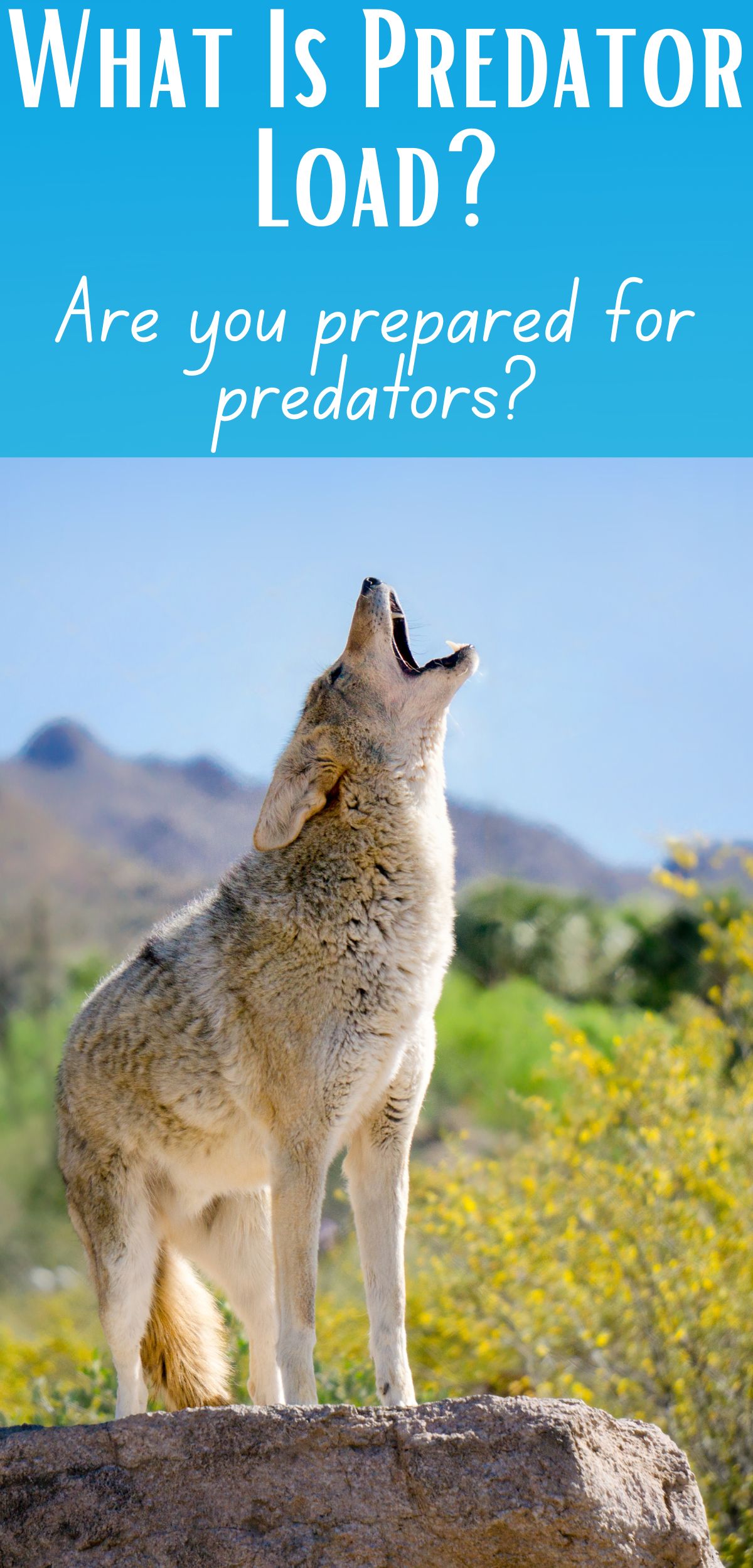
Up till recently, we have been very lucky when it comes to predators. In our immediate area, we have a couple coyote dens on the surrounding properties and the typical skunks, opossum, fox and minx. We also have a couple of bears and bobcat, too. But what is a homestead predator, what is predator load and why is it important?

The Ultimate Homesteader’s Starter Bundle – Only $47!
Get the tools you need to stay organized, track profits, and manage your homestead with ease!
Includes:
✅ Schedule F Tracker – Simplify tax prep
✅ Profit Calculator – Track earnings
✅ Hay Calculator – Plan livestock feed
✅ Garden Journal – Digital & printable
✅ Herd Health Tracker – Monitor animal care
✅ Simple Budget – Manage finances
✅ Backyard Homestead eBook – Essential tips
$99 value – now just $47! Start your homesteading journey today!
Let’s First Answer: What is a predator?
A predator is simply any creature that wishes, is programmed and is able to do harm. That is a very broad definition right? But the reality is that anything could be a predator. The rabbit in your garden is a predator because it wants to harm (eat) your plants. A chicken is a predator to plants and bugs, sometimes each other.

It’s natural to think that predators are only big, scary animals with bigger teeth and claws. And while that is correct, you also have to broaden your definitions when you homestead or care for any kind of livestock. And, it’s not just other animals you have to be careful of. Humans are just as bad, if not worse predators.
What is Predator Load?
By definition, predator load is the amount of predators that come through your property or surrounding area. It could be high, moderate, or low and it can be seasonal as well. If you don’t know your predator load, I would start talking to your neighbors, local extension office, or Google. I would also do this prior to getting livestock.
Just by knowing our neighbors and having their phone numbers, we have successfully avoided several attacks. We alert our neighbors, or they alert us, and we get outside with our animals or put them up.
If you don’t have access to those things, I would hold off on getting any livestock until you have a better understanding on what other animals live in your area. The last thing you want is to pick up an amazing herd only to have it torn apart by bears that you didn’t know lived in your area.
Why is knowing your predator load important?
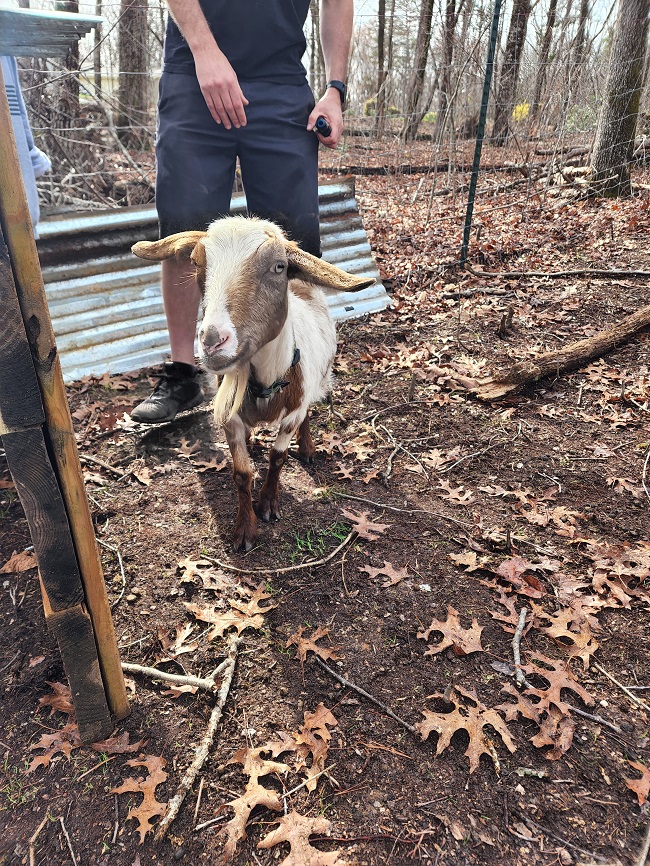
Once you know what is going to actively try and kill your animals (besides your goats trying to kill themselves), you can start planning steps to fix problems before they arise. For example; I stated above that we have coyote, bear, bob cat, minx, skunk, and opossum as our homestead predators. This tells me that I need to make sure that I have secured my chicken coop at night. It also tells me that I need to put my goats up at night too. But my day time problems, shouldn’t be too bad.

Next, you need to start researching various predator deterrents. There are several non lethal methods but at the end of the day, you have to decide how you are going to protect the animals in your care. Whether that is trapping and releasing, SSS (Shoot, Shovel, Shut Up), or hoping that they decide to leave a free buffet alone. Otherwise, you’ll need to mark off a section of your property for your animal cemetery.
You can also check out this from Redfin article as well! “Whether you’re planning to raise chickens at home in Asheville, NC, Eugene, OR, or Burlington, VT, check out this Redfin article we were featured in on 5 Chicken Coop Ideas For A Thriving Flock.” The big thing to remember when it comes to deterring predators is your enclosures.
The Ultimate Homesteader’s Starter Bundle – Only $47!
Get the tools you need to stay organized, track profits, and manage your homestead with ease!
Includes:
✅ Schedule F Tracker – Simplify tax prep
✅ Profit Calculator – Track earnings
✅ Hay Calculator – Plan livestock feed
✅ Garden Journal – Digital & printable
✅ Herd Health Tracker – Monitor animal care
✅ Simple Budget – Manage finances
✅ Backyard Homestead eBook – Essential tips
$99 value – now just $47! Start your homesteading journey today!
How We Handle Predator Load
One of the first things we did, when it started getting cooler, was to start working on our goat barn. We knew that the coyotes were going to start coming up into the yard to find food. I was not going to risk my goats lives because I didn’t want to build them a secure enclosure for night.
Another thing we did was order these. They are predator lights. We have them all over the property to help deter predators. It’s not foolproof but it does help. We’ve got them in the garden, around the chicken coop, goat barn, etc.
We also have huge dogs that we have praised for alerting us since we got them. Bear is our smallest at 75# and Kodi is our biggest at a skinny 140#, we are working to put more weight on him. This helps because most predators are not going to come into the yard of dogs that are 2-3x the size of them. We also rotate dogs in and out of the house so there is always a dog outside during the day. You can read more about how we train our farm dogs here.

Lastly, we practice SSS. I really struggle with this because I don’t want to harm another animal. Especially one that is doing what it is supposed to be doing. I struggle when we butcher meat chickens. But at the same time, when I bought animals, I took on the responsibility of keeping them safe. I take that very seriously. Not just in terms of predators but also educating myself on the best possible practices for their care.
I tell you all this because we have officially lost our first chicken to a fox. I was at work and Jared sent me a text saying that our favorite chicken was killed by a fox. When I was able to call him, I got the recap. Apparently, the fox was chasing our ducks and chickens around the house before he finally caught one. Jared was too far away from the rifle and by the time he got to it, the chicken was dead and the fox was enjoying his meal. We have since beefed up our protection measures and hopefully, won’t lose anymore chickens, ducks, or goats.

Predators No One Wants To Talk About
Lastly, I wanted to talk about the predators that no one wants to talk about. There are two; humans and their dogs. Now, this may never be a problem for you. You may never have to deal with neighbors intentionally harming your animals. But those people are out there. We have been beyond blessed that our neighbors are amazing. But on the next mountain over? That’s a different story entirely. So how do you protect your animals from humans? Honestly, cameras are going to be your best course for any sort of legal action. Because livestock is expensive.
As for dogs? This is a lot harder. Dogs can climb fencing or dig under it. We had an incident where our neighbors dog would come over and eat our ducks and chickens. I wasn’t mad about it, per se. The dog was doing what her breed is supposed to do. But it was a frustrating. Luckily, our neighbors are awesome and he fixed the problem on his side and we fixed it on ours. But not everyone is that lucky.
I am here to tell you that for any predator on your property, you have to make the decision on what YOU are comfortable with. If you aren’t comfortable with SSS, then you are going to go the extra length to secure your animals. If you can’t, then maybe don’t get animals. Dealing with predators comes down to your personal ethics and answering the question; is my stuff more valuable than the predator?
So before you get livestock, save yourself some heartache and do some research. Not just on the types of animals, breeds, and their care. Research the predator load in your area, how to handle it, and how you are going to deal with the predator that maims or kills your favorite chicken.
If you like the content I put out, feel free to buy us a coffee! It helps keep this site running, marketing and the goats in grain!
Buy me a coffeeIf you like this post, feel free to share it and follow us below on our social media accounts!