• Skip to primary navigation
  • Skip to main content
  • Skip to primary sidebar
  • Skip to footer

Steel Raven Farms

Where muck boots meet ground.

  • Animals
    • Chickens
    • Farm Dogs
    • Goats
  • Garden
    • Compost
    • Garden Projects
    • Seeds and Plants
    • Garden Journal
    • Working With Food
      • Recipes
      • Freezing Foods
      • Dehydrating Foods
      • Canning Tips And Tricks
        • Canning Inventory Sheets
  • Helpful Info
    • Welcome to the Homestead!
    • Emergency Preparedness
    • Frequently Asked Questions
    • Goal Setting
    • Project List
    • Shop Digital Products
      • Hay Calculator
      • Farm Expense And Income Tracker
      • Goat Crash Course: 101
      • Garden Journal Prompts
      • Schedule C Tracker
      • Schedule C Tracker
      • The Homestead Bundle
  • The Truths
  • Episode List
  • Start Here
    • Privacy Policy
    • Affiliate Disclosure
    • Let’s Get in Touch
    • Members Only Library
    • Welcome To Our Homestead

Eggs

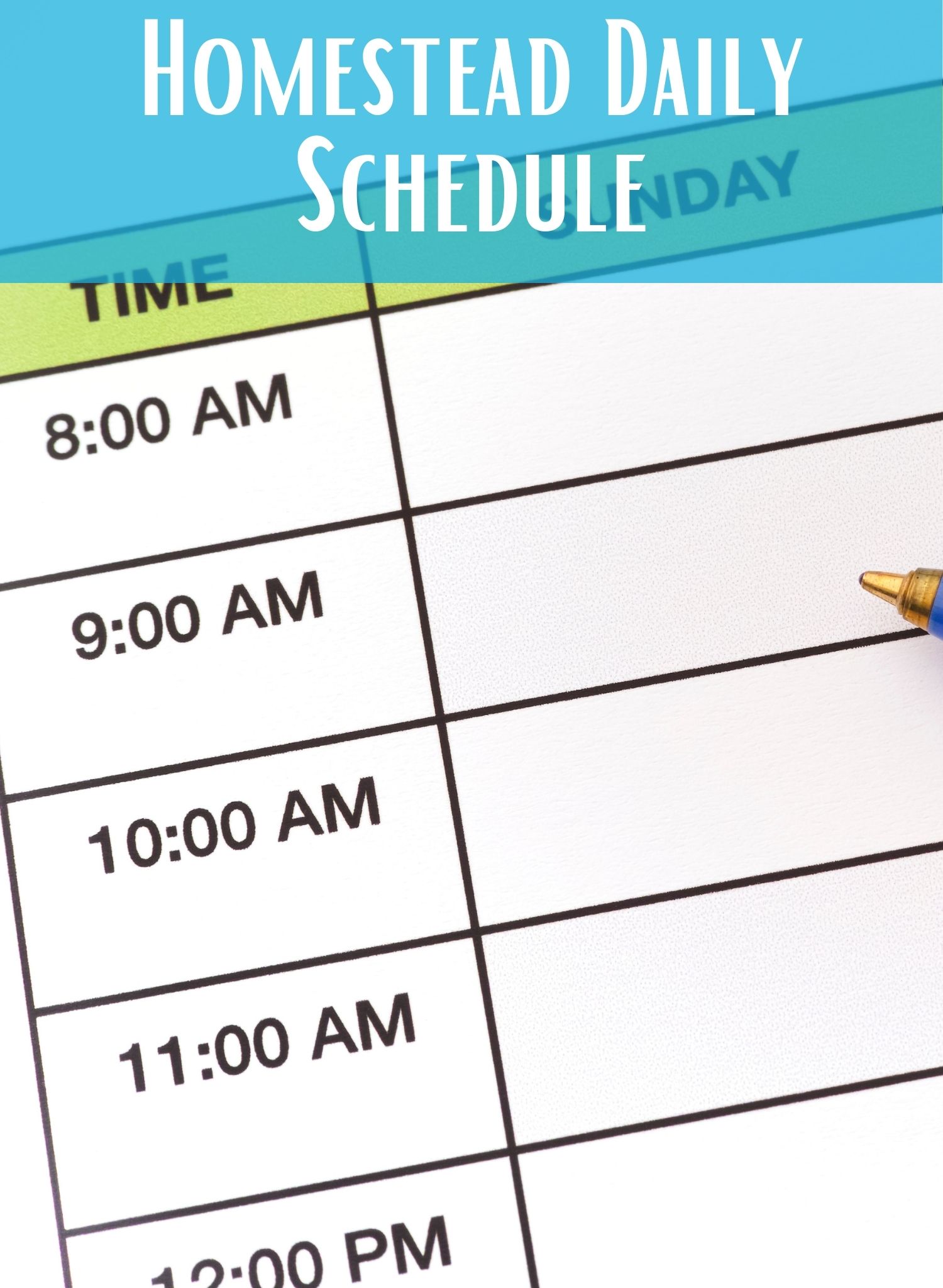
Homestead Daily Schedule

August 13, 2024 by Leigh Leave a Comment

On our homestead, this looks a little different than most. Due to our work schedules, one of us is gone 48 of 72 hours. Sometimes more. However, the goats still need to be milked, fed and let out. Chickens and ducks still need feed, water, and be let out. Dogs are also hungry and need to go to the bathroom. And all the other chores need to be done. So regardless of who is home, the daily schedule looks pretty much the same.
The Ultimate Homesteader’s Starter Bundle – Only $47!

Get the tools you need to stay organized, track profits, and manage your homestead with ease!

Includes:
✅ Schedule F Tracker – Simplify tax prep
✅ Profit Calculator – Track earnings
✅ Hay Calculator – Plan livestock feed
✅ Garden Journal – Digital & printable
✅ Herd Health Tracker – Monitor animal care
✅ Simple Budget – Manage finances
✅ Backyard Homestead eBook – Essential tips

$99 value – now just $47! Start your homesteading journey today!

Buy Now

What Is Our Homestead Daily Schedule?

As I mentioned above, our days are set up on a 3 day rotation. On the first day, I go to work and Jared is the responsible party until he goes to work the next day. Day 2 is when I come home and handle my portion of the homestead chores. On day 3 we are both home and try to squeak out as much time together as possible.

Day 1 Daily Schedule

This is my work day, so Jared is home with the boys. He usually gets up with me and we drink coffee and hang out for a few minutes before I head to work. Sometimes, he will tell me about what he has planned for the day. But more often then not, I don’t really care per say. The way I see it, he is a grown ass man and knows what he needs to do for the day. Unless there is something pressing, I don’t worry too much about what he’s doing.

That being said, most of the time he is working on whatever project we are doing. In the summer, it’s usually firewood. In the winter, it’s usually household projects. Spring is reserved for garden projects and fall is for yard clean up.

He also makes sure that the boys are doing their school work and the house doesn’t burn down.

Day 2 Daily Schedule

This is the day that he goes to work and I am coming home. Normally, I get home a little later in the morning. After getting myself cleaned up and my stuff put away, I get the boys started on their school work and I start working on whatever inside projects need to be handled. Sometimes this is blog or household work. Other times this could be getting seeds together and planted. It really depends on what the season is.

But I can tell you that the day after a 24 hour shift is left really loose. I have run calls all night and come home with a pile of chores that HAVE to get done and it’s awful. Instead, we give ourselves and each other grace when it comes to the day after shift. We just don’t put a lot of stuff on ourselves.

That being said, the goats still need to be checked and fed. Chickens and ducks still need to be fed and let out. The garden still needs to be harvested, planted or maintained. But we don’t stress about getting the to do list done.

Day 3 Daily Schedule

For me, the day starts around 8am. Blu gets her morning meds and mom needs coffee. The first set of dogs are let out and showers start. I will usually start a load of laundry and work on it throughout the day.

If I have goats in milk, my day starts a little earlier so that I can get them milked before they are screaming for their food and to be let out. I also do a quick glance at the herd to make sure everyone is healthy and happy.

After I get the goats done, I am in the garden first thing to beat the heat. I try to get things harvested before the heat of the day really hits. I will also try to get the first batches of preservation going. Whether it’s dehydrating tomatoes or squash or getting a canner filled. Depending on the season, I may be planting more in the garden.

I will also start the boys on their homeschool stuff for the day. As the day heats up, I scramble into the house to keep from overheating (y’all the Georgia heat is no joke!). I will work on the blog or general household tasks until it cools down enough to be able to go back outside.

Then it’s dinner time. After dinner, the boys take care of their chores. I finish up laundry and head to bed, where I read for about 4 hours.

Homesteading Daily Schedule With Kids

One of the biggest issues that I see new homesteaders, and hell even parents, making is that they don’t give their kids chores. You will overwhelm yourself and your partner if you do not let those kids earn their keep. We have a pay to play rule which means that if you want to play video games, watch TV or do what YOU want to do, you have to “pay” for that by doing your chores, school work, etc. So make sure that your kiddos are helping.

After everyone is done and animals are fed, we start working on school work, this is usually around 930-10. Jared and I have different views on this. Usually I let them unschool and Jared is more structured. Unschooling is when the child directs what they would like to learn about. I feel like this gives them the opportunity to learn about the things that interest them and helps them learn better. Jared prefers to help them with “normal” school work.

Neither way is wrong and the boys seem to enjoy having the flexibility. Win Win.

We get them involved with various aspects of homesteading to not only teach them how to do things that are necessary for survival if the SHTF but also because this is invaluable information. And this still counts as their schooling since they are learning things like how to follow the instructions on how to put together a metal shed. Or how much firewood makes a cord and then measuring the stack that they’ve made. They also get crash courses in animal husbandry if an animal gets sick and needs medications. They’ve also been a huge help in the garden and ask a ton of great questions. Most that I don’t have an answer to, so we ask google a lot of questions.

Don’t Beat Yourself Up

One of the things that I see a lot of new homesteaders do, especially those of us that work off farm, is that they feel like they have to do ALL the things, RIGHT NOW! That can’t be further from the truth. In fact, the opposite is more true; you have time. I talk about homesteading goals and preparation here, but the short version is figure out where you want to be, and take small actionable steps to get there.

Homesteading, while hard work, should NOT be so stressful that you don’t want or can’t do it. You don’t have to get everything done right now! Take a breath and give yourself kindness and grace to make at a reasonable pace. You don’t need to burn yourself out within the first year.

If you like the content I put out, feel free to buy us a coffee! It helps keep this site running, marketing and the goats in grain!

Buy me a coffee

If you like this post, feel free to share it and follow us below on our social media accounts!
  • Facebook
  • Pinterest
  • Instagram
  • YouTube
  • TikTok
  • Spotify
  • Threads

Filed Under: Animals, Canning, Chickens, Garden, Goats, Homeschool, How To's, Our Homestead, Pigs, Projects Tagged With: Canning, cast iron, Chickens, Chicks, cooking, Eggs, Goats, Homestead, kitchen, Welcome

JOIN TO OUR MAILING LIST!

Leave us your email to receive new posts and special offers for members only! Don't miss a thing!

Recent Posts

  • Fall Garden Guide
  • Top Mistakes With Goats
  • How To Bond With Your Goats

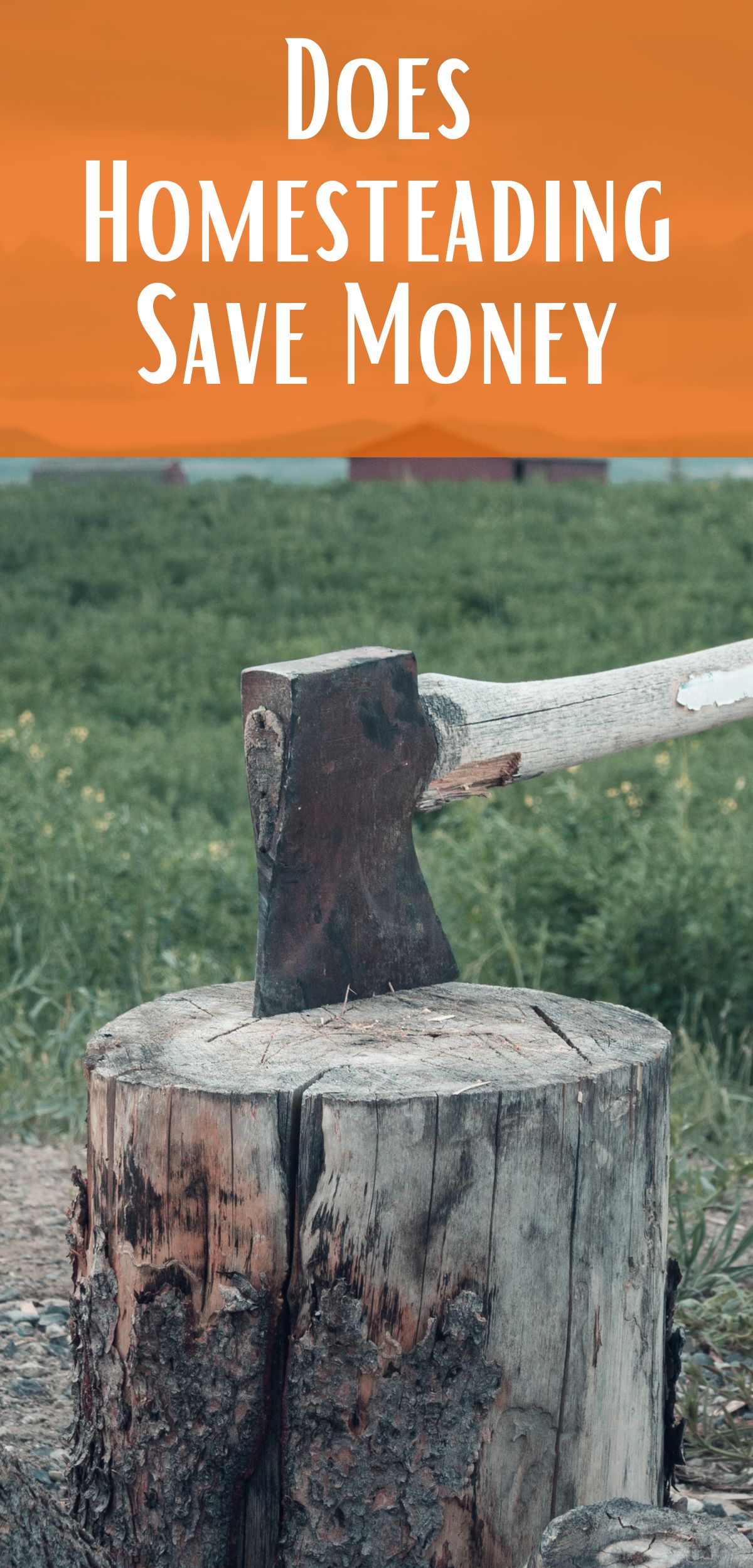
Can Homesteading Save Money

August 6, 2024 by Leigh 2 Comments

We can answer this right now, no. Homesteading will not save you money. In fact, homesteading will cost you money. A lot of money. In the first year we were on our homestead we exhausted our emergency fund four separate times. Can homesteading save money? No. Not at first. But in the long run, it will absolutely save you money. Just maybe not in the ways your expecting. Be sure to read to the end for the “pay offs” I’m talking about.

The Ultimate Homesteader’s Starter Bundle – Only $47!

Get the tools you need to stay organized, track profits, and manage your homestead with ease!

Includes:
✅ Schedule F Tracker – Simplify tax prep
✅ Profit Calculator – Track earnings
✅ Hay Calculator – Plan livestock feed
✅ Garden Journal – Digital & printable
✅ Herd Health Tracker – Monitor animal care
✅ Simple Budget – Manage finances
✅ Backyard Homestead eBook – Essential tips

$99 value – now just $47! Start your homesteading journey today!

Buy Now

Why Should You Homestead Then?

Homesteading is not necessarily about saving money. Sure, there are somethings that we have saved a ton of money on like eggs, milk, and chicken.

We no longer buy eggs because our chickens have solved that problem. We don’t have to buy chicken at the grocery store because we butcher our own. We don’t buy milk from the store unless we run out. But when you look at the $100/month we have saved by how much we have spent? We are solidly in the red.

Spend More To Make More?

Because the farm is an LLC, which I highly recommend you do, we are able to write off a lot for taxes. That being said, our first year’s return was eye opening. We spent over $3,000 in vet bills and another $5,000 on feed. That was only in six months. The following year we doubled that. That doesn’t include the well pump that went out, or the water heater. Or all the fencing and structures for the goats and chickens.

But homesteading is not about saving money. It’s about living off the land, having livestock, learning new skills, and being self sufficient. Of course homesteading means different things for different people.

The Ultimate Homesteader’s Starter Bundle – Only $47!

Get the tools you need to stay organized, track profits, and manage your homestead with ease!

Includes:
✅ Schedule F Tracker – Simplify tax prep
✅ Profit Calculator – Track earnings
✅ Hay Calculator – Plan livestock feed
✅ Garden Journal – Digital & printable
✅ Herd Health Tracker – Monitor animal care
✅ Simple Budget – Manage finances
✅ Backyard Homestead eBook – Essential tips

$99 value – now just $47! Start your homesteading journey today!

Buy Now

Homesteading Is A Long Game When It Comes To Saving Money

What I have found is that homesteading is a long term goal and commitment. You are probably not going to save money your first or your second year. If you are starting your homestead from the ground up, you will probably not see a positive until year five. But it really depends on your goals. If you want your homestead completely self sufficient but you are starting from scratch, it will take time. If you came into a property that has fencing, a barn, and garden. You are probably already ahead of the game.

Why Homesteading Doesn’t Save Money?

The reality is that you are going to spend money at first. Rarely, though it does happen, are you going to stumble onto a property that is absolutely perfect for you. You are going to have to spend money to make that property the way you want it.

I preach the importance of setting goals and figuring out your WHY. But probably the most important thing is to define what your vision of a successful homestead is. This is no different. When you are trying to set up your homestead, you want to make sure that you aren’t wasting money on things that don’t matter in the long run.

While you may not see a big financial gain, you will see the “pay off” in other areas.

When Does Homesteading “Pay Off”?

For us, homesteading started to pay off within the first year. But it’s probably not the way you’re thinking. When we bought our property, we defined, very quickly, what a successful homestead meant, and then wrote down our year one, five and ten year goals. That’s when we started to see the “pay off.”

Chickens Doing Double Duty

The pay off was a significant decrease in fleas and ticks. This was because the chickens free ranged and took care of those bugs. That meant that Jared and Jaxson weren’t being eaten alive. This made them happier and more likely to be outside.

The chickens also helped break up the compacted soil in the garden spaces. They ate the grubs and bugs that could destroy the next years crops. They’re manure became compost for the next years garden.

Their eggs are SO much better than anything you can get from the store. Bright orange yolks mean very healthy and happy chickens. But it also means that egg is packed with nutrients.

Another great thing about chickens is that we can incubate the eggs because we have a rooster. That means that technically, we never have to buy another batch of chickens. Which of course means that we will buy more chickens because… chicken math is a thing.

cropped-3.jpg

Are you looking for garden journal prompts, but aren’t interested in a weekly email? Check out our 365 Garden Journal Prompts! This is an amazing, all in one, yearly product that you only pay for once.

Buy Now!

Goats Earning Their Keep

Initially, we bought the goats to be long term lawn mowers. But after falling in love with these creatures, we started breeding and milking them. Their pay off has been a little slower because they are expensive creatures to maintain. But I realized very quickly that I could tolerate their milk.

Their pay off is in my health. For the first time in years, I am able to consume milk with pain. While I am not lactose intolerant, I do have issues with gut health. Their milk has helped ease that pain and has increased the good bacteria in my gut. Not to mention, I know exactly what is in their feed, hay, treats, etc.

Before we get too far into this, I have a great course on the basics of goat care. I call it Goat Crash Course: Goat 101. In this course, I explain things like types of shelter, types of feeds and hays, basic assessments and so much more! Check it out!

Buy Now

The Garden Producing

Gardening is probably the biggest way that we save money on the homestead. But again, not at first and not in the way you are probably thinking. Our big garden is getting a face lift in 2024 and that means a TON of money is getting dumped into it.

Like the budget for it is about $10,000 and includes the orchard, chicken runs, fencing, the gazebo and more. That’s okay, though. Because the amount of money it saves us isn’t about the weekly or monthly dollars saved at the grocery store.

It’s about the health benefits of the garden.

We do not spray our gardens with ANYTHING. There are no pesticides, herbicides or fertilizers used…. at all. It’s grown in soil that comes from our neighbors horse manure and our own animals bedding. Neither one of us deworm or use chemicals our animals unless absolutely necessary.

That means that our food from the garden is literally the healthiest thing we can consume on the planet. This pays off HUGE because we are filling our plates with food that is so nutrient dense, that it helps ward off sickness, disease and other issues that are common for people who eat the standard American diet.

goat kidding

Before we get too far into this, I have a great course on the basics of goat care. I call it Goat Crash Course: Goat 101. In this course, I explain things like types of shelter, types of feeds and hays, basic assessments and so much more! Check it out!

Buy Now

No, homesteading probably won’t save you money

But what homesteading will do is shorten your supply train. Homesteading will reduce your need on the grocery store. It will make you healthier, even if it’s only because you are more active. There are so many other pay offs when it comes to homesteading that it’s okay that it doesn’t save you a ton of money at first.

It will pay off in the end.

If you like the content I put out, feel free to buy us a coffee! It helps keep this site running, marketing and the goats in grain!

Buy me a coffee

If you like this post, feel free to share it and follow us below on our social media accounts!
  • Facebook
  • Pinterest
  • Instagram
  • YouTube
  • TikTok
  • Spotify
  • Threads

Filed Under: Animals, Canning, Chickens, Goats, How To's, Our Homestead, Pigs, Projects Tagged With: Canning, cast iron, Chickens, Chicks, cooking, Eggs, Goats, Homestead, kitchen, Welcome

JOIN TO OUR MAILING LIST!

Leave us your email to receive new posts and special offers for members only! Don't miss a thing!

Recent Posts

  • Fall Garden Guide
  • Top Mistakes With Goats
  • How To Bond With Your Goats

What To Do With Squash

June 25, 2024 by Leigh Leave a Comment

Squash is a very prolific plant for us. We don’t have a ton of pressure from squash bugs, though we do have them. But it doesn’t take long before we are drowning in squash. If you have squash coming out of your ears, you have probably asked the magical Google what to do with squash. I’ve compiled a list of the various things we do with squash that not only feed us but our animals. Plus a bonus on what we do with winter squash.

The Ultimate Homesteader’s Starter Bundle – Only $47!

Get the tools you need to stay organized, track profits, and manage your homestead with ease!

Includes:
✅ Schedule F Tracker – Simplify tax prep
✅ Profit Calculator – Track earnings
✅ Hay Calculator – Plan livestock feed
✅ Garden Journal – Digital & printable
✅ Herd Health Tracker – Monitor animal care
✅ Simple Budget – Manage finances
✅ Backyard Homestead eBook – Essential tips

$99 value – now just $47! Start your homesteading journey today!

Buy Now

What To Do With Squash

Squash is one of the most versatile veggies in the garden. Probably second only to tomatoes and potatoes. It’s a fast growing and productive plant, that if you can keep healthy, will out produce EVERY plant in the garden. But when even you are rebelling against eating one more sauteed squash for dinner, it can be overwhelming.

There are two types of squash; summer and winter. Depending on where you live, you may be able to keep your winter squash without having to do anything with it. I’ll go over more on how to keep winter squash at the bottom of this post. But unless otherwise stated, this post is focused more on summer squash.

But I wanted to go over some of the ways that we use our squash so that we aren’t just throwing out moldy squash. There are three big things that we do with squash, besides fresh eating; freeze it, dehydrate it or give it to our animals.

Before we get too far into this, I have a great course on the basics of goat care. I call it Goat Crash Course: Goat 101. In this course, I explain things like types of shelter, types of feeds and hays, basic assessments and so much more! Check it out!

Buy Now

Freezing Squash

Freezing squash is a great way to extend the shelf life of this beloved veggie. Though there are some considerations. First is that very few things have the best texture when coming out of the freezer. So if that is going to be a problem, then don’t put your entire harvest in the freezer. Also make sure that you are washing your produce before you put it in the freezer!

When we put squash in the freezer, we usually slice it into half inch medallions and lay them on a tray with either parchment paper or silicone mats. This allows the squash to freeze separately before going in a bag. You don’t have to, but it makes thawing a lot easier. We will also cube it or grate it and store depending on what we need it for.

Squash will hold it’s shape well when thawing but it is usually going to taste better in soups, stews, or mashed up. We will use it in stir fry’s and have enjoyed it, but again, remember texture will be a thing.

Lastly, be aware that the more stuff you put in your freezer, the harder it will be to find it later. No matter how well you keep your freezers organized, it’s only a matter of time before you find a 6 year old bag of squash at the bottom of your freezer.

If you are new to heating with firewood and are looking to master the finer points of it. We’ve got a great eBook that goes in depth of what tools you should consider, how and where to stack, how to build a fire and so much more!

Buy Now

Dehydrating It

This is hands down my favorite way to store squash. It takes up less space and uses zero electricity to store. I also love the fact that I can set it and forget it, in the dehydrator. It’s not like it’s going to spoil sitting in a running dehydrator. I use this dehydrator and absolutely love it! Also, I go more in depth about dehydrating foods here.

I will chunk up several trays worth of various squash to put in the dehydrator. Then I turn it on to veggie and let it run until I remember it’s been going for 3 days…oops. Once it’s done, or I remember it exists, I will pump them into half gallon mason jars like this and store.

Now, you can and probably should put oxygen absorbers in there, but usually I don’t. I haven’t found any issues with not doing it. You can also use mylar bags, but I have found that keeping everything in jars is better for my set up. The reason I don’t bother with oxygen absorbers and bags is because I’m not usually storing for more than a year.

Are you getting overwhelmed in the garden? Stressed? Or just not enjoying the garden like you used to? Check out our garden prompts! We send out weekly emails that get you back in the garden and out of your head! Turn the garden back into a place of love and joy instead of frustration and headache!

Subscribe Now!

When it comes to using dehydrated squash, I usually throw it in soups and stews for extra veggies. It also helps absorb any extra water and flavoring.

To reconstitute dehydrated squash, I will fill the bottom of a bowl with however much I needed, then add boiling hot water over the top, covering the squash with several inches of water. If I need more water, I’ll add more as the squash absorbs it. But again, usually my dehydrated squash is going into soup.

Give Squash To Your Animals

Most animals can eat most squashes without worry. Yes, there will be outliers that can’t handle squash, but for the most part, squash is perfectly safe for animals to eat. But if you have questions, reach out to a vet. That being said, we will gladly give our animals excess squash.

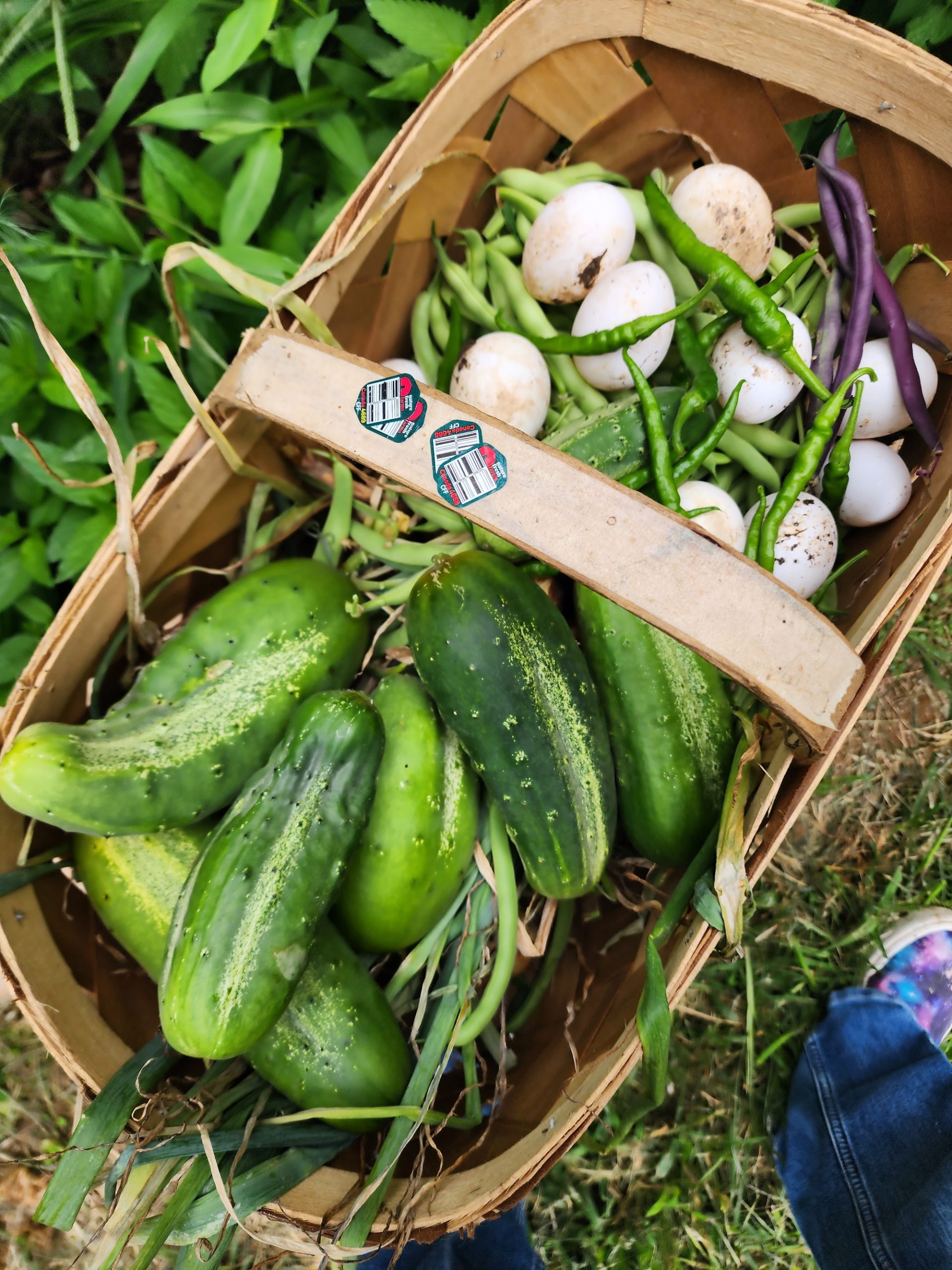
Our chicken’s run is right next to the garden so when I fill my basket with squash, I will chuck whatever is ready but I can’t use over the fence to them. They love it! Plus this helps reduce our feed bill which is always a win win.

Also, the seeds from squash can act as a natural dewormer for your animals, so win, win, win.

When we feed squash to the goats, we do it in moderation AND we cut it into smaller pieces. Their mouths are not very big and we don’t want to cause them to choke.

goat kidding

Before we get too far into this, I have a great course on the basics of goat care. I call it Goat Crash Course: Goat 101. In this course, I explain things like types of shelter, types of feeds and hays, basic assessments and so much more! Check it out!

Buy Now

Storing Winter Squash

Finally, when it comes to winter squash, there are a few more things to consider. First and foremost, winter squash is grown for storage. The skin of it is thicker and able to withstand storage. Usually, you can store winter squash for about 3 months in ideal situations. This means a cool, dark place with good air flow.

The problem with that is I don’t really have an ideal place to store winter squash, whole. Come end of harvest season, my canning shelves are crammed with jars of food, storage items, potatoes, and other random bits. So my favorite way to store winter squash is to either can it or freeze it.

Usually, I will peel the squash, scoop the seeds and cube it. I will either flash freeze it (freezing on silicone mats or parchment paper) and put it into bags. Or I will go ahead and can it. I don’t usually dehydrate winter squash because it takes so long, but I’m not opposed to it either. It really depends on my mood and what I have going on at the time.

cropped-3.jpg

Are you looking for garden journal prompts, but aren’t interested in a weekly email? Check out our 365 Garden Journal Prompts! This is an amazing, all in one, yearly product that you only pay for once.

Buy Now!

I hope this helps you figure out what all you can do with your squash!

If you like the content I put out, feel free to buy us a coffee! It helps keep this site running, marketing and the goats in grain!

Buy me a coffee

If you like this post, feel free to share it and follow us below on our social media accounts!
  • Facebook
  • Pinterest
  • Instagram
  • YouTube
  • TikTok
  • Spotify
  • Threads

Filed Under: Dehydrating Food, Freezing, Garden, Working With Food Tagged With: Chickens, dehydrating, Eggs, food, freezing, Garden, Goats

JOIN TO OUR MAILING LIST!

Leave us your email to receive new posts and special offers for members only! Don't miss a thing!

Recent Posts

  • Fall Garden Guide
  • Top Mistakes With Goats
  • How To Bond With Your Goats

Traveling When You Homestead

June 22, 2024 by Leigh Leave a Comment

As I sit here writing this, I am supposed to be packing, cleaning and getting ready to hit the road in two days. We are going out of town for the Homesteaders Of America Conference in Virginia this weekend. Instead of packing and getting last minute chores done, I sit here thinking about all the things I need to do, but I am obviously not doing… Thanks ADD. But all of this did get me thinking that brand new homesteaders may be struggling with the logistics of traveling when you homestead.

The Ultimate Homesteader’s Starter Bundle – Only $47!

Get the tools you need to stay organized, track profits, and manage your homestead with ease!

Includes:
✅ Schedule F Tracker – Simplify tax prep
✅ Profit Calculator – Track earnings
✅ Hay Calculator – Plan livestock feed
✅ Garden Journal – Digital & printable
✅ Herd Health Tracker – Monitor animal care
✅ Simple Budget – Manage finances
✅ Backyard Homestead eBook – Essential tips

$99 value – now just $47! Start your homesteading journey today!

Buy Now

Traveling When You Homestead

When most people travel, they have to find someone to watch their dogs, cats, maybe a snake or lizard. Usually, it is not a big deal. But when you have gardens that need to be harvested, animals that need to be fed and watered, medications to be given, sometimes finding someone is extremely difficult.

Tractor Supply

I’m not going to lie, traveling when you homestead can be a logistical nightmare. It’s not as easy as it was pre homestead. But your days of traveling aren’t over, they just look a little different now. Some homesteaders rarely leave their property. Others will only travel a certain distance away. Still others will globe trot in the winter. There is no right or wrong answer to traveling and homesteading. It’s all about logistics.

goat kidding

Before we get too far into this, I have a great course on the basics of goat care. I call it Goat Crash Course: Goat 101. In this course, I explain things like types of shelter, types of feeds and hays, basic assessments and so much more! Check it out!

Buy Now

Our Travels

Pre-homestead, we just needed to find someone that could either stay at the house with our four dogs, two cats and three bearded dragons or at least let dogs out to go to the bathroom and feed them. Heading out for a quick overnight or weekend trip was as simple as calling one of Jared’s buddies from the fire department to have them do a drive by the house and let the dogs out. Rarely was it a big deal.

Post- homestead? There’s a lot more.

The first time we went out of town, we went to Yellowstone for a week. One of my friends from work was willing to stay the week and hang out with the animals. She had a crash course in goats and we prefilled their foods, medications and anything else we could to make her life easier. She did fantastic and I am extremely grateful for her.

The second trip is to Virginia for the conference. We were lucky that our neighbor is willing to help us out since he will be home all weekend. But how do you travel when you are knee deep in kidding season, or canning season?

Below is how I get prepared to leave the homestead for a few days.

If you are new to heating with firewood and are looking to master the finer points of it. We’ve got a great eBook that goes in depth of what tools you should consider, how and where to stack, how to build a fire and so much more!

Buy Now

Getting A Farm Sitter

The first thing to do is to line up your farm sitter for your trip. If you’ve got friends or family that is willing to help out, all the better. But if not, check with your local 4-H or FFA. There are a ton of kids that are well versed in farming and would love to make some money. You could also get in touch with your local feed store and see if they know of anyone that would be willing to come out and help.

There are a ton of people out there that are willing to help out if the pay is right. There is no set rate for this, either. Some people who only have a few chickens and need someone to harvest the garden is going to charge less than someone you load chores on.

Logo 468x60

Have your farm sitter come out to the farm to go over everything with you. I leave a typed list of all the things that need to be done in order of animals. So goats have their own list, dogs, chickens, etc.

If you have a friend coming over and they know nothing about feeding animals, go ahead and pre-fill buckets or jars with feed, so all they have to do is dump and go.

Save on Seeds

Clean Up Before You Go

This isn’t just cleaning your house. It’s mucking out the stalls, barns and coops and laying fresh bedding. Move chicken tractors, electric netting, etc. so that they don’t have to mess with it. It’s fresh sheets on the bed if they are spending the night. Make sure that they do not have to do that stuff while your gone.

When we leave, we make sure that the only thing they have to do is feed and water animals, let out dogs, and collect eggs.

Harvesting The Garden

First, let me just say this, planning a vacation in July/ August, is not the best possible scenario. Can it be done? Absolutely. But if there is a choice, maybe not go during peak harvest time.

If you are in mid swing with canning and harvesting the garden, life just got a little harder. But it’s still not impossible. When we went to Yellowstone, we told my friend, you can keep anything the garden produces and any eggs the hens lay. If you don’t want it, throw it to the chickens.

But if it’s the middle of August and you are harvesting the garden every day, that’s a lot of produce to “lose”. Here are some quick tips:

The farm sitter can have anything the garden produces.

Peppers can be frozen, tomatoes too.

Cucumbers and summer squash can go to the goats, chickens and pigs.

Watermelons can stay on the vine for a few days extra.

Look into other ways your produce can be saved until you get back and have your farm sitter do that.

goat kidding

Before we get too far into this, I have a great course on the basics of goat care. I call it Goat Crash Course: Goat 101. In this course, I explain things like types of shelter, types of feeds and hays, basic assessments and so much more! Check it out!

Buy Now

Other Random Chores

Sometimes you have to leave and you have a goat in milk. Or sometimes you had an accidental breeding and now you are going on vacation when your favorite doe is going to kid. You’ve got eggs in the incubator or you’ve got chicks in the brooder. Maybe you have a last minute trip and need to butcher chickens. Or you have a sick animal that needs medications.

All of these things happen. A good farm sitter is invaluable. In theory, you should find someone that is comfortable doing all of those things. The reality is Prior Proper Planning Prevents Piss Poor Performance. That’s not to say that anyone is at fault, quite the opposite. If you can plan around your vacation, and prepare your farm sitter, everything will be fine.

Tractor Supply

In the situation of a goat in milk, see if your farm sitter is comfortable milking. If not, try drying her up before you leave. If that won’t work, think about putting her baby back with her while you’re gone. Another option is to see if you have a goat friend that would be willing to keep her while you’re gone.

Prepare

The best thing you can do when you are preparing for travel is to be as prepared as possible. Our vet has our credit card on file so that if anything happens, we are good to go. We have lists for the farm sitter. Our neighbors are willing to help out and, not only do they have knowledge of animals but have actually met our animals.

Logo 468x60

Having a good infrastructure in place is also key to making sure that you are good to go. Setting up your farm to be automated, like automatic waterers for the garden and animals, helps tremendously.

Enjoy

Lastly, enjoy your trip! Seriously, you have probably earned it. Especially in the fall/ winter when everything is buttoned up for the season and it’s time to relax and plan for spring.

If you like the content I put out, feel free to buy us a coffee! It helps keep this site running, marketing and the goats in grain!

Buy me a coffee

If you like this post, feel free to share it and follow us below on our social media accounts!
  • Facebook
  • Pinterest
  • Instagram
  • YouTube
  • TikTok
  • Spotify
  • Threads

Filed Under: Animals, Chickens, Goats, How To's, Our Homestead, Pigs Tagged With: Eggs, Goats, Homestead, traveling

JOIN TO OUR MAILING LIST!

Leave us your email to receive new posts and special offers for members only! Don't miss a thing!

Recent Posts

  • Fall Garden Guide
  • Top Mistakes With Goats
  • How To Bond With Your Goats

Using A Metal Shed For A Chicken Coop

April 16, 2024 by Leigh

I have been browsing the internet for weeks trying to figure out something for a new coop. We’ve got more chicks and ducks coming and nowhere to put them. So I started researching the different types of chicken coops and I couldn’t find anything I really liked. And to be honest, the wood coop that we have now, is starting to really stink, even after we clean it really well. I think using a metal shed for a chicken coop may work. Maybe.

Why We Chose A Metal Shed For A Chicken Coop

***Make sure to read the updates at the bottom to see how it’s actually working***

We have seriously out grown our old coop. When we bought it, we weren’t really planning on having a ton of chickens. Our thought was, chickens are pretty easy so let’s get a couple. By a couple I mean 15 but only 9 survived. After offering our extra eggs for sale and current state of the supply chain, we have decided to grow our flock. We are hoping that this will allow us to make a little bit of money but also sustain us food wise. You can read about our new flock here. 

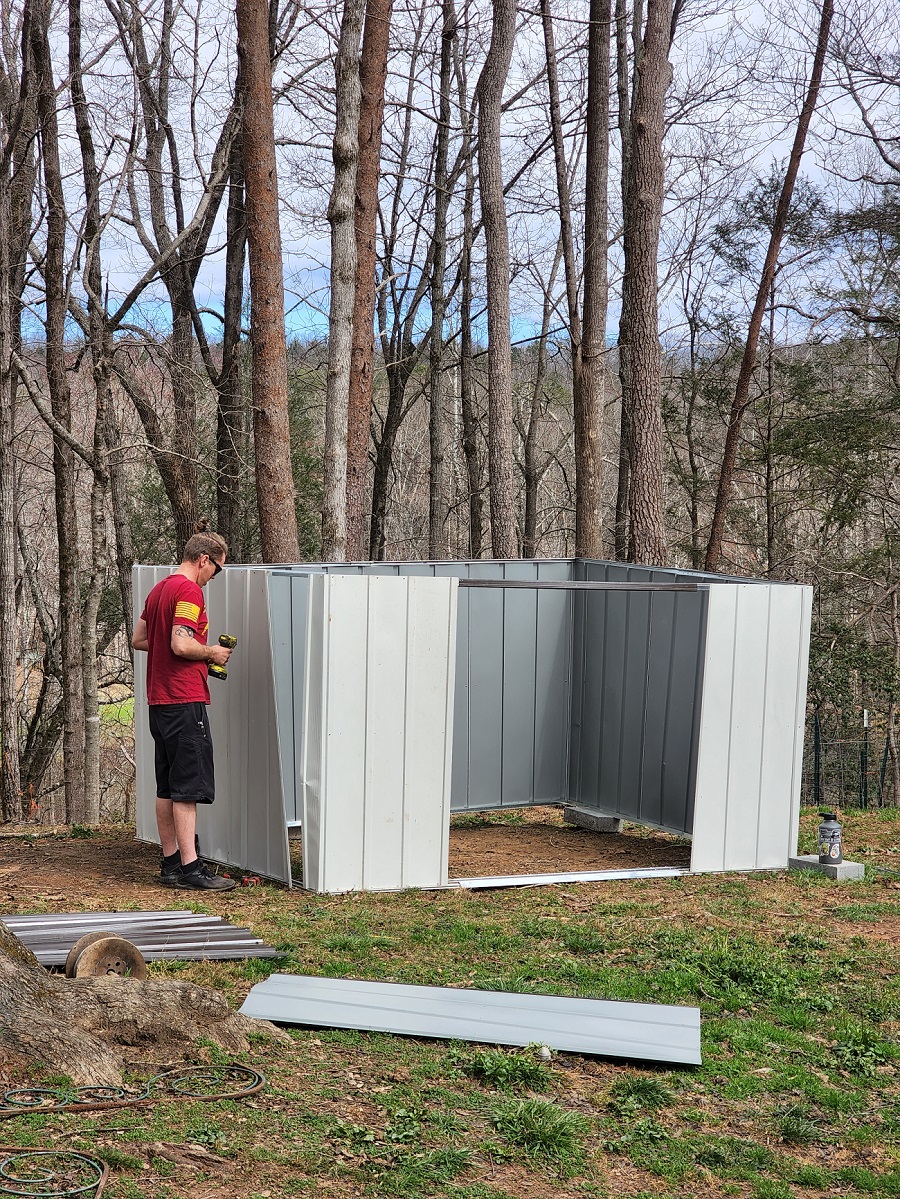
Since, we will also be getting 20 ducks around the end of March AND the 36 chickens, we want to make sure there is plenty of room for all of them. I think this 8×10 metal shed will work great. It’s got plenty of space and if we can hang the new laying boxes and roosting bars, there will be plenty of room for the ducks to nest.

Also since we allow them to free range throughout the day, there shouldn’t be any problems with space during the day.

Now before anyone gets all up in arms about it, we know some of the problems with a shed like this as well as ducks and chickens in the same coop. First, we will be installing gables and vents to make sure that the heat can escape in the summer. They will also have frozen bottles on the ground to keep cool. Not to mention we made sure that the coop is in a shady area.

Save on Seeds

We will also be adding boards and hardware cloth to the bottoms to ensure it as predator proof as possible. The ducks and chickens can cohabitate in the same coop as long as they have their own spaces. The ducks will be on one side and the chickens on the other. I’m sure we will find more problems as we go but we will see.

Jared working on the new Coop

We will always be as transparent with our readers. In that vein, we want to make sure that you don’t make the same mistakes we have. Or if you decide to make the mistake, at least do it differently.

You can also check out this from Redfin article as well! “Whether you’re planning to raise chickens at home in Asheville, NC, Eugene, OR, or Burlington, VT, check out this Redfin article we were featured in on 5 Chicken Coop Ideas For A Thriving Flock“

Summer Update

So this coop was built in the spring before it got really hot. What we have found is that the coop does not get super hot at night like we thought. Since we allow them to free range throughout the day and only put them inside the coop at night when the sun has gone down. We have not noticed a HUGE temperature increase.

Don’t get me wrong, it’s still hot at night and it’s warm in the coop, but I was thinking like fatally hot and it’s not. We have been averaging 80* nights and the coop is 90* but also has fans blowing the hot air out.

One of the things we have noticed is that NONE of the animals want to go in their respective houses at night. That includes the goats. I think a lot of it is that it’s just too hot. When they are outside they can move around and find cool ground.

The chickens and ducks seem to prefer being outside during the summer and that’s fine. We have predator lights up around the property and so far we haven’t seen any signs of them being taken in the night.

I’ll update back after winter and let you know how that goes. But for right now the coop is working.

Winter Update

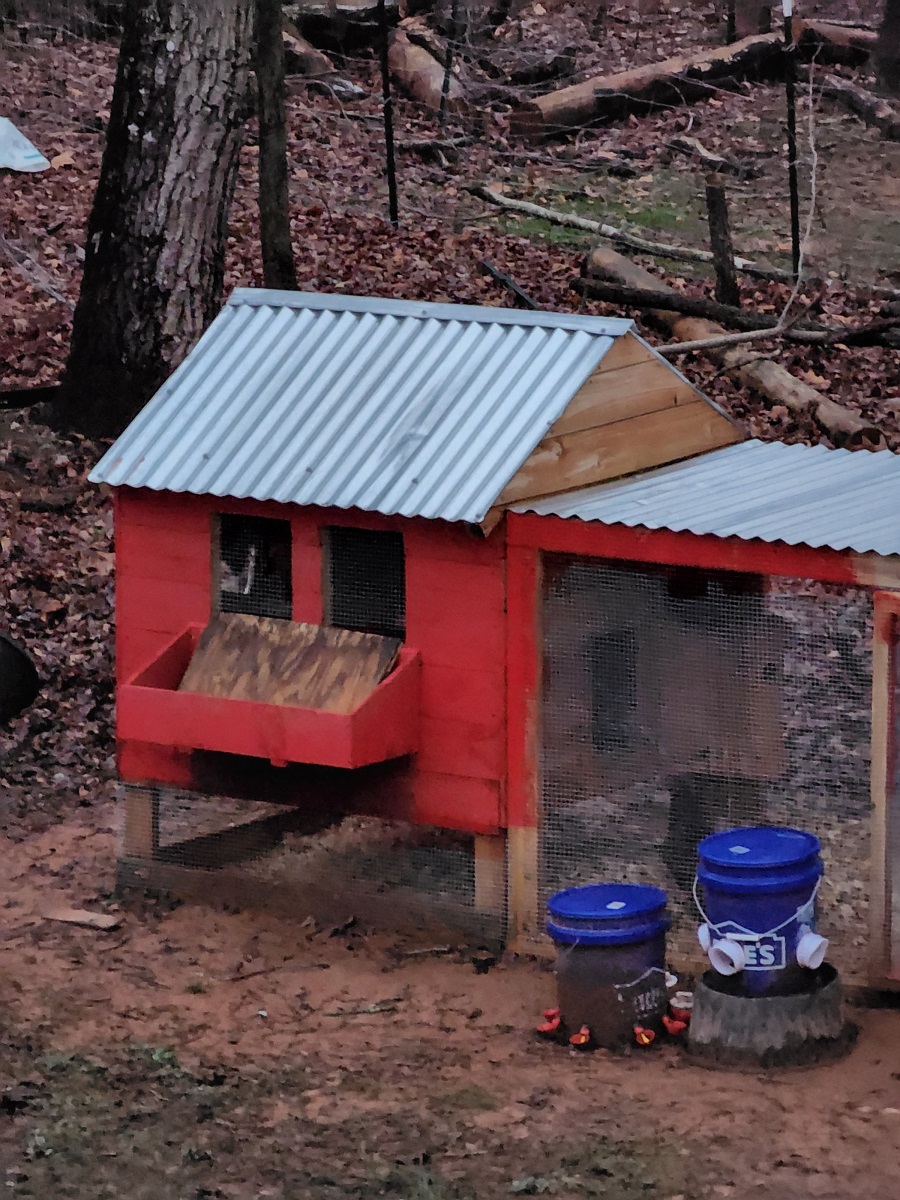
We have moved the chickens and ducks back into the red coop. The metal shed has turned into a flop…. Well, not completely. The shed rusted from the ground up. No matter how much pine shavings we added, the odor was completely foul. The chickens also didn’t seem as healthy either. It seemed to take them longer to get through molt and they stopped laying eggs way sooner than they should have.

When we moved them back to the red coop, their feathers seemed to get brighter and they seemed happier. Now, this is all speculation and we don’t have scientific proof, but I feel like the shed was not a good option for long term keeping.

We plan to convert the shed back into a shed and just put our various building materials in it. I would suggest looking into different types of chicken coops and leave the metal shed alone.

Using A Metal Shed For A Chicken Coop…. The Final Update

As of this writing (2024), we have turned this shed into a home for broody hens and a brood coop for new chicks. For this purpose, the metal shed has turned out to be excellent. We went through and painted all the rust, patched holes, and general upkeep of the shed. We noticed that the broody hens and new chicks all thrived.

I think the main problem with using a metal coop as a permanent coop is the severe lack of air flow, extremely low light, and everything tends to stay damp without a good heat source. Since we fixed everything and have made it a temporary home for these chicks/ hens, it has turned out VERY well and is something we will continue to do.

If you like this post, feel free to share it and follow us below on our social media accounts!

  • Facebook
  • Pinterest
  • Instagram
  • YouTube
  • TikTok
  • Spotify
  • Threads

Filed Under: Animals, Chickens, How To's, Projects Tagged With: chicken coop, Chickens, Chicks, Ducks, Eggs, Homestead, metal coop

JOIN TO OUR MAILING LIST!

Leave us your email to receive new posts and special offers for members only! Don't miss a thing!

Recent Posts

  • Fall Garden Guide
  • Top Mistakes With Goats
  • How To Bond With Your Goats

Welcome to The Homestead

April 13, 2024 by Leigh Leave a Comment

We are excited to bring you along for the journey. On this blog you will find a ton of posts about goats, gardening and homesteading. We wanted to let other people know that you don’t have to have hundreds of acres, tons of livestock or even generations of knowledge. We wanted our blog to be different. So welcome to the homestead!

The Ultimate Homesteader’s Starter Bundle – Only $47!

Get the tools you need to stay organized, track profits, and manage your homestead with ease!

Includes:
✅ Schedule F Tracker – Simplify tax prep
✅ Profit Calculator – Track earnings
✅ Hay Calculator – Plan livestock feed
✅ Garden Journal – Digital & printable
✅ Herd Health Tracker – Monitor animal care
✅ Simple Budget – Manage finances
✅ Backyard Homestead eBook – Essential tips

$99 value – now just $47! Start your homesteading journey today!

Buy Now

Welcome To The Homestead

Both Jared and I grew up as city kids. The hustle and bustle something that we never really wanted. As time went on and we got older, we realized that city life is not what we wanted. It is not what we want for our boys. So we decided to do something about it. We were breaking our back trying to save as much money as possible to get our homestead. Since we are both paramedics and after working 36-60 hour straight shifts for two years, we finally did it. We purchased our homestead.

We just celebrated 15 years of marriage

Shortly after buying the homestead, we got our first chickens.  They are pretty cool little critters and really, what homestead is complete without a couple chickens. We started with 15 and lost a couple. Now we are in the ballpark of 50. But I wanted something a little different. So I started looking into other critters that would be low maintenance while also being semi profitable.

George and His Ladies

Enter the goats

I’m not going to lie, I didn’t want goats. I had heard the horror stories. They are escape artists, they die easily, they can’t actually eat everything, and so on. They are pretty much everything BUT low maintenance and semi profitable. But Jared wanted goats, so we got the goats. Man, I was so wrong! I love those critters! They are seriously the best. Bella is a challenge and I am going to make her love me. But Champ? The girl below? She is the best girl. She is actually going to be giving us babies soon!

Champ

After adding our first couple goats, we wanted even more. So we added more goats, then some goats had babies and now we are at 12. We are hoping to have a few more and that will allow us to start milking regularly. That milk will then help us reduce our dependence on the grocery store.

Since owning goats for several years now, we have decided to, temporarily, move away from registered lines and start working on building a resistant herd with great milk lines. We have also learned to deal with the question of what to do with boys.

Sending bucks to processing has been a hard choice but definitely one that needed to be made. Unfortunately, when you breed animals, you have to face the hard reality of what to do with them if you can sell them. Livestock are not companion animals, although there are some exceptions, and treating them like pets will only break your heart.

We have also created a Goat Crash Course for those that were in our same position. Brand new and with no mentor.

goat kidding

Before we get too far into this, I have a great course on the basics of goat care. I call it Goat Crash Course: Goat 101. In this course, I explain things like types of shelter, types of feeds and hays, basic assessments and so much more! Check it out!

Buy Now

On To The Ducks

Ever since I was a kid, I have loved ducks. They are such cool creatures. Jared finally okayed a few ducks and meat ducks. While they are messy and their pool stinks to high heaven, no matter how often we drain it, I love those guys. We also gained our neighbors guinea. Apparently she was unhappy living with them.

Tractor Supply

Since owning the chickens and the ducks, we have come to realized a couple things. One, chickens get into EVERYTHING when they are not contained in some fashion. So free ranging chickens isn’t really a great idea. Two, ducks free range beautifully and don’t get into as much trouble as the chickens.

While I am not a huge fan of duck eggs, their antics and meat keep them around the homestead.

The Garden

We have also been working hard on our gardens and general clean up of the property. Our property was not set up for homesteading before we bought it. So we have been slowly but surely working through the property and clearing out old debris, trash, and other things. We are hoping to have it safe enough soon to let the goats roam bigger areas to keep the brush in line.

The Ultimate Homesteader’s Starter Bundle – Only $47!

Get the tools you need to stay organized, track profits, and manage your homestead with ease!

Includes:
✅ Schedule F Tracker – Simplify tax prep
✅ Profit Calculator – Track earnings
✅ Hay Calculator – Plan livestock feed
✅ Garden Journal – Digital & printable
✅ Herd Health Tracker – Monitor animal care
✅ Simple Budget – Manage finances
✅ Backyard Homestead eBook – Essential tips

$99 value – now just $47! Start your homesteading journey today!

Buy Now

The garden has been a huge pain in the backside as well. Between not being able to get all my seedlings started and then the ducks eating what I managed to plant, the garden is finally in. I was also able to harvest our first cucumbers!

We are gearing up to start our fall garden and I am ridiculously excited! Our summer harvest has been good, considering it’s our first garden here, but I’m hoping the fall garden will be even better. Our second garden was a bit better but not at all what we thought it was going to be. We have learned a ton about gardening in this area.

One of the biggest things I learned about the garden is protecting the soil! I never really put much thought into the soil and how to build it. I just thought you put things in the ground and they grew. I didn’t realize that building healthy soil, naturally, helped to bring in better harvests. Who knew!?

Our garden this year (2024) is set to be our best yet!

Building A Greenhouse

Last year, the major project was building a greenhouse. Jared absolutely nailed it and I love my greenhouse. It has become my sanctuary when things get hard. Jared poured so much love into that greenhouse and I can feel it every time I walk into it.

Not everyone can build a greenhouse, or really need one. But I do highly recommend at least entertaining the subject if it is possible for you.

Welcome To The Homestead

We will be adding to our homestead as this blog progresses and we want you to be along for the ride. So share and follow us on social media and welcome to the Homestead!

Are you getting overwhelmed in the garden? Stressed? Or just not enjoying the garden like you used to? Check out our garden prompts! We send out weekly emails that get you back in the garden and out of your head! Turn the garden back into a place of love and joy instead of frustration and headache!

Subscribe Now!

If you like the content I put out, feel free to buy us a coffee! It helps keep this site running, marketing and the goats in grain!

Buy me a coffee

If you like this post, feel free to share it and follow us below on our social media accounts!

  • Facebook
  • Pinterest
  • Instagram
  • YouTube
  • TikTok
  • Spotify
  • Threads

Filed Under: Our Homestead Tagged With: beginners, Chickens, Ducks, Eggs, Goats, Homestead

JOIN TO OUR MAILING LIST!

Leave us your email to receive new posts and special offers for members only! Don't miss a thing!

Recent Posts

  • Fall Garden Guide
  • Top Mistakes With Goats
  • How To Bond With Your Goats

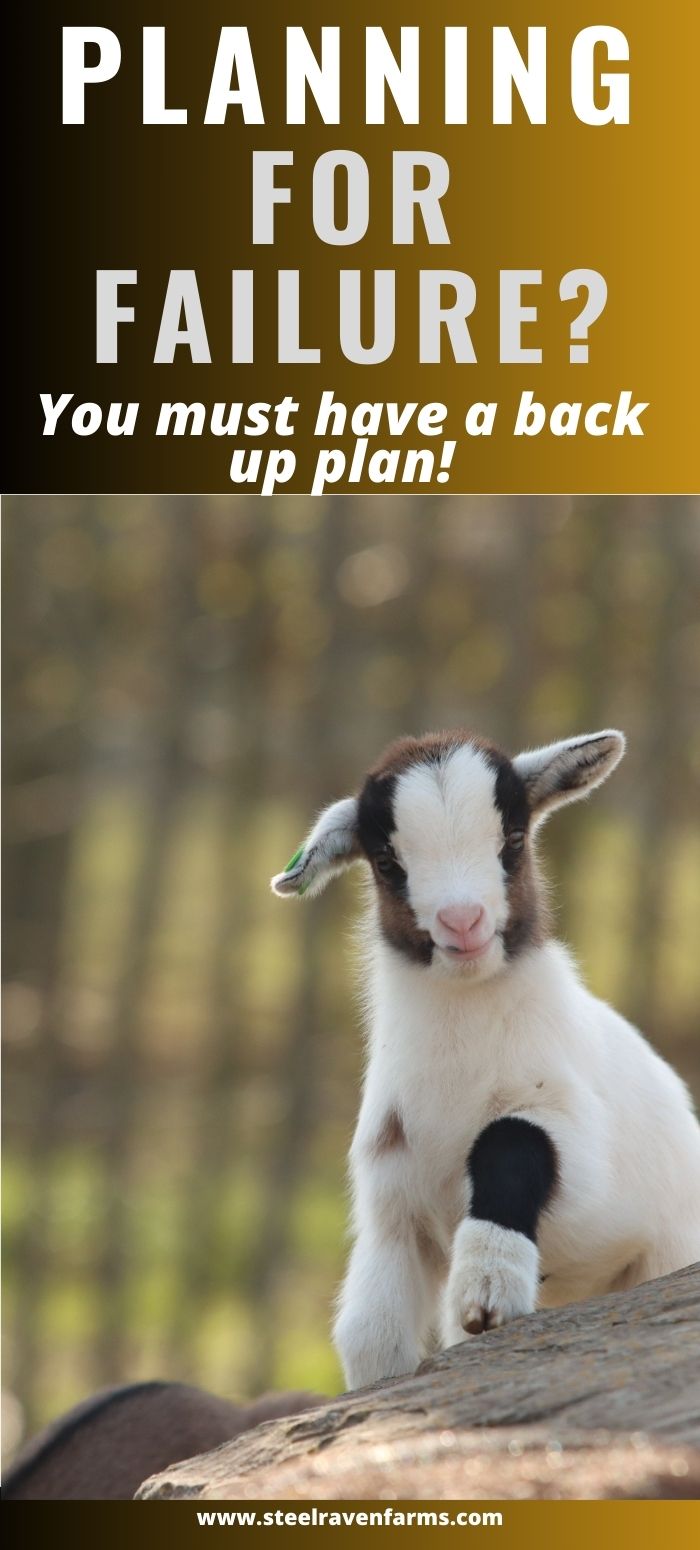
Planning For Failure

March 16, 2024 by Leigh Leave a Comment

When you are doing anything in life, you are never going to get it 100% right. It’s just part of the learning process. Whether you are learning a new skill, hobby, or job, you will screw something up. Even when you are a “professional”, you will probably screw something up eventually. And that is OKAY! While absolutely frustrating, it is also totally normal. But there are ways to get around it, and it’s called planning for failure. Everyone can benefit from planning for failure.

Before we get too far into this, I have a great course on the basics of goat care. I call it Goat Crash Course: Goat 101. In this course, I explain things like types of shelter, types of feeds and hays, basic assessments and so much more! Check it out!

Buy Now

What Is Planning For Failure?

This may seem counter productive, right? It may even seem like you are “borrowing trouble” as my aunt would say. But there are a lot of times were you should ABOSLUTELY be planning for failure. Life isn’t easy, nor is is cut and dry. You can do everything 100% right and still fail.

While we don’t want to anticipate failure, you need to be ready and have back up plans…. and then more back up plans. I talked about Semper Gumby in my post about homestead flexibility, and it is no different when it comes to bringing an income to the farm. In fact, when you are relying on nature for your income, you should have plans coming out of your ears.

Today, I want to talk more about planning for failure when it comes to earning money on the homestead. For example, you should plan for crop failure, animals not producing, and market failures. Then I want to talk about how to build your back up plans. Now, everyone can benefit from these things, but this post is more geared for those that are looking to start marketing their homestead.

If you are interested in learning more about my favorite garden planner. I highly recommend Seedtime! This planner has been instrumental in helping me plan out my gardens with WAY more efficiency than I could ever expect! It has also reduced overwhelm, stress, and calmed my ADD/ADHD!

More Info!

Planning For Crop Failure

On this topic, planning for failure starts at the seed level. If you are growing produce for market, you should be starting your own seeds. There are a ton of reasons for this that I go over in this blog post. But in that post, I don’t really talk about starting seeds for market. The reason is because that post is for a first time gardener/ seed starter. Not for someone looking to break into the farmer’s market side of farming.

When it comes to seed starting, I’m not necessarily talking about live plant sales here, though the principle is the same. Start more seeds than you think you’ll need. You will have seed failure. It may be because you watered too much or too little. Too much light or not enough. Or because you looked at the seed wrong…. Either way, because you started WAY more than you needed, a couple of cups that didn’t start isn’t going to derail your entire crop.

As you move into planting/ growing season, always make sure that you are looking at possibilities for failure. When we start pruning our tomatoes and peppers, we take the cuttings and put them in water. Once they have sprouted roots, we put them back into the soil. This helps not only save on seeds, but also weeks or months of growth. The reason for this is because you will have plants that stunt, get damaged or diseased, or some other issue that you didn’t even think to plan against. But you DID plan for failure and now you have a back up plan.

Are you getting overwhelmed in the garden? Stressed? Or just not enjoying the garden like you used to? Check out our garden prompts! We send out weekly emails that get you back in the garden and out of your head! Turn the garden back into a place of love and joy instead of frustration and headache!

Subscribe Now!

Planning For Animals Not Producing

When you have animals for market, no matter the animal or the market, you HAVE to plan for livestock to be livestock. This means that you may have goats that abort and you have lost not only the kids, but milk, meat AND money. Or your pig got pneumonia and you had to give antibiotics. Now, they can’t be sold as organic, antibiotic free.

At the end of the day, on my farm, an animal is the focus of every single thing we do. When we do our farm days, where photographers come out with their clients, we explain that if the goat isn’t feeling it, you don’t get to have pictures with the goat. Same thing with mommas and kids. If that momma is raising hell because you have her baby? You aren’t getting her baby. Period. Yes, it can a loss of income but that animal is more important.

All of these things happen and if you are not prepared, it could absolutely devastate your bottom line. But there are some things that you can do to prevent these failures. Things like good animal husbandry, rotational grazing, etc will help make sure that your animals are in peak condition and able to weather those storms. But sometimes, it still happens. So look at your operation and see where you can add some buffers. I’ll go into more detail below about my buffers for our animals.

Save on Seeds

Planning For Market Failures

There will absolutely be some catastrophe that happens when you are growing for market. It maybe a pest or disease that takes out your entire crop of green beans. It could be coccidiosis that stunts kids for market. Or it could be that the market doesn’t effectively market and no one shows up.

Some of these things you can’t do anything about. But there are things that you can do to make sure that you don’t get stuck holding the bag. To give you an example, we do not disbud our goats. We also no not necessarily take deposits on kids. However, if you decide you want one of my kids and you want it disbudded? You will be paying a full price, non refundable deposit for that kid.

Can you do that with farmer’s markets? Not really, but you can make sure to do your homework before signing up with that market.

Logo 468x60

When it comes to animals, it’s practicing good husbandry to ensure that you have done everything you can to prevent stunting or other poor growth.

Back Up Plans And Buffers

Sometimes, even the best laid plans go to hell in a hand basket. Make sure you have a back up plan. But what do those back up plans look like? How do you build in buffers? What in the world is a buffer?!

Have A Back Up Plan

For every situation, you should have a plan if things go sideways. Let’s take our last green bean crop as an example. Every year, we deal with Japanese beetles that absolutely LOVE our green beans. To ensure that we have plenty of green beans for ourselves and market, we plant green beans in 4 different locations on the property. Is it a pain in the ass? YES! But I would rather have 4 separate crops that I can get something out of than 1 main crop that gets nothing.

This year, we had 3 out of 5 does, abort. That means that I do not have goat kids or meat to sell. I do not have a back up plan for them. But my bottom line does not hang on the goat kids or meat. That is “extra” money. Because livestock is livestock. You cannot make huge decisions on a small herd. If we had a huge herd, then yes, we could make plans and have back up plans.

Save on Seeds

What Is A Buffer?

There are various ways to create buffers on your farm and the best one is diversification. Monocropping is for people with hundreds of acres. It is not for us that are on small acreage. That being said, don’t put all of your eggs in a produce basket. Or even a meat market basket. Make sure that you have plenty of ways for your farm to earn money.

One of the ways we do this is by offering Farm Days. This is our program that allows photographers to come to the farm, with their clients, and use the garden and greenhouse for photos. We charge per hour or per day. We also offer animals as add ons. This requires very little from us, unless animals are added to their day. And this allows us to make money even if our market crops don’t do well.

Another way that we diversify is by selling cut flowers. We sell cut flowers at markets, to florists, and offer to ship. We are not a florist, but it has done pretty well for us. Again, it doesn’t take a lot of extra work for us because I plant flowers all over the property. I love them. Plus, it brings pollinators to the farm.

Building Your Buffers

This is going to look vastly different for everyone. If you don’t want to sell cut flowers, that can’t be a buffer for you. If you don’t want to have people on your property, don’t host farm days. But think about all the different things you do that you could sell. This could be offering classes or starting a few more seeds to sell as plant starts.

Before we get too far into this, I have a great course on the basics of goat care. I call it Goat Crash Course: Goat 101. In this course, I explain things like types of shelter, types of feeds and hays, basic assessments and so much more! Check it out!

Buy Now

Brainstorm the things you know how to do and figure out a way to monetize that. Do you take pictures? Sell digital prints on Etsy. Are you a pro at butchering chickens? Offer a class on it. Can you run a pressure canner with your eyes closed? Make a couple videos and offer a course.

Or offer coaching services! You have knowledge that other homesteaders are looking for!

Lastly, Plan For Bad Press

One more thing that could affect your ability to earn an income is bad press. Now, you won’t please everyone and no, the customer isn’t always right. You will have someone that has a problem with you, your product or your farm. But there are somethings that you can do about it.

First and foremost, be friendly! People are willing to overlook mistakes when you are not a total scrouge. Second, be honest and open. When you start trying to hide behind a facade of “I know everything“, people are going to see right through it. And third, communicate! Seriously, if you have a disastrous year for green beans, and you tell your customers that, they are going to understand.

cropped-3.jpg

Are you looking for garden journal prompts, but aren’t interested in a weekly email? Check out our 365 Garden Journal Prompts! This is an amazing, all in one, yearly product that you only pay for once.

Buy Now!

But sometimes, you are going to get someone who just wants to complain and nothing you do is going to matter. I will tell you this from experience in my real job, as well as literally every interaction I have ever had with the public: your reputation is EVERYTHING. One of my bosses at my real job has said on many occasions, to me and others about me, that I am so honest that I will tell on myself. He knows that, no matter how uncomfortable it is, I will always tell the truth.

Because of my reputation, I have the backing of my department. Because of my reputation, I am making a name for myself in the homesteading world. I will be the first to tell you, this may not be the “right” way, but this is how I do it. This is what has gone wrong, and this is what has gone right. And I’m always willing to hear you out.

When it comes to your farm, you will make your own name for yourself and hopefully, it’s a good one.

Let me know how you plan for failures

If you like the content I put out, feel free to buy us a coffee! It helps keep this site running, marketing and the goats in grain!

Buy me a coffee

If you like this post, feel free to share it and follow us below on our social media accounts!

  • Facebook
  • Pinterest
  • Instagram
  • YouTube
  • TikTok
  • Spotify
  • Threads

Filed Under: Homestead Planning Tagged With: Eggs, Garden, Goats, income, market

JOIN TO OUR MAILING LIST!

Leave us your email to receive new posts and special offers for members only! Don't miss a thing!

Recent Posts

  • Fall Garden Guide
  • Top Mistakes With Goats
  • How To Bond With Your Goats

Best Chickens For A Homestead

March 5, 2024 by Leigh Leave a Comment

You’ve closed on your new homestead and are itching to get your first set of livestock. Or, you have made the determination that you need chickens on the homestead to help close some holes in food security. What are the best chickens for a homestead? The short answer is: that depends. The real question you should be asking yourself is, why do you want chickens on the homestead?

The Ultimate Homesteader’s Starter Bundle – Only $47!

Get the tools you need to stay organized, track profits, and manage your homestead with ease!

Includes:
✅ Schedule F Tracker – Simplify tax prep
✅ Profit Calculator – Track earnings
✅ Hay Calculator – Plan livestock feed
✅ Garden Journal – Digital & printable
✅ Herd Health Tracker – Monitor animal care
✅ Simple Budget – Manage finances
✅ Backyard Homestead eBook – Essential tips

$99 value – now just $47! Start your homesteading journey today!

Buy Now

What Do You Want Out of Your Chickens

If you simply want chickens to have chickens then really any breed will do. It doesn’t matter how many eggs they lay, or if they are good for meat. You could get any breed and be happy with that choice. However, if you are looking for a high producing egg layer that is going to give you a ton of different colored eggs to sell at the farmers market, a Cornish Cross is not your answer. So here are our top favorites for bringing chickens to the homestead.

Best Egg Laying Birds

  • Australorps- Lay large brown eggs and a heritage breed. They will lay about 250-365 eggs a year. They are also considered meat birds which is why our rooster may end up in the stock pot if he doesn’t start being nicer.
  • Black Star- This is not a heritage breed and can’t beat the Australorps with egg production, but they can usually lay about 200 large brown eggs a year. They will hit maturity about 2 weeks faster. They are also a good meat bird.
  • Red Star- The red start is up there with the Australorp when it comes to egg production with the same 250-365 eggs per year. Plus, they reach maturity faster which means faster eggs. And they are a decent meat bird.
  • Rhode Island Red- The RI Red also lays large brown eggs and will lay 250-365 eggs a year. They are also good meat birds.

Banner 468x60

All of these birds are good to free range which means that you can let them run your property and they will probably not run away. That being said, we ordered 15 birds for our first batch, and we only have 9 left.

Best Meat Birds

Before we delve too deep into the world of meat birds there are some things to consider. First, are you ONLY raising these birds for meat? If so, the Cornish Cross or Freedom Ranger are the birds you are looking for. If you are looking for something that will grow slower and you can maybe get some eggs out of? Then a Delaware or Rock may be a better option.

  • Cornish Cross- These are the big white birds that the chicken industry is known for. They mature quickly and hit butcher weight at around 8 weeks old.
  • Freedom Ranger- These are a big red bird that are slower to mature but are said to be more tender. They usually reach butcher weight around 12-15 weeks. We raise these guys for our meat birds.
  • Delaware Broiler- This is one of the better tasting meat birds but tend to be about 3# female and 4# male at 12 weeks old.
  • The Giants- I have to put these guys in here, but I’m not a fan. The meat to feed ratio and meat to bone ratio is WAY off for me. They should reach butcher weight around 20 weeks but because they get so big, their feed bill is as impressive as they are. They lay a decent amount of eggs,150 or so a year, that are large and brown.

Logo 468 x 60

Best Brooding Birds

Brooding hens are chickens that are most likely to sit on eggs. That doesn’t meant that they WILL but they are more likely. I added them to this list because we are moving towards hatching our own chicks and would like to have the birds do the work for us. Especially since unexpected power outages can render those eggs useless.

  • Dark Brahma- These are impressive birds that will fit pretty much any need you have. Unfortunately they are poor free rangers but they are excellent mothers and lay about 150-200 eggs a year.
  • The Cochins- These chickens come in many different colors and sizes but we have the standard black and they are more likely to sit on eggs for us, as well as give us a good amount of them. They are also good for meat with a solid meat to bone ratio.
  • Sussex- We absolutely love the Sussex. Every single one we have went broody and actually hatched out all of their chicks.

Best All Around Birds

  • Australorps- Solid egg production, good meat weights, and foragers. This is a homestead favorite. George is an Australorp and while most of these guys have a great disposition, he does not.
  • Plymouth Rocks- These guys come in several different colors and are great birds. They can usually be butchered around 18-20 weeks. They lay large brown eggs and should lay about 200 or so a year.
  • Sussex- The other two birds on this list are not likely to sit, the Sussex is the most likely to sit and in my opinion is the best chicken for our homestead. They are excellent meat birds, egg layers AND mothers.

If you are new to heating with firewood and are looking to master the finer points of it. We’ve got a great eBook that goes in depth of what tools you should consider, how and where to stack, how to build a fire and so much more!

Buy Now

Things That Most Chickens Are Going To Do

Before you end up thinking “This breed is good for this, and that for that”, here is a list of traits that 99% of chickens have. We call it chickens doing chicken shi…stuff.

  • Scratch and peck- All chickens will forage for bugs, grubs, and greens. They will decrease your bug population by half if you let them. They will also forage on all the goodness around your property and that helps reduce your feed bill.
  • Free range- Yes, technically speaking all chickens will free range. If you have a good rooster, even the worst free ranger will come back home. For all George’s faults, he takes excellent care of his girls. When that changes, he’s going in the stock pot.
  • Make a mess- All chickens are going to wreck havoc on your homestead. They are going to get into to your garage and break a $100 bottle of goat antibiotics. They are going to poop EVERYWHERE. That is the trade off for “free” eggs.
Save on Seeds

On our homestead we absolutely love our chickens. Not to the point that they are pets, but we love that they don’t require a ton of feed because they free range. We love that they are a meat source if necessary. And to be fair, they are pretty cool critters that allow you to hang out with them, if you’ve socialized them.

If you like the content I put out, feel free to buy us a coffee! It helps keep this site running, marketing and the goats in grain!

Buy me a coffee

If you like this post, feel free to share it and follow us below on our social media accounts!
  • Facebook
  • Pinterest
  • Instagram
  • YouTube
  • TikTok
  • Spotify
  • Threads

Filed Under: Animals, Chickens Tagged With: Chickens, Chicks, Eggs, Homestead

JOIN TO OUR MAILING LIST!

Leave us your email to receive new posts and special offers for members only! Don't miss a thing!

Recent Posts

  • Fall Garden Guide
  • Top Mistakes With Goats
  • How To Bond With Your Goats

Quieting The Pantry

February 20, 2024 by Leigh Leave a Comment

I talked about starting a stricter diet at the end of last year (December 2023) and there are some truly amazing things that have happened as a result. I’ve lost some weight, which is always nice but never my goal. I noticed a significant improvement in my stomach pains, bloat, etc. But the coolest part about this stricter diet is the quieting the pantry.

Quieting In The Pantry

The Ultimate Homesteader’s Starter Bundle – Only $47!

Get the tools you need to stay organized, track profits, and manage your homestead with ease!

Includes:
✅ Schedule F Tracker – Simplify tax prep
✅ Profit Calculator – Track earnings
✅ Hay Calculator – Plan livestock feed
✅ Garden Journal – Digital & printable
✅ Herd Health Tracker – Monitor animal care
✅ Simple Budget – Manage finances
✅ Backyard Homestead eBook – Essential tips

$99 value – now just $47! Start your homesteading journey today!

Buy Now

Quieting The Pantry

In October 2023, I got really sick. Like, overnight stay in the hospital sick because I couldn’t stop vomiting. They had me so doped up on anti-psych meds (because you can’t puke if you’re unconscious) and I was still vomiting through them. Finally, we were able to get it somewhat under control and they started me on some pretty stout meds to take home for “correcting” the stomach acid, easing the vomiting, etc. But I knew that if I wanted to get better, I needed to change my diet.

Diets Vs Lifestyle Changes

Now, I’ve said it before that we eat “healthy” about 85% of the time. Sometimes, we just can’t because of our jobs. Other times, because of stress. But for the most part, we don’t consume a lot of junk food. Things like soda, candy, and other overly processed foods are a treat if they ever happen at all.

I started looking into various “elimination diets” as a way to heal my gut. But all of the diets seemed to be a band aid. Think about it, you diet to lose weight. Or maybe you diet so that you can figure out what is causing an issue (me). But at the end of the day, a diet means that you plan on going back to the way you were eating after the thing is corrected, with maybe a couple of adjustments. But that’s not what I wanted.

I wanted to completely, maybe even radically, change the way we were eating. Even if it was only one step at a time. I wanted to move my family away from the loud pantry.

What Is A Quiet Pantry?

Well, to be honest, I didn’t know what a quiet pantry was until I had one. Jill Winger over at The Prairie Homestead nailed the one feeling that I have been coming back to over the last several months. But I just couldn’t put my finger on why I felt so much better opening my cabinets. My pantry, now full of jars of rice, soups, dehydrated veggies, and many more simple ingredients, had become quiet.

As I look at my pantry, I don’t see the hydrogenated oils masquerading as cheese. Or quick boxes of pasta that somehow only needed a few ingredients from me to turn into a “delicious” meal. I no longer see “quick”, “easy”, or “ready to serve” keywords jumping out at me. The bright packaging has been replaced by clear jars. Where you can clearly see what you are getting. And as odd as it is, the stress of figuring out what’s for dinner has just about vanished.

Now, I am not the type of person to throw out food. I will continue to use it until it’s gone or I will give it to the chickens. But over the last several months, there are less of those keywords in my pantry. It’s so cool, opening my cupboards and seeing jars and jars of dried beans, flour, rice, and other simple ingredients. And the fact that I know how to cook with them!

If you are new to heating with firewood and are looking to master the finer points of it. We’ve got a great eBook that goes in depth of what tools you should consider, how and where to stack, how to build a fire and so much more!

Buy Now

When I tell you that figuring out what to do for dinner has gotten easier, it really has. But not in the way you’re probably thinking. When you get stuck in the drag of “quick”, “easy”, or “ready to eat” your creative energy gets stuck in neutral. I’ll go over more of that below.

Quieting The Pantry Has Extended To The Fridge

I am a coffee junkie. Actually, to be fair, I am a creamer junkie. I absolutely love flavored creamers. My favorite was Cinnamon Toast Crunch from Coffee Mate. But in 2021-2022 it was difficult to find, then as time went on, it was harder and harder to find other creamers that I liked. I will make my own creamers from goat milk, but if I don’t have goat milk, I don’t have creamer. When I got sick in October, I knew that the first thing to go needed to be the creamer.

goat kidding

Before we get too far into this, I have a great course on the basics of goat care. I call it Goat Crash Course: Goat 101. In this course, I explain things like types of shelter, types of feeds and hays, basic assessments and so much more! Check it out!

Buy Now

Why? Well, most commercial, flavored creamers are not actually diary. Those creamers are mostly oil and most oils are made from either soy or corn…. Do I need to go on?

After cutting the creamer, I started really looking at the rest of the stuff in the fridge. Y’all, I didn’t realize how much junk was in my fridge. Looking past the creamer, we also had a ton of sauces, marinades, and other processed stuff. It really opened my eyes to just how much junk we were still consuming. But it also clued me in to how much we were still relying on the store for things that I can make.

And The Freezer!

I don’t know how your freezer looks. But in our freezers, it looks like about 90% meat. But there are still a fair amount of packing. Not as much as it could be, and it’s definitely a lot better than what I was expecting. But realizing just how much of the non-meat products in there were probably not good for us either. I love frozen corn, but the vast majority of corn bought from a store is going to be GMO. I don’t think I need to go in depth about why that isn’t ideal….

The Ultimate Homesteader’s Starter Bundle – Only $47!

Get the tools you need to stay organized, track profits, and manage your homestead with ease!

Includes:
✅ Schedule F Tracker – Simplify tax prep
✅ Profit Calculator – Track earnings
✅ Hay Calculator – Plan livestock feed
✅ Garden Journal – Digital & printable
✅ Herd Health Tracker – Monitor animal care
✅ Simple Budget – Manage finances
✅ Backyard Homestead eBook – Essential tips

$99 value – now just $47! Start your homesteading journey today!

Buy Now

Freeing Your Creative Energy

When you allow the quieting of the pantry to actually take affect, it forces you to become more creative with dinner. And as weird as it sounds, it makes figuring out what’s for dinner a lot easier. For example, you can transform basic rice into chicken flavored rice with chicken bullion or stocks. Add in some peppers, beans and corn (non-gmo of course) and you’ve got dirty rice. Throw in some shredded chicken or andouille sausage and you’ve got a meal.

By giving yourself the creativity to make dinner fun, you end up with some really fun recipes that are quick, easy, and HEALTHY!

Last night, we had chicken tacos. They were absolutely delicious and not one thing came out of a box, can or packaging. No taco seasoning packets, plastic wrapped tortillas, or box and packet of flavoring for the rice.

The other really cool thing about having these very basic staples in your pantry is that when you know you’ve got something getting ready to go bad, you can plan a meal around it. Or you just need to use up the very last of this item, you can just throw it in the pot. To give you an example, every week I make a Brunswick stew style dinner. This is literally any fresh produce that is about to turn, or the very last bit of dehydrated leeks that need a home.

cropped-3.jpg

Are you looking for garden journal prompts, but aren’t interested in a weekly email? Check out our 365 Garden Journal Prompts! This is an amazing, all in one, yearly product that you only pay for once.

Buy Now!

Grocery Shopping Is Cheaper!

For years, we have been conditioned to think that eating from scratch or “healthy” is too expensive. And yes, it can be. When you are talking about getting two weeks worth of groceries and half of your meals are “quick”, “easy”, or “ready to eat”, yea it’s going to be more expensive. Or when $75 of your food budget goes to creamer **raises hand** yes, it’s going to get expensive.

Since the quieting in the pantry, I have cut our grocery budget in half. Now, some of that is because we have bulk purchased rice, beans, sugar, etc. But the other part of that is because I am more deliberate in what I am buying. I am not buying prepackaged meals, or cans of soup. We are also using more meat instead of filling the plate with over processed junk.

Quieting The Pantry Takes Time

You can absolutely go nuts and clean out the pantry, fridge and freezer. Or you could slowly use everything up. I’m not going to tell you how to cook your dinners. But I will say that if you are not a strong cook, it can be VERY difficult to move away from packaged foods and dinners.

To be honest, I’m kind of in between a strong cook and great cook. There are a lot of meals that I do really well… Tacos for example. But there are still others that I am learning. When you walk into ANYTHING that you are learning, please give yourself grace. Your dinner may not look just like the recipe. That’s okay! Just don’t give up!

If you like the content I put out, feel free to buy us a coffee! It helps keep this site running, marketing and the goats in grain!

Buy me a coffee

If you like this post, feel free to share it and follow us below on our social media accounts!

  • Facebook
  • Pinterest
  • Instagram
  • YouTube
  • TikTok
  • Spotify
  • Threads

Filed Under: Working With Food Tagged With: cooking, Eggs, Goats, Homestead

JOIN TO OUR MAILING LIST!

Leave us your email to receive new posts and special offers for members only! Don't miss a thing!

Recent Posts

  • Fall Garden Guide
  • Top Mistakes With Goats
  • How To Bond With Your Goats

Our Best Dual Purpose Chickens

February 17, 2024 by Leigh Leave a Comment

When we first brought chickens to the homestead, we started with 25 chicks. As we became victims of chicken math, we have grown our flock to about 50-75…. They are really hard to count. While I don’t LOVE the thought of dual purpose chickens, there is a need to have a good solid laying hen, that can produce good meat animals. So, these are our best dual purpose chicken breeds.

The Ultimate Homesteader’s Starter Bundle – Only $47!

Get the tools you need to stay organized, track profits, and manage your homestead with ease!

Includes:
✅ Schedule F Tracker – Simplify tax prep
✅ Profit Calculator – Track earnings
✅ Hay Calculator – Plan livestock feed
✅ Garden Journal – Digital & printable
✅ Herd Health Tracker – Monitor animal care
✅ Simple Budget – Manage finances
✅ Backyard Homestead eBook – Essential tips

$99 value – now just $47! Start your homesteading journey today!

Buy Now

Why More Chickens?

Bringing more chickens home is a multi-layered answer. First, we sell eggs. That means that we need more eggs than our current eight hens can keep up with. Seriously, I’ve got a wait list going on. Second, we want to be able to hatch chicks and sell those babies to others. Third, and most sensitive to people, we want meat. Having the additional 24 laying hens will up our production in all of those areas. Since the third reason is so controversial I want to briefly touch on it.

We eat meat, as I am sure many of us do. But with the rising prices of everything, the cost of meat is skyrocketing. I don’t know about you but I can’t afford to keep having to fork out hundreds of dollars a month on meat. And going vegetarian is not a viable option either. Let’s not mention the living conditions of some of these chicken houses. You can read more about my choice to raise our own meat chickens here.

But to expand a little more, when you raise meat chickens you normally hear about the Cornish X. These birds are not genetically modified but they have been bred from several other breeds of chickens to get big as fast as possible. That’s fine with me. We raised fifty of them over winter. But I’m not going to lie, they don’t taste good.

I’m not sure if it’s because they were allowed to free range, we waited to butcher a little too long or what, but I’m not a fan of the meat. But to keep with the point, my issue with the Cornish X is: what happens when I can’t order them? I want to close the holes in our food security as much as possible. So having to order them from a hatchery doesn’t make a lot of sense.

Banner 468x60

So we made sure to order chicks that are all dual purpose breeds. We have Dark Brahmas, Sussex, Ancona, Dorking, Black Cochins, and New Hampshire’s. They are also pretty good egg producers with a mix of cream, white, and brown eggs. Lastly, we made sure to get a couple of breeds that are good mothers. We wanted to have the ability to leave the eggs and let them hatch them out.

cropped-3.jpg

Are you looking for garden journal prompts, but aren’t interested in a weekly email? Check out our 365 Garden Journal Prompts! This is an amazing, all in one, yearly product that you only pay for once.

Buy Now!

Our thinking was, if the power goes out for several days (which we are prone to here), we don’t want to rely completely on an incubator. I’ll keep you up to date on how they are doing but for now, they are warm, happy, and loving their box.

Our Best Dual Purpose Chickens

Speckled Sussex- Our Sussex’s have been absolute rockstars when it comes to doing chicken things. They have been fantastic in the garden and have single “winged” taken out about half of our Japanese Beatle population. They are also fantastic mothers. Sussex are a fairly fast growing chicken with good meat to bone ratio. But be forewarned, it takes them about 6-8 months to get to a decent size.

Black Australorp- I have to say, I don’t really care for the Australorp. They are not very friendly and tend to be pretty flighty. But they produce great eggs and hit a good butcher weight faster than the Sussex. Honestly, I would love to get more of these guys, but having them panic and run away from us is a big sticking point for me.

Barred Rock- This is my second favorite dual purpose chicken. The biggest down side is that they really are a laying chicken more than a meat chicken. They take forever to get to a decent butcher weight. But they will absolutely rock it with eggs. Plus they are a classic sight on the farm.

At the end of the day, any animal is a meat animal. The question becomes is it worth it to butcher them? Because if they are laying a ton of eggs but they are tiny? Keep letting them lay eggs. You could get more meals out of the eggs than the meat. But if they are eating a ton of food and only producing a couple eggs a week? It’s to the freezer.

You have to make that distinction.

The Next Generation

Since the original publication of this blog post, all of the girls are doing fantastic. We’ve had a few issues with predators, but nothing since losing our favorite fluffy foot (black cochin). We are starting to get some eggs from them as well.

We’ve also had a lot of success with our incubator and it has yielded us several roosters which will be butchered with the meat ducks… If I can get Jared to do it. If he can’t, I’m not really sure what we are going to do. I guess in the end we will have 10 jumbo pekins that we have to keep a close eye on for health issues.

The best part about this next generation is the peace of mind. I knew what I was trying to do when I ordered them. I wanted to create a system that reduced our dependence not only on the grocery store, but also hatcheries. To see that actually happening is pretty awesome.

The Ultimate Homesteader’s Starter Bundle – Only $47!

Get the tools you need to stay organized, track profits, and manage your homestead with ease!

Includes:
✅ Schedule F Tracker – Simplify tax prep
✅ Profit Calculator – Track earnings
✅ Hay Calculator – Plan livestock feed
✅ Garden Journal – Digital & printable
✅ Herd Health Tracker – Monitor animal care
✅ Simple Budget – Manage finances
✅ Backyard Homestead eBook – Essential tips

$99 value – now just $47! Start your homesteading journey today!

Buy Now

If you have any questions feel free to ask and I’ll get back to you. If you like this post feel free to share it on all your social media.

If you like the content I put out, feel free to buy us a coffee! It helps keep this site running, marketing and the goats in grain!

Buy me a coffee

If you like this post, feel free to share it and follow us below on our social media accounts!

  • Facebook
  • Pinterest
  • Instagram
  • YouTube
  • TikTok
  • Spotify
  • Threads

Filed Under: Animals, Chickens Tagged With: Chickens, Chicks, Eggs, Homestead, kitchen

JOIN TO OUR MAILING LIST!

Leave us your email to receive new posts and special offers for members only! Don't miss a thing!

Recent Posts

  • Fall Garden Guide
  • Top Mistakes With Goats
  • How To Bond With Your Goats
  • « Go to Previous Page
  • Page 1
  • Page 2
  • Page 3
  • Page 4
  • Go to Next Page »

Primary Sidebar

WELCOME

WELCOME

My name is Leigh and I am the lead chaos creator here at Steel Raven Farms. You will see throughout this blog that I am the crazy goat lady.

I am married to my high school sweetheart, Jared and we have two amazing boys.

FOLLOW ME

  • Amazon
  • Facebook
  • Instagram
  • Pinterest
  • TikTok

GET UPDATES!

Leave us your email to receive new posts and special offers for members only! Don't miss a thing!

In all the years that I’ve been growing a garden, the fall garden has steadily remained my favorite. Which is funny because I don’t really like any of the brassicas, which is what most people know the fall garden for. I prefer the root vegetables and cool air. But I have learned over the years…

Read More

  • Animals
    • Chickens
    • Farm Dogs
    • Goats
  • Garden
    • Compost
    • Garden Projects
    • Seeds and Plants
    • Garden Journal
    • Working With Food
      • Recipes
      • Freezing Foods
      • Dehydrating Foods
      • Canning Tips And Tricks
        • Canning Inventory Sheets
  • Helpful Info
    • Welcome to the Homestead!
    • Emergency Preparedness
    • Frequently Asked Questions
    • Goal Setting
    • Project List
    • Shop Digital Products
      • Hay Calculator
      • Farm Expense And Income Tracker
      • Goat Crash Course: 101
      • Garden Journal Prompts
      • Schedule C Tracker
      • Schedule C Tracker
      • The Homestead Bundle
  • The Truths
  • Episode List
  • Start Here
    • Privacy Policy
    • Affiliate Disclosure
    • Let’s Get in Touch
    • Members Only Library
    • Welcome To Our Homestead

Footer

  • Email
  • Facebook
  • Instagram
  • Pinterest

COME AND GET IT!

Leave us your email to receive new posts and special offers for members only! Don't miss a thing!

· Midnight Theme

Copyright © 2026 · Midnight Theme on Genesis Framework · WordPress · Log in