• Skip to primary navigation
  • Skip to main content
  • Skip to primary sidebar
  • Skip to footer

Steel Raven Farms

Where muck boots meet ground.

  • Animals
    • Chickens
    • Farm Dogs
    • Goats
  • Garden
    • Compost
    • Garden Projects
    • Seeds and Plants
    • Garden Journal
    • Working With Food
      • Recipes
      • Freezing Foods
      • Dehydrating Foods
      • Canning Tips And Tricks
        • Canning Inventory Sheets
  • Helpful Info
    • Welcome to the Homestead!
    • Emergency Preparedness
    • Frequently Asked Questions
    • Goal Setting
    • Project List
    • Shop Digital Products
      • Hay Calculator
      • Farm Expense And Income Tracker
      • Goat Crash Course: 101
      • Garden Journal Prompts
      • Schedule C Tracker
      • Schedule C Tracker
      • The Homestead Bundle
  • The Truths
  • Episode List
  • Start Here
    • Privacy Policy
    • Affiliate Disclosure
    • Let’s Get in Touch
    • Members Only Library
    • Welcome To Our Homestead

Chickens

Is Homesteading Worth It?

September 17, 2024 by Leigh Leave a Comment

When the shutdowns hit the US, a lot of people were stuck inside with nothing to do. They were scared of the virus and scared that they couldn’t find the basic supplies they need. All of this caused a huge uptick in people learning about homesteading. Mostly because they were stuck at home and bored out of their mind. This in turn caused a lot of people to start gardens, learn how to process foods, and in general adopt the homesteaders mentality. Is homesteading worth it? Absolutely!
The Ultimate Homesteader’s Starter Bundle – Only $47!

Get the tools you need to stay organized, track profits, and manage your homestead with ease!

Includes:
✅ Schedule F Tracker – Simplify tax prep
✅ Profit Calculator – Track earnings
✅ Hay Calculator – Plan livestock feed
✅ Garden Journal – Digital & printable
✅ Herd Health Tracker – Monitor animal care
✅ Simple Budget – Manage finances
✅ Backyard Homestead eBook – Essential tips

$99 value – now just $47! Start your homesteading journey today!

Buy Now

How To Get Started

I wrote an entire blog post about how to start a homestead and how to homestead on 5 acres. You don’t need to have a million acres to homestead. To be honest, you don’t even need 5 acres. You just need the right attitude to get started. I talked, in depth about what homestead means here and the reality is that no two homesteads look the same.

An urban homestead is just as amazing as a country homestead. A 100 acre homestead is just as awesome as a 5 acre homestead. At the end of the day, it doesn’t matter what homestead means because YOU are the homestead. It’s your ideas, your dreams, and your needs, not someone else’s.

What Do You Want?

Do you want to have a veggie garden, fruit trees or a container garden? Should you have chickens, rabbits, or quail because you only have a quarter acre in the city? What about a couple of goats or pigs? What about converting your lawn into a veggie garden? Or removing non edible landscaping and replacing it with edible, like raspberry bushes, grapes, or a salad bar?

All of these questions should be floating around in your brain about how to get started. The only thing that should be limiting you, is you. Set your goals and get to work. If you are on a small property, get creative. Instead of having a huge garden plot, go vertical. There are hundreds of posts on vertical gardening but my favorite is this one from The Homesteading RD. If you follow her, especially on Instagram, you can see all the wonderful ideas she has.

I always suggest writing down all of your wants, dreams, and desires. Then pick a couple a week to really dive into. As you start educating yourself on that thing, ask yourself if this is something that you really want to do. For example, we really wanted ducks, chickens, and rabbits. After doing a deep dive into raising each, we realized that rabbits just weren’t really worth it. That’s ok! It saved us a ton of money, work and frustration just because we educated ourselves on what it would take to actually raise these animals.

Becoming Self Reliant

We are in an age where shortages are a thing. Toilet paper, baby formula, you name it. What is next? So, I’ll ask the question again: Is homesteading worth it? Yes. Because if you become self reliant, you will do yourself and your family a world of good.

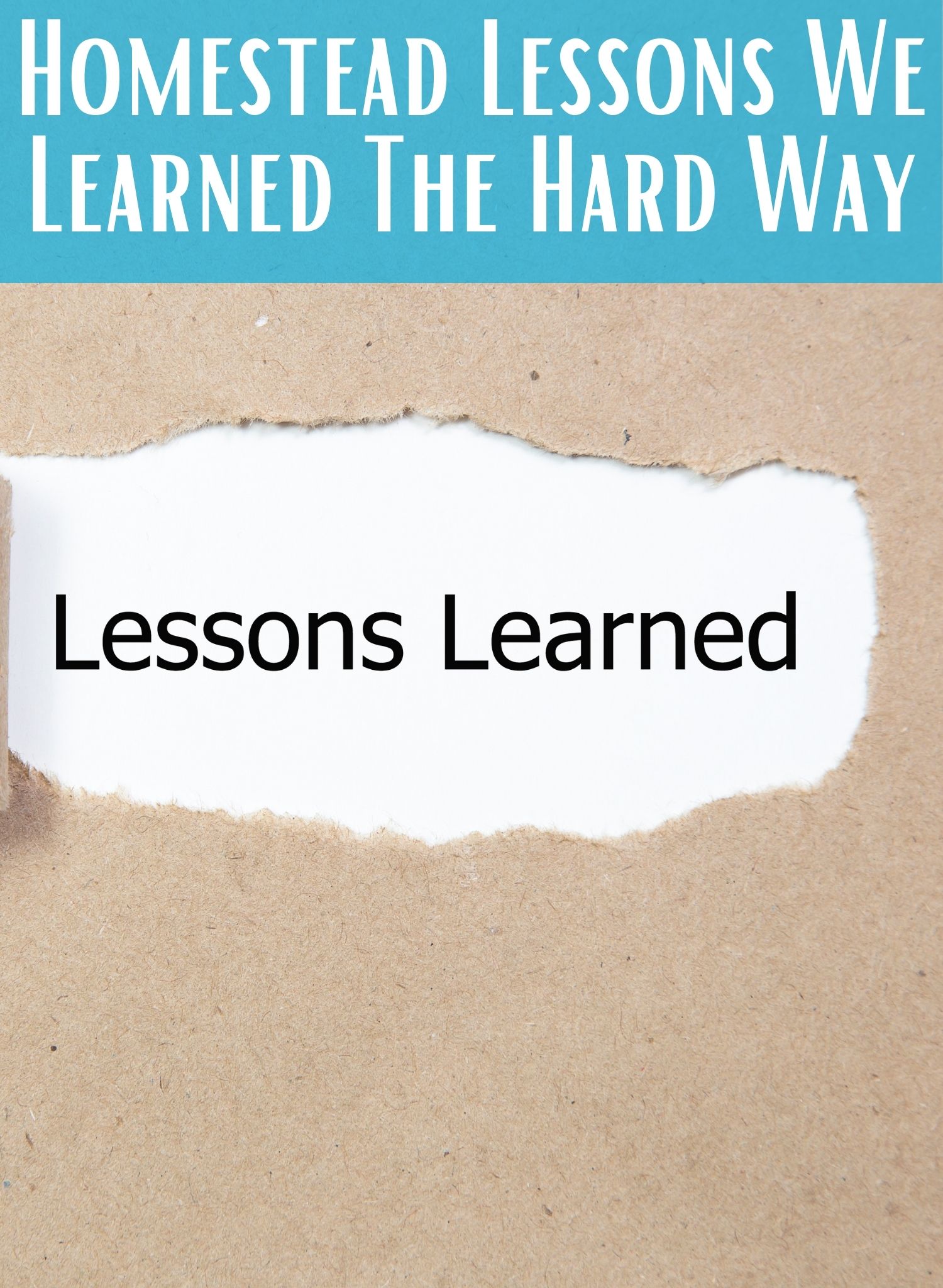
2 goats

Being self reliant can mean many different things. It could mean having the ability to grow, harvest, and preserve your garden. It could mean having the knowledge and understanding of what animals can eat, how to make them grow faster for meat, and to butcher them humanely. But it also means adding new skills to your toolbox and not relying on others to fix it.

By being self reliant, you can barter for goods or services. If you suck at growing veggies but you have the space for extra meat birds. Strike a deal with someone who does grow veggies but doesn’t have the space for meat birds. If you have never canned anything, find someone who has and start learning.

We have become more and more self reliant, just by being more frugal with what we do purchase, make or use. We purchase whole ingredients instead of quick meals… for the most part. But one of the things that we decided early on was to learn the “manual” way to do something.

We wanted to be able to make pasta if we ever needed to instead of always buying it from the store. Or making bread. Learning to be more self reliant doesn’t have to mean these big huge skills like gardening, canning, butchering, etc. It can be as simple as making bread or pasta.

Is Homesteading Worth It?

At the end of the day, you need to make that decision for yourself. I can say this, it is the most amazing feeling knowing that I made most the food in my food storage room. It’s also pretty cool that if I’m out of something, I know how to make a lot of things from scratch. Like that time that Jaxson wanted hamburger helper but I haven’t bought that stuff in years. Instead, I was able to make my own cheese sauce from butter and cheese that I made.

The question is, do you want that? Do you want to cook from scratch? Does a garden appeal to you? You have to know your why.

Every decision you make and goal you have should start with a Why. Why is it so important to you? This helps keep you on track when things get hard… And they WILL get hard. If you remember your why, every single decision you make will be a lot easier.

Our Why

Our why is simple: to not rely on others for things we can do ourselves. When it comes to the blog our why is equally as simple: To help beginning homesteaders with setting up their homestead and avoid the pitfalls of doing things “wrong”.

I have said for many years, if I just had 5 years and 5 acres, I could get us about 75% self reliant in terms of produce and meat. I could get our infrastructure set up to a point were trees, bushes, and other perennials require minimal effort with major results.

While we have had some major set backs, we have made a good sized dent in our infrastructure and are working towards doing more. I have to remind myself daily that our neighbors homestead has had over 100 years of work done to it. Ours only has a couple. They may have what we are moving towards, but we are starting from scratch. We’ll get there, though, and so will you.

So Join Us

The homesteading community is an amazing resource for all of us. It doesn’t matter if you are a master gardener or a beginner. It doesn’t matter if you have 1/8th acre or 800. We are a supportive group that only wants you to be successful.

YouTube is an amazing resource, as well as Instagram. The vast majority of us want to chat about anything and everything from livestock to gardens to preserving. Don’t be afraid to reach out!

If you like the content I put out, feel free to buy us a coffee! It helps keep this site running, marketing and the goats in grain!

Buy me a coffee

If you like this post, feel free to share it and follow us below on our social media accounts!
  • Facebook
  • Pinterest
  • Instagram
  • YouTube
  • TikTok
  • Spotify
  • Threads

Filed Under: Frequently Asked Questions, Our Homestead Tagged With: Canning, Chickens, Eggs, Goats, Homestead, kitchen, Pigs

JOIN TO OUR MAILING LIST!

Leave us your email to receive new posts and special offers for members only! Don't miss a thing!

Recent Posts

  • Fall Garden Guide
  • Top Mistakes With Goats
  • How To Bond With Your Goats

What Is Predator Load

September 14, 2024 by Leigh 6 Comments

Up till recently, we have been very lucky when it comes to predators. In our immediate area, we have a couple coyote dens on the surrounding properties and the typical skunks, opossum, fox and minx. We also have a couple of bears and bobcat, too. But what is a homestead predator, what is predator load and why is it important?

The Ultimate Homesteader’s Starter Bundle – Only $47!

Get the tools you need to stay organized, track profits, and manage your homestead with ease!

Includes:
✅ Schedule F Tracker – Simplify tax prep
✅ Profit Calculator – Track earnings
✅ Hay Calculator – Plan livestock feed
✅ Garden Journal – Digital & printable
✅ Herd Health Tracker – Monitor animal care
✅ Simple Budget – Manage finances
✅ Backyard Homestead eBook – Essential tips

$99 value – now just $47! Start your homesteading journey today!

Buy Now

Let’s First Answer: What is a predator?

A predator is simply any creature that wishes, is programmed and is able to do harm. That is a very broad definition right? But the reality is that anything could be a predator. The rabbit in your garden is a predator because it wants to harm (eat) your plants. A chicken is a predator to plants and bugs, sometimes each other.

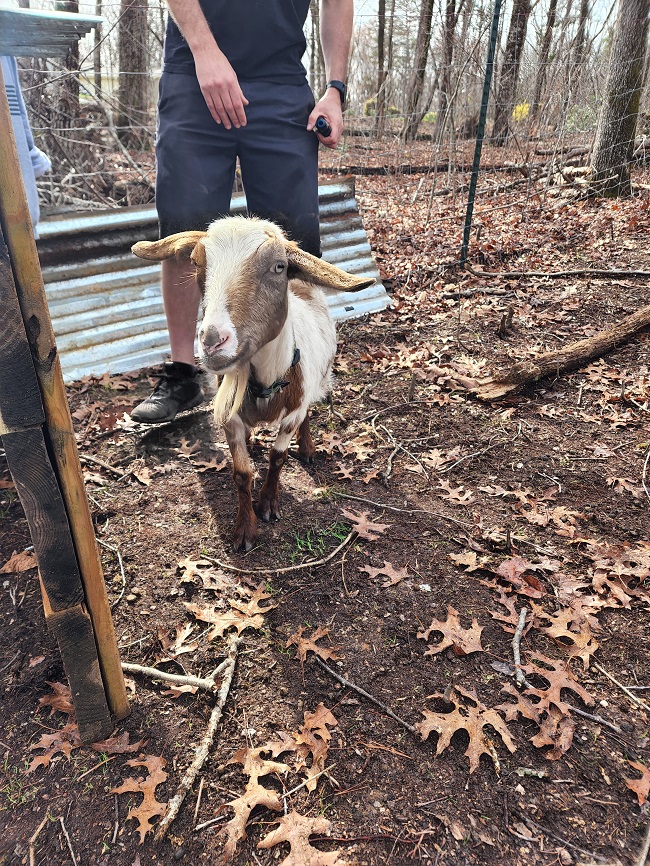
Large black, white and brown goat

It’s natural to think that predators are only big, scary animals with bigger teeth and claws. And while that is correct, you also have to broaden your definitions when you homestead or care for any kind of livestock. And, it’s not just other animals you have to be careful of. Humans are just as bad, if not worse predators.

What is Predator Load?

By definition, predator load is the amount of predators that come through your property or surrounding area. It could be high, moderate, or low and it can be seasonal as well. If you don’t know your predator load, I would start talking to your neighbors, local extension office, or Google. I would also do this prior to getting livestock.

Want the Ultimate Bug Out Bag? Enjoy the ultimate tactical backpack for an insanely cheap price

Just by knowing our neighbors and having their phone numbers, we have successfully avoided several attacks. We alert our neighbors, or they alert us, and we get outside with our animals or put them up.

If you don’t have access to those things, I would hold off on getting any livestock until you have a better understanding on what other animals live in your area. The last thing you want is to pick up an amazing herd only to have it torn apart by bears that you didn’t know lived in your area.

Why is knowing your predator load important?

Once you know what is going to actively try and kill your animals (besides your goats trying to kill themselves), you can start planning steps to fix problems before they arise. For example; I stated above that we have coyote, bear, bob cat, minx, skunk, and opossum as our homestead predators. This tells me that I need to make sure that I have secured my chicken coop at night. It also tells me that I need to put my goats up at night too. But my day time problems, shouldn’t be too bad.

Black rooster and several chickens

Next, you need to start researching various predator deterrents. There are several non lethal methods but at the end of the day, you have to decide how you are going to protect the animals in your care. Whether that is trapping and releasing, SSS (Shoot, Shovel, Shut Up), or hoping that they decide to leave a free buffet alone. Otherwise, you’ll need to mark off a section of your property for your animal cemetery.

You can also check out this from Redfin article as well! “Whether you’re planning to raise chickens at home in Asheville, NC, Eugene, OR, or Burlington, VT, check out this Redfin article we were featured in on 5 Chicken Coop Ideas For A Thriving Flock.” The big thing to remember when it comes to deterring predators is your enclosures.

The Ultimate Homesteader’s Starter Bundle – Only $47!

Get the tools you need to stay organized, track profits, and manage your homestead with ease!

Includes:
✅ Schedule F Tracker – Simplify tax prep
✅ Profit Calculator – Track earnings
✅ Hay Calculator – Plan livestock feed
✅ Garden Journal – Digital & printable
✅ Herd Health Tracker – Monitor animal care
✅ Simple Budget – Manage finances
✅ Backyard Homestead eBook – Essential tips

$99 value – now just $47! Start your homesteading journey today!

Buy Now

How We Handle Predator Load

One of the first things we did, when it started getting cooler, was to start working on our goat barn. We knew that the coyotes were going to start coming up into the yard to find food. I was not going to risk my goats lives because I didn’t want to build them a secure enclosure for night.

https://www.wickedgoodcupcakes.com/shop-online/thinking-of-you-boxes

Another thing we did was order these. They are predator lights. We have them all over the property to help deter predators. It’s not foolproof but it does help. We’ve got them in the garden, around the chicken coop, goat barn, etc.

We also have huge dogs that we have praised for alerting us since we got them. Bear is our smallest at 75# and Kodi is our biggest at a skinny 140#, we are working to put more weight on him. This helps because most predators are not going to come into the yard of dogs that are 2-3x the size of them. We also rotate dogs in and out of the house so there is always a dog outside during the day. You can read more about how we train our farm dogs here.

kids with their XXL dogs

Lastly, we practice SSS. I really struggle with this because I don’t want to harm another animal. Especially one that is doing what it is supposed to be doing. I struggle when we butcher meat chickens. But at the same time, when I bought animals, I took on the responsibility of keeping them safe. I take that very seriously. Not just in terms of predators but also educating myself on the best possible practices for their care.

Tractor Supply

I tell you all this because we have officially lost our first chicken to a fox. I was at work and Jared sent me a text saying that our favorite chicken was killed by a fox. When I was able to call him, I got the recap. Apparently, the fox was chasing our ducks and chickens around the house before he finally caught one. Jared was too far away from the rifle and by the time he got to it, the chicken was dead and the fox was enjoying his meal. We have since beefed up our protection measures and hopefully, won’t lose anymore chickens, ducks, or goats.

Blonde and black dog

Predators No One Wants To Talk About

Lastly, I wanted to talk about the predators that no one wants to talk about. There are two; humans and their dogs. Now, this may never be a problem for you. You may never have to deal with neighbors intentionally harming your animals. But those people are out there. We have been beyond blessed that our neighbors are amazing. But on the next mountain over? That’s a different story entirely. So how do you protect your animals from humans? Honestly, cameras are going to be your best course for any sort of legal action. Because livestock is expensive.

As for dogs? This is a lot harder. Dogs can climb fencing or dig under it. We had an incident where our neighbors dog would come over and eat our ducks and chickens. I wasn’t mad about it, per se. The dog was doing what her breed is supposed to do. But it was a frustrating. Luckily, our neighbors are awesome and he fixed the problem on his side and we fixed it on ours. But not everyone is that lucky.

I am here to tell you that for any predator on your property, you have to make the decision on what YOU are comfortable with. If you aren’t comfortable with SSS, then you are going to go the extra length to secure your animals. If you can’t, then maybe don’t get animals. Dealing with predators comes down to your personal ethics and answering the question; is my stuff more valuable than the predator?

So before you get livestock, save yourself some heartache and do some research. Not just on the types of animals, breeds, and their care. Research the predator load in your area, how to handle it, and how you are going to deal with the predator that maims or kills your favorite chicken.

If you like the content I put out, feel free to buy us a coffee! It helps keep this site running, marketing and the goats in grain!

Buy me a coffee

If you like this post, feel free to share it and follow us below on our social media accounts!

  • Facebook
  • Pinterest
  • Instagram
  • YouTube
  • TikTok
  • Spotify
  • Threads

Filed Under: Animals, Chickens, Farm Dogs, Goats, Homestead Planning, Our Homestead, Pigs Tagged With: Chickens, Eggs, Goats, Homestead

JOIN TO OUR MAILING LIST!

Leave us your email to receive new posts and special offers for members only! Don't miss a thing!

Recent Posts

  • Fall Garden Guide
  • Top Mistakes With Goats
  • How To Bond With Your Goats

Homestead Lessons: We Learn The Hard Way

August 24, 2024 by Leigh 7 Comments

Originally, this post was about the all the homestead lessons we learned the first year. But you never stop learning, especially when you homestead. So I wanted to go over all the homestead lessons we have picked up along the way. And the list keeps growing and growing.

The Ultimate Homesteader’s Starter Bundle – Only $47!

Get the tools you need to stay organized, track profits, and manage your homestead with ease!

Includes:
✅ Schedule F Tracker – Simplify tax prep
✅ Profit Calculator – Track earnings
✅ Hay Calculator – Plan livestock feed
✅ Garden Journal – Digital & printable
✅ Herd Health Tracker – Monitor animal care
✅ Simple Budget – Manage finances
✅ Backyard Homestead eBook – Essential tips

$99 value – now just $47! Start your homesteading journey today!

Buy Now

Homestead Lessons:

The Animals

Goats are not entry level animals. Seriously, wait until you have good fencing, a good vet, and patience!

Goats eat WAY more than you think they do.

Goat math is a thing. I’m still confused how our numbers jumped from 2 to 7….. Now, we are hovering around 15.

Chickens are cool, roosters are not. I threaten George with the stock pot daily.

Learn how to butcher and process your own animals. But also give yourself grace because you don’t know how.

If you don’t have a solid plan for pigs, don’t even bother. They will destroy your gardens, pens, and sanity. Sure, sometimes they’re fine. But these are also not beginner animals.

Be prepared for a ton of clean up after processing those animals.

Chicken poop is slippery on concrete. Be careful when you start chasing chickens through your basement.

Animals will die. Yes, it’s hard. No, it doesn’t get any easier.

Building

Build it right the first time. I cannot tell you the amount of times we have had to rebuild fences.

But also understand that you will rebuild things. It’s inevitable.

Don’t let the husband borrow your tools. Ever. Seriously, don’t do it. This man has broken more tape measures….

You are way more capable than you think you are. So is your spouse.

Regardless if it’s going to take longer, get your kids involved with projects. They need to learn how to do this stuff too.

Budget for a project, and then double it. If you think it’s going to cost $400 to build a fence, make sure you’ve got at least $800 set aside.

Garden

Find a local farm stand. Even if you have a garden. It’s better to know where to get fresh produce if the garden fails…. or the chickens, goats or pigs wreck it.

Canning is addictive. Get more jars than you think you will ever need, then double it.

Enjoy the abundance, even when you are drowning in cucumbers.

Learn to start your own plants. It’s WAY cheaper.

Give your garden and yourself grace! You can’t know everything about every plant!

Keep a garden journal!

Buy the seeds…. yes, all of them.

Try new varieties. Even if you have ones you love, try different ones.

Plant the flowers. Yes, all of them.

Plant ALL the plants. Even if you think it’s too many. You would be surprised what can happen in a season…. Plus that’s extra for the animals.

Also, plant for your animals too. You may not have enough to sustain them, but any discount on my feed bill makes me happy.

Planning

Have a plan A, B, C, D and E. Maybe go ahead and plan for F, G and H too. Just to be safe.

Estimate how much firewood you will use, and then double it. Maybe triple if you live in a crazy weather state like Georgia.

Go ahead and stock up on the things you think you need. Not only is it cheaper in the long run, if you need to pull off your supply in an emergency, you will be glad you have it.

Patience is the biggest lesson you will learn.

An emergency fund is going to be your saving grace when you buy a house. But when you buy a homestead? You should probably triple the amount you think you’ll need.

You are going to blow through that emergency fund when your goats get sick, dog needs surgery, well pump goes out and water heater explodes all in one month.

Understand things are going to happen that are beyond your control. Roll with it. A good attitude will get you through it.

Start a blog to detail the antics and chaos of your life. In a year, you will look back and laugh.

Learn to say no. Especially to your husband when he says goats would be a great idea 2 months into owning your homestead.

You are living the life you always wanted in a way you never dreamed. You are blessed beyond measure.

A homestead is what you make it. It starts with HOME for a reason. Enjoy it.

Bear the freeloader

Since buying our homestead, I have learned so much. These are just a few of the homestead lessons we have picked up along the way. I could write 100 more and still not be at the end of my list. But it has been worth every single penny, sleepless night, and fight. I would not trade my life for the world and all the money. Here’s to the next year on the homestead. May it be as entertaining and interesting as the last.

If you like the content I put out, feel free to buy us a coffee! It helps keep this site running, marketing and the goats in grain!

Buy me a coffee

If you like this post, feel free to share it and follow us below on our social media accounts!

  • Facebook
  • Pinterest
  • Instagram
  • YouTube
  • TikTok
  • Spotify
  • Threads

Filed Under: Animals, Canning, Chickens, Goats, How To's, Our Homestead, Pigs, Projects Tagged With: Chickens, Goats, Homestead, Projects, Welcome

JOIN TO OUR MAILING LIST!

Leave us your email to receive new posts and special offers for members only! Don't miss a thing!

Recent Posts

  • Fall Garden Guide
  • Top Mistakes With Goats
  • How To Bond With Your Goats

Is 5 Acres Enough For A Homestead?

August 20, 2024 by Leigh Leave a Comment

There has been a self sufficient movement over the last couple of years. More people are wanting to become self sustaining. They want to be able to grow their own food, raise livestock, and be less reliant on others. Personally, I am ecstatic. But how big of a property do you need? 100 acres? 50? At least 20, right? Is 5 acres enough for a homestead? The answer is yes.

The Ultimate Homesteader’s Starter Bundle – Only $47!

Get the tools you need to stay organized, track profits, and manage your homestead with ease!

Includes:
✅ Schedule F Tracker – Simplify tax prep
✅ Profit Calculator – Track earnings
✅ Hay Calculator – Plan livestock feed
✅ Garden Journal – Digital & printable
✅ Herd Health Tracker – Monitor animal care
✅ Simple Budget – Manage finances
✅ Backyard Homestead eBook – Essential tips

$99 value – now just $47! Start your homesteading journey today!

Buy Now

Is 5 Acres Enough For A Homestead

Technically, we have just over 8 acres. But 2 acres of that is a pond, and another 1.5-2 acres is a giant hill that we can’t do a lot with. So, we have 5 usable acres. We have 30ish chickens, 17 ish ducks, and 10 goats that all need a place to live. There is also the garden that needs to go somewhere. Not to mention all the small projects that need land, like the orchard, clothesline, and *fingers crossed* the pool. Or the larger projects like the shop, greenhouse, and granny pods? 5 acres is enough for a homestead.

What Are Your Goals?

Do you want to be totally self sufficient? Is this a hobby? Are you supplementing your income? Why do you want to homestead? What does a successful homestead look like to you? When you can answer those questions you can start crafting your goals. Our goals are: Have the homestead be self sustaining and self funding. Mortgage paid off in less than 15 years. Animals provide food and/ or income. Land produces 75% or more food and 100% of firewood. Yes, 5 acres can do that.

By having clear goals and expectations, it allows you to focus your energy on the things that matter.

Save on Seeds

The Plan

In another post about homesteading, I talked about what homesteading means and starting a homestead. You really need to figure out what it means for you and how you want to make this property work for you.

Before you even decide on a property, or if you already have a property, you need to plan what you want to do with it. Do you want goats? What about chickens? Are you going to try and squeeze a cow or pigs in? What does your property look like? Is it hilly or flat? Do you have access to plenty of water? Are you going to garden for fun or for purpose? These are just some of the questions that you need to answer before you get into the guts of building up your homestead.

If you want goats, do you already have browse for them? Is the fencing goat proof? How long would it take you to put up good fencing and install a good pasture? Do you already have a barn? Is there a predator problem? Do you want to milk them? Breed them? If you can answer these questions you can start to plan.

goat kidding

Before we get too far into this, I have a great course on the basics of goat care. I call it Goat Crash Course: Goat 101. In this course, I explain things like types of shelter, types of feeds and hays, basic assessments and so much more! Check it out!

Buy Now

As a beginning homesteader, you are going to want chickens. At least every beginner that I have met does. But really think about how any eggs you eat. Jared usually eats 3 eggs a day but no one else really does. When we make breakfast for dinner, we normally go through about a dozen eggs. But what about expansion. Do you want to sell eggs? Do you want to sell chicks? Are you going to be a victim of chicken math? Are you going to raise meat birds?

What about raising larger livestock, do you want pigs or cows? With enough pasture land, you can have a cow on an acre. You could have several pigs as well. The key is knowing your space and maximizing it.

Banner 468x60

Get To Work On The Plan

Most people only need a 800 sq ft (or 200 sq ft per person) garden to feed their family of 4 for a year. That’s not really a ton of space when you are talking about having 5 acres. Since we can a ton and give it to family, we decided to triple that. Plus, tomato math is a thing. We also knew that we were going to put in an orchard and decided that strategically planting trees throughout the property would benefit us more than having trees in rows. This would help with shade and keep pests from demolishing the entire crop.

We decided that we wanted to up our egg production for sales as well as reducing our need for chicken at the store. Then we bought more chickens and all of them are dual purpose birds, meaning that they are both egg layers and meat birds. We are also looking into selling any extra chicks.

Then we bought ducks…. Initially, I bought 10 meat ducks and 10 egg ducks. After our losses, I’m pretty sure I now have a total of 17 pet ducks. I’m not sure if I can butcher these guys. The way I see it though, I have 10 production meat ducks and those guys can lay and hatch our meat ducks…. At least that’s what I’m telling myself.

Our goats are for milking and breeding. Goats are a long term investment. If we can keep them alive and healthy, and all our does produce milk and good kids, we are looking at making about $9,000-11,000/ year. Not counting vet, feed, fencing, etc. That’s also not counting cheese, butter, soap or lotion sales.

Stick To Your Plan

We went off plan by getting the goats. They are no where near returning their investment. But they are so damn cute that we let it slide. Unfortunately, we had to put pigs on the back burner because of it. Same with meat rabbits. Homesteading on 5 acres or less is totally doable, but I will say it again and again. Set your goals, prioritize them, and get your plan in motion.

I would love to hear how you are homesteading or planning to homestead your property.

If you like the content I put out, feel free to buy us a coffee! It helps keep this site running, marketing and the goats in grain!

Buy me a coffee

If you like this post, feel free to share it and follow us below on our social media accounts!

  • Facebook
  • Pinterest
  • Instagram
  • YouTube
  • TikTok
  • Spotify
  • Threads

Filed Under: How To's, Our Homestead Tagged With: Chickens, Chicks, Eggs, Goats, Homestead, Welcome

JOIN TO OUR MAILING LIST!

Leave us your email to receive new posts and special offers for members only! Don't miss a thing!

Recent Posts

  • Fall Garden Guide
  • Top Mistakes With Goats
  • How To Bond With Your Goats

Homestead Daily Schedule

August 13, 2024 by Leigh Leave a Comment

On our homestead, this looks a little different than most. Due to our work schedules, one of us is gone 48 of 72 hours. Sometimes more. However, the goats still need to be milked, fed and let out. Chickens and ducks still need feed, water, and be let out. Dogs are also hungry and need to go to the bathroom. And all the other chores need to be done. So regardless of who is home, the daily schedule looks pretty much the same.

The Ultimate Homesteader’s Starter Bundle – Only $47!

Get the tools you need to stay organized, track profits, and manage your homestead with ease!

Includes:
✅ Schedule F Tracker – Simplify tax prep
✅ Profit Calculator – Track earnings
✅ Hay Calculator – Plan livestock feed
✅ Garden Journal – Digital & printable
✅ Herd Health Tracker – Monitor animal care
✅ Simple Budget – Manage finances
✅ Backyard Homestead eBook – Essential tips

$99 value – now just $47! Start your homesteading journey today!

Buy Now

What Is Our Homestead Daily Schedule?

As I mentioned above, our days are set up on a 3 day rotation. On the first day, I go to work and Jared is the responsible party until he goes to work the next day. Day 2 is when I come home and handle my portion of the homestead chores. On day 3 we are both home and try to squeak out as much time together as possible.

Day 1 Daily Schedule

This is my work day, so Jared is home with the boys. He usually gets up with me and we drink coffee and hang out for a few minutes before I head to work. Sometimes, he will tell me about what he has planned for the day. But more often then not, I don’t really care per say. The way I see it, he is a grown ass man and knows what he needs to do for the day. Unless there is something pressing, I don’t worry too much about what he’s doing.

That being said, most of the time he is working on whatever project we are doing. In the summer, it’s usually firewood. In the winter, it’s usually household projects. Spring is reserved for garden projects and fall is for yard clean up.

He also makes sure that the boys are doing their school work and the house doesn’t burn down.

Day 2 Daily Schedule

This is the day that he goes to work and I am coming home. Normally, I get home a little later in the morning. After getting myself cleaned up and my stuff put away, I get the boys started on their school work and I start working on whatever inside projects need to be handled. Sometimes this is blog or household work. Other times this could be getting seeds together and planted. It really depends on what the season is.

But I can tell you that the day after a 24 hour shift is left really loose. I have run calls all night and come home with a pile of chores that HAVE to get done and it’s awful. Instead, we give ourselves and each other grace when it comes to the day after shift. We just don’t put a lot of stuff on ourselves.

That being said, the goats still need to be checked and fed. Chickens and ducks still need to be fed and let out. The garden still needs to be harvested, planted or maintained. But we don’t stress about getting the to do list done.

Day 3 Daily Schedule

For me, the day starts around 8am. Blu gets her morning meds and mom needs coffee. The first set of dogs are let out and showers start. I will usually start a load of laundry and work on it throughout the day.

If I have goats in milk, my day starts a little earlier so that I can get them milked before they are screaming for their food and to be let out. I also do a quick glance at the herd to make sure everyone is healthy and happy.

After I get the goats done, I am in the garden first thing to beat the heat. I try to get things harvested before the heat of the day really hits. I will also try to get the first batches of preservation going. Whether it’s dehydrating tomatoes or squash or getting a canner filled. Depending on the season, I may be planting more in the garden.

I will also start the boys on their homeschool stuff for the day. As the day heats up, I scramble into the house to keep from overheating (y’all the Georgia heat is no joke!). I will work on the blog or general household tasks until it cools down enough to be able to go back outside.

Then it’s dinner time. After dinner, the boys take care of their chores. I finish up laundry and head to bed, where I read for about 4 hours.

Homesteading Daily Schedule With Kids

One of the biggest issues that I see new homesteaders, and hell even parents, making is that they don’t give their kids chores. You will overwhelm yourself and your partner if you do not let those kids earn their keep. We have a pay to play rule which means that if you want to play video games, watch TV or do what YOU want to do, you have to “pay” for that by doing your chores, school work, etc. So make sure that your kiddos are helping.

After everyone is done and animals are fed, we start working on school work, this is usually around 930-10. Jared and I have different views on this. Usually I let them unschool and Jared is more structured. Unschooling is when the child directs what they would like to learn about. I feel like this gives them the opportunity to learn about the things that interest them and helps them learn better. Jared prefers to help them with “normal” school work.

Neither way is wrong and the boys seem to enjoy having the flexibility. Win Win.

We get them involved with various aspects of homesteading to not only teach them how to do things that are necessary for survival if the SHTF but also because this is invaluable information. And this still counts as their schooling since they are learning things like how to follow the instructions on how to put together a metal shed. Or how much firewood makes a cord and then measuring the stack that they’ve made. They also get crash courses in animal husbandry if an animal gets sick and needs medications. They’ve also been a huge help in the garden and ask a ton of great questions. Most that I don’t have an answer to, so we ask google a lot of questions.

Don’t Beat Yourself Up

One of the things that I see a lot of new homesteaders do, especially those of us that work off farm, is that they feel like they have to do ALL the things, RIGHT NOW! That can’t be further from the truth. In fact, the opposite is more true; you have time. I talk about homesteading goals and preparation here, but the short version is figure out where you want to be, and take small actionable steps to get there.

Homesteading, while hard work, should NOT be so stressful that you don’t want or can’t do it. You don’t have to get everything done right now! Take a breath and give yourself kindness and grace to make at a reasonable pace. You don’t need to burn yourself out within the first year.

If you like the content I put out, feel free to buy us a coffee! It helps keep this site running, marketing and the goats in grain!

Buy me a coffee

If you like this post, feel free to share it and follow us below on our social media accounts!

  • Facebook
  • Pinterest
  • Instagram
  • YouTube
  • TikTok
  • Spotify
  • Threads

Filed Under: Animals, Canning, Chickens, Garden, Goats, Homeschool, How To's, Our Homestead, Pigs, Projects Tagged With: Canning, cast iron, Chickens, Chicks, cooking, Eggs, Goats, Homestead, kitchen, Welcome

JOIN TO OUR MAILING LIST!

Leave us your email to receive new posts and special offers for members only! Don't miss a thing!

Recent Posts

  • Fall Garden Guide
  • Top Mistakes With Goats
  • How To Bond With Your Goats

Can Homesteading Save Money

August 6, 2024 by Leigh 2 Comments

We can answer this right now, no. Homesteading will not save you money. In fact, homesteading will cost you money. A lot of money. In the first year we were on our homestead we exhausted our emergency fund four separate times. Can homesteading save money? No. Not at first. But in the long run, it will absolutely save you money. Just maybe not in the ways your expecting. Be sure to read to the end for the “pay offs” I’m talking about.

The Ultimate Homesteader’s Starter Bundle – Only $47!

Get the tools you need to stay organized, track profits, and manage your homestead with ease!

Includes:
✅ Schedule F Tracker – Simplify tax prep
✅ Profit Calculator – Track earnings
✅ Hay Calculator – Plan livestock feed
✅ Garden Journal – Digital & printable
✅ Herd Health Tracker – Monitor animal care
✅ Simple Budget – Manage finances
✅ Backyard Homestead eBook – Essential tips

$99 value – now just $47! Start your homesteading journey today!

Buy Now

Why Should You Homestead Then?

Homesteading is not necessarily about saving money. Sure, there are somethings that we have saved a ton of money on like eggs, milk, and chicken.

We no longer buy eggs because our chickens have solved that problem. We don’t have to buy chicken at the grocery store because we butcher our own. We don’t buy milk from the store unless we run out. But when you look at the $100/month we have saved by how much we have spent? We are solidly in the red.

Spend More To Make More?

Because the farm is an LLC, which I highly recommend you do, we are able to write off a lot for taxes. That being said, our first year’s return was eye opening. We spent over $3,000 in vet bills and another $5,000 on feed. That was only in six months. The following year we doubled that. That doesn’t include the well pump that went out, or the water heater. Or all the fencing and structures for the goats and chickens.

But homesteading is not about saving money. It’s about living off the land, having livestock, learning new skills, and being self sufficient. Of course homesteading means different things for different people.

The Ultimate Homesteader’s Starter Bundle – Only $47!

Get the tools you need to stay organized, track profits, and manage your homestead with ease!

Includes:
✅ Schedule F Tracker – Simplify tax prep
✅ Profit Calculator – Track earnings
✅ Hay Calculator – Plan livestock feed
✅ Garden Journal – Digital & printable
✅ Herd Health Tracker – Monitor animal care
✅ Simple Budget – Manage finances
✅ Backyard Homestead eBook – Essential tips

$99 value – now just $47! Start your homesteading journey today!

Buy Now

Homesteading Is A Long Game When It Comes To Saving Money

What I have found is that homesteading is a long term goal and commitment. You are probably not going to save money your first or your second year. If you are starting your homestead from the ground up, you will probably not see a positive until year five. But it really depends on your goals. If you want your homestead completely self sufficient but you are starting from scratch, it will take time. If you came into a property that has fencing, a barn, and garden. You are probably already ahead of the game.

Why Homesteading Doesn’t Save Money?

The reality is that you are going to spend money at first. Rarely, though it does happen, are you going to stumble onto a property that is absolutely perfect for you. You are going to have to spend money to make that property the way you want it.

I preach the importance of setting goals and figuring out your WHY. But probably the most important thing is to define what your vision of a successful homestead is. This is no different. When you are trying to set up your homestead, you want to make sure that you aren’t wasting money on things that don’t matter in the long run.

While you may not see a big financial gain, you will see the “pay off” in other areas.

When Does Homesteading “Pay Off”?

For us, homesteading started to pay off within the first year. But it’s probably not the way you’re thinking. When we bought our property, we defined, very quickly, what a successful homestead meant, and then wrote down our year one, five and ten year goals. That’s when we started to see the “pay off.”

Chickens Doing Double Duty

The pay off was a significant decrease in fleas and ticks. This was because the chickens free ranged and took care of those bugs. That meant that Jared and Jaxson weren’t being eaten alive. This made them happier and more likely to be outside.

The chickens also helped break up the compacted soil in the garden spaces. They ate the grubs and bugs that could destroy the next years crops. They’re manure became compost for the next years garden.

Their eggs are SO much better than anything you can get from the store. Bright orange yolks mean very healthy and happy chickens. But it also means that egg is packed with nutrients.

Another great thing about chickens is that we can incubate the eggs because we have a rooster. That means that technically, we never have to buy another batch of chickens. Which of course means that we will buy more chickens because… chicken math is a thing.

cropped-3.jpg

Are you looking for garden journal prompts, but aren’t interested in a weekly email? Check out our 365 Garden Journal Prompts! This is an amazing, all in one, yearly product that you only pay for once.

Buy Now!

Goats Earning Their Keep

Initially, we bought the goats to be long term lawn mowers. But after falling in love with these creatures, we started breeding and milking them. Their pay off has been a little slower because they are expensive creatures to maintain. But I realized very quickly that I could tolerate their milk.

Their pay off is in my health. For the first time in years, I am able to consume milk with pain. While I am not lactose intolerant, I do have issues with gut health. Their milk has helped ease that pain and has increased the good bacteria in my gut. Not to mention, I know exactly what is in their feed, hay, treats, etc.

Before we get too far into this, I have a great course on the basics of goat care. I call it Goat Crash Course: Goat 101. In this course, I explain things like types of shelter, types of feeds and hays, basic assessments and so much more! Check it out!

Buy Now

The Garden Producing

Gardening is probably the biggest way that we save money on the homestead. But again, not at first and not in the way you are probably thinking. Our big garden is getting a face lift in 2024 and that means a TON of money is getting dumped into it.

Like the budget for it is about $10,000 and includes the orchard, chicken runs, fencing, the gazebo and more. That’s okay, though. Because the amount of money it saves us isn’t about the weekly or monthly dollars saved at the grocery store.

It’s about the health benefits of the garden.

We do not spray our gardens with ANYTHING. There are no pesticides, herbicides or fertilizers used…. at all. It’s grown in soil that comes from our neighbors horse manure and our own animals bedding. Neither one of us deworm or use chemicals our animals unless absolutely necessary.

That means that our food from the garden is literally the healthiest thing we can consume on the planet. This pays off HUGE because we are filling our plates with food that is so nutrient dense, that it helps ward off sickness, disease and other issues that are common for people who eat the standard American diet.

goat kidding

Before we get too far into this, I have a great course on the basics of goat care. I call it Goat Crash Course: Goat 101. In this course, I explain things like types of shelter, types of feeds and hays, basic assessments and so much more! Check it out!

Buy Now

No, homesteading probably won’t save you money

But what homesteading will do is shorten your supply train. Homesteading will reduce your need on the grocery store. It will make you healthier, even if it’s only because you are more active. There are so many other pay offs when it comes to homesteading that it’s okay that it doesn’t save you a ton of money at first.

It will pay off in the end.

If you like the content I put out, feel free to buy us a coffee! It helps keep this site running, marketing and the goats in grain!

Buy me a coffee

If you like this post, feel free to share it and follow us below on our social media accounts!
  • Facebook
  • Pinterest
  • Instagram
  • YouTube
  • TikTok
  • Spotify
  • Threads

Filed Under: Animals, Canning, Chickens, Goats, How To's, Our Homestead, Pigs, Projects Tagged With: Canning, cast iron, Chickens, Chicks, cooking, Eggs, Goats, Homestead, kitchen, Welcome

JOIN TO OUR MAILING LIST!

Leave us your email to receive new posts and special offers for members only! Don't miss a thing!

Recent Posts

  • Fall Garden Guide
  • Top Mistakes With Goats
  • How To Bond With Your Goats

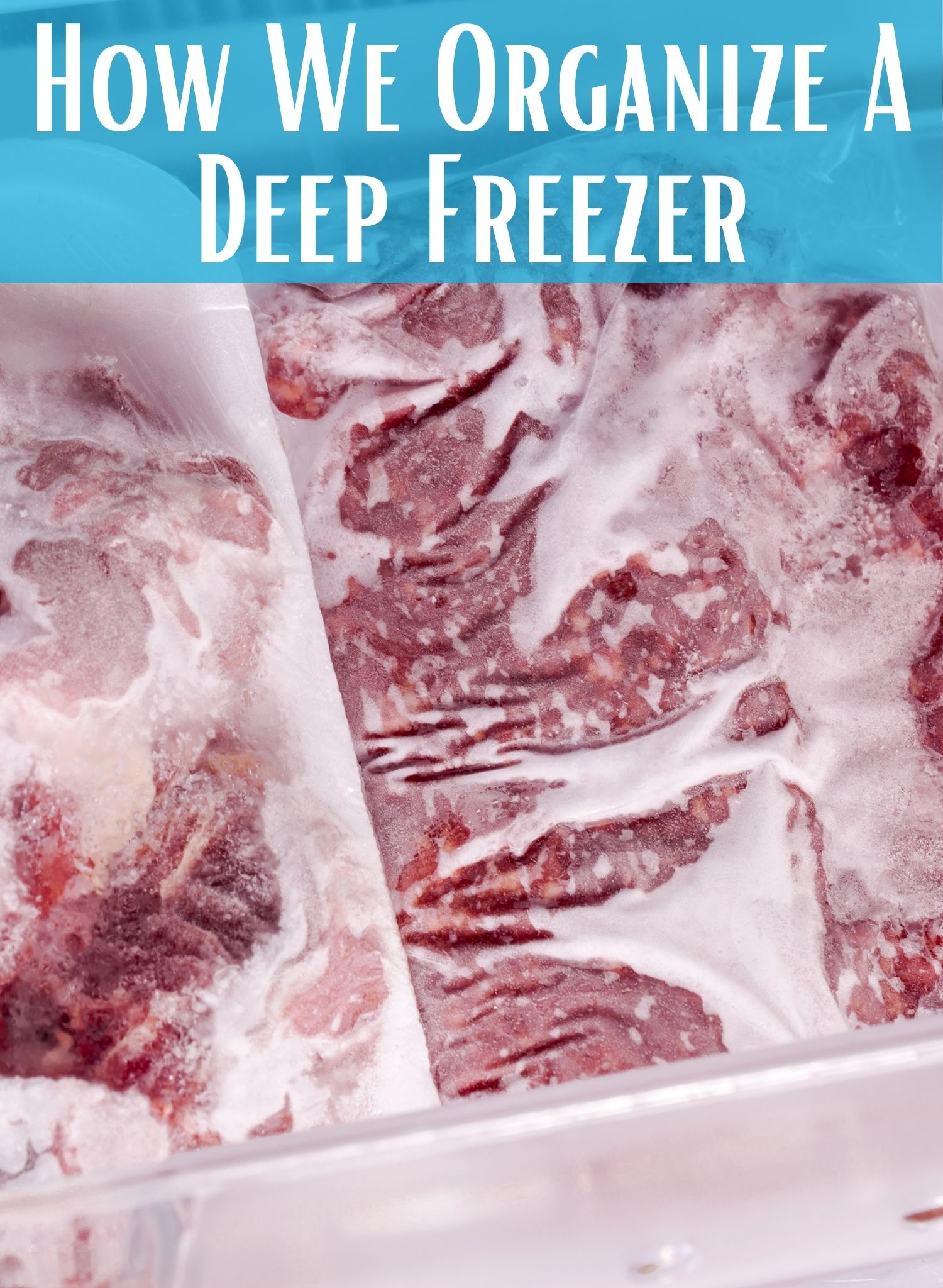
How We Organize A Deep Freezer

July 9, 2024 by Leigh Leave a Comment

Seriously, how is it that I can organize our freezer and within a month it’s back to being a disaster. Every time! But I have finally figured it out! I saw this hack on Pinterest and figured what did I have to lose? If it doesn’t work, I can reuse the supplies. But if it works? Well, my sanity may just be returned. Maybe. So how did we organize a deep freezer?

The Ultimate Homesteader’s Starter Bundle – Only $47!

Get the tools you need to stay organized, track profits, and manage your homestead with ease!

Includes:
✅ Schedule F Tracker – Simplify tax prep
✅ Profit Calculator – Track earnings
✅ Hay Calculator – Plan livestock feed
✅ Garden Journal – Digital & printable
✅ Herd Health Tracker – Monitor animal care
✅ Simple Budget – Manage finances
✅ Backyard Homestead eBook – Essential tips

$99 value – now just $47! Start your homesteading journey today!

Buy Now

Organizing A Deep Freezer

The biggest problems with freezers, whether upright or a chest freezer is that things get lost in the shuffle. It doesn’t matter what you do or how well you organize, you are going to lose stuff in those freezers. Not to mention it’s not something that you go into every day. Or maybe you go into it, but only for the 30 seconds it takes to pull out a couple packs of meat.

And if you have kids, they aren’t going to take the time to gently move things around to find what they need. No, my teenagers just throw things around until they find whatever it is they are looking for and them move on with their life…. It’s infuriating.

Before we get too far into this, I have a great course on the basics of goat care. I call it Goat Crash Course: Goat 101. In this course, I explain things like types of shelter, types of feeds and hays, basic assessments and so much more! Check it out!

Buy Now

Starting To Organize A Deep Freezer

When you are sorting your deep freeze to organize it, make sure that you take the time to clean it out too. Over the years, I found that we tend to only clean out our deep freeze when we are getting a whole cow or hog, which is usually once a year per freezer. We usually purchase a whole cow in July and empty out that freezer, defrost it, and then scrub it out. And we do it for the whole hog in February.

This helps to make sure that any freezer burned meat is either used or given to the chickens. I tend to find a bunch of roasts and will can a bunch of soups for us for the winter. If the meat is just too burned, it goes to the dogs or chickens. I hate wasting food.

After it is sorted, make sure to defrost it. This allows you to get all those weird bits of meat, frost, and other random crap that gets lost in the freezer out. If you have had a freezer before, you know what I’m talking about. Especially, the upright freezers. Everything collects at the bottom of the freezer. Hunks of ice, broken caps, a random chicken wing. It ends up at the bottom!

If you are new to heating with firewood and are looking to master the finer points of it. We’ve got a great eBook that goes in depth of what tools you should consider, how and where to stack, how to build a fire and so much more!

Buy Now

Choosing The Right Size Freezer

When we purchase bulk meat like half/whole cows or whole hogs, we needed more freezer space than just one upright freezer. To give you some insight into freezer sizes, a whole cow will barely fit in an 16cu ft freezer. When I say barely, it’s a game of Tetris to get it all in there. Whole chickens take up a ton of space as well. I would say that you could probably fit 100 whole chickens in that same freezer.

I think it’s better to err on the side of caution and always go at least one “size” up from what you think you’ll need. Especially when it comes to getting whole animals. I have found that if you have the square footage to have a bigger freezer, get the bigger freezer. You will end up using the space. Trust me.

Another thing to consider with freezers is that an upright freezer will be easier to find things, but will not hold as much as you think they will. It is incredibly difficult to pack an upright freezer, no matter the size, due to the likelihood of things spilling out. And yes, milk crates will help with this, but just trust me, get a chest freezer if you are getting irregularly shaped things like packs of meat, veggies, etc.

Chest freezers are where it’s at in my opinion. Yes, it will become a holy terror of a disaster, but you get far more bang for your buck with them. Because it doesn’t matter if you organize it or not, you are able to use every square inch of that space.

The Ultimate Homesteader’s Starter Bundle – Only $47!

Get the tools you need to stay organized, track profits, and manage your homestead with ease!

Includes:
✅ Schedule F Tracker – Simplify tax prep
✅ Profit Calculator – Track earnings
✅ Hay Calculator – Plan livestock feed
✅ Garden Journal – Digital & printable
✅ Herd Health Tracker – Monitor animal care
✅ Simple Budget – Manage finances
✅ Backyard Homestead eBook – Essential tips

$99 value – now just $47! Start your homesteading journey today!

Buy Now

Enter Milk Crates To Organize A Deep Freezer

When it comes to organizing a deep freezer, you need to have the ability to sort those various things (packs of meat, froze veggies, etc) into some sort of organized chaos. I love using milk crates. But a word of caution. Don’t buy cheap file crates from Wal-Mart. You want to get something like this. The sturdier the better. We got the cheap ones from Wal-Mart and it’s gone about how you would expect.

Milk crates saved my sanity when Jared brought home the cow. I’m not going to lie, I was nervous that three coolers of meat was going to create more chaos than me. But we worked through it and got everything separated into five milk crates. They are overflowing but still stackable.

The idea with the milk crates is to have the ability to pick up and move them to get to what is below them. So far it has worked beautifully and I will be buying more crates for my upright freezer to handle that disaster.

The problem with the using milk crates in the upright freezer is not having the ability to see through them to what is inside. Yes, we could label them but if my kids won’t put things up where they go, do we really think that putting a label on the crate will help? I guarantee it won’t.

Our herd health bundle helps you keep track of your herd’s health. Includes the goat assessment, herd check sheets AND Herd Health Tracker!

Buy Now

Clearly Label What Is In The Freezer

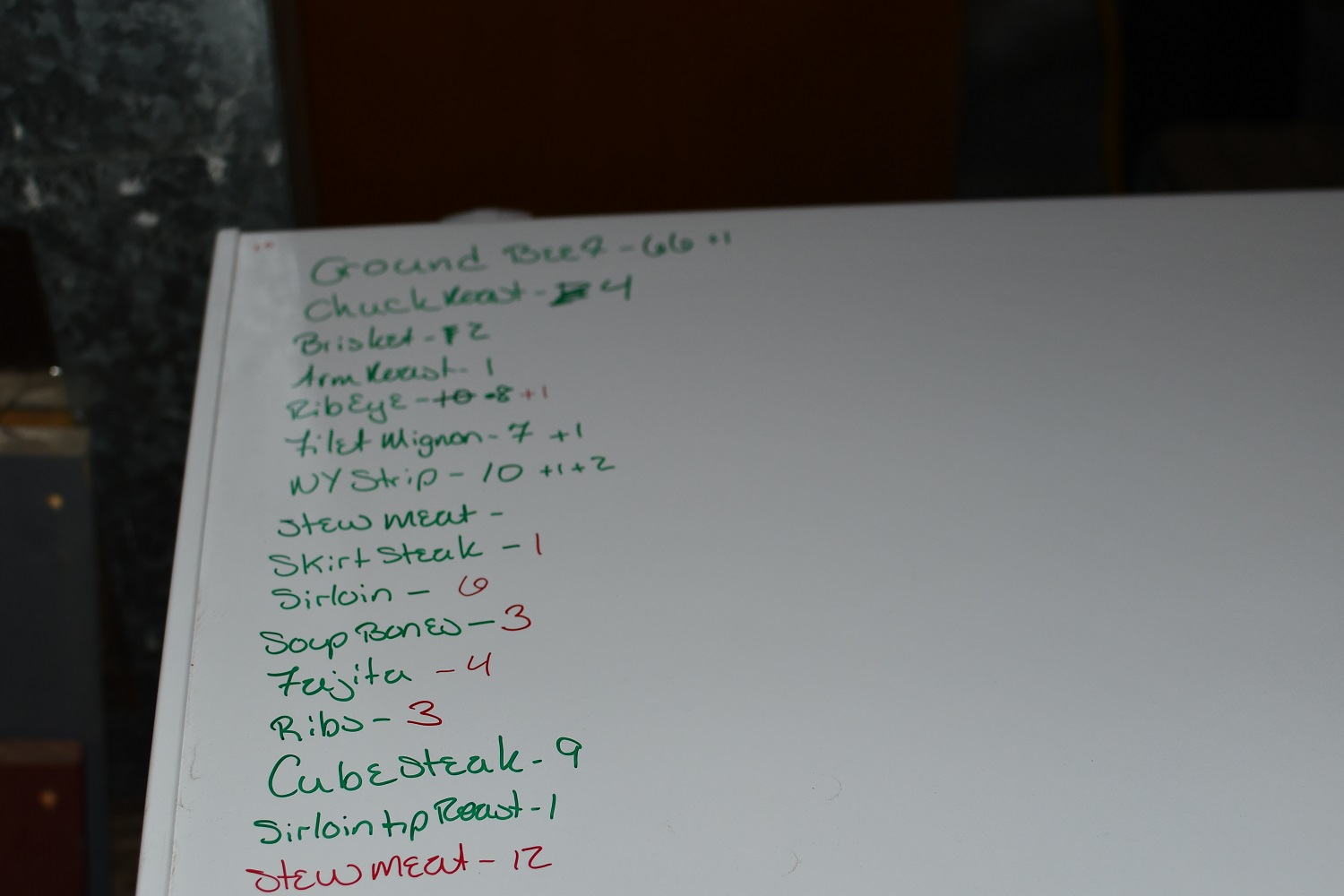
We write on our freezers. This helps keep an eye on inventory levels…. when someone remembers to deduct what they took out…. which no one does. But it’s a good idea. We know that one freezer is full of beef and the other is full of… well other. Unfortunately, what ends up happening, especially with teenage boys, is that they just shove things in the freezer.

That means that you could have cow in one freezer, hog in another and chicken in with the bacon. It’s extremely frustrating. But if you label the outside of the freezer, it could help you a lot more. We have gone so far as to list out how many packs of something is in the freezer. For example, when we load up the freezer with a whole cow, we will put 200 packs of ground beef or 17 sirloin steaks.

This has helped a ton but only if you keep up with it.

If you like the content I put out, feel free to buy us a coffee! It helps keep this site running, marketing and the goats in grain!

Buy me a coffee

If you like this post, feel free to share it and follow us below on our social media accounts!
  • Facebook
  • Pinterest
  • Instagram
  • YouTube
  • TikTok
  • Spotify
  • Threads

Filed Under: How To's, Projects Tagged With: Chickens, cooking, Homestead, kitchen, Organization

JOIN TO OUR MAILING LIST!

Leave us your email to receive new posts and special offers for members only! Don't miss a thing!

Recent Posts

  • Fall Garden Guide
  • Top Mistakes With Goats
  • How To Bond With Your Goats

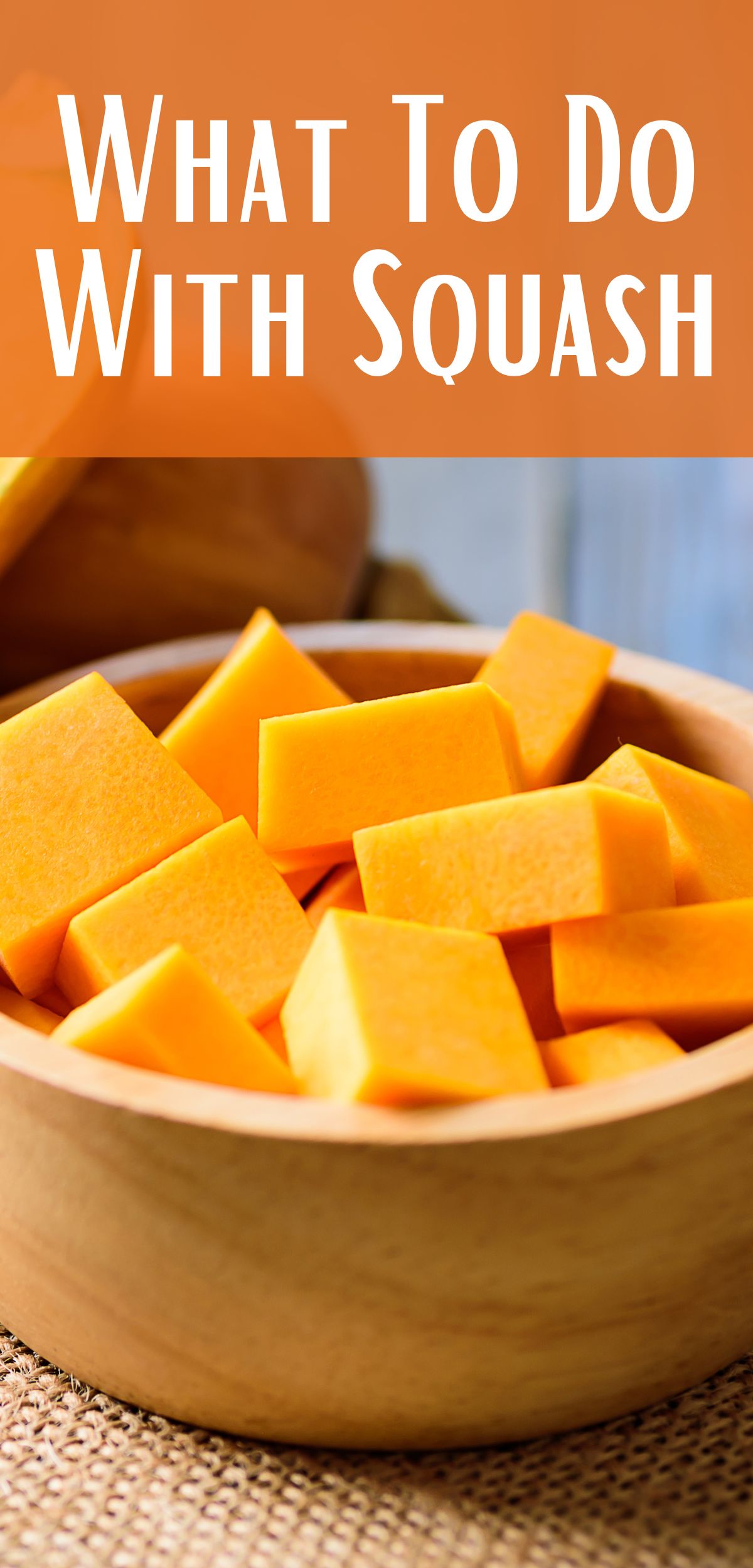
What To Do With Squash

June 25, 2024 by Leigh Leave a Comment

Squash is a very prolific plant for us. We don’t have a ton of pressure from squash bugs, though we do have them. But it doesn’t take long before we are drowning in squash. If you have squash coming out of your ears, you have probably asked the magical Google what to do with squash. I’ve compiled a list of the various things we do with squash that not only feed us but our animals. Plus a bonus on what we do with winter squash.

The Ultimate Homesteader’s Starter Bundle – Only $47!

Get the tools you need to stay organized, track profits, and manage your homestead with ease!

Includes:
✅ Schedule F Tracker – Simplify tax prep
✅ Profit Calculator – Track earnings
✅ Hay Calculator – Plan livestock feed
✅ Garden Journal – Digital & printable
✅ Herd Health Tracker – Monitor animal care
✅ Simple Budget – Manage finances
✅ Backyard Homestead eBook – Essential tips

$99 value – now just $47! Start your homesteading journey today!

Buy Now

What To Do With Squash

Squash is one of the most versatile veggies in the garden. Probably second only to tomatoes and potatoes. It’s a fast growing and productive plant, that if you can keep healthy, will out produce EVERY plant in the garden. But when even you are rebelling against eating one more sauteed squash for dinner, it can be overwhelming.

There are two types of squash; summer and winter. Depending on where you live, you may be able to keep your winter squash without having to do anything with it. I’ll go over more on how to keep winter squash at the bottom of this post. But unless otherwise stated, this post is focused more on summer squash.

But I wanted to go over some of the ways that we use our squash so that we aren’t just throwing out moldy squash. There are three big things that we do with squash, besides fresh eating; freeze it, dehydrate it or give it to our animals.

Before we get too far into this, I have a great course on the basics of goat care. I call it Goat Crash Course: Goat 101. In this course, I explain things like types of shelter, types of feeds and hays, basic assessments and so much more! Check it out!

Buy Now

Freezing Squash

Freezing squash is a great way to extend the shelf life of this beloved veggie. Though there are some considerations. First is that very few things have the best texture when coming out of the freezer. So if that is going to be a problem, then don’t put your entire harvest in the freezer. Also make sure that you are washing your produce before you put it in the freezer!

When we put squash in the freezer, we usually slice it into half inch medallions and lay them on a tray with either parchment paper or silicone mats. This allows the squash to freeze separately before going in a bag. You don’t have to, but it makes thawing a lot easier. We will also cube it or grate it and store depending on what we need it for.

Squash will hold it’s shape well when thawing but it is usually going to taste better in soups, stews, or mashed up. We will use it in stir fry’s and have enjoyed it, but again, remember texture will be a thing.

Lastly, be aware that the more stuff you put in your freezer, the harder it will be to find it later. No matter how well you keep your freezers organized, it’s only a matter of time before you find a 6 year old bag of squash at the bottom of your freezer.

If you are new to heating with firewood and are looking to master the finer points of it. We’ve got a great eBook that goes in depth of what tools you should consider, how and where to stack, how to build a fire and so much more!

Buy Now

Dehydrating It

This is hands down my favorite way to store squash. It takes up less space and uses zero electricity to store. I also love the fact that I can set it and forget it, in the dehydrator. It’s not like it’s going to spoil sitting in a running dehydrator. I use this dehydrator and absolutely love it! Also, I go more in depth about dehydrating foods here.

I will chunk up several trays worth of various squash to put in the dehydrator. Then I turn it on to veggie and let it run until I remember it’s been going for 3 days…oops. Once it’s done, or I remember it exists, I will pump them into half gallon mason jars like this and store.

Now, you can and probably should put oxygen absorbers in there, but usually I don’t. I haven’t found any issues with not doing it. You can also use mylar bags, but I have found that keeping everything in jars is better for my set up. The reason I don’t bother with oxygen absorbers and bags is because I’m not usually storing for more than a year.

Are you getting overwhelmed in the garden? Stressed? Or just not enjoying the garden like you used to? Check out our garden prompts! We send out weekly emails that get you back in the garden and out of your head! Turn the garden back into a place of love and joy instead of frustration and headache!

Subscribe Now!

When it comes to using dehydrated squash, I usually throw it in soups and stews for extra veggies. It also helps absorb any extra water and flavoring.

To reconstitute dehydrated squash, I will fill the bottom of a bowl with however much I needed, then add boiling hot water over the top, covering the squash with several inches of water. If I need more water, I’ll add more as the squash absorbs it. But again, usually my dehydrated squash is going into soup.

Give Squash To Your Animals

Most animals can eat most squashes without worry. Yes, there will be outliers that can’t handle squash, but for the most part, squash is perfectly safe for animals to eat. But if you have questions, reach out to a vet. That being said, we will gladly give our animals excess squash.

Our chicken’s run is right next to the garden so when I fill my basket with squash, I will chuck whatever is ready but I can’t use over the fence to them. They love it! Plus this helps reduce our feed bill which is always a win win.

Also, the seeds from squash can act as a natural dewormer for your animals, so win, win, win.

When we feed squash to the goats, we do it in moderation AND we cut it into smaller pieces. Their mouths are not very big and we don’t want to cause them to choke.

goat kidding

Before we get too far into this, I have a great course on the basics of goat care. I call it Goat Crash Course: Goat 101. In this course, I explain things like types of shelter, types of feeds and hays, basic assessments and so much more! Check it out!

Buy Now

Storing Winter Squash

Finally, when it comes to winter squash, there are a few more things to consider. First and foremost, winter squash is grown for storage. The skin of it is thicker and able to withstand storage. Usually, you can store winter squash for about 3 months in ideal situations. This means a cool, dark place with good air flow.

The problem with that is I don’t really have an ideal place to store winter squash, whole. Come end of harvest season, my canning shelves are crammed with jars of food, storage items, potatoes, and other random bits. So my favorite way to store winter squash is to either can it or freeze it.

Usually, I will peel the squash, scoop the seeds and cube it. I will either flash freeze it (freezing on silicone mats or parchment paper) and put it into bags. Or I will go ahead and can it. I don’t usually dehydrate winter squash because it takes so long, but I’m not opposed to it either. It really depends on my mood and what I have going on at the time.

cropped-3.jpg

Are you looking for garden journal prompts, but aren’t interested in a weekly email? Check out our 365 Garden Journal Prompts! This is an amazing, all in one, yearly product that you only pay for once.

Buy Now!

I hope this helps you figure out what all you can do with your squash!

If you like the content I put out, feel free to buy us a coffee! It helps keep this site running, marketing and the goats in grain!

Buy me a coffee

If you like this post, feel free to share it and follow us below on our social media accounts!

  • Facebook
  • Pinterest
  • Instagram
  • YouTube
  • TikTok
  • Spotify
  • Threads

Filed Under: Dehydrating Food, Freezing, Garden, Working With Food Tagged With: Chickens, dehydrating, Eggs, food, freezing, Garden, Goats

JOIN TO OUR MAILING LIST!

Leave us your email to receive new posts and special offers for members only! Don't miss a thing!

Recent Posts

  • Fall Garden Guide
  • Top Mistakes With Goats
  • How To Bond With Your Goats

How To Set Homestead Goals

May 28, 2024 by Leigh Leave a Comment

We all know the saying “A goal is a dream with a deadline.” — Napoleon Hill. We also know that when you break that goal down into steps it becomes a plan. Then when you take action, you can make those dreams come true. You can think it’s a load of goat shit but it really is true. We had a dream of owning a homestead, we added a deadline, made a plan, and when we followed through. Our dream became reality. If your goal is similar to ours, or if you already have a homestead and you are trying to figure out your next steps, this is how to set homestead goals.

The Ultimate Homesteader’s Starter Bundle – Only $47!

Get the tools you need to stay organized, track profits, and manage your homestead with ease!

Includes:
✅ Schedule F Tracker – Simplify tax prep
✅ Profit Calculator – Track earnings
✅ Hay Calculator – Plan livestock feed
✅ Garden Journal – Digital & printable
✅ Herd Health Tracker – Monitor animal care
✅ Simple Budget – Manage finances
✅ Backyard Homestead eBook – Essential tips

$99 value – now just $47! Start your homesteading journey today!

Buy Now

First Step For How To Set Homestead Goals

The first thing you need to do is dream. If you’re anything like me, that’s absolutely not a problem. I am a daydreamer at heart. But thankfully, I’m also a planner so getting down to the nitty gritty is also easy. But if you struggle with dream, I’ve got an exercise for you.

Daydreaming Exercise

Go out into nature. It can be a park, your yard, whatever. Take your shoes off and put your feet on the ground. This is called grounding. Take a couple of big, deep breaths. Close your eyes (as long as it’s safe!) and allow your mind to wander. Don’t think of all the responsibilities you have, allow yourself to dream.

Flush out that dream in your meditative state. Do you see animals? A huge garden? A greenhouse? What is the finished product of your goal?

Write it down

Our dream is to make the homestead as self sustaining and self funding as possible. We want to be able to pay off our mortgage in 15 years. We want our animals to not only provide food for us, but also an income. Lastly, we want the land to produce enough food and firewood that we decrease our dependency on outside sources by 75% in 5 years.

That’s a large order, right? But it’s really not when you add a deadline like 15 years for the mortgage or 5 years for independence. It is overwhelming when you stop and consider how much work, money, and time it’s going to take. But again, bite size steps or actions can really make a difference.

Logo 468x60

Setting Your Homestead Goals

These are the big goals inside our dream

  • Pay off mortgage in 15 years
  • Self sustaining and self funding
  • Animals provide food and income
  • Land produces enough food, and water and firewood to decrease dependency by 75% in 5 years.

Be sure to list out those big goals from your daydreaming. These high point/ big goals are your starting point.

Logo 468x60

By having clear and measurable goals you can then start brainstorming on what you can do to hit those goals. But the goals listed above are long term goals. And while maintaining a big picture is always a good thing, small steps are what we are after.

My list of 2022 homestead goals are:

  • Garden/ orchard
  • Goat breeding program/ goat dairy
  • Poultry
  • Remodel master bedroom/bathroom/ hall
  • Water Collection system

These small goals will help us reduce dependency, and start making a dent in our budget to allow us to put more money towards the mortgage or back into the farm.

Save on Seeds

Brainstorming or Brain Dumping

I like to list out all the possible things we can do to hit these goals. No matter how big or small, ridiculous, or crazy, I want to know what I can do to make sure we can get achieve our dreams. Get creative here.

  • Pick up extra shifts at work
  • Sell ducklings
  • Sell goat butter
  • Buy/plant fruit trees
  • Pay extra on mortgage
  • Stud out buck
  • Sell Goat Pages
  • Sell cut flowers
  • Sell eggs
  • Sell goat kids
  • Buy/ plant nut trees
  • Sell goat milk
  • Set up roach colony for dragons
  • Farmers Market
  • Stop spending so much money at Lowes
  • Sell chicks
  • Sell goat cheese
  • Plant extra in the gardens
  • Bigger salad bar for dragons
  • Sell the actual kids
  • Sell bearded dragons
  • Goat Ultrasound
goat kidding

Before we get too far into this, I have a great course on the basics of goat care. I call it Goat Crash Course: Goat 101. In this course, I explain things like types of shelter, types of feeds and hays, basic assessments and so much more! Check it out!

Buy Now

Setting The Goals With A Deadline

Setting a deadline puts your brain in motion. Your brain is going to start thinking of ways to hit those goals. And each time you mark off one of those goals, your brain releases a small hit of dopamine and serotonin which are the happy chemicals that will keep you going when you are struggling through that extra shift.

Some examples of goals with a deadline is:

  • I will install our kitchen garden by March of 2023.
  • The greenhouse will be finished by January 2024.
  • We will get and be proficient with an ultrasound machine by 2025.

Keeping goals simple will make them easier to achieve. If you have never run a marathon, it may not be the most attainable to say you are going to run a marathon in three months. Could you do it? Sure, but the chances are that you are not going to be successful without a lot of hard work.

Just because this says for a homestead, doesn’t mean it’s only for a homestead. This same theory can be used for absolutely anything.

Understanding Homestead Flexibility

There is a fine line between homestead flexibility and abandoning your goals because they are too hard or you lose interest.

At the end of the day, you have to remember that all of your goals may be amazing, achievable, S.M.A.R.T, etc. But if you don’t have the flexibility to understand that life is going to pop up and change things? Your homestead could come to a grinding halt. So make sure you are allowing for plenty of time to achieve your goals. I wrote an entire post about homestead flexibility that you can find here.

The flip side is that you have to make sure that you are staying the course. You don’t want to get distracted and end up spending more time and money on projects that aren’t worth your time and money. So make sure that while you’re dreaming, you are also keeping in mind what your definition of success is.

If you like the content I put out, feel free to buy us a coffee! It helps keep this site running, marketing and the goats in grain!

Buy me a coffee

If you like this post, feel free to share it and follow us below on our social media accounts!
  • Facebook
  • Pinterest
  • Instagram
  • YouTube
  • TikTok
  • Spotify
  • Threads

Filed Under: Animals, Canning, Garden, How To's, Our Homestead, Pigs, Projects Tagged With: cast iron, Chickens, Chicks, cooking, Goats, Homestead, kitchen, Welcome

JOIN TO OUR MAILING LIST!

Leave us your email to receive new posts and special offers for members only! Don't miss a thing!

Recent Posts

  • Fall Garden Guide
  • Top Mistakes With Goats
  • How To Bond With Your Goats

Homesteading With A Job

May 11, 2024 by Leigh 1 Comment

Wouldn’t it be nice to not have to go to work anymore? No matter how much you love your job, the idea of staying on your homestead is very appealing. I would love to be in a situation where I no longer have to work outside of my homestead. But homesteading doesn’t save you money, at least initially. So if you are like most of us, you are interested in homesteading with a job and you’ve come to the right place.

The Ultimate Homesteader’s Starter Bundle – Only $47!

Get the tools you need to stay organized, track profits, and manage your homestead with ease!

Includes:
✅ Schedule F Tracker – Simplify tax prep
✅ Profit Calculator – Track earnings
✅ Hay Calculator – Plan livestock feed
✅ Garden Journal – Digital & printable
✅ Herd Health Tracker – Monitor animal care
✅ Simple Budget – Manage finances
✅ Backyard Homestead eBook – Essential tips

$99 value – now just $47! Start your homesteading journey today!

Buy Now

Social Media Would Have You Believe

If you are browsing YouTube, Facebook, Pinterest, or other blogs, you will see a ton of stories about how they only work their homestead. Their home is insta-worthy and never once will they show last nights dishes in the sink.

Jealous? Maybe a little.

But a lot of people have been shown through various social media platforms that the only way to homestead is by not having a job. For a long time, I thought that too. But I figured with our schedule, we could make something work. And we have.

So how do I homestead with a job?

First and foremost, we have divided the chores between the four of us. Jaxson takes care of the chickens. Chase has the goats. I handle most of the garden, canning and project research. Jared handles butchering, building and many other tasks.

When it comes to the house split those chores as well. That sounds very homestead-y, right? But what about working? How is it with a job?

Logo 468x60

Well, between Jared and I, we work a ton. I work about 48 hours a week at one job, another 8-12 hours at another, and then spend another 20 hours a week on the blog. Not to mention that we homeschool the boys. Jared will usually pick up one or two extra shifts a week and he also works on the homestead.

We are always busy with something and come 8PM, we are exhausted. With our schedule though, that actually only looks like 3-5 days of work off the homestead. Both of us average about 65 hours of non homestead related jobs.

Save on Seeds

We are lucky enough that we have jobs that allow us to fit homesteading and homeschooling around our work life. But sometimes it just doesn’t seem like there are enough hours in the day. Especially for Jared since he is the master of projects around the property.

But Leigh, I work 9-5 Monday through Friday

Start small. If you start off thinking that you need to do everything all at once, you are not going to succeed. But if you start small and slowly build up, you will find that it’s not too bad. I did a blog post about saving your sanity with chores, and this is really no different.

The best thing you can do is start with a couple chickens, then add more. Or start with a small garden, then add to it. You do not have to start everything the day you move in.

I would set up your homestead goals and make sure you prioritize them. It takes a lot of time to get where you want to be, so don’t beat yourself up if you don’t get everything done in one year or five years.

When we started homesteading, we started small-ish. We started with chickens but then jumped to goats and all bets were off. The last six months “catching up” with the goats. We were also still trying to fix up the house, property, and all the other things starting a from scratch homestead entails.

Logo 468 x 60

Our schedule isn’t five days a week, but it is extremely long hours. But if you are working five days a week, it may be difficult to start at all. You probably only have the weekends off or two random days a week. So how can you do it?

Figure out what you CAN do then Level Up

Figure out what you can do during the week. Can you work the garden in the evenings when it’s cool? Do you have an instapot or crockpot for dinners? What about milking the goats in the morning before you go to work? Can you do anything early, the night before, or when you get back from work?

On the days that I am working at the college, I throw one of my favorite slow cooker recipes in before I leave for work. PS This one is great for winter! If I get home a little early, I will throw one of these awesome recipes in my Instapot. I could, and sometimes will grab a pizza on the way home but I really prefer to not spend extra cash that I don’t have on things I can make at home.

The Ultimate Homesteader’s Starter Bundle – Only $47!

Get the tools you need to stay organized, track profits, and manage your homestead with ease!

Includes:
✅ Schedule F Tracker – Simplify tax prep
✅ Profit Calculator – Track earnings
✅ Hay Calculator – Plan livestock feed
✅ Garden Journal – Digital & printable
✅ Herd Health Tracker – Monitor animal care
✅ Simple Budget – Manage finances
✅ Backyard Homestead eBook – Essential tips

$99 value – now just $47! Start your homesteading journey today!

Buy Now

My friend over at the 104 Homestead has some great recipes for slow cookers and Instapots. Seriously, if you don’t have an instapot by now, you really should get one!

My other friend at The Farmer’s Lamp has some really awesome Instapot recipes to look at here.

Subscribe to Craft Beer Club Today!

Some of the other things that can work out great for you is don’t touch the garden until it’s in the shade. For us, that is usually around 5pm. That allows us to get other chores done in the mean time. We also have our hoses set on a timer so if we aren’t there, the garden still gets water.

Our goats and chickens can be let out in less than 5 minutes. We will also plan ahead and “pre-bucket” their feed, if we know that we have an early morning. Our does get a scoop of grain (about a quart per bucket) and two scoops of alfalfa pellets (four quarts) per bucket. That way come morning we grab buckets and let them out. This really helps cut down on wasted time in the mornings.

Tractor Supply

If you can work around your work schedule, then you can absolutely homestead with a job. It just takes some time, patience, creativity, and a ton of hard work. But you can absolutely do it.

If you like the content I put out, feel free to buy us a coffee! It helps keep this site running, marketing and the goats in grain!

Buy me a coffee

If you like this post, feel free to share it and follow us below on our social media accounts!

  • Facebook
  • Pinterest
  • Instagram
  • YouTube
  • TikTok
  • Spotify
  • Threads

Filed Under: Frequently Asked Questions, Our Homestead Tagged With: Chickens, Goats, Homestead

JOIN TO OUR MAILING LIST!

Leave us your email to receive new posts and special offers for members only! Don't miss a thing!

Recent Posts

  • Fall Garden Guide
  • Top Mistakes With Goats
  • How To Bond With Your Goats
  • « Go to Previous Page
  • Page 1
  • Page 2
  • Page 3
  • Page 4
  • Page 5
  • Interim pages omitted …
  • Page 7
  • Go to Next Page »

Primary Sidebar

WELCOME

WELCOME

My name is Leigh and I am the lead chaos creator here at Steel Raven Farms. You will see throughout this blog that I am the crazy goat lady.

I am married to my high school sweetheart, Jared and we have two amazing boys.

FOLLOW ME

  • Amazon
  • Facebook
  • Instagram
  • Pinterest
  • TikTok

GET UPDATES!

Leave us your email to receive new posts and special offers for members only! Don't miss a thing!

In all the years that I’ve been growing a garden, the fall garden has steadily remained my favorite. Which is funny because I don’t really like any of the brassicas, which is what most people know the fall garden for. I prefer the root vegetables and cool air. But I have learned over the years…

Read More

  • Animals
    • Chickens
    • Farm Dogs
    • Goats
  • Garden
    • Compost
    • Garden Projects
    • Seeds and Plants
    • Garden Journal
    • Working With Food
      • Recipes
      • Freezing Foods
      • Dehydrating Foods
      • Canning Tips And Tricks
        • Canning Inventory Sheets
  • Helpful Info
    • Welcome to the Homestead!
    • Emergency Preparedness
    • Frequently Asked Questions
    • Goal Setting
    • Project List
    • Shop Digital Products
      • Hay Calculator
      • Farm Expense And Income Tracker
      • Goat Crash Course: 101
      • Garden Journal Prompts
      • Schedule C Tracker
      • Schedule C Tracker
      • The Homestead Bundle
  • The Truths
  • Episode List
  • Start Here
    • Privacy Policy
    • Affiliate Disclosure
    • Let’s Get in Touch
    • Members Only Library
    • Welcome To Our Homestead

Footer

  • Email
  • Facebook
  • Instagram
  • Pinterest

COME AND GET IT!

Leave us your email to receive new posts and special offers for members only! Don't miss a thing!

· Midnight Theme

Copyright © 2026 · Midnight Theme on Genesis Framework · WordPress · Log in