• Skip to primary navigation
  • Skip to main content
  • Skip to primary sidebar
  • Skip to footer

Steel Raven Farms

Where muck boots meet ground.

  • Animals
    • Chickens
    • Farm Dogs
    • Goats
  • Garden
    • Compost
    • Garden Projects
    • Seeds and Plants
    • Garden Journal
    • Working With Food
      • Recipes
      • Freezing Foods
      • Dehydrating Foods
      • Canning Tips And Tricks
        • Canning Inventory Sheets
  • Helpful Info
    • Welcome to the Homestead!
    • Emergency Preparedness
    • Frequently Asked Questions
    • Goal Setting
    • Project List
    • Shop Digital Products
      • Hay Calculator
      • Farm Expense And Income Tracker
      • Goat Crash Course: 101
      • Garden Journal Prompts
      • Schedule C Tracker
      • Schedule C Tracker
      • The Homestead Bundle
  • The Truths
  • Episode List
  • Start Here
    • Privacy Policy
    • Affiliate Disclosure
    • Let’s Get in Touch
    • Members Only Library
    • Welcome To Our Homestead

Leigh

Pre-Planting Checklist For The Garden

February 6, 2024 by Leigh Leave a Comment

If you are a gardener, you are chomping at the bit for spring. Trust me, you are absolutely not alone. I am impatiently waiting for the day that I can put my seeds in the ground…. plus I am taking off a whole month between mid April to mid May from my “real” job. But until then I’ve got my pre-planting checklist for the garden ready to go. And I’m going to share it with you.

cropped-3.jpg

Are you looking for garden journal prompts, but aren’t interested in a weekly email? Check out our 365 Garden Journal Prompts! This is an amazing, all in one, yearly product that you only pay for once.

Buy Now!

Pre-Planting Checklist For The Garden

For every gardener, the finer details of this list is could look different. But I feel like despite your growing zone, frost dates, etc. The list is still the same. I’m going to go more in depth below, but to get the check list out of the way now. You’ll need amendments, soil tester, irrigation, quality soil or compost, tools, journal, plants/ seeds and their needs, and chairs.

Checklist For Amendments

Now, every gardener has a different philosophy and definition when it comes to amendments. To me, an amendment is something that added to the soil or seedling to encourage growth, improve soil structure, and water holding capacity. That being said, once my plants are in the ground, the only amendments I add to the soil is animal bedding and mulch. Because of that, I make sure that my soil is as top notch.

Some amendments I like to have on hand are:

Pine shavings or perlite: I personally prefer pine shavings as it will break down over time and feed the soil and soil biome as it does. Perlite doesn’t break down at all. While that isn’t necessarily a bad thing, it’s not what I’m looking for in my soil.

Peat Moss: I love peat moss! When I can get my hands on good quality, organic peat moss, I have noticed a HUGE improvement in water retention.

The Ultimate Homesteader’s Starter Bundle – Only $47!

Get the tools you need to stay organized, track profits, and manage your homestead with ease!

Includes:
✅ Schedule F Tracker – Simplify tax prep
✅ Profit Calculator – Track earnings
✅ Hay Calculator – Plan livestock feed
✅ Garden Journal – Digital & printable
✅ Herd Health Tracker – Monitor animal care
✅ Simple Budget – Manage finances
✅ Backyard Homestead eBook – Essential tips

$99 value – now just $47! Start your homesteading journey today!

Buy Now

Worms: When I am building a raised bed, I will add worms to to the bed. It seems odd, but I don’t want to wait for them to come on their own. I will usually add one bait cup to each bed to encourage them to start working.

Fertilizers: Now, I’m not big on adding fertilizer to my plants after they are in the ground. BUT sometimes it’s necessary. Usually, I will use fertilizers on seedlings and then once or twice after transplanting. I only use OMRI grade, natural fertilizers like Fox Farm Big Bloom, Grow Big and Tiger Bloom. The goal is for my soil to be so great that I don’t need any fertilizers.

Checklist For Soil Tests

If you already have beds or rows done, getting a soil test will help you figure out exactly what kind of amendments you need. I would not go adding a ton of amendments to your soil without a test. You don’t want to end up adding a bunch of nitrogen and end up with a huge plant that isn’t producing fruits. This is the testing kit we use.

Are you getting overwhelmed in the garden? Stressed? Or just not enjoying the garden like you used to? Check out our garden prompts! We send out weekly emails that get you back in the garden and out of your head! Turn the garden back into a place of love and joy instead of frustration and headache!

Subscribe Now!

That being said, I don’t do soil tests every year. And I don’t do tests on brand new beds. Usually, because we are pushing right into planting time and I just don’t have the time to send off and wait for results. But on my established beds, I will do a soil test every other year or so. Unless my harvest for the year was terrible.

Another soil tester that I like to have on hand is this guy. This soil tester is amazing because I can test pH and moisture easily. I can then make minute adjustments based on what I’m seeing right then. But again, this isn’t something I use regularly because I can see my plants and soil to make a lot of those decisions.
If you are interested in learning more about my favorite garden planner. I highly recommend Seedtime! This planner has been instrumental in helping me plan out my gardens with WAY more efficiency than I could ever expect! It has also reduced overwhelm, stress, and calmed my ADD/ADHD!

More Info!

Irrigation Checklist

Making sure that you have water to your garden may sound like a “Duh”. But you would be surprised how many people, myself included, forget about how we are going to water our gardens! Or wait until plants are in the ground before we remember we don’t have enough drip tape, sprinklers, or hose to reach those beds….

So make sure that you have your irrigation figured out. That may look like planning out your drip irrigation or making sure that you have enough connectors. In our case, we have to make sure we have enough hose to reach the big garden, then make sure we have enough pressure and sprinklers to reach the far back of the garden. There are plans to get a yard hydrant out to the garden but until that happens, I’m stuck hauling hoses.

I highly, HIGHLY recommend having your irrigation on a timer. I am notorious for forgetting to water the garden…. or starting to water and then forgetting to turn it off. Having a timer really helps to make sure that even if I forget, it still gets done.

Checklist For Soil And Compost

I use Fox Farm Potting Soil for seed starts. This stuff is amazing! There is a ton of nutrients to help those seeds grow big and strong. I would highly recommend using caution when using a seed starting mix like this. The main reason is because it’s sterile. That means it has no nutrients in it. You will have to add SOMETHING to it to make sure your plants can grow.

cropped-3.jpg

Are you looking for garden journal prompts, but aren’t interested in a weekly email? Check out our 365 Garden Journal Prompts! This is an amazing, all in one, yearly product that you only pay for once.

Buy Now!

Sourcing compost is going to be the next part of your checklist. Now, you HAVE to be careful when sourcing animal manure compost. A lot of the times, animals are eating hay that has been sprayed with herbicides or pesticides. The animals that eat that hay are not going to be able to absorb those chemicals so it will be pushed out in their feces. That means that you will end up with those herbicides and pesticides in your garden. So source your compost carefully.

The other way around that is to make your own. I use my kitchen scraps, animal bedding, leaf litter and sticks to start making compost. This isn’t ideal if you are starting a garden from scratch because you could need a TON of compost and soil. But starting your own compost area isn’t that hard.

Great Tools For The Garden

Shears/ Pruners: I recommend a couple sets of really good pruners. I say a couple because you will lose them and then find them, only to lose them again. I really like the Fiskars brand.

Hand Tools: I love having hand tools in the garden. I normally grab tools form my local Habitat For Humanity or thrift store because I know I am going to lose these tools. But I recommend getting something similar to these.

Bigger Tools: These are your typical tools like shovels, hoes, rakes, etc. I don’t use these much in the garden after planting. Well, I spread mulch with a shovel and by hand but for the most part, once my plants are in the ground, I’m on to hand tools.

Make Sure To Grab A Journal

I’ve talked repeatedly about the need for a garden journal. It’s not just for mental health and, in this case, hugely important for tracking your gardens progress throughout the year. This is my favorite journal but really anything that will get you writing your garden’s progress is key. I also have a digital garden journal that I update a couple times a year. The digital journal is more utilitarian and not for the beauty of the garden.

If you are looking for a great way to keep track of your gardens for years to come, check out our Digital Garden Journal. It’s a digital spreadsheet that helps you manage not only your seedlings but also your seed inventories, soil testing, orchard, harvests and so much more.

Buy Now

I also recommend a check registry… I know it’s weird but hear me out. Using a registry is a great way to list out what seeds you have on hand before ordering new ones! I’ve got a digital inventory that I also use, but I have found that using the registry helps me keep track better.

Seeds Or Plants Checklist

What is a garden without plants to go in it! This is going to be completely dependent on you, your growing season and your garden size. But, again, you can’t have a garden without plants. I talked here about the benefits of seed starting but if the only thing you have access to is a nursery or big box store, do you what you’ve got to do.

If you are looking to start your own seeds I recommend buying your seeds from True Leaf Market, Eden Brothers, and Territorial Seed Company. That doesn’t mean that you can’t purchase seeds elsewhere, I just really like their seeds. I’ve had really good luck with them and the price is great.

Save on Seeds

Logo 468x60

Another thing to consider when you are starting your own seeds is what pots to use. I love Bootstrap Farmer! I use these pots and these trays. They have really held up over time and I am not gentle on them. The trays are stout and can be carried, fully loaded, with one hand and not break.

A Place To Sit

One of my favorite YouTuber’s, Jessica Sowards, says it the best, “The best medicine for the garden, is the gardener.” That means having a place to sit when you’re tired, either from the garden or life. It’s pretty amazing to be able to just sit and relax in the garden.

Each of my gardens, the kitchen and big gardens, have a ton of chairs. We move them around so we can sit in the shade or in the sun. I’ve picked them up from thrift stores, Habitat For Humanity and various yard sales. I paint them, replace cushions and put them outside. It’s been the best medicine for this gardener.

Other Possible Needs

Shade cloth: You may or may not need shade cloth. But if you live where it is incredibly hot, giving your plants some shade from the sun is a must. We have lost more than our far share of plants that require full sun….to the sun.

Plant Tape: I have used various ways to secure plants to trellis, fencing, etc and sometimes it works great, others not so much. I recently found this plant tape and I really like it. It doesn’t hurt the plants and is completely reusable.

Sprayer: I only use these sprayers when the seeds are watering or fertilizer. If I need to spray fertilizer on the garden, I use one like this that attaches to the hose.

What other items are on your checkist?

If you like the content I put out, feel free to buy us a coffee! It helps keep this site running, marketing and the goats in grain!

Buy me a coffee

If you like this post, feel free to share it and follow us below on our social media accounts!

  • Facebook
  • Pinterest
  • Instagram
  • YouTube
  • TikTok
  • Spotify
  • Threads

Filed Under: Garden Tagged With: checklists, Garden, garden start, Homestead, seed

JOIN TO OUR MAILING LIST!

Leave us your email to receive new posts and special offers for members only! Don't miss a thing!

Recent Posts

  • Fall Garden Guide
  • Top Mistakes With Goats
  • How To Bond With Your Goats

How to Brood Chicks Inside

February 5, 2024 by Leigh Leave a Comment

Jump to Recipe

You went to tractor supply to get dog food and they had baby chicks. Of course, you had your kids with you and some how you managed to get talked into a couple of chicks. How does this happen?! The good news is, it’s not rocket science to brood chickens. But for someone who has never raised day old chicks? It sure seems like it. In this post I’m going to go over the basics of how to brood chicks inside, what we use, and other tips and tricks I’ve learned. If you want to skip most of this click the “jump to recipe” at the top of the post for my lists.

The Ultimate Homesteader’s Starter Bundle – Only $47!

Get the tools you need to stay organized, track profits, and manage your homestead with ease!

Includes:
✅ Schedule F Tracker – Simplify tax prep
✅ Profit Calculator – Track earnings
✅ Hay Calculator – Plan livestock feed
✅ Garden Journal – Digital & printable
✅ Herd Health Tracker – Monitor animal care
✅ Simple Budget – Manage finances
✅ Backyard Homestead eBook – Essential tips

$99 value – now just $47! Start your homesteading journey today!

Buy Now

What Do You Need?

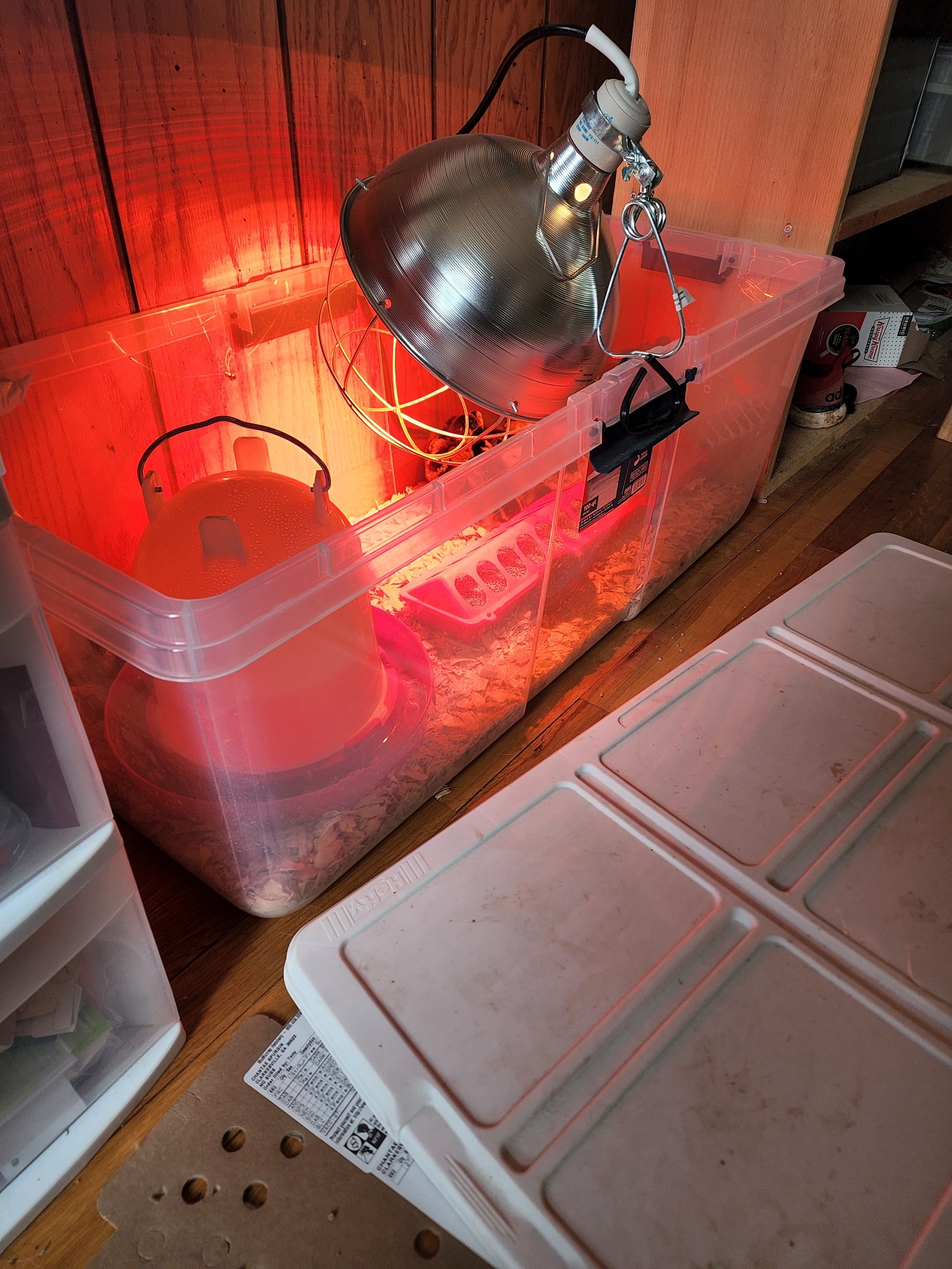
This is going to depend on how many babies you get. But you need a place to put them, a waterer, feeder, medicated chick feed, a heat lamp with red light and bedding. That’s really it. You don’t HAVE to use medicated chick starter but I do recommend it for baby chicks. It helps prevent coccidia in your flock and that my friends is huge. Coccidia and other parasites are the number one killer of all baby animals on all homesteads, except maybe predator’s.

Tractor Supply

When it comes to a place to put them, it really doesn’t have to be fancy. We use a plastic tote when we have to brood a smaller batch of chickens. There are 25 in here and this will only last about a week, maybe two. Once they have out grown this, *fingers crossed* they will go into the new chicken coop. You can read about our experiment with a metal chicken coop here . But they will stay here until it’s a “problem” and then they will be moved elsewhere. Usually if you are only brooding a couple up to maybe 6, this tote should be fine.

Approx 100Qt Plastic tote

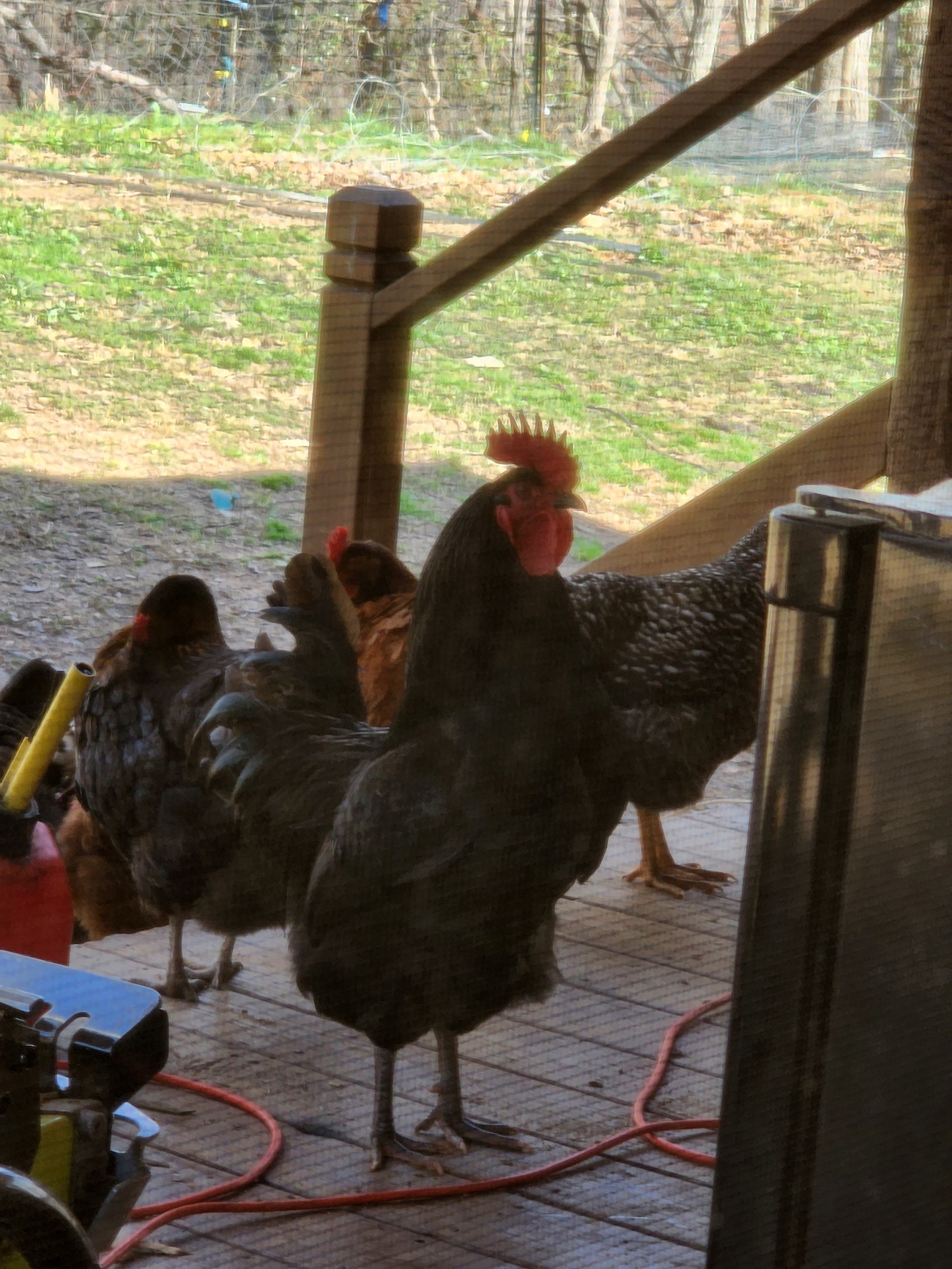
We put this tote in our living room for a couple of different reasons. Our other chickens like to come up onto the deck. Since having the chicks, the other chickens have been jumping up on the mini fridge out front to look through the window. This is going to help when the time comes to integrate everyone into the new coop. The other chickens know that we are brooding chickens in here. George and one of black stars have taken to keeping an eye on them.

George and his ladies trying to find the chicks

While you are brooding chickens, you want to try and maintain their temperatures around 90-95*. At this age, they are simply too little to regulate their own temperatures well. Every week you decrease their temps by moving the light higher and higher. If you notice your chicks staying away from the heat lamp or panting, move the heat lamp up because it’s probably too warm for them. Another thing you can buy to help gauge the heat is a Temp gun. These things are amazing for so many things beyond a chicken brooder.

If you are new to heating with firewood and are looking to master the finer points of it. We’ve got a great eBook that goes in depth of what tools you should consider, how and where to stack, how to build a fire and so much more!

Buy Now

The other reason we brood chickens in the living room is so they get used to us and our noise. We are hoping that being around us will socialize them better and we will be able to handle them more. There is also the added bonus of photo ops like this one.

Bear says “what is this thing”

This is the first time for us using a red light for heat. Since we have reptiles, we have an abundance of CHE (ceramic heat emitters) and we used those for our first two batches. Unfortunately, we had a couple issues with our meat chicks pecking each other. After doing some research I found out that chickens are attracted to red things and they are cannibals. They will peck each other and then once they see the blood, they will kill that chick. So we got this red light and we already had the lamp with caging. But the new one is so far so good. We got ours from Tractor Supply and love it.

Tractor Supply

When it comes to feeders and waterers, it comes down to size. When they are little, you don’t need a ton of feed and water but you do want to make sure that they don’t run out. You can find the feeder shown in the picture here. However, when that one breaks we will be switching to this one because the one we have takes up a lot of space and can really only be used for chicks. I like our waterer and we will continue to use it for chicks. When the ducks come, they will need a different waterer because they like to play in it.

Logo 468x60

Tips and Tricks

Socializing

So you’ve got your set up, got all the things. Now what? Love on those babies! Seriously. If you want happy chicks that will run up to you, love on them. Let your kids play with them. Socialize them to the point where they are excited to see you. We didn’t do that with our first batch and it’s hard to get them to come to us. Our meat chicks however, loved us. They would come running when you came outside and they would follow you around because they associated us with food.

If you have older children, around five or so, make this their chore. Giving kids an animal helps teach them responsibility, empathy, and kindness in a way that human to human interaction just doesn’t do.

Pasty Butt

Chicks will get what is called pasty butt. It’s a thing. The best thing you can do to combat this is apple cider vinegar in their drinking water. I do about a tablespoon in each time we fill up our 5 Qt waterer. You can absolutely do more but I wouldn’t do much less. If your chick does end up with pasty butt simply take a warm wet rag and GENTLY wipe it off. If you are too rough you can damage their vent and that is fatal.

The Ultimate Homesteader’s Starter Bundle – Only $47!

Get the tools you need to stay organized, track profits, and manage your homestead with ease!

Includes:
✅ Schedule F Tracker – Simplify tax prep
✅ Profit Calculator – Track earnings
✅ Hay Calculator – Plan livestock feed
✅ Garden Journal – Digital & printable
✅ Herd Health Tracker – Monitor animal care
✅ Simple Budget – Manage finances
✅ Backyard Homestead eBook – Essential tips

$99 value – now just $47! Start your homesteading journey today!

Buy Now

Feeding Your Chicks

Chicks only need the medicated feed for the first bag. Again this depends on how many chicks you have and what size bag. We buy a 50lb bag for 50 chicks. If you only have 5? Get the 5lb bag. Just use common sense on how much your chicks need. Feeding them more isn’t going to hurt them but not enough could.

Logo 468 x 60

What do you feed them after that first bag? Just regular chick feed. You do want about 20-24% protein until they are mostly grown, about 4wks-2months. Also make sure that it is crumbles for a while and once they get most of their feathers, you can switch to a pellet. After that we switch our laying hens to a layer feed. This keeps them from growing too fast but also have different nutrients for healthy chickens and eggs.

You can see that they have most of their feathers and now they are outside

How long do you brood chickens? About 3 weeks or once they are fully feathered, they can go outside into their coop or to free range. If it’s cold out, make sure to bring the heat lamp with them for nights. If it’s warm, make sure they have plenty of water.

Buying List For Brooding Chicks

Print Recipe
Equipment

Equipment

  • 1 Brooder Box
  • 1 Clamp Lamp
  • 1 Red light
  • 1 bag Pine shavings
  • 1 bag Medicated chick feed
  • 1 waterer
  • 1 feeder

That’s about it! If you have any questions about how to brood chickens feel free to comment below. Feel free to share this on your social media and like us as well!

If you like the content I put out, feel free to buy us a coffee! It helps keep this site running, marketing and the goats in grain!

Buy me a coffee

If you like this post, feel free to share it and follow us below on our social media accounts!
  • Facebook
  • Pinterest
  • Instagram
  • YouTube
  • TikTok
  • Spotify
  • Threads

Filed Under: Animals, Chickens Tagged With: Brooding, Chickens, Chicks, Eggs, Homestead

JOIN TO OUR MAILING LIST!

Leave us your email to receive new posts and special offers for members only! Don't miss a thing!

Recent Posts

  • Fall Garden Guide
  • Top Mistakes With Goats
  • How To Bond With Your Goats

Raised Bed Vs Row Gardens

February 3, 2024 by Leigh Leave a Comment

I see this question a lot when I am browsing social media and forums, “which is better, raised bed vs row gardens?” And every time, I answer, “whichever one gets you in the garden is the best.” Seriously, I don’t care what type of garden you have, if you are gardening, that’s a win in my book. But if you clicked on this blog, or read any of my posts, you know I’m not going to stop there. I am going to give you MY reasons for why a raised bed garden is better than a row garden. But I still maintain, that any garden is better than no garden!

Raised beds vs row gardens with a picture of a garden

Are you getting overwhelmed in the garden? Stressed? Or just not enjoying the garden like you used to? Check out our garden prompts! We send out weekly emails that get you back in the garden and out of your head! Turn the garden back into a place of love and joy instead of frustration and headache!

Subscribe Now!

Why Is The Question Raised Bed Vs Row Gardens?

I think the main reason for the question of which one is better is because people want a hard fast, concrete, right or wrong answer before they “waste” their time or money. But I am not one of those people. I want to have a whole conversation about WHY which one is better than the others. Plus, I figure it’s all about perspective anyways.

Benefits Of A Row Garden

Row gardens are exactly what they sound like, rows and rows of plants. Sometimes, there is trellising and stakes and sometimes not. Usually, though not always, there is a lot of tilling involved. This type of garden doesn’t require a ton of soil to be trucked in or building materials to be used. All you really need is a way to get your plants in the ground.

Row gardens can be very cheap to install and maintain because you don’t have to build anything. It’s as simple as digging up the ground enough to get your plants in the ground. It is suggested that you till just enough to get any rocks, weeds, etc out of the garden.

Another great pro to a row garden is that you don’t have to bring a ton of soil into the mix. Now, this assumes that you will be adding compost or organic matter to the bed or that you will be using cover cropping.

cropped-3.jpg

Are you looking for garden journal prompts, but aren’t interested in a weekly email? Check out our 365 Garden Journal Prompts! This is an amazing, all in one, yearly product that you only pay for once.

Buy Now!

Cons Of A Row Garden

There are a few cons to a row garden and number one is weeding! You will be on your hands and knees pulling weeds or using harsh chemicals to kill the weeds before they stunt your plant. Another option is laying a TON of mulch. But honestly, you should be mulching your garden anyways.

Another con to a row garden is going to be pests. Now, there are absolutely pests in raised beds, but they don’t seem to be as bad. Ant hills, spiders, scorpions, etc are all more likely to be found in a row garden than a raised bed. I have noticed that the only critters that are in my raised beds are tiny wolf spiders and Japanese beetles. The row garden? GIANT spiders, scorpions, grasshoppers, a million army worms and two million horn worms.

I don’t know why they don’t touch the raised beds, I just know that they don’t…. at least my beds.

If you are interested in learning more about my favorite garden planner. I highly recommend Seedtime! This planner has been instrumental in helping me plan out my gardens with WAY more efficiency than I could ever expect! It has also reduced overwhelm, stress, and calmed my ADD/ADHD!

More Info!

Benefits Of A Raised Bed Garden

There are a lot of benefits of a raised bed garden and the first is that it can be a back saver! Seriously, not having to kneel down, bend over and reach has been a life saver for my back. It’s has been amazing.

Then there is the fact that I have complete control of the soil? Yea, that’s another win in my book. We have extremely rocky, clay soil that is prone to erosion. Not only that, we live on a mountain so there are a ton of flat spots, steep inclines, etc so it is hard to get a garden to stay put. Every year, I add leaves, sticks, compost and animal bedding to my raised beds and the plants flourish.

Before we get too far into this post, I wanted to give a suggestion about keeping a garden journal. A digital garden journal is a fantastic way to keep track of past, present and future gardens. Our Digital Garden Journal is a great way to keep up with everything without getting too overwhelmed.

Buy Now

Lastly, harvesting has been a snap. While I still lose produce, it’s not nearly as bad as a row garden. Because most everything is at least a mid thigh height for me, I can actually see what needs to be harvested.

Cons of A Raised Bed Garden

Well, the first, and biggest, con to a raised bed garden is the cost. Depending on the size of the bed, materials, prefab-ed, etc, each bed can set you back several hundred dollars. That’s just the materials to build the bed. Then you have to fill the bed with materials and soil. This can ramp up the cost of a raised bed.

Which brings us to our next point. The amount of work to build and maintain raised beds can get both expensive AND labor intensive. The cost may not be a problem for you, but when it comes time to start filling those beds? You are in for a ton of work.

Depending on the size of your bed, you are going to be loading a ton of logs, sticks, leaves, soil, and compost until it’s mostly full. Then you are going to repeat this for several years as that material breaks down and settles.

The Ultimate Homesteader’s Starter Bundle – Only $47!

Get the tools you need to stay organized, track profits, and manage your homestead with ease!

Includes:
✅ Schedule F Tracker – Simplify tax prep
✅ Profit Calculator – Track earnings
✅ Hay Calculator – Plan livestock feed
✅ Garden Journal – Digital & printable
✅ Herd Health Tracker – Monitor animal care
✅ Simple Budget – Manage finances
✅ Backyard Homestead eBook – Essential tips

$99 value – now just $47! Start your homesteading journey today!

Buy Now

Why I Like Raised Beds Over Row Gardens

My personal preference is raised bed gardens. I love the way raised beds look. They are clean cut and help keep the lines of the garden pretty. It also helps with weeding because there just isn’t as many weeds to contend with.

Wear And Tear On My Body

I also really like the fact that I don’t have to kneel down and get on my hands and knees to plant, weed, mulch, etc. I can do it from standing or bending over or I can also sit on the edge of the bed and work. Also, I don’t have to worry as much about pest problems because they just don’t crawl up the beds like the do in the row garden.

When it comes time to harvest, I’m not having to get down on my hands and knees to find produce before it’s overripe. I can also see what is going to be ready for harvest a lot easier and there is a lot less wasted harvest.

Are you getting overwhelmed in the garden? Stressed? Or just not enjoying the garden like you used to? Check out our garden prompts! We send out weekly emails that get you back in the garden and out of your head! Turn the garden back into a place of love and joy instead of frustration and headache!

Subscribe Now!

But Raised Beds Are Expensive

However, there are some pretty major cons. Depending on the size of the bed, each bed costs about $150-$300 to build. Then to fill the bed takes a TON of labor. Now, I’m lucky enough that my boys are always looking for ways to earn extra money. So they are more than happy to do that manual labor for me. But if you don’t have that option, it can be very labor intensive or expensive.

Then there’s the soil cost.

Now, we mostly use logs, sticks and leaves as the foundation to our raised beds and that helps a ton. We usually fill the beds about 3/4 of the way full with woody products. Then we fill the rest with wood shavings or wood chips. After that, we add animal bedding, starting with the chicken bedding and then adding the goats. Then we fill with spent hay. After all that, we add soil.

Usually, our yearly soil cost is about $400-500 for the kitchen garden and another $800 for the big garden. We get our soil from a couple different places. We’ve been lucky that we have a neighbor that has a horse farm. She turns the manure regularly until it’s composted down into black gold. But sometimes, we still have to purchase soil. And it’s expensive.

So Which Is Better? Raised Bed Vs Row Gardens?

For me, a raised bed is better than a row garden. But that doesn’t mean that row gardens don’t have their place. In fact, I would say that if you don’t have a lot of money, row gardens are better. Or if you can’t do a lot of manual labor to set up raised beds, row gardens are better. But if you have access to the money, time and labor to set up a raised bed garden? I think raised beds are better.

cropped-3.jpg

Are you looking for garden journal prompts, but aren’t interested in a weekly email? Check out our 365 Garden Journal Prompts! This is an amazing, all in one, yearly product that you only pay for once.

Buy Now!

But remember, a garden is better than no garden. It doesn’t matter if it is a container garden on your apartment patio, an acre row garden, or 50 60ft long raised beds. A garden that produces food for you is the best garden.

If you like the content I put out, feel free to buy us a coffee! It helps keep this site running, marketing and the goats in grain!

Buy me a coffee

If you like this post, feel free to share it and follow us below on our social media accounts!
  • Facebook
  • Pinterest
  • Instagram
  • YouTube
  • TikTok
  • Spotify
  • Threads

Filed Under: Garden, Garden Projects Tagged With: Garden, Homestead, vegetable, vegetable garden

JOIN TO OUR MAILING LIST!

Leave us your email to receive new posts and special offers for members only! Don't miss a thing!

Recent Posts

  • Fall Garden Guide
  • Top Mistakes With Goats
  • How To Bond With Your Goats

What Do I Do With Bucks?

January 30, 2024 by Leigh Leave a Comment

Depending on how you run your homestead, you may start to realize that your male livestock and poultry don’t have a long life span. Or, maybe you aren’t used to the livestock way of life and are really struggling with the idea of butchering the males. Either way, you are probably asking yourself, “What do I do with bucks?” And the real answer is one that you may not like or it may not fit with your ideals. But I’m going to tell you what I do with my bucks.

What do I do with Bucks

Two goat kids in a field
goat kidding

Before we get too far into this, I have a great course on the basics of goat care. I call it Goat Crash Course: Goat 101. In this course, I explain things like types of shelter, types of feeds and hays, basic assessments and so much more! Check it out!

Buy Now

What Do I Do With Bucks?

Well, this entirely depends on your homestead goals, philosophies and needs. And that is something that you need figure out BEFORE you start breeding. Seriously, don’t get livestock or poultry and then not know what you are going to do with the animals. You will end up in a world of hurt. Ask me how I know.

Some of the ways that we handle the bucks on our farm is selling, castrating, and butchering.

Selling Bucks

We always try to sell any bucks that we don’t need for next seasons breeding cycles. But there are two very important criteria that have to be met before selling an uncastrated buckling. One, he has to come from good, hardy, proven lines. Two, he has to have good conformation, size, and disposition. If he doesn’t meet those criteria, he is castrated.

We do everything in our power to only sell uncastrated males that hit those criteria. The reason why those criteria are so important to us is the heavy losses we have sustained on our farm due to unhealthy kids and weak genetics. We don’t want to spread that to other farms. It has taken years for us to finally get our herd genetics figured out and sending out weak goats isn’t something I’m interested in.

If for some reason, we cannot sell a solid and healthy buckling by ten weeks, he is castrated.

goat kidding

Before we get too far into this, I have a great course on the basics of goat care. I call it Goat Crash Course: Goat 101. In this course, I explain things like types of shelter, types of feeds and hays, basic assessments and so much more! Check it out!

Buy Now

Castrating Bucks

If we cannot use a buck on our farm, we cannot sell him, or he doesn’t meet our criteria, he is castrated. We do this by banding around ten to twelve weeks and putting him in the buck pen. If he met our criteria but we couldn’t sell him, then we attempt to sell him as a wether or pet. Unfortunately, bucks and wethers are not as sought after as does. So this happens a lot.

I don’t want to sell any inferior goats. Goats have become increasingly fragile for a lot of reasons like; overbreeding, poor genetics, breeders just trying to make a dollar, and overuse of medical interventions. Because of all these things, it’s really hard to guarantee the health of a goat. Weak goats don’t make it through winter and you are stuck digging a hole in the frozen ground.

So to keep from spreading weak genetics, we are very strict when it comes to who is leaving our farm.

Butchering Bucks

Unfortunately, we cannot afford to feed a bunch of goats that don’t have a purpose. It’s the reality of farm life. And it HURTS! I didn’t grow up like this and I still struggle with the idea of culling members of the herd. But it’s part of responsible breeding and, PLEASE, breed responsibly. Goats are so fragile to start with and irresponsible breeders are out there just selling kids to make a dollar. That’s not doing anything to improve the situation.

When it comes to deciding who gets butchered and who stays, we have made it easy on ourselves. Well, as easy as this decision can be. If the buck doesn’t meet our criteria, he is castrated and will be butchered. If we are not using him for breeding, he gets sold. If we can’t sell him by ten to twelve weeks, he is castrated. If we cannot sell him as a wether, he is butchered.

Unfortunately, this is the life we lead.

The Ultimate Homesteader’s Starter Bundle – Only $47!

Get the tools you need to stay organized, track profits, and manage your homestead with ease!

Includes:
✅ Schedule F Tracker – Simplify tax prep
✅ Profit Calculator – Track earnings
✅ Hay Calculator – Plan livestock feed
✅ Garden Journal – Digital & printable
✅ Herd Health Tracker – Monitor animal care
✅ Simple Budget – Manage finances
✅ Backyard Homestead eBook – Essential tips

$99 value – now just $47! Start your homesteading journey today!

Buy Now

Our Does Get The Same Treatment

And just so everyone is clear, this is the same criteria we use for our does. Just without the castration part. If a doe requires deworming, we don’t breed her and she will go to the butcher. If she is sickly, she gets butchered. We don’t try to sell our does as a rule. The main reason is we want the milk.

If she doesn’t fit our requirements, there’s a really good chance she isn’t a solid goat and we don’t want to put out inferior goats. Maybe in a few years, when we have our established lines and have enough milk goats, we will think about selling our does. But for right now, we are standing by our standards.

Dealing With The Emotions Of These Decisions

I will say it again, we didn’t grow up like this. We were taught from a young age that you care for animals. You don’t kill them because they don’t “meet your criteria“. You get your meat from the grocery store like everyone else. I talked extensively about livestock are not pets in this blog post, and it’s very hard to stand by these criteria and make these decisions.

This whole situation and subsequent conversations, can create a very difficult and emotional rollercoaster ride. But I have found that when you pick a goal, set perimeters for that goal, and measure EVERYTHING against that goal? It makes these decisions a LOT easier.

But don’t get it twisted, it’s still hard.

If you are new to heating with firewood and are looking to master the finer points of it. We’ve got a great eBook that goes in depth of what tools you should consider, how and where to stack, how to build a fire and so much more!

Buy Now

Since getting into goats, we lost at least two goats a year until we implemented this criteria. We lost beloved pets because we didn’t want to make the hard decisions. We bred for milk, not for healthy kids. We thought overusing medical interventions was normal.

We did it wrong

Since making the decision that we were going to breed for hardiness first, then milk, then meat, we have had a lot less death on the homestead. We have placed beloved goats on the cull list, and it’s a hard decision to make. It feels terrible to take them to the slaughter house, but I will NOT sell inferior goats. Because I will not be part of the problem.

What’s more heartbreaking? Losing a goat to the cold because she wasn’t strong enough to survive it or butchering a goat that was raised in a healthy, happy, loving environment?

Is it better to perpetuate a vicious cycle of over deworming or only breed hardy, parasite resistant goats?

Is it better to make a dollar on any kid, or only produce top notch animals that don’t require medical intervention?

These are all decisions that you will HAVE to make if you are getting into livestock that will have a purpose. I’m not going to say that either side is right or wrong. I AM going to say that when we are making decisions on our farm, these are some of the questions we ask ourselves.

Because we are tired of sickly goats that don’t survive winter. We are tired of digging new holes in the pet cemetery.

If you like the content I put out, feel free to buy us a coffee! It helps keep this site running, marketing and the goats in grain!

Buy me a coffee

If you like this post, feel free to share it and follow us below on our social media accounts!

  • Facebook
  • Pinterest
  • Instagram
  • YouTube
  • TikTok
  • Spotify
  • Threads

Filed Under: Animals, Goats, Homestead Planning Tagged With: Butchering, Freezer, Goats, Homestead, meat goat

JOIN TO OUR MAILING LIST!

Leave us your email to receive new posts and special offers for members only! Don't miss a thing!

Recent Posts

  • Fall Garden Guide
  • Top Mistakes With Goats
  • How To Bond With Your Goats

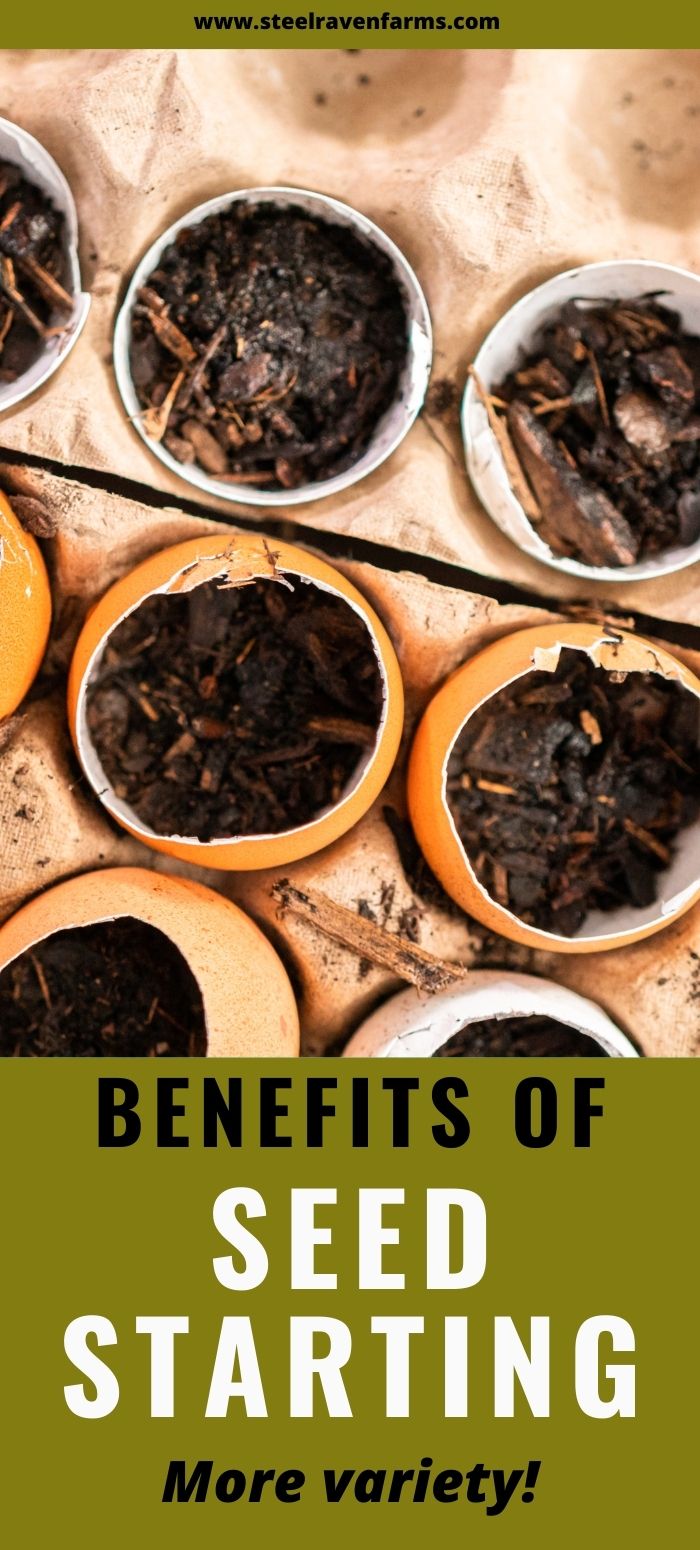
Benefits Of Seed Starting

January 27, 2024 by Leigh Leave a Comment

A lot of people buy their plant starts from big box stores and I don’t think that is necessarily a bad thing. I purchase plant starts from big box stores and nurseries, but there are so many benefits to starting seeds yourself. I think a lot of people think starting seeds is more labor intensive than they are interested in, and they would be right. Or, and I think this is more accurate, people don’t know HOW to start seeds.

cropped-3.jpg

Are you looking for garden journal prompts, but aren’t interested in a weekly email? Check out our 365 Garden Journal Prompts! This is an amazing, all in one, yearly product that you only pay for once.

Buy Now!

Benefits Of Starting Seeds

Oh, let me count the benefits of seed starting. But in all seriousness, there are a ton of benefits but I’m going to limit this post to three main areas; varieties, skills and saving money. There are thousands and thousands of varieties out there! Plus, if you learn how to start your own seeds, you will not only save money and build skills, but you also get to try all these amazing varieties!

Trying Different Varieties

Big box stores have to purchase/ sell plants based on what customers will buy. Nurseries start plants based off of what big box stores will buy. Because of that, you are just not going to find the rare, weird or amazing varieties in a store. Sure, some nurseries will start that odd ball tomato variety, but the reality is that you will be limited on what you can choose from.

Save on Seeds

Y’all, there are literally 10,000 varieties of tomato seeds! And you are only getting the choice of maybe 20. Maybe.

Also, when you start your own seeds, you can get local varieties that do well in your location. Some tomato plants don’t do well in the oppressive southern heat but if that’s the only variety available at the big box store? Your tomatoes may shrivel up and die before you ever harvest anything off it.

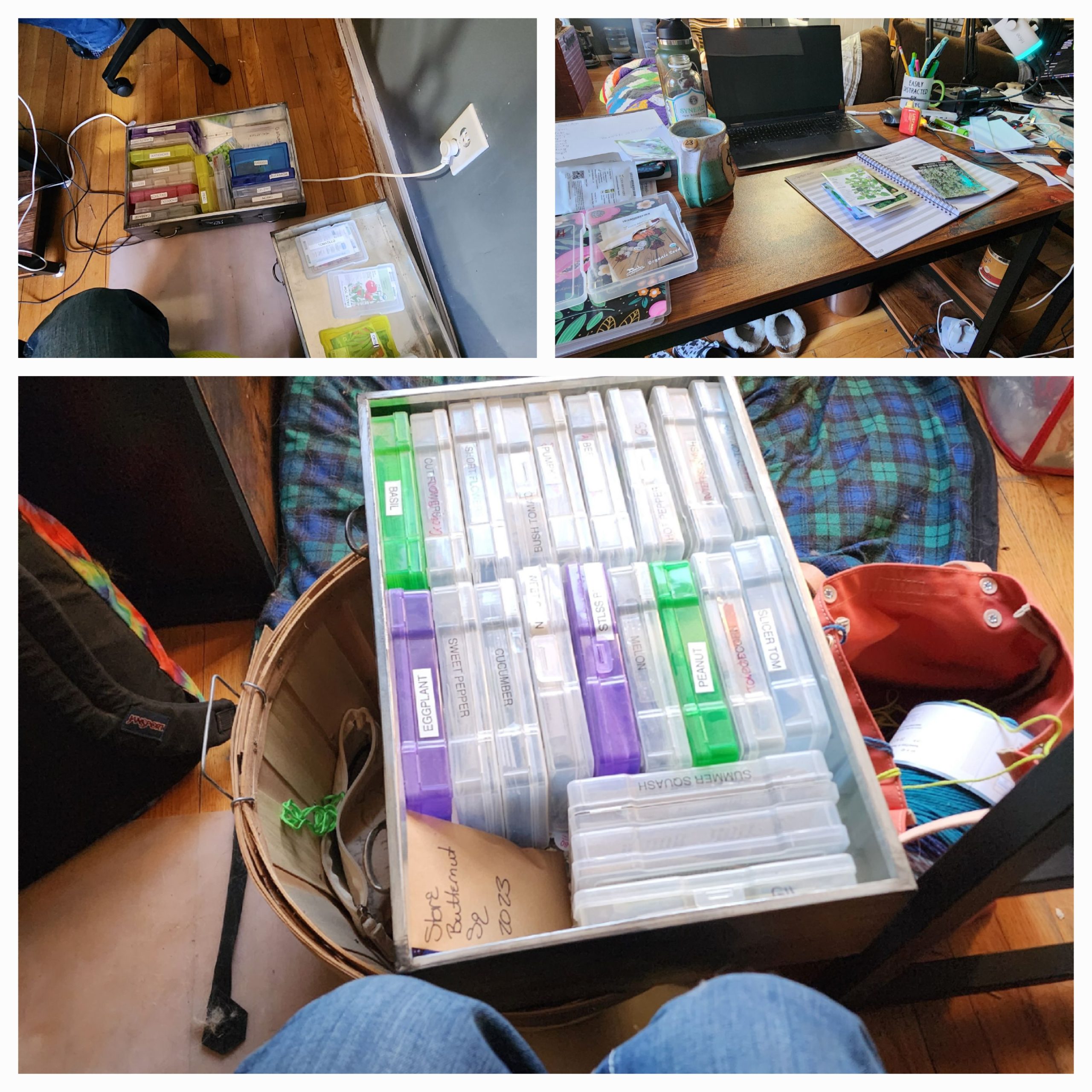
In my seed inventory, I’ve got about 30 varieties of tomato, 10 variety of cherry tomatoes, 25 different hot peppers, 10 different sweet peppers, and 10 different varieties of corn. That’s just a few of them!

Logo 468x60

Learning New Skills

The benefits of starting seeds isn’t limited to saving money and varieties, it also grows your gardening muscle. I talked about gardening being a skill in this blog post, but it really only talks about growing the garden. There are so many more skills to learn when it comes to gardening and starting seeds is a HUGE skill that a lot of people think they can’t do.

When you take the time to really learn how to grow something from seed, you are taking back more of your independence. And to be honest, starting your own seed really isn’t that hard. Sure, there are more steps that you have to remember and it’s not as easy as dropping a plant in the ground. You’ve got to baby seeds for a little bit.

One of the areas that I have been working hard on is my seed starting and garden planning. I use Seedtime . I’ve been using it to track seed starting, garden plans and more. I’ve really enjoyed using it!

If you are interested in learning more about my favorite garden planner. I highly recommend Seedtime! This planner has been instrumental in helping me plan out my gardens with WAY more efficiency than I could ever expect! It has also reduced overwhelm, stress, and calmed my ADD/ADHD!

More Info!

But it really is as simple as putting seeds in dirt, keeping the soil damp (not drowning) and giving it some light. Everything else just makes it easier.

Saving Money

Now, in theory, you will save a TON of money by starting your own seeds. Unless you are a seed hoarder… In which case, you will still save money, but definitely not as much as you could. But there are tons of ways that starting your own seeds can save you a ton of money. Like the amount of seeds you get in a seed packet is MORE than enough to start a years worth of plants. Or the fact that a single cabbage plant at a box store is going to be $3-5 but only yields one vegetable.

Seed Packets

Seed packets are amazing little gifts that are totally underrated. I would LOVE my entire Christmas/ Birthday presents to be nothing but seed packets. Why? Because it’s literally the gift that keeps on giving. That person is giving me the gift of FOOD, mental health, and building my gardening skills. Plus the ability to feed my family. How awesome is that?!

A standard seed packet is usually 3x4in, holds about 10-100 seeds and is usually around $2-5. The reason for the range totally depends on the seed. I’ve got a pack of tomato seeds that are $7 for 10 seeds. But it’s a variety that does well in cooler weather. Why would I need that? Because I can start it earlier and harvest tomatoes sooner, or I can plant it later and harvest tomatoes into October/ November.

Check out our Microgreens at True Leaf Market

Buying Plant Starts

I’ve bought plant starts and I will probably always buy some starts. There are some plants that are just easier to purchase from a store or nursery. Things like onion, potato, strawberries, garlic, and flowers. But to save money, I start all of my tomatoes, peppers, brassicas, sunflowers, pumpkins, squash, and more.

To give you the best example, at the big box stores a cabbage plant is $3-5 but at the store a cabbage is usually less than $1. That doesn’t make any damn sense. Let’s not mention that the cabbage plant is going to bolt in a matter of weeks because you can’t grow a baby cabbage plant, in May, in the south!

Tractor Supply

But when we are talking about other plants like tomatoes, peppers, pumpkins and squash, you really want to at least TRY to start seeds. If it doesn’t work, go get your starts from the store and try again next year. Again, a seed packet is, on average, $3 and gives you about 30 seeds. Even at 50% germination (and it will probably be more like 99%) you will end up with 15 plants. A big box store will sell those same plants for $5 each. You are saving $72 on 15 plants! But if you get all those seeds to germinate and grow, you are looking at saving $147! That’s just one seed packet.

I know it sounds sales-y but I promise you, if you have good soil, good light and a fair amount of heat, you can save hundreds of dollars on your garden.

Save on Seeds

My Seed Stash

My seed stash is valued somewhere in the ballpark of $1200. That doesn’t count the boxes or other storage. And yes, that is a LOT of money. And NO, you don’t need to invest that kind of money into your seed stash. In fact, with the right discount codes, I could grow my entire 50×100 garden with only $100. But…. my name is Leigh and I am a seed hoarder. Though, I prefer the term seed collector.

Now, I LOVE starting seeds for a lot of reasons. The first is that I get to play in the dirt earlier. I start my cool/cold loving plants in February and put them in my greenhouse. If you don’t have a greenhouse, you can absolutely put them on a shelf next to a window or get yourself some cheap shop lights.

Check out our Microgreens at True Leaf Market

The second reason I love starting seeds is because of variety! When you go to the grocery store, you are getting produce that is grown for a grocery store. That means the variety must grow to consistent size, ship well, and be able to sit on a shelf for a far amount of time. All of these things have a sacrifice and it’s usually flavor.

When you start your own seeds, you get to start the weird varieties. Like a tomato that is all black or a melon that looks like a winter squash and tastes like candy. But more importantly, you get a fruit or vegetable that is packed with flavor.

Logo 468x60

What Are Your Favorite Benefits Of Seed Starting?

I would love to hear from you! Drop your favorite varieties in the comments!

If you like the content I put out, feel free to buy us a coffee! It helps keep this site running, marketing and the goats in grain!

Buy me a coffee

If you like this post, feel free to share it and follow us below on our social media accounts!
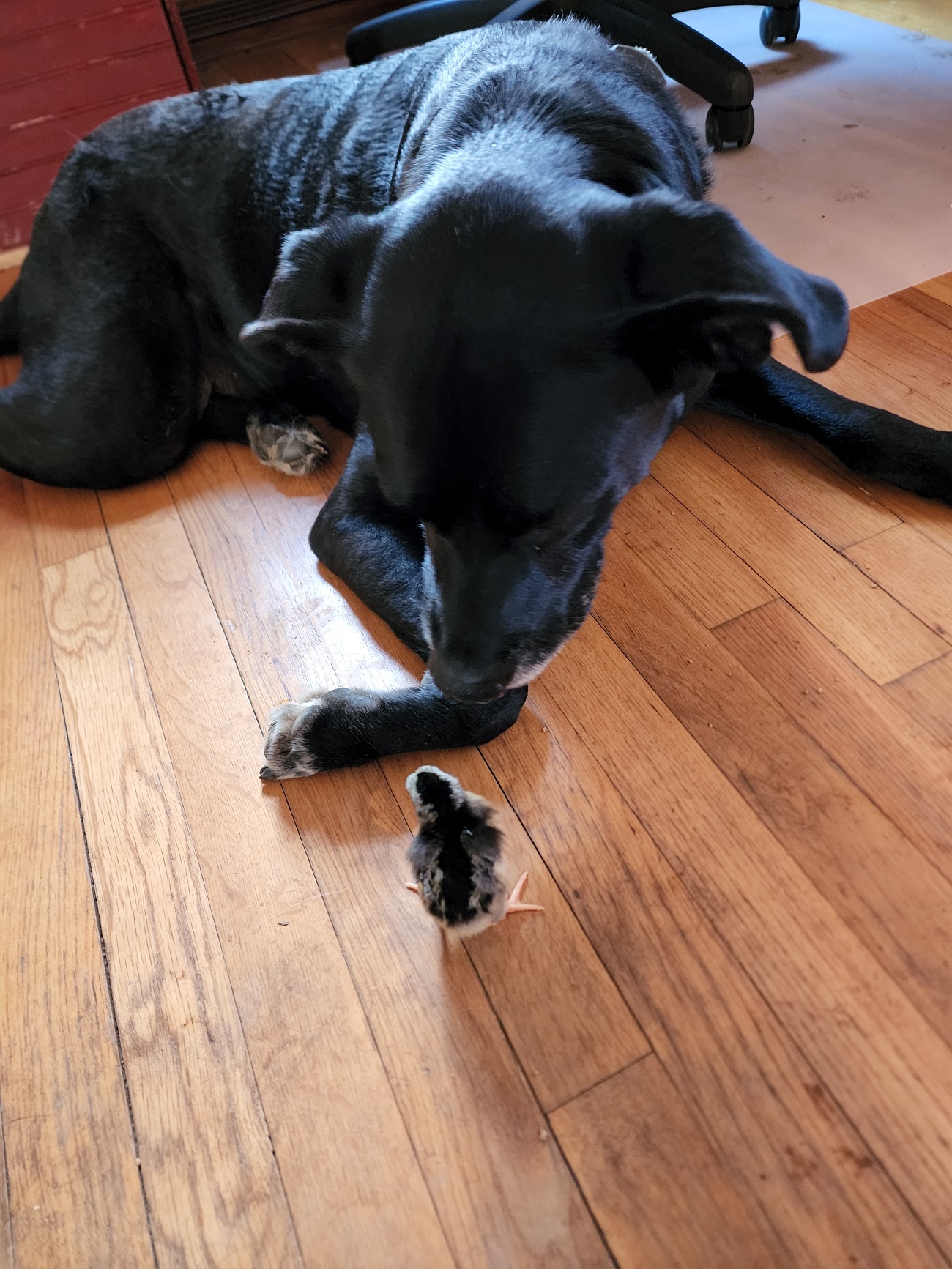
  • Facebook
  • Pinterest
  • Instagram
  • YouTube
  • TikTok
  • Spotify
  • Threads

Filed Under: Garden, Seeds and Plants Tagged With: Garden, seed starting, seeds

JOIN TO OUR MAILING LIST!

Leave us your email to receive new posts and special offers for members only! Don't miss a thing!

Recent Posts

  • Fall Garden Guide
  • Top Mistakes With Goats
  • How To Bond With Your Goats

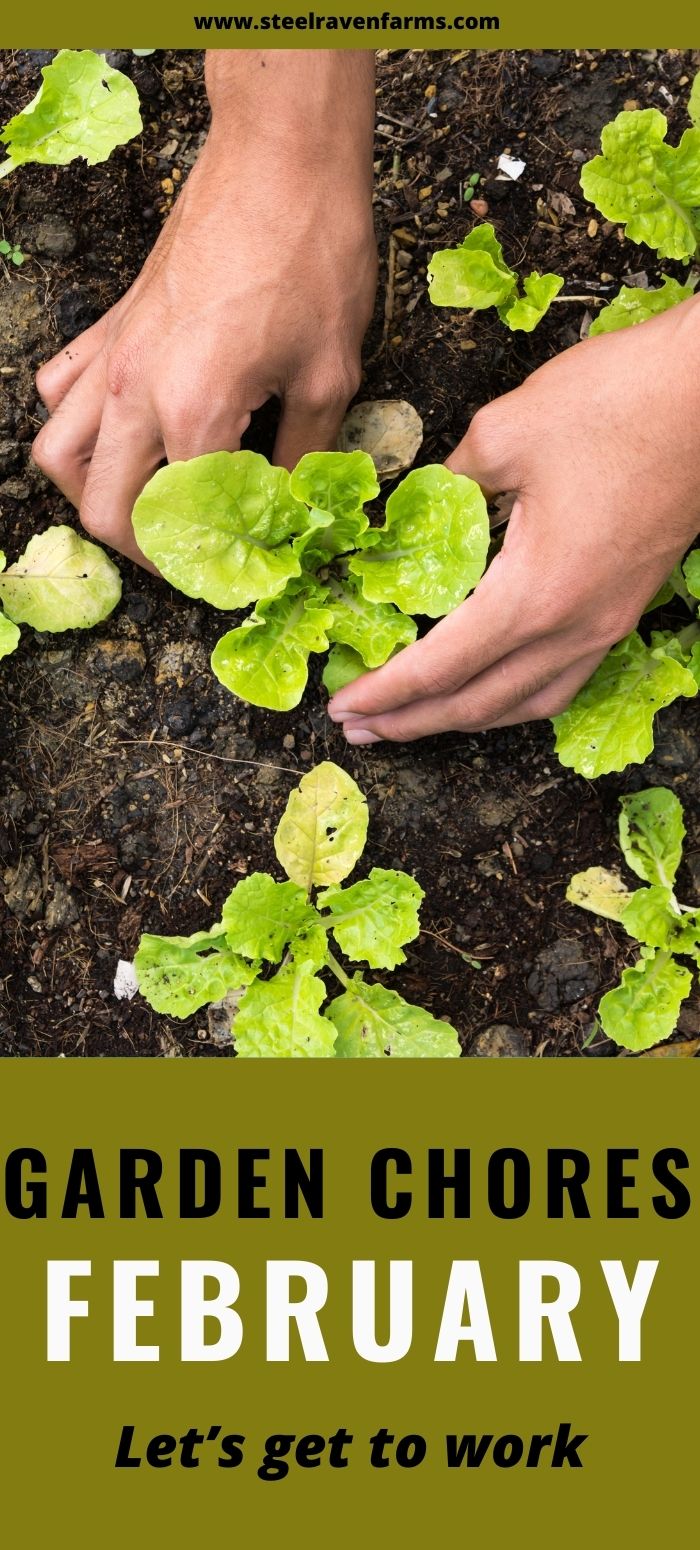
February Garden Chores

January 23, 2024 by Leigh Leave a Comment

This is an exciting time for those of us that are getting ready to start seeds. Steel Raven Farms is located in Northeast Georgia, in the foothills of the Appalachian Mountains. We are in zone 7b, even though I don’t really keep track of that. But this time of year is really when I start working on February garden chores and really start on getting my garden stuff going.

cropped-3.jpg

Are you looking for garden journal prompts, but aren’t interested in a weekly email? Check out our 365 Garden Journal Prompts! This is an amazing, all in one, yearly product that you only pay for once.

Buy Now!

February Garden Chores

First and foremost, there is a never ending list of homestead chores that need to be done. But February is a weird month for us. We’ve got goat kids being born, projects getting finished up and prepping for spring planting. And it’s COLD! The very last thing most people are thinking about is a garden. But I know that in just a few short weeks, the weather will turn and we will start warming up.

As far as February garden chores, we are looking at finalizing garden plans, checking seed inventory, checking our garden stuff, and starting seeds. Some of these things will take place towards the start of the month and others will depend on the weather but for the most part, these are the things we are doing in February.

Finalizing Garden Plans

As we are moving out of January, we are still finalizing garden plans. This looks a little different for everyone depending on how you are planning your garden. But for us, we are still in the process of giving our big garden a facelift. So I don’t want to put a ton of effort into planning a space when I don’t know EXACTLY how much space I’m going to have.

But garden plans are not just the physical structures of the garden, though that is a huge part of garden plans. In this case, I’m talking about what I can put IN those structures. This is the time were I am making sure that I have plenty of space for all of the things I want to plant.

Now, I know that regardless of whether my beds are build or not, there will still be plenty of room to plant all the tomatoes, peppers, squash, and all the other delicious veggies. But I do want to ensure that I have plenty of space, seeds, pots, and other things make this years garden a success.

Checking Seed Inventory

I’ve got a whole blog post/ page on creating a seed inventory. This can look like a notebook or a spreadsheet but it is surprisingly important to have some sort of system that tells you exactly what seeds you have on hand. I’ve created a digital seed inventory that you can purchase here, or you can make your own. But now is not the time to buy seeds!

If you are just starting your gardens, then yes, buy the seeds. But if you have a ton of seeds and you don’t NEED to purchase seeds for this years garden, wait till summer! Most seed companies will start putting their seeds on sale in the middle of summer and that is the time to stock up. Plus, come summer, you will have a better idea of what plants are doing well for you and which aren’t.

All that being said, start looking at what seeds you have on hand and match that up to your garden plans. Do you have enough tomato seeds? Which squash was resistant to bores? Which sweet pepper did you love? All of this information should be either in your seed inventory or your garden journals.

Are you getting overwhelmed in the garden? Stressed? Or just not enjoying the garden like you used to? Check out our garden prompts! We send out weekly emails that get you back in the garden and out of your head! Turn the garden back into a place of love and joy instead of frustration and headache!

Subscribe Now!

Prepping Your Garden Stuff

Again, this looks different for everyone, but February garden chores wouldn’t be complete without checking your supplies. Do you have enough compost, soil or amendments? Do you have a fresh garden journal? Are your tools clean and sharp? Do you have enough pots to start your plants?

You would be surprised to find that you need to start sourcing some of these materials NOW before you get too far into the season.

For me, I am making sure that I have plenty of soil and compost, my pots are clean and sanitized, my greenhouse is ready, and I’m good to go! Jared will usually go through and start sharpening tools, finish any big projects that need to be done in the garden and help me with seeds.

Starting Seeds!

This is it, ya’ll! Every single gardener is chomping at the bit to get their gardens started and I am no different. My last frost is supposed to be around April 15th. But I can go ahead and start a fair amount of cool weather, frost hardy things now! Things like cabbage, broccoli, cauliflower, kohlrabi, etc can all be started in my greenhouse without risk of damage.

But there are some summer things we can start now too! I wait till I’m closer to March before starting too many tomatoes and peppers but I will start a tray and put them in the greenhouse around mid February. This is an experiment more than anything, because I want to see just how well my greenhouse stays warm.

But don’t go too crazy with starting your seeds. If your last frost is around the same time as mine, it’s easy to get caught up in the hype of starting seeds early. But remember, the more you start at once, the less bumper crop you will have later.

Pro Amateur Tips For February Garden Chores

Start A Garden Journal

If you haven’t already, start setting up your garden journal! I’ve talked about the importance of journaling here, but garden journals are a must if you are going to “take your garden seriously”. By that I mean, if you want to learn from your garden and grow your gardening skills, then you should make sure that you are writing down what is happening in your garden.

If you’re not sure what to write about, I’ve got my 365 Day Garden Journal Prompt that you can purchase below!

cropped-3.jpg

Are you looking for garden journal prompts, but aren’t interested in a weekly email? Check out our 365 Garden Journal Prompts! This is an amazing, all in one, yearly product that you only pay for once.

Buy Now!

This is also a great place to write down all the seed varieties you grew for the year and how they did for you. This will keep you from purchasing seeds that don’t work for you or remind you of what did well.

Seed Inventory

I have two different ways I track my seed inventory. One is my digital seed inventory and the other is an account ledger book. The reason is twofold. One, I love redundancy. Two, I love having paper copies. There is something about handwriting something that sticks in my brain better.

But having that digital copy of my seed inventory tells me where I bought the seed and has links which is amazing! So no matter if you are super techy or ole school, (or in my case both), make sure that you’ve got something to help you track your seeds!

Don’t Start A TON Of Summer Seeds Yet

I know it’s tempting to start a ton of seeds because you’ve got your hands in the dirt and it’s exciting! But please! Don’t start all of your peppers, tomatoes, cucumbers, etc all at once!

Space out your plantings by about two weeks. This ensures a longer and more spread out harvest, but also won’t wipe out your seed stash if you get a freak storm.

As always, don’t be afraid to try new varieties and have fun! It’s great being a student of the garden!

If you like the content I put out, feel free to buy us a coffee! It helps keep this site running, marketing and the goats in grain!

Buy me a coffee

If you like this post, feel free to share it and follow us below on our social media accounts!
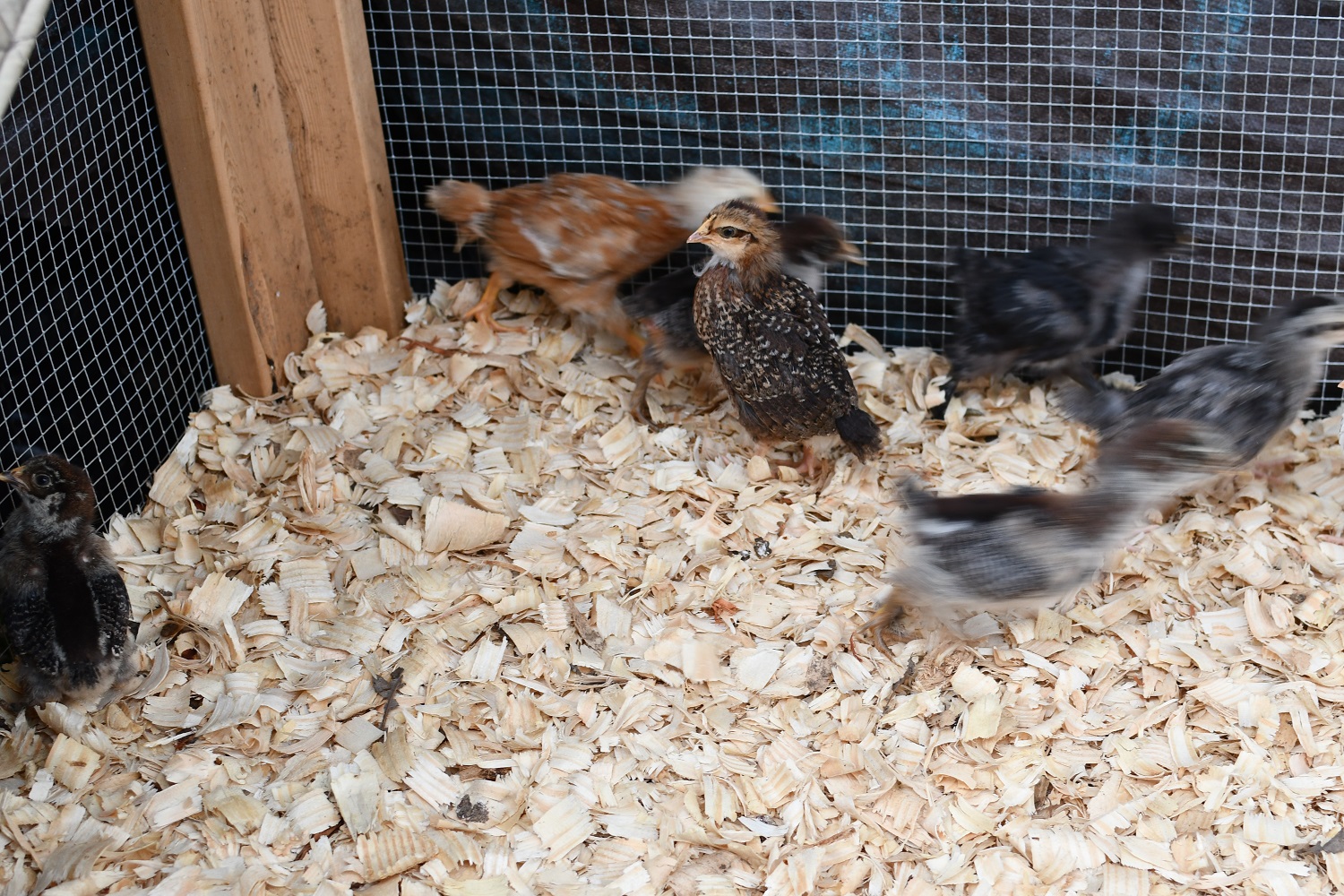
  • Facebook
  • Pinterest
  • Instagram
  • YouTube
  • TikTok
  • Spotify
  • Threads

Filed Under: Garden, Seeds and Plants Tagged With: by month, Chores, Garden, Homestead, kitchen

JOIN TO OUR MAILING LIST!

Leave us your email to receive new posts and special offers for members only! Don't miss a thing!

Recent Posts

  • Fall Garden Guide
  • Top Mistakes With Goats
  • How To Bond With Your Goats

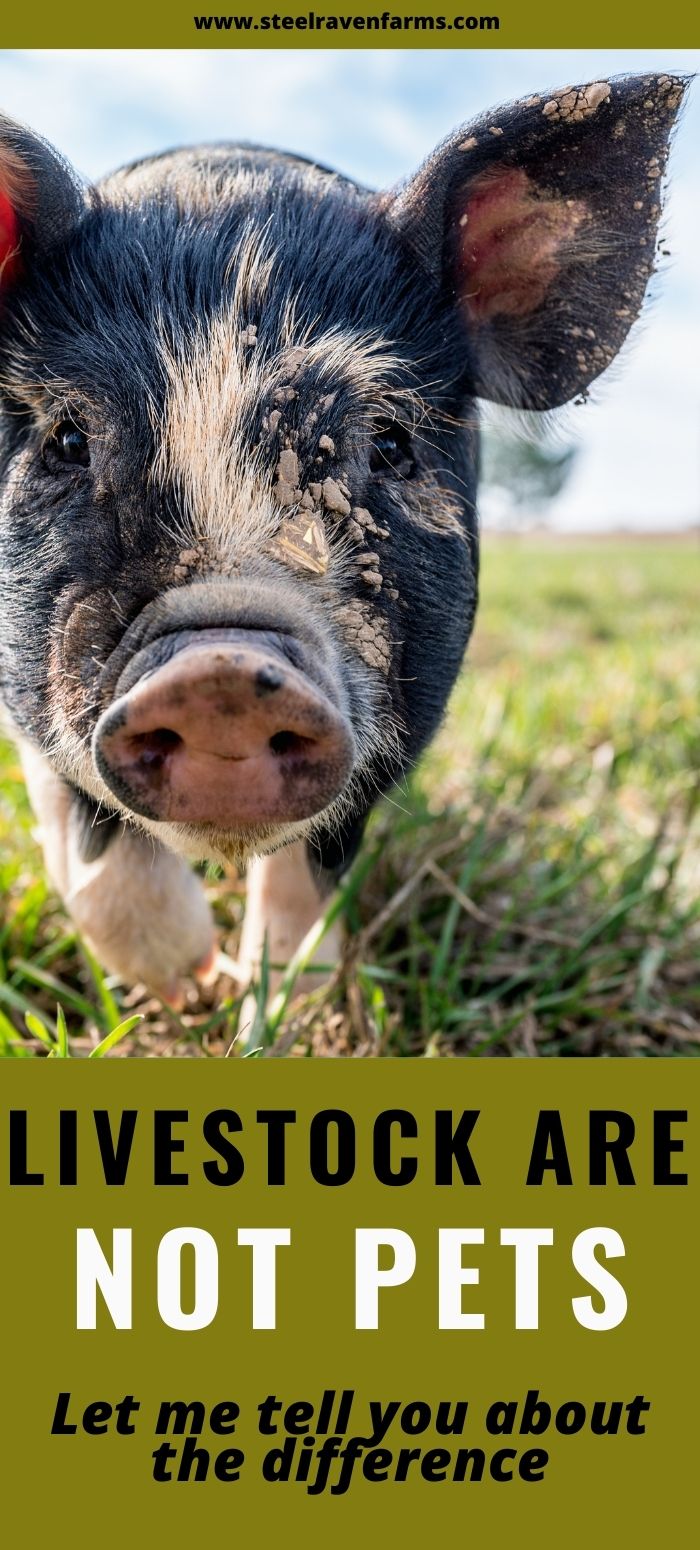
Livestock Are Not Pets

January 20, 2024 by Leigh Leave a Comment

If you did not grow up on a farm or with livestock animals, it may be a foreign concept of raising animals for meat. It could bother you that people, like myself, butcher animals for meat. It’s difficult for a lot of people to wrap their mind around the fact that I can genuinely love my animals, yet I’m still able to put them in the freezer. But that’s because I have realized that livestock and poultry are not pets and that helps a lot. Before you click off this blog post, stick with me and I will explain more about how people can raise an animal and then butcher it. Maybe then, you can understand why people like me choose to raise our meat.

goat kidding

Before we get too far into this, I have a great course on the basics of goat care. I call it Goat Crash Course: Goat 101. In this course, I explain things like types of shelter, types of feeds and hays, basic assessments and so much more! Check it out!

Buy Now

Livestock Aren’t Pets

Now, you can absolutely have livestock animals that you bought with the sole purpose of it being a pet. But before we get too far down this rabbit hole, we need to discuss some things first. Like, the definition of livestock and poultry, what is a companion animal, why people choose to raise their own meat, and why we need to respect those decisions.

Remember, stick with me! Don’t get upset and storm off because you don’t like what I have to say. I mean, obviously you can, but if you truly want the answer to “how can you slaughter something you raised” stick around and find out.

What Is Livestock And Poultry

The Oxford Dictionary defines livestock as “Domestic animals kept on a farm for use or profit; esp. cattle, sheep, and pigs.” And poultry as “Domestic fowl collectively; birds which are commonly reared for their flesh, eggs, or feathers, as chickens, ducks, geese, turkeys, etc.“

The reason this is important is that a lot of people confuse ALL animals with pets or companion animals. They think that all animals that are kept by people should be raised but not butchered. Because that is the lens in which they see animals. They’ve never been on a farm or raised an animal knowing that it’s entire purpose is to end up in the freezer.

Which makes me wonder who they think raises the meat they get at the grocery store?

What Is A Companion Animal

I’m not going to pull out the dictionary for this one but I define a companion animal as a pet. This could be a dog, cat, gerbil, or even a pig or goat. And we have PLENTY of these on the homestead. These animals don’t really have a job, they aren’t an asset or really have a use other than companionship.

Champ is a goat and companion animal. She will live out the rest of her days here on the farm with no use. When she dies, she will be cremated. BUT she started out as livestock. Her original purpose was to give us milk and babies and she did that. Now that she is older, she has earned her retirement.

But what a lot of people don’t seem to understand is that my herd, and most peoples herd, of goats are not companion animals. They have a purpose: Milk, Money or Meat. While I don’t WANT to butcher any of my goats, I know that it is a reality that I will have to deal with. Especially because I want milk.

BeBe and Rory are not companion animals, they are livestock. They will be butchered as soon as they hit 75# or we head into winter, whichever comes first.

Answering Questions With Questions

To answer the question of why we raise our own meat, the answer is another question, actually a couple. Have you ever seen where livestock is raised? I’m not talking about the fields dotted with cattle and chicken or woods with pigs. I’m talking the pig houses, chicken houses or CAFOs. Have you seen what those animals are fed? Do you know where that feed comes from? Do you have any knowledge of ruminant biology?

I don’t ask these questions to be rude or nasty. I ask them because if you have never seen any of those things, I can understand why you would be confused. I can understand why you ask “why raise your own meat?”

Why We Raise Our Own Meat

Now, to be completely transparent, we don’t raise cow or pig on the homestead. We tried to raise pigs and it was a colossal failure meat-wise. We will try again when we are in a better position…maybe. But we do raise our own chicken and goat. That may not seem like a lot, but we just don’t have the infrastructure to raise cows yet. Building pasture for cattle and goats is a big goal for 2024.

In the mean time, we source our beef from a local farm that raises grass fed beef. We source our pigs from someone who raises pasture pork. We purchase meat in bulk instead of relying on the grocery store.

The reason is because we want the animals that are being raised for meat, to be animals. Pigs root and wallow. Cattle should walk around and eat grass. Chickens should scratch and peck. Goats should scream and eat grass. That is what they are SUPPOSED to do.

Industrial Agriculture

Industrial agriculture has created these confinement systems to hold huge groups of animals together, feed them low grade antibiotics and grains, pack them onto trailers and send them to the processor.

The amount of stress those animals endures is not okay. In fact, it’s inhumane. Animal welfare is not at the top of industrial agriculture’s list of priorities.

Like most homesteaders, I choose to source or raise the meat my family is going to consume as humanely as possible. I want animals that are raised as natural a diet as possible. I want animals that have only one bad day.

Respecting Decisions

I’m not sure when we became a country that isn’t allowed to have differences of opinions. But what I will say is that no matter where you fall on the meat eating/ raising spectrum you fall on, respecting other’s decisions is a key part of being an adult. If a person chooses to only source their meat from local farms, great. If a person decides to go to the grocery store, great…. I don’t have to like it.

I can desperately want to take them to the different chicken farms around here and show them how these animals are raised, shoved into cramped boxes, transported in the rain, heat, etc. I want show them where these animals are unloaded and butchered.

But I can’t do that. I have to respect their decision.

But the beautiful thing about a blog?

I can also show you my operation. I can show you transparency.

I can talk about all of the crazy things my chickens and goats do.

In doing those things, my hope is that you make the decision to source your food locally. From farmers who really do love their animals, instead of industrial ag….

If you like the content I put out, feel free to buy us a coffee! It helps keep this site running, marketing and the goats in grain!

Buy me a coffee

If you like this post, feel free to share it and follow us below on our social media accounts!

  • Facebook
  • Pinterest
  • Instagram
  • YouTube
  • TikTok
  • Spotify
  • Threads

Filed Under: Animals Tagged With: Ducks, ethical meat, Goats, Homestead, livestock

JOIN TO OUR MAILING LIST!

Leave us your email to receive new posts and special offers for members only! Don't miss a thing!

Recent Posts

  • Fall Garden Guide
  • Top Mistakes With Goats
  • How To Bond With Your Goats

Butchering The Pigs*****TrIgGEr Warning****

January 19, 2024 by Leigh Leave a Comment

Steel Raven Farms
Steel Raven Farms
Butchering The Pigs*****TrIgGEr Warning****


Loading


00:00
/


RSS Feed

Share


Link

Embed

Download file | Play in new window | Recorded on January 19, 2024

Here is your warning. On this episode we are talking about butchering the pigs.

If you don't wan to hear it? Don't listen!

Filed Under: Our Homestead Tagged With: Butchering, Freezer, homesteading, meat, Pigs

JOIN TO OUR MAILING LIST!

Leave us your email to receive new posts and special offers for members only! Don't miss a thing!

Recent Posts

  • Fall Garden Guide
  • Top Mistakes With Goats
  • How To Bond With Your Goats

Let’s Chat About The Hard Stuff: Death and Birth

January 18, 2024 by Leigh Leave a Comment

Steel Raven Farms
Steel Raven Farms
Let's Chat About The Hard Stuff: Death and Birth


Loading


00:00
/


RSS Feed

Share


Link

Embed

Download file | Play in new window | Recorded on January 18, 2024

If you want to watch the birth click here: https://youtu.be/A2hvwJM2xl4

Hey Guys! It’s Leigh with Steel Raven Farms! On this podcast, we talk about all the trial and error, successes and wins on the homestead. We have been homesteading for the last several years and I have been a gardener and canner for over a decade. But as always, I am still learning and I want to take you along with me on that journey. 

Think of me as your partner in crime, co-chaos creator, ear to listen, and never, ever the voice of reason. 

Don’t forget to sign up for our newsletter here: Steel Raven Farms Newsletter

 If you like the content you are consuming, head over to our tip jar (⁠https://steel-raven-farms-llc.ck.page/products/the-goat-fund⁠)

Sign up for our newsletter: Steel Raven Farms Newsletter https://steel-raven-farms-llc.ck.page/7edda2c83c

Buy us a coffee! https://steel-raven-farms-llc.ck.page/products/the-goat-fund

Find our blog here: www.steelravenfarms.com 

Homepage

Our Patreon here: Steel Raven Farms Patreon 

http://patreon.com/SteelRavenFarms

Follow us on Instagram: Steel Raven Farms Instagram 

https://instagram.com/steelravenfarms

Shop our Amazon Store: Steel Raven Farms Amazon Store  https://www.amazon.com/shop/steelravenfarms?ref_=cm_sw_r_cp_ud_aipsfshop_aipsfsteelravenfarms_B4R4P43DQDYW5BTRMSRA

Our YouTube Channel: https://www.youtube.com/channel/UCPCZe-TWXhVSEZ4iR_1o5Yw

Filed Under: Our Homestead

JOIN TO OUR MAILING LIST!

Leave us your email to receive new posts and special offers for members only! Don't miss a thing!

Recent Posts

  • Fall Garden Guide
  • Top Mistakes With Goats
  • How To Bond With Your Goats

Setting Goals In 2024

January 16, 2024 by Leigh Leave a Comment

Steel Raven Farms
Steel Raven Farms
Setting Goals In 2024


Loading


00:00
/


RSS Feed

Share


Link

Embed

Download file | Play in new window | Recorded on January 16, 2024

Homesteading goals are a lot different than regular goals. You can be that type A goal setter, but you will burn out before you can ever truly enjoy the bounty.

Our first year homesteading, I was a type A goal setter. But I realized very quickly that setting a ton of HUGE goals for the homestead lead to frustration and burnout.

Because on a homestead, you are dealing with a lot of outside factors. Things like animals not having babies, gardens not producing, experience and knowledge and more.

In 2024, our goals are simple but easy to manage. They allow us to push the needle towards our 5 and 10 year goals without burning us out.

Sign up for our newsletter: Steel Raven Farms Newsletter https://steel-raven-farms-llc.ck.page/7edda2c83c

Find our blog here: www.steelravenfarms.com 

Homepage

Our Patreon here: Steel Raven Farms Patreon 

http://patreon.com/SteelRavenFarms

Follow us on Instagram: Steel Raven Farms Instagram 

https://instagram.com/steelravenfarms

Shop our Amazon Store: Steel Raven Farms Amazon Store  https://www.amazon.com/shop/steelravenfarms?ref_=cm_sw_r_cp_ud_aipsfshop_aipsfsteelravenfarms_B4R4P43DQDYW5BTRMSRA

Our YouTube Channel: https://www.youtube.com/channel/UCPCZe-TWXhVSEZ4iR_1o5Yw

Filed Under: Podcast Episodes

JOIN TO OUR MAILING LIST!

Leave us your email to receive new posts and special offers for members only! Don't miss a thing!

Recent Posts

  • Fall Garden Guide
  • Top Mistakes With Goats
  • How To Bond With Your Goats
  • « Go to Previous Page
  • Page 1
  • Interim pages omitted …
  • Page 12
  • Page 13
  • Page 14
  • Page 15
  • Page 16
  • Interim pages omitted …
  • Page 23
  • Go to Next Page »

Primary Sidebar

WELCOME

WELCOME

My name is Leigh and I am the lead chaos creator here at Steel Raven Farms. You will see throughout this blog that I am the crazy goat lady.

I am married to my high school sweetheart, Jared and we have two amazing boys.

FOLLOW ME

  • Amazon
  • Facebook
  • Instagram
  • Pinterest
  • TikTok

GET UPDATES!

Leave us your email to receive new posts and special offers for members only! Don't miss a thing!

In all the years that I’ve been growing a garden, the fall garden has steadily remained my favorite. Which is funny because I don’t really like any of the brassicas, which is what most people know the fall garden for. I prefer the root vegetables and cool air. But I have learned over the years…

Read More

  • Animals
    • Chickens
    • Farm Dogs
    • Goats
  • Garden
    • Compost
    • Garden Projects
    • Seeds and Plants
    • Garden Journal
    • Working With Food
      • Recipes
      • Freezing Foods
      • Dehydrating Foods
      • Canning Tips And Tricks
        • Canning Inventory Sheets
  • Helpful Info
    • Welcome to the Homestead!
    • Emergency Preparedness
    • Frequently Asked Questions
    • Goal Setting
    • Project List
    • Shop Digital Products
      • Hay Calculator
      • Farm Expense And Income Tracker
      • Goat Crash Course: 101
      • Garden Journal Prompts
      • Schedule C Tracker
      • Schedule C Tracker
      • The Homestead Bundle
  • The Truths
  • Episode List
  • Start Here
    • Privacy Policy
    • Affiliate Disclosure
    • Let’s Get in Touch
    • Members Only Library
    • Welcome To Our Homestead

Footer

  • Email
  • Facebook
  • Instagram
  • Pinterest

COME AND GET IT!

Leave us your email to receive new posts and special offers for members only! Don't miss a thing!

· Midnight Theme

Copyright © 2026 · Midnight Theme on Genesis Framework · WordPress · Log in