• Skip to primary navigation
  • Skip to main content
  • Skip to primary sidebar
  • Skip to footer

Steel Raven Farms

Where muck boots meet ground.

  • Animals
    • Chickens
    • Farm Dogs
    • Goats
  • Garden
    • Compost
    • Garden Projects
    • Seeds and Plants
    • Garden Journal
    • Working With Food
      • Recipes
      • Freezing Foods
      • Dehydrating Foods
      • Canning Tips And Tricks
        • Canning Inventory Sheets
  • Helpful Info
    • Welcome to the Homestead!
    • Emergency Preparedness
    • Frequently Asked Questions
    • Goal Setting
    • Project List
    • Shop Digital Products
      • Hay Calculator
      • Farm Expense And Income Tracker
      • Goat Crash Course: 101
      • Garden Journal Prompts
      • Schedule C Tracker
      • Schedule C Tracker
      • The Homestead Bundle
  • The Truths
  • Episode List
  • Start Here
    • Privacy Policy
    • Affiliate Disclosure
    • Let’s Get in Touch
    • Members Only Library
    • Welcome To Our Homestead

Animals

Cons Of Getting Chickens

January 9, 2024 by Leigh Leave a Comment

I will be the first to tell you that I am not a big fan of chickens. So if you are a die hard chicken lover, this may not be the post for you. BUT if you are in the research phase of chickens, or maybe you are new to chickens and looking to get some insight, I just want to tell you to use caution. There are a few cons of getting chickens.
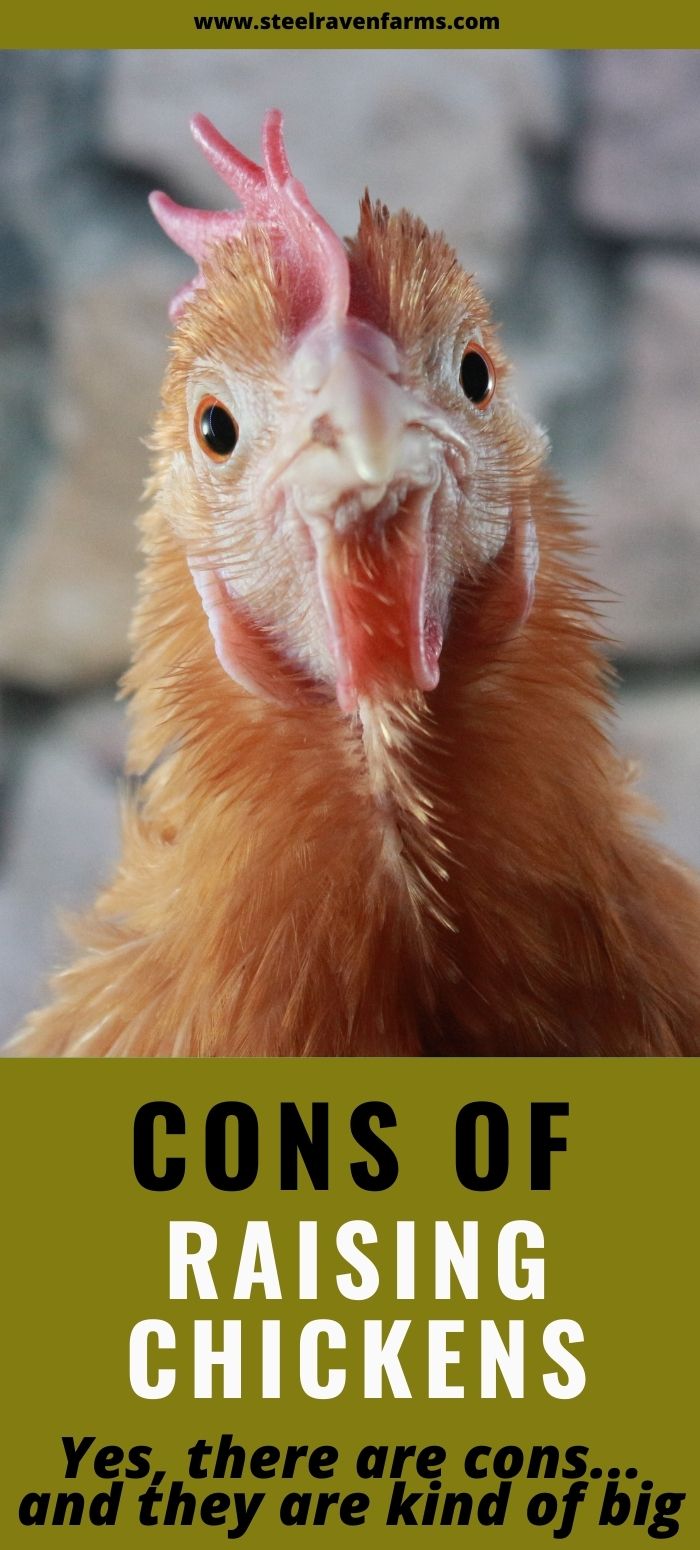
text saying cons of raising chickens and a chicken staring at the camera

Cons Of Getting Chickens

I want to start this whole blog post by being completely transparent. I don’t like chickens. Like at all. I prefer ducks. Those creatures don’t get into my gardens because they are too big to fit through the fence holes and they can’t fly.

The Ultimate Homesteader’s Starter Bundle – Only $47!

Get the tools you need to stay organized, track profits, and manage your homestead with ease!

Includes:
✅ Schedule F Tracker – Simplify tax prep
✅ Profit Calculator – Track earnings
✅ Hay Calculator – Plan livestock feed
✅ Garden Journal – Digital & printable
✅ Herd Health Tracker – Monitor animal care
✅ Simple Budget – Manage finances
✅ Backyard Homestead eBook – Essential tips

$99 value – now just $47! Start your homesteading journey today!

Buy Now

But chickens are here for Jared and Jaxson’s enjoyment. So I am absolutely biased. Now that that is out of the way, I want you to take off the rose colored glasses or blinders and really look at chickens. We already know the pros of getting chickens, right? Eggs!

But what are the cons of getting chickens? Well, I’m here to tell you that the list is pretty extensive. Chicken poop being the top of that list. Then there’s wing clipping, they die easily, predators, eggs, sickness, they get into EVERYTHING…. just to name a few things.
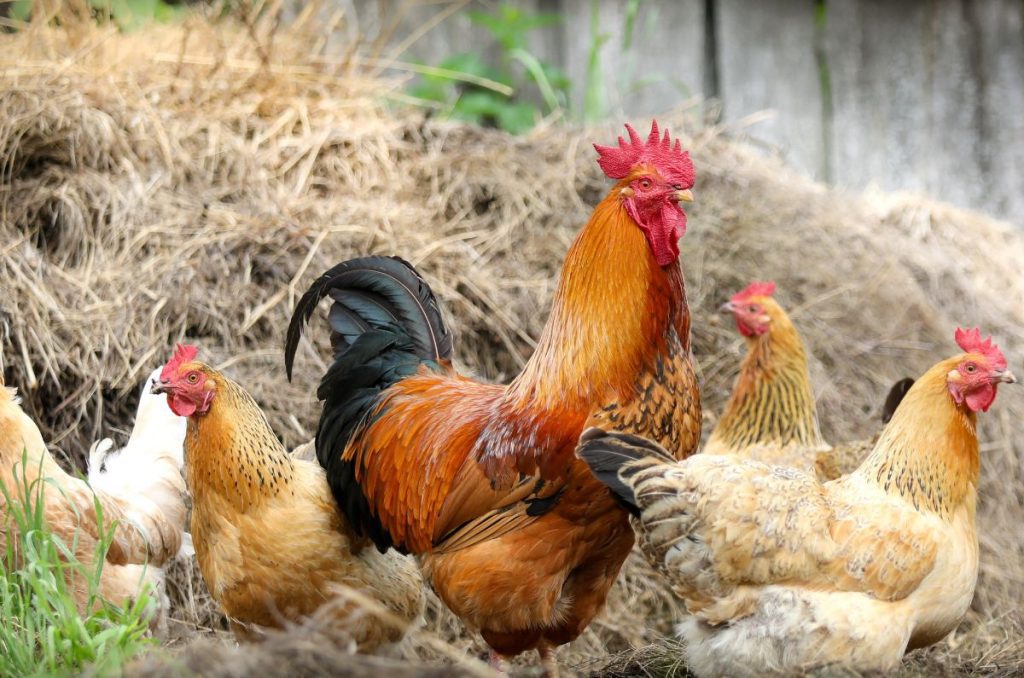
So why get chickens?

Good question…. Don’t get me wrong, chickens are pretty cool creatures. They are the hardest working, most productive animal on the farm, hands down. But they come at a cost which I will go into further down.

Chickens are the gateway animal for a lot of homesteaders. They are relatively easy to care for, cheap to purchase and raise, don’t require a ton of time or attention, and you get eggs! Chickens are great to get rid of kitchen scraps, too.

Tractor Supply

But that poop!

If you have a dedicated coop, and they will ALL go into that coop, you may only have to deal with massive amounts of poop in one spot. And it should be relatively easy to clean up, especially if you are using pine shavings for bedding. However, if you don’t have a dedicated coop because they free range, or they don’t ALL go into it, you will find their favorite roosting spots. The next morning…. after you’ve stepped in a HUGE pile of chicken poop.

My back deck is COVERED in chicken poop. No matter what we try to do, they will figure out that we have gone to bed, jump the fences and bed down on the deck…. It’s like they know. They will occasionally roost on the front deck but we are usually able to get them scattered before they bed down. They also like to roost on our bikes…. Our $700+ mountain bikes. They like to roost on the outside AC unit. If we don’t shut the door to the greenhouse? They like to roost in there too.

As you can imagine, this has created a huge hassle. Despite our best efforts, we just don’t get all of them into the coops at night. Which is a downside of letting them free range and being a victim of chicken math. And leads us into the next big con.

Clipping wings to keep them contained

This is not something that I feel good about. It’s just not. But I do it, and I’m diligent about it, because I don’t want them to escape their run or electric nets. But these creatures have figured out how to jump up and/or climb over the fencing with only one set of feathers. Even electrified fencing…. They just go through it.

I’ve tried various ways of clipping wings, and none have worked to actually keep them contained. Which is disheartening.

Check out our Microgreens at True Leaf Market

Then chickens are both extremely hardy and fragile

I’m not even sure how in the world you can be both hardy and fragile but chickens manage to do it with ease. An ole timer once told me “the chicken will die of anything else before dying of old age“. And that is something I have found to be absolutely true.

Chicks are extremely fragile, if they can make out of the brooder? Then they have to run the gauntlet of not getting picked off by another chicken or predator. Then they have to make it to egg laying age before a predator gets ahold of them, or they get lost in the woods. Let’s not mention that while they can eat pretty much anything but a freaking avocado can take them out… go figure.

The Ultimate Homesteader’s Starter Bundle – Only $47!

Get the tools you need to stay organized, track profits, and manage your homestead with ease!

Includes:
✅ Schedule F Tracker – Simplify tax prep
✅ Profit Calculator – Track earnings
✅ Hay Calculator – Plan livestock feed
✅ Garden Journal – Digital & printable
✅ Herd Health Tracker – Monitor animal care
✅ Simple Budget – Manage finances
✅ Backyard Homestead eBook – Essential tips

$99 value – now just $47! Start your homesteading journey today!

Buy Now

And finally the biggest con of them all?

They get into EVERYTHING!

Now, maybe I have mutant chickens. Or maybe we have let them free range for too long. Or even still, they enjoy taunting me. But when I say that these chickens get into everything, I mean literally everything.

I have found chickens trapped in the wheel well of my truck, under the front deck, and in the goat barn… that they walked into.

They will willing jump into my garden to peck away at freshly planted seeds or plants, but if I even THINK about putting them in a tractor over a bed? Forget it. They just poop and refuse to eat.

Save on Seeds

They will find the most inconvenient place to go broody and then scream at you when you get within 5 feet of them. Like, sorry dear but I have to go past you to get through the FRONT DOOR!

Or, and this is my biggest frustration, I create this beautiful temporary pen. It’s got all the grass, bugs, weeds, you could want. Plenty of sun AND shade, water and pan of fermented feed. But, NO, you don’t want THAT pen. You want to go into my garden and eat every single tomato transplant that I have lovingly tended for the last 6 weeks……

So there are a lot of cons of getting chickens in my book

I do not like chickens. I do not like eggs. I do not like the taste of chicken. These creatures are the bane of my existence.

BUT!

Before you leave here thinking that I hate these creatures. I will give you a few things that I like about chickens.

They eat spiders! If you hold a chicken up to a spider, they will nom nom that eight legged, terrifying thing like it’s going out of style.

Chickens will turn my compost for me! No extra work on my part? Sold.

They turn kitchen scraps and moldy left overs into eggs…. that’s pretty cool.

Tractor Supply

Chickens create a TON of compostable animal bedding to put in my gardens.

Chicks are pretty cute.

They eat bugs! Watching a chicken chase a grasshopper is probably the funniest, cutest thing I have ever seen them do.

The Ultimate Homesteader’s Starter Bundle – Only $47!

Get the tools you need to stay organized, track profits, and manage your homestead with ease!

Includes:
✅ Schedule F Tracker – Simplify tax prep
✅ Profit Calculator – Track earnings
✅ Hay Calculator – Plan livestock feed
✅ Garden Journal – Digital & printable
✅ Herd Health Tracker – Monitor animal care
✅ Simple Budget – Manage finances
✅ Backyard Homestead eBook – Essential tips

$99 value – now just $47! Start your homesteading journey today!

Buy Now

So while there are cons of getting chickens.

They aren’t all that bad. There are a ton of ways around the irritating things they do. We just haven’t exhausted all the options. And yes, it’s frustrating but at the same time, they are the hardest working animal on this farm. So fine…. they can stay.

If you like the content I put out, feel free to buy us a coffee! It helps keep this site running, marketing and the goats in grain!

Buy me a coffee

If you like this post, feel free to share it and follow us below on our social media accounts!

  • Facebook
  • Pinterest
  • Instagram
  • YouTube
  • TikTok
  • Spotify
  • Threads

Filed Under: Animals, Chickens Tagged With: Caution, Chickens, Chicks, Eggs

JOIN TO OUR MAILING LIST!

Leave us your email to receive new posts and special offers for members only! Don't miss a thing!

Recent Posts

  • Fall Garden Guide
  • Top Mistakes With Goats
  • How To Bond With Your Goats

What Is Goat Math?

December 12, 2023 by Leigh Leave a Comment

We talked about chicken math here, but did you know there is such a thing as goat math? And you will become a victim of it SO much faster than chickens! But to stay on topic as much as possible, I’m going to tell you what goat math is, how it happens, why it happens and what you can do about it…. of course that is assuming you don’t want to be a victim of goat math. But if I’m being honest, I’m a proud victim of goat math…

goat kidding

Before we get too far into this, I have a great course on the basics of goat care. I call it Goat Crash Course: Goat 101. In this course, I explain things like types of shelter, types of feeds and hays, basic assessments and so much more! Check it out!

Buy Now

Is Goat Math A Thing?

Uh, yes, goat math is absolutely a thing. It may not be as wide spread as chicken math because there are people who don’t like goats… Yea, I know, I couldn’t believe it either. But those people do exist and I am not their friend.

What Is Goat Math?

Goat math is very similar to chicken math if only because you’re not really sure how it happens. But that’s where the similarities end. In chicken math, you end up getting more chickens because you want to meet your egg needs. Or maybe, you need a couple more because your flock is getting older. Maybe you wanted to incubate a couple eggs to see what it was like. Your numbers could explode.

With goat math, the animal and by extension bill is much more expensive.

Before we get too far into this, I have a great course on the basics of goat care. I call it Goat Crash Course: Goat 101. In this course, I explain things like types of shelter, types of feeds and hays, basic assessments and so much more! Check it out!

Buy Now

How Does Goat Math Happen?

Goat math is an all or nothing thing type of math, because it is 100% controllable. If you only purchase does, and never use a buck? Goat math doesn’t apply. Or if you only purchase wethers or bucks, you won’t have to worry about goat math. But if you ever decide to you want milk? You are screwed.

Sure, goat math could apply if you decide to bring one more goat onto the property, then another, and another. But it’s not like getting suckered at Tractor Supply. You don’t hear those baby goats bleating at TSC!

Goat math also happens because you are aiming for a goal like, only drinking goat milk or eating goat cheese. Well, you have to breed to get milk! So now, you have a couple goat kids. Then you want to keep one, then another, and another and BAM you’ve got 20 goats!

Ask me how I know.

Why Does Goat Math Happen?

Goat math happens because you get attached to these adorable creatures. I don’t know anyone that doesn’t melt when goat kids start jumping around and acting crazy. Again, if you don’t, I don’t know if we can be friends. Because it is freaking adorable!

But because we get attached, it’s harder and harder to not get more! Or at least keep one or two from that year’s kidding season.

Save on Seeds

Again, the why to goat math is answered exclusively by being a mere mortal and unable to say no to more goats. Because honestly, how in the world do you say no to a baby goat!

How To Combat Goat Math

There are several ways to not be a victim of goat math:

  1. Never buy a buck
  2. Never buy a doe
  3. Probably best to never buy a goat, at all.
  4. Don’t breed.

Pretty simple, right?

But it’s really not that simple. I absolutely love my goats. And while I don’t think they are beginner livestock, I do think they are a great animal to get for those city kids that moved to the country…. *raises hand*

goat kidding

Before we get too far into this, I have a great course on the basics of goat care. I call it Goat Crash Course: Goat 101. In this course, I explain things like types of shelter, types of feeds and hays, basic assessments and so much more! Check it out!

Buy Now

They are a million times easier to raise than pigs and easier to keep track of than chickens.

Major Issues With Goats

I talked above about goats not being beginner livestock, and they are easier to raise than just about other animals if you stay on top of their care. But goats can be relatively fragile unless you get lucky with a Bella.

Skittish Goats

Goats for the most part are extremely friendly, especially if they have been raised by someone who truly cares about their goats. With a little bonding time, you can have an animal that is dog-like with their affection.

But if you acquire goats from less than ideal situations, you may end up with goats that will never come around. Just like dogs, goats raised on poor husbandry farms will probably always mistrust humans. Sure, you can get them to come around a bit, like we have with Bella, but they will probably never be truly comfortable with humans. Which breaks my heart.

Most Goats Aren’t Hardy

Due to constant, monthly worming, goats have become reliant on these medications to survive. When we bought Champ, she came from a place were she was wormed monthly. She is not a hardy goat. In fact, we have to baby her almost every winter.

Logo 468x60

We don’t worm monthly, in fact, we rarely worm our animals. We want them to be hardy and we are getting there. One of Champ’s daughters, Stella, has only been wormed 5 times in the 2.5yrs since she was born.

Our herd health bundle helps you keep track of your herd’s health. Includes the goat assessment, herd check sheets AND Herd Health Tracker!

Buy Now

But if we don’t “force” the hardiness, the goats will not thrive.

Kidding Season

This is probably the most obvious reason for goat math issues. Kidding season is, normally, a happy time. But sometimes, you will have issues with miscarried babies, stuck kids, and stillborns. Sometimes, after kids are born, they aren’t hardy and they are more likely to die.

Check out our Microgreens at True Leaf Market

We learned the hard way that any babies born from May to August don’t survive the worm blooms. We lost 2 bucklings to high worm loads and not being hardy enough to handle the cold. There’s more to it than that, but we realized that any babies born in those months tend to die very easily. But all the babies born at other times have thrived.

Goat Math Survivors

Now, that I have my established herd of does, I usually only retain one or two does every year. Normally, I will sell any that aren’t producing the amount of milk we need. We have also made the decision that we will keep 100% of Bella’s doelings. At least until we don’t have the room to keep more.

But remember, just because you’ve made plans and decisions, doesn’t mean that you won’t have brushes with goat math and watch those plans go right out the window.

How do you handle goat math?

If you like the content I put out, feel free to buy us a coffee! It helps keep this site running, marketing and the goats in grain!

Buy me a coffee

If you like this post, feel free to share it and follow us below on our social media accounts!

  • Facebook
  • Pinterest
  • Instagram
  • YouTube
  • TikTok
  • Spotify
  • Threads

Filed Under: Animals, Goats Tagged With: Goats, Homestead

JOIN TO OUR MAILING LIST!

Leave us your email to receive new posts and special offers for members only! Don't miss a thing!

Recent Posts

  • Fall Garden Guide
  • Top Mistakes With Goats
  • How To Bond With Your Goats

How Much Do Chickens Cost?

November 8, 2023 by Leigh Leave a Comment

So you’re interested in getting some chickens. I warn you now, you will become a victim of chicken math if your not careful. But one of the ways to keep that from happening is to really understand what you’re getting yourself into. It’s not as easy as going to Tractor Supply or your local feed store and picking up a batch of chicks. How much do chickens cost? A lot.

The Ultimate Homesteader’s Starter Bundle – Only $47!

Get the tools you need to stay organized, track profits, and manage your homestead with ease!

Includes:
✅ Schedule F Tracker – Simplify tax prep
✅ Profit Calculator – Track earnings
✅ Hay Calculator – Plan livestock feed
✅ Garden Journal – Digital & printable
✅ Herd Health Tracker – Monitor animal care
✅ Simple Budget – Manage finances
✅ Backyard Homestead eBook – Essential tips

$99 value – now just $47! Start your homesteading journey today!

Buy Now

If you are looking for an audio version of this post, check out our podcast below

Before You Get Chickens

I feel like I should start every single blog post about livestock by reminding you that you should not get ANY livestock, including chickens until you have a garden set up. I also fully expect you to not listen. It’s just the nature of homesteaders.

In all seriousness, you should be prepared for chicks or chickens WAY before they ever show up on your property.

Tractor Supply

The Chicken Coop

You have a couple options here when it comes to your chicken coop. You can go as cheap or as expensive as you want. But there are some hard fast rules that you should follow. It should be secure from predators and this includes the human variety, too.

You should make sure that it is draft free, but with good ventilation. There should be roosting bars and nesting boxes. But after that, sky is the limit. We have a metal shed that we use and we like it for the most part, but I’m not a huge fan. The metal has started to rust in less than a year and it’s very drafty in the winter and BOILING hot in the summer. We normally use it for brooding chicks since it is more secure and stays pretty warm when we’ve got the lamps on.

I would stay away from anything that isn’t made from real wood. There’s a bunch on the internet that are composite and unless it is a good quality like the decking boards. There are also a ton of places that shell really nice shed/ coops. If you can build it, that would probably be a better option because at $8,000? My girls are just find in their metal shed, outside or in a tree.

Buckets, Waterers and Feeders

You can absolutely cut corners here, but remember, the more corners you cut, the more issues you can have. For example, I would not get a tiny seven pound chick feeder for your chicks. The reality is that you are going to be filling that thing twice a day depending on the amount of chicks you have. I would get one like this, that is going last them for at least a day but preferably several days.

The same thing goes for waterers. Don’t get a tiny one. You will be refilling it all the time. We have several of these, and absolutely love them. Chicks are able to drink from them with no problems. And we don’t have to worry as much about them running out of water.

Buckets and pans are as needed but you will eventually need them. Pans for oyster shell or buckets for hauling feed. You will eventually need them.

So How Much Do Chickens Cost?

Let’s start with the coop. A decent middle of the road coop shouldn’t cost you much more than $500. I would recommend getting one with a run attached to it so that on days that they can’t free range, they have a way to get outside.

If you want a bigger run, I would recommend poultry netting. You can get the netting and a solar charger for under $600 for GOOD netting. Don’t try to save money here by getting cheap. Cheap means less protection from predators, chickens getting loose, and more. This is the netting we have and it works great.

Save on Seeds

Your feeders, waterers, buckets, and feed will all depend on your location but should run you about $100 for good feeders and waterers. Feed should be about $15-35 depending on where you get it. I am able to get Non-GMO feed at my local feed store for about $17/ 50# bag.

Supplements will also depend on your area but for a different reason. If you have high parasite loads on your property, you’re going to want to get something for that. We use Corrid for our chicks. We also give them electrolytes in the summer because it gets so hot and humid here in Georgia.

Grand total you are looking at about $1200 before you even get your chicks. Again, this will depend on which coop and supplies you get.

Brooding Your Chicks

Before you get your chicks, you need to have a brooder that is ready to go. I talk in depth about brooding in this blog post. This could look like a large tub with a heat lamp in your living room, like the picture below. Or a metal shed and a bunch of lights. Everyone will brood their chicks differently. If we only have a few chicks, we will brood in the house in a large tub. If we have a ton of chicks, like when we bring home our meat chickens, we will brood in the metal shed.

Buying the Chicks

I would make sure that you have the coop, brooder, and supplies BEFORE getting your chicks.

Usually, you can get chicks for about $3-7 each. This is going to depend on your breed and if you get straight run. I highly recommend getting sexed chicks. This will help you avoid getting roosters and then figuring out what to do with them.

I also recommend getting from a reputable hatchery. We use McMurray Hatchery and have for years. We love them and will probably always go with them unless we don’t have a choice.

The biggest problem about getting chicks is not falling victim to chicken math. I wrote a whole blog post about chicken math and how to avoid it here. But some quick points that I forgot to mention is making sure that you get a chicken coop that will only fit so many chickens. Then making the decision, and sticking to it, that you will only have THIS many chickens. I wish you the best of luck with it.

At The End Of The Day

I can’t tell you exactly how much chickens cost. There are too many variables. But the biggest thing to remember is that a good coop, feeders and waterers, feed and the chickens themselves are not cheap. You will end up spending at least $1200-$2000 before you ever get that first egg. That’s if you do it “right”. You can go cheaper and you ca go more expensive. But your eggs will never be free.

If you like this post, feel free to share it and follow us below on our social media accounts!

  • Facebook
  • Pinterest
  • Instagram
  • YouTube
  • TikTok
  • Spotify
  • Threads

Filed Under: Animals, Chickens Tagged With: Chickens, Chicks, Eggs, Homestead

JOIN TO OUR MAILING LIST!

Leave us your email to receive new posts and special offers for members only! Don't miss a thing!

Recent Posts

  • Fall Garden Guide
  • Top Mistakes With Goats
  • How To Bond With Your Goats

What Is Chicken Math?

November 8, 2023 by Leigh Leave a Comment

Have the chickens taken over your farm? Because I know they have on mine. Chicken math is a legit phenomenon that every single chicken owner deals with. It starts out as a couple of chickens and ends with an unknown number of chickens and you answering, “I have no idea how many chickens I have.” That’s Chicken Math.

If you are looking for an audio version of this post, check out our podcast episode below

Dealing With Chicken Math

Once you get “bitten” by the chicken bug, you are going to end up with a million chickens. While that may seem like an exaggeration, it’s really not.

How You Become A Victim Of Chicken Math

It’s actually pretty simple to fall victim to chicken math. It starts with your first box of chickens. You’ve gone to Tractor Supply or ordered them online (Ps: We use McMurray Hatchery and LOVE them). You brood them inside and fall in love with them.

Then you have some die on you, or maybe all but one. Then you decide that you need a few more to meet your egg needs. So you order another box of chickens.

Tractor Supply

Then you realize that you can get different colored eggs! You want the blue, green or pink eggs. Or better yet, you decide that you are going to get the Copper Marans that lay deep chocolate colored eggs.

You go to Tractor Supply to get feed and see that they have chicks and you decide you HAVE to have them. Only to realize that 60% of them are all roosters.

Or, in my case, you decide to start incubating eggs and end up with 20 chicks. Then your kids re-set up the up the incubator while you’re at work…. now you’ve got 40 chicks.

You do a quick head count and realize you have 100 chickens.

Justifying Chicken Math

After doing your head count, you’ll say NO MORE! I’m drowning in eggs! You’ve water glassed a million eggs, you’ve got a bunch in the freezer and you are SO OVER eggs of all kinds. You’ve Googled and Pinterest-ed ALL of the egg recipes.

So you think , “I’ll just sell the eggs!” And after selling a couple dozen to friends and family, you think, “I need more eggs to keep up with this!”

You know it can take up to 8 months to get those first eggs so you go ahead and purchase more chicks….

Now You’re A Victim Of Chicken Math

Your feed bill is now several hundred dollars a month and you’re trying to figure out exactly how that happened. You start to figure out how to reduce your feed bill because you’ve got a ton of people that buy eggs from you!

But your girls aren’t laying in the winter and now, you have to feed these girls through winter with no income from the eggs. You’ve got to start looking for ways to trim the budget because this is ridiculous.

You don’t produce enough kitchen scraps to feed them so you start a collection bucket at work or the local potluck.

Now We Can Deal With Righting The Ship

If any of this sounds familiar, or you are just looking into chickens, keep reading. I can help you right the ship and become a chicken math survivor!

How Many Chickens Do You Need

So the obvious answer is don’t get more chickens than you need. But the reality is that isn’t going to happen, or didn’t happen. Every chicken owner KNOWS that we don’t need this many chickens. But we still buy chickens every spring because….insanity.

When you make the decision that you are going to get chickens, you need to be prepared for the reality that you will end up with more than you need. The goal is to keep that number manageable.

If you are an avid egg eater, and consume 2 eggs per day, you should have 3 chickens. If you’re entire family is an avid egg eater, you should have 3 chickens per person.

The Ultimate Homesteader’s Starter Bundle – Only $47!

Get the tools you need to stay organized, track profits, and manage your homestead with ease!

Includes:
✅ Schedule F Tracker – Simplify tax prep
✅ Profit Calculator – Track earnings
✅ Hay Calculator – Plan livestock feed
✅ Garden Journal – Digital & printable
✅ Herd Health Tracker – Monitor animal care
✅ Simple Budget – Manage finances
✅ Backyard Homestead eBook – Essential tips

$99 value – now just $47! Start your homesteading journey today!

Buy Now

If you only eat a couple eggs a week, I wouldn’t even get chickens. I would find someone local and support their chicken habit. The reason is the cost of keeping chickens is so high that it’s not worth it. Because those eggs are not free. While you may think that keeping chickens is a must for a homestead, it’s really not.

What To Do With Your Current Chickens

Really, we only need 12 chickens. That’s it. We currently have approximately 40 chickens and 12 ducks. We will be culling the older hens because they just aren’t laying much anymore. We also plan on selling a bunch of them. Again, we really don’t need that many chickens and they have caused more headache over the years than I really want.

If you have too many chickens, I would recommend really looking at your flock. If you have some that aren’t laying, and haven’t been laying, I would go ahead and put them in the freezer. If you have no need for roosters, make sure to get them in the freezer too.

Just remember that chickens don’t usually lay eggs in the winter! There was a huge hype a couple years ago about chickens not laying in winter and I wanted to scream, “They’re NOT SUPPOSED TO!” But I kept my cool and minded my own business.

Do Those Chickens Serve YOUR Purpose

I know that this sounds harsh and maybe a little cruel, but you have to really think about where your money is going and if you are okay with that. Sometimes that means culling animals.

My chickens are not pets. They have one purpose….Okay, they have several but at the end of the day, their purpose is to give us food. That could be in the form of eggs or meat. If they aren’t doing that, they have to go.

Save on Seeds

If you got chickens for eggs, and they aren’t laying eggs, you need to figure out if you want to spend the money on feed, shelter and other supplies on a chicken not pulling her weight. If you’re okay with that? Then by all means.

I talked in depth about putting chickens to work on your homestead here. If you’ve got a few favorites that are going to live their life on your farm, look at putting them to work. I’ve got a couple that I do actually like, and they will live their life out on our farm. Mostly, because they won’t make good stew hens either.

Save on Seeds

Chickens are a lot of work

I will never tell you, at least seriously, that you HAVE to do something. There are things that you SHOULD do, but at the end of the day, it’s your farm, your kitchen, your rules. But livestock (chickens, ducks, goats, cows, etc) are all a lot of work. There’s fencing, shelter, feed, buckets, waterers, medications, and more.

I’m not saying that I would never have chickens again. But dollar for dollar and work hour per work hour, they are absolutely not worth it FOR OUR FARM. So surviving chicken math isn’t too hard for us.

How do you survive chicken math?

If you like this post, feel free to share it and follow us below on our social media accounts!

  • Facebook
  • Pinterest
  • Instagram
  • YouTube
  • TikTok
  • Spotify
  • Threads

Filed Under: Animals, Chickens Tagged With: Chickens, Chicks

JOIN TO OUR MAILING LIST!

Leave us your email to receive new posts and special offers for members only! Don't miss a thing!

Recent Posts

  • Fall Garden Guide
  • Top Mistakes With Goats
  • How To Bond With Your Goats

How To Tell If Your Goat Is Healthy

October 20, 2023 by Leigh Leave a Comment

This is a loaded question because if you are not completely aware of how goats act and behave, you may not know what is normal or healthy. Then again, you could have a goat that is totally healthy but doesn’t bounce around like you think they should. So here is my best tips for being able to tell if your goat is healthy.

goat kidding

Before we get too far into this, I have a great course on the basics of goat care. I call it Goat Crash Course: Goat 101. In this course, I explain things like types of shelter, types of feeds and hays, basic assessments and so much more! Check it out!

Buy Now

If you are looking for an audio version of this post, check out out below

First Step To Tell If Your Goat Is Healthy

First thing first, you need to have a routine of how you assess your goat. Now, I am a paramedic in real life, so I have a system of how I treat EVERY SINGLE patient, EVERY SINGLE time. It always starts with a scene size up. That means that as I am walking up to a car accident or into a home, I’m looking around. I want to make sure it’s safe, but also what do I see? Is the patient crushed inside a car? Is the patient gasping for air?

Next comes the ABC’s. Airway, Breathing, Circulation. Is the patient’s airway open? Are they breathing? Is their skin normal? Is there blood?

Tractor Supply

After those first two things, we start to treat based off our findings. If we didn’t find any life threats, we continue on with our assessment. These things are based on the problems we see or the complaint of the patient.

Goat Assessment

When it comes to goats, it’s really no different. Except that they can’t talk to you. You have to get all of this information based solely on what you see and find during your assessment. Which is why learning how to tell if your goat is healthy NOW, when they are healthy is SO important.

If you haven’t already, sign up above to receive our goat assessment worksheet. It is incredibly easy to use but as we go through the rest of this post, we will be using that sheet. I also use my Herd Check Sheet when I am doing my weekly herd checks to make sure I check EVERY goat. I also to write down any concerns or findings I may have on this Herd Check Sheet.

I’m not going to go super in depth about how to treat any illnesses here. The whole point around this blog post is for you to learn HOW to do an assessment. I want you to start getting into the routine of doing this assessment while your animals are healthy before we go down a rabbit hole of treatment.

goat kidding

Before we get too far into this, I have a great course on the basics of goat care. I call it Goat Crash Course: Goat 101. In this course, I explain things like types of shelter, types of feeds and hays, basic assessments and so much more! Check it out!

Buy Now

Goat Size Up

The Goat Scene Size Up is very, very simple. As you walk up to your goat, do they look at you? Are their eyes bright and alert? Are their ears erect and moving? Do you see an injury? Do you see fluids around them? Are they jumping around like a jumping bean? Are they playing or fighting with other goats? Are they screaming at you to bring them food? What are they doing?

ABC’s

Human ABC’s are the same as Goat ABC’s. Is their airway open? Are they choking or not moving air well? Are they breathing normally? Does it seem fast or slow? Do they have a cough? Are they bleeding? What is their heart rate? Is it fast or slow?

The Head To Toe….Hooves

Once you are past the life threatening concerns like what would be seen on a scene size up or ABC’s, it’s time to move on to your head to hoof assessment. It is exactly what it sounds like, we are starting from the top and working down.

Head- Check eyes, ears, nose, mouth, and FAMACHA. We are always looking for something “off”. Blood, mucus, fluids, swelling, broken teeth, FAMACHA score.

Body- This is a large part of the animal but we are still looking for all the same things. Do you see blood? Is there an injury? Bodily fluids? Body condition? Fur and skin healthy and intact? Legs in good shape? Temperature? Are they chewing their cud? Do you hear rumen sounds? Does the left (THEIR left) side of their belly seem swollen or bloated?

Tractor Supply

Hooves- Are their hooves normal? Do the hooves stink? Do you see abscesses? Are their hooves sound? Are they limping? Do they need a hoof trim?

What To Do With The Information

Well, that all depends on what you found on your assessment. But I will tell you to head over to one of these 3 Facebook groups:

Goat Emergency Team

Successful Goating With Rosie

The Holistic Goat

These are the goat groups that I have been apart of for YEARS! They have pulled several of our goats through in those first couple years. Plus there is always a moderator that can help no matter if it’s day or night.

Treatment Protocols

Once you can do your assessments correctly and quickly, now we can start diving into treatment protocols. However, I do want to caution you. You need to have a vet or mentor on stand by. Even if it’s only a basic relationship. You never know when you are going to need help and it’s better to know where to find that help before you need it.

Treatment protocols are basically a set of things to do IF your goat meets these certain criteria. For example: I would only follow a worming protocol if I had a positive fecal because I don’t deworm preventively. Another example would be using antibiotics for a cough. I don’t believe in just giving antibiotics for any reason. That doesn’t meant I won’t give it, but it’s not my first line treatment.

Tractor Supply

If you look through those 3 pages, especially Goat Emergency Team and Successful Goating with Rosie, you will see the treatment protocols that they actually use. Those are very close to the protocols I use on my farm.

Remember To Be Kind

As you are on your goating journey, you need to remember one thing. Be kind to yourself. You are learning. Yes, you will have animals die on you. Yes, it will break your heart and you will want to give up. You will beat yourself up because you didn’t catch something.

Save on Seeds

But remember what the ole timers say, “If you haven’t lost a goat, you haven’t owned one long enough.”

It’s the truth. These are not extremely hearty creatures to start with. They can be indestructible like Bella or fragile like Champ. But at the end of the day, everything will die. We just don’t want that to happen too soon.

If you like this post, feel free to share it and follow us below on our social media accounts!
  • Facebook
  • Pinterest
  • Instagram
  • YouTube
  • TikTok
  • Spotify
  • Threads

Filed Under: Animals, Goats Tagged With: goat assessment, goat protocols, Goats

JOIN TO OUR MAILING LIST!

Leave us your email to receive new posts and special offers for members only! Don't miss a thing!

Recent Posts

  • Fall Garden Guide
  • Top Mistakes With Goats
  • How To Bond With Your Goats

How To Bottle Feed Goat Kids

September 17, 2023 by Leigh Leave a Comment

Whether you have a surprise goat kid or trying to help a momma out, if you own goats you will probably, at some point, end up bottle feeding goats. This may come in a variety of forms, like getting suckered into bottle babies at an auction, a sudden loss of a doe, or maybe on purpose. But the reality is that there are times when it will happen and if you aren’t prepared, you may struggle to get calories into that goat kid. Let’s not wait till last minute to figure out how to bottle feed goat kids.

Before we get too far into this, I have a great course on the basics of goat care. I call it Goat Crash Course: Goat 101. In this course, I explain things like types of shelter, types of feeds and hays, basic assessments and so much more! Check it out!

Buy Now

When To Bottle Feed Goat Kids

First and foremost, we really, REALLY want a kid to stay on mom for as long as possible. There’s a couple of reasons for this but the biggest is that the milk from momma is the best for them. Period. Yes, bottle babies can do well being bottle raised, but the reality is that they do much better with momma. Momma’s milk is specifically designed for THOSE kids. Removing those kids from her can lead to unthrifty kids. We don’t want that.

BUT there are situations were you need to bottle feed babies. And that’s okay. I liken it to the argument of breast is best vs formula fed babies. At the end of the day, the only thing that REALLY matters is that the kid (human or goat) is fed. So if you have to bottle feed a baby, no worries. I’m going to help you through this.

Tractor Supply

Too Many Kids

One of the situations that you may encounter that has you asking, “Should I bottle feed these kids?” is too many kids. Your goat only has two teats. Therefore only two kids can nurse at a time. If you have triplets, quads or quints? You may need to seriously consider bottle feeding a couple of them.

There are plenty of does that can handle trips or quads. In fact, Bella is helping to feed quads right now…. And three are not even hers!

However, Bailey is not a doe that can handle a lot of babies, at least not yet. A couple of weeks ago Bella gave birth to twin girls but we lost June to Bacon the AGH. Three days later, Bailey dropped her triplets. Now, Bailey is not a fantastic milker. She produces, but not a whole lot and now she’s trying to produce for trips? Well, we decided to help supplement her milk with Bella’s milk.

I really wish we had grafted one of the trips but I wasn’t exactly expecting triplets from Bailey!

Not Gaining Enough Weight

Sometimes momma just doesn’t make enough milk. While this can be because of too many kids, it’s not always. After every birth, you should get a weight on every kid that is born. This will show you if the kids are gaining weight. If they aren’t, you may need to supplement milk because momma isn’t making enough.

Usually, this isn’t a problem unless you have multiples. But again, it does happen.

Rejection

Some mommas will just never take care of their babies. Usually, this is because they are young or they’re babies have always been taken from them. Other times, momma knows the baby is weak. Finally, they could reject the baby because the sky is the wrong shade of blue.

If the momma rejects the baby, you have a couple of choices. You can try like hell to get momma to accept the baby, or you can just take the baby and bottle feed. Bottle feeding is a last resort for me. I want that baby to stay with momma for as long as possible. So I will try and try to get momma to accept the baby. If it doesn’t happen, okay. But I’m going to try.

Injury or Illness

If one of those kids is born with a defect, is ill, or has something going on that makes them fragile, I would highly consider bottle feeding. If June had survived Bacon, she would have been one that we bottle fed because her jaw was broken in multiple places. Sometimes it’s as “simple” as a kid not being able to maintain temperature.

Like I said, sometimes these things happen, and you have to be prepared to step in and start bottle feeding.

Tractor Supply

Hacks For Bottle Feeding Goat Kids

Everyone has a different way of bottle feeding. Some swear that you can only use a teat nipple like this. Others, like me, say fed is best so they get whatever they will eat. I use regular baby bottles. It works great and I can get them literally anywhere.

If the kid just won’t latch, try different nipples. Just like with human kids, they may not be able to work the nipple right. It happens.

Sometimes you need to cover their eyes so they think they are up against mom. We have also found success with rubbing a stuffed animal all over momma to get the scent and then holding that over the kid’s head while holding the bottle upside down.

Other times, the kid may want to be held while they feed. Samantha is like this. She will drink about an ounce or two and then walk away. If we hold her, she will gobble down the whole bottle.

Another thing you can try is to put a little bit of honey or molasses on the nipple and see if the kid will take the bottle that way.

If the kid still won’t latch, you may have to put a stomach tube in and force it. This is usually the last ditch effort.

Tractor Supply

How Much To Feed Your Kid?

According to the internet, it’s all over the map. Since I try my damnest to keep my kids on their momma, I don’t have a hard fast true rule to give you. BUT this is what I have found that works well for us. You should keep an eye on your kids for signs of overfeeding (lethargic, floppy, grinding teeth, head thrown back, etc).

You want to start with colostrum only for the first 24 hours. Hopefully, you have colostrum from a healthy goat you can use. If not, replacer will work but it’s not as good.

Save on Seeds

After that first day, start with 2-4oz every 3-4 hours for the first couple of days. Then, I increase to 4-6oz about 4-5x a day for a couple of weeks. Then I move to 6-8oz 3x a day for a couple of weeks. They should be eating hay and drinking water at this point.

Then I move them to 8-12oz 1-2x a day until they are at least two months old.

I would only deviate from this if 1) my vet said to or 2) the kid wasn’t gaining weight. They should be gaining about 5-10#/ month depending on breed. If they are not on pace with that, I would up their feeding SLOWLY to avoid overfeeding.

Tractor Supply

What To Feed Them?

The goal would be only fresh goat milk. But if you don’t have access to that, the next best thing would be whole cow milk from the grocery store.

Goat milk replacer really isn’t that good. In fact, most goat kids just don’t do well on it. They have issues with bloating, lethargy, and just generally not doing great. It could be that particular goats genetics, but I’ve heard of more problems with the replacers than just using cows milk.

We are lucky to have Bella. She may be a total pain in the butt but she has single handedly supplied us with milk for over a year AND provided milk for her own babies. Plus Bailey’s babies.

is homesteading hard

I’m also really happy that she gave me a girl! Fingers crossed Ursula is just as amazing of a mother and milker as Bella.

If you like this post, feel free to share it and follow us below on our social media accounts!

  • Facebook
  • Pinterest
  • Instagram
  • YouTube
  • TikTok
  • Spotify
  • Threads

Filed Under: Animals, Goats

JOIN TO OUR MAILING LIST!

Leave us your email to receive new posts and special offers for members only! Don't miss a thing!

Recent Posts

  • Fall Garden Guide
  • Top Mistakes With Goats
  • How To Bond With Your Goats

Animals For New Homesteaders

August 28, 2023 by Leigh Leave a Comment

Welcome to the homestead family! It doesn’t matter if you are on less than an acre or have 200+, you are welcome here. At some point, you will want to get some animals for your homestead, whether that is a couple chickens, a cow or two, or maybe just a good farm dog, it doesn’t matter. I wanted to give you my picks for animals for new homesteaders and why.

animals for new homesteaders

The Ultimate Homesteader’s Starter Bundle – Only $47!

Get the tools you need to stay organized, track profits, and manage your homestead with ease!

Includes:
✅ Schedule F Tracker – Simplify tax prep
✅ Profit Calculator – Track earnings
✅ Hay Calculator – Plan livestock feed
✅ Garden Journal – Digital & printable
✅ Herd Health Tracker – Monitor animal care
✅ Simple Budget – Manage finances
✅ Backyard Homestead eBook – Essential tips

$99 value – now just $47! Start your homesteading journey today!

Buy Now

Setting Yourself Up For Success

Before we can get too far down the rabbit hole of what animals you should get, I think we need to first start with what your goals are for your homestead. If you go through my posts on this website, you will find that I am extremely goal oriented and tend to be pretty obsessive about it. I have good reason for it.

If you don’t know what a successful homestead looks like to you, you are going to spend years chasing your tail before you ever hit the first goal. When we start adding animals to our homestead, we are adding more financial strain to the budget. While a bag of feed here and there may not seem like a lot, it adds up really quick. Especially in winter. So be aware that what seems like not a big deal now, could end up being a big financial and emotional deal later.

Which Animals For New Homesteaders?

Now that we have cleared up the fact that you should WAIT before adding animals to your homestead, even though we all know you’re not going to. Let’s start looking at some different animals to bring to the homestead and their uses/ purposes. PS, this list is going to include some things that are not livestock, but bear with me you will see what I’m talking about in a minute.

I want to add a disclaimer here. You and your homestead are YOURS. I practice the your kitchen, your house, your land, your rules. These are my thoughts and feelings. You may not agree with what I am saying and that is absolutely ok. I am not saying you HAVE to get these animals or feel/think/do what I say. So please keep that in mind as you read through this blog post.

Dogs

To be clear and transparent, on a homestead, a small dog is usually a vulnerability because of predators, risk of injury from livestock, and costs associated with caring for a pet vs a working dog. It’s the reality. I’m not saying you can’t have a small dog, but you do need to be prepared for predation.

There is a difference when dealing with dogs on a homestead. You’ve got your farm dog, your working dog, and your livestock guardian dog (LGD). These are 3 completely different dogs and should be used accordingly.

All 4 of my dogs are farm dogs. Their job is to raise the alarm if a predator is close, keep the pigs off the porch, and to hang out with the family. Bear’s only job is to make me happy, which he does perfectly because he’s the best boy.

animals for new homesteaders

I believe that with enough training, any dog can be a farm dog. Yes, that is a blanket statement, but it is something I truly believe. Bear is a typical pound special that we rescued 9 years ago from the animal shelter in Texas. He was never, ever raised around livestock or allowed to roam off leash/out of a fence. But he has taken to farm life like he’s been living it forever. A lot of his patience and lack of drive to chase could be because he’s an old man but a lot of it is the work I have done with him over the last 9 years.

A working dog is going to be your active dogs that have a job, think heelers, shepherds, etc. These are dogs that you need to be aware of their breeding and genetics before bringing them onto your farm. If you have a heeler, there is a very good chance that they could hurt or kill your goats or chickens. This is were training is going to be the most important thing you could do for this dog. I would not recommend these dogs unless you have training on lock.

An LGD is a great addition to any farm that has smaller livestock. BUT, and it’s a big one, make sure you are getting an LGD from a working line, that is being trained with livestock, before bringing one to the homestead. While in search for an LGD for the farm, we found a TON of LGD’s that were not bred to or actively protecting animals. That is going to cause a problem for you. An LGD is going to be a whole post on it’s own because their training is so important that it won’t fit into a couple paragraphs.

Cats

If you are going to have livestock, you are going to have issues with rodents. Period. When you start bringing hay, feed, or installing pasture, you are going to start having a rodent problem. While I’m NOT saying get one despite being allergic to cats, I am saying that you need to weigh your allergy against having mouse droppings in your house.

There is a lot of opinions on how cats should work on a homestead. Some people say not to feed the cats because it will make them lazy. Others feed their cats. I don’t think there is a right or wrong answer as long as the cat is fed (either by hunting or you) and healthy. I’m going to leave the rest of that alone.

Snakes

While I have a pet snake, I am not talking about that. I am talking about having several king or racer snakes that live on your property. I live in the south and a walk in the woods or through the garden can easily lead to an ER visit from a snake bite. A king snake will eat rattlers, moccasins, and copperheads while also keeping your rodent population down.

I totally understand that you may not want snakes on your property, but I would highly recommend having a few. We have several king snakes on the property and Frank is my favorite. He hangs out in the hay barn and keeps the rodents out of my hay. Frank lives here rent free until he doesn’t want to because he does such a good job keeping unwanted creatures out of my hay barn. But he will scare the crap out of you if you’re not expecting him.

If you don’t have a king snake on your property or you’re not sure, a good option is to contact your local exterminator or pest control person and see if they will bring one that they catch. Yes, this is a thing and most of the time it’s free.

Chickens And Ducks

Now for the livestock! Chickens are a great way to enter into the farm scene without having a TON of expense, depending on how you set them up. You can absolutely break the bank bringing these animals to the property, but you don’t have to. You can free range your chickens with a small coop and be done. You can throw a kiddie pool down for your ducks.

But be warned of 2 things: 1) chickens are the gateway animal and 2) they are easy targets for predators.

Before you know it, you will have 60 chickens and not really sure how it happened. You will also lose some to predators or sickness. Or in my case, they just wonder off. The ducks stick around better and don’t cause as much issues in the garden but they are messy creatures.

After having chickens and ducks for several years, I am only buying/ breeding ducks from here on out. We will raise meat chickens every year for the freezer, but I am not interested in chickens. The reason is that while ducks are messy, they don’t get in my garden unless it’s not secured. They don’t get on my decks and poop everywhere. They don’t get attacked by predators as often if ever. They produce eggs year round. They are freaking adorable with their quacks and cheese feet. Yea, those chickens got to go.

Other Fowl/ Poultry

I would highly recommend staying away from other feathered creatures until you have a lock on chickens or ducks. Quail would be the exception. Turkey’s are hard to raise. Emu’s are huge. Peacocks are weird. That being said, I would also have a plan for what exactly you are going to use other feathered beasts for. If you like the way they look, ok but if you are trying to set up a working farm? Try not to get a bunch of unprofitable creatures.

Rabbits

While we were researching, planning and learning, the plans were to use rabbits as a meat source…. That never happened. Not because they are cute and cuddly and would be hard to send to freezer camp but because we just don’t have a good place to put them. It gets HOT here in the south and most of the time rabbits don’t do amazing if they are not kept shaded with good air flow. Our options for their space was limited and we just couldn’t do it.

But rabbits can yield a LOT of meat very quickly and pretty cheap. A batch of meat chickens can run you about $1500+ in 8-16 weeks, after everything is all said and done. A trio of rabbits can crank out the same amount of meat for less money. Plus they are much quieter.

Pigs

Despite Bacon eating one of my brand new doeling from our favorite milk goat, pigs have to be one of my favorite animals on the homestead. They eliminate food waste, break up the soil, and taste delicious. They are truly one of the few multi-purpose animals, just by existing. But they have some draw backs.

Pigs are incredibly smart. Bacon and Delilah learned how to sit for their feed within a few days. They also learned how to break out of the electric fencing. So now we have porch pigs until they are big enough for butchering.

The work they do on the homestead has been invaluable for us. We got them after going to the HOA conference and listening to multiple speakers talk about using pigs to help break up the soil and heal the land. When we got home, we bough 2 American Guinea Hogs. Since then they have helped us reclaim a lot of areas that the goats cleared but left us with hard rocky soil. They have tilled the soil and we have the starts of some amazing pasture.

Goats/ Sheep

I added these two small ruminants together because they are pretty similar but also vastly different. Sheep are grazers and need to have mostly grasses to eat. Goats are browsers and need mostly woody plants to eat. If you have a ton of brush, get goats. If you have a ton of grass but not space, get sheep. Goats will do okay on pasture but they really prefer brush.

Goats are incredibly smart and require waterproof fencing unless you plan to free range them.

Sheep are not incredibly smart but will stay put for the most part. But beyond that, I can’t really talk about sheep because I don’t have any. But I can tell you all about goats.

goat kidding

Before we get too far into this, I have a great course on the basics of goat care. I call it Goat Crash Course: Goat 101. In this course, I explain things like types of shelter, types of feeds and hays, basic assessments and so much more! Check it out!

Buy Now

If you are looking to increase self sufficiency I would suggest getting full size dairy does and a meat buck. The reason for this is because you can have high production, high butter fat milk produced by the dairy doe and the meaty body of a meat goat. While the babies will be mixed, you can easily fill your freezer with quality meat and milk with just a few goats.

Cows

I would LOVE to have a milk cow! I want one so badly but it just not in the cards for us right now. We have the land but not the grass. The pigs are working on it for us but it takes time to build established pastures. But cows are the ultimate machine when it comes to filling a freezer and you don’t need to worry about having a bull on stand by!

Your homestead cow operation would look something like this: milk breed cow + AI meat breed bull semen= meat in the freezer and 1-3 gallons of milk or more per day.

That extra milk can feed your chickens, pigs, dogs, cats, etc. It also freezes well once the cream has been skimmed off. That cream can make heavy whipping cream, butter, creamers, and so much more. Let’s not mention the cheeses, ice creams, sour creams, etc.

Yall, I want a cow!!!!

What Are Your Favorite Homestead Animals?

If you like this post, feel free to share it and follow us below on our social media accounts!

  • Facebook
  • Pinterest
  • Instagram
  • YouTube
  • TikTok
  • Spotify
  • Threads

Filed Under: Animals Tagged With: Chickens, Chicks, Goats, Sheep

JOIN TO OUR MAILING LIST!

Leave us your email to receive new posts and special offers for members only! Don't miss a thing!

Recent Posts

  • Fall Garden Guide
  • Top Mistakes With Goats
  • How To Bond With Your Goats

Welcoming American Guinea Hogs To The Homestead

November 21, 2022 by Leigh Leave a Comment

About a month ago, we welcomed Bacon and Delilah to the homestead. We had talked about wanting to get pigs when we started the homestead, but I never really put a lot of thought into it. After a ton of research and a swift kick in the pants while at The Homesteaders of America Conference? We picked up two American Guinea Hogs.

American Guinea Hogs

Why We Chose The American Guinea Hog 

When we started looking at adding pigs to the homestead, there were quite a few concerns that I had about pigs. I was told that they are mean, bite, root, escape and eat a ton of food. The trade off was that if you could keep them contained and fed for six months, you would have a pig at market weight. Well, I’ve got some problems with that.

Mean/ Biting

While I don’t normally mind animals that are…. difficult, I do have a problem when they are large animals that are potentially deadly. I’m not saying that pigs are deadly. But I am saying that aggressive animals have no place on our homestead…. except Blu….and Bella.

After doing a ton of research we were really leaning towards the Berkshires, Duroc and Kune Kune. These breeds have great personalities and are rarely aggressive. Plus they are heritage breeds which is really important to me.

Rooting

Another issue with pigs is the damage they can cause to the soil. Our soil is extremely compacted with red clay under it all. But the top? It’s all sand. We want SOME rooting to help break the soil barriers so that more organic material gets mixed up in the soil. But we don’t want them to root so much that the soil biome is ruined. Or worse, stay in one area so long that they compact it with wallowing. Also, I was wanting a pig that would graze more than root. But since I don’t have pasture or grass yet, I need them to root.

This is getting to be a tall order for pig breeds.

Escaping

When looking at various breeds and watching many videos, we learned that pigs are incredibly smart. They are also more than willing to use their brute strength to break down fences. The only one that wasn’t going to constantly try and break free was the Kune Kune. But the Kune takes a long time to reach market weight, like 14+ months. This is getting harder and harder to pick a breed.

Feed Bill

The faster you want your pig to reach market weight, the more they are going to eat. The problem is, I don’t want to buy any more feed than I have to. The Duroc will reach market weight in five months, but to do that, we would have to give it grower feed, which is expensive. I talked about the real cost of raising livestock here. I’ve already got a $600/mo feed bill. Let’s not add to that.

I really wanted a grazing pig that would eat table scraps and left overs but ultimately would eat grass if we didn’t have scraps to give them.

Logo 468x60

Enter The American Guinea Hogs

The American Guinea Hogs are amazing pigs and up until about 75 years ago, it was a staple animal on almost every single farm in the US. But with the rise of super markets and city living, they fell out of favor. In fact, up till recently, there were only about 100 on in the country.

American Guinea Hogs are grazing pigs that will get bigger than the Kune and do it faster. But AGHs are a small heritage breed of pig. That means that it’s not going to be one of the monsters that will yield hundreds of pounds of pork. But that’s okay. Because they are smaller, it makes raising and butchering a lot easier.

Save on Seeds

Bacon is extremely friendly, needing to have all the snuggles and scratches. If I come outside, he is at the gate grunting at me to come snuggle and scratch. Delilah is a little stand-offish but she is coming around. The good part about that is that they come when they are called. There have been a few rainy days here and the solar chargers have run out of juice. If they slip the fence, it’s not a big deal. I simply call them and they come running, no food needed.

Another great thing about the AGH is that I have bought two bags of feed in the six weeks they have been here. Between the table scraps and fermentation, they haven’t even eaten a whole bag yet!

Tractor Supply

American Guinea Hogs Care

So what do you need to care for American Guinea Hogs? Not much if you already have livestock. We have been soaking and fermenting everyone’s feed, so we needed a few 5 gallon buckets. We already had feed buckets to bring them feed so no added expense there. We also bought a couple of Premier 1 fences with a solar charger. I mentioned above that our other charger ran out of juice, I suggest highly getting the one linked above. It doesn’t run out of juice! We just bought ours and it’s been amazing.

You do need to make sure you have some sort of a shelter. Right now, they are in our old kidding shed and that is working out very well. If they out grow it, we will look for something else but for right now, it’s good. They can handle lower temperatures as long as they are dry and have deep bedding.

Our AGHs are doing great and I absolutely love them. Butchering day is going to be brutal but at least I know they had the best life possible.

  • Facebook
  • Pinterest
  • Instagram
  • YouTube
  • TikTok
  • Spotify
  • Threads
  • Facebook
  • Pinterest
  • Instagram
  • YouTube
  • TikTok
  • Spotify
  • Threads

Filed Under: Animals, Our Homestead, Pigs Tagged With: Butchering, cooking, Homestead, kitchen, Pigs

JOIN TO OUR MAILING LIST!

Leave us your email to receive new posts and special offers for members only! Don't miss a thing!

Recent Posts

  • Fall Garden Guide
  • Top Mistakes With Goats
  • How To Bond With Your Goats

Our Thoughts On The Homesteaders Of America 2022 Conference

October 20, 2022 by Leigh Leave a Comment

When we go on trips, we try to have a purpose behind the trip. When we went to Yellowstone, we wanted to have fun and see all the mountains and animals. But we also wanted to make it educational for all of us, get some photography to sell, and enjoy time with family. When we went to Virginia for the Homesteaders of America Conference, our purpose was purely educational and they knocked it out of the park.

Homesteaders of America

Homesteaders of America Conference: Day 1

Prior to leaving for the conference, we made sure to look at the schedule and see which classes/ lectures we wanted to take. We put those into our Google calendar so that we weren’t having to scramble to figure out where we wanted to be.

Logo 468x60

Planting Fodder For Livestock

The first class we took was Shawn and Beth Dougherty about planting fodder crops for livestock. Let me tell you, this couple is extremely engaging. If you haven’t heard of them, check out their website at the link above. Their lecture, and their entire philosophy, is to reduce input onto the farm, increase soil fertility and become more self sustaining. They talked in depth about planting crops that preserve well and that animals can eat.

Logo 468x60

This was fascinating. While I knew that we could plant food for animals, I hadn’t really thought much about it. In my head, I planted my garden for my family and the animals got any excess. I figured, animal food came in the form of grain from the feed store. Again, I knew that we could grow their food, but didn’t really think much beyond that. But with a $600/mo feed bill, I’m starting to see the draw to growing their food.

We walked away with more information on rotational grazing, increasing soil fertility and how to use livestock for more than just enjoyment.

Save on Seeds

Homestead Security Class

The second class was for homestead security, and to be honest, I tuned out most of it. This was a class for Jared. While I 100% believe in homestead security, it’s just not something I’m interested in. I didn’t take a single note. Not to mention that within about 10 minutes, I was bored out of my mind. I actually left the class and went to walk around to the different vendors. Jared really enjoyed the class, but I don’t know that he took any notes. Mainly because the class covered things that he/we were already doing.

Farm Set Up and Checklist

This was put on by Daniel Salatin and one I enjoyed almost as much as the Dougherty’s. Daniel talked about how to set up farms and how livestock should be the last thing brought to the homestead…. oops. But the biggest take away that we needed to work on getting water capture and stop relying on hoses and buckets to transport water.

Another thing that was interesting was pasture rotation. Now, we knew pasture rotation is extremely important. But one of the things that we struggled with was the idea of permanent fencing for that rotation. We want our animals to free range, this by itself will reduce worm load. But there are a ton of other reasons to rotate pasture. And at the top of that list is soil conservation and fertility.

Logo 468x60

Homesteaders of America Conference: Day 2

We were extremely excited about day 2. There were a lot of good speakers lined up, but really it was the day we got to go home. I loved the conference and we will definitely go back, but I missed my goats…. and kids.

Sustainable Broiler Breeding

This class was enlightening because we had raised meat chickens already and weren’t a fan. We wanted to move away from buying broilers and move towards hatching our own. We didn’t necessarily want hybrids or other crosses like the Cornish X. The biggest reason was expense. If I have to buy chicks every year to feed my family, then what I am going to do when I can’t buy them?

Tom from McMurray Hatchery explained that while there are birds that are dual purpose, they are not really meat birds. For example, a Brahma is marketed as a meat bird, but it takes 1-2yrs for it to reach market weight. That’s a lot of feed for a big bird. Not to mention that once it hits market weight, the meat will probably be very tough.

Tractor Supply

Tom’s suggestion for a sustainable bird was a New Hampshire Red. They grow quickly but not so quick that they suffer from the major health problems that a Cornish x will. He also suggested Rocks and Sussex due to their fast growth and good market weights at young ages.

Sustainable Homestead

Shawn and Beth had another class that we were excited to sit in on. This one was similar to their fodder crop class but focused more on how to grow your SOIL and reduce input to the farm. Their idea is to stop bringing input onto the farm and let the farm grow and nurture itself.

The big thing with a lot of these well known farmers like the Salatin’s, Dougherty’s, Rhodes’, etc is that you want to create an environment where the soil is protected, encouraged and treated like the most important thing on the farm.

The idea is that you want to use animals to do the work. You put goats/cows in a pasture and let them eat the grass, browse and other tall material. This will allow the plant to kill off roots which will leave carbon in the soil. Then you bring in the chickens. The chickens will peck through the manure, eating bugs and larvae, spread the manure and lay their own. They will eat the low lying grasses as well. After the chickens you bring in the pigs to eat any left over grains, manures, and break/till the soil.

When it’s done, the pasture has a chance to soak up all that carbon, nitrogen, etc. and have a chance to take off. It will improve the soil. New plants that couldn’t grow in impacted soil. But when these creatures come in, they are able to rework the soil and increase the fertility of it. Soil, sunlight and water are the keys to good farming.

Pastured Livestock

Daniel Salatin’s class on pastured livestock echoed the same things from his previous class on setting up a homestead, as well as Shawn and Beth’s class on setting up a sustainable homestead. But it was much more in depth on the HOW. He talked about the 4 R’s of pasture management: Rotation, Rest/Recovery, Removal, and Recon.

Rotation is pretty obvious. Rotate the animal onto new forage daily, or weekly depending on the animal.

Rest/ Recovery- allow the plants, soil, etc. to recover. When plants in the area have reached mature potential you can allow animals back onto the pasture.

Removal of nutrients- we want the soil to pull nutrients back into the ground. If that doesn’t happen, then the manure should be removed. Having multiple animals move through the same pasture but eat different things is paramount to creating not only good soil but healthy animals.

Logo 468x60

Recon/ Observation- Did it work? Daniel said to take a picture of the same pasture during all 4 seasons and do it every year at those same times. Why? We want to see if we are improving the soil and plants in that area. If we are making it worse and it is not recovering, then we need to do something different.

https://www.wickedgoodcupcakes.com/shop-online/thinking-of-you-boxes

Catching Free Bees

This was my favorite class of all because I want honey bees so badly. Unfortunately, I am the only one that will take care of them because everyone else is terrified of bees. So until I am ready to take over that chore 100%, I am putting them off. Plus the cost is huge. You’ve got boxes, frames, paint, bees themselves? I’m not totally ready yet.

But listening to Kaylee talk about catching a swarm and how to do it, got me thinking. If we can set up our farm so that everything they need is here? Maybe we can do it?

We learned about how to catch bees and how to work with them, which will decrease your cost for getting bees by 100%.

Our Thoughts On The Conference

I think that anyone could learn something from this conference. It’s a great place to go and learn, to ask questions. Every single speaker that lectured also answered questions and were so passionate about it. We were able to talk with Shawn and Beth about free ranging our goats. They not only answered our questions but gave advise on how to do it effectively within our own “ecosystem” of animals and plants on the homestead.

We walked away with new products to try and books to read.

But most importantly, we walked away realizing that we are not alone. There are thousands of people out there just like us. Just trying to live in harmony with nature, to get back to the land. Raise our children and animals in a way that Mother Nature would approve. To get dirty, be wild, and have fun. These people are a wealth of knowledge and they are willing teachers.

If you have the opportunity to go to next year’s conference, I highly recommend going. Even if you don’t have a homestead yet. Even if you are just dreaming. It is absolutely worth it.

If you can’t get to the conference, here are some books that I highly recommend based off what I learned while I was there.

  • Facebook
  • Pinterest
  • Instagram
  • YouTube
  • TikTok
  • Spotify
  • Threads
  • Facebook
  • Pinterest
  • Instagram
  • YouTube
  • TikTok
  • Spotify
  • Threads

Filed Under: Animals, Chickens, Garden, Goats, Our Homestead, Pigs Tagged With: Canning, cast iron, Chickens, Chicks, cooking, Eggs, Goats, Homestead, kitchen

JOIN TO OUR MAILING LIST!

Leave us your email to receive new posts and special offers for members only! Don't miss a thing!

Recent Posts

  • Fall Garden Guide
  • Top Mistakes With Goats
  • How To Bond With Your Goats

The Homestead Holiday Gift Guide

October 2, 2022 by Leigh Leave a Comment

The holidays are coming and with that comes the desire to get those that matter to us gifts that are meaningful and useful. If you are living on a homestead, or have relatives that do, this list is packed full of great ideas to help you get the most bang for your buck. While also get something that they will love. Some of the things on this list are things that are on our own holiday wish list. Others are things that we have already bought and absolutely love. This homestead holiday gift guide is sure to have something for your homesteader.

If you are a homesteader, and your family doesn’t know what to get you for the holidays? Share this with them. Or, if you are going to a holiday party and need a hostess gift? Check out the $0-$50 section below. It’s got a ton of great ideas.

Homestead Holiday Gift Guide

I have broken this guide up into price points because that’s important. No one wants to find the perfect gift and realize it’s outside of their price range. Also this entire post is filled with affiliate links. Buying from these links doesn’t charge you any extra but it does allow us to make some extra money for the farm. You can read more about our affiliate disclosure by clicking the link.

But First Some Housekeeping

The holiday season is a time for giving. As the giver, you are giving someone a gift that you thought they would like or that made you think of them. And friends? That is amazing. As the recipient, it is an awesome feeling when someone hands you a gift and says, “This made me think of you.” But also as a recipient, I don’t want you to waste your money on me. I would rather you donate that money to a good cause like animal rescue, save the bees, or really anything where the money actually goes to the cause.

Sometimes though, the gift giver simply wants to give you a gift. And if you are getting a gift for a homesteader, you may be a little lost on what to get them. You know they don’t want anything, but you are bound and determined to get them something. Most homesteaders would love to receive a gift that works on the farm. So let’s talk about homestead holiday gifts.

$0-$100 Gifts

First and foremost, GIFT CARDS. I can not stress this enough. I know, it seems like such an impersonal gift. But it is seriously the BEST gift I could receive and I know a lot of other people feel the same. I hate wasting money and when people buy things that I can’t use, it bothers me. Not because I’m spoiled, although that is true too. It’s because that person spent their hard earned money on things that won’t get used, can’t be returned, etc. So seriously consider gift cards to places like Home Depot, Tractor Supply and Amazon.

Tractor Supply

Digital Prints, Digital Art Work, or Printables– I have several different digital photography prints in my Etsy store and they are a huge hit. Unlike regular artwork, these are digital and can be printed at any size you want. These make fantastic hostess gifts, too. You will usually find prints for less than $10 and it doesn’t cost more than a few more dollars to have them printed at Walmart, Target, Sams, etc.

Ask About Their Amazon Wish List– Almost anyone that regularly shops on Amazon has at least one wish list. I have 10. But ask them for a link to their wish list so you can be sure to get something that they will love.

Donations– Every year there is that one person that you have absolutely no idea what to get them. I’ve got a family full of them. Instead of getting them a present that is going to hang out in the garage for the next 5 years, you know who you are, make a donation to their favorite charity. Get them a card, explain what you did, and put the receipt in the card.

Books– If your homesteader is a bookworm then I’ve got the list for you!

Homesteading

  • Back To The Basics
  • The Homesteader’s Herbal Companion
  • The Encyclopedia of Country Living
  • The First-Time Homesteader

Cookbooks

  • The Homestead Canning Cookbook
  • The Complete Guide To Pressure Canning
  • Preserving Everything
  • The Prepper’s Pantry

Animals

  • The Backyard Homestead Guide To Raising Animals
  • Butchering
  • The Ultimate Guide To Raising Farm Animals

Gear- Whether it’s stuff for butchering, milking, or building having extra gear is amazing. Gift cards would be amazing for this stuff as well because you may not know the difference between hoof trimmers to get, or which power tools they need batteries for. But I will tell you this, getting me gear so I can do my chores better? Score.

Sharp Things

  • Cold Steel Machete
  • Mtech Axe
  • Throwing Axes

Tools

  • Drill Bits, Saw Blades, and more
  • Hand tools: extra screw drivers, wrenches, socket sets, pliers and more.

Miscellaneous

  • Cast Iron, the good kind from antique stores.
  • Boots are always a plus
  • Coveralls! Seriously.

Seeds!!!!!!!! This would probably be better as a gift card, but I don’t know many homesteaders that will turn down packets of seeds. Tomatoes are usually pretty safe. Cucumbers are too if they have livestock. But check and see what they grow, and then check out Territorial Seed Company or Eden Brothers.

Logo 468x60

Plants- Territorial Seed has some great plants including coffee plants! Etsy is also another great place to get edible plants so consider berry bushes, grape vines, etc.

$100-$250 Gifts

You had better be pretty good to get something off this list. While I know I haven’t been super good, if my family is reading this? I would like this milker please!

Greenhouse– There are some greenhouses that will come in under $250 that are great for seed starts or house plants that are too big to come inside. If you know they are short on space, a greenhouse may be a great option.

Pressure Canners– I will never say no to an additional canner. I’ve been saving up for this canner, but just having another one is a time saver for me. The All American 931 can hold 19 quart jars and is a double stack. When I’m hip deep in canning season, this helps a lot. The Presto is a great canner and you can usually only get 7 quart jars in there.

Camp stove- Along the same lines as a pressure canner, having additional burners would be amazing. Not to mention not heating up the house. This camp stove has been on my list for a while and I’m hoping to get one before next canning season.

Bench Grinder– You have no idea how quickly sharp things get dull on the homestead. Having a good bench grinder is a great gift to give. Jared is able to sharpen all the knives, scissors, shovels, axes, and more with ours.

$250+ Gifts

If you’ve got a from scratch chef that has made you some amazing meals, check out this Kitchen Aid Mixer. Yes, it’s pricey but well worth the money spent, especially if that means you are going to get some awesome home cooking from it. This one is on my wish list as well

Got a homesteader that has goats? Or other hooved creatures? Hoof Boss is definitely a time and back saver. When we have to trim hooves, it takes hours. It’s hard on the back and trying to wrangle all the goats? Well, they’re lucky they’re cute.

Chainsaws– Now, this one will need a little bit of research, but an extra chainsaw is always great to have around. Not to mention the chains, sharpening equipment, etc.

At The End Of The Day

Your homesteader will love whatever gift you give them, we are grateful like that. But if you want to give them something that they will use, or need, check out some of the offerings on the homestead holiday gift guide. Or better yet, ask them what they want or need. I’m sure they would be ecstatic to receive something they need.

If you like this post, feel free to share it and follow us below on our social media accounts!

  • Facebook
  • Pinterest
  • Instagram
  • YouTube
  • TikTok
  • Spotify
  • Threads

Filed Under: Animals, Canning, Chickens, Garden, Goats, How To's, Our Homestead, Pigs, Projects Tagged With: Canning, cast iron, Chickens, Chicks, cooking, Eggs, Goats, Homestead, kitchen, Welcome

JOIN TO OUR MAILING LIST!

Leave us your email to receive new posts and special offers for members only! Don't miss a thing!

Recent Posts

  • Fall Garden Guide
  • Top Mistakes With Goats
  • How To Bond With Your Goats
  • « Go to Previous Page
  • Page 1
  • Interim pages omitted …
  • Page 5
  • Page 6
  • Page 7

Primary Sidebar

WELCOME

WELCOME

My name is Leigh and I am the lead chaos creator here at Steel Raven Farms. You will see throughout this blog that I am the crazy goat lady.

I am married to my high school sweetheart, Jared and we have two amazing boys.

FOLLOW ME

  • Amazon
  • Facebook
  • Instagram
  • Pinterest
  • TikTok

GET UPDATES!

Leave us your email to receive new posts and special offers for members only! Don't miss a thing!

In all the years that I’ve been growing a garden, the fall garden has steadily remained my favorite. Which is funny because I don’t really like any of the brassicas, which is what most people know the fall garden for. I prefer the root vegetables and cool air. But I have learned over the years…

Read More

  • Animals
    • Chickens
    • Farm Dogs
    • Goats
  • Garden
    • Compost
    • Garden Projects
    • Seeds and Plants
    • Garden Journal
    • Working With Food
      • Recipes
      • Freezing Foods
      • Dehydrating Foods
      • Canning Tips And Tricks
        • Canning Inventory Sheets
  • Helpful Info
    • Welcome to the Homestead!
    • Emergency Preparedness
    • Frequently Asked Questions
    • Goal Setting
    • Project List
    • Shop Digital Products
      • Hay Calculator
      • Farm Expense And Income Tracker
      • Goat Crash Course: 101
      • Garden Journal Prompts
      • Schedule C Tracker
      • Schedule C Tracker
      • The Homestead Bundle
  • The Truths
  • Episode List
  • Start Here
    • Privacy Policy
    • Affiliate Disclosure
    • Let’s Get in Touch
    • Members Only Library
    • Welcome To Our Homestead

Footer

  • Email
  • Facebook
  • Instagram
  • Pinterest

COME AND GET IT!

Leave us your email to receive new posts and special offers for members only! Don't miss a thing!

· Midnight Theme

Copyright © 2026 · Midnight Theme on Genesis Framework · WordPress · Log in