• Skip to primary navigation
  • Skip to main content
  • Skip to primary sidebar
  • Skip to footer

Steel Raven Farms

Where muck boots meet ground.

  • Animals
    • Chickens
    • Farm Dogs
    • Goats
  • Garden
    • Compost
    • Garden Projects
    • Seeds and Plants
    • Garden Journal
    • Working With Food
      • Recipes
      • Freezing Foods
      • Dehydrating Foods
      • Canning Tips And Tricks
        • Canning Inventory Sheets
  • Helpful Info
    • Welcome to the Homestead!
    • Emergency Preparedness
    • Frequently Asked Questions
    • Goal Setting
    • Project List
    • Shop Digital Products
      • Hay Calculator
      • Farm Expense And Income Tracker
      • Goat Crash Course: 101
      • Garden Journal Prompts
      • Schedule C Tracker
      • Schedule C Tracker
      • The Homestead Bundle
  • The Truths
  • Episode List
  • Start Here
    • Privacy Policy
    • Affiliate Disclosure
    • Let’s Get in Touch
    • Members Only Library
    • Welcome To Our Homestead

Homestead Planning

Canning Food Is Safe

November 12, 2024 by Leigh Leave a Comment

I would say, as a whole, canning food is totally safe. But that being said, there are a lot of variables that can make canning food unsafe. In this blog post, I will go over all the reasons that you should consider canning and all the reasons why canning food is safe, practical and the things that can go wrong. But the end of this blog post, you will be able to make the decision of if canning food is safe for you and your family.

The Ultimate Homesteader’s Starter Bundle – Only $47!

Get the tools you need to stay organized, track profits, and manage your homestead with ease!

Includes:
✅ Schedule F Tracker – Simplify tax prep
✅ Profit Calculator – Track earnings
✅ Hay Calculator – Plan livestock feed
✅ Garden Journal – Digital & printable
✅ Herd Health Tracker – Monitor animal care
✅ Simple Budget – Manage finances
✅ Backyard Homestead eBook – Essential tips

$99 value – now just $47! Start your homesteading journey today!

Buy Now

Canning Food Is Safe

There are many reasons that canning food could become unsafe, but as a whole, canning is totally safe. In this blog post, I am going to talk about everything that I’ve heard about unsafe and safe canning practices. I’m also going to talk about things to keep in mind as you start your canning journey and how to minimize your risk of consuming unsafe foods. But most importantly, I am going to give you as much information as I can about Botulism, which is everyone’s biggest fear when it comes to canning.

What Is Canning?

Canning is a preservation method that allows food to be shelf stable for a longer period of time. There is some debate about the longevity of canned foods. I’ll discuss more about this below but the average shelf life for home canned foods is about 18 months.

There are two main types of canning here in the US; pressure canning and waterbath canning. Pressure canning is used for low acidity foods and waterbath canning is for high acidity foods. But understand something here, the US is one of the very, VERY few countries that use pressure canning as a food preservation method.

The jist of canning is this; put food in a jar, wipe the rim, put in a pot and heat it for a certain amount of time. There is a lot more to it, but for the point of figuring out if canning food is safe, that’s really it.

Are you getting overwhelmed in the garden? Stressed? Or just not enjoying the garden like you used to? Check out our garden prompts! We send out weekly emails that get you back in the garden and out of your head! Turn the garden back into a place of love and joy instead of frustration and headache!

Subscribe Now!

The Dreaded Botulism

Canning food is a personal choice that you REALLY have to think about. For me, it was a no brainer. But I also understand that some people may not feel comfortable risking their family like this. So I wanted to drop some information for you to digest as we move through the rest of this post.

Botulism is an anaerobic bacteria which means that it lives and thrives in an environment with no oxygen. This means that canning is the perfect breeding ground for botulism because the whole purpose of heating the food and sealing it, is to get most the air out of the jar.

But to give you some stats, in 2022, there were 19 cases of foodborne Botulism. You can go here to play with the CDC’s BEAM Dashboard and see where I am getting these numbers. You want to make sure that you are putting “Clostridium” in the etiology filter, and specifically, we are looking for foodborne cases.

To give you a little more information about what would be considered a foodborne Botulism case, it could have been home canned food OR honey, baked potatoes and minced garlic in oil.

But before you start freaking out, keep reading.

Botulism spores cannot live in acidic environments with a pH less than 4.6. Nor is Botulism found in canned food where the internal temperatures have reached, at least, 240*.

The Ultimate Homesteader’s Starter Bundle – Only $47!

Get the tools you need to stay organized, track profits, and manage your homestead with ease!

Includes:
✅ Schedule F Tracker – Simplify tax prep
✅ Profit Calculator – Track earnings
✅ Hay Calculator – Plan livestock feed
✅ Garden Journal – Digital & printable
✅ Herd Health Tracker – Monitor animal care
✅ Simple Budget – Manage finances
✅ Backyard Homestead eBook – Essential tips

$99 value – now just $47! Start your homesteading journey today!

Buy Now

Safe Vs Unsafe Canning Practices

This is really where you are going to protect yourself and your family against most issues when it comes to canning. What is considered a safe or unsafe canning practice? Well, I’m going to tell you.

Not washing vegetables prior to canning is unsafe. Even if you peel the skin, you should still wash both the skin before peeling and the vegetable AFTER peeling. This decreases risk of contamination.

Raising the pH of your foods that are going to be waterbath canned is always safe. Though sometimes unnecessary, it is always good practice.

Boiling food for at least 10 minutes prior to eating is safe practice. This will kill any possible toxins that have grown and to be fair, most of the time you need to heat the food anyways.

Using unsterilized jars is an unsafe practice. Your jars should be clean before you put anything in it. Personally, I do not sterilize my jars prior to canning. But I do make sure that if I’m water bath canning, I dip those babies in boiling water, this will “sterilize” them as best as I can get. My dishwasher is a 13 or 16 year old boy. I’m just working with what I’ve got.

Not reusing lids is another safe canning practice, that I don’t always do. It really depends if the lid is in good shape but normally, I do use new lids. But I can’t say that I ALWAYS do.

Before we get too far into this, I have a great course on the basics of goat care. I call it Goat Crash Course: Goat 101. In this course, I explain things like types of shelter, types of feeds and hays, basic assessments and so much more! Check it out!

Buy Now

The Pressure Canning Debate

The debate is this: People have used waterbath, open kettle, dry canning, and other forms of canning, instead of pressure canning, for hundreds of years and the vast majority of them didn’t die from Botulism.

And that argument is correct for the most part. With a decade worth of recent reporting, there have been less than 1,000 cases of home canned Botulism cases. The risk of death or injury from other canning methods is extremely low, but never zero.

One of the things that I really want to bring up here is a two fold thing that you should decide for yourself. Again, I am NEVER going to tell you what to do. I’m going to give you information and tell you what I do. After that, you make your own decision. I follow the “Your kitchen, homestead, home, kids, your rules” philosophy, so you do you boo boo.

That being said, there is a lot of debate about pressure canning in other countries vs the US. Above, I told you that the US is one of the only states in the world that has and uses pressure canners to can food. But the US is NOT the only country that cans food. That being said, other countries have more cases of Botulism than we do, mind you it’s still really low at 82 in 2021. But these are SEVERAL countries in Europe.

All of that to say, your risk of getting Botulism or other injury, illness or death from home canned food is extremely low, but never zero.

cropped-3.jpg

Are you looking for garden journal prompts, but aren’t interested in a weekly email? Check out our 365 Garden Journal Prompts! This is an amazing, all in one, yearly product that you only pay for once.

Buy Now!

How Long Does Canned Food Stay Safe

12-18 months is the generally accepted timeframe for shelf stable home canned food, depending on food type, recipe, and canning method. I have found that most of the time, the food itself is still good long after 12-18 months, but the texture, nutrition, etc are all poor.

In my home, most food doesn’t last past the 18 month mark for two reasons. One, we’ve already eaten it and two, I need the jars. But there are a few cans of food that I wouldn’t touch after 18 months; beans and pickles are the two that come to mind immediately. But anything that sits in water for a long period isn’t going to taste very good after 18 months.

But there are two ways that I ALWAYS use to check if the food is still good. I ALWAYS look at the food before I open the jar. If it doesn’t look good, it’s probably not. If there’s mold, obviously toss it. Second, I smell it. If it doesn’t smell, we are probably good to go. If it does smell, does it smell like the cooked version of that food. For example, cooked carrots have a very distinct smell. Does the jar of canned carrots smell like cooked carrots? Yes, we are good to go. No, toss it.

The Ultimate Homesteader’s Starter Bundle – Only $47!

Get the tools you need to stay organized, track profits, and manage your homestead with ease!

Includes:
✅ Schedule F Tracker – Simplify tax prep
✅ Profit Calculator – Track earnings
✅ Hay Calculator – Plan livestock feed
✅ Garden Journal – Digital & printable
✅ Herd Health Tracker – Monitor animal care
✅ Simple Budget – Manage finances
✅ Backyard Homestead eBook – Essential tips

$99 value – now just $47! Start your homesteading journey today!

Buy Now

Starting Your Canning Journey

My suggestion for any new canner is to start small and easy. Don’t try to run a pressure canner without any canning experience. Don’t try and make a super difficult recipe when you don’t have a clue what you are doing. Start easy with jams, syrups, and salsa.

Once you’ve got that under your belt, start working with things like chow chow, relish, etc. Then get a pressure canner and start working on single vegetable jars like canning corn, green beans, etc.

After you’ve gotten a feel for how to use your canner, start working on harder things like beef stew, chicken noodle, etc and move on from there.

The biggest thing that I will recommend is always starting with tried, true, and tested recipes. Personally, I use recipes from all over the web. But I’ve been canning for over 15 years. I don’t always know what I’m doing, but I do know when things go sideways and something isn’t right.

But all that knowledge didn’t help me when I warped my pressure canner this year. I wasn’t paying attention and didn’t add enough water to the canner. That was an expensive mistake. But it happens.

Before we get too far into this, I have a great course on the basics of goat care. I call it Goat Crash Course: Goat 101. In this course, I explain things like types of shelter, types of feeds and hays, basic assessments and so much more! Check it out!

Buy Now

Canning Food Is Safe

At the end of the day, canning food is safe. It’s far safer than texting and driving (400 deaths/year on average). It’s safer running a marathon. And while that sounds funny, it really is the reality.

Canned food is safe as long as you follow safe practices and don’t try to out can your abilities. Learn, grow, and enjoy the fruits of your labor!

If you like this post, feel free to share it and follow us below on our social media accounts!
  • Facebook
  • Pinterest
  • Instagram
  • YouTube
  • TikTok
  • Spotify
  • Threads

Filed Under: Canning, Emergency Preparation, Frequently Asked Questions Tagged With: Canning, emergency, emergency food, Garden, pressure canning

JOIN TO OUR MAILING LIST!

Leave us your email to receive new posts and special offers for members only! Don't miss a thing!

Recent Posts

  • Fall Garden Guide
  • Top Mistakes With Goats
  • How To Bond With Your Goats

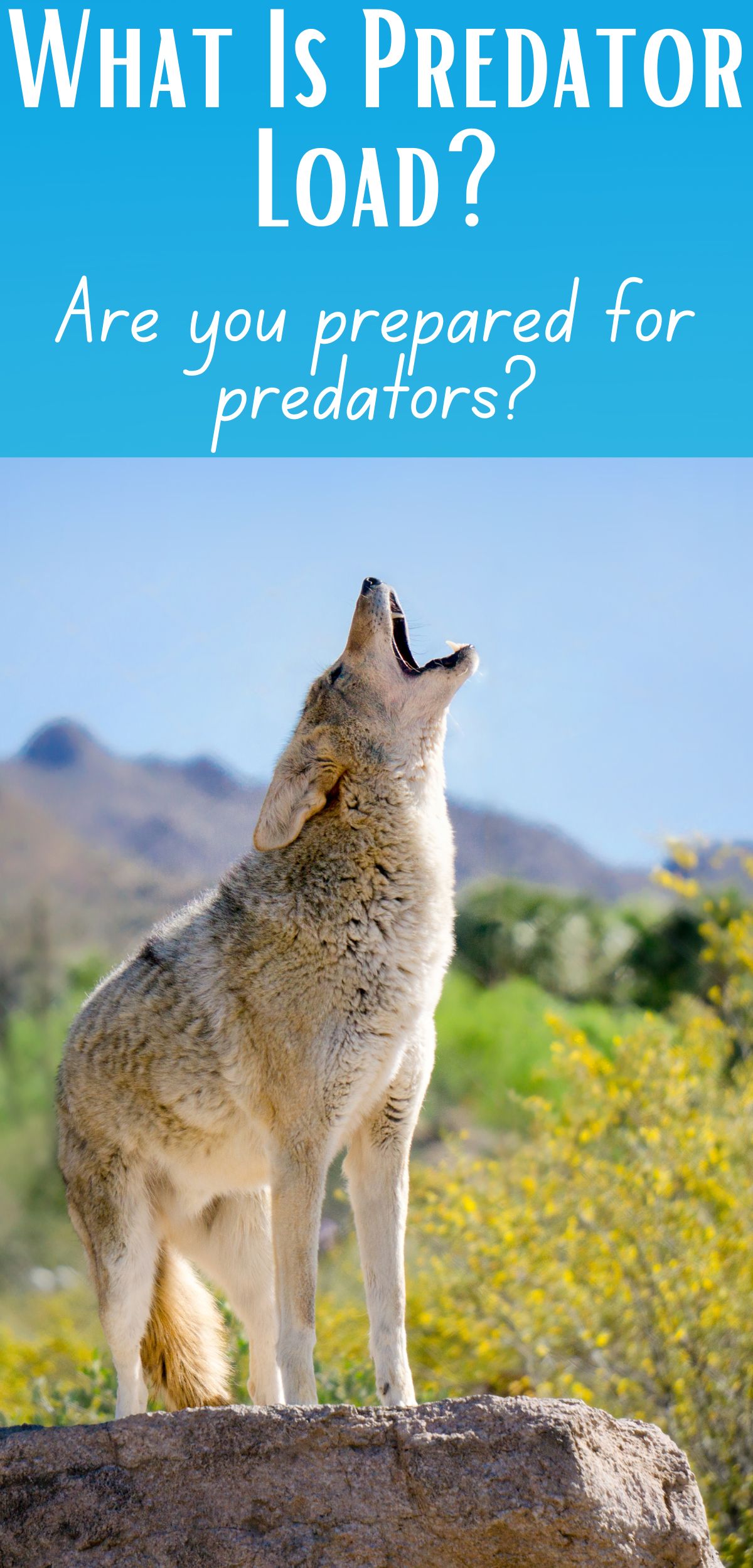
What Is Predator Load

September 14, 2024 by Leigh 6 Comments

Up till recently, we have been very lucky when it comes to predators. In our immediate area, we have a couple coyote dens on the surrounding properties and the typical skunks, opossum, fox and minx. We also have a couple of bears and bobcat, too. But what is a homestead predator, what is predator load and why is it important?

The Ultimate Homesteader’s Starter Bundle – Only $47!

Get the tools you need to stay organized, track profits, and manage your homestead with ease!

Includes:
✅ Schedule F Tracker – Simplify tax prep
✅ Profit Calculator – Track earnings
✅ Hay Calculator – Plan livestock feed
✅ Garden Journal – Digital & printable
✅ Herd Health Tracker – Monitor animal care
✅ Simple Budget – Manage finances
✅ Backyard Homestead eBook – Essential tips

$99 value – now just $47! Start your homesteading journey today!

Buy Now

Let’s First Answer: What is a predator?

A predator is simply any creature that wishes, is programmed and is able to do harm. That is a very broad definition right? But the reality is that anything could be a predator. The rabbit in your garden is a predator because it wants to harm (eat) your plants. A chicken is a predator to plants and bugs, sometimes each other.

Large black, white and brown goat

It’s natural to think that predators are only big, scary animals with bigger teeth and claws. And while that is correct, you also have to broaden your definitions when you homestead or care for any kind of livestock. And, it’s not just other animals you have to be careful of. Humans are just as bad, if not worse predators.

What is Predator Load?

By definition, predator load is the amount of predators that come through your property or surrounding area. It could be high, moderate, or low and it can be seasonal as well. If you don’t know your predator load, I would start talking to your neighbors, local extension office, or Google. I would also do this prior to getting livestock.

Want the Ultimate Bug Out Bag? Enjoy the ultimate tactical backpack for an insanely cheap price

Just by knowing our neighbors and having their phone numbers, we have successfully avoided several attacks. We alert our neighbors, or they alert us, and we get outside with our animals or put them up.

If you don’t have access to those things, I would hold off on getting any livestock until you have a better understanding on what other animals live in your area. The last thing you want is to pick up an amazing herd only to have it torn apart by bears that you didn’t know lived in your area.

Why is knowing your predator load important?

Once you know what is going to actively try and kill your animals (besides your goats trying to kill themselves), you can start planning steps to fix problems before they arise. For example; I stated above that we have coyote, bear, bob cat, minx, skunk, and opossum as our homestead predators. This tells me that I need to make sure that I have secured my chicken coop at night. It also tells me that I need to put my goats up at night too. But my day time problems, shouldn’t be too bad.

Black rooster and several chickens

Next, you need to start researching various predator deterrents. There are several non lethal methods but at the end of the day, you have to decide how you are going to protect the animals in your care. Whether that is trapping and releasing, SSS (Shoot, Shovel, Shut Up), or hoping that they decide to leave a free buffet alone. Otherwise, you’ll need to mark off a section of your property for your animal cemetery.

You can also check out this from Redfin article as well! “Whether you’re planning to raise chickens at home in Asheville, NC, Eugene, OR, or Burlington, VT, check out this Redfin article we were featured in on 5 Chicken Coop Ideas For A Thriving Flock.” The big thing to remember when it comes to deterring predators is your enclosures.

The Ultimate Homesteader’s Starter Bundle – Only $47!

Get the tools you need to stay organized, track profits, and manage your homestead with ease!

Includes:
✅ Schedule F Tracker – Simplify tax prep
✅ Profit Calculator – Track earnings
✅ Hay Calculator – Plan livestock feed
✅ Garden Journal – Digital & printable
✅ Herd Health Tracker – Monitor animal care
✅ Simple Budget – Manage finances
✅ Backyard Homestead eBook – Essential tips

$99 value – now just $47! Start your homesteading journey today!

Buy Now

How We Handle Predator Load

One of the first things we did, when it started getting cooler, was to start working on our goat barn. We knew that the coyotes were going to start coming up into the yard to find food. I was not going to risk my goats lives because I didn’t want to build them a secure enclosure for night.

https://www.wickedgoodcupcakes.com/shop-online/thinking-of-you-boxes

Another thing we did was order these. They are predator lights. We have them all over the property to help deter predators. It’s not foolproof but it does help. We’ve got them in the garden, around the chicken coop, goat barn, etc.

We also have huge dogs that we have praised for alerting us since we got them. Bear is our smallest at 75# and Kodi is our biggest at a skinny 140#, we are working to put more weight on him. This helps because most predators are not going to come into the yard of dogs that are 2-3x the size of them. We also rotate dogs in and out of the house so there is always a dog outside during the day. You can read more about how we train our farm dogs here.

kids with their XXL dogs

Lastly, we practice SSS. I really struggle with this because I don’t want to harm another animal. Especially one that is doing what it is supposed to be doing. I struggle when we butcher meat chickens. But at the same time, when I bought animals, I took on the responsibility of keeping them safe. I take that very seriously. Not just in terms of predators but also educating myself on the best possible practices for their care.

Tractor Supply

I tell you all this because we have officially lost our first chicken to a fox. I was at work and Jared sent me a text saying that our favorite chicken was killed by a fox. When I was able to call him, I got the recap. Apparently, the fox was chasing our ducks and chickens around the house before he finally caught one. Jared was too far away from the rifle and by the time he got to it, the chicken was dead and the fox was enjoying his meal. We have since beefed up our protection measures and hopefully, won’t lose anymore chickens, ducks, or goats.

Blonde and black dog

Predators No One Wants To Talk About

Lastly, I wanted to talk about the predators that no one wants to talk about. There are two; humans and their dogs. Now, this may never be a problem for you. You may never have to deal with neighbors intentionally harming your animals. But those people are out there. We have been beyond blessed that our neighbors are amazing. But on the next mountain over? That’s a different story entirely. So how do you protect your animals from humans? Honestly, cameras are going to be your best course for any sort of legal action. Because livestock is expensive.

As for dogs? This is a lot harder. Dogs can climb fencing or dig under it. We had an incident where our neighbors dog would come over and eat our ducks and chickens. I wasn’t mad about it, per se. The dog was doing what her breed is supposed to do. But it was a frustrating. Luckily, our neighbors are awesome and he fixed the problem on his side and we fixed it on ours. But not everyone is that lucky.

I am here to tell you that for any predator on your property, you have to make the decision on what YOU are comfortable with. If you aren’t comfortable with SSS, then you are going to go the extra length to secure your animals. If you can’t, then maybe don’t get animals. Dealing with predators comes down to your personal ethics and answering the question; is my stuff more valuable than the predator?

So before you get livestock, save yourself some heartache and do some research. Not just on the types of animals, breeds, and their care. Research the predator load in your area, how to handle it, and how you are going to deal with the predator that maims or kills your favorite chicken.

If you like the content I put out, feel free to buy us a coffee! It helps keep this site running, marketing and the goats in grain!

Buy me a coffee

If you like this post, feel free to share it and follow us below on our social media accounts!

  • Facebook
  • Pinterest
  • Instagram
  • YouTube
  • TikTok
  • Spotify
  • Threads

Filed Under: Animals, Chickens, Farm Dogs, Goats, Homestead Planning, Our Homestead, Pigs Tagged With: Chickens, Eggs, Goats, Homestead

JOIN TO OUR MAILING LIST!

Leave us your email to receive new posts and special offers for members only! Don't miss a thing!

Recent Posts

  • Fall Garden Guide
  • Top Mistakes With Goats
  • How To Bond With Your Goats

Building Your Own First Aid Kit

July 27, 2024 by Leigh Leave a Comment

Personally, I would look into building your own first aid kit because you can put everything that you want/ need in it. However, it’s going to get really expensive, really quick. The reason why first aid kits can be bought so cheap is because these companies buy the supplies in bulk and then build the kit. However, if you build your own, you get to build it specifically for your family and homestead.

The Ultimate Homesteader’s Starter Bundle – Only $47!

Get the tools you need to stay organized, track profits, and manage your homestead with ease!

Includes:
✅ Schedule F Tracker – Simplify tax prep
✅ Profit Calculator – Track earnings
✅ Hay Calculator – Plan livestock feed
✅ Garden Journal – Digital & printable
✅ Herd Health Tracker – Monitor animal care
✅ Simple Budget – Manage finances
✅ Backyard Homestead eBook – Essential tips

$99 value – now just $47! Start your homesteading journey today!

Buy Now

Building Your Own First Aid Kit

But one of the things I’ve found is that most commercial first aid kits aren’t enough. They aren’t bad at all, especially for a civilian/ non medical person. In fact, I would go so far as to say that commercial first aid kits are actually great, for those that don’t have a clue what to put in one. Or they don’t want the hassle of building their own. But commercial kits just don’t have enough stuff. There aren’t nearly enough gloves, medicines, tape, etc for most situations. Or if there’s enough of those things, there isn’t enough.

I talked here about the best first aid kits for homesteaders, and I stand by that post 100%. But if you are looking to build a more robust first aid kit, then keep reading! PS: this post is affiliate link heavy. If you would like to learn more about our affiliate links, click here.

This blog post is going to be laid out by type of first aid kit. For example, the first section would be for a car, tractor, UTV style kit and what I would put in it.

Please remember, this is coming from a paramedic, not a physician and is not meant to be medical advise.

goat kidding

Before we get too far into this, I have a great course on the basics of goat care. I call it Goat Crash Course: Goat 101. In this course, I explain things like types of shelter, types of feeds and hays, basic assessments and so much more! Check it out!

Buy Now

Building Small First Aid Kits

Small bags like this are absolutely fantastic for small places like your car, tractor, or UTV. You can cram a fair amount of things in this, but remember this is for small injuries or until you can get to a bigger bag or supply. We aren’t trying to stuff an entire first aid kit into this little bag.

For a small bag, I would keep things like band aids, 5 or so antiseptic wipes like these, 5 or so triple antibiotic packets, 1 or 2 compressed gauze like these, a pair of scissors, a CPR face shield, an emergency blanket and small packets of pain medicines like these. I would consider putting gloves in this bag, but you need to make sure they fit you.

A couple boxes of nitrile gloves will set you back about $8/ box but it’s worth it to make sure that you don’t have gloves that fit. Gloves that are practically sliding off your hands or break when you put them on because they are too small.

If you are of an age where you are at an increased risk for heart attack, I would recommend getting some aspirin packs as well but talk to your physician.

Are you getting overwhelmed in the garden? Stressed? Or just not enjoying the garden like you used to? Check out our garden prompts! We send out weekly emails that get you back in the garden and out of your head! Turn the garden back into a place of love and joy instead of frustration and headache!

Subscribe Now!

Building Your Own First Aid Kit: The Big Bag

This is a decent sized medium bag for building your own first aid kit. You can fit a lot in these bags and you don’t need to have a huge bag to do so. This bag could also fit in your car, truck or other every day ride. It can easily fit in a close, tractor compartment or even strapped to a UTV.

As with the small bag above, you are going put 5 or so antiseptic wipes like these, 5 or so triple antibiotic packets, 1 or 2 compressed gauze like these, a pair of scissors, a CPR face shield, a couple emergency blankets and small packets of pain medicines like these. If you have more space, or you think you could use it, put the entire box of these things into the bag. You don’t have to, but make sure that you have plenty.

You are also going to put in a couple tourniquets. While you may not think you need one, remember, the average response time for an ambulance to get to you is 8 minutes. If you live out in the country, it’s probably closer to 20 minutes. You can bleed out from your leg in less than 4 minutes. Get a tourniquet.

Bandaging and supplies are going to take up the majority of the bag, which is why it’s got it’s own section.

If you are new to heating with firewood and are looking to master the finer points of it. We’ve got a great eBook that goes in depth of what tools you should consider, how and where to stack, how to build a fire and so much more!

Buy Now

Bandaging Needs It’s Own Section

I was going to try and cram bandaging into each section but there is a lot of stuff to know and use when it comes to bandaging. So to try and stuff it into a few sentences wouldn’t work. Bandaging is not just for cuts but also for broken bones, head wounds, etc. So there are a lot of small pieces to make sure that you’ve got in your first aid kit.

Now, most commercial kits will send you like 4 4×4 gauze in packaging. Let me tell you that when I’ve got a patient who is bleeding, the last thing I’m trying to do is rip open packaging. You want to get what’s called a loaf. It’s a ton of 4×4 non sterile dressings. You’ll want to get some of those sterile gauze sure, but I prefer my loafs. Then you’re going to want some sort of wrap. I like these the best, but the elastic wraps are great too. Don’t forget tape!

Then, you need stuff for splinting. I like these universal splints because you can splint just about anything with them. If money is an issue, you don’t have to have splints. You can absolutely make them from just about anything as long as it fits to the injury and is doesn’t bend. So a stick, wooden spoon, T-post, you get the point. Just make sure that you secure it well so that it doesn’t move.

Pressure bandages are great for wounds that require pressure to stop the bleeding but you are a little busy with other things, like driving the tractor out of the pasture.

Now, combine or abdominal pads are fantastic for injuries. But don’t feel like you HAVE to get them. In fact, if you apply a couple 4x4s and a pressure bandage, you really don’t need abdominal pads. But they do have their place and I like them. These pads are great for big wounds that you are struggling to get the bleeding to stop.

The Ultimate Homesteader’s Starter Bundle – Only $47!

Get the tools you need to stay organized, track profits, and manage your homestead with ease!

Includes:
✅ Schedule F Tracker – Simplify tax prep
✅ Profit Calculator – Track earnings
✅ Hay Calculator – Plan livestock feed
✅ Garden Journal – Digital & printable
✅ Herd Health Tracker – Monitor animal care
✅ Simple Budget – Manage finances
✅ Backyard Homestead eBook – Essential tips

$99 value – now just $47! Start your homesteading journey today!

Buy Now

Miscellaneous Items For A First Aid Kit

I would get some form of eye wash. You do not have to get anything that is marked specifically for emergency use. Realistically, eye was is just saline. So get that. You can also use this for a wound wash as well. If you get a deep cut, this would help get all that nasty out from inside it.

Anti-choking device… Yes, I know we don’t want to think about it, but the reality is that if you have humans who eat, someone is going to choke one day. Unfortunately, most people either can’t or don’t know how to do abdominal thrusts to clear an airway. Or if you can’t get the leverage to do effective abdominal thrusts, you can’t clear the airway. Having a device similar to what is linked could literally save your or your family’s life.

CPR Masks– For same reason above, get one. The ones that I linked have a mount piece so you don’t have to get that mouth to mouth with Uncle Jim Bob. Now, the AHA is no longer recommending rescue breaths. But that doesn’t mean that you can’t or shouldn’t do it. And honestly, bystander CPR is literally the #1 reason that a lot of people walk out of the hospital after cardiac arrest. Because remember, the national average to get an ambulance is 7-8 minutes. After 6 minutes with no oxygen, you are brain dead.

The Ultimate Homesteader’s Starter Bundle – Only $47!

Get the tools you need to stay organized, track profits, and manage your homestead with ease!

Includes:
✅ Schedule F Tracker – Simplify tax prep
✅ Profit Calculator – Track earnings
✅ Hay Calculator – Plan livestock feed
✅ Garden Journal – Digital & printable
✅ Herd Health Tracker – Monitor animal care
✅ Simple Budget – Manage finances
✅ Backyard Homestead eBook – Essential tips

$99 value – now just $47! Start your homesteading journey today!

Buy Now

What You DON’T Need In A Kit

There are a ton of kits out there that have a lot of things that you will probably never use. Things like quick clot, benzoin swabs, cold packs, and more. You are literally wasting your money.

You don’t need suturing material for your first aid kit. You don’t need tongue depressors.

Tons of different style of band aids aren’t necessary either. You can literally use 4×4’s and pads until you can clean up the wound at home or get sutures at the emergency room.

Our herd health bundle helps you keep track of your herd’s health. Includes the goat assessment, herd check sheets AND Herd Health Tracker!

Buy Now

Take Aways For Building Your Own First Aid Kit

First and foremost, take the time to learn how to use the various supplies that you are purchasing. This goes for a commercial kit or one that you’ve build. Know what you are getting and how to use them.

Make sure to have multiple kits. I would have a first aid kit of some sort in every vehicle, UTV/ tractor, etc and then a fully stocked kit or go bag in the house. If we are going to be dangerous things like chain sawing, building, or anything that requires sharp tools, I would take a go bag with me. Mainly because your first aid kit does you no good in the house.

Remember, when it comes to first aid kits, you aren’t necessarily trying to fix the injury or illness right there. You are simply trying to stabilize it until you get help.

The only one that I can think of off the top of my head that you are trying to fix is when someone’s heart stops. That we need to fix right now. If you would like more information about how to do bystander CPR, check out Project Adam and watch the videos linked.

Also, remember to restock your bags after use. If you haven’t used them, I would make sure to go through and check them every 6 months or so. For us, it’s spring and fall.

If you like the content I put out, feel free to buy us a coffee! It helps keep this site running, marketing and the goats in grain!

Buy me a coffee

If you like this post, feel free to share it and follow us below on our social media accounts!

  • Facebook
  • Pinterest
  • Instagram
  • YouTube
  • TikTok
  • Spotify
  • Threads

Filed Under: Emergency Preparation Tagged With: emergency, First aid, Homestead, preparedness

JOIN TO OUR MAILING LIST!

Leave us your email to receive new posts and special offers for members only! Don't miss a thing!

Recent Posts

  • Fall Garden Guide
  • Top Mistakes With Goats
  • How To Bond With Your Goats

Best First Aid Kits For Homesteaders

July 23, 2024 by Leigh Leave a Comment

As a paramedic in real life, I am constantly shocked by how many people don’t have a basic first aid kit! You would be surprised how many times we are asked for band aids! That being said… I don’t have a first aid kit…. It’s more like a pantry. You should have a first aid kit of some sort, whether it is bought or built doesn’t matter. So today I wanted to talk to you about first aid kits but also the ones I have found that fit into the best first aid kits.

The Ultimate Homesteader’s Starter Bundle – Only $47!

Get the tools you need to stay organized, track profits, and manage your homestead with ease!

Includes:
✅ Schedule F Tracker – Simplify tax prep
✅ Profit Calculator – Track earnings
✅ Hay Calculator – Plan livestock feed
✅ Garden Journal – Digital & printable
✅ Herd Health Tracker – Monitor animal care
✅ Simple Budget – Manage finances
✅ Backyard Homestead eBook – Essential tips

$99 value – now just $47! Start your homesteading journey today!

Buy Now

Best First Aid Kits For Homesteaders

The best first aid kits are going to be ones that actually work. It doesn’t matter how much money you spend (or don’t), the best kit is going to be one that you use, is easy to carry, and actually has the supplies you need. At the very bottom of this post, I am going to give tell you what is in my first aid pantry and my “go bag”.

I’m going to list these kits out in price ranges so that you can find something within your budget. Towards the bottom of this post, I’m going to give you extra purchases. These are items that I think you could absolutely use but most kits doesn’t have this stuff in them.

If you are looking to build your own, I did this blog post to help you out.

I’m going tell you which one of these kits are FSA/HSA eligible. Lastly, this post is affiliate link heavy. If you would like to learn more about our affiliate links, click here.

Please remember, this is coming from a paramedic, not a physician and is not meant to be medical advise.

Our herd health bundle helps you keep track of your herd’s health. Includes the goat assessment, herd check sheets AND Herd Health Tracker!

Buy Now

Best First Aid Kits Under $50

General Medi– This first aid kit would be pretty good for in your car, tractor, 4 wheeler or side by side. It is not meant to be an end all be all. But it will work well until someone could get to you with a bigger kit. It’s also got a CPR mouth guard which is fantastic. But since AHA is moving away from rescue breaths this is really a non issue. It’s FSA/HSA eligible and it’s less than $30 as of this writing.

M2 Basics- This one is better because it has more wraps and other bandaging supplies. It’s has a hard case and is mountable, which will make it easier to have at the house. You could absolutely put it in your car, tractor, etc but it will take up more room. I couldn’t find if it was FSA/HSA eligible. It’s less than $50 as of this writing.

Be Smart First Aid Kit– This kit is also mountable and has pretty much the same as the other kits, but with one main difference, there’s medications in this kit. It is also mountable but again, this is not a small kit so you will end up not being able to store it easily in cars, tractors, etc.

cropped-3.jpg

Are you looking for garden journal prompts, but aren’t interested in a weekly email? Check out our 365 Garden Journal Prompts! This is an amazing, all in one, yearly product that you only pay for once.

Buy Now!

Best First Aid Kits Under $100

Comprehensive First Aid– This kit is significantly better than those listed above. It gives you splinting materials, trauma dressings, and more. This is the bag that should be coming with you when you are going out to work on the homestead. It’s under $100 but I think this one is worth the price point. I can’t find if it’s FSA/HSA eligible though.

Ever Ready First Aid Kit– This kit is a great compact little kit that has almost everything you need for just about any situation… except, it doesn’t have splinting supplies. Not a deal breaker because you can make do without but moving someone with a broken bone hurts. It is FSA/HSA eligible and as of this writing is $85.

Lightening X– This kit is made by first responders/ EMT’s, which is weird because this isn’t necessarily the kit I would make. BUT it is a good kit for a civilian to have and everything in it is usable. This kit would be more for someone that has some first aid knowledge since it’s not labeled. But again, it’s got a lot of good stuff in it. It’s about $90 and I can’t find if it’s FSA/HSA eligible.

goat kidding

Before we get too far into this, I have a great course on the basics of goat care. I call it Goat Crash Course: Goat 101. In this course, I explain things like types of shelter, types of feeds and hays, basic assessments and so much more! Check it out!

Buy Now

Best First Aid Kits Over $100

Most of these kits you are paying for the bag, not necessarily the items in it. So keep that in mind as you are looking at these.

Luminary Tactical– This is a great, but bulky first aid kit. It has some things that you will probably never use, like OPA’s, C-collar, and sutures. But it’s there if you do know how to use them. This kit is pricey at $200 but again, it’s robust and covers most of your bases. I can’t find if it’s FSA/HSA eligible.

Lightening X Tac Med– Lightening X makes the list again. This one is more geared for an event medical personnel stand point but it is still a solid first aid kit. I love the removable pouches so that you can just grab that one pouch instead of having to empty out your entire kit. Again, there are things that you will probably never use, like the mask and oxygen tubing but that’s not a deal breaker. This kit is pretty pricey coming in at $330 but it is FSA/HSA eligible.

Advanced Aventurer– This bag would be perfect for most civilian, non medical person. It has just about everything to cover you from minor sprains to lacerations and just about anything in between. It’s a good sized bag without being overbearing like the other two in this list. It’s not horribly priced but definitely not cheap at $300.

The Ultimate Homesteader’s Starter Bundle – Only $47!

Get the tools you need to stay organized, track profits, and manage your homestead with ease!

Includes:
✅ Schedule F Tracker – Simplify tax prep
✅ Profit Calculator – Track earnings
✅ Hay Calculator – Plan livestock feed
✅ Garden Journal – Digital & printable
✅ Herd Health Tracker – Monitor animal care
✅ Simple Budget – Manage finances
✅ Backyard Homestead eBook – Essential tips

$99 value – now just $47! Start your homesteading journey today!

Buy Now

Take Aways For Best First Aid Kits

The importance of a good, well stocked first aid kit cannot be underestimated. Unfortunately for most people, they don’t put enough thought into their first aid kid (or lack or one) until it’s too late. And people don’t put enough thought into HOW to use their first aid kit. If they even have one, they just throw it in the car or under the sink and never think about HOW to use what’s in it. So do yourself and your loved ones a favor and learn how to use the kit, how to do CPR, and how to bandage, splint, etc.

As much as you may not want to, please take the time to learn the basics of CPR, how to stop bleeding, place a tourniquet, and bandaging/ splinting. I can’t tell you how many people I’ve encountered over the years that have told me, I wish I would have learned how to do this. Because a lot of the time, it’s their family member on the line.

Imagine with me, just for a second, that you are building a shed and your son walks past a panel of sheet metal. He gets nailed on the leg with that sheet metal and he now has a deep laceration on his leg. He’s bleeding everywhere. What are you going to do? Do you have anything on hand to help stop the bleeding? Do you know how to stop the bleeding? What if it’s shooting blood out? Do you know what that means?

That scenario happened to us, here on our homestead. My youngest son was walking past sheet metal as him and Jared were building the metal chicken coop. Thankfully, we had rags and knew what to do. Thankfully, it wasn’t spurting blood. But that was a trip to the emergency room for 3 stitches to reattach the muscle and another 13 to close him up.

Injuries can happen to ANYONE and if you don’t know what to do, you will be in a bind. So get the first aid kit.

If you like the content I put out, feel free to buy us a coffee! It helps keep this site running, marketing and the goats in grain!

Buy me a coffee

If you like this post, feel free to share it and follow us below on our social media accounts!

  • Facebook
  • Pinterest
  • Instagram
  • YouTube
  • TikTok
  • Spotify
  • Threads

Filed Under: Emergency Preparation Tagged With: emergency planning, First aid, Homestead, preparedness

JOIN TO OUR MAILING LIST!

Leave us your email to receive new posts and special offers for members only! Don't miss a thing!

Recent Posts

  • Fall Garden Guide
  • Top Mistakes With Goats
  • How To Bond With Your Goats

Homesteading: Start Where You’re At

July 6, 2024 by Leigh Leave a Comment

If you are reading this and you want to homestead, but you aren’t there yet, I’ve got some great advice for you: Start where you’re at. That’s it. It doesn’t matter if you are in an apartment, a townhouse or in a subdivision with a quarter acre lot. Start where you’re at. You don’t need tens of acres in the country to start a garden. You don’t need to be in the country to have a couple chickens. You can absolutely start where you’re at and start pushing the needle to get to where you want to be.

The Ultimate Homesteader’s Starter Bundle – Only $47!

Get the tools you need to stay organized, track profits, and manage your homestead with ease!

Includes:
✅ Schedule F Tracker – Simplify tax prep
✅ Profit Calculator – Track earnings
✅ Hay Calculator – Plan livestock feed
✅ Garden Journal – Digital & printable
✅ Herd Health Tracker – Monitor animal care
✅ Simple Budget – Manage finances
✅ Backyard Homestead eBook – Essential tips

$99 value – now just $47! Start your homesteading journey today!

Buy Now

How To Start Where You’re At

One of the things I hear over and over from people who want to homestead is that they can’t start until they have X. Whether that is land, time, money, or any other made up reason. The reality is that they are excuses, however valid. I have yet to meet or talk to anyone that has a valid reason for not starting where they are.

In an effort to not have a million word blog post, I’m going to talk about the most common reasons that I have heard from people who want to homestead but have said they can’t. Those reason have ranged, but the most common ones I hear is: I don’t have the land. I don’t have the time. Or my favorite, I don’t know where to start.

goat kidding

Before we get too far into this, I have a great course on the basics of goat care. I call it Goat Crash Course: Goat 101. In this course, I explain things like types of shelter, types of feeds and hays, basic assessments and so much more! Check it out!

Buy Now

I don’t have the land to garden

Let me tell you this: you do not have to have a lot of land to start gardening. When we lived in Texas, we lived on a quarter acre and had a small 20x15ft garden. It was tiny, but it provided fresh eating! But more importantly, it taught me how to start and grow plants!

I’ve talked here about when to start a garden, and yes, it’s based on an emergency garden. But I specifically talk about how gardening is a muscle. You have to use it to grow it. I have gardened for over 15 years, but every place that you garden is different and there is so much to learn!

If you don’t have space for a garden because you live in an apartment, start with containers. You can effectively grow tomatoes in a gallon pot (though bigger is better). Squash, cucumbers, beans, strawberries, and so much more absolutely love containers! You don’t need to put them in the ground to have a garden!

Are you getting overwhelmed in the garden? Stressed? Or just not enjoying the garden like you used to? Check out our garden prompts! We send out weekly emails that get you back in the garden and out of your head! Turn the garden back into a place of love and joy instead of frustration and headache!

Subscribe Now!

I don’t have enough land to have animals

I don’t know what kind of animals you want to have, but you can absolutely have chickens in a small space. Sure, the more space they have, the better but you don’t have to have a ton of acreage to have a couple chickens.

But you live in the city? Check your local laws and regulations and see if you can have chickens. Most places, especially now, are fine with a couple chickens. Check it out.

If you live on a small plot but don’t have to worry about laws and regulations, sheep are a great way to keep your lawn mowed. Plus, most of them are happy to stay put. I don’t recommend goats in small spaces because they will Houdini out of a space if they want into your garden.

Yes, you will need space if you want larger livestock like cows. But there is no reason why you can’t start where you’re out and start working towards something bigger.

Our herd health bundle helps you keep track of your herd’s health. Includes the goat assessment, herd check sheets AND Herd Health Tracker!

Buy Now

I don’t have the time

Look, I get it. I don’t have a ton of time either and I HAVE a homestead. I work full time, plus have a couple part time jobs. Not to mention the homestead and homeschooling our boys. I understand the time crunch. But don’t let that get in the way.

There are a lot of ways to work gardening and animals into your life. For example, our kids take care of the goats and chickens while we supervise. We handle the gardens. If you don’t have kids, or they are too little, start small. Get the chickens in the winter when you don’t have much going on. Then expand as you have time.

Another thing that can be tough is harvesting and preserving the garden. The best way I have found to help with this is to dehydrate as much as possible. It really helps with storage space and it takes very little time to actually prep and put up.

cropped-3.jpg

Are you looking for garden journal prompts, but aren’t interested in a weekly email? Check out our 365 Garden Journal Prompts! This is an amazing, all in one, yearly product that you only pay for once.

Buy Now!

I don’t know where to start

I think out of all the reasons that people give to delay starting a homestead, this is the most valid. The reality is that most people weren’t raised to know how to plant a garden, harvest it and then use it later. People don’t know how to take care of animals. And while that is sad, there is a way around it.

I talked here about setting homestead goals and here about a brain dump. And these are two exercises to really look at why you want to homestead. Is it because you want to garden? Or do you want goats for milk? Why do you want to homestead? Once you’ve figured out why you want to homestead, you can start looking for ways to start where you’re at.

If you want to raise goats for milk, but you live in an apartment, this is a challenge. But you can start talking to goat owners about how it all works. YouTube is a great way to get started too. Learning everything you can while you are working towards getting land is a great way to be prepared when the time comes.

If you want to homestead for a garden? Start working what you have now. Depending on the space you have, you could absolutely have a container garden on your apartment patio! It may not feed you through the winter, but it can feed you now. Plus, you get to learn all the nuances of planting seeds, growing plants and harvesting. And all of this is on a scale small enough that you don’t have to freak out if something goes wrong.

Before we get too far into this, I have a great course on the basics of goat care. I call it Goat Crash Course: Goat 101. In this course, I explain things like types of shelter, types of feeds and hays, basic assessments and so much more! Check it out!

Buy Now

Don’t be afraid to fail

One of the biggest lies we have been told is that failure is bad. Failure is a teaching tool. It’s okay to fail, though sometimes the consequences for failure is death. We have lost more goats than I really want to admit. We’ve lost hundreds of chickens and ducks. The amount of food that has been “wasted” is kind of ridiculous. But at the end of the day, we are learning. We aren’t perfect.

We don’t have anyone to teach us how to live this life. No one to hold our hand and show us how to butcher animals, grow a garden, or any other skill that we have learned.

We plan for failure because that makes more sense than planning for everything to go right.

The Ultimate Homesteader’s Starter Bundle – Only $47!

Get the tools you need to stay organized, track profits, and manage your homestead with ease!

Includes:
✅ Schedule F Tracker – Simplify tax prep
✅ Profit Calculator – Track earnings
✅ Hay Calculator – Plan livestock feed
✅ Garden Journal – Digital & printable
✅ Herd Health Tracker – Monitor animal care
✅ Simple Budget – Manage finances
✅ Backyard Homestead eBook – Essential tips

$99 value – now just $47! Start your homesteading journey today!

Buy Now

Taking the first step

I know that sometimes that first step is the hardest to take. I know that it’s terrifying. I know that the fear of failure keeps a lot of us on the sidelines. But I also know that this life is the hardest and most rewarding things I have ever done.

If you like the content I put out, feel free to buy us a coffee! It helps keep this site running, marketing and the goats in grain!

Buy me a coffee

If you like this post, feel free to share it and follow us below on our social media accounts!

  • Facebook
  • Pinterest
  • Instagram
  • YouTube
  • TikTok
  • Spotify
  • Threads

Filed Under: Homestead Planning

JOIN TO OUR MAILING LIST!

Leave us your email to receive new posts and special offers for members only! Don't miss a thing!

Recent Posts

  • Fall Garden Guide
  • Top Mistakes With Goats
  • How To Bond With Your Goats

Homesteading On A Budget

June 18, 2024 by Leigh Leave a Comment

This blog has been up and running for several years now and one of the topics that I don’t usually cover is finances. There’s a lot of reason for that, but one of the biggest is that I don’t feel overly qualified to offer a lot of financial advise. I can’t tell you who you should invest your money with or the best way to raise your credit score. But I do feel qualified to tell you how we do things here on our homestead. So here is how we have tackled homesteading on a budget.

The Ultimate Homesteader’s Starter Bundle – Only $47!

Get the tools you need to stay organized, track profits, and manage your homestead with ease!

Includes:
✅ Schedule F Tracker – Simplify tax prep
✅ Profit Calculator – Track earnings
✅ Hay Calculator – Plan livestock feed
✅ Garden Journal – Digital & printable
✅ Herd Health Tracker – Monitor animal care
✅ Simple Budget – Manage finances
✅ Backyard Homestead eBook – Essential tips

$99 value – now just $47! Start your homesteading journey today!

Buy Now

Homesteading On A Budget

First and foremost, you should absolutely have a budget. Not just for your regular finances, but also for any projects or animals you have. One of the things I have seen over and over, and fell victim to ourselves, is not having a solid budget. Next, you should always plan for failure. While it may seem counter productive, it’s always better to be ready for failure than caught with your pants down. Finally, you should never, ever rely on new income sources to cover something.

This isn’t an end all be all list of homesteading on a budget. But it is a place to start.

Start With A Budget

It is shocking to me that even now, in 2024, people still don’t have or know how to budget. This is so weird to me because we’ve always had a budget. It’s a product of growing up poor and staying poor for a long time. Hell, having a budget is what eased us out of poverty and into solidly middle income.

When it comes to homesteading, you should have your regular budget for paying bills and getting food, gas, clothing, etc. But you should also be budgeting what projects, animals or other “add ons” you will be adding to your homestead.

A prime example of this was the greenhouse. We knew that we wanted a greenhouse and that we did not want a kit greenhouse. So we had to figure out how to build it, draw it up, purchase materials and begin. The problem with any project like this is that you are going to forget something. So making sure to have an extra buffer built into your budget is a great way to not get stuck.

The Ultimate Homesteader’s Starter Bundle – Only $47!

Get the tools you need to stay organized, track profits, and manage your homestead with ease!

Includes:
✅ Schedule F Tracker – Simplify tax prep
✅ Profit Calculator – Track earnings
✅ Hay Calculator – Plan livestock feed
✅ Garden Journal – Digital & printable
✅ Herd Health Tracker – Monitor animal care
✅ Simple Budget – Manage finances
✅ Backyard Homestead eBook – Essential tips

$99 value – now just $47! Start your homesteading journey today!

Buy Now

Types of Budgets

It doesn’t necessarily matter what kind of budget you use. This post from Nerd Wallet is a great place to get started if you need a little more help figuring out what kind of budget will work for you. It could be a zero budget, where every penny of income is accounted for and you zero out your bank account every month. It could be the 50/30/20 budget were 20% goes to savings, 30% goes to wants, and 50% goes to necessities. Or a pay yourself first budget that focuses on savings first.

We follow a mix of these budgets. Because I am a spender and Jared is a saver, we use that to our advantage. Basically, just enough money goes into our main account to pay bills, take care of the homestead and some “fun” money. Then the rest goes into his savings to cover bigger projects for the homestead, putting money back for big purchases like purchasing a whole cow or into our emergency fund.

The most important thing is to have a budget and that it accounts for everything. A budget that doesn’t account for chicken feed isn’t going to do you any favors if you are constantly having to dip into other funds to pay for your chicken feed.

Before we get too far into this, I have a great course on the basics of goat care. I call it Goat Crash Course: Goat 101. In this course, I explain things like types of shelter, types of feeds and hays, basic assessments and so much more! Check it out!

Buy Now

Planning For Failure

I wrote a blog post about planning for failure here, but it’s mostly geared towards earning an income from the farm. It doesn’t really talk about planning for failure on plain ole homestead. So I wanted to touch on what planning for failure means to your budget and homestead.

Planning for failure on the homestead really revolves around having back up plans. It’s the same idea that you won’t start an emergency garden in the middle of an emergency. You should start it when you don’t HAVE to rely on it to feed you. That way you can learn and grow that muscle first.

Planning for failure looks like having 2 proven milk goats if you are trying to move away from store bought milk and cheese. Because if one of those goats goes down, you have a back up. It’s better to have to figure out what to do with too much milk, than not enough.

But when it comes to finances, it means that a $1,000 emergency fund is not enough. To be honest, regardless if you homestead or not, that is a tiny emergency fund to start with, especially with inflation. But on a homestead, it’s WAY too small. If your well pump goes out, that can be a $3,000 fix. A call and visit to the vet can easily rack up thousands of dollars.

As you are setting up your budget, make sure that you are taking into account what will happen if your garden fails and you don’t get a lot of food. Take into account a freezer failing at any point. Make sure that you have back up plans.

Are you getting overwhelmed in the garden? Stressed? Or just not enjoying the garden like you used to? Check out our garden prompts! We send out weekly emails that get you back in the garden and out of your head! Turn the garden back into a place of love and joy instead of frustration and headache!

Subscribe Now!

Never Count Chickens Before They Are Sold

Everyone is guilty of expecting one thing to happen, and then it either doesn’t or something worse happens. It’s equally true here. In fact, this saying exemplifies homesteading. Do not expect that 50 tomato plants will produce enough for your family until you have consistently maxed those plants production.

If you are working on a new income stream, like a farmers market, don’t rely 100% on that to feed your family. You should absolutely hustle like it’s the only income you’ll have, but you should plan that it won’t. Just in case.

If I had quit my job to focus on the farmers market, we would have been sunk. If I had quit my job to focus on this blog, we would have been sunk. And yes, you should go at every new venture as if your life depends on it, but in these crazy times, I’m not willing to risk my family, finances, and farm to rash decisions.

The Ultimate Homesteader’s Starter Bundle – Only $47!

Get the tools you need to stay organized, track profits, and manage your homestead with ease!

Includes:
✅ Schedule F Tracker – Simplify tax prep
✅ Profit Calculator – Track earnings
✅ Hay Calculator – Plan livestock feed
✅ Garden Journal – Digital & printable
✅ Herd Health Tracker – Monitor animal care
✅ Simple Budget – Manage finances
✅ Backyard Homestead eBook – Essential tips

$99 value – now just $47! Start your homesteading journey today!

Buy Now

How Homesteading On A Budget Works For Us

I’ve mentioned in various points how we do it, but I will condense it down all right here for you.

First, we work full time jobs and that pays our bills, projects, and other homestead stuff. We are not at a point where the farm can sustain us. Plus, we really like our jobs.

Second, we try to only take on projects that can be self sustaining. That means that we don’t want to have to work our asses off off farm, to pay for the farm. So little to no inputs to keep that project running. For example, we don’t feed a lot of feed to our chickens. They get kitchen scraps, from home and work, and forage for bugs and grass.

Third, we use our financial habits to our advantage. Jared saves money, I don’t. So I’m not in charge of saving money. I get the bills paid, food/feed bought, and plan projects. Jared saves every penny so that when the time comes, we can build the new decks, purchase meat animals, etc.

Fourth, we account for EVERYTHING and plan for failure. This helps keep things from popping up. And while there are still surprises, it’s not as terrifying because we have back up plans to the back up plans.

Fifth, we have monthly, quarterly and yearly finance meetings were we sit down and actually go through our finances and figure out what is happening, is it working and where we want to go from here. I am a firm believer in money talks with the whole family, but specifically your spouse.

Finally, while we hold each other accountable, we also give grace. Life is hard, there is not reason to make it harder by constantly arguing with your person about money. So keeping accountability is important, but so is kindness and grace.

If you like the content I put out, feel free to buy us a coffee! It helps keep this site running, marketing and the goats in grain!

Buy me a coffee

If you like this post, feel free to share it and follow us below on our social media accounts!

  • Facebook
  • Pinterest
  • Instagram
  • YouTube
  • TikTok
  • Spotify
  • Threads

Filed Under: Frequently Asked Questions, Homestead Planning Tagged With: budget, Goats, homesteading

JOIN TO OUR MAILING LIST!

Leave us your email to receive new posts and special offers for members only! Don't miss a thing!

Recent Posts

  • Fall Garden Guide
  • Top Mistakes With Goats
  • How To Bond With Your Goats

Making Homestead Changes

June 15, 2024 by Leigh Leave a Comment

Sometimes, and I would say with regularly, your life will change. It could be massive changes that totally rip your world apart, taking your sense of stability, safety and self away. Or it could be tiny, miniscule changes that feel good that you realize actually help you. And we all know that change is hard. Sometimes those changes make you feel like a failure, especially when it comes to your hopes and dreams. But I wanted to give you some examples of making homestead changes that we have made over the last year. I want to give you our reasoning, thoughts and how it’s working out. So that maybe, you won’t be so overwhelmed or frustrated with your own changes.

The Ultimate Homesteader’s Starter Bundle – Only $47!

Get the tools you need to stay organized, track profits, and manage your homestead with ease!

Includes:
✅ Schedule F Tracker – Simplify tax prep
✅ Profit Calculator – Track earnings
✅ Hay Calculator – Plan livestock feed
✅ Garden Journal – Digital & printable
✅ Herd Health Tracker – Monitor animal care
✅ Simple Budget – Manage finances
✅ Backyard Homestead eBook – Essential tips

$99 value – now just $47! Start your homesteading journey today!

Buy Now

Making Homestead Changes Is Hard

We have had to step back and really look at not only our homestead goals but also our family and financial goals. We had to really look at what we were spending money on and if those things really served our end financial goal. And we looked at what these things were doing to our family and if that was how we wanted to live.

We had to be really honest with ourselves and our family and make some hard decisions. And I like to think that after making these changes, we will start moving in a better and more peaceful direction.

We sold half our goat herd

This decision was a really hard one. I love my goats, all of them, but we were running into issues with hay and feed. We could afford it, but it was taking money away from other projects and savings. To feed all 15 goats for the month, I was having to spend about $1,000. That is insane.

We had to figure out who to sell and who to keep. It was an easy choice for the babies because only Goose and Maverick were being retained, all other babies were sold. Then we looked at our adults and decided that we couldn’t keep low producing mommas. So that meant that Oakley and Bailey were up. Then we looked at our bucks. Midas has been a proven breeder of healthy kids so we decided to keep him.

The goats went to a wonderful home were they get to jump and play and get all the snuggles. So I’m not terribly upset.

But making this change was important to keeping money on the farm. We are working towards retirement, not spend every penny on animals. Not to mention that it was getting overwhelming with trying to manage 15 goats plus work full time, and and and. We are down to 9 now and it’s much more manageable now.

goat kidding

Before we get too far into this, I have a great course on the basics of goat care. I call it Goat Crash Course: Goat 101. In this course, I explain things like types of shelter, types of feeds and hays, basic assessments and so much more! Check it out!

Buy Now

We decided to hold off on the farmers market this year

We paid to be apart of a locals farmers market this year and I prepped everything to center around it. As we were coming closer and closer to it, I realized that we had nothing to sell. Our chickens still weren’t producing eggs, our garden had just been put in, and I had absolutely NOTHING made to sell.

Not to mention that for us to actually make it to the market, one of us would have to be off work. Because it’s not as easy as just showing up. You’ve got to pick and wash produce, collect, wash and package eggs, load up the truck, unload the truck, and then hope that there are people at the market.

While that’s not really a big deal for most farmers, it is for us. Due to our schedules, we could really only make one market every week if we pushed it. I sat down with planners to try and figure out how we would get there and what we would sell and I just couldn’t figure out how to make it work.

Not to mention we got a late start on the garden, again. So after talking to Jared, we decided that we wouldn’t do the market just yet. We still had too many projects and things on the homestead that needed to get done. Plus, it’s easier for us to pick up shifts than to gamble that the market will pay us what we could have worked in overtime.

The Ultimate Homesteader’s Starter Bundle – Only $47!

Get the tools you need to stay organized, track profits, and manage your homestead with ease!

Includes:
✅ Schedule F Tracker – Simplify tax prep
✅ Profit Calculator – Track earnings
✅ Hay Calculator – Plan livestock feed
✅ Garden Journal – Digital & printable
✅ Herd Health Tracker – Monitor animal care
✅ Simple Budget – Manage finances
✅ Backyard Homestead eBook – Essential tips

$99 value – now just $47! Start your homesteading journey today!

Buy Now

We decided to let ourselves “play”

We all know the saying all work and no play makes Jack a dull boy. Well, one of the things about homesteading is that it tends to take over your entire life. And that’s not necessarily a bad thing. There is an immense amount of joy and pride that comes from planting and harvesting your garden, storing food and raising animals.

But the cool thing about being an adult, is that you get to have several, totally different hobbies. I’m not just a homesteader. I’m an avid reader and love tinkering on projects. I enjoy learning new things. I love to write and LOVE renovating my home. All of these things have gotten pushed to the back burner for the last several years in effort to get the homestead running.

After talking to Jared about these various things, we decided that maybe it wouldn’t be such a bad idea to start leaning into our other hobbies. He loves to work on engines. I love to make things. Why can’t we do those things too? And what does that look like?

Because I’m going to tell you, you will absolutely burnout on homesteading if all you do is eat, breathe and sleep homesteading. You should take a break to enjoy the things that you love that don’t have anything to do with homesteading.

And it’s hard. Because it takes money away from the homestead. But your mental health and wellbeing is WAY more important than making sure that you sink every ounce of energy and dollar into your homestead.

We decided not to do meat chickens this year

Well, that’s not entirely true. We are still going to do meat chickens. But instead of doing a hundred, doing classes, etc. We decided that we were just going to get a couple. We don’t eat that much chicken because we order whole cows and hogs. Plus, we don’t really like chicken.

Our original plan was that we were going to order 150 chicks, raise them and then offer classes every other weekend until they were all butchered. While we may still do that, it will be on a much smaller scale. Because raising, moving, and feeding that many chicks is expensive and hard work.

It puts a lot of strain on Jaxson (our youngest) because he is the keeper of the chickens. We help him out, but ultimately, he is responsible for making sure that they are fed, watered and moved. He asked if we could do less this year and we absolutely agreed.

The Ultimate Homesteader’s Starter Bundle – Only $47!

Get the tools you need to stay organized, track profits, and manage your homestead with ease!

Includes:
✅ Schedule F Tracker – Simplify tax prep
✅ Profit Calculator – Track earnings
✅ Hay Calculator – Plan livestock feed
✅ Garden Journal – Digital & printable
✅ Herd Health Tracker – Monitor animal care
✅ Simple Budget – Manage finances
✅ Backyard Homestead eBook – Essential tips

$99 value – now just $47! Start your homesteading journey today!

Buy Now

Making Your Homestead Changes

I’ve talked a lot about homestead goals, how to deal with overwhelm, how to work full time and homestead, and so much more on this blog. And I’ve always said that if you get overwhelmed take a step back and evaluate what you are doing. If you are burning out, look at what you can change to stop it.

And making those changes looks good on paper. I was so excited about not being so stressed about the goats, only to feel the emotional tug of having them leave the farm. I was so relived that we decided to limit the amount of chickens we raised, only to get gut punched at the financial issues of not putting on those classes. And I am so excited to get my motorcycle and “play time”, but not prepared for the guilt of “taking” my own money.

I can’t help you with making homestead changes. Those are things that you have to really look at and decide if making those changes will satisfy you. You have to look at your goals and your big picture and do a lot of introspection.

But I can tell you this, while the changes are hard, if you have really thought about what you are going to do and why? It’s a lot easier to make a change.

If you like the content I put out, feel free to buy us a coffee! It helps keep this site running, marketing and the goats in grain!

Buy me a coffee

If you like this post, feel free to share it and follow us below on our social media accounts!

  • Facebook
  • Pinterest
  • Instagram
  • YouTube
  • TikTok
  • Spotify
  • Threads

Filed Under: Garden, Homestead Planning, How To's Tagged With: goals, Goats, Homestead, Pigs

JOIN TO OUR MAILING LIST!

Leave us your email to receive new posts and special offers for members only! Don't miss a thing!

Recent Posts

  • Fall Garden Guide
  • Top Mistakes With Goats
  • How To Bond With Your Goats

Avoiding Homestead Burnout

April 20, 2024 by Leigh Leave a Comment

As I was writing about our 2022 goals and planning our 2023 goals, I realized something. I’ve hit burnout. As a medic, I am very, very familiar with burnout. But maybe you don’t know the signs and symptoms of burnout and you may not know how to fix it. Or you didn’t think you could burnout doing something you enjoy and are passionate about, but you’re ready to throw in the towel. Before you do that, let me see if I can help in avoiding homestead burnout.

Avoiding Homestead Burnout

The Ultimate Homesteader’s Starter Bundle – Only $47!

Get the tools you need to stay organized, track profits, and manage your homestead with ease!

Includes:
✅ Schedule F Tracker – Simplify tax prep
✅ Profit Calculator – Track earnings
✅ Hay Calculator – Plan livestock feed
✅ Garden Journal – Digital & printable
✅ Herd Health Tracker – Monitor animal care
✅ Simple Budget – Manage finances
✅ Backyard Homestead eBook – Essential tips

$99 value – now just $47! Start your homesteading journey today!

Buy Now

What Is Burnout?

Burnout is, at it’s core, being overly stressed. The powers that be (psychiatrists) believe that it is work related. While I don’t disagree, I feel like it is more encompassing than that.

Your children can burn you out. That job you love, can burn you out. Those animals you love? Can burn you out. Your beautiful homestead? WILL burn you out. Why? Because burnout is stress and even the things we love most in the world, stress us out.

If you don’t know how to identify burnout, then you will never be able to cope with it.

But What Is Homestead Burnout?

Homestead burnout is no different than work burnout. It’s feeling overwhelmed with all the things that need to be done. Apathy when it comes to chores, projects or other upgrades to the homestead. A lack of empathy with those around you. It’s also a kind of depression, not wanting to get out of bed/house to take care of your farm, life, etc. Homestead burnout can also be trying to push through and failing miserably. Or, lastly, anxiety.

Identifying Burnout

Do your animals no longer bring you joy, or not as much?

Everything you touch seems to turn to shit?

The thought of planning your garden causes so much anxiety that you avoid it at all costs?

The last thing you want to do is start another project?

You and your spouse are not on the same page?

Logo 468x60

You are staying in your house more and more instead of working your property?

Constant fatigue?

Pain?

Congratulations, if you’ve answered yes to literally any of these, you are courting with burnout. If you answered yes to the majority of these, you are burned out.

I can’t talk for any other career field, but as a medic, I know more about burnout then I care to admit. Not only because I’ve had it, but because I’ve watched great medics and EMT’s lose the battle with burnout. In an effort of full disclosure, my homestead is my exit strategy for burnout. BUT I’ve put everything I have into my homestead, and guess what? It’s burned me out too.

Coping With Homestead Burnout

The crappy part is that even if you are burned out because of your homestead, there really isn’t much you can do about it, right? The animals, gardens, children, etc don’t just go away when you say, “That’s it! I’m stressed and I can’t function with this anymore.” Because guess what? You still have to slog out to feed and water the animals. There’s still weeds to pick and eggs to collect. There’s nothing we can do about it….

Or is there something you can do about it?

Save on Seeds

Things That “They” Say To Try

These think tanks that like to tell us how to minimize stress, reduce burn out, etc are obviously upper management and don’t get their hands dirty. For those of us in healthcare, it’s like them saying “I know you asked for increase staffing, higher pay and better equipment, but here’s a pizza party instead.”

I say this because “They” are saying things like “Have a support system” or “Get some sleep”…. and in the real world that doesn’t happen. I can’t just get more sleep. Trust me, I’ve tried. I have a support system. But guess what? They’re burned out too. So what are some ACTUAL ways to help relieve burnout?

If you are struggling with burnout and not sure where to start, there are several really good books out there to help identify and cope with burnout. I found this one and this one to be pretty helpful. Buuuuuttttttt. When I’m burned out the last thing I want to do is read books about burnout.

Identify What Is Causing Your Stress

Identify the things that are stressing you out. Really think about what is happening in your life that is causing your stress levels to be so high. There may not be much you can do about those stresses, but at least by identifying what they are, you can start looking at ways to reduce those. The first step in fixing a problem is realizing you have one, right? Same thing here.

If you are struggling to figure out what is stressing you out, simply look at the things you are avoiding. This may not look like active avoidance, “I refuse to weed the garden.” Instead, it could look something like, “I’m too busy to weed the garden, I’ll do it later.” Lately, I have been avoiding my goats. Not purposefully, but avoiding all the same. I just don’t hang out with them like I used to because I feel this all consuming drive to get all the things done. This resulted in not realizing that they are all covered in chewing lice and now I’m behind the eight ball on treatment.

Reduce Stress

Now, that you know what is causing your stress, you can start to take steps to reduce it. Unlike normal burnout, it may not be as simple as walking away from that job or cutting back hours. Again, you can’t just stop homeschooling the kids. You can’t just stop being a farmer. But there are things you can do and the first is ask for help.

When you reach out for help, you need to be willing to accept that help in whatever form it comes in. This is really hard for us women. We want it done THIS way. But when you are at your wits end, sometimes done is better than not done, even if it’s not the way you would do it. You can always fix it your way later.

You can put off that project until you’re ready to tackle it. It’ll still be there.

You can spend an extra 10 minutes playing with your goats. Everything else can wait.

You can make that homemade bread. If it sucks? The pigs can eat it.

Reducing stress doesn’t include doing nothing. Sometimes it’s as easy as doing something you WANT to do, instead of HAVE to do. But if doing nothing works, then do nothing for a short time every day and call it your meditation time.

Tractor Supply

Understand that it doesn’t all need to be done right now

For the last twenty years or so, we have had it crammed into our head that tomorrow is never promised. So we have been killing ourselves trying to get everything done. Go see that play, hang out with friends, get the garden in, homeschool the kids, work more, save more. More, More, More.

But trust me, there’s always tomorrow. Yes, I understand that tomorrow is never guaranteed. But would you rather die stressed with almost everything done, or happy with a million unfinished projects. Personally, I want both. But I also understand that by stressing myself out getting everything done, I am not happy. Jared isn’t happy. And the farm suffers.

Subscribe to Craft Beer Club Today!

Learn Something New

This may seem counter productive because we are trying to reduce stress, but learning something new or different can help ease stress. How? Because when we are learning, we tend to give ourselves grace. We’re just learning, right? It’s okay to get it wrong because you understand that you can’t be an expert in something you are just learning.

Whenever I’m burned out, I pick a new craft, book, baking technique and start to learn it. This really helps pull my focus off the things that are burning me out, and pulls me back to learning which is something I love.

Are you getting overwhelmed in the garden? Stressed? Or just not enjoying the garden like you used to? Check out our garden prompts! We send out weekly emails that get you back in the garden and out of your head! Turn the garden back into a place of love and joy instead of frustration and headache!

Subscribe Now!

Work On An Easy Project

When you have the anti-Midas touch, sometimes it’s really easy to get even more stressed and burned out. No matter what you are doing, everything turns to crap. But find a project that doesn’t require a lot of brain power from you. Or something you’ve done a million times and probably won’t screw up. Then go do it.

Part of burnout is depression. You just don’t care about whatever it is that you’re doing. But by working on a project that is easy, you are doing something. Even if it’s just taking out the trash or cleaning off your desk. That alone will help you beat back that depression. And if you just can’t, that’s okay too. At least you tried.

How I Deal With Homestead Burnout

I’m not going to lie, usually I step back and punt. That means that I just don’t do the chores or I fall back on planning, cleaning, organizing, or my Finish Line Goals. I am beyond blessed that I have that option, and I know it. There are times when I simply cannot gather up the gumption to build a fence, work on the gardens, or literally anything else. So I ask for help, and do something else.

If that’s not an option and I have to do the things that are burning me out, I do it carefully and slowly. There’s nothing more frustrating that things not going how you want or need them to go.

Lastly, I go play in the dirt. For some reason, that is my reset. It doesn’t have to be anything major, either. Simply watering my plants or spreading grass seed is enough to remember that not everything has to be done the way I want it or think it should be. And that’s okay.

How Can You Deal With Burnout?

The reality is that you will burn out at sometime. Probably multiple times. That’s okay! You are normal. Identify that you are burned out, figure out (if possible) what is specifically burning you out, and then step back or go slower. Or don’t do it at all. Remember, at the end of the day, it’ll get done or it won’t. And both of those answers are just fine.

If you like the content I put out, feel free to buy us a coffee! It helps keep this site running, marketing and the goats in grain!

Buy me a coffee

If you like this post, feel free to share it and follow us below on our social media accounts!

  • Facebook
  • Pinterest
  • Instagram
  • YouTube
  • TikTok
  • Spotify
  • Threads

Filed Under: Homestead Planning, How To's Tagged With: Animals, burnout, Chickens, Goats, homeschool, kitchen, stress

JOIN TO OUR MAILING LIST!

Leave us your email to receive new posts and special offers for members only! Don't miss a thing!

Recent Posts

  • Fall Garden Guide
  • Top Mistakes With Goats
  • How To Bond With Your Goats

Planning For Failure

March 16, 2024 by Leigh Leave a Comment

When you are doing anything in life, you are never going to get it 100% right. It’s just part of the learning process. Whether you are learning a new skill, hobby, or job, you will screw something up. Even when you are a “professional”, you will probably screw something up eventually. And that is OKAY! While absolutely frustrating, it is also totally normal. But there are ways to get around it, and it’s called planning for failure. Everyone can benefit from planning for failure.

Before we get too far into this, I have a great course on the basics of goat care. I call it Goat Crash Course: Goat 101. In this course, I explain things like types of shelter, types of feeds and hays, basic assessments and so much more! Check it out!

Buy Now

What Is Planning For Failure?

This may seem counter productive, right? It may even seem like you are “borrowing trouble” as my aunt would say. But there are a lot of times were you should ABOSLUTELY be planning for failure. Life isn’t easy, nor is is cut and dry. You can do everything 100% right and still fail.

While we don’t want to anticipate failure, you need to be ready and have back up plans…. and then more back up plans. I talked about Semper Gumby in my post about homestead flexibility, and it is no different when it comes to bringing an income to the farm. In fact, when you are relying on nature for your income, you should have plans coming out of your ears.

Today, I want to talk more about planning for failure when it comes to earning money on the homestead. For example, you should plan for crop failure, animals not producing, and market failures. Then I want to talk about how to build your back up plans. Now, everyone can benefit from these things, but this post is more geared for those that are looking to start marketing their homestead.

If you are interested in learning more about my favorite garden planner. I highly recommend Seedtime! This planner has been instrumental in helping me plan out my gardens with WAY more efficiency than I could ever expect! It has also reduced overwhelm, stress, and calmed my ADD/ADHD!

More Info!

Planning For Crop Failure

On this topic, planning for failure starts at the seed level. If you are growing produce for market, you should be starting your own seeds. There are a ton of reasons for this that I go over in this blog post. But in that post, I don’t really talk about starting seeds for market. The reason is because that post is for a first time gardener/ seed starter. Not for someone looking to break into the farmer’s market side of farming.

When it comes to seed starting, I’m not necessarily talking about live plant sales here, though the principle is the same. Start more seeds than you think you’ll need. You will have seed failure. It may be because you watered too much or too little. Too much light or not enough. Or because you looked at the seed wrong…. Either way, because you started WAY more than you needed, a couple of cups that didn’t start isn’t going to derail your entire crop.

As you move into planting/ growing season, always make sure that you are looking at possibilities for failure. When we start pruning our tomatoes and peppers, we take the cuttings and put them in water. Once they have sprouted roots, we put them back into the soil. This helps not only save on seeds, but also weeks or months of growth. The reason for this is because you will have plants that stunt, get damaged or diseased, or some other issue that you didn’t even think to plan against. But you DID plan for failure and now you have a back up plan.

Are you getting overwhelmed in the garden? Stressed? Or just not enjoying the garden like you used to? Check out our garden prompts! We send out weekly emails that get you back in the garden and out of your head! Turn the garden back into a place of love and joy instead of frustration and headache!

Subscribe Now!

Planning For Animals Not Producing

When you have animals for market, no matter the animal or the market, you HAVE to plan for livestock to be livestock. This means that you may have goats that abort and you have lost not only the kids, but milk, meat AND money. Or your pig got pneumonia and you had to give antibiotics. Now, they can’t be sold as organic, antibiotic free.

At the end of the day, on my farm, an animal is the focus of every single thing we do. When we do our farm days, where photographers come out with their clients, we explain that if the goat isn’t feeling it, you don’t get to have pictures with the goat. Same thing with mommas and kids. If that momma is raising hell because you have her baby? You aren’t getting her baby. Period. Yes, it can a loss of income but that animal is more important.

All of these things happen and if you are not prepared, it could absolutely devastate your bottom line. But there are some things that you can do to prevent these failures. Things like good animal husbandry, rotational grazing, etc will help make sure that your animals are in peak condition and able to weather those storms. But sometimes, it still happens. So look at your operation and see where you can add some buffers. I’ll go into more detail below about my buffers for our animals.

Save on Seeds

Planning For Market Failures

There will absolutely be some catastrophe that happens when you are growing for market. It maybe a pest or disease that takes out your entire crop of green beans. It could be coccidiosis that stunts kids for market. Or it could be that the market doesn’t effectively market and no one shows up.

Some of these things you can’t do anything about. But there are things that you can do to make sure that you don’t get stuck holding the bag. To give you an example, we do not disbud our goats. We also no not necessarily take deposits on kids. However, if you decide you want one of my kids and you want it disbudded? You will be paying a full price, non refundable deposit for that kid.

Can you do that with farmer’s markets? Not really, but you can make sure to do your homework before signing up with that market.

Logo 468x60

When it comes to animals, it’s practicing good husbandry to ensure that you have done everything you can to prevent stunting or other poor growth.

Back Up Plans And Buffers

Sometimes, even the best laid plans go to hell in a hand basket. Make sure you have a back up plan. But what do those back up plans look like? How do you build in buffers? What in the world is a buffer?!

Have A Back Up Plan

For every situation, you should have a plan if things go sideways. Let’s take our last green bean crop as an example. Every year, we deal with Japanese beetles that absolutely LOVE our green beans. To ensure that we have plenty of green beans for ourselves and market, we plant green beans in 4 different locations on the property. Is it a pain in the ass? YES! But I would rather have 4 separate crops that I can get something out of than 1 main crop that gets nothing.

This year, we had 3 out of 5 does, abort. That means that I do not have goat kids or meat to sell. I do not have a back up plan for them. But my bottom line does not hang on the goat kids or meat. That is “extra” money. Because livestock is livestock. You cannot make huge decisions on a small herd. If we had a huge herd, then yes, we could make plans and have back up plans.

Save on Seeds

What Is A Buffer?

There are various ways to create buffers on your farm and the best one is diversification. Monocropping is for people with hundreds of acres. It is not for us that are on small acreage. That being said, don’t put all of your eggs in a produce basket. Or even a meat market basket. Make sure that you have plenty of ways for your farm to earn money.

One of the ways we do this is by offering Farm Days. This is our program that allows photographers to come to the farm, with their clients, and use the garden and greenhouse for photos. We charge per hour or per day. We also offer animals as add ons. This requires very little from us, unless animals are added to their day. And this allows us to make money even if our market crops don’t do well.

Another way that we diversify is by selling cut flowers. We sell cut flowers at markets, to florists, and offer to ship. We are not a florist, but it has done pretty well for us. Again, it doesn’t take a lot of extra work for us because I plant flowers all over the property. I love them. Plus, it brings pollinators to the farm.

Building Your Buffers

This is going to look vastly different for everyone. If you don’t want to sell cut flowers, that can’t be a buffer for you. If you don’t want to have people on your property, don’t host farm days. But think about all the different things you do that you could sell. This could be offering classes or starting a few more seeds to sell as plant starts.

Before we get too far into this, I have a great course on the basics of goat care. I call it Goat Crash Course: Goat 101. In this course, I explain things like types of shelter, types of feeds and hays, basic assessments and so much more! Check it out!

Buy Now

Brainstorm the things you know how to do and figure out a way to monetize that. Do you take pictures? Sell digital prints on Etsy. Are you a pro at butchering chickens? Offer a class on it. Can you run a pressure canner with your eyes closed? Make a couple videos and offer a course.

Or offer coaching services! You have knowledge that other homesteaders are looking for!

Lastly, Plan For Bad Press

One more thing that could affect your ability to earn an income is bad press. Now, you won’t please everyone and no, the customer isn’t always right. You will have someone that has a problem with you, your product or your farm. But there are somethings that you can do about it.

First and foremost, be friendly! People are willing to overlook mistakes when you are not a total scrouge. Second, be honest and open. When you start trying to hide behind a facade of “I know everything“, people are going to see right through it. And third, communicate! Seriously, if you have a disastrous year for green beans, and you tell your customers that, they are going to understand.

cropped-3.jpg

Are you looking for garden journal prompts, but aren’t interested in a weekly email? Check out our 365 Garden Journal Prompts! This is an amazing, all in one, yearly product that you only pay for once.

Buy Now!

But sometimes, you are going to get someone who just wants to complain and nothing you do is going to matter. I will tell you this from experience in my real job, as well as literally every interaction I have ever had with the public: your reputation is EVERYTHING. One of my bosses at my real job has said on many occasions, to me and others about me, that I am so honest that I will tell on myself. He knows that, no matter how uncomfortable it is, I will always tell the truth.

Because of my reputation, I have the backing of my department. Because of my reputation, I am making a name for myself in the homesteading world. I will be the first to tell you, this may not be the “right” way, but this is how I do it. This is what has gone wrong, and this is what has gone right. And I’m always willing to hear you out.

When it comes to your farm, you will make your own name for yourself and hopefully, it’s a good one.

Let me know how you plan for failures

If you like the content I put out, feel free to buy us a coffee! It helps keep this site running, marketing and the goats in grain!

Buy me a coffee

If you like this post, feel free to share it and follow us below on our social media accounts!

  • Facebook
  • Pinterest
  • Instagram
  • YouTube
  • TikTok
  • Spotify
  • Threads

Filed Under: Homestead Planning Tagged With: Eggs, Garden, Goats, income, market

JOIN TO OUR MAILING LIST!

Leave us your email to receive new posts and special offers for members only! Don't miss a thing!

Recent Posts

  • Fall Garden Guide
  • Top Mistakes With Goats
  • How To Bond With Your Goats

What Do I Do With Bucks?

January 30, 2024 by Leigh Leave a Comment

Depending on how you run your homestead, you may start to realize that your male livestock and poultry don’t have a long life span. Or, maybe you aren’t used to the livestock way of life and are really struggling with the idea of butchering the males. Either way, you are probably asking yourself, “What do I do with bucks?” And the real answer is one that you may not like or it may not fit with your ideals. But I’m going to tell you what I do with my bucks.

What do I do with Bucks

Two goat kids in a field
goat kidding

Before we get too far into this, I have a great course on the basics of goat care. I call it Goat Crash Course: Goat 101. In this course, I explain things like types of shelter, types of feeds and hays, basic assessments and so much more! Check it out!

Buy Now

What Do I Do With Bucks?

Well, this entirely depends on your homestead goals, philosophies and needs. And that is something that you need figure out BEFORE you start breeding. Seriously, don’t get livestock or poultry and then not know what you are going to do with the animals. You will end up in a world of hurt. Ask me how I know.

Some of the ways that we handle the bucks on our farm is selling, castrating, and butchering.

Selling Bucks

We always try to sell any bucks that we don’t need for next seasons breeding cycles. But there are two very important criteria that have to be met before selling an uncastrated buckling. One, he has to come from good, hardy, proven lines. Two, he has to have good conformation, size, and disposition. If he doesn’t meet those criteria, he is castrated.

We do everything in our power to only sell uncastrated males that hit those criteria. The reason why those criteria are so important to us is the heavy losses we have sustained on our farm due to unhealthy kids and weak genetics. We don’t want to spread that to other farms. It has taken years for us to finally get our herd genetics figured out and sending out weak goats isn’t something I’m interested in.

If for some reason, we cannot sell a solid and healthy buckling by ten weeks, he is castrated.

goat kidding

Before we get too far into this, I have a great course on the basics of goat care. I call it Goat Crash Course: Goat 101. In this course, I explain things like types of shelter, types of feeds and hays, basic assessments and so much more! Check it out!

Buy Now

Castrating Bucks

If we cannot use a buck on our farm, we cannot sell him, or he doesn’t meet our criteria, he is castrated. We do this by banding around ten to twelve weeks and putting him in the buck pen. If he met our criteria but we couldn’t sell him, then we attempt to sell him as a wether or pet. Unfortunately, bucks and wethers are not as sought after as does. So this happens a lot.

I don’t want to sell any inferior goats. Goats have become increasingly fragile for a lot of reasons like; overbreeding, poor genetics, breeders just trying to make a dollar, and overuse of medical interventions. Because of all these things, it’s really hard to guarantee the health of a goat. Weak goats don’t make it through winter and you are stuck digging a hole in the frozen ground.

So to keep from spreading weak genetics, we are very strict when it comes to who is leaving our farm.

Butchering Bucks

Unfortunately, we cannot afford to feed a bunch of goats that don’t have a purpose. It’s the reality of farm life. And it HURTS! I didn’t grow up like this and I still struggle with the idea of culling members of the herd. But it’s part of responsible breeding and, PLEASE, breed responsibly. Goats are so fragile to start with and irresponsible breeders are out there just selling kids to make a dollar. That’s not doing anything to improve the situation.

When it comes to deciding who gets butchered and who stays, we have made it easy on ourselves. Well, as easy as this decision can be. If the buck doesn’t meet our criteria, he is castrated and will be butchered. If we are not using him for breeding, he gets sold. If we can’t sell him by ten to twelve weeks, he is castrated. If we cannot sell him as a wether, he is butchered.

Unfortunately, this is the life we lead.

The Ultimate Homesteader’s Starter Bundle – Only $47!

Get the tools you need to stay organized, track profits, and manage your homestead with ease!

Includes:
✅ Schedule F Tracker – Simplify tax prep
✅ Profit Calculator – Track earnings
✅ Hay Calculator – Plan livestock feed
✅ Garden Journal – Digital & printable
✅ Herd Health Tracker – Monitor animal care
✅ Simple Budget – Manage finances
✅ Backyard Homestead eBook – Essential tips

$99 value – now just $47! Start your homesteading journey today!

Buy Now

Our Does Get The Same Treatment

And just so everyone is clear, this is the same criteria we use for our does. Just without the castration part. If a doe requires deworming, we don’t breed her and she will go to the butcher. If she is sickly, she gets butchered. We don’t try to sell our does as a rule. The main reason is we want the milk.

If she doesn’t fit our requirements, there’s a really good chance she isn’t a solid goat and we don’t want to put out inferior goats. Maybe in a few years, when we have our established lines and have enough milk goats, we will think about selling our does. But for right now, we are standing by our standards.

Dealing With The Emotions Of These Decisions

I will say it again, we didn’t grow up like this. We were taught from a young age that you care for animals. You don’t kill them because they don’t “meet your criteria“. You get your meat from the grocery store like everyone else. I talked extensively about livestock are not pets in this blog post, and it’s very hard to stand by these criteria and make these decisions.

This whole situation and subsequent conversations, can create a very difficult and emotional rollercoaster ride. But I have found that when you pick a goal, set perimeters for that goal, and measure EVERYTHING against that goal? It makes these decisions a LOT easier.

But don’t get it twisted, it’s still hard.

If you are new to heating with firewood and are looking to master the finer points of it. We’ve got a great eBook that goes in depth of what tools you should consider, how and where to stack, how to build a fire and so much more!

Buy Now

Since getting into goats, we lost at least two goats a year until we implemented this criteria. We lost beloved pets because we didn’t want to make the hard decisions. We bred for milk, not for healthy kids. We thought overusing medical interventions was normal.

We did it wrong

Since making the decision that we were going to breed for hardiness first, then milk, then meat, we have had a lot less death on the homestead. We have placed beloved goats on the cull list, and it’s a hard decision to make. It feels terrible to take them to the slaughter house, but I will NOT sell inferior goats. Because I will not be part of the problem.

What’s more heartbreaking? Losing a goat to the cold because she wasn’t strong enough to survive it or butchering a goat that was raised in a healthy, happy, loving environment?

Is it better to perpetuate a vicious cycle of over deworming or only breed hardy, parasite resistant goats?

Is it better to make a dollar on any kid, or only produce top notch animals that don’t require medical intervention?

These are all decisions that you will HAVE to make if you are getting into livestock that will have a purpose. I’m not going to say that either side is right or wrong. I AM going to say that when we are making decisions on our farm, these are some of the questions we ask ourselves.

Because we are tired of sickly goats that don’t survive winter. We are tired of digging new holes in the pet cemetery.

If you like the content I put out, feel free to buy us a coffee! It helps keep this site running, marketing and the goats in grain!

Buy me a coffee

If you like this post, feel free to share it and follow us below on our social media accounts!

  • Facebook
  • Pinterest
  • Instagram
  • YouTube
  • TikTok
  • Spotify
  • Threads

Filed Under: Animals, Goats, Homestead Planning Tagged With: Butchering, Freezer, Goats, Homestead, meat goat

JOIN TO OUR MAILING LIST!

Leave us your email to receive new posts and special offers for members only! Don't miss a thing!

Recent Posts

  • Fall Garden Guide
  • Top Mistakes With Goats
  • How To Bond With Your Goats
  • « Go to Previous Page
  • Page 1
  • Page 2
  • Page 3
  • Go to Next Page »

Primary Sidebar

WELCOME

WELCOME

My name is Leigh and I am the lead chaos creator here at Steel Raven Farms. You will see throughout this blog that I am the crazy goat lady.

I am married to my high school sweetheart, Jared and we have two amazing boys.

FOLLOW ME

  • Amazon
  • Facebook
  • Instagram
  • Pinterest
  • TikTok

GET UPDATES!

Leave us your email to receive new posts and special offers for members only! Don't miss a thing!

In all the years that I’ve been growing a garden, the fall garden has steadily remained my favorite. Which is funny because I don’t really like any of the brassicas, which is what most people know the fall garden for. I prefer the root vegetables and cool air. But I have learned over the years…

Read More

  • Animals
    • Chickens
    • Farm Dogs
    • Goats
  • Garden
    • Compost
    • Garden Projects
    • Seeds and Plants
    • Garden Journal
    • Working With Food
      • Recipes
      • Freezing Foods
      • Dehydrating Foods
      • Canning Tips And Tricks
        • Canning Inventory Sheets
  • Helpful Info
    • Welcome to the Homestead!
    • Emergency Preparedness
    • Frequently Asked Questions
    • Goal Setting
    • Project List
    • Shop Digital Products
      • Hay Calculator
      • Farm Expense And Income Tracker
      • Goat Crash Course: 101
      • Garden Journal Prompts
      • Schedule C Tracker
      • Schedule C Tracker
      • The Homestead Bundle
  • The Truths
  • Episode List
  • Start Here
    • Privacy Policy
    • Affiliate Disclosure
    • Let’s Get in Touch
    • Members Only Library
    • Welcome To Our Homestead

Footer

  • Email
  • Facebook
  • Instagram
  • Pinterest

COME AND GET IT!

Leave us your email to receive new posts and special offers for members only! Don't miss a thing!

· Midnight Theme

Copyright © 2026 · Midnight Theme on Genesis Framework · WordPress · Log in