• Skip to primary navigation
  • Skip to main content
  • Skip to primary sidebar
  • Skip to footer

Steel Raven Farms

Where muck boots meet ground.

  • Animals
    • Chickens
    • Farm Dogs
    • Goats
  • Garden
    • Compost
    • Garden Projects
    • Seeds and Plants
    • Garden Journal
    • Working With Food
      • Recipes
      • Freezing Foods
      • Dehydrating Foods
      • Canning Tips And Tricks
        • Canning Inventory Sheets
  • Helpful Info
    • Welcome to the Homestead!
    • Emergency Preparedness
    • Frequently Asked Questions
    • Goal Setting
    • Project List
    • Shop Digital Products
      • Hay Calculator
      • Farm Expense And Income Tracker
      • Goat Crash Course: 101
      • Garden Journal Prompts
      • Schedule C Tracker
      • Schedule C Tracker
      • The Homestead Bundle
  • The Truths
  • Episode List
  • Start Here
    • Privacy Policy
    • Affiliate Disclosure
    • Let’s Get in Touch
    • Members Only Library
    • Welcome To Our Homestead

vegetables

Master Garden List

January 7, 2025 by Leigh Leave a Comment

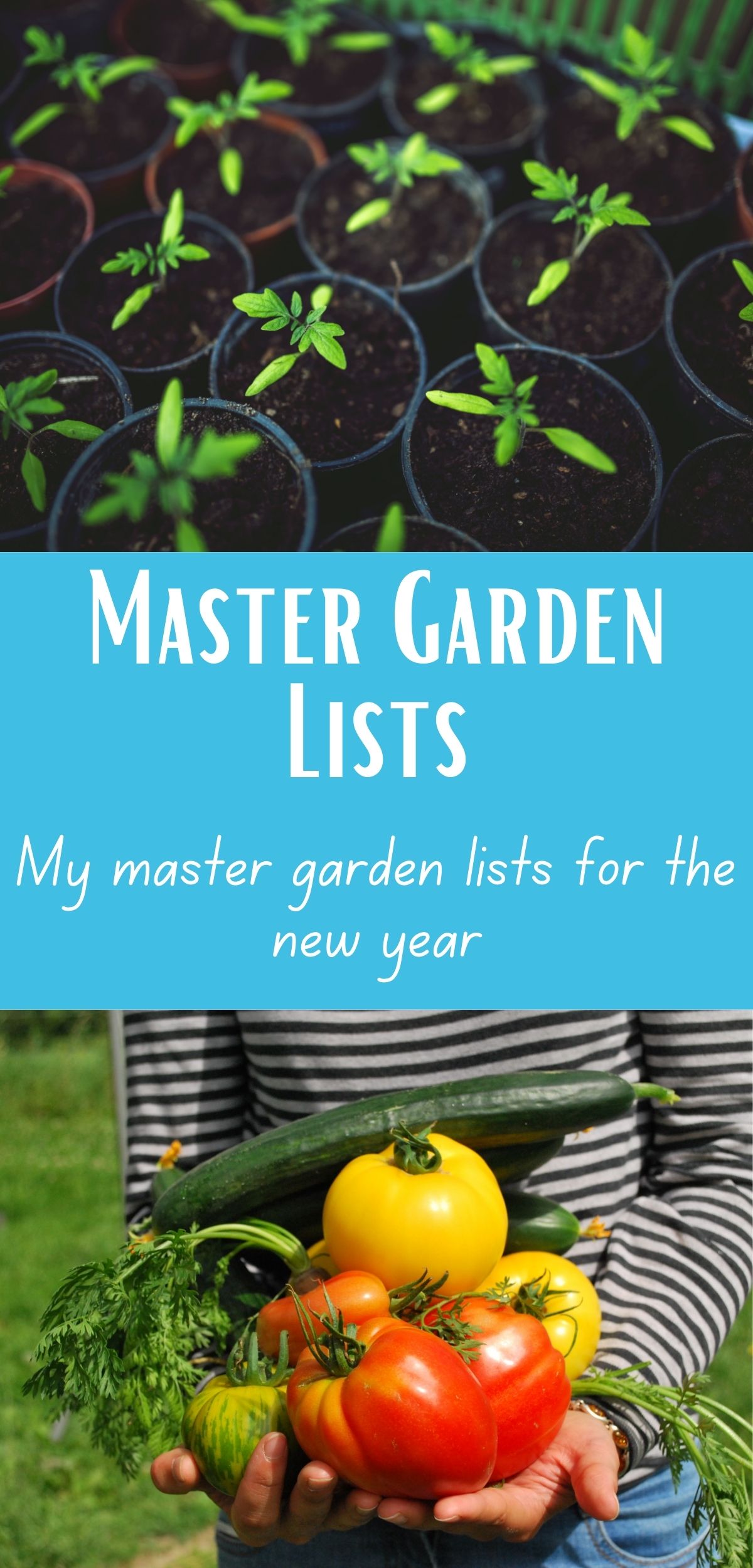
At the end of every year, I go through all of my gardening stuff and make sure that I have everything that I need for the next season. As I was doing that, I realized that a lot of new gardeners may not have a clue about what all they will need. Then they end up making several hardware store runs or having to wait for packages to arrive. I decided to make my master garden list for you (there’s a printable at the end) so that you can avoid those hassles and make this year the best garden year yet!
cropped-3.jpg

Are you looking for garden journal prompts, but aren’t interested in a weekly email? Check out our 365 Garden Journal Prompts! This is an amazing, all in one, yearly product that you only pay for once.

Buy Now!

Master Garden List

I have broken this down into a couple of different sections, that include; tools/ extras, soil/ amendments, and seeds/bulbs. Then I’m going give you my master planting list for my family of 4 and our livestock. My hope is that you have everything you need to have a great garden season that doesn’t included last minute trips to the hardware store or unplanned seed orders.

Master Garden List- Tools

There aren’t many tools that I use regularly, but I have multiples of the items I use all the time. I do not need a ton of tools because of the way I grow my veggies and the way that I handle my soil. Because I do not till, I don’t need a tiller. Things like that. But I have a ton of shovels because there are four of us and when we do big work in the garden, we are all working. So let’s get into my list:

Hoses- Every year, we either buy new hoses or have to repair our old hoses. Do yourself a sold and don’t waste your money on the heavy duty, mac daddy hoses. They aren’t worth it. We’ve bought just about every brand out there and all of them have been destroyed within about 2 years. That being said, we aren’t gentle with our hoses. If you are, then buy the good hoses.

Sprayers- Again, don’t waste your money on super expensive sprayers and hose nozzles. We are lucky to get a full season out of them. And again, if you are gentle with your stuff, buy the expensive ones. We aren’t. But there are some things that the nozzle needs to do, shower and jet. I want power when I need it and I want gentle power on baby plants.

Hand Tools- I have three hand shovels for planting, but when it comes to filling me seed start trays, I use an old coffee mug that the handle has been broken off of. It just works better for me. But get yourself some good hand shoves, weeders, etc. This “kit” from Amazon is a good place to start if you aren’t sure which tools you want and which ones you’ll actually use.

Extra Tools To Make Life Easier

Shears/ Blades- Now, I am snobby when it comes to my hand tools. I am a Fiskars girl through and through. I have found that they stand up to a beating. Even the blades stay sharp and I am not careful. These little pruners have been a lifesaver for my hands. You should have at least two smaller pruners, a large branch cutter, and then a smaller leaf pruner. Honestly, if you’re short on cash, get the smaller pruners and be done. Whatever brand you choose, make sure that they are always sharp and try to remember to bring them inside….

Hemp/Jute/ String- Lastly, you will need string. Now, I prefer a natural fiber like hemp or jute, but that is more expensive than nylon or other fibers. You will need string for tying up tomatoes, peas, etc, or training squash. I’ve used old hay bale twine to fix gates and hang cattle panel. Do what makes sense for you. String has endless uses so make sure you’ve got plenty.

Soil/ Amendments

If you are starting your garden from scratch, or you just need a really, REALLY good brand of soil, I buy from Fox Farm. Yes, it’s incredibly expensive. But you are getting what you pay for. This soil has amazing microbes already thriving in it. And if you have dirt, but it’s not great, this soil will jump start your dirt and turn it into soil.

If you already have good soil, I recommend getting a soil test kit every year. I really like the My Soil test kits because it gives you suggestions for both organic AND conventional fertilizers based on your specific soil needs. They also tell you about your nutrient density and more. My Soil Test is who I will use every year.

I am incredibly picky about my soil and amendments but also incredibly lazy. I talked here about how I build my soil, so I don’t need a lot of soil amendments. In fact, I really only ever add goat bedding to fill the beds and that’s usually it.

BUT, if I am going to use any kind of amendments, it’s going to be OMRI listed and I need to be able to figure out where it came from. Things like fish emulsion, kelp, bone meal, etc are okay. And really, just doing the best you can here is the most important. Don’t get hung up on the details.

At the end of the day though, I know that I am not going to add any amendments to my soil. Not because the plants don’t need it, but because it’s just not something I’m thinking about. So again, do what you can.

Seeds/ Bulbs/ Tubers

I figure out my seed needs totally based on my seed horde and what grew well last year. This year (2025), we are focusing on putting up more food than we normally do. So we are focusing more on things like tomatoes for tomato sauce instead of cherry tomatoes for fresh eating and pickling cucumbers over slicers.

Typically, I bulk order my seeds from Botanical Interests, Eden Brothers, and Baker Creek Seed Company, with Botanical Interests being my favorite. My seed order is usually about $150, again depending on what I have left over from last year.

Every year, I order leeks, potatoes, sweet potatoes, and garlic. I haven’t successfully figured out how to start leeks yet but it’s something that I am continuing to work on. I also totally forget to set aside seed potatoes and garlic every year…. oops.

If you are looking to start your own seed horde and not sure where to start, I am working on my Master Planting List. But a good general rule of thumb is one or two packets of seeds for every type of plant that you know your family will eat. For example, if your family likes cucumbers, get one packet of slicers. But again, I get into the details of this in Master Planting List.

Master Garden List- Printable

If you would like to download my Master Garden List, sign up below and follow the prompts! Or if you are already subscribed to Steel Raven Farms, it is in the Member’s Only Library along with all my other downloads for you.

If you like the content I put out, feel free to buy us a coffee! It helps keep this site running, marketing and the goats in grain!

Buy me a coffee

If you like this post, feel free to share it and follow us below on our social media accounts!

  • Facebook
  • Pinterest
  • Instagram
  • YouTube
  • TikTok
  • Spotify
  • Threads

Filed Under: Garden, Homestead Planning Tagged With: flowers, Garden, Homestead, soil, soil testing, vegetables

JOIN TO OUR MAILING LIST!

Leave us your email to receive new posts and special offers for members only! Don't miss a thing!

Recent Posts

  • Fall Garden Guide
  • Top Mistakes With Goats
  • How To Bond With Your Goats

When To Plant A Garden

August 27, 2024 by Leigh Leave a Comment

Have you ever wondered when to plant a garden? If you live and breathe based on your zones, you could also be in for a world of hurt. But there are a lot of nuances to planting a garden that may make you freeze up and think, I can’t start a garden right now. But you CAN start a garden right now, you just need some insights to do it “right”. So when do you plant a garden? Let’s talk about it.

If you are interested in learning more about my favorite garden planner. I highly recommend Seedtime! This planner has been instrumental in helping me plan out my gardens with WAY more efficiency than I could ever expect! It has also reduced overwhelm, stress, and calmed my ADD/ADHD!

More Info!

When To Plant A Garden

To start with there are several different zones, frost dates, and ole timers that all say something different. But how do you know which is right for you? If you are new to gardening and don’t really have any experience or are just new to your area and aren’t sure about your specific growing climate, I suggest using your frost dates. I’m going to walk you through my entire system and how and when I actually plant my spring, summer and fall gardens.

Are you getting overwhelmed in the garden? Stressed? Or just not enjoying the garden like you used to? Check out our garden prompts! We send out weekly emails that get you back in the garden and out of your head! Turn the garden back into a place of love and joy instead of frustration and headache!

Subscribe Now!

Frost Dates

First thing first, you need to look up your frost dates. This is as simple as Googling “What are the frost dates for X city.” PS: X city is your city. Google may not be able to give you an answer for your specific zip code, so you may end up having to figure out your next closest city and use those frost dates. My first frost date is October 31st and my last frost is April 15th.

Next, grab a pocket calendar from your local dollar store or order one like this off Amazon. Put your dates in the calendar. You can use whatever calendar you have but it does need to be something that you are going to keep track of. We don’t want to put this much work into a planner to never touch it again….. Guilty.

Finally, you are going to count back from your first frost to your last frost. Google makes this really easy. Simply type “How many days from X date to X date.” Google will spit out the answer. You can also search for a week count that tells you how many weeks from this date to that date. I like to use days so that I can figure out how many days the plant needs vs how many day the plant will get.

cropped-3.jpg

Are you looking for garden journal prompts, but aren’t interested in a weekly email? Check out our 365 Garden Journal Prompts! This is an amazing, all in one, yearly product that you only pay for once.

Buy Now!

Tips For Frost Dates

Depending on what season you are in and your dates, there is usually something that you can plant year round. If you live far north or in extreme climates, you need to pay more attention to what you are planting and when, but for us that isn’t a problem.

Also, remember that just because your frost date is closing in, doesn’t mean that you can’t plant something. You may end up with plenty of time to plant extra plants. Or you may just need to take some precautions. If you wanted to plant some squash but you know you are going to be pushing close to your frost date, through a sheet or blanket over the plant at night time.

For example, I want to plant squash but I know I’m close to my frost date, I would look at my seed packet to see how many days to maturity. Summer squash usually takes 40-60 days. But the fruit doesn’t get to edible size until about 2-3 weeks later. So to make sure that I have plenty of days, I will assume that it will take 90 days from seed to table. That means that, for my first frost date of Oct 31st, I need to plant by August 2nd. But if I miss that date, and I plant summer squash on September first, I may have to protect that plant for a couple of weeks.

If you are interested in learning more about my favorite garden planner. I highly recommend Seedtime! This planner has been instrumental in helping me plan out my gardens with WAY more efficiency than I could ever expect! It has also reduced overwhelm, stress, and calmed my ADD/ADHD!

More Info!

Planting A Spring Garden

For us, a spring garden isn’t really “smart”. I do it anyways because come February I am begging to play in the dirt. The reason that a spring garden isn’t “smart” is because it tends to be a waste of time and seeds. Our springs in Georgia flip flop worse than a politician during election season. You will have an 80* day and a 25* night and the next day will be 40*. Then next day will be 80* again. You’ll have torrential downpours that turn to ice overnight. It’s insanity.

To plant my spring gardens, I check my calendar and see when my last frost is. Again, for me, it’s mid April. I know that come end of April to beginning of May, my summer gardens are going in so I don’t want to take up space in my gardens for things that aren’t going to be ready to go by then. Usually, I will start my spring stuff in January and put them in the greenhouse and plant in end of February to beginning of March. Usually, the weather has started to stabilize a bit and it’s not too crazy.

I don’t plant a ton of things because again, most of this stuff is going to bolt before I ever get a chance to harvest. This is almost exclusively for fresh eating and seed saving.

If you live in a climate similar to ours, where it goes from winter to summer in .388393 seconds, AND you have limited space, feel free to skip the spring garden.

The Ultimate Homesteader’s Starter Bundle – Only $47!

Get the tools you need to stay organized, track profits, and manage your homestead with ease!

Includes:
✅ Schedule F Tracker – Simplify tax prep
✅ Profit Calculator – Track earnings
✅ Hay Calculator – Plan livestock feed
✅ Garden Journal – Digital & printable
✅ Herd Health Tracker – Monitor animal care
✅ Simple Budget – Manage finances
✅ Backyard Homestead eBook – Essential tips

$99 value – now just $47! Start your homesteading journey today!

Buy Now

Planting A Summer Garden

Every gardener loves the summer garden…. at least at first. My summer gardens start in February when I start about 60% of my seeds. As the months go on, I start the rest of my seeds so that I have wave after wave of plants that will be going into the garden. Some things like melons, pumpkins, cucumbers, beans, etc can go in mid April. But there are some things that can’t go in until the threat of frost has completely past. This is stuff like tomatoes, peppers, okra, and other heat loving things.

As I stated above, I will start planting things mid April, pending the weather. This means that if I don’t have a 10 day stretch of non freezing nights, I don’t plant. If one night is less than 35*, I don’t plant. If I have one day that is less than 65*, I don’t plant. The 10 day stretch gets restarted until I have a whole stretch were the temps are at least above 35* and 65* respectively.

There are two really important things to remember when planting in the south. First, never rely on one set of crops if you are planning to put up your harvest. You will want to continue to succession sow until you have run out of days. The reason for this is because we have a ton of bugs here. Between the Japanese beetles and squash bugs, you will absolutely lose your harvest before you ever get the full bounty of that fruit.

The second most important thing to remember is that full sun in the south is not full sun anywhere else. Because we get more direct sun, you will absolutely scorch your garden if you are not careful. This means constant watering or even having to put up shade cloth. I talk more about the effects of full sun in the blog post above.

If you are interested in learning more about my favorite garden planner. I highly recommend Seedtime! This planner has been instrumental in helping me plan out my gardens with WAY more efficiency than I could ever expect! It has also reduced overwhelm, stress, and calmed my ADD/ADHD!

More Info!

Planting A Fall Garden

If I’m being really honest, this is my favorite garden. While I love most of the produce that comes out of the summer garden, the fall garden is hands down my favorite. I love kohlrabi, carrots, peas, cabbage, and broccoli. I love the fact that I am not going to have to worry as much about heat stroke. It’s an easier garden to tend and it’s not as fussy as the summer garden. That being said, it’s still a timing issue to get my plants in the ground.

Usually, I start my seeds for the fall garden mid August. I start them in the house where it’s cooler and then move them to the greenhouse after a few weeks. Once the temps drop to not Satan’s armpit, I will start planting. This is usually mid September.

Also, I will take down our cattle panels for the tomatoes, and use those to help create covers over the beds in case we get a light frost. Most brassicas and other cool loving crops can handle a light frost. In fact, carrots will taste better after a few frosts. But as we creep closer to December, we start getting pretty chilly nights that are closer to or at freezing.

cropped-3.jpg

Are you looking for garden journal prompts, but aren’t interested in a weekly email? Check out our 365 Garden Journal Prompts! This is an amazing, all in one, yearly product that you only pay for once.

Buy Now!

When To Plant A Garden

At the end of the day, you are going to have to look at your frost dates and experiment. We learned that planting in mid April is risky but not impossible, we just have to check the weather. We’ve learned that we can easily grow throughout winter, as long as we keep an eye on the weather and plant damage.

But that knowledge comes with experience for our area and our gardens. If you are new to the world of gardening, you will struggle. It’s just the reality. But paying attention to your frost dates and Googling “How many days till X date” or “How many days from X date to X date” will allow you to figure out how many days you plant needs to mature and produce a good harvest and how much time you actually have.

I hope this helps you figure out when to plant a garden and I hope that you look forward to your next planting season!

If you like the content I put out, feel free to buy us a coffee! It helps keep this site running, marketing and the goats in grain!

Buy me a coffee

If you like this post, feel free to share it and follow us below on our social media accounts!
  • Facebook
  • Pinterest
  • Instagram
  • YouTube
  • TikTok
  • Spotify
  • Threads

Filed Under: Garden Tagged With: Eggs, Garden, Goats, Homestead, vegetables, veggie garden

JOIN TO OUR MAILING LIST!

Leave us your email to receive new posts and special offers for members only! Don't miss a thing!

Recent Posts

  • Fall Garden Guide
  • Top Mistakes With Goats
  • How To Bond With Your Goats

What Is Full Sun

August 3, 2024 by Leigh Leave a Comment

Recently, I saw a meme on social media that had a cartoon picture of a garden where the plants were wilted and either steaming or smoking and the sun was shining bright. The caption read, “Full Sun doesn’t mean full sun in Georgia.” and man, that couldn’t have been more accurate. But it got me thinking about all the new gardeners out there that have no idea what the difference is between full sun, partial sun, and shade AND how it relates to their own climate. So today we are going to go over what is full sun but also what it means if you live in a HOT place.

cropped-3.jpg

Are you looking for garden journal prompts, but aren’t interested in a weekly email? Check out our 365 Garden Journal Prompts! This is an amazing, all in one, yearly product that you only pay for once.

Buy Now!

What IS Full Sun

Full sun is an area that receives direct sun for at least six hours. But there is so much more to it than that. Just because a plant label or seed packet says it requires full sun doesn’t mean that you need to plant it in the brightest part of your garden or yard. There’s also partial sun and shade labels. But the most important part of those labels isn’t necessarily full sun, partial sun or shade, it’s YOUR climate in relation to those labels.

The Ultimate Homesteader’s Starter Bundle – Only $47!

Get the tools you need to stay organized, track profits, and manage your homestead with ease!

Includes:
✅ Schedule F Tracker – Simplify tax prep
✅ Profit Calculator – Track earnings
✅ Hay Calculator – Plan livestock feed
✅ Garden Journal – Digital & printable
✅ Herd Health Tracker – Monitor animal care
✅ Simple Budget – Manage finances
✅ Backyard Homestead eBook – Essential tips

$99 value – now just $47! Start your homesteading journey today!

Buy Now

All Full Sun Is Not The Same

I’m pretty sure that those plant labels are for people that live in climates that don’t feel like Satan’s armpit during the summer. I feel like they are probably for people that live in climates that have all four seasons. Not those of us who live in the south. Because full sun in Pennsylvania is not the same as full sun in Georgia or Texas. To be honest, Texas full sun and Georgia full sun are totally different.

To give you an example, we planted 4 4x20ft beds with tomatoes. One of those beds is in full direct sun for about 8 hours. Those plants are scorched and the beds require more water than any of the others. Another bed is about 15 ft away, and only a 8ft section receives full sun, the rest is shaded for most of the day. That 8ft section is totally scorched. But the plants that are right next to those scorched plants in the shade? Growing beautifully.

Why? Because in the south, we get a lot more direct sun because of angle of the Earth in relation to the sun. We may not get the same amount of sun, but we do get more of a direct hit. There’s whole science behind it, but in the end the important thing to know is that our summers are hotter because our section of the planet is angled towards the sun.

Are you getting overwhelmed in the garden? Stressed? Or just not enjoying the garden like you used to? Check out our garden prompts! We send out weekly emails that get you back in the garden and out of your head! Turn the garden back into a place of love and joy instead of frustration and headache!

Subscribe Now!

Understanding Full Sun

No matter where you live, you could be dealing with scorched plants if you aren’t paying attention to your labels. I once put a Boston Fern in my greenhouse and forgot about it. Needless to say, I no longer have a Boston Fern.

But one of the biggest misconceptions about full sun is that you need 6 hours of direct sun… in a row. This is not the case. In fact, this couldn’t be further from the truth. Unless otherwise noted on those labels, ambient sunlight is more than sufficient for many plants. And 2 hours in the morning and then another 4 in the evening is perfectly fine for most full sun plants, if you live in a really hot place.

Off the top of my head, the only plants that I know can handle full sun would be peppers, okra, and corn. Beyond that, if you don’t give other plants some sort of shade they will scorch.

goat kidding

Before we get too far into this, I have a great course on the basics of goat care. I call it Goat Crash Course: Goat 101. In this course, I explain things like types of shelter, types of feeds and hays, basic assessments and so much more! Check it out!

Buy Now

Creating Shade

Creating shade is a necessary evil for a lot of us. We are lucky that we have a ton of trees in and around our gardens. This allows for most of our beds to be in shade or ambient sunlight. But those few beds that are in full sun? We have to create shade for them.

Shade cloths are a great way to reduce the amount of sun your plants are getting. They come in a variety of different sizes and strengths. This shade cloth is 40% and great for things that require “full sun” but you live in an oven. You can get other percentages up to 90% depending on what you are dealing with. I recommend 90% for things that are sun fragile like beans, some squashes, flowers, and the like. But any shade will be better than none.

cropped-3.jpg

Are you looking for garden journal prompts, but aren’t interested in a weekly email? Check out our 365 Garden Journal Prompts! This is an amazing, all in one, yearly product that you only pay for once.

Buy Now!

Why Watering Doesn’t Always Help

For most plants, animals and people, it doesn’t matter how much water you give them, too much sun is too much sun. So while you may think “It’s fine, I’ll just water extra”, remember that it may not be enough. We water those super sunny beds every other day or every day if necessary and they still wilt and die.

Also, pay attention to your rain cycles to know how often to water your plants and when to water your plants. In Georgia, we cannot water our plants in the morning because they will scorch. Specifically for us, we can’t water overnight because we will get mildew, rot, or other fungus. Really the only time we can safely water is in the evening when the sun is starting to go down but it’s still warm.

Are you getting overwhelmed in the garden? Stressed? Or just not enjoying the garden like you used to? Check out our garden prompts! We send out weekly emails that get you back in the garden and out of your head! Turn the garden back into a place of love and joy instead of frustration and headache!

Subscribe Now!

Understanding Your Climate

If you live in an area that gets hot, I suggest very highly, that you carefully consider your garden placement. You do not need to put your garden in the sunniest spot in the garden if you live in an area where you don’t get a ton of rain, clouds, or it feels like Satan’s armpit from May to September.

Instead, pay attention to what your weather looks like. For example, Florida, Arizona, New Mexico, Texas, and other super hot places, garden in the winter because it is just too hot to grow anything in the summer.

If you are interested in learning more about my favorite garden planner. I highly recommend Seedtime! This planner has been instrumental in helping me plan out my gardens with WAY more efficiency than I could ever expect! It has also reduced overwhelm, stress, and calmed my ADD/ADHD!

More Info!

What Is Full Sun For You

At the end of the day, full sun is not the same for everyone. The angle of the Earth, the direction of the sun, and your specific location all matter in determining if your plants, on YOUR property, will get too much or too little sun.

So if you haven’t set up your gardens yet, I would recommend putting one of these outdoor thermometers and set it to where you want your gardens. See how hot it actually gets and figure out if that is too much or too little heat in that area.

But the reality is that it may be easier to get a couple of plants and put them in that area. If they scorch, wilt or don’t do well, that may be too much sun for that area. It’s not a deal breaker to put a garden there, but you need to be ready to install shade cloths or consider planting trees around that area.

If you like the content I put out, feel free to buy us a coffee! It helps keep this site running, marketing and the goats in grain!

Buy me a coffee

If you like this post, feel free to share it and follow us below on our social media accounts!

  • Facebook
  • Pinterest
  • Instagram
  • YouTube
  • TikTok
  • Spotify
  • Threads

Filed Under: Garden Tagged With: full sun, Garden, Goats, vegetables

JOIN TO OUR MAILING LIST!

Leave us your email to receive new posts and special offers for members only! Don't miss a thing!

Recent Posts

  • Fall Garden Guide
  • Top Mistakes With Goats
  • How To Bond With Your Goats

Episode 19: End Of A Season (2023)

January 12, 2024 by Leigh Leave a Comment

Other Episodes

The Reason You NEED A Seed Inventory!!!!
The Reason You NEED A Seed Inventory!!!...
Rarely, will I tell you what you NEED to do. In fact, I live my life by your kitchen, your family, your land, YOUR...
00:10:22
February 01, 2024
Let's Look At The Benefits of Seed Starting
Let's Look At The Benefits of Seed Star...
Seed starting can be pretty intimidating. But it's probably the easiest part of gardening. Sure, you can purc...
00:19:53
January 30, 2024
February Garden To-Do List: Essential Chores for a Successful Garden
February Garden To-Do List: Essential C...
Hey Guys! It’s Leigh with Steel Raven Farms! On this podcast, we talk about all the trial and error, successes ...
00:34:45
January 26, 2024

Filed Under: Podcast Episodes Tagged With: Eggs, Garden, Goats, homesteading, Podcast, vegetables

JOIN TO OUR MAILING LIST!

Leave us your email to receive new posts and special offers for members only! Don't miss a thing!

Recent Posts

  • Fall Garden Guide
  • Top Mistakes With Goats
  • How To Bond With Your Goats

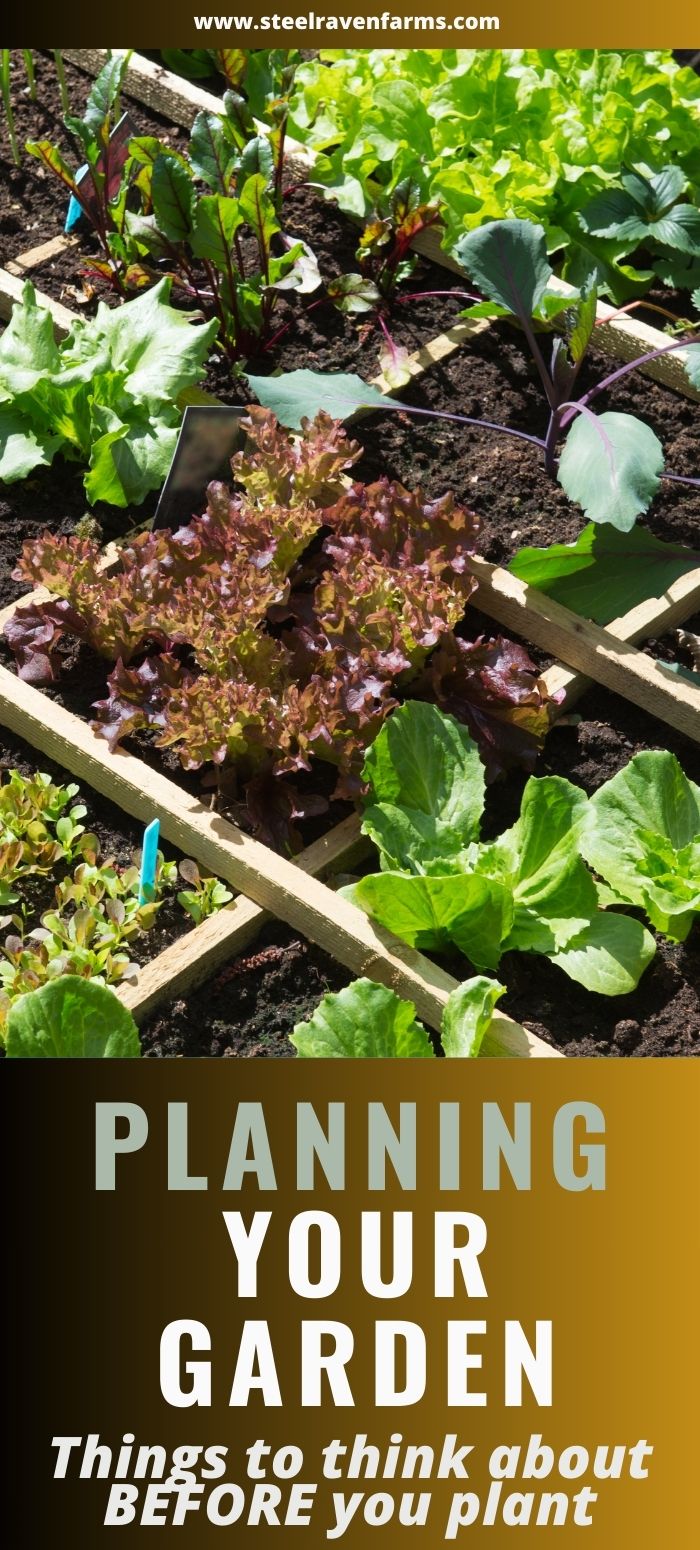
Planning Your Garden

January 6, 2024 by Leigh Leave a Comment

This is my favorite part of winter. I am a planner by nature and I love my garden. So this is the best part of the year for me! I get to dream about spring while impatiently waiting for the cool/cold, wet days of winter to hurry up and go. Today, I wanted to get into some of the nitty, gritty aspects of planning your garden. Whether this is your first garden, or your 50th, I hope you can learn something from this post.

Why Planning Your Garden Is Important

There are a million and a half reasons why you should at least have a general idea about WHY you should be planning your garden. Some of these reasons include space, frost dates, what you eat, what you want to grow, and your storage capabilities. That’s not all of them by any means, but it is a good place to get started for your future garden.

Are you getting overwhelmed in the garden? Stressed? Or just not enjoying the garden like you used to? Check out our garden prompts! We send out weekly emails that get you back in the garden and out of your head! Turn the garden back into a place of love and joy instead of frustration and headache!

Subscribe Now!

Planning Your Garden Space

This may seem like a fairly straight forward thing, right? But you would be surprised how many people over, or under plant, a space. Now, I have to be completely transparent here and tell you that I am an over planter. If I can plant something every 6in I’m probably planting closer to 4in. It’s a flaw that is probably not going to change anytime soon.

But the other part of planning out your garden space is understanding that you probably have more than you think. Fruit and vegetables don’t ONLY have to go into the garden! If you have a porch, patio, or other seating area, you can absolutely plant in containers. In fact, even with 500 sq ft of raised bed space, I still plant in pots around the garden.

If you are interested in learning more about my favorite garden planner. I highly recommend Seedtime! This planner has been instrumental in helping me plan out my gardens with WAY more efficiency than I could ever expect! It has also reduced overwhelm, stress, and calmed my ADD/ADHD!

More Info!

I also plant in hanging pots around the house, on our porch, and around the greenhouse, because why not!

Also look at vertical gardening! If you can trellis something, you can probably plant closer together. For example, I trellis/tie up my melons. This allows me to plant closer together to maximize space without sacrificing food.

If you like the content I put out, feel free to buy us a coffee! It helps keep this site running, marketing and the goats in grain!

Buy me a coffee

Planning For Your Frost Dates

Maybe I’m weird, which I am, but I don’t go off zones for my vegetable gardens. The reason is because zones don’t affect annuals (or things treated as annuals) like peppers, tomatoes, melons, etc. I will look at hardiness zones when looking at landscaping, perennials, orchards, etc.

Save on Seeds

Since zones aren’t my jam, I do make sure that I have a good handle on our frost dates. While this can change year to year, I take an average or look up average frost dates for my zip code. I really like this frost date finder from Dave’s Garden. This has been the most accurate as far as I can tell.

Why are frost dates more important than zones?

Well, because most vegetable gardens are planned and planted with annuals in mind, it really doesn’t matter what zone I’m in. What matters more is if I have enough days between the frost to have the plant reach maturity and harvest.

When I am planning my gardens, I look at the 50% temperature average date. If you click the link above, you will see a table that shows a bunch of temperatures, dates and percentages. In this particular example, I use the Helen, Ga table because that’s the closest to me. Then I start figuring out what I’m comfortable risking.

Logo 468x60

In the 2024 growing season, I will start my plants with the intention of planting around April 21st. That doesn’t mean that I WILL plant on April 21st but I will plan on it. Starting on April 21st, I will start looking at the 10 day forecast. If in those 10 days, there is no days that drop below freezing (or 32*), I will start planting things like corn, melons, cukes, squash, and some other frost tender plants.

cropped-3.jpg

Are you looking for garden journal prompts, but aren’t interested in a weekly email? Check out our 365 Garden Journal Prompts! This is an amazing, all in one, yearly product that you only pay for once.

Buy Now!

I will still hold off on planting my heat loving plants, like peppers and tomatoes, until May 1st or so. We have found that by waiting until the day temperatures are steadily above 70*, we get a better harvest of tomatoes and peppers.

Save on Seeds

Planning Your Garden Based On What You Eat

Every single year, I caution new gardeners to only plant the things that they eat. Especially, if they are limited on space. If you hate everything tomato, do NOT plant a million tomato plants! Buuuuuttttt, if you have space and want to experiment, make sure to plant some weird varieties. You may find that you actually like THIS type of tomato.

Another thing to be sure of is, if you like something, make sure to plant a lot of it. Again, if space allows. Jared HATES cucumbers, but he loves pickles. So I plant a LOT of cucumbers, usually 10 plants, spaced out over several weeks. This means that I have fresh cucumbers and he gets plenty of pickles.

Check out our Microgreens at True Leaf Market

Another question when it comes to planning your garden is do you have livestock? Chickens and pigs LOVE cucumbers. Goats LOVE green beans. You can lower your feed bill if you plant extra for your animals.

What Do You WANT To Grow

This is, in my opinion, the most important question when it comes to planning your garden. I’m not saying that you should only plant things that you want to grow, but I AM saying that you should absolutely, always plant things that you want to grow.

Again, I hate raw tomatoes, but watching tomatoes grow? Man, it’s so cool!

The Ultimate Homesteader’s Starter Bundle – Only $47!

Get the tools you need to stay organized, track profits, and manage your homestead with ease!

Includes:
✅ Schedule F Tracker – Simplify tax prep
✅ Profit Calculator – Track earnings
✅ Hay Calculator – Plan livestock feed
✅ Garden Journal – Digital & printable
✅ Herd Health Tracker – Monitor animal care
✅ Simple Budget – Manage finances
✅ Backyard Homestead eBook – Essential tips

$99 value – now just $47! Start your homesteading journey today!

Buy Now

I also plant a TON of flowers. Not for the pollinators, although that’s what I tell myself, but because they are pretty and I like them. I WANT to grow as many flowers as possible because they make me happy.

Don’t think that your garden has to be so utilitarian that you lose the beauty of YOUR garden.

Lastly, What Can You Store

If you only garden for fresh eating, by all means, ignore this part of the post. But if you are looking to put up food for winter, you really need to look at your storage capabilities. I have these amazing canning shelves that Jared built me, and he is working on building my food storage room this year.

Right now, we are limited only by what we can dehydrate, can or freeze. But since freezer space is limited to meats, we have to make sure that we can either eat things fresh, can or dehydrate.

Logo 468x60

If you can’t can, freeze or dehydrate, you should consider how much space you are giving to items that don’t store well. For example, tomatoes should be canned for preservation. When you freeze them, they turn to mush when they thaw. If that’s your goal, then you’re good to go. If not, maybe don’t plant 200 tomato plants.

Same goes for potatoes. If you don’t have a cool, dark place to store, I wouldn’t plant a ton of them. But if you can can them? You are golden. It’s really just thinking through how you are going to use the things you grow.

Pro Amateur Gardener Tip

I will never be a pro gardener…. Like ever. Mainly because there is just so much to learn. But one of the best tips I can ever give you, when it comes to gardening, is WRITE IT DOWN! You will absolutely not remember next year. Trust me! It’s a lie I tell myself every year, and every year I forget and regret.

Are you getting overwhelmed in the garden? Stressed? Or just not enjoying the garden like you used to? Check out our garden prompts! We send out weekly emails that get you back in the garden and out of your head! Turn the garden back into a place of love and joy instead of frustration and headache!

Subscribe Now!

I use these bullet journals because they are cute but also because they hold up really well. If you have any other tips, make sure to comment below this post. I would love to read them.

If you like this post, feel free to share it and follow us below on our social media accounts!

  • Facebook
  • Pinterest
  • Instagram
  • YouTube
  • TikTok
  • Spotify
  • Threads

Filed Under: Garden, Garden Projects, Goal Setting Tagged With: food, Garden, Planning, using what you plant, vegetables

JOIN TO OUR MAILING LIST!

Leave us your email to receive new posts and special offers for members only! Don't miss a thing!

Recent Posts

  • Fall Garden Guide
  • Top Mistakes With Goats
  • How To Bond With Your Goats

Top 10 Ways To Improve Soil

October 19, 2023 by Leigh Leave a Comment

As we are steadily moving towards cooler months, and for some of you freezing already, now is a great time to start looking into ways to improve soil. You don’t have to do any of it right now, especially if it’s too cold to work the soil or grow a cover crop. But having these ideas in your journal as ways to improve soil will help in the long run.

10 Ways To Improve Your Soil

Mulch

Mulching is usually a forgotten chore in the garden but it is so important. I know what you’re thinking, “I don’t have any plants in the ground, why should I mulch?” Because mulching, no matter the season, keeps weeds at bay, puts organic matter back in the soil and helps retain moisture in the soil.

Save on Seeds

Cover Cropping

This is another huge thing that gets left out for most new gardeners. They think, well I’ve harvested what I need so I’m just going to rip out all of the plants. Then they don’t put any new plants to make sure that the soil stays covered.

I use this mix from True Leaf Markets for the kitchen garden. Depending on what I need in my big garden will depend on what mix (or self mix) I use. I usually try to do a mix that my chickens and ducks can eat on. But regardless of what you buy, something has to be planted in order to keep your ground soft and workable.

Organic Matter

This goes hand in hand with mulching and cover cropping. Soil needs to have organic matter to give it better structure. If you have ever lived in a place with clay soil, you know it is clumpy when wet or blows away if too dry. We want to change the structure of the soil by allowing roots to grow and create channels. The more growth and channels, the more water can be absorbed.

Low or No Till

Tilling isn’t bad per say, but over the last hundred years or so, we have come to realize that tilling may not be the best thing for the soil. When you till, you are ripping the soil apart and that means you are ripping apart the microbiomes that live in the soil. To make this more relatable, it would be like a nuclear bomb going off in your town every couple of months. Everything is destroyed and you have to rebuild season after season.

If you can limit the amount of destruction to the soil, you will have soil with better moisture retention and a lot less run off. Not to mention it’ll have the channels to retrieve nutrients from deeper in the ground.

Logo 468x60

Leaves and limbs

We’ve been taught to think that leaves and debris is something that must be hauled off. But you are getting rid of one of the best (and FREE) resources that our land gives us! Throw those leaves into the compost or straight onto a bed to act as mulch. Trust me, your garden will thank you for it.

There could be issues with the leaves and branches composting and sucking up a ton of nitrogen. But I have not seen that to be an issue. But I also cover crop with nitrogen fixers.

Animal Bedding

I talked in depth about using animal bedding as compost here. It is probably the best and easiest ways to fill up or top dress a garden bed. Especially, when you are looking for free or cheap materials for your garden beds.

You can also use pine shavings as mulch too.

Save on Seeds

Eliminate pesticides and synthetics fertilizers

When I read Gabe Brown’s Dirt to Soil, he mentions that when you use synthetics you are creating “lazy” plants. If the plant doesn’t have to work to get its nutrients because you give it to them, the plant isn’t going to be as hardy or give back to the soil. Same thing with pesticides. Even natural fertilizers and pesticides are creating a situation where the plant doesn’t have to defend or protect itself.

We don’t use any amendments to our beds except compost and animal bedding. That’s it. We learned very quickly that our plants were healthier and are better able to fend off pests if we just left them alone. So that’s what we do.

Animals

Animals are a phenomenal way to improve your soil! To put it very simply, you put an animal in a portable pen, give them some hay and let them be in that pen for 1-4 days depending on the animal size and size of pen. After you move them to a new area, seed where they were. If you can keep this up, they will slowly but surely fix your compacted soil!

Our pigs have been instrumental in bringing our property back! They turned hard, compacted clay, that a tiller couldn’t get into because of the rocks, into the softest black soil within 3 rotations!

Tractor Supply

Crop Rotation

We’ve all heard this one. You’ve got to rotate crops to keep pests, fungi, etc from becoming a problem. But it’s actually more than that. When you rotate your crops from a heavy nitrogen feeder to a nitrogen fixer, you are giving the soil a chance to recover. We want to make sure that we don’t put heavy feeders in the same place for about 3 planting seasons.

For example: You planted Corn in summer 2022, Squash in Fall of 2022, and Tomatoes in summer 2023. Your soil is going to be bone dry when it comes to nutrients. But if you were to plant beans, peas, and garlic in fall of 2022 instead of squash, you have broken the heavy feeder cycle without having to amend the beds with inputs.

Save on Seeds

Plants

Plants probably the most under rated way to improve soil health. I used to pull spent plants from the ground and give them to my chickens, goats, pigs, whatever. But when you rip out plants, you are taking all that carbon out of the soil. You are wrecking all those channels and creating more work for the soil microbiome to fix.

The best thing you can do when you are done with a bed is to just hit it with a weed eater, clippers, etc and just chop and drop it just above soil level. This will leave all that carbon (roots) in the ground to compost and feed the microbiome.

What are your favorite ways to improve soil health?

These are just my favorite ways to improve soil health. In fact, these are the only things I do and we have seen a HUGE improvement in planting. It used to be that we would have to use a drill attachment augur to be able to plant. Now, I can just stick my hand in the dirt and move the soil out of the way. How cool is that!?

If you like this post, feel free to share it and follow us below on our social media accounts!

  • Facebook
  • Pinterest
  • Instagram
  • YouTube
  • TikTok
  • Spotify
  • Threads

Filed Under: Garden Tagged With: compost, cover crop, Fodder, Garden, garden space, soil, vegetables

JOIN TO OUR MAILING LIST!

Leave us your email to receive new posts and special offers for members only! Don't miss a thing!

Recent Posts

  • Fall Garden Guide
  • Top Mistakes With Goats
  • How To Bond With Your Goats

Primary Sidebar

WELCOME

WELCOME

My name is Leigh and I am the lead chaos creator here at Steel Raven Farms. You will see throughout this blog that I am the crazy goat lady.

I am married to my high school sweetheart, Jared and we have two amazing boys.

FOLLOW ME

  • Amazon
  • Facebook
  • Instagram
  • Pinterest
  • TikTok

GET UPDATES!

Leave us your email to receive new posts and special offers for members only! Don't miss a thing!

In all the years that I’ve been growing a garden, the fall garden has steadily remained my favorite. Which is funny because I don’t really like any of the brassicas, which is what most people know the fall garden for. I prefer the root vegetables and cool air. But I have learned over the years…

Read More

  • Animals
    • Chickens
    • Farm Dogs
    • Goats
  • Garden
    • Compost
    • Garden Projects
    • Seeds and Plants
    • Garden Journal
    • Working With Food
      • Recipes
      • Freezing Foods
      • Dehydrating Foods
      • Canning Tips And Tricks
        • Canning Inventory Sheets
  • Helpful Info
    • Welcome to the Homestead!
    • Emergency Preparedness
    • Frequently Asked Questions
    • Goal Setting
    • Project List
    • Shop Digital Products
      • Hay Calculator
      • Farm Expense And Income Tracker
      • Goat Crash Course: 101
      • Garden Journal Prompts
      • Schedule C Tracker
      • Schedule C Tracker
      • The Homestead Bundle
  • The Truths
  • Episode List
  • Start Here
    • Privacy Policy
    • Affiliate Disclosure
    • Let’s Get in Touch
    • Members Only Library
    • Welcome To Our Homestead

Footer

  • Email
  • Facebook
  • Instagram
  • Pinterest

COME AND GET IT!

Leave us your email to receive new posts and special offers for members only! Don't miss a thing!

· Midnight Theme

Copyright © 2026 · Midnight Theme on Genesis Framework · WordPress · Log in