So you’re thinking about getting a goat. You’re doing your research and probably thinking, “Whoa, there’s a lot to learn.” You would be right, but don’t let that stop you. Just by having some basic supplies on hand and a willingness to learn, puts you ahead of the game. Learning how to care for goats is actually pretty simple with the right supplies, resources and attitude. It would be impossible to write one post about caring for goats. It’s simply too much. But this post is a good start and below you can find our goat crash course.

Before we get too far into this, I have a great course on the basics of goat care. I call it Goat Crash Course: Goat 101. In this course, I explain things like types of shelter, types of feeds and hays, basic assessments and so much more! Check it out!
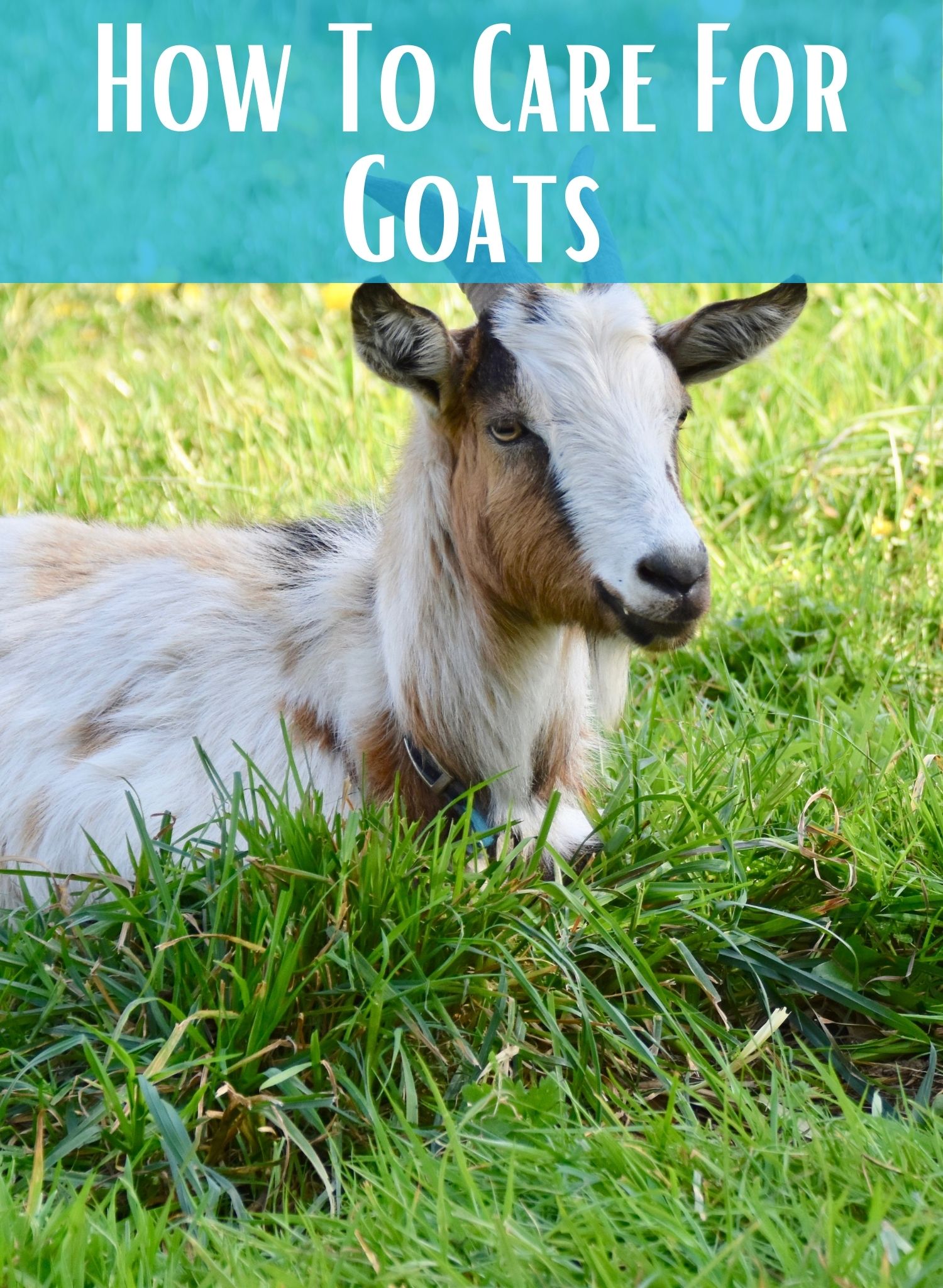
How To Care For Goats
When we first started looking into goats, I was extremely hesitant. I knew from research that they were a ton of work and hard to keep alive, but I didn’t realize how much more there was to learn. I have learned a ton in the years that I’ve been raising and managing goats. From caring for hooves to goat assessments, what medicines to keep on hand, and what goats can eat, the opportunities for education and adventure is never ending with goats.

Our herd health bundle helps you keep track of your herd’s health. Includes the goat assessment, herd check sheets AND Herd Health Tracker!
Medications to keep on hand
This is by no means a comprehensive list or replacement for veterinarian advise or treatment.
Vitamin B Complex is another necessity. When your goat isn’t acting 100%, sometimes it’s simple vitamin deficiency. Other times, their entire system is out of whack and you need to start working to get them back on track. The real need with the B complex is actually the thiamine in it. Goats will usually make their own but when their rumen is out of whack, they can get really sick. If you can get your hands on thiamine from the vet, I highly suggest that you get some.
LA200, Tylan 200 or similar antibiotic. Sometimes your goat will have a cough, gunky eyes or nose, or other infection. Having antibiotics on hand helps save you from a vet visit. As of this revision, you need a vet to get antibiotics. If you have a good relationship with your regular vet, they may be able to help you when it comes to your livestock.
Dewormers- now I could go in depth about the various types of dewormers. Both chemical and natural. But I’m not going to. The reason is because there are so many different types of parasites and treatment protocols for them, it would make this blog post insanely long. What I will say is talk to the person you are getting your goats from and see what they are giving their animals. That will point you in the right direction for care. I do talk in depth about deworming goats here if you are interested in it.
BluKote– This amazing can of awesome has literally saved our goat’s lives. I was told by a farmer once that BluKote is so good, it will regrow legs. And while obviously, that’s not true, it will help keep the leg from rotting off. It’s an antifungal, kind of antibacterial and quick drying agent. Stella got tangled up in sheet metal and sliced up all four legs in various spots. Some deep enough to need sutures. But have you ever tried to suture a goat? We sprayed this on her, kept her contained for a few days and within about 6 hours she had scabs and within about 2 days she was almost completely healed. So no, it won’t regrow legs. But it does protect the ones they have.
Before we get too far into this, I have a great course on the basics of goat care. I call it Goat Crash Course: Goat 101. In this course, I explain things like types of shelter, types of feeds and hays, basic assessments and so much more! Check it out!
Supplies to have on hand to care for goats
A thermometer is number one for a reason. Goats must stay around 101-103. This tells you a lot about what you could be dealing with. Too cold and you need to start actively rewarming them. Too warm and you may have an infection.
Syringes and Needles– Having a variety of different syringes is huge. I’ve got goats that range from 5# to 100# so having everything from 3cc-60cc syringes is extremely helpful. Also make sure that whatever size you get they are Luer Lock! Seriously, you do not want to be sprayed in the face with an antibiotic because the pressure shot off the needle. Yes, it’s happened. With needles, I highly recommend getting 20 ga or 18 ga. Anything smaller than 20 gauge and you will have a really hard time getting medication into a squirming goat. We use 18ga as a rule but we have 20s as well.
Free choice baking soda is a mineral that goats will eat to help soothe their stomach. Goats can bloat or become acidotic and baking soda can help them help themselves.
Free choice minerals is very important in making sure that they have ample minerals that your area may be deficient in. We use these as the goats love them. *** As of this revision (6/24) we use the goat mineral buffet from Avalon Farms and our goats love it. We have seen huge improvements in their health and coats. If you can’t get this or don’t have the “right set up” regular free choice is fine.
All the buckets. When you think you have enough, grab a couple more. We use a 5gal buckets for water and 3gal buckets for feeding. I attach the feed buckets to the fence with strong clips so they have plenty of space for everyone to have something. I also hang a couple of these on the fences to give even more options. It really helps to keep everyone from crowding on each other.
As long as you have plenty of ruffage, you shouldn’t need a lot of feed for them. Bucks, male goats, don’t get grain or at least not a lot. We fed our goats off the land for the first year to help get everything clear. Now we are bringing in pellets and grains to help supplement the hay until our pastures take hold. But really we could put them back in the briars and they would be very happy.
Hoof Trimmers– A couple pairs of hoof trimmers are great. Even better if you can take them apart to sharpen them. We’ve got probably 5 or so pairs around the farm. I like to have extras just in case one set is dull or we need to clean them while trimming hooves.

Before we get too far into this, I have a great course on the basics of goat care. I call it Goat Crash Course: Goat 101. In this course, I explain things like types of shelter, types of feeds and hays, basic assessments and so much more! Check it out!
Other Resources
I would also recommend getting into a couple of different goat groups on Facebook. Most vets do not see livestock and if they do see livestock, they are probably not well versed in goats. That being said, these different groups on Facebook are people with years and years of experience. I have trusted them with my babies on multiple occasions and they have helped me pull my goats through when a vet was clueless. Successful Goating With Rosie and Goat Emergency Team are the two that I recommend.
Lastly, enjoy your goats. Seriously, they are some of the coolest critters and I am so glad that Jared talked me into getting them. When I am stressed to the max with work, the kids, or anything, I go out and sit with my babies. They make all of it go away. How can Midas’ antics not put a smile on your face?
If you like the content I put out, feel free to buy us a coffee! It helps keep this site running, marketing and the goats in grain!
Buy me a coffeeIf you like this post, feel free to share it and follow us below on our social media accounts!
Honestly, that’s not NEARLY as much stuff as I thought! Thanks for the information! 😀
It’s a lot when you aren’t prepared and always running to the store. But as long as you have the basics, you should be ok. Then again, goats are always trying to off themselves
Goats are the next livestock animal that we plan to bring onto our homestead. I always enjoy learning about them!
They are by far and wide my favorite livestock. Their care is intensive but worth it
Great information. I wish I could get a goat, but our township won’t allow farm animals. ;( Maybe one day!
It’s an emotional support goat?