As we head into fall garden season, I got to thinking about all the things I needed to do before I plant my first fall garden seed. As I was chopping and dropping spent plants, I realized that most gardening content is geared towards planting, but there wasn’t much about when or how to prepare your gardens. So here is what we do to prepare our gardens for planting as well as how to prepare them for winter.

Are you looking for garden journal prompts, but aren’t interested in a weekly email? Check out our 365 Garden Journal Prompts! This is an amazing, all in one, yearly product that you only pay for once.
When To Prepare Your Gardens
There is no perfect time to prepare your gardens for planting, mainly because you will be preparing your gardens several times throughout the year. Sometimes, I don’t use a bed for a season. Other times, it’s a quick dump of goat bedding in a bed and move along with my plans. And sometimes, I just plant the bed without doing barely any prep work. But I wanted to talk to you about how I usually prepare my garden beds for planting or putting them to bed for winter. I also wanted to talk to you about how I START my beds just in case you are brand new to gardening and don’t know where to start.

The Ultimate Homesteader’s Starter Bundle – Only $47!
Get the tools you need to stay organized, track profits, and manage your homestead with ease!
Includes:
✅ Schedule F Tracker – Simplify tax prep
✅ Profit Calculator – Track earnings
✅ Hay Calculator – Plan livestock feed
✅ Garden Journal – Digital & printable
✅ Herd Health Tracker – Monitor animal care
✅ Simple Budget – Manage finances
✅ Backyard Homestead eBook – Essential tips
$99 value – now just $47! Start your homesteading journey today!
What Does Preparing Mean
Let’s talk first about what preparing your garden means. For me, prepping beds could range from filling with soil to adding organic matter or even just doing a chop and drop. But prepping beds always starts with an idea of what is going to happen with that bed within the current or next several seasons.
Having a plan for what that bed will look like in the coming season will tell you how you should prepare it. To give you some examples, I have a couple beds that I am going to allow to overwinter with nothing in them. I will throw a bunch of leaves over the top of the bed and call it good. If I am planning on using that bed, I will clean out the goat barn and add all that amazing goat bedding as organic matter AND fertilizer. It really depends on what I am doing with that bed.
But I have a plan, even if it’s just a loose guess of what I want to do with the bed.
Are you looking for garden journal prompts, but aren’t interested in a weekly email? Check out our 365 Garden Journal Prompts! This is an amazing, all in one, yearly product that you only pay for once.
Preparing Your Gardens: Brand New Gardens
When you are starting a brand new space, you may have some questions about how to get started. This is really going to depend on if you are building raised beds or row gardens. Because I prefer raised beds, I don’t do much before I start planting except building and filling beds.
This year, we installed 12 4ft x 20ft raised beds in our big garden. It was a HUGE undertaking. But one of the things that we did was loaded the bottoms of each bed with logs, branches, leaves, etc. The reason we did this was several parts. First, I can’t afford to fill each bed with 6 cubic yards of soil (that’s about 215 bags of soil). Second, by loading the bottom half of the bed with brown matter (tree parts), it gives the organisms in the soil something to eat. Third, and possibly most important, by loading the bottom with tree parts, it reduces weeds!
However, because I am not going to use my raised beds for things like corn, potatoes, etc. I still need a place to plant those things. For these spaces, I will pick a spot, dump a ton of goat bedding on it and then till it under. While I don’t like tilling the soil, I live in Georgia where our soil is clay. So doing a no till isn’t ideal, at least at first.
After a season or two, I don’t need to till to break up the soil anymore. But it can be tricky to figure out when you’ve reached the point of not needing to till anymore. The other thing that I will do to keep weeds down in the off season is either plant cover crops or tarping. This is going to look different for everyone, but tarping allows you to kill weeds by blocking out all light to the soil. I use these from Bootstrap Farmer. You can plant cover crops and then tarp them about 2 months before needing to use that space. That’s usually enough time to kill the plant and start the composting cycle.
The Ultimate Homesteader’s Starter Bundle – Only $47!
Get the tools you need to stay organized, track profits, and manage your homestead with ease!
Includes:
✅ Schedule F Tracker – Simplify tax prep
✅ Profit Calculator – Track earnings
✅ Hay Calculator – Plan livestock feed
✅ Garden Journal – Digital & printable
✅ Herd Health Tracker – Monitor animal care
✅ Simple Budget – Manage finances
✅ Backyard Homestead eBook – Essential tips
$99 value – now just $47! Start your homesteading journey today!
Preparing Your Gardens: Established Space
Again, this is going to look different for various reasons. If you are doing row gardens, raised beds, planning to do a fall garden or just summer gardens, it will all require different things to prepare them. To keep this simple, I’m going to give you an overview.
When I am preparing raised beds for the next season (spring, summer, or fall), I will usually chop down whatever was growing and either give it to the chickens or goats or dump it into a bed that needs to be filled. Then dump a healthy amount of used goat bedding in the bed, water it, then in a day or so, plant the next round of vegetables.

Before we get too far into this, I have a great course on the basics of goat care. I call it Goat Crash Course: Goat 101. In this course, I explain things like types of shelter, types of feeds and hays, basic assessments and so much more! Check it out!
If the bed isn’t going to be used that season, I will chop and drop whatever was growing. Chop and drop is exactly what it sounds like. Cut the plant at soil level and drop it in the bed. That’s it. Sometimes, I will add a healthy layer of mulch, leaves or other organic matter that will break down during that bed’s off season. This feeds the organisms in the soil and allows the soil to replenish itself.
If I am working on an area that is in ground and not being used for the following season, I will usually hit it with the weed eater. Then I will either use cover crops or tarp it, most of the time both depending on the timing. But if I plan on using that area for something like sugar beets in the fall or corn in the summer, and the soil is not yet light and fluffy, I will dump used goat bedding on it and then till it under. If the soil is light and fluffy, I will cover it with a tarp until the weeds are dead (again about 2 months), then I will drop seeds and cover with compost or goat bedding.

If you are interested in learning more about my favorite garden planner. I highly recommend Seedtime! This planner has been instrumental in helping me plan out my gardens with WAY more efficiency than I could ever expect! It has also reduced overwhelm, stress, and calmed my ADD/ADHD!
Overwintering Your Gardens
When your seasons are done, there are several things to keep in mind. First, you need to cover the soil. This could look like dropping a ton of leaves or mulch on the beds. It could look like cover crops. You just need something to cover the soil to prevent erosion, water loss, and weeds. You’ll also want something that will give back to your soil. I use this cover crop from True Leaf Market.
When we are done with our gardens, sometimes we will leave the plants in the ground. Yes, I have pulled out last years tomatoes out in February. For us, it’s not a big deal.
Also, if you plan on starting your own seeds, which I highly recommend, find your healthiest soil and pull several buckets of soil out of it. I use these totes from Home Depot. This allows me to use my own very healthy soil instead of having to purchase bagged soil.
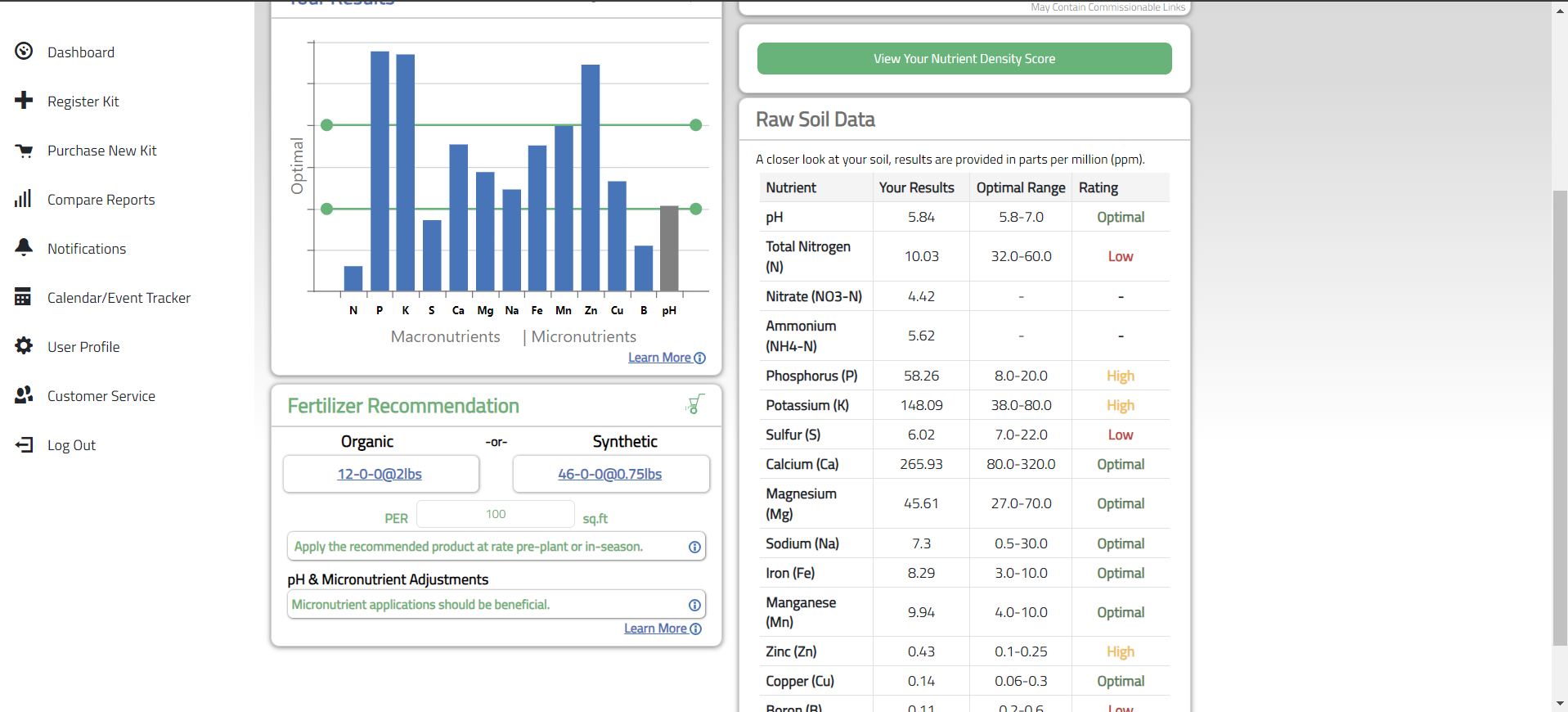
Lastly, if you haven’t already, go here and grab a soil tester. I usually grab two, one for our kitchen garden and another for our big garden. This tells me how my soil is doing and what I need to add for the following year. But I’m going to be really honest with you, I didn’t add anything to the kitchen garden. The only thing I did, was what I do every year….add more goat bedding.
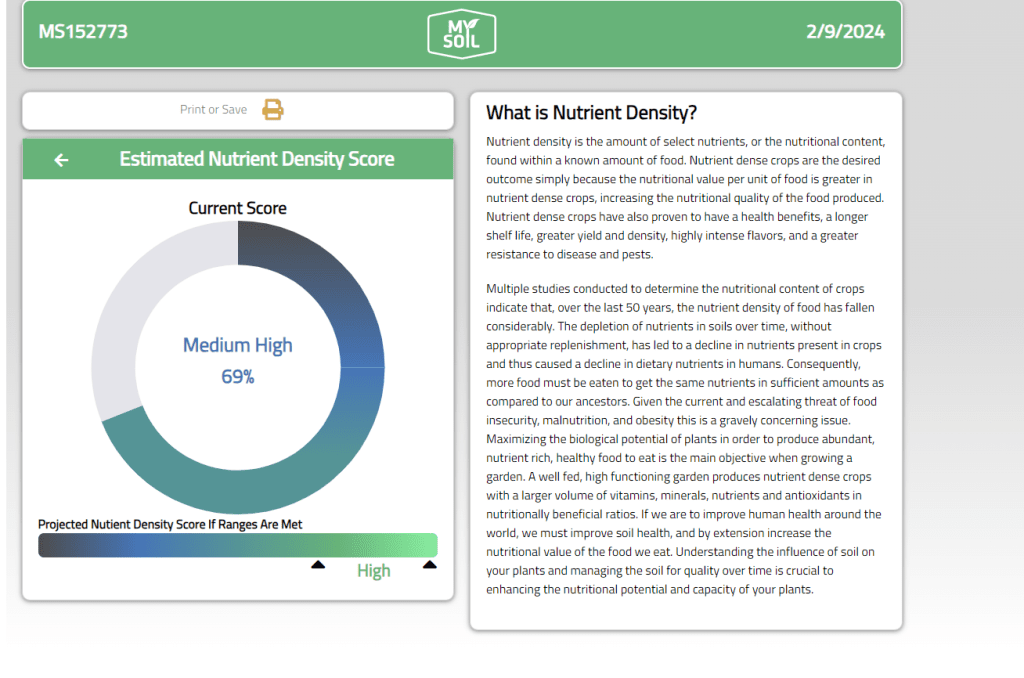
The two pictures below are from our 2024 test in the kitchen garden, test was taken in January of 2024. Not too shabby considering this is the first year of those garden beds and we only used cheap top soil from the gravel place down the road, used goat bedding and mulch from the local tree company.
Reoccurring Themes
If you have made it this far, you will notice that there is a reoccurring theme to my planting style. I have found over the years that I have a TON of goat bedding that needs a place to live. Especially at the end of winter. We use the deep litter method for our goats. This means that by the end of winter, I have about 30 bags worth of pine shavings, 4 months worth of poop and urine, that have been composting down in the barn. This is free organic matter, fertilizer and mulch!
Another theme that you have probably noticed is cover crops and tarping. Letting a garden plot go fallow is one of the worst things you can do to the soil. Fallow is basically ripping plants out of the soil and then not doing anything with it. The reason this is so bad is because your soil is going to run away with the water. All that hard work you did to get your soil fluffy, light and workable without having to till it, is gone. You’ve got to give the soil something to grab on to, like plants. This is going to help water retention, reduce loss of top soil, and keep the micro organisms in the soil happy. If your soil is happy, your plants will be very happy.
Lastly, I absolutely love my raised beds. It is the ultimate no till garden and I don’t have to worry about the soil, plants, or anything else going outside those beds. It’s contained and I love it. There are so many benefits to raised beds that I could go on and on… I even made a post about it! But don’t panic if you can’t do raised beds! I’ve said it a million times and I’ll say it a million more. A home garden is the best garden. It doesn’t matter how you grow plants, as long as you are growing plants!
If you like the content I put out, feel free to buy us a coffee! It helps keep this site running, marketing and the goats in grain!
Buy me a coffeeIf you like this post, feel free to share it and follow us below on our social media accounts!
Leave a Reply